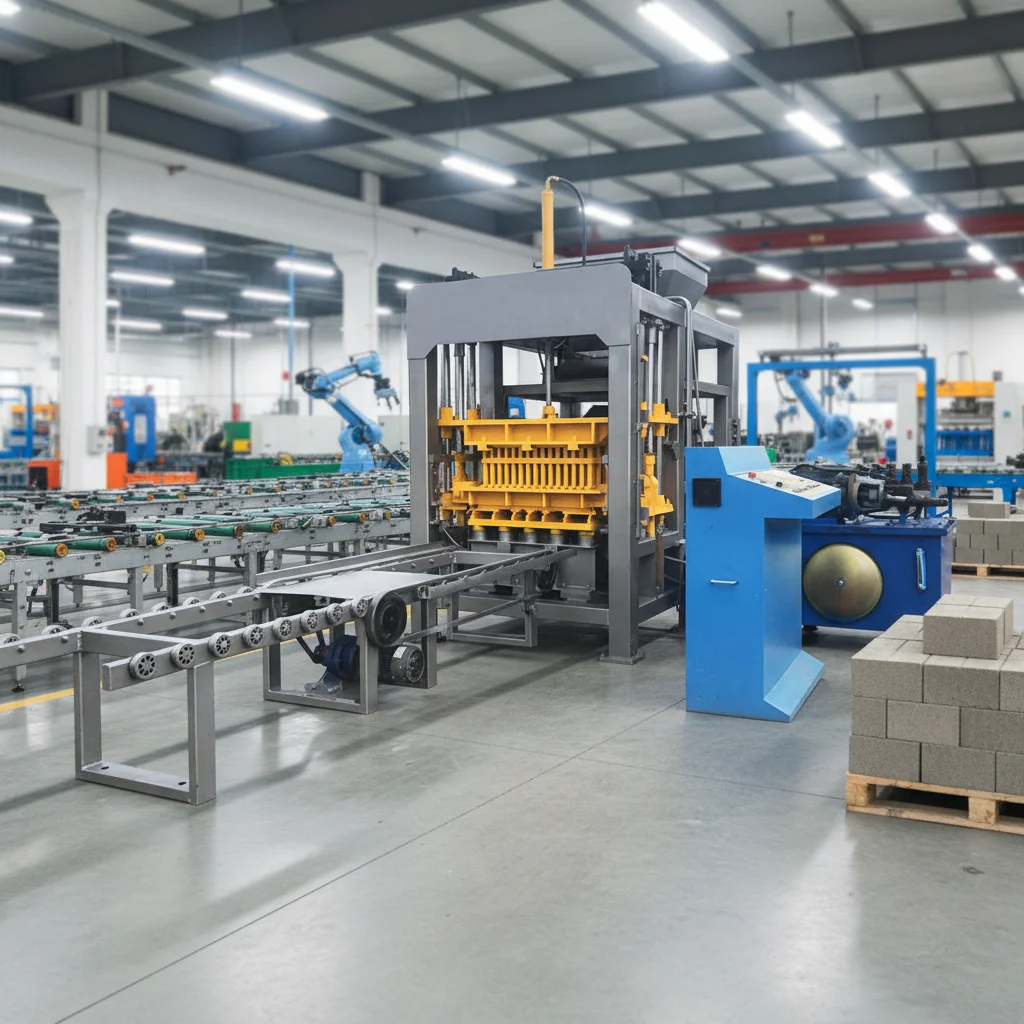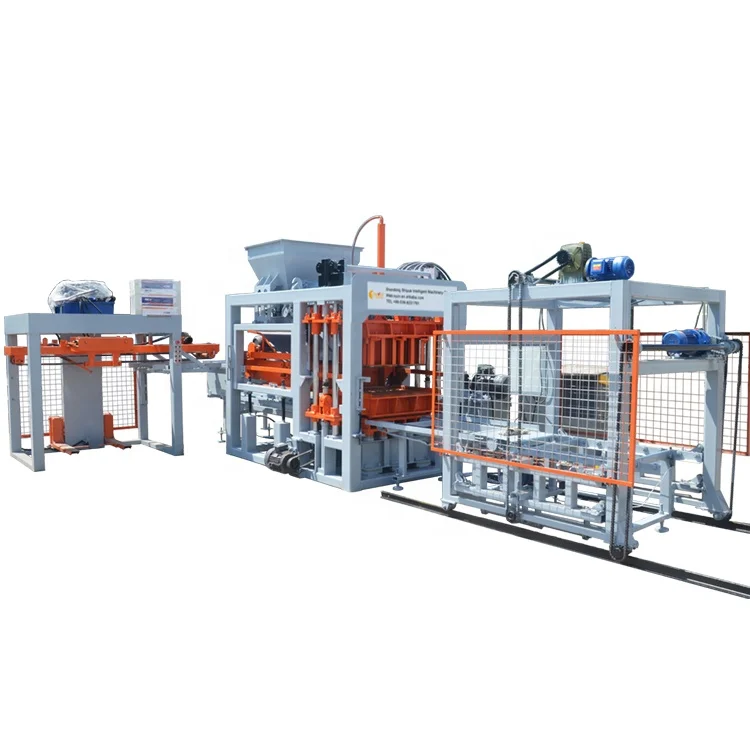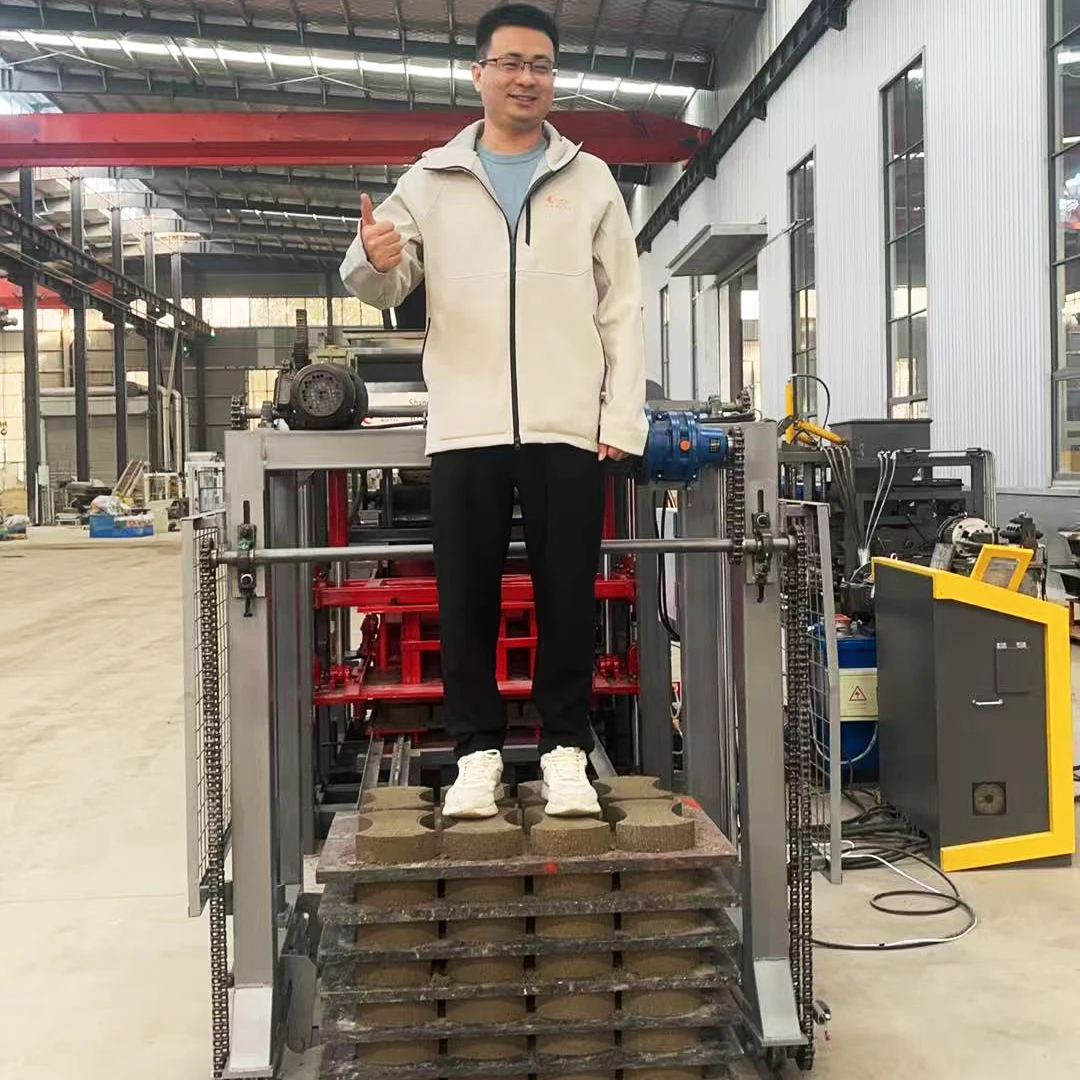
Description
Matched Cycle Calculation — QT4-15A concrete block making machine specifications are quoted per target block format and local aggregate, not as a single headline number that masks the assumption behind it.
Technical Specifications
| Parameter | Value |
|---|---|
| Model | QT4-15A |
| Product Type | Fully Automatic Concrete Block Making Machine |
| Overall Dimension | 4100 × 1600 × 2600 mm |
| Total Mass | 4 T |
| Rated Pressure | 16–21 MPa |
| Main Vibration Form | Platform Vibration |
| Vibration Frequency | 4200 r/min |
| Vibration Force | 55 kN |
| Pallet Size | 880 × 550 mm |
| Molding Cycle | 25–30 s (basis not stated in source — confirm block format, material, and thickness) |
| Overall Power | 18.45 kW |
| Demolding Method | Hydraulic |
| Factory Area | 300 m² |
| Loading | 1 × 40HQ container (basic equipment) |
| Warranty | 1 year |
| Mould Customization | Available to customer’s drawings |
Application Suitability
| Application | Material or Output |
|---|---|
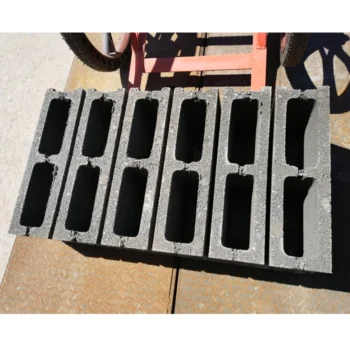
| Hollow block production | Crushed stone, sand, cement, fly ash |
| Solid block manufacturing | Gravel, sand, cement blends |
| Paving brick production | Crushed stone and cement with pigment layers |
| Interlocking block forming | Sand, cement, and fine aggregate mixes |
| Curbstone pressing | Coarse aggregate with high-cement content mixes |
| Colored paver production | Face mix with pigment and base concrete |
What the Concrete Block Making Machine Specifications Don’t Tell You About Daily Output
Cycle time only means something when the block format behind it is named.
A catalogue may quote a concrete block making machine at a certain number of cycles per hour, yet that figure often assumes a standard hollow block in ideal conditions. When the buyer’s actual product is a tall interlocking paver or a dense curbstone, the press needs longer vibration and higher hydraulic dwell. The result is a daily tally well below what the brochure suggested, and the whole line — mixer, pallet feeder, stacker — sits idle waiting for each stroke to finish. [NEED_CITE: common capacity overstatement causes in block plant commissioning reports]
Matching Vibration Force to Your Local Aggregate
The QT4-15A delivers 55 kN of platform vibration at 4200 r/min, which compacts standard crushed-stone mixes effectively. If your local sand runs fine or your fly ash content is high, the mix absorbs vibration differently and the pressure profile must be adjusted downward to avoid surface cracking. This is why the concrete block making machine specifications must be read alongside your own sieve analysis rather than taken as a universal guarantee.
Hydraulic Pressure Range and Block Density
A rated pressure window of 16–21 MPa lets the operator tune compaction force to the target block strength. Hollow blocks typically sit at the lower end to protect the core pins, while solid pavers and curbstones demand the upper range for maximum density. Hydraulic demolding then releases the green block without dragging, preserving edge definition across every format the mould produces. [NEED_CITE: hydraulic pressure and block compressive strength correlation studies]
Reading the Pallet and Power Figures Together
An 880 × 550 mm pallet defines the maximum mould footprint and, by extension, the number of blocks per stroke. Before ordering, confirm that this pallet size matches your curing rack spacing and the fork tine width already in your yard. The 18.45 kW total power draw covers the press, vibration motors, and hydraulic pump; verify that your transformer and cable run can sustain this load continuously through a two-shift day without voltage sag.
The Hidden Cost of Skipping Format-Level Capacity Checks
When a plant orders a machine on headline cycle time alone, the first sign of trouble appears at the curing racks — they fill slower than planned, revenue lags, and the payback timeline stretches. Operators then push the press harder, shortening vibration and raising pressure to chase volume, which introduces micro-cracks and raises reject rates on the pallet return line. [NEED_CITE: block plant throughput loss due to mismatched cycle assumptions]
Why Sourcing Through a Single-System Supplier Matters
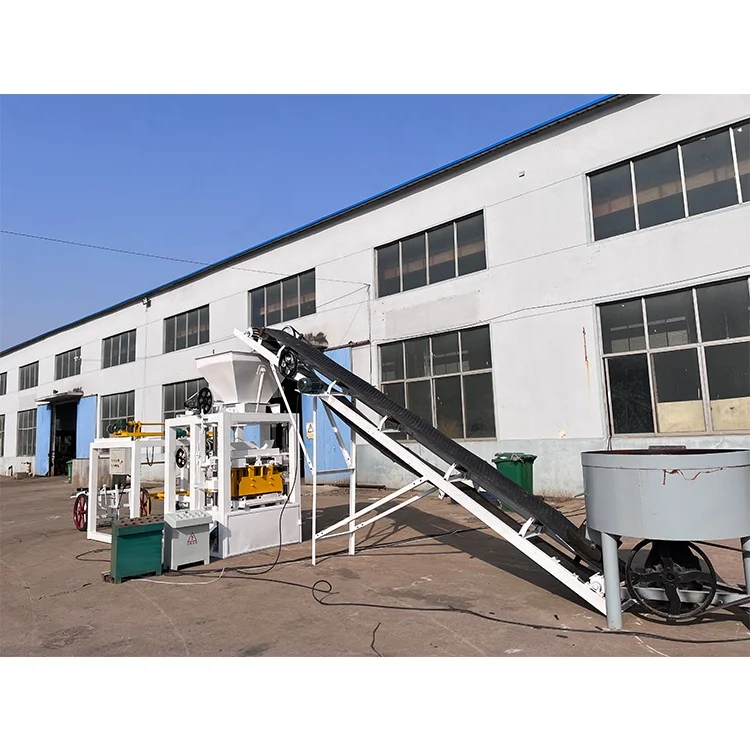
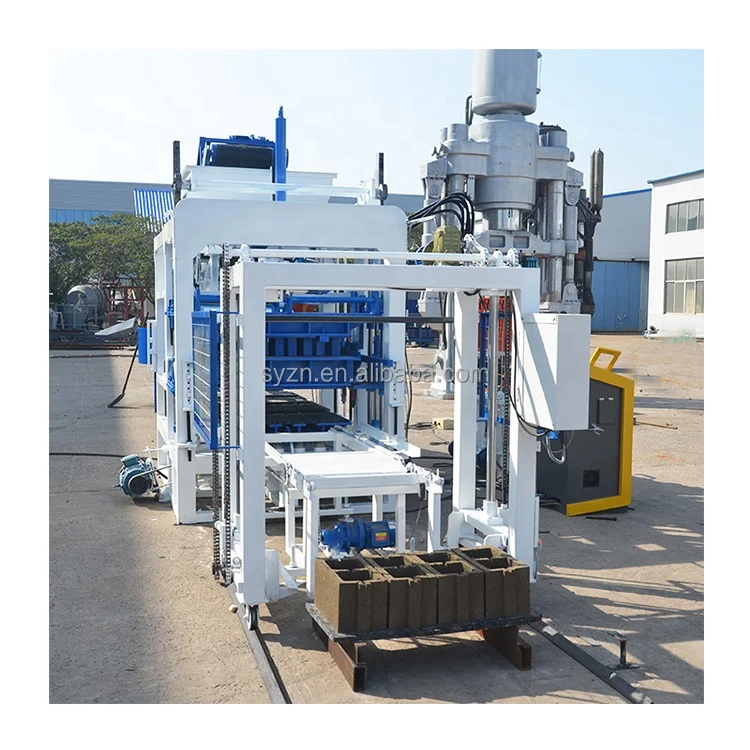
The QT4-15A is specified as a matched unit: press, mould, pallet, and handling are sized together so no station starves another. Mould designs are built to the buyer’s drawings, meaning the format list reflects the products the local market actually buys. Automation level can start semi-automatic and grow toward full stacking and cubing as volume justifies the capital. Voltage, frequency, and PLC display language are confirmed in writing before production begins, preventing commissioning delays at the destination port. Documentation covers the line layout with capacity stated per block format, hydraulic and electrical schematics, factory test records, and a wear-part list so the first replacement order is already prepared. [NEED_CITE: benefits of single-source block line procurement]
Documentation & Verification
- Line layout and capacity sheet stating cycle time per block format
- Hydraulic and electrical schematics matched to confirmed voltage
- Mould drawing pack covering every format on the order list
- Factory test record run on buyer’s specified pallet size
- Wear-part and mould list with part numbers for reordering
Installation, Commissioning & Support
- 300 m² factory area requirement verified against QT4-15A footprint and curing space
- 18.45 kW power draw confirmed with site electrician before cable sizing
- Hydraulic hoses and platform vibration mounts inspected after 40HQ container transit
- Mould change procedure walked through with operators using first format set
- PLC display language and control logic tested before production ramp-up
- Pallet return rollers aligned to 880 × 550 mm pallet tolerance on day one
What to Prepare Before Requesting a Quotation
Share your target block formats with dimensions, the daily volume you need per format, and a recent sieve analysis of your local aggregate. Confirm the voltage and frequency at your site, the PLC language your operators read, and the pallet size your curing racks and forklifts already accept.
Frequently Asked Questions
Q: How is the 25–30 s molding cycle determined, and which block format does it assume?
A: The quoted cycle covers press close, vibration, hydraulic dwell, and demold for a standard hollow block on typical crushed-stone mix. Taller pavers or dense curbstones extend vibration and dwell, so we recalculate the cycle against your specific format and publish the revised figure in the capacity sheet before you commit.
Q: How do I match vibration force and hydraulic pressure to my local aggregate?
A: We ask for your sieve analysis and a sample mix. Fine sand or high fly ash content absorbs vibration differently, so we adjust the 55 kN force and 16–21 MPa pressure window accordingly, then run a factory test on your exact recipe to confirm green strength before shipment.
Q: What pallet size and material should I choose based on my existing curing setup?
A: The standard 880 × 550 mm pallet must clear your curing rack rails and match your forklift tine spacing. We confirm rack dimensions and fork width during the proposal stage, then specify pallet material — bamboo, PVC, or steel — based on your curing temperature and expected handling cycles.
Q: How long does a mould change take, and what formats are available?
A: Mould change time depends on the bolt pattern and block height difference between formats. We supply a change procedure with each mould set and can design custom formats from your drawings, so the machine produces exactly the shapes your local market requires without extended downtime.
Q: How are voltage, frequency, and control language confirmed before production?
A: We collect your site voltage and frequency data along with the preferred PLC display language during the proposal stage, then lock these values in the order confirmation. Electrical schematics reflect the agreed configuration and are verified during the factory test before the machine enters the container.