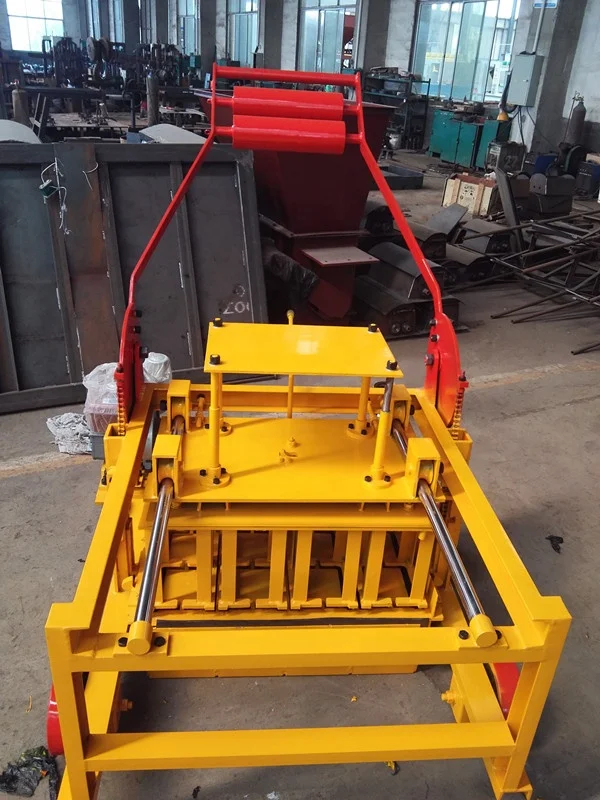
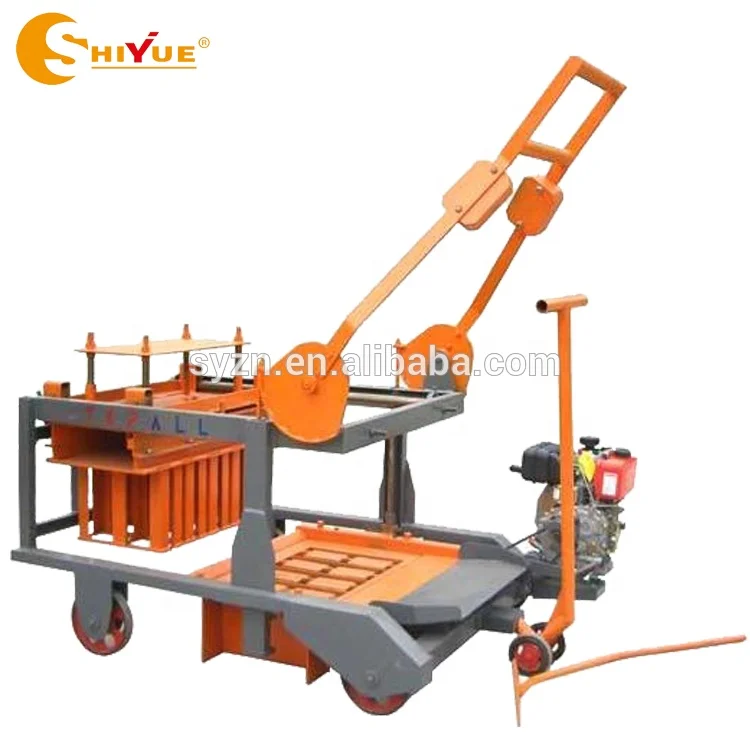
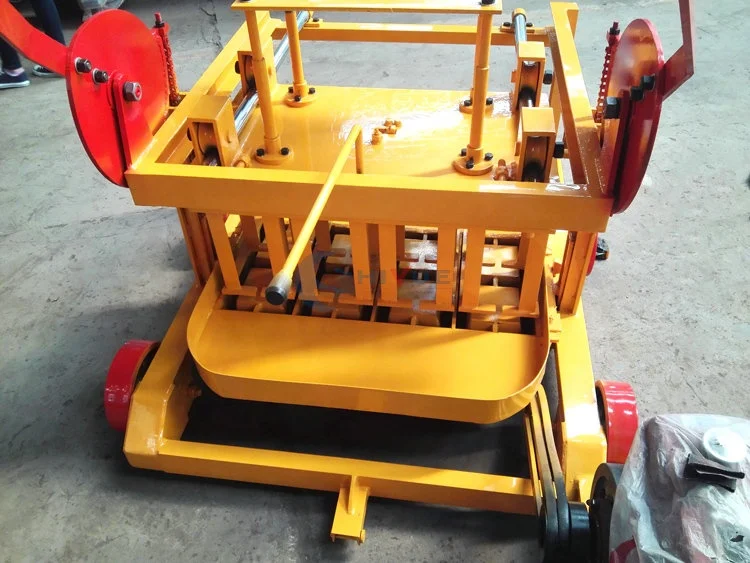
Description
Mould Matched to Market — every QMR4-45 leaves our Linyi workshop with a mould profiled against the buyer’s actual block format and local aggregate sample, not a catalogue default.
Technical Specifications
| Parameter | Value |
|---|---|
| Model | QMR4-45 |
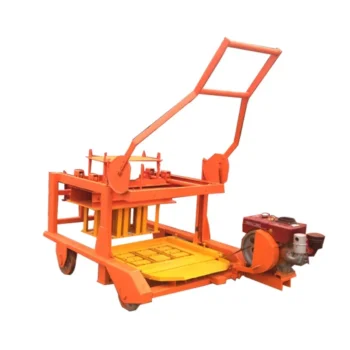
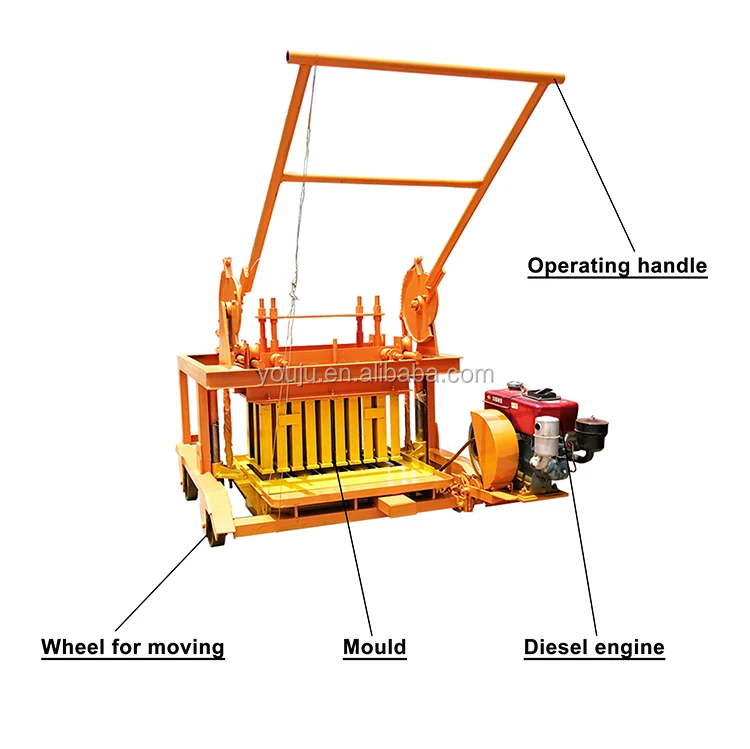
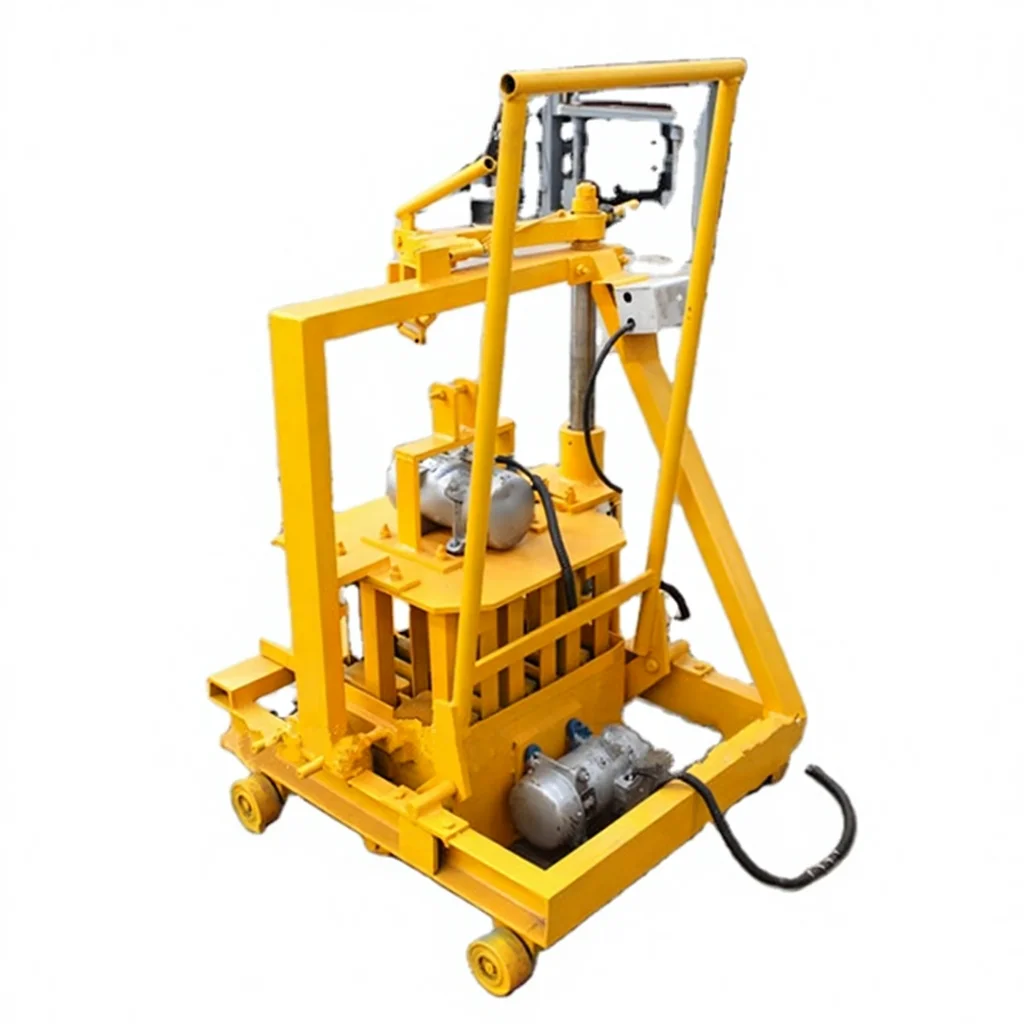
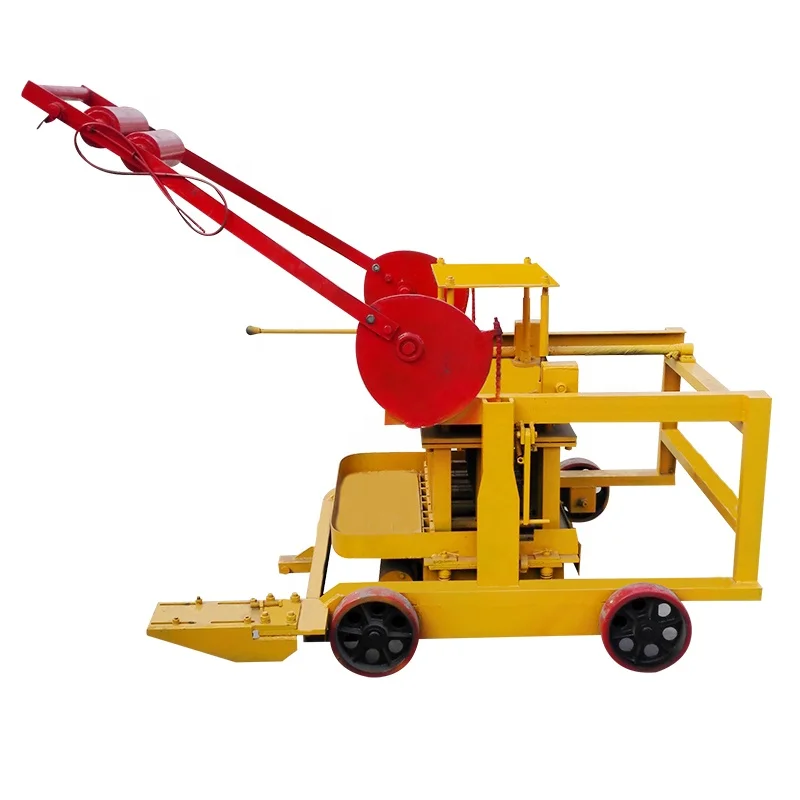
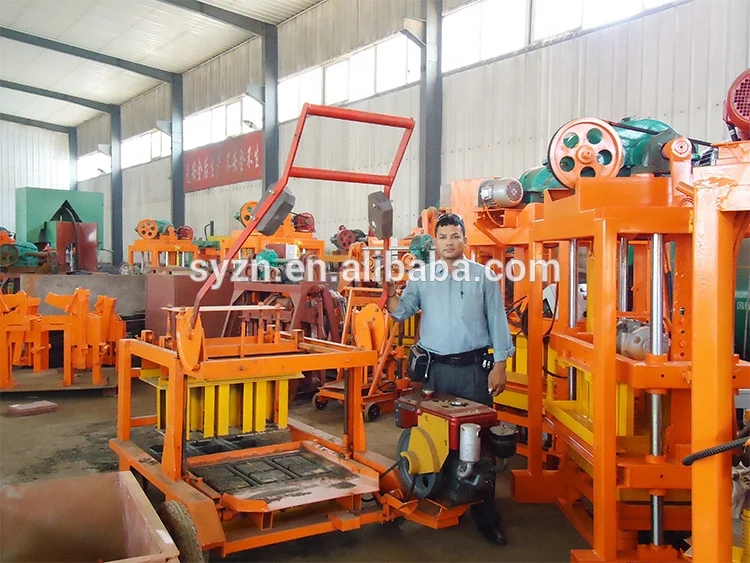
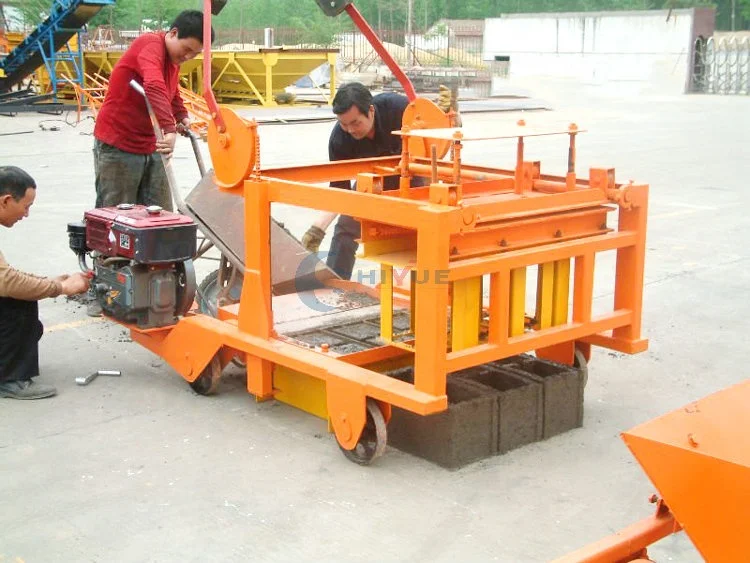
| Product Type | Mobile Egg-Laying Block Making Machine |
| Power Source | Diesel / Petrol Engine / Electric (selectable) |
| Molding Cycle | 30–45 s (varies by block format and mix) |
| Output Capacity | 2,560 pcs/day (basis not stated in source — confirm block format / material / thickness) |
| Overall Dimensions (L×W×H) | 1,100 × 950 × 2,100 mm |
| Net Weight | 810 kg |
| Pallet Requirement | None (egg-laying type) |
| Compatible Block Formats | Hollow block, solid brick, paver brick, fly ash brick, concrete block |
| Basic Equipment Included | JZC350 Diesel Concrete Mixer or JQ350 Diesel Electric Mixer; Trolley |
| Warranty | 1 Year |
| Assembly State | Mobile, movable on-site |
Application Suitability
| Application | Material or Output |
|---|---|
| On-site housing project block production | Hollow and solid concrete blocks from crushed stone, sand and cement |
| Remote job site without grid power | Diesel-driven hollow block and paver production |
| Startup block yard with limited infrastructure | Multi-format output — solid, hollow, paving and fly ash bricks |
| Temporary infrastructure camp | Egg-laying production directly on prepared ground, no pallets needed |
Why "2,560 Pieces per Day" Means Nothing Without the Block Format
Daily output is only meaningful when tied to a specific block dimension, wall thickness and mix recipe.
Suppliers often quote a single headline number for the QMR4-45 mobile block machine specifications, leaving buyers to discover on-site that hollow blocks and pavers run at very different cycle times. A 30-second cycle on a small solid brick does not translate to the same pace on a 200 mm hollow block, and the mixer feeding the machine must keep up or the press sits idle. We have seen contractors plan a housing project around an unqualified capacity figure and fall short by the second week [NEED_CITE: block output calculation methods by format].
Format-by-Format Cycle Reality
The QMR4-45 mobile block machine specifications list a 30–45 second molding window, but where your product lands inside that range depends entirely on block geometry. A thin solid brick releases quickly; a deep-cavity hollow block needs longer vibration to consolidate the mix around the core pins. When we configure a QMR4-45 for a buyer, we map each target format to its realistic cycle so the daily plan holds up beyond the first test run.
Ground Preparation and Egg-Laying Consistency
Egg-laying machines deposit wet blocks directly on the ground, which means surface flatness and compaction become part of the production process. Uneven ground tilts fresh blocks before they gain green strength, causing chipped corners and dimensional drift. We specify a prepared bed thickness and moisture condition matched to the buyer’s soil type — clay-rich ground in tropical sites behaves very differently from compacted gravel in arid regions [NEED_CITE: ground preparation standards for mobile block production].
Reading the Specs That Actually Matter
Power source selection is the first decision that shapes everything downstream. A diesel-driven QMR4-45 gives full independence on remote sites, but fuel cost and engine maintenance add running expenses that an electric unit avoids when grid power is available. The included JZC350 mixer must batch consistently with the press cycle — if the mixer is undersized for the target block volume, the operator waits between cycles and the quoted output drops. Net weight at 810 kg keeps the machine within the towing capacity of a small tractor or pickup, which matters when the machine must relocate across a large project site multiple times.
The Cost of Skipping the Format Conversation
Ordering a mobile block machine on headline capacity alone leads to predictable disappointments. The mould arrives sized for a block the local market does not buy, forcing a re-order and weeks of downtime. A diesel engine is specified when the site already has stable three-phase power, wasting fuel and adding noise complaints in residential areas. We document these mismatches regularly when buyers come to us after a first machine failed to meet expectations [NEED_CITE: common mobile block machine specification mismatches].
What Configuration Discipline Looks Like Here
Block machinery is our single focus, so the QMR4-45, its mould, mixer and trolley leave the workshop as one matched set. We set the vibration frequency and duration against the buyer’s own aggregate sample — the red clay that stalled a West African project last year taught us that lab sand data does not transfer to laterite. Mould design covers the formats the buyer’s market actually sells, with custom drawings accepted. Automation level is selectable; a buyer can start with manual trolley handling and add pallet-free stacking aids later. Installation support includes operator training on the buyer’s specific block format.
Documentation & Verification
- Capacity calculation sheet stating the assumed block format and wall thickness
- Mould drawing with dimensions matching the buyer’s market requirement
- Power source confirmation sheet locking in diesel, petrol or electric before production
- Factory test video running the buyer’s specified block format before dispatch
- Voltage, frequency and control language written confirmation for electric variants
Installation, Commissioning & Support
- Prepared ground bed specification matched to the 1,100 × 950 mm machine footprint
- Power circuit sizing confirmed for the selected mixer — diesel or electric — before arrival
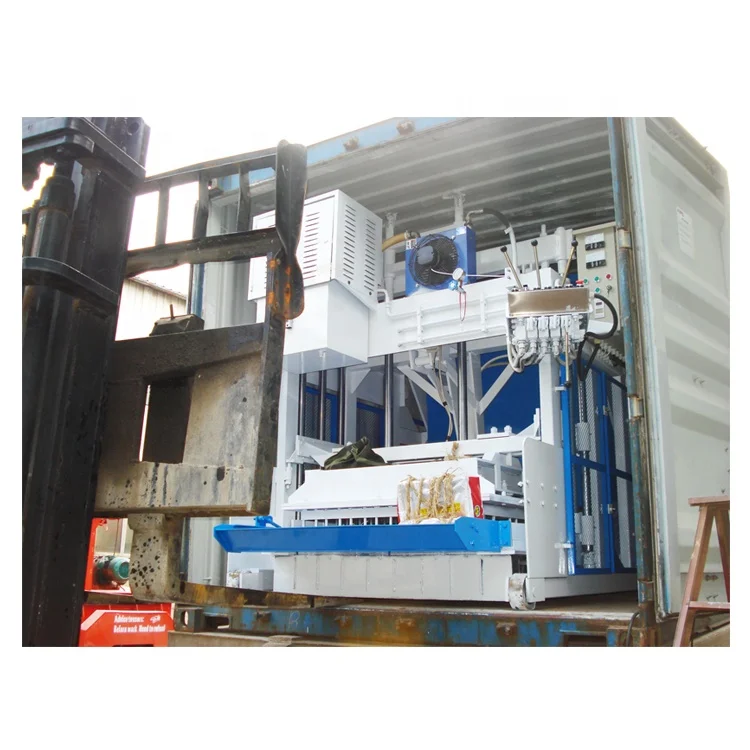
- Assembly guidance for the trolley and mixer frame, shipped partially dismantled for container loading
- First-run parameter setting on the buyer’s local aggregate and target block format
- Operator training covering mould change, mix consistency and daily maintenance of the 810 kg unit
- Wear parts list identifying high-contact surfaces with recommended replacement intervals
What We Need From You to Quote Accurately
Send us the block formats your market sells — dimensions, wall thickness and any local standard references — along with a sample of your aggregate. Tell us whether grid electricity is available at the site or if diesel is the only option, and confirm the local voltage and frequency if you choose electric. With those details we can return a configuration proposal that states output per format, not a single number that hides the real picture.
Frequently Asked Questions
Q: How is the 2,560 pcs/day figure calculated and which block format does it assume?
A: That figure appears in source data without a stated block format or wall thickness, so we treat it as a reference point only. Realistic daily output must be recalculated for your specific block — a 100 mm solid brick cycles faster than a 200 mm hollow block. We provide a per-format capacity sheet with every proposal so you can plan against verified numbers.
Q: What mould formats are available and can you design to my drawings?
A: Standard moulds cover hollow, solid, paver and fly ash bricks in common dimensions. We also accept custom mould drawings from buyers whose local market requires non-standard sizes or interlocking profiles. Each mould is test-fitted to the QMR4-45 press before shipment to confirm dimensional accuracy and release timing.
Q: Should I choose diesel or electric power for my site?
A: Diesel suits remote job sites with no reliable grid, giving you full production independence. Electric reduces running cost and noise where three-phase power is stable. We confirm your site voltage, frequency and plug standard before production begins so the machine commissions without delay on arrival.
Q: How does my local aggregate affect cycle time and block strength?
A: Aggregate shape, gradation and clay content change how the mix consolidates under vibration. Sticky laterite, for example, demands different vibration frequency settings than clean river sand. We require a raw material sample before finalising machine parameters so the block reaches target strength without on-site trial-and-error.
Q: How do I verify the machine is correctly configured before it ships?
A: We run a factory test using your specified block format and share the video record along with a test report. The documentation package includes the mould drawing, capacity calculation per format and power source confirmation so you can cross-check every parameter against your order before the container is sealed.