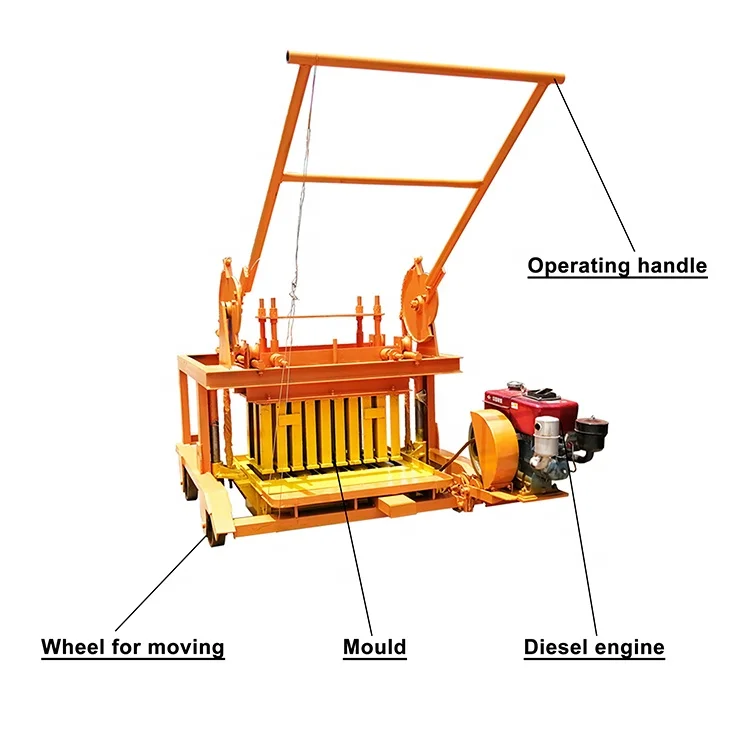
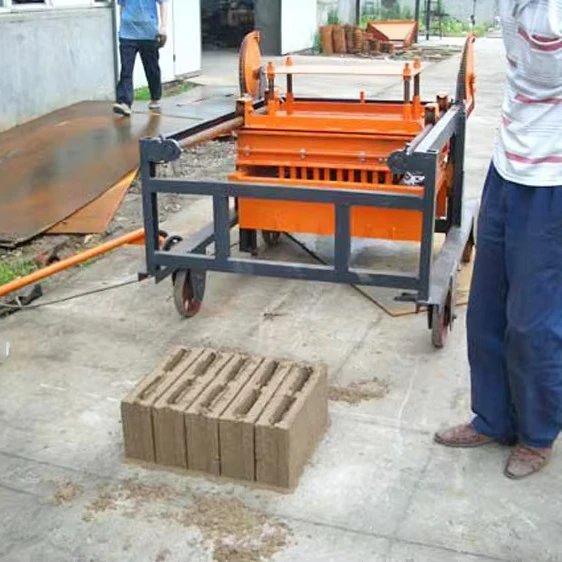
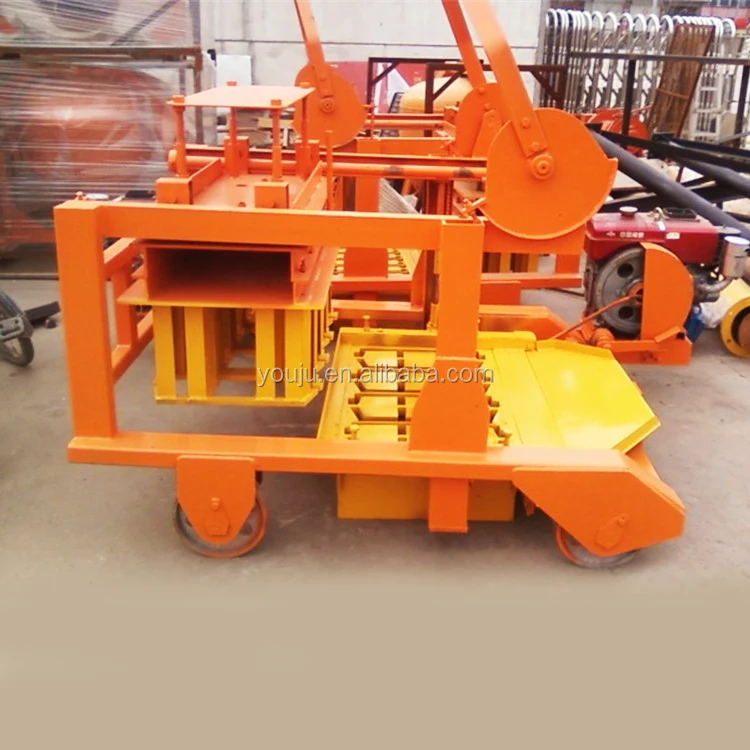

Description
Matched Mould Configuration — every output figure for the QMR4-45 mobile block machine is stated per hollow-block dimension and cavity count, so daily capacity reflects your actual product, not a catalogue average.
Technical Specifications
| Parameter | Value |
|---|---|
| Model | QMR4-45 |
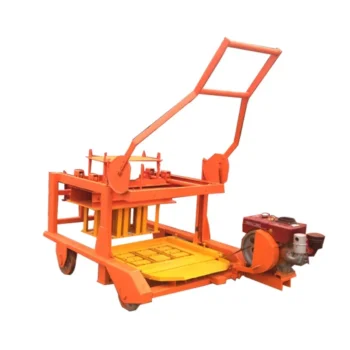
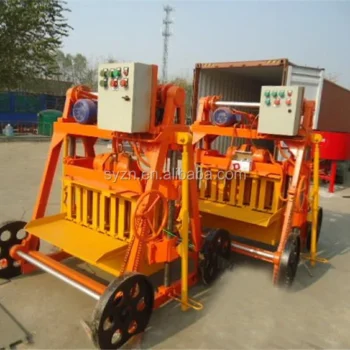
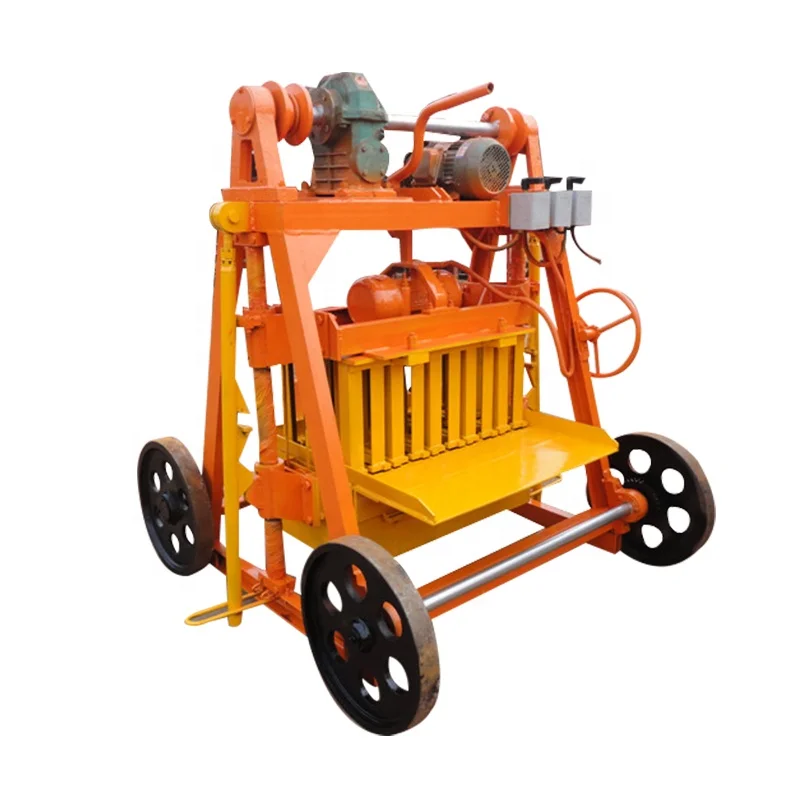
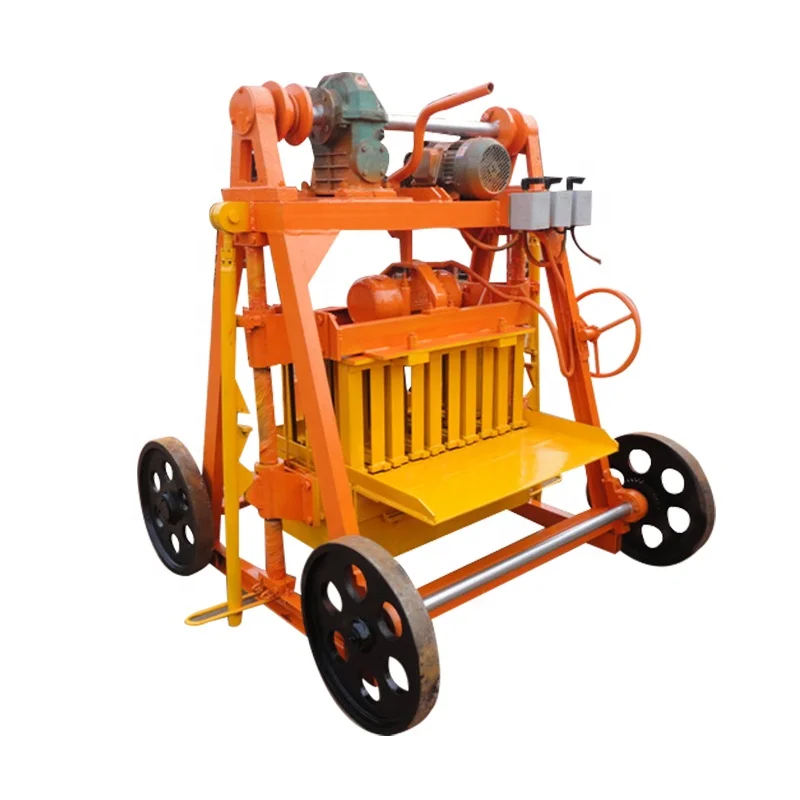
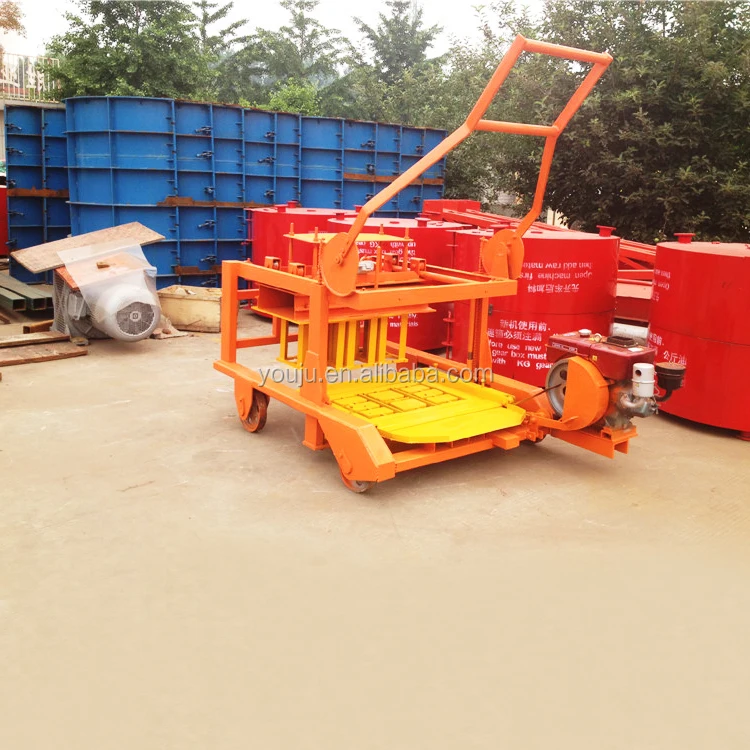
| Product Type | Diesel Egg-Laying Block Making Machine |
| Overall Dimensions (L×W×H) | 2420×1320×1650 mm |
| Net Weight | 810 kg |
| Rated Power | 6 kW |
| Diesel Engine | 6 kW or 6-8 HP |
| Voltage & Frequency | 220 V or 380 V or according to client local voltage (frequency basis not stated in source — confirm block format / material / thickness) |
| Moulding Cycle | 40-45 s |
| Pallet Size | No need pallet |
| Output Capacity | 3000 pcs/day (based on 400×200×200 mm hollow block, 8-hour shift) |
| Output Capacity | 3500 pcs/day (based on 400×150×200 mm hollow block, 8-hour shift) |
| Output Capacity | 4500 pcs/day (based on 400×120×200 mm hollow block, 8-hour shift) |
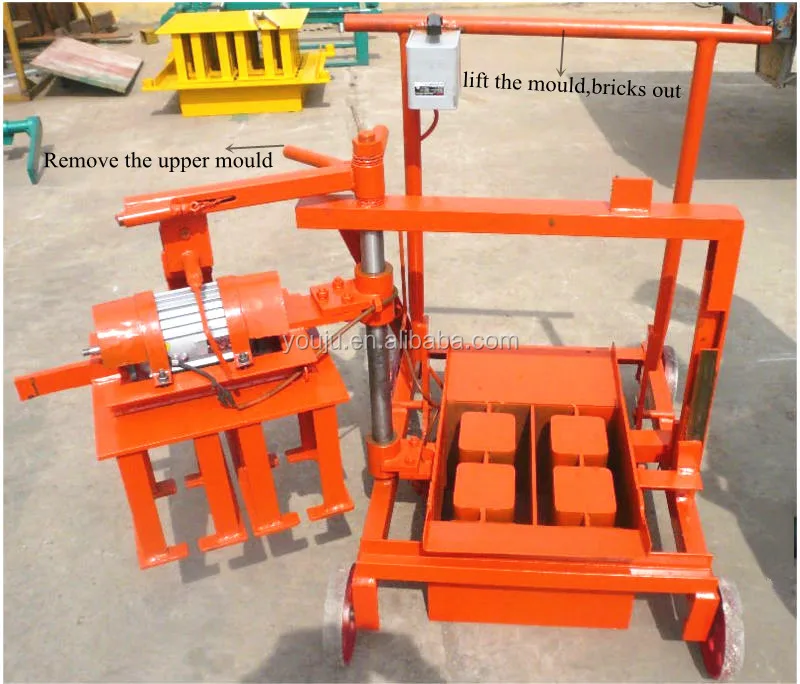
| Mould Format | 400×200×200 mm (4 pcs/mould), 400×150×200 mm (5 pcs/mould), 400×120×200 mm (6 pcs/mould) |
| Automation Level | Manual / egg-laying (mobile, no fixed plant required) |
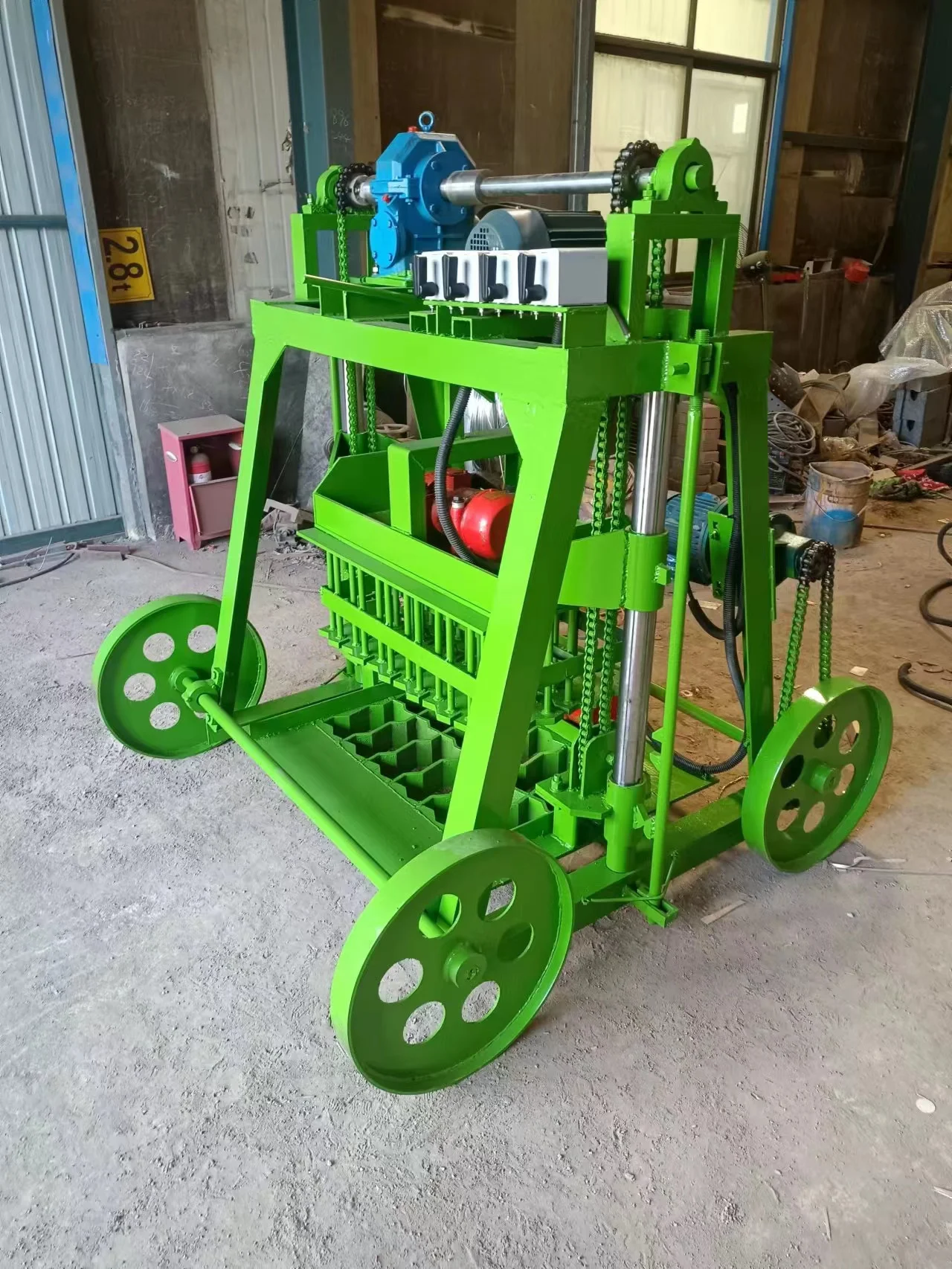
| Power Source Option | Diesel engine or electric motor |
| Assembly State | Fully assembled, mobile unit |
| Warranty | 1 Year |
| Key Features | Pallet-free laying, mobile design, dual power source option, CE declaration where applicable |
Application Suitability
| Application | Material or Output |
|---|---|
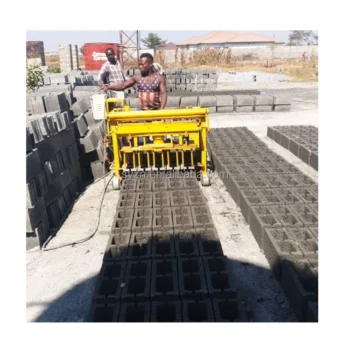
| On-site concrete block production | Hollow blocks laid directly on ground without a fixed plant or concrete floor |
| Off-grid or unreliable power sites | Diesel-powered hollow block production using local sand, crushed stone and cement |
| Small-scale contractor manufacturing | Format-switching across 400×200, 400×150 and 400×120 mm hollow blocks on one machine |
| Remote housing project supply | Mobile egg-laying operation producing blocks at the construction location |
What "3000 Blocks per Day" Leaves Out About Mobile Block Machine Output
Every capacity number for the QMR4-45 mobile block machine is tied to a specific hollow-block dimension, mould cavity count and shift length.
When a supplier quotes a single daily output for a mobile egg-laying machine without stating which block format that figure assumes, buyers plan their project timelines around numbers the machine cannot deliver on their actual product. I have watched contractors in West Africa lose an entire week because the machine they received was rated on a thin-wall block while their market demanded the 200 mm wall thickness format. The QMR4-45 capacity figures here are broken down per format: 3000 pieces per day at 400×200×200 mm, 3500 at 400×150×200 mm, and 4500 at 400×120×200 mm, all based on an 8-hour shift [NEED_CITE: standard shift-based output calculation methods for mobile block machines].
Mould Cavity Count Drives Real Cycle Economics
The QMR4-45 machines three hollow-block formats from a single press, but the cycle time of 40-45 seconds applies across all formats. What changes is how many blocks drop per cycle: four pieces for the 200 mm wall, five for the 150 mm wall, and six for the 120 mm wall. This means the QMR4-45 mobile block machine specifications on daily throughput depend entirely on which mould is fitted. A buyer who needs the heavier 200 mm block for load-bearing walls will run a longer day for the same count than one producing partition blocks.
Format Flexibility Without Dismantling the Line
Switching between hollow-block wall thicknesses on the QMR4-45 involves changing the mould box on the egg-laying frame. Because the machine lays blocks directly on the ground without pallets, there is no pallet inventory to reconfigure when the format changes. Contractors who need to produce both 200 mm structural blocks and 120 mm partition blocks on the same site can do so within a single shift, provided the spare mould is on hand [NEED_CITE: mould change procedures for egg-laying block machines]. The critical point is ordering the right set of moulds at the time of purchase, since lead times for additional mould tooling can extend project schedules if not planned upfront.
Vibration, Mix Design and Block Strength on Site
The QMR4-45 uses vibration compaction to form hollow blocks, and the resulting block strength depends on how well the vibration force matches the buyer’s local aggregate and cement ratio. River sand with high clay content absorbs water differently from washed crushed sand, changing the optimum moisture level at the press. I once had to halt a production line in East Africa because the standard factory test used clean graded sand while the client’s local river sand carried significant silt — the blocks looked fine at the press but crumbled after sun exposure. Matching vibration settings to the actual raw material is why sending an aggregate sample before final configuration matters for any QMR4-45 mobile block machine deployment.
The Cost of Ignoring Local Aggregate Before Ordering
Buying a mobile block machine configured for a standard sand mix that the buyer cannot source locally leads to either weak blocks or a costly material substitution after arrival. When the vibration frequency and compaction pressure are set for one aggregate profile and the site uses another, block density varies from batch to batch. Contractors then face rejected deliveries or structural test failures [NEED_CITE: concrete block compressive strength testing standards by region]. Specifying the machine against a sample of the actual sand and stone available at the project site prevents this mismatch.
Why Buyers Source This Machine Through a Matched-System Approach
The QMR4-45 is supplied as a complete mobile unit — machine, mould and power source specified together rather than assembled from separate vendors. Capacity calculations are provided per block format so buyers can plan project volumes accurately. Mould options cover the three hollow-block wall thicknesses common in construction markets, and custom mould drawings can be produced for non-standard formats. Voltage and control language are confirmed against the buyer’s country before dispatch, avoiding commissioning delays. Factory test records are run using the buyer’s specified block format, not a default setting.
Documentation & Verification
- Capacity calculation sheet stating output per hollow-block format and mould cavity count
- Mould drawing and format list confirming block dimensions before production
- Voltage and frequency confirmation matched to destination country grid
- Factory test record run on the specified hollow-block format
- Wear parts and mould list identifying first-replacement components
- Operation and maintenance manual with egg-laying procedures
Installation, Commissioning & Support
- Flat ground area required; the 2420×1320 mm footprint needs level compacted earth for egg-laying
- Diesel engine variant requires no electrical connection; electric variant needs confirmed voltage and dedicated circuit
- Machine ships fully assembled; operator unloads and positions on site
- First-run calibration of vibration timing against the buyer’s local aggregate mix
- Mould change training covering the three hollow-block formats supplied
- Wear parts list with reorder references for vibration components and mould liners
What to Prepare Before Requesting a Quotation
To configure the QMR4-45 for your project, share the target hollow-block format and wall thickness, the daily volume your site requires, and the type of sand and aggregate available locally. Confirm your site voltage and frequency if selecting the electric motor option, or specify diesel-only operation. A sample of your raw material allows the vibration settings to be matched before the machine leaves the factory.
Frequently Asked Questions
Q: How is daily output calculated and which block format does each figure assume?
A: Output for the QMR4-45 is stated per format: 3000 pieces per day for 400×200×200 mm hollow blocks, 3500 for 400×150×200 mm, and 4500 for 400×120×200 mm. Each figure assumes an 8-hour shift and a 40-45 second moulding cycle. The mould cavity count changes with each format, which is why a single output number without a format reference is unreliable.
Q: What block formats and mould options are available for my local market?
A: Standard moulds produce 400×200×200 mm, 400×150×200 mm and 400×120×200 mm hollow blocks. Custom mould designs can be manufactured to buyer drawings for formats outside this range. Providing the block dimensions your market actually sells allows the right mould set to be included with the machine at dispatch.
Q: Can the machine run on diesel only, and how does that affect cycle time?
A: The QMR4-45 is available with a 6-8 HP diesel engine or an electric motor. Diesel operation maintains the same 40-45 second moulding cycle as electric power. The choice depends on site electricity reliability; diesel removes dependence on grid supply entirely, which suits remote project sites.
Q: What is the realistic mould change time between formats?
A: Mould change on the QMR4-45 egg-laying machine involves removing the current mould box and fitting the replacement on the press frame. Because there are no pallets to reconfigure, the change is limited to the mould swap and adjustment. Having the spare mould on site and a trained operator keeps the downtime within a practical portion of the shift.
Q: How do I match vibration force to my local aggregate and mix design?
A: Vibration settings must align with the aggregate particle size, shape and clay content available at your site. Sending a raw material sample before machine configuration allows vibration frequency and compaction timing to be set against your actual mix. This prevents the common problem where blocks pass factory tests but fail on site due to material differences.