
Description
Matched System Sizing — The QMJ4-45 egg laying block machine is configured against your local aggregate and target block format, with capacity calculations stated per size rather than a single headline figure.
Technical Specifications
| Parameter | Value |
|---|---|
| Model | QMJ4-45 |
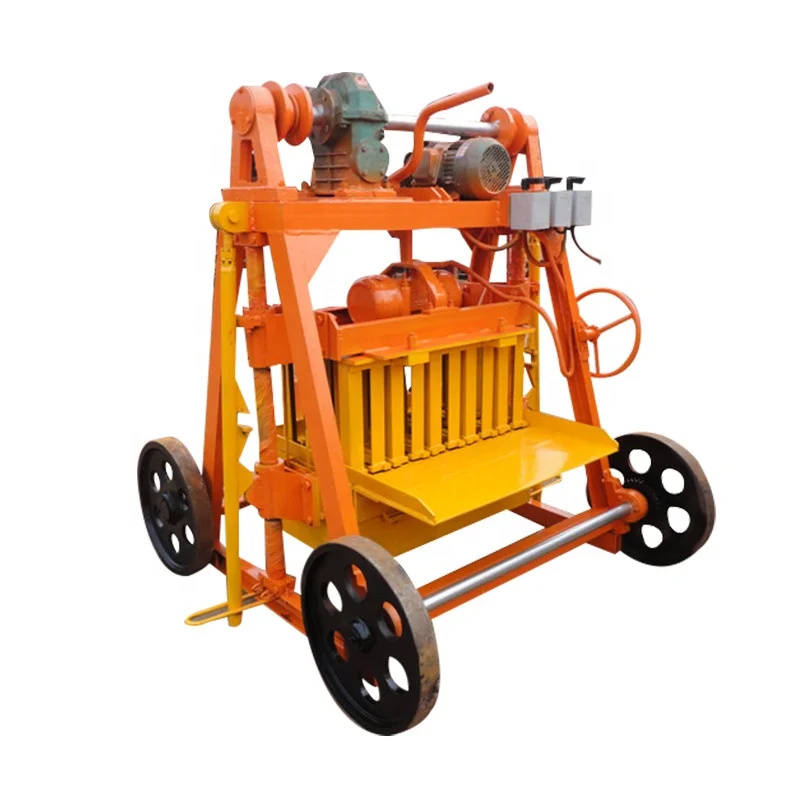
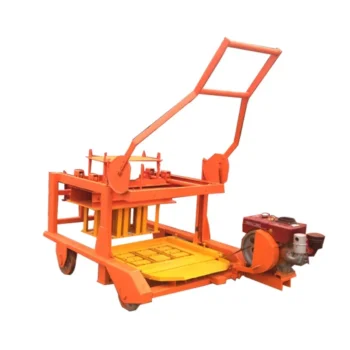
| Product Type | Egg Laying Mobile Block Machine |
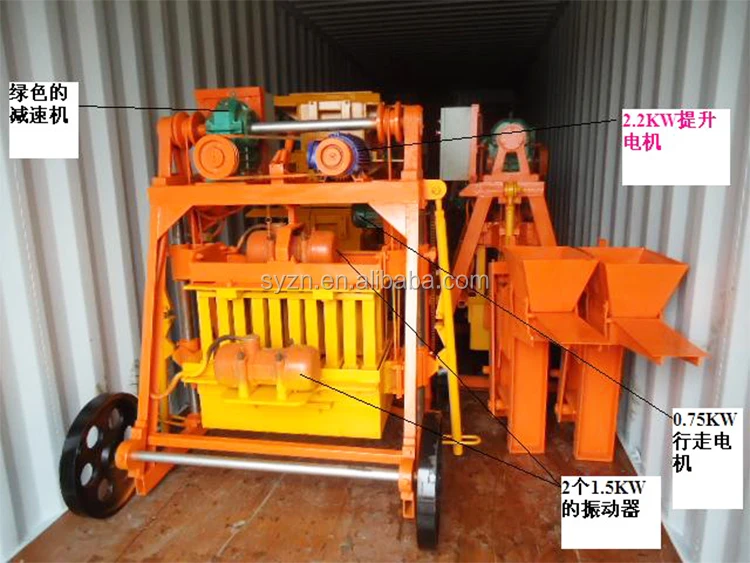
| Rated Power | 7.4 kW |
| Molding Cycle | 45 s |
| Output Capacity | 2400 pcs/8h (based on 400×200×200mm hollow block); 3200 pcs/8h (based on 400×150×200mm hollow block) |
| Pallet Requirement | No pallets required (egg-laying type) |
| Raw Materials | Concrete, sand, cement, fly ash, lime, gypsum |
| Machine Weight | 1 T |
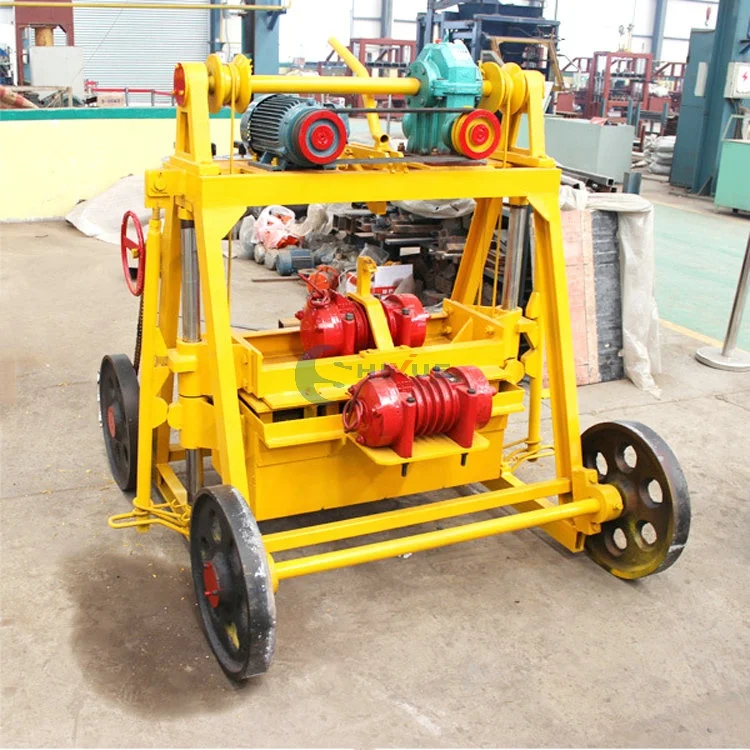
| Overall Dimensions | 1550×1335×1580 mm |
| Voltage | Configurable to buyer’s local voltage (confirm before production) |
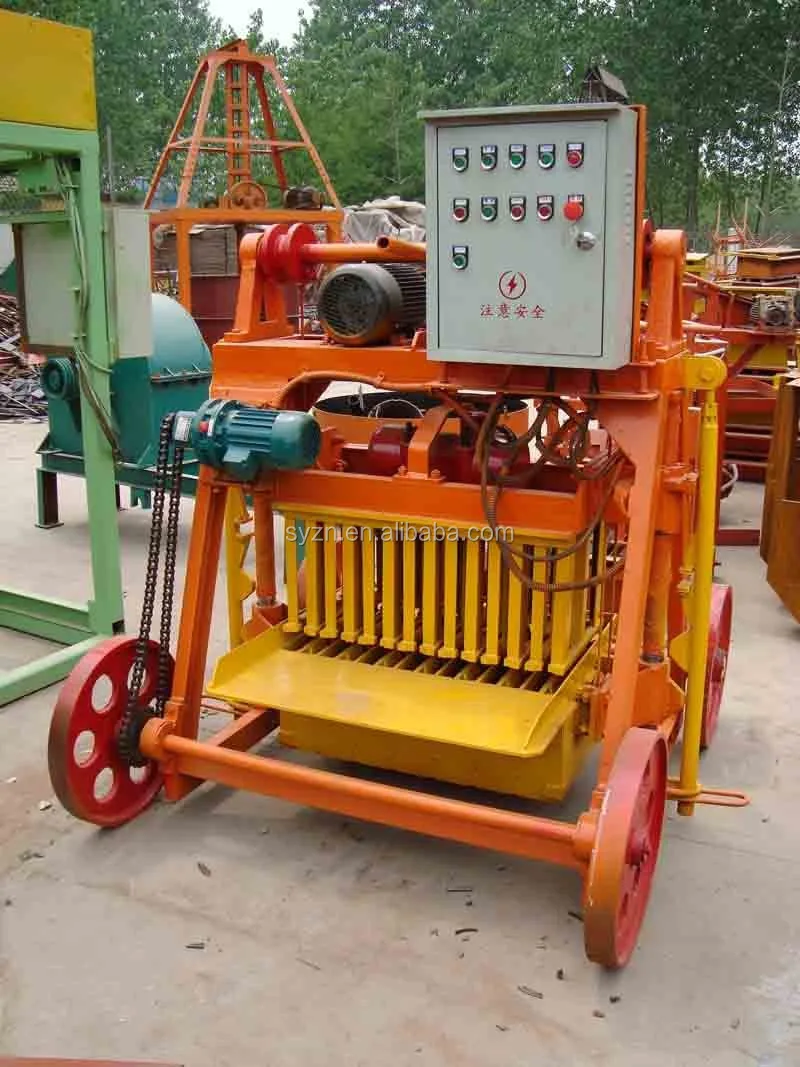
| Control System | Manual force control + jog control |
| Mould Formats | 400×200×200mm (4 pcs/mould); 400×150×200mm (5 pcs/mould); other formats via mould change (basis not stated in source) |
| Automation Level | Semi-automatic / manual operation |
| Orientation Mechanism | Four-pole guided with ultralong orientation bearing |
| Electrical Components | Imported electrical appliances, sealing parts and hydraulic components (specific brands not stated in source) |
Application Suitability
| Application | Material or Output |
|---|---|
| On-site hollow block production for building contractors | Concrete and sand mix laid directly on cured ground |
| Small-scale solid block manufacturing for entrepreneurs | Cement and local aggregate with manual batching |
| Road block and kerbstone production at dispersed project locations | Fly ash, lime and gypsum blends |
| First block plant setup with minimal footprint | Pallet-free operation eliminating curing-area storage needs |
Why "2400 Blocks per Day" Means Nothing Without the Format
Every output figure must name the block size it assumes, or it is a guess.
I once watched a buyer in West Africa discover that the QMJ4-45 egg laying block machine they purchased could not hit the quoted daily volume because the supplier’s capacity number assumed a smaller block format than what the local market actually bought. The machine ran fine, but the real daily count fell noticeably short of the headline promise. Capacity stated without a block format attached is not a specification — it is marketing. [NEED_CITE: block machine capacity calculation standards by format]
When you evaluate a QMJ4-45 egg laying block machine, the first question should not be "how many blocks per day" but "how many of which block per day." The difference between a 400×200×200mm hollow block and a 400×150×200mm hollow block is significant across an eight-hour shift, and neither number transfers to a solid block or kerbstone format.
Format-by-Format Output Transparency
The QMJ4-45 egg laying block machine delivers 2400 pieces over eight hours when pressing 400×200×200mm hollow blocks, and 3200 pieces over the same shift when pressing 400×150×200mm hollow blocks. These figures come from a 45-second molding cycle with four cavities or five cavities depending on the mould fitted. The honest approach is to state the output for each block format your market demands, then let you compare against your actual order book.
Pallet-Free Operation and What It Eliminates
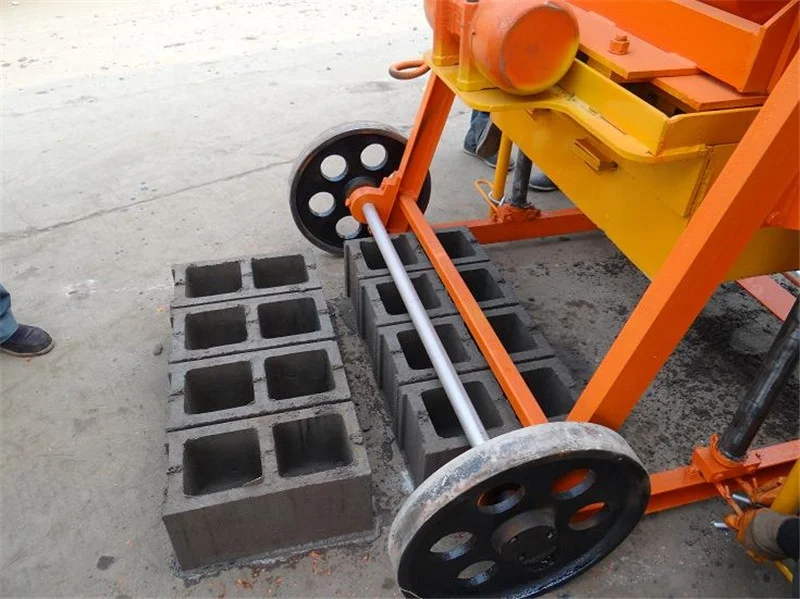
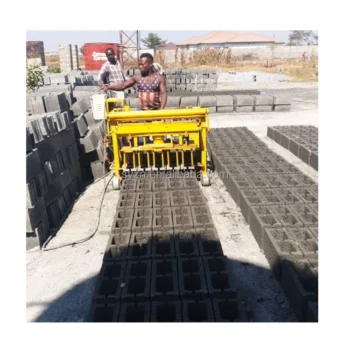
Egg-laying design means the QMJ4-45 lays each block directly onto the ground surface, then moves forward to the next position. This removes pallet purchasing costs, pallet storage in the curing area, and forklift dependency for pallet circulation. For a contractor producing on a building site or an entrepreneur starting a first block plant, the reduction in ancillary equipment and ground space is a practical advantage that goes beyond the press itself. [NEED_CITE: pallet-free versus pallet block production site requirements]
Four-Pole Guidance and Dimensional Consistency
The QMJ4-45 egg laying block machine uses a four-pole guided press head with an ultralong orientation bearing. In a mobile block machine, this matters because each pressing cycle occurs on a surface that may not be factory-flat. The guided mechanism keeps the mould aligned through the full stroke, reducing dimensional variation between the first block of the shift and the last. When blocks are laid directly on the ground and cannot be repositioned, dimensional accuracy at the point of release is the only accuracy that counts.
Reading the Specification Sheet Correctly
Rated power at 7.4 kW indicates the total electrical load for both vibration and pressing motors combined. On a mobile block machine of this class, that figure must match your site generator or grid connection capacity — undersized supply causes voltage drop under load, which shortens motor life and produces inconsistent vibration force. The 45-second molding cycle governs your realistic shift output, and any claim that ignores cycle time in favor of "cycles per hour" is obscuring the math. Mould change capability across hollow, solid, road block and kerbstone formats gives you product flexibility, but the time and tools required for each change should be confirmed before you commit to a multi-format production plan.
What Happens When Configuration Is Skipped
A QMJ4-45 egg laying block machine configured for a concrete mix that your local quarry cannot supply forces a material change that drives up cost per block. Voltage and frequency left unconfirmed until after arrival delays commissioning while transformers are sourced locally. Ground surface flatness assumed but not verified means blocks crack or lean during curing because the egg-laying surface was never prepared. [NEED_CITE: common mobile block machine commissioning delays from unconfirmed specifications] These are not theoretical failures — they follow a pattern where the specification conversation stopped at the price.
Why Procurement Starts with Format and Ends with Documentation
Shiyue Intelligent Machinery focuses exclusively on block making machinery, which means the QMJ4-45 egg laying block machine, its moulds, and any supporting equipment are specified as one matched system. Configuration is set against your actual mix design, local aggregate gradation and target block format rather than pulled from a catalogue default. Mould design covers the formats your market sells, including custom drawings when standard sizes do not match. Automation level is selectable, so you can begin with manual operation and plan an upgrade path. Installation support includes operator training, and wear parts are specified against your planned output volume rather than shipped as a generic kit.
Documentation & Verification
- Capacity calculation document stating output per block format for the QMJ4-45
- Mould drawing and format list confirming compatible block sizes and change procedure
- Voltage, frequency and control language confirmation signed before production
- Factory test record with actual cycle time measured per block format
- Operation manual covering manual force control and jog control sequences
- Wear parts list matched to your planned output volume
Installation, Commissioning & Support
- Flat concrete ground surface required for egg-laying operation across the 1550×1335 mm machine footprint
- Power supply confirmed at buyer’s local voltage with dedicated circuit for 7.4 kW total load
- Machine shipped assembled with orientation bearing and mould pre-installed for immediate site use
- Commissioning includes cycle time verification per block format and vibration force adjustment
- Operator training covers manual force control, jog control and mould change procedure
- Wear kit specified against your daily output plan and local aggregate abrasiveness
What to Include in Your Inquiry
When you request a quotation, specify the block formats your market buys and the daily volume required for each. Confirm your local voltage and frequency, the control panel language your operators read, and the aggregate available from your nearest quarry. If your production site has ground flatness constraints or limited curing area, state those conditions so the QMJ4-45 egg laying block machine configuration accounts for them from the start.
Frequently Asked Questions
Q: How is the QMJ4-45 capacity calculated per block format, and what happens when I switch to a different size?
A: Output is calculated by dividing the eight-hour shift by the 45-second molding cycle, then multiplying by the cavity count of the fitted mould. When you switch from a 400×200×200mm hollow block to a smaller format, the cavity count may increase, changing the daily total. Always confirm the output figure for each format you intend to produce.
Q: What mix design and local aggregate gradation does the QMJ4-45 require for consistent block strength?
A: The machine processes concrete, sand, cement, fly ash, lime and gypsum, but consistent block strength depends on matching the mix ratio and aggregate particle size to your local materials. Provide a sample of your available aggregate so the mould and vibration parameters can be adjusted to your specific supply rather than a generic default.
Q: How long does a mould change take on the QMJ4-45, and what tools are needed?
A: Mould change time depends on the format transition and operator experience. Confirm the procedure and required tools before ordering, especially if you plan frequent switches between hollow block, solid block and kerbstone formats during a single shift.
Q: What site conditions are needed for pallet-free egg-laying operation?
A: The production surface must be flat and cured concrete to prevent block deformation during laying. Adequate curing area around the machine path is required since blocks remain in place until fully set. Power supply must match the confirmed voltage and support the 7.4 kW load without voltage drop.
Q: Which voltage and frequency configurations are available, and how is the correct one confirmed?
A: The QMJ4-45 is configured to the buyer’s local voltage and frequency before production. A confirmation document specifying voltage, frequency and control panel language is signed before manufacturing begins, ensuring the machine arrives ready for connection without requiring local transformers or rewiring.


![QMY10-15 Mobile Block Machine – Technical Guide QMY10-15 Mobile Block Machine – Technical Guide QMY10-15 Mobile Block Machine Specifications QMY10-15 Mobile Block Machine Technical Guide ===== 关键决策说明 ===== - 记录ID 81396 数字和=28,28 mod 6 = 4,句式:[品类词] with [核心配置] – [站点修饰词] - 目标站 shiyuebrickmachine.com → 技术选型类 → 池:Specifications / Technical Guide / Model Selection - 第三层:28 mod 3 = 1 → Technical Guide 按句式4填入:Mobile Block Machine with Hydraulic Pressure – Technical Guide(62字符)](https://shiyuebrickmachine.com/wp-content/uploads/2026/04/H5d0ed98e7d244cb5a89c3f713b6c2eb82.webp)