


Description
Matched System Sizing — the QMJ2-45 mobile block machine, its moulds and operating parameters are configured against your target format and local aggregate, not pulled from a generic catalogue.
Technical Specifications
| Parameter | Value |
|---|---|
| Model | QMJ2-45 |
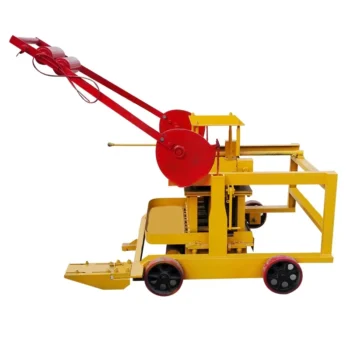
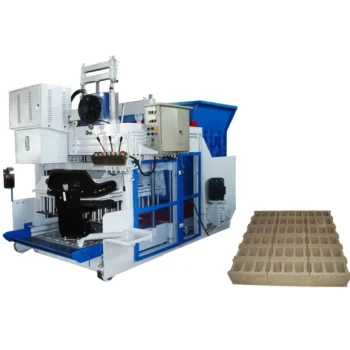
| Product Type | Mobile Concrete Hollow Block Making Machine |
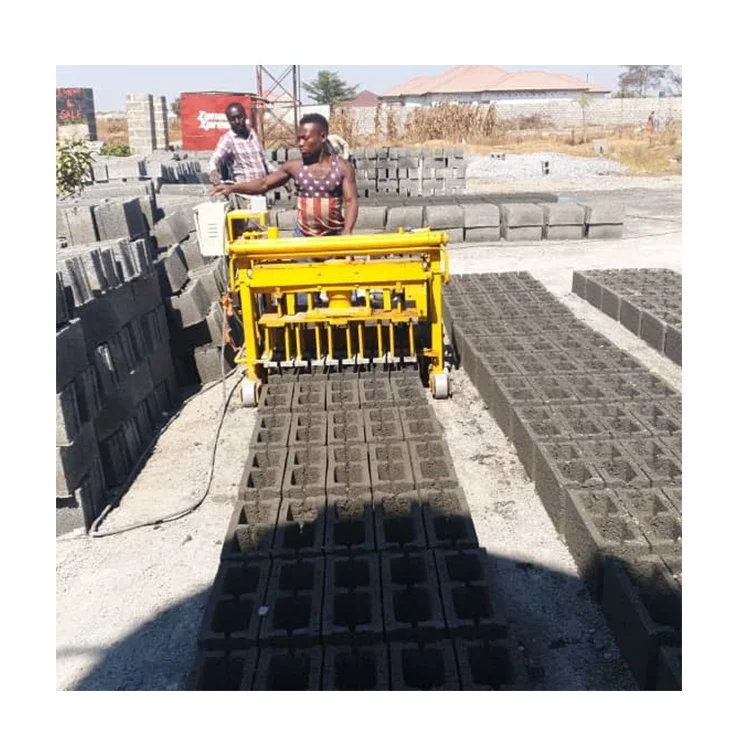
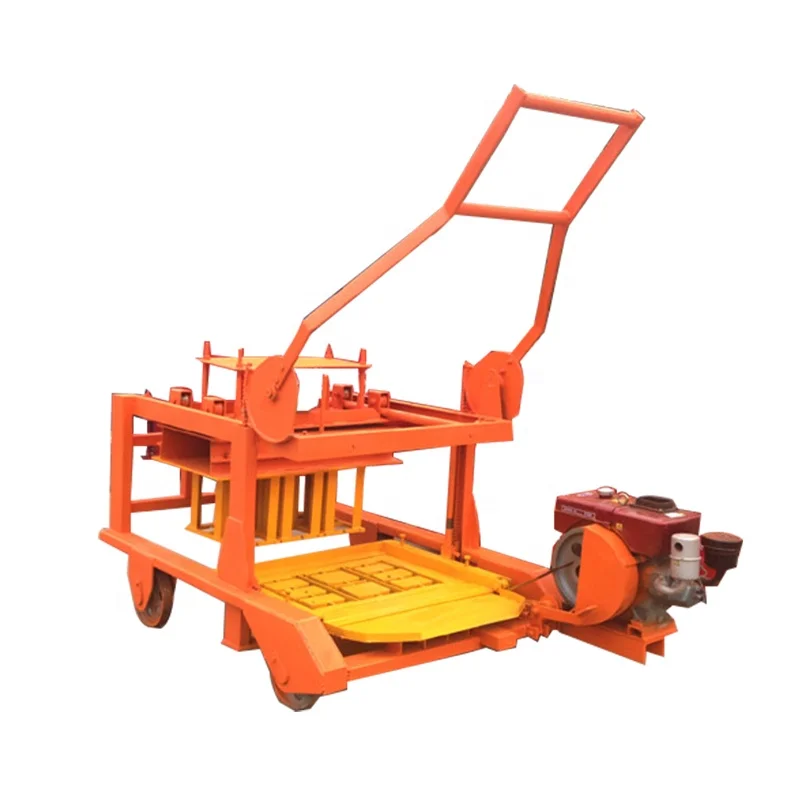
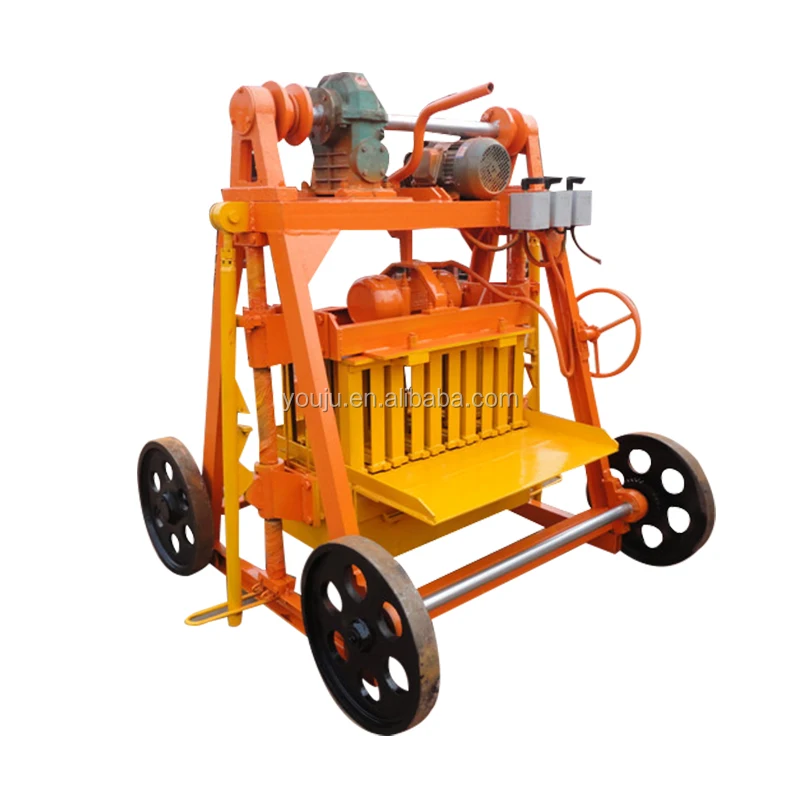
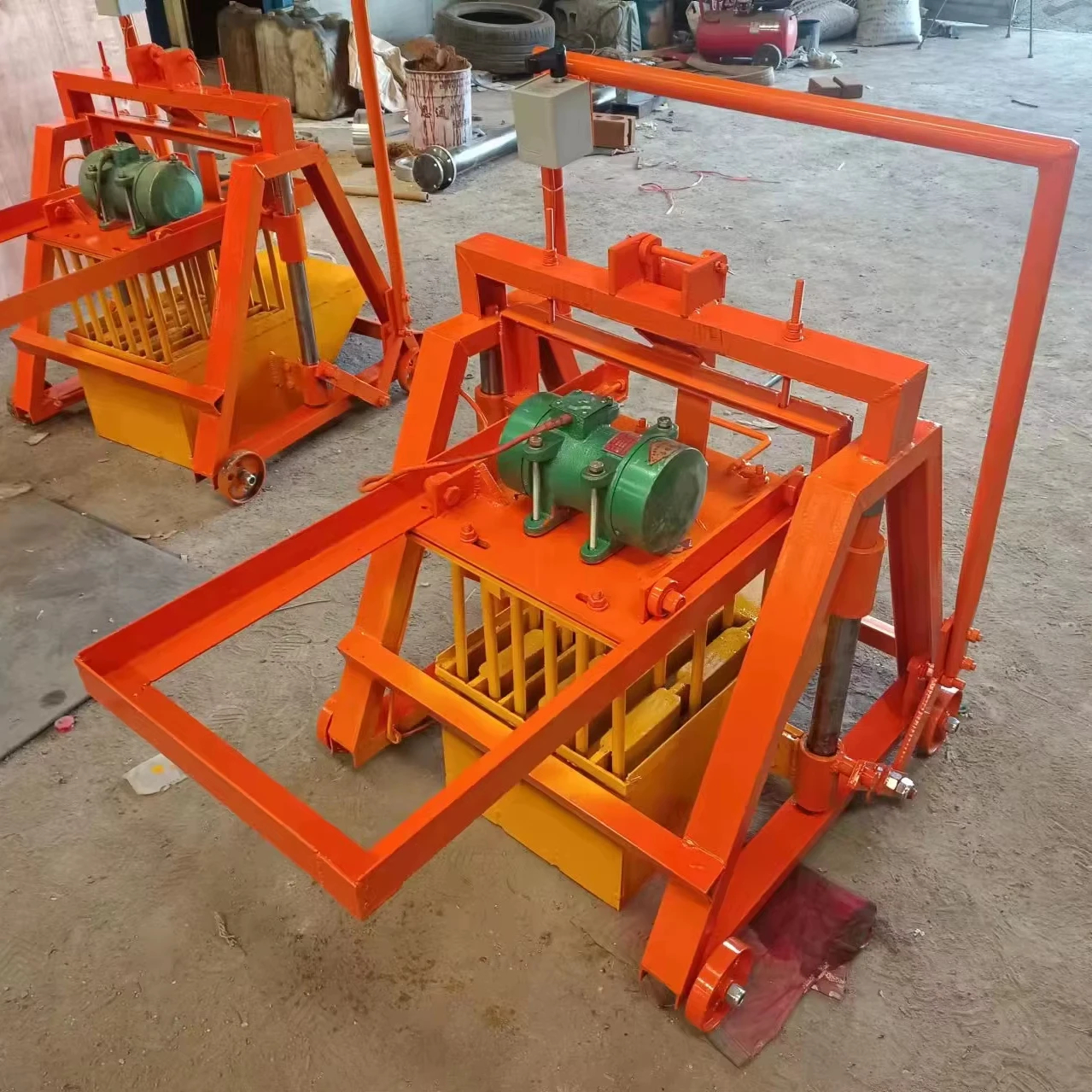
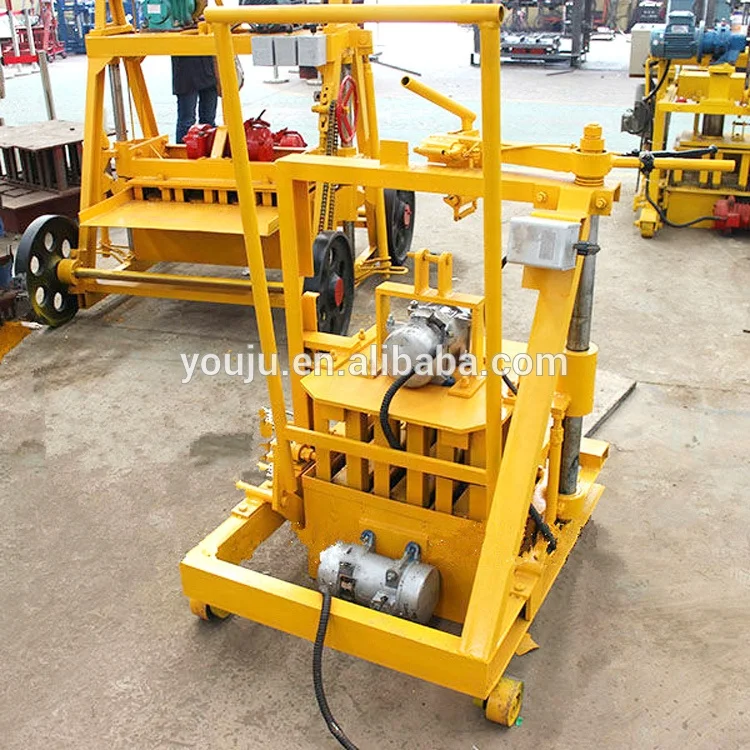
| Machine Type | Motorized hand-pushed mobile (egg-laying) block machine |
| Pallet Requirement | None (palletless / egg-laying operation) |
| Power Source | Electric motor |
| Labor Requirement | 1 to 3 workers |
| Mould Change | Manual, supports multiple hollow and interlocking brick formats |
| Cycle Time | 25–30 s (basis not stated in source — confirm block format and material) |
| Output Capacity | 2 pcs/mould, 160 pcs/h based on 400×200×200 mm hollow brick |
| Output Capacity | 3 pcs/mould, 240 pcs/h based on 400×150×200 mm hollow brick |
| Output Capacity | 4 pcs/mould, 320 pcs/h based on 400×100×200 mm hollow brick |
| Mobility | Hand-pushed, free movement on-site, small space operation |
| Stacking Method | Blocks laid directly on ground |
| Automation Level | Manual / semi-manual (hand-pushed, motorized vibration) |
| Standards | ISO 9001:2000, CE (certificate validity and scope to be verified) |
Application Suitability
| Application | Material or Output |
|---|---|
| On-site hollow block production for housing projects | Crushed stone, river sand, cement mixes laid directly on prepared ground |
| Small-scale startup block plant without fixed infrastructure | Hollow bricks in 400×200×200, 400×150×200, and 400×100×200 mm formats |
| Interlocking brick production for paving and wall applications | Interlocking brick moulds mounted on the same machine frame |
| Remote or space-constrained job sites | Palletless egg-laying operation eliminating curing-area pallet logistics |
Why "Pieces per Hour" Means Nothing Without a Format Attached
The QMJ2-45 mobile block machine specifications only become meaningful when tied to the exact block dimension you intend to produce.
A supplier quoting 320 pieces per hour on a mobile block machine may be referencing the smallest hollow brick in the mould range. Swap to a 200 mm wide format and that same machine drops to fewer than half the pieces in the same shift. I have watched contractors arrive on site with a schedule built around a headline number, only to discover the machine was never tested against the format their market actually buys [NEED_CITE: block format assumptions in capacity quotations]. Before you compare any mobile block machine on output alone, demand the calculation broken down per format, per mould cavity count, and per cycle time.
Per-Format Output Is the Only Honest Starting Point
When sizing a mobile block machine to your production target, the first question is not how fast the press cycles but how many cavities the mould holds for your chosen format. The QMJ2-45 produces two 400×200×200 mm blocks per cycle, three at 150 mm width, and four at 100 mm width. Each format carries its own cycle time, and the daily total shifts accordingly. Requesting a capacity table per format removes the guesswork and lets you plan shift lengths and curing space around what the machine actually delivers.
Mould Interchangeability Across Formats on One Frame
A single QMJ2-45 frame accepts hollow brick moulds in multiple dimensions as well as interlocking brick moulds for paving and wall applications. Mould change is manual, which keeps the machine simple and avoids hydraulic quick-change systems that add cost and maintenance. The trade-off is that format switching takes labour and time on the shop floor. Buyers running one dominant format benefit most; those needing daily format swaps should weigh the change time against their production schedule [NEED_CITE: mould change time impact on daily output].
Vibration, Mix Design, and Local Aggregate
The motorized vibration on a palletless egg-laying machine must be matched to the mix it receives. I once spent two weeks on a site where the local river sand carried high clay content, and every hollow block crumbled at the edges after vibration. We adjusted the vibration frequency and moisture content until the blocks held their shape through curing. That adjustment is only possible when the supplier understands your aggregate before shipping. The QMJ2-45 has no PLC to mask a bad mix with automated overrides — the operator sets the rhythm, and the mix must cooperate.
What Happens When Voltage and Frequency Are Assumed
Shipping a mobile block machine with a motor rated for 380 V / 50 Hz to a site running 440 V / 60 Hz does not just shorten motor life — it changes the vibration frequency, which shifts the compaction profile and produces blocks outside the strength range your market expects. Voltage and frequency confirmation belongs in the pre-production checklist, not in the commissioning-week scramble. The QMJ2-45 motor specification must be locked to the buyer’s site supply before the machine leaves the factory.
Why the Pallet Question Disappears Here
Conventional block lines require a pallet inventory sized to cover production, curing, and return logistics. The QMJ2-45 lays blocks directly on prepared ground, eliminating pallet purchase, pallet storage, and pallet damage from the cost equation entirely. For contractors working across multiple sites or entrepreneurs launching a first plant with limited capital, palletless operation removes a line item that often surprises buyers who only budgeted for the press itself.
Why Source This Machine Here
Block machinery is the single focus of this operation, which means the QMJ2-45 is not bundled from separate press, mould, and handling suppliers. The mould is designed for the formats your market actually sells, including custom drawings when standard hollow dimensions do not match local demand. Configuration is set against your actual mix design and target block format rather than a catalogue default. Factory test records cover the specific formats and cycle times you will run, and the documentation package arrives with the machine so commissioning does not stall waiting for a schematic [NEED_CITE: factory test documentation standards for block machinery].
Documentation & Verification
- Line layout and capacity calculation stating the exact block format and shift length assumed
- Mould drawing and format list confirming cavity count per dimension before production
- Factory test record on your target hollow brick format before dispatch
- Voltage and motor specification confirmation sheet matched to site supply
- Operation and maintenance manual covering mould change and vibration adjustment
Installation, Commissioning & Support
- Ground preparation guidance for palletless egg-laying on compacted soil or concrete slab
- Motor wiring and circuit rating verification against the confirmed voltage and frequency
- Mould mounting and alignment check during first on-site production run
- Vibration frequency and moisture adjustment based on local aggregate sample
- Manual mould change procedure and required hand tools covered during operator training
- Wear parts list for mould liners and vibration motor brushes with replacement intervals
Before You Send an Inquiry
Share the block format and dimensions your market demands, the local aggregate type and source, and the site voltage and frequency available. If you are producing on a construction site rather than a fixed plant, describe the ground conditions and curing space you have prepared. This information lets us configure the QMJ2-45 and its mould package around your actual output requirement rather than a generic estimate.
Frequently Asked Questions
Q: How is the output capacity calculated, and which block format does the figure assume?
A: Every capacity figure for the QMJ2-45 is tied to a specific block dimension and cavity count. The 160 pieces per hour value applies to 400×200×200 mm hollow bricks at two per mould, while 320 pieces per hour applies to 400×100×200 mm at four per mould. Always confirm which format a quoted capacity assumes before building your production schedule.
Q: The 400×150×200 mm entry shows 240 pcs/h × 8 hr = 1,920 — is that the correct daily output?
A: Yes, the arithmetic for an eight-hour shift at 240 pieces per hour on the 400×150×200 mm hollow brick yields 1,920 blocks. Any higher figure found elsewhere for that format on this machine should be questioned. Request a written capacity calculation that states the format, cycle time, and shift duration used.
Q: What block formats and mould sizes are available beyond the three hollow brick dimensions listed?
A: The QMJ2-45 frame also accepts interlocking brick moulds for paving and wall applications. Custom mould designs can be produced from buyer drawings when standard formats do not match local building codes or market preference. Confirm your target dimensions during inquiry so the mould package is scoped before production.
Q: What voltage, frequency, and motor rating does the QMJ2-45 ship with?
A: Motor voltage and frequency are configured to match the buyer’s site electrical supply and must be confirmed before production begins. Shipping a motor rated for the wrong frequency changes vibration behaviour and block density. State your available supply at inquiry stage so the correct motor is fitted and documented.