
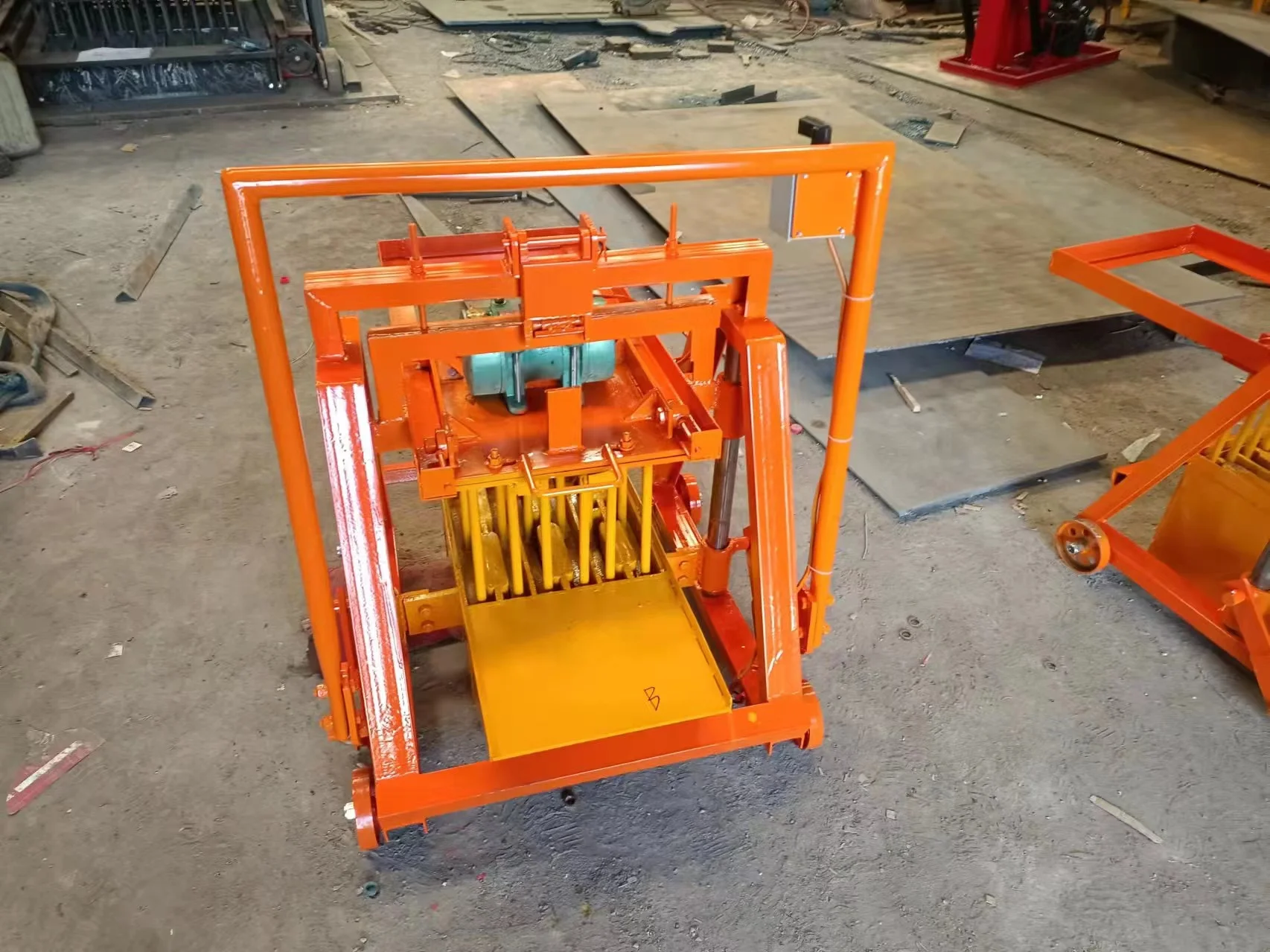
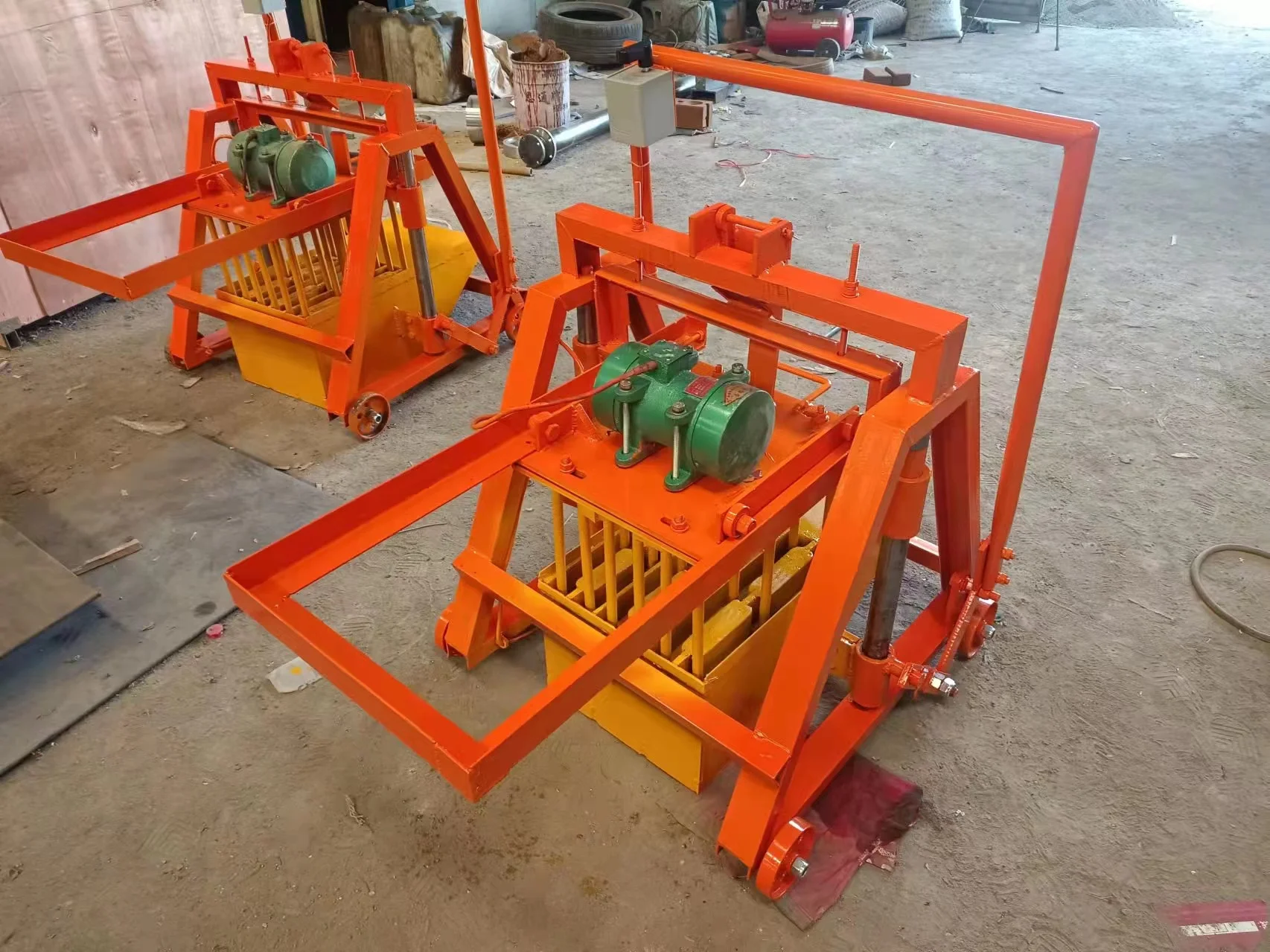


Description
Honest capacity by format — The QMJ2-45 is sized against the hollow brick, paving block or interlock brick your market actually sells, with cycle time and daily output stated per format, not as a single headline number.
Technical Specifications
| Parameter | Value |
|---|---|
| Model | QMJ2-45 |
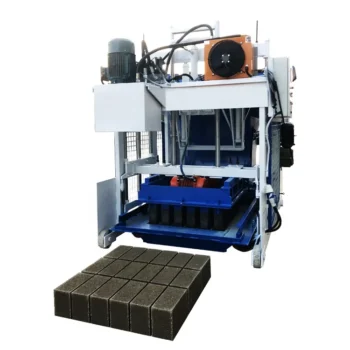
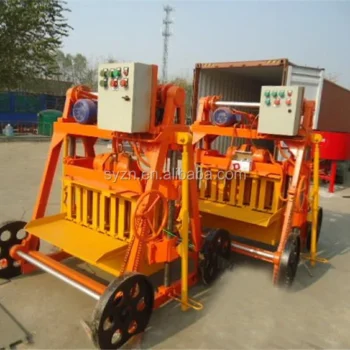
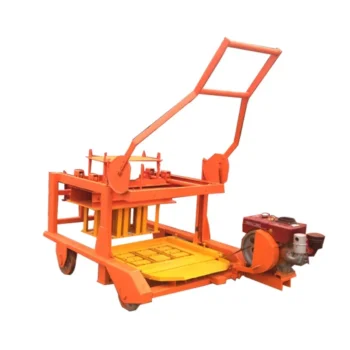
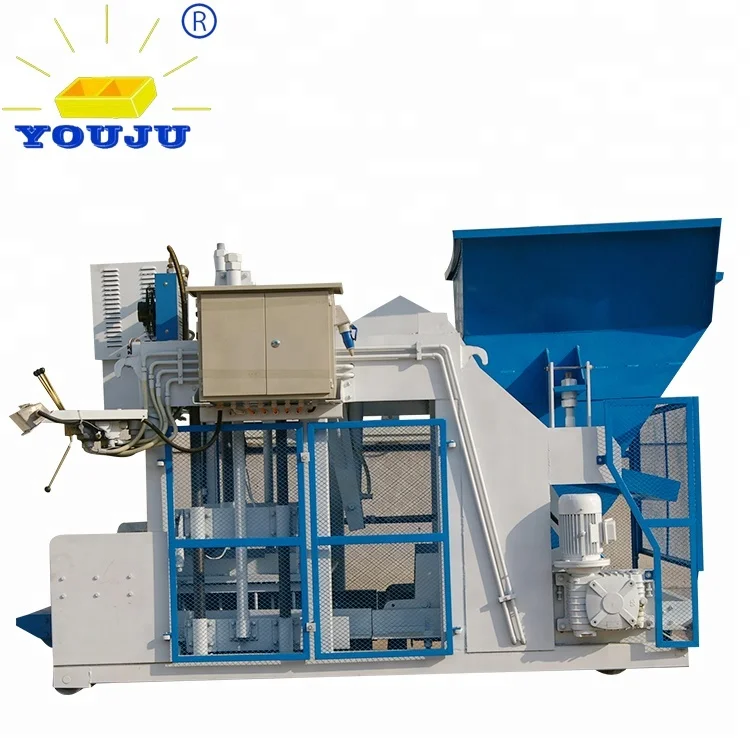
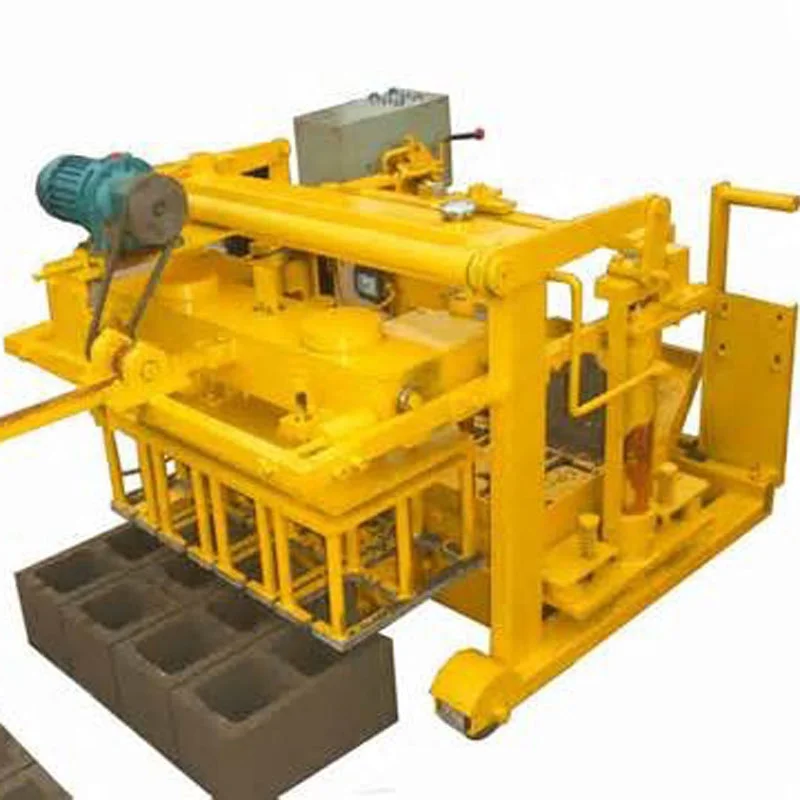
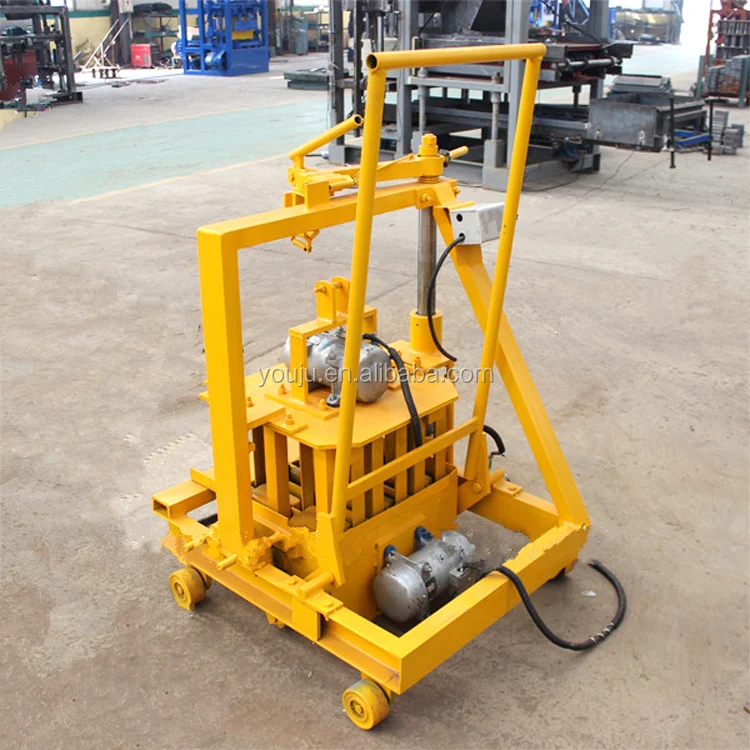
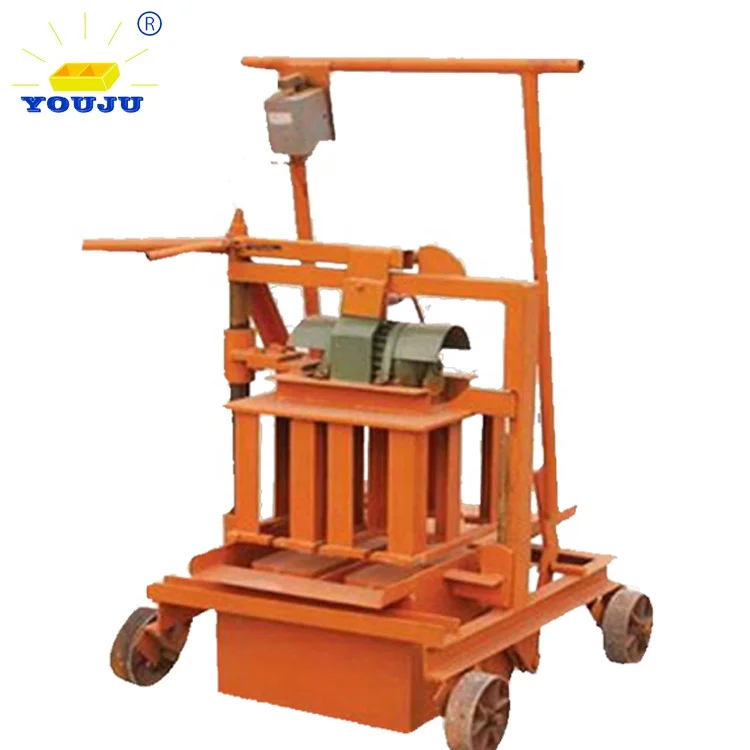
| Product Type | Mobile Egg-Laying Block Making Machine |
| Machine Type | Manual mobile egg-laying block machine |
| Mould Format | Interchangeable moulds for hollow brick, paving block, interlock block |
| Cycle Time | 25-30s (basis not stated in source — confirm block format / material / thickness) |
| Output Capacity (Hollow Brick 400×200×200mm) | 160 pcs/h, 1280 pcs/8hr (based on 2 pcs/mould) |
| Output Capacity (Hollow Brick 400×150×200mm) | 240 pcs/h, 4800 pcs/8hr (based on 3 pcs/mould — note: source lists 4800 pcs/8hr, arithmetic suggests 1920 pcs/8hr at 240 pcs/h × 8h; source value — verify against manufacturer catalog) |
| Output Capacity (Hollow Brick 400×100×200mm) | 320 pcs/h, 2560 pcs/8hr (based on 4 pcs/mould) |
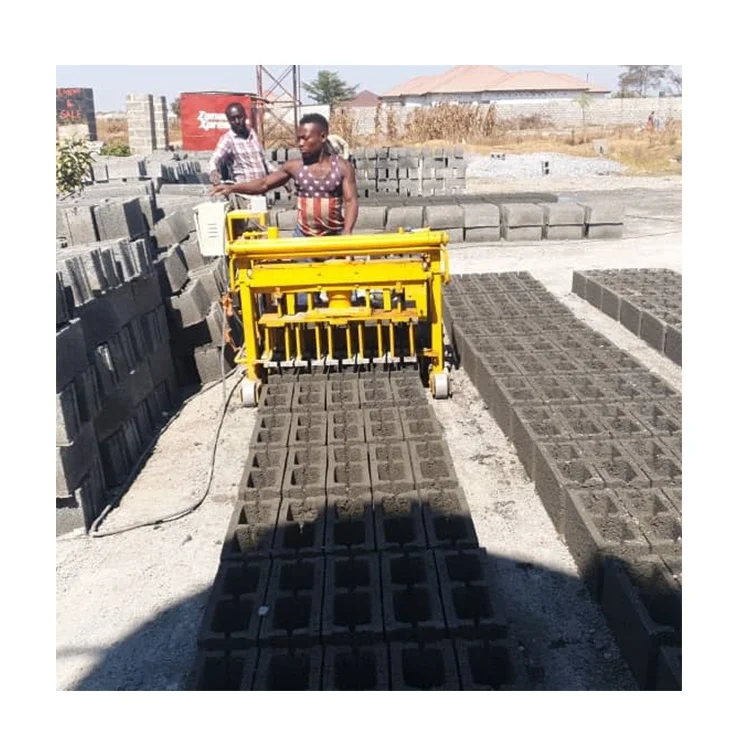
| Pallet Requirement | No pallets required (egg-laying / ground-curing) |
| Power Source | Motorized (diesel or other external power not required) |
| Labour Requirement | 1 to 3 workers |
| Portability | Hand-pushed, free-moving on site |
| Mould Change | Manual, by replacing mould on machine |
| Mould Heat Treatment | Carburization technology |
| Automation Level | Manual operation, no PLC |
| Control System | Manual (no PLC) |
| Certification | ISO9001:2000, CE |
| Key Features | No pallets required, hand-pushed portability, interchangeable moulds, carburized mould heat treatment, manual operation |
Application Suitability
| Application | Material or Output |
|---|---|
| On-site block production for small construction projects and housing developments | Hollow bricks, paving blocks, interlock blocks from local aggregate and cement |
| Entrepreneur-started first block plant with low initial investment | Standard hollow brick formats produced directly on ground |
| Remote or off-grid sites where fixed plant infrastructure is unavailable | Ground-cured blocks without pallet handling or curing racks |
| Production of hollow bricks, paving blocks and interlock blocks in limited space | Multiple formats from a single hand-pushed machine |
What "25-30 Second Cycle Time" Leaves Out
Cycle time only means something when tied to the exact block size, pieces per mould, and mix design it was measured on.
Capacity is often quoted in cycles per hour without stating which block format that figure assumes, so real daily output falls far short of expectation. I have stood on job sites where a mobile block machine arrived with impressive cycle numbers, but the local sand had higher clay content than the factory test used, and the vibration force could not compact the mix properly. The crew spent the first week adjusting water ratios and timing before the blocks reached acceptable strength [NEED_CITE: mix design adaptation to local aggregate properties].
Matching the Machine to Your Block Format
The QMJ2-45 produces three standard hollow brick formats with different output rates, so buyers need to know which format dominates their sales mix before comparing this mobile block machine against alternatives. A contractor producing mostly 400×200×200mm blocks will see different daily throughput than one focused on 400×100×200mm partition blocks, even though both use the same machine.
Mould Change Reality on Site
Switching between hollow brick, paving block, and interlock formats requires manual mould replacement. The time this takes on a working job site with a small crew depends on tool availability and operator familiarity, not just the mechanical design [NEED_CITE: typical mould change procedures on manual mobile block machines]. Buyers planning frequent format changes should confirm the procedure and required tools before ordering.
Understanding Vibration and Compaction
The QMJ2-45 uses mechanical vibration rather than hydraulic pressure to compact the concrete mix into the mould. This means block density and strength depend heavily on the mix design, particularly the water-to-cement ratio and aggregate gradation. A mix that works in the factory test may not compact properly with the vibration force available on this machine, especially if local aggregate differs from what was used during testing. The carburization treatment on the mould extends its service life, but it does not compensate for a poorly matched mix design.
When Ground-Curing Becomes a Constraint
The egg-laying design eliminates pallet costs and handling, which is a genuine advantage for small operations. But it also means blocks cure directly on the ground where they are laid, requiring a flat, prepared surface and protection from rain during early curing. On sites with uneven ground or limited covered area, the usable production space may be smaller than expected, and block quality can suffer if the curing surface is not level [NEED_CITE: ground-curing requirements for egg-laying block machines].
Why Procurement Happens Here
The machine, mould, and handling approach are specified as a matched system rather than assembled from separate suppliers, so the QMJ2-45 arrives with moulds designed for the formats your market actually sells. Configuration is set against your actual mix design and local aggregate, not a catalogue default, reducing the risk of arriving on site with a machine tuned for materials you cannot source. Mould design and supply covers the formats you need, including custom drawings if your market demands a non-standard block shape. The automation level is appropriate for a small crew starting out, with a path to upgrade as production volume grows. Installation and commissioning support includes operator training on your specific block format, not a generic walkthrough.
Documentation & Verification
- Line layout and capacity calculation stating the block format assumed for each QMJ2-45 output figure
- Mould drawing and format list confirming which hollow, paving, and interlock blocks can be produced
- Voltage, frequency, and motor rating confirmation locked before QMJ2-45 production begins
- Factory test record showing actual cycle time and block dimensions on your chosen format
- Operation and maintenance manual covering mould change procedure and daily maintenance intervals
Installation, Commissioning & Support
- Flat, prepared ground surface required for egg-laying operation with adequate drainage and weather protection
- Power connection at confirmed voltage and frequency with dedicated circuit matching the QMJ2-45 motor rating
- Machine arrives assembled and ready for operation after mould installation and basic checks
- First-day commissioning includes mix adjustment to local aggregate and vibration timing optimization
- Operator training covers mould change procedure, mix consistency checks, and block quality inspection
- Wear parts list identifies mould components and vibration elements requiring periodic replacement
Before You Send an Inquiry
To size the QMJ2-45 accurately, provide the specific hollow brick, paving block, or interlock format your market sells, along with your target daily output and the local aggregate you plan to use. Include your site voltage and frequency, and let us know whether you need standard moulds or a custom block shape. If you have existing mix designs or block samples from your current production, share those so the configuration matches your actual materials.
Frequently Asked Questions
Q: How is the quoted capacity calculated, and which block format does each figure assume?
A: Each capacity figure on the QMJ2-45 is tied to a specific hollow brick size and pieces-per-mould count. The 160 pcs/h rate applies to 400×200×200mm blocks at 2 pieces per mould, while 320 pcs/h applies to 400×100×200mm blocks at 4 pieces per mould. Cycle time of 25-30 seconds was measured under test conditions that may differ from your local mix and aggregate.
Q: Which block formats can this machine produce with standard moulds, and which need custom drawings?
A: The QMJ2-45 supports interchangeable moulds for hollow brick, paving block, and interlock block formats. Standard moulds cover common sizes within these categories. If your market requires a non-standard shape or dimension, custom mould design to your drawings is available, but lead time and cost differ from standard mould supply.
Q: What mix design and local aggregate does the machine expect, and how is that confirmed before order?
A: The QMJ2-45 uses mechanical vibration to compact concrete, so mix design must match the available vibration force. Before ordering, provide a sample of your local aggregate and any existing mix proportions. The machine configuration is then adjusted to your actual materials, and a factory test confirms block strength before shipment.
Q: How long does a mould change take on site, and what tools are required?
A: Mould change on the QMJ2-45 is manual, involving removal of the current mould and installation of the replacement. The exact time depends on operator familiarity and tool availability. Specific tools required and the step-by-step procedure are covered in the operation manual and during on-site operator training.