

Description
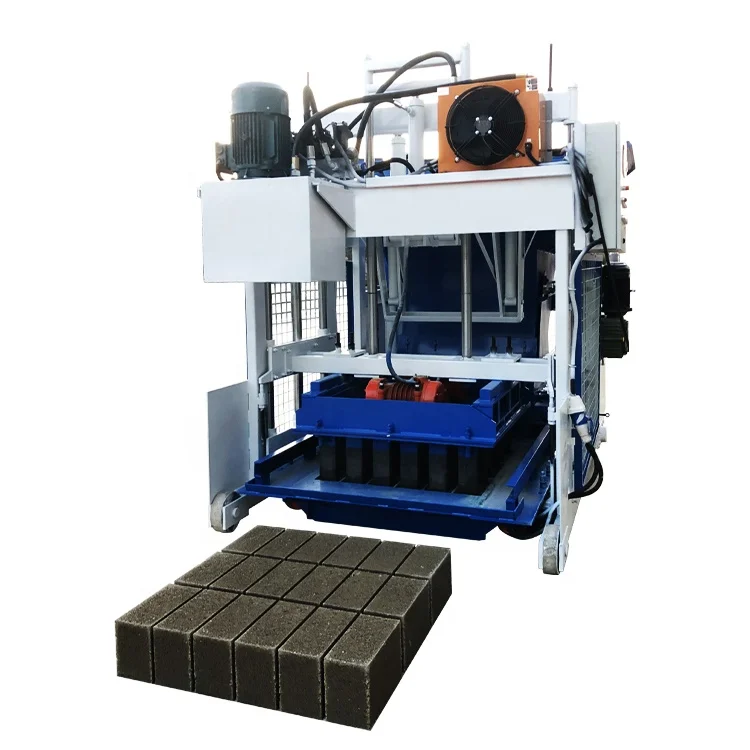
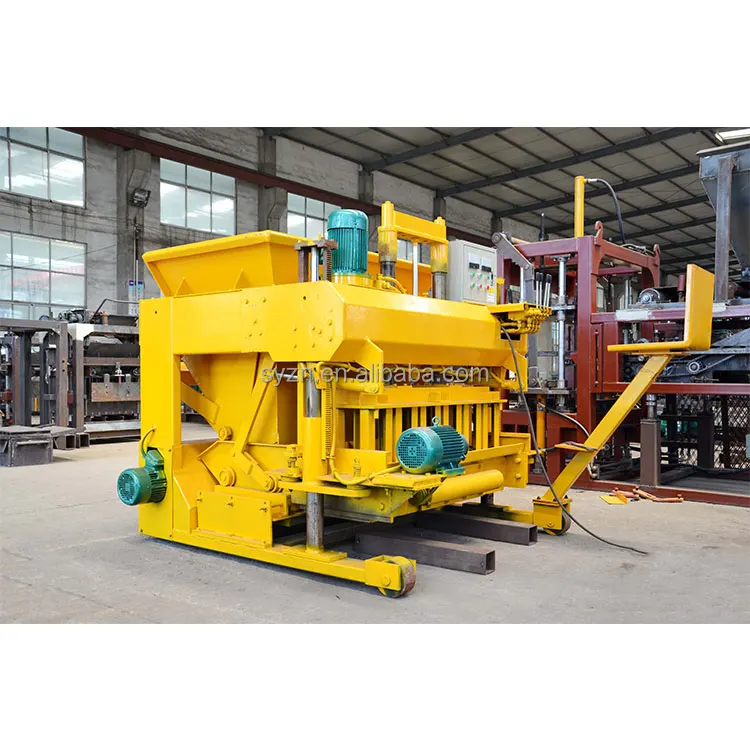
Capacity by block format, not a catalogue guess — Every QMY6-25 output figure on this page is tied to a specific block dimension and cycle time, so you can match the machine to what your market actually buys before you sign a purchase order.
Technical Specifications
| Parameter | Value |
|---|---|
| Model | QMY6-25 |
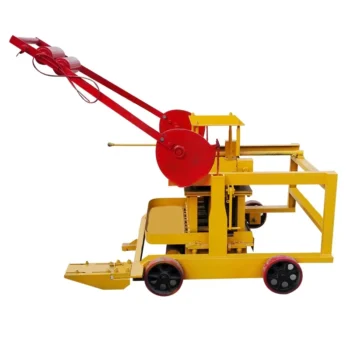
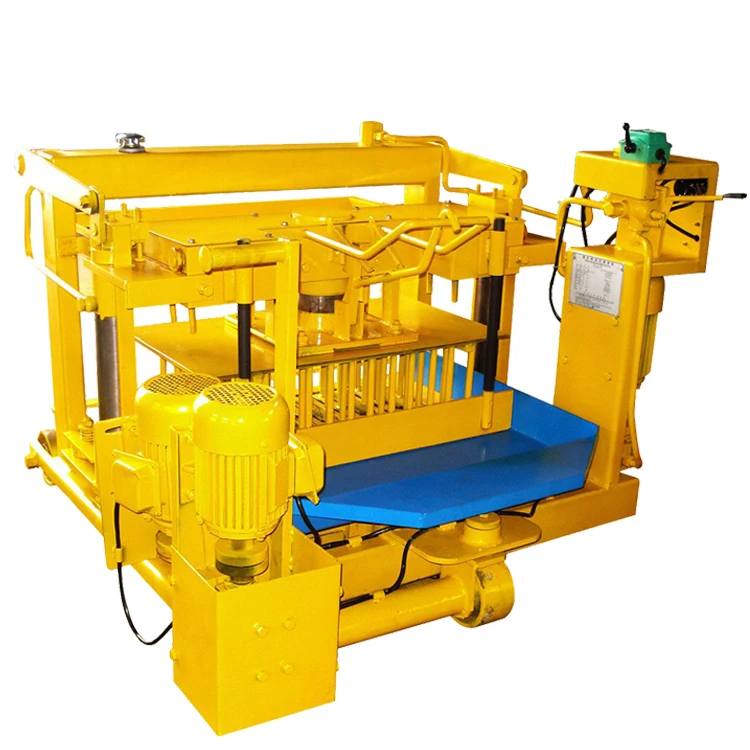
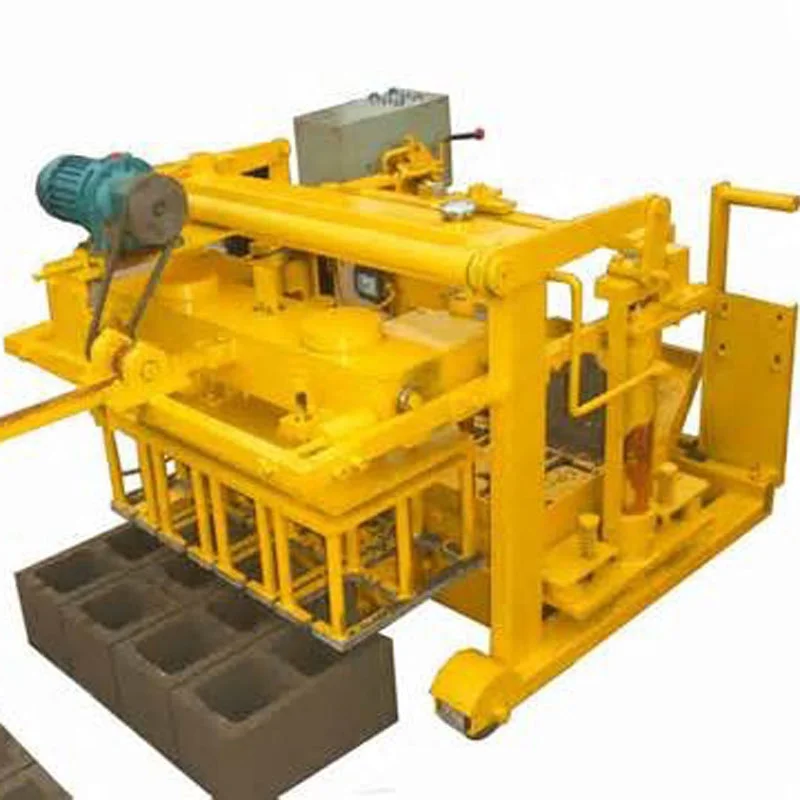
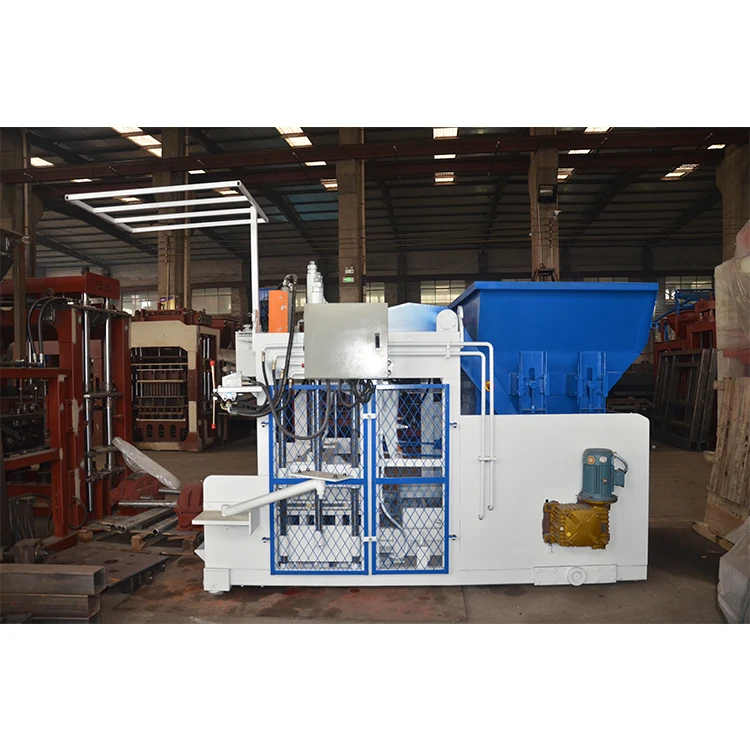
| Product Type | Mobile Hollow Block Making Machine |
| Main Vibration Form | Three-dimensional excitation |
| Vibration Frequency | 3200 Hz |
| Moulding Cycle | 25–30 s |
| Overall Power | 9.6 kW |
| Moving Method | Automatic movement with hydraulic steering |
| Overall Dimension | 2000 × 2100 × 1650 mm |
| Pallet Requirement | No pallet required |
| Operator Requirement | Single-person operation |
| Output Capacity (400×200×200 mm hollow block) | 1080 pcs/hour, 8600 pcs/8-hour shift |
| Output Capacity (400×150×200 mm hollow block) | 1260 pcs/hour, 10000 pcs/8-hour shift |
| Output Capacity (400×120×200 mm solid block) | 1620 pcs/hour, 12960 pcs/8-hour shift |
| Output Capacity (400×100×200 mm solid block) | 1800 pcs/hour, 14400 pcs/8-hour shift |
| Voltage & Frequency | Configurable to buyer’s site supply (basis to be confirmed before production) |
| Control Language | PLC display language configurable (basis to be confirmed) |
| Warranty | 1 year, excluding consumable wear parts |
Application Suitability
| Application | Material or Output |
|---|---|
| On-site hollow block production at building projects | Concrete mix with crushed stone, sand, and cement |
| Solid block manufacturing for housing developments | Standard aggregate blends with cement binder |
| Low-investment block plant start-up | Local sand, gravel, and cement with minimal handling equipment |
| Contractor self-supply on remote construction sites | Soil cement or standard concrete mix on prepared ground |
What "8600 Blocks per Shift" Really Means When the Mix Changes
A capacity number without a block format and material assumption is a guess, not a quotation.
When a mobile block machine specification lists a single output figure, it almost always assumes a standard sand-aggregate mix and a specific hollow block size. Run a different material — higher clay content, coarser gravel, or a local soil cement blend — and the moulding cycle lengthens, demoulding becomes inconsistent, and the real daily total drops. I watched a QMY6-25 ship to a site where the buyer ran high-clay soil cement, and the actual shift output fell to roughly half the catalogue figure because the vibration and cycle settings had been tuned for standard sand. That mismatch was not a machine fault; it was a specification gap [NEED_CITE: mix design impact on block machine cycle time].
Before you compare any Mobile Block Machine specifications, confirm which block dimension, mix design, and aggregate the output number assumes. Without that context, the figure tells you nothing about what you will produce.
Matching Block Format to Local Market Demand
The QMY6-25 covers four block dimensions from 400×200×200 mm down to 400×100×200 mm, spanning hollow and solid formats. Each format carries a different moulding cycle and a different per-shift total, so the block your market actually buys determines your real throughput. A buyer selling mainly 150 mm hollow blocks will see a different daily volume than one producing 100 mm solid partition blocks, even on the same machine. Choosing the right mould from the start avoids costly mid-project format compromises.
Mould Change and Format Flexibility on Site
Swapping moulds on a mobile block machine determines how many formats you can run in a single shift. The QMY6-25 supports custom mould design to buyer drawings, so if your local market requires a non-standard wall thickness or a block length outside the four listed sizes, a dedicated mould can be engineered before delivery. Mould change time depends on the block format and operator familiarity, and a single operator can handle the switch during a normal working day [NEED_CITE: mobile block machine mould change procedure].
Vibration, Pressure, and Block Density
Three-dimensional vibration at 3200 Hz works together with the hydraulic system to compact the concrete mix into the mould cavity. Higher vibration frequency improves particle rearrangement in fine-aggregate mixes, while hydraulic pressure locks the compacted shape before demoulding. For hollow blocks with thin webs, consistent vibration across all three axes prevents weak spots that cause breakage during curing and transport. The 25–30 second cycle window gives the mix enough time to settle fully, which is critical when using coarser local gravel that takes longer to consolidate than graded sand.
Pallet-Free Operation and Ground Preparation
The pallet-free design means the machine lays blocks directly onto a prepared ground surface, eliminating the need for pallet investment, pallet return conveyors, and curing-area pallet handling. The trade-off is that ground flatness and surface condition directly affect block dimensional consistency. A compacted sand bed or a concrete floor slab is necessary; soft or uneven soil will cause block height variation and bottom-edge deformation. Hydraulic steering and automatic movement allow the QMY6-25 to advance along the production bed without manual pushing, keeping block spacing uniform across a shift.
The Cost of Skipping Voltage and Language Confirmation
Unconfirmed electrical specifications are one of the most frequent reasons a mobile block machine sits idle after arrival. If the site supply is 220 V / 60 Hz but the machine was built for 380 V / 50 Hz, the motor and vibration system will not run at rated performance, and the PLC display may not power up correctly. A PLC interface in a language the operator cannot read turns routine fault codes into guesswork, adding days to troubleshooting [NEED_CITE: voltage and frequency standards by export market]. Confirming voltage, frequency, and control language in writing before production starts is a single-email task that prevents weeks of delay.
Why Sizing Starts Here, Not at the Loading Bay
Block machinery is our single production focus, which means the machine, mould, and hydraulic system are specified as one matched set rather than assembled from separate catalogues. Every capacity calculation we issue names the block format, mix design assumption, and cycle time behind each figure. Mould drawings are reviewed against the buyer’s target block dimensions before steel is cut, so custom formats for local building codes are addressed at design stage, not after delivery. Voltage and PLC language are confirmed in writing before production begins, and the factory test record is run on a block size agreed with the buyer, not a default catalogue setting.
Documentation & Verification
- Capacity calculation sheet stating output per block format and assumed mix design
- Mould drawing and format list confirming supplied block dimensions
- Hydraulic and electrical schematic matching confirmed voltage and frequency
- Factory test record run on buyer-agreed block size before dispatch
- Operation and maintenance manual with wear parts list and replacement intervals
Installation, Commissioning & Support
- Ground bed preparation guide specifying flatness tolerance for the 2000 × 2100 mm machine footprint
- Electrical connection requirements for the confirmed 9.6 kW load and dedicated circuit
- Hydraulic steering system commissioning and movement calibration on site
- PLC display language verification and control parameter setting at first start-up
- Operator training covering mould change procedure and daily vibration system checks
- Wear parts supply plan with lead times for remote-site mould and hydraulic seal replacement
Start with Your Block, Not the Brochure
To size the QMY6-25 accurately, share the block dimensions your market buys, the local aggregate type and cement ratio you plan to run, and your site voltage and frequency. If you already have ground conditions or a curing area layout, include those details so the pallet-free setup can be evaluated against your actual site. The more specific your format and material input, the more reliable the capacity figure you receive.
Frequently Asked Questions
Q: How is the output capacity calculated, and which block format does each figure assume?
A: Each capacity figure on this page is tied to a specific block dimension — 400×200×200 mm hollow through 400×100×200 mm solid — with a 25–30 second moulding cycle. The calculation assumes a standard sand-aggregate concrete mix. If your material differs, the cycle time and per-shift total may change, so we re-calculate against your actual mix before confirming the order.
Q: What mould formats are available, and can I order custom moulds?
A: Standard moulds cover the four listed block dimensions. Custom moulds can be engineered to your market’s specific block size and wall thickness from your drawings. Mould design is reviewed and approved before production so the delivered mould matches your local building code requirements exactly.
Q: What are the voltage, frequency, and control language options?
A: Voltage and frequency are configured to match your site supply, and the PLC display language is set to your operator’s requirement. Both are confirmed in writing before production begins. Unconfirmed electrical specifications are a leading cause of commissioning delay, so this step is built into the order process.
Q: How does the pallet-free system work, and what ground preparation is needed?
A: The QMY6-25 lays blocks directly onto a prepared flat surface and advances forward using hydraulic steering. A compacted sand bed or concrete floor slab is required for consistent block height. Soft or uneven ground causes dimensional variation, so site preparation is a prerequisite before production begins.
Q: What is the mould change procedure, and can one operator manage it?
A: The mould is unbolted from the vibration table, lifted out, and the replacement mould is positioned and secured. A single operator can complete the change within a shift. Mould change time varies by block format, and we provide a step-by-step procedure with the operation manual to minimise format-switching downtime.