

Description
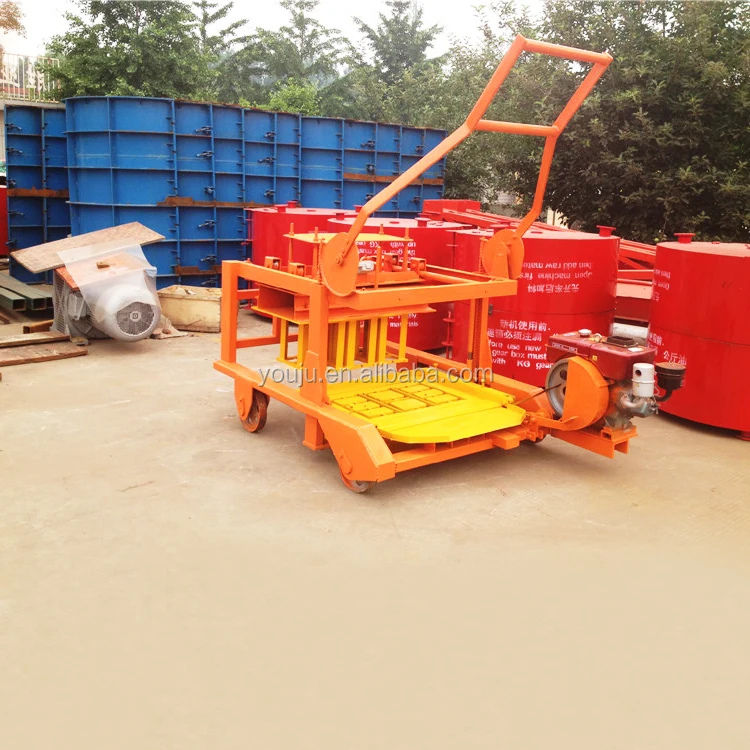
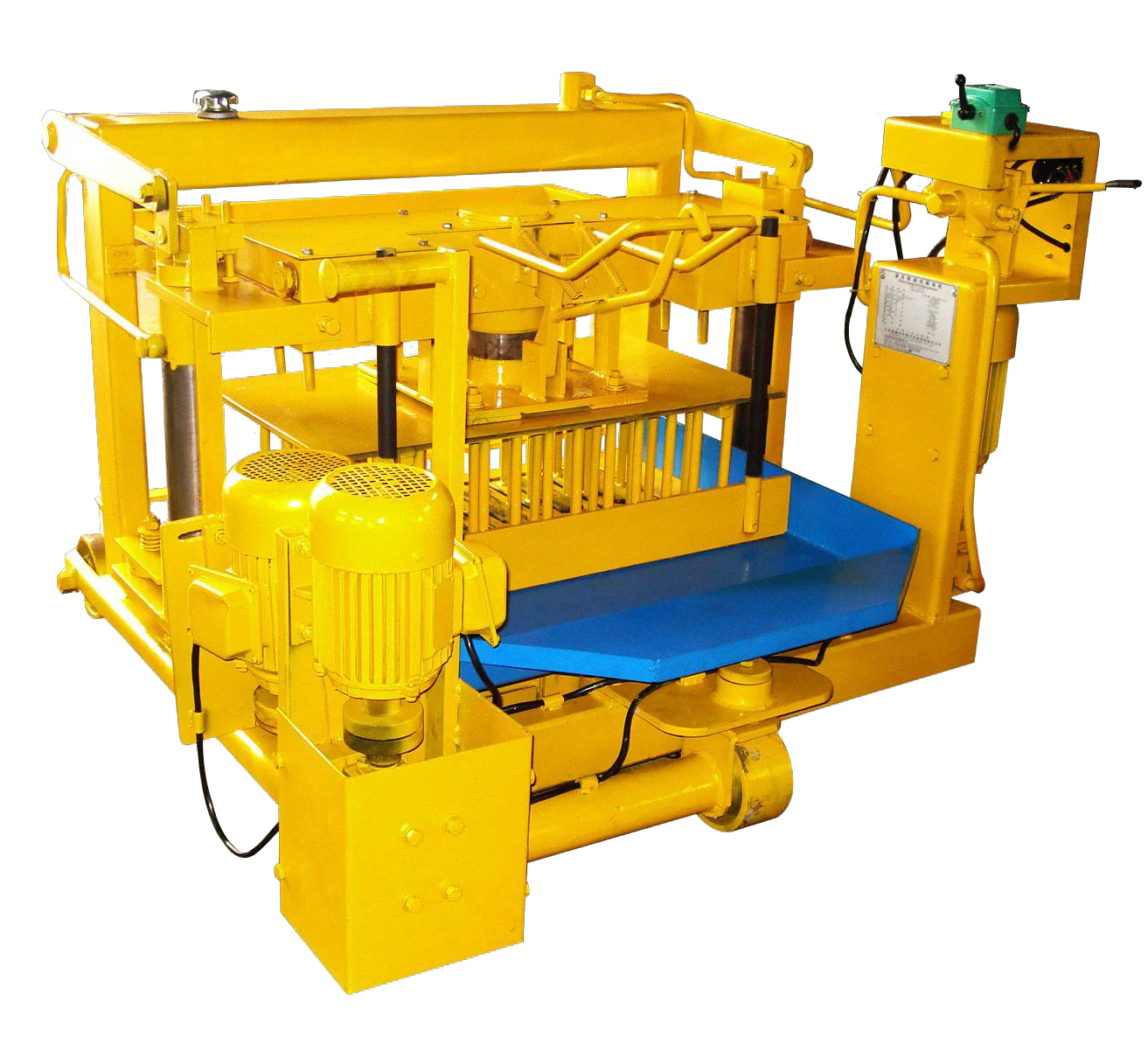
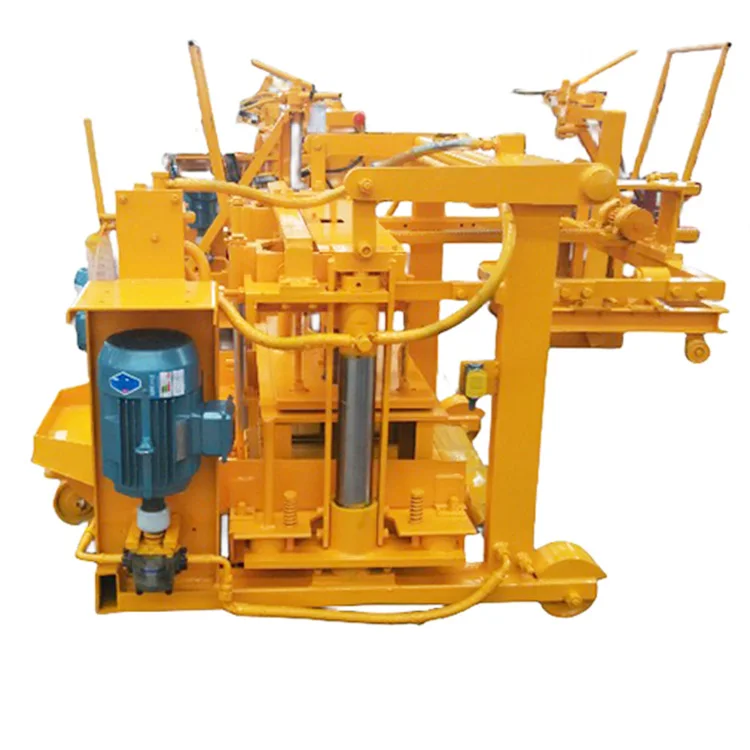
Matched to Format and Aggregate — The QMY4-30 mobile block making machine is specified against the buyer’s actual block size and local raw material, with every capacity figure stating the exact format it assumes.
Technical Specifications
| Parameter | Value |
|---|---|
| Model | QMY4-30 |
| Product Type | Mobile Concrete Block Making Machine |
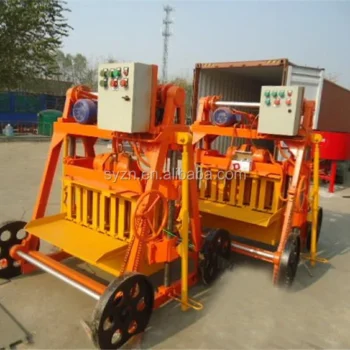
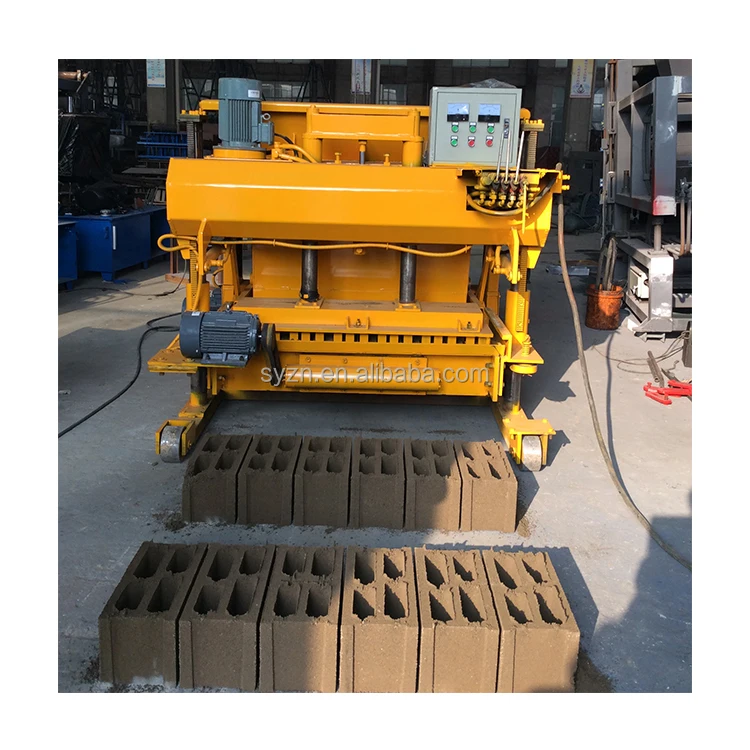
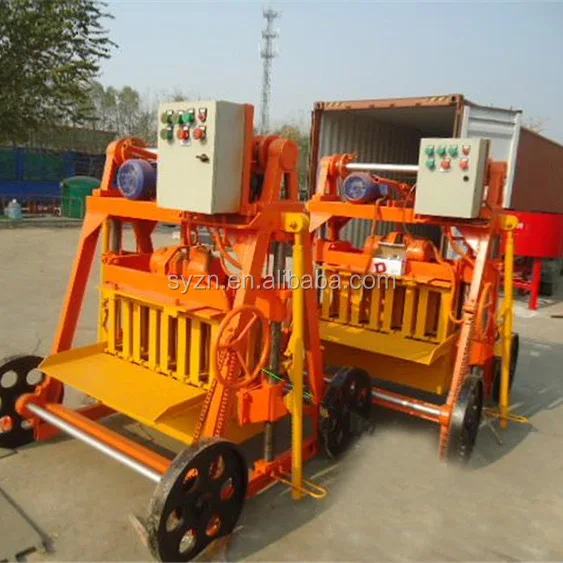
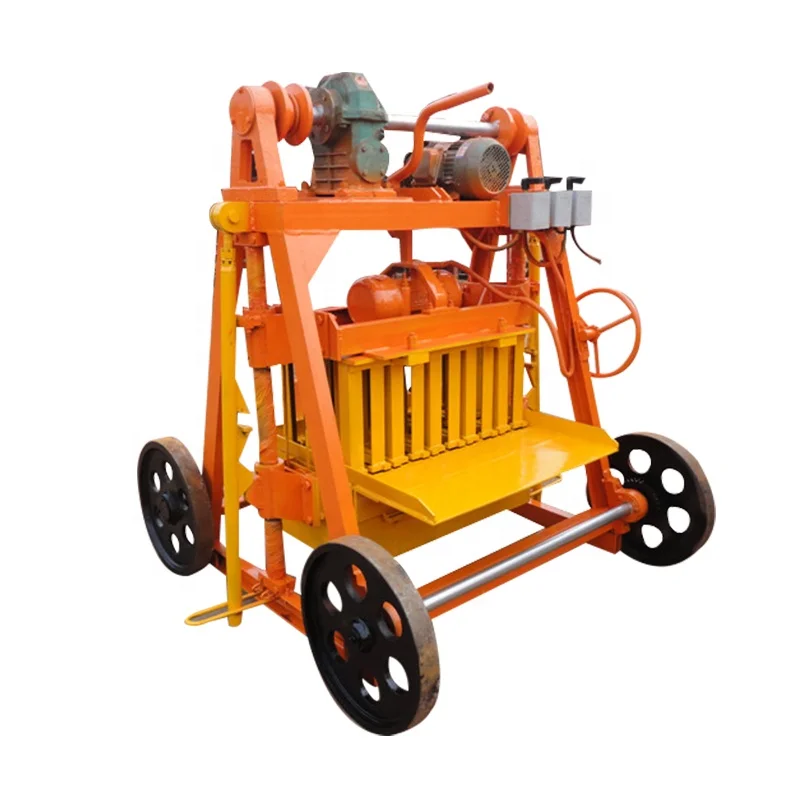
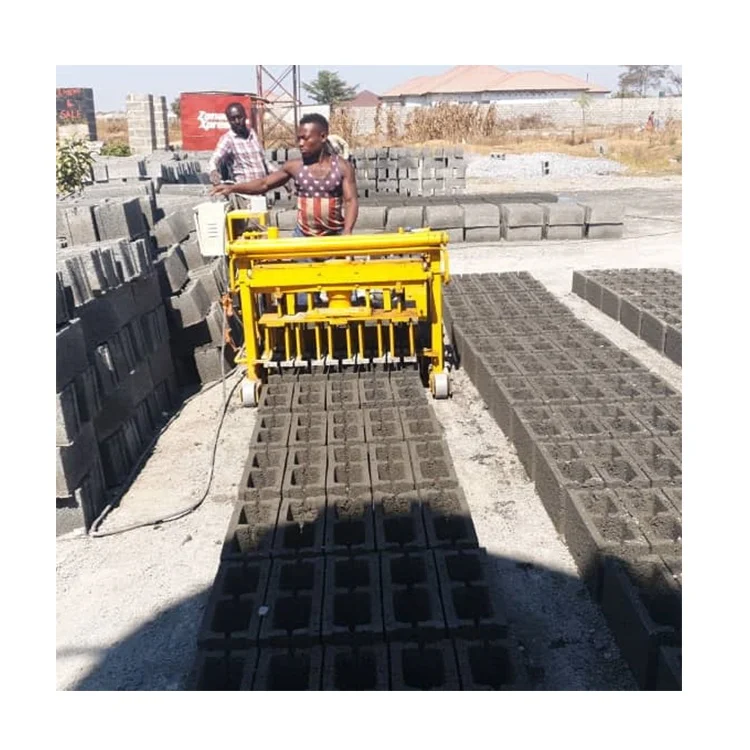
| Machine Type | Mobile / egg-laying block making machine |
| Rated Power | 5 kW |
| Molding Cycle Time | 30 seconds |
| Overall Dimensions (L×W×H) | 1200×1200×1100 mm |
| Net Weight | 950 kg |
| Automation Level | Manual operation |
| Pallet Size | Not applicable (egg-laying type, blocks laid directly on ground) |
| Mould Format | Interchangeable moulds for hollow block and solid brick |
| Output Capacity | 480 pcs/h based on 400×200×200 mm hollow block, 4 pcs/mould |
| Output Capacity | 600 pcs/h based on 400×150×200 mm hollow block, 5 pcs/mould |
| Output Capacity | 840 pcs/h based on 400×100×200 mm hollow block, 7 pcs/mould |
| Daily Output | 3,840 pcs/8h based on 400×200×200 mm hollow block |
| Daily Output | 4,800 pcs/8h based on 400×150×200 mm hollow block |
| Daily Output | 6,720 pcs/8h based on 400×100×200 mm hollow block |
| Raw Materials | Cement, sand, crushed stones, slag |
| Stacking Method | Manual (egg-laying, no pallet) |
| Assembly State | Fully assembled, mobile unit |
| Voltage & Frequency | Configurable to buyer’s site (basis to be confirmed) |
| Hydraulic Pressure | Not stated in source (basis to be confirmed) |
| Vibration Force | Not stated in source (basis to be confirmed) |
Application Suitability
| Application | Material or Output |
|---|---|
| Small-scale hollow block production on-site | Crushed stone, sand, and cement mix without fixed plant infrastructure |
| Solid brick manufacturing for local building supply | Sand and cement blends with locally available aggregate grading |
| On-site block production at construction project locations | Cement and slag or crushed stone, blocks laid directly on prepared ground |
| First block plant setup by entrepreneurs | Low-investment entry using standard cement, sand, and crushed stone |
| Supplementary mobile unit alongside existing fixed line | Same raw material feed as the main line for supplementary format output |
What "480 Pieces per Hour" Leaves Out When the Format Is Missing
Every output figure for this mobile block making machine names the exact block dimension it is based on — no single catalogue number hiding behind an assumption.
I have watched buyers sign contracts for mobile egg-laying machines after being told a single hourly output figure, only to discover on the first production day that the number assumed the smallest block in the mould range. When they switched to the format their market actually buys, daily output dropped sharply and the project schedule slipped. The QMY4-30 mobile block making machine specifications how to choose guide on this page avoids that trap entirely by stating capacity per format. [NEED_CITE: common disputes in block machine capacity claims and buyer expectations]
Cycle Time Held Constant Across Every Mould Format
The QMY4-30 runs a 30-second molding cycle regardless of which interchangeable mould is fitted. Whether you are pressing a 400×200×200 mm hollow block at four pieces per cycle or a 400×100×200 mm hollow block at seven pieces per cycle, the vibration and compaction duration does not shorten to inflate the smaller format’s output. This matters because some suppliers reduce cycle time on smaller blocks to make the hourly figure look higher, producing under-compacted units that crack during curing.
Honest Daily Output Per Format, Not a Blended Average
When you look at the mobile block making machine specifications how to choose for this model, you will see three separate daily output lines: 3,840 pieces per eight-hour shift on the 200 mm wide hollow block, 4,800 on the 150 mm, and 6,720 on the 100 mm. Each figure flows directly from the 30-second cycle and the cavity count of that specific mould. There is no weighted average or "up to" claim. The buyer picks the format that matches local demand and plans production around that number. [NEED_CITE: block format demand variation across regional construction markets]
Reading the Numbers That Actually Matter on Site
The 5 kW rated power keeps the QMY4-30 within the reach of a standard three-phase generator, which is important when the machine is working at a remote project site without a permanent electrical connection. The overall dimensions of 1200×1200×1100 mm and the 950 kg net weight mean a single operator can relocate the unit with a small forklift or a pallet jack across a job site. Because this is an egg-laying design, no pallets are required — blocks are laid directly on prepared ground, which eliminates pallet investment and pallet handling labour from the operating cost entirely.
The interchangeable mould system lets the operator switch between hollow block formats without replacing the entire press head. The vibration force and hydraulic pressure specifications are not published in the source data, so they must be confirmed against the buyer’s mix design before the machine ships. Running weathered rock or oversized aggregate without adjusting these settings can cause cracking across every pallet of output.
The Hidden Cost of Ignoring Local Aggregate When Sizing a Machine
A mobile block machine that was tested on clean, graded silica sand in the factory will behave differently when it arrives at a site where the only available aggregate is locally crushed, weathered stone with high fines content. The mix may require more cement to reach the same block strength, which raises cost per block. Or the vibration setting that produced clean faces in the factory may leave surface voids when the aggregate shape changes. I once saw a QMY4-30 trial produce perfect hollow blocks on standard sand, then ship to a buyer running weathered rock — the bricks cracked across every pallet because the pressure and vibration were never re-matched to the new material. [NEED_CITE: effect of aggregate grading and shape on concrete block compressive strength]
Why Source a Mobile Block Machine Through a Format-First Approach
Block machinery is the single focus here, so the QMY4-30 is specified as one matched unit — machine, mould, and egg-laying operation considered together rather than sourced from separate vendors. The configuration is set against the buyer’s actual target block format and local aggregate, not pulled from a catalogue default. Mould design covers the formats the buyer’s market sells, and custom mould drawings are available when standard sizes do not match local demand. The automation level stays manual on this model, keeping the initial investment low, while buyers who later need higher output can step up to a semi-automatic or fully automatic line without replacing their existing knowledge base. Installation support and operator training are included, and wear parts supply continues after commissioning so the first mould replacement does not become a sourcing crisis.
Documentation & Verification
- Capacity calculation sheet stating output per block format for the QMY4-30, not a single aggregate figure
- Mould drawing and format list confirming which block sizes the quoted interchangeable moulds produce
- Voltage and frequency confirmation for the QMY4-30 before production to avoid on-site commissioning delays
- Factory test record demonstrating actual 30-second cycle time on the buyer’s selected hollow block format
- Operation and maintenance manual covering mould change procedure and daily lubrication points
Installation, Commissioning & Support
- Requires a level, compacted ground surface for egg-laying operation; the 1200×1200 mm footprint needs clear workspace around all four sides
- 5 kW rated power requires a dedicated three-phase circuit or appropriately sized generator at the project site
- Arrives fully assembled as a mobile unit; no on-site mechanical assembly needed before first production run
- Voltage and control language confirmed before dispatch to match the buyer’s local electrical standard and operator preference
- Mould change training included during commissioning so the operator can swap formats without a second technician
- Wear parts list and mould replacement schedule provided at handover to plan first reorder before stock runs out
What to Prepare Before Requesting a Quotation
Send the exact block format or formats your local market sells, including dimensions in millimetres and whether hollow or solid. Provide a sample or description of your locally available aggregate — type, maximum particle size, and whether it is natural sand or crushed stone. Confirm the voltage and frequency at the site where the QMY4-30 will operate, along with whether a generator or grid connection will supply power.
Frequently Asked Questions
Q: How do I verify the daily output figure for the QMY4-30, and which block format is it based on?
A: Every daily output number on this page states the exact block dimension and cavity count it assumes. For example, 3,840 pieces per eight-hour shift is based on a 400×200×200 mm hollow block at four pieces per mould with a 30-second cycle. Ask for a capacity calculation sheet that breaks output down per format rather than quoting a single blended figure.
Q: What block formats can the QMY4-30 moulds produce, and can I request custom mould drawings?
A: Standard interchangeable moulds cover 400×200×200, 400×150×200, and 400×100×200 mm hollow block formats. Custom mould drawings are available when your local market requires dimensions outside this range. Provide your target block size and wall thickness so the mould cavity count and compaction settings can be matched before production.
Q: How does the egg-laying design affect block strength compared to a vibration press with pallets?
A: Egg-laying machines compact blocks directly on the ground, so block strength depends heavily on ground preparation, mix design, and curing conditions rather than pallet-supported vibration alone. The QMY4-30 vibration force must be matched to the buyer’s specific aggregate to ensure adequate compaction and consistent compressive strength across production runs.
Q: What raw material mix and aggregate grading are required for the QMY4-30?
A: The machine processes cement, sand, crushed stones, and slag. Before the order is finalized, a sample of the buyer’s local aggregate is reviewed to confirm grading and particle shape. The vibration and pressure settings are then adjusted to match, preventing the surface cracking and strength inconsistency that occur when factory-default settings meet unfamiliar material.