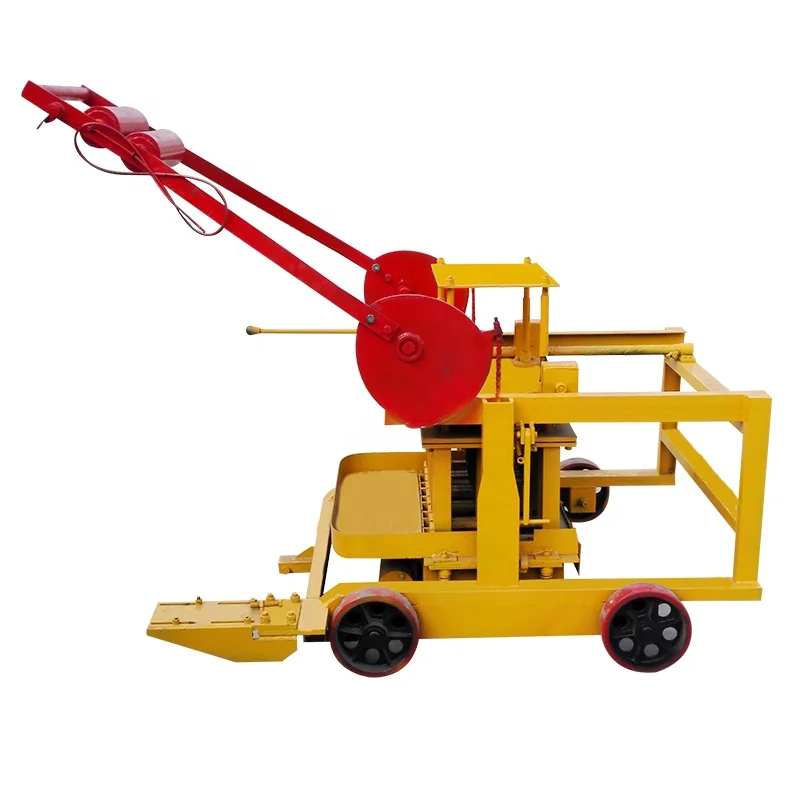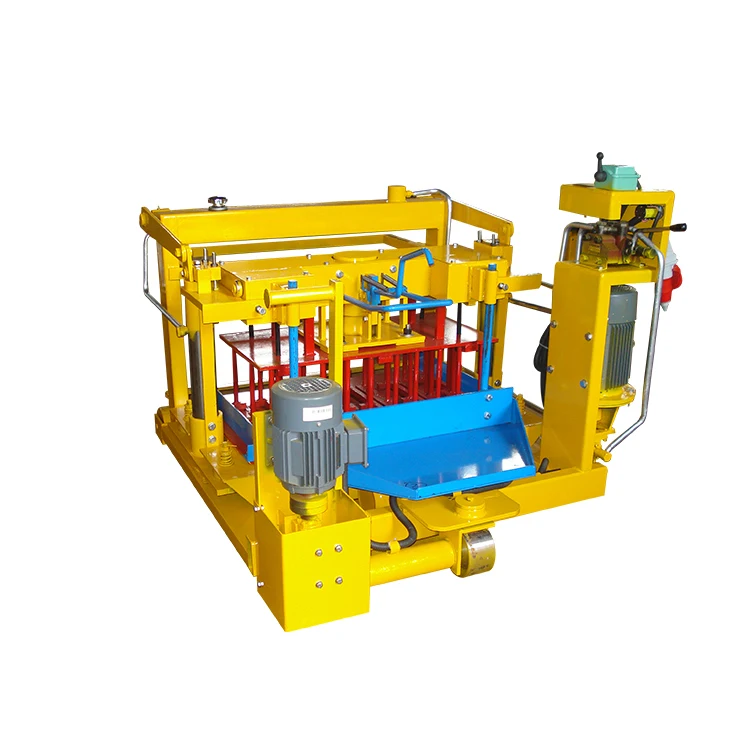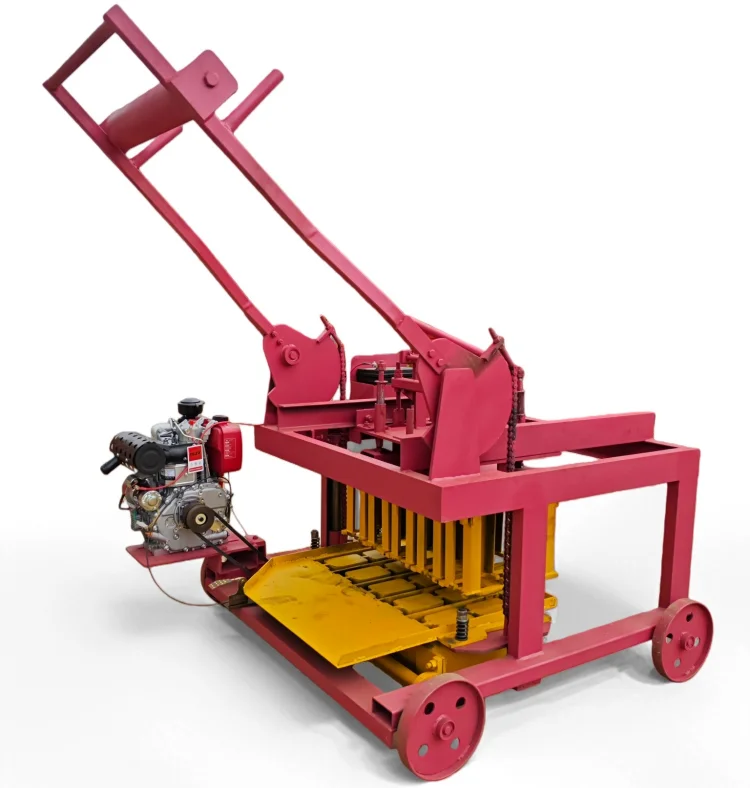


Description
Honest capacity per block format — Every output figure for the QMY4-30 is stated against a specific hollow block dimension and mould cavity count, so your daily production plan reflects what the machine actually delivers on your site.
Technical Specifications
| Parameter | Value |
|---|---|
| Model | QMY4-30 |
| Product Type | Mobile Concrete Block Making Machine |
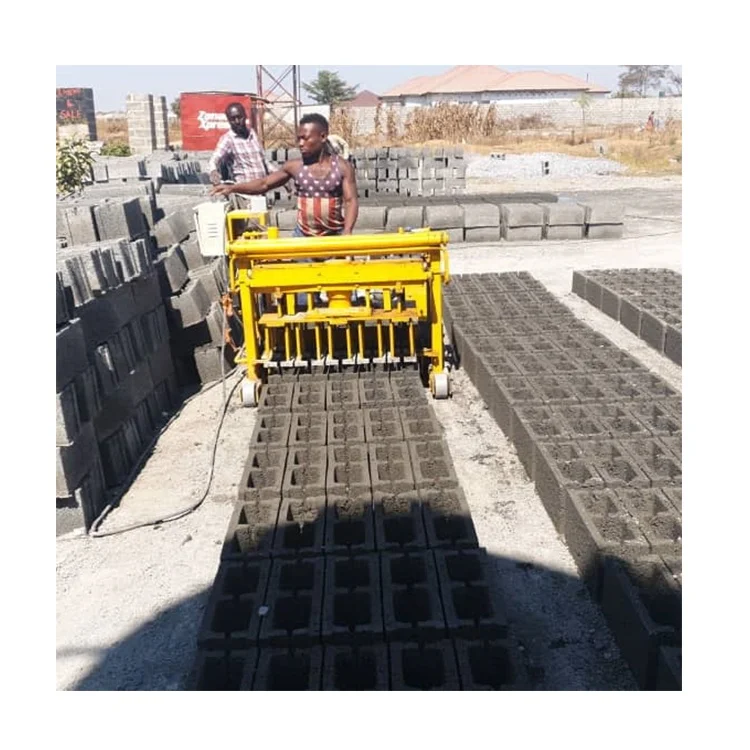
| Assembly State | Mobile, self-propelled on-site (egg-laying type) |
| Rated Power | 5 kW |
| Molding Cycle Time | 30 seconds |
| Output Capacity | 480 pcs/h (based on 400×200×200mm hollow block, 4 pcs/mould) |
| Output Capacity | 600 pcs/h (based on 400×150×200mm hollow block, 5 pcs/mould) |
| Output Capacity | 840 pcs/h (based on 400×100×200mm hollow block, 7 pcs/mould) |
| Output per 8-hour Shift | 3,840 / 4,800 / 6,720 pcs (for the above three formats respectively) |
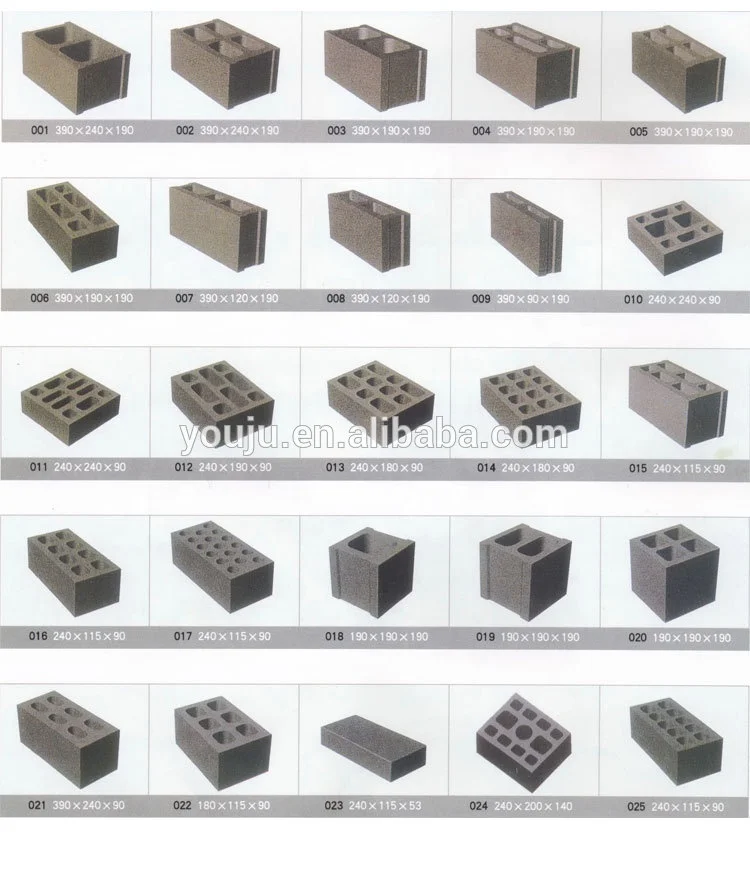
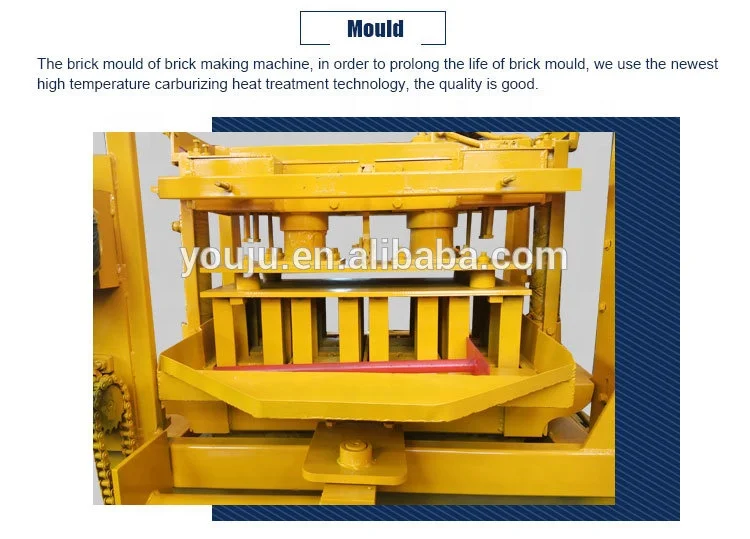
| Mould Format | Interchangeable moulds for hollow block and solid brick |
| Raw Materials | Cement, sand, crushed stones, slag |
| Overall Dimensions (L×W×H) | 1200 × 1200 × 1100 mm |
| Net Weight | 950 kg |
| Pallet Size | N/A (blocks laid directly on ground) |
| Voltage & Frequency | Configurable to buyer’s site supply (to be confirmed) |
| Control System | PLC or relay logic (to be confirmed) |
| Warranty | One year |
Application Suitability
| Application | Material or Output |
|---|---|
| On-site hollow block production for building contractors | Cement, sand, and crushed stone mixed on the job site; blocks laid directly on the concrete floor |
| First block plant for entrepreneurs with limited capital | Local aggregates including slag and volcanic sand where available; low-investment setup without a fixed curing line |
| Supplemental mobile unit for material distributors | Solid brick and multiple hollow block formats switched via interchangeable moulds to cover a range of local demand |
What a Single "Pieces per Hour" Figure Leaves Out About Mobile Block Machines
Capacity only becomes real when tied to the exact block format your market buys.
Many mobile block machine specifications quote a single cycle rate and leave the buyer to assume it applies across all block sizes. The QMY4-30 completes a moulding cycle in 30 seconds, but that cycle produces four pieces of 400×200×200mm hollow block while it produces seven pieces of 400×100×200mm. The gap between 480 and 840 pieces per hour is not an efficiency gain — it is simple arithmetic driven by cavity count. Buyers who plan a project timeline around the higher number, only to spend most shifts running the larger format, end up with a shortfall that cascades into missed contractor deadlines [NEED_CITE: capacity planning assumptions in mobile block production]. Stating output per format removes that surprise before the machine arrives.
Matching the Mould to the Block Your Market Actually Buys
The QMY4-30 ships with interchangeable moulds covering standard hollow block dimensions and solid brick formats. Mould selection starts with the format that moves fastest in your local market, not with the format that inflates the hourly number. Each cavity count and block dimension is confirmed before the machine leaves the factory, so the cycle time you see on the specification sheet is the cycle time your operator will run on day one. Choosing the right mobile block machine means choosing the right mould set first.
Why Local Aggregate Dictates the Configuration
I have watched a mobile egg-laying machine crack every block it produced on the second day of a project in Kenya because the vibration force was tuned for standard river sand while the contractor was feeding local volcanic aggregate. The mix behaved differently under pressure, and the machine settings had not been adjusted. Before we confirm any QMY4-30 configuration, we ask for a sample description or lab report of the sand, crushed stone, or slag you plan to use [NEED_CITE: effect of aggregate type on block compressive strength]. The vibration and pressure settings are then matched to that material, not to a catalogue default.
Reading the Specs That Actually Govern Block Quality
The 30-second moulding cycle is the baseline rhythm, but block density and strength come from how vibration force and hydraulic pressure interact with your specific mix. A stiffer mix with more crushed stone demands higher vibration to consolidate fully, while a wetter mix with finer sand needs less force to avoid slumping. The QMY4-30’s 5 kW rated power must be available continuously at your site — voltage drop over a long cable run from a portable generator will reduce both vibration amplitude and pressure, producing lighter and weaker blocks without any visible alarm. Pallet size is irrelevant here because the egg-laying design deposits blocks directly on a prepared floor, which means the floor flatness and curing area layout become part of your quality equation. Mould change time depends on the operator’s familiarity with the bolt pattern and the tools on hand; planning for this during training avoids losing half a shift the first time a format switch is required.
The Cost of Skipping the Configuration Conversation
A mobile block machine that arrives with the wrong mould installed, a voltage that does not match the site generator, and vibration settings tuned for a material the buyer cannot source locally creates a chain of avoidable costs. Blocks fail strength tests, the contractor orders a second batch from a competitor, and the machine sits idle while replacement parts ship overseas [NEED_CITE: common causes of block rejection in small-scale production]. Every hour spent re-tuning on-site is an hour of lost output, and the operator who was supposed to be running production is instead troubleshooting settings that should have been confirmed before loading.
Why Buyers Source This Machine Through Shiyue
Block machinery is the single focus here, so the QMY4-30 is specified as a matched system of machine, mould, and handling approach rather than assembled from unrelated catalogue pages. Configuration is set against your actual mix design, your local aggregate, and the target block format your market sells, not against a default line in a brochure. Mould design covers the formats you need, and custom drawings are accepted when your market demands a non-standard dimension. The automation level starts at manual mobile operation, which keeps initial investment low, while the same product family offers upgrade paths if your output requirements grow later. Installation support and operator training are included so the machine runs correctly from the first shift, and mould and wear parts availability is confirmed before you take delivery.
Documentation & Verification
- Line layout and capacity calculation stating the block format assumed for every output figure
- Mould drawing and format list confirming exact cavity count and block dimensions per mould
- Voltage, frequency, and control display language confirmation signed off before dispatch
- Factory test record run on the agreed block format with your specified raw material mix
- Wear parts and mould catalogue with first-replacement availability dates included in the shipment
Installation, Commissioning & Support
- Flat, level concrete floor required — the QMY4-30 lays blocks directly on the ground with no pallet line
- 5 kW continuous power supply with voltage and frequency confirmed before the machine leaves the factory
- Machine ships as a single mobile unit; self-propelled on arrival with no heavy crane needed for positioning
- On-site commissioning covers vibration and pressure tuning to the buyer’s actual mix design and aggregate
- Operator training includes mould change procedure, cycle timing, and daily maintenance checkpoints
- Wear parts list provided with lead times so first replacements are on hand before they are needed
What to Include in Your Inquiry
To configure the QMY4-30 around your project rather than a catalogue default, share the block format your market sells most, the local raw materials you plan to mix, and your site’s voltage and frequency. Include the curing area dimensions you have available so the egg-laying pattern can be planned before the machine arrives.
Frequently Asked Questions
Q: How is daily output calculated for each block format on the QMY4-30?
A: Output is calculated from the 30-second moulding cycle multiplied by the number of cavities in the specific mould. For a 400×200×200mm hollow block with four cavities, that yields 480 pieces per hour or 3,840 over an eight-hour shift. For a 400×100×200mm block with seven cavities, the same cycle produces 840 per hour. Every figure carries its format assumption.
Q: Which raw materials and mix designs are compatible with this mobile block machine?
A: The QMY4-30 runs on cement, sand, crushed stones, and slag. However, vibration and pressure settings must be matched to the specific aggregate you source locally. We ask for a material description before confirming configuration so the machine is tuned for your mix, not a generic one.
Q: What voltage and control language will the machine ship with?
A: Voltage, frequency, and control display language are confirmed with you before production begins. The QMY4-30 is configured to match your site’s power supply — whether that is a grid connection or a portable generator — and the operator interface is set to a language your team reads.
Q: How long does a mould change take, and what does the operator need?
A: Mould change on the QMY4-30 involves unbolting the current mould, lifting it clear, and securing the replacement. The procedure is covered during on-site operator training, and the required hand tools are listed in the manual so they are on hand before the first format switch is needed.
Q: Can custom block dimensions be designed for my market?
A: Custom mould design is available based on buyer drawings or target block dimensions. The mould cavity count, block wall thickness, and overall format are confirmed against your production requirements before the mould enters manufacturing, ensuring the cycle time and output figures reflect your specific product.