

Description
Format-matched capacity — Every QMJ2-45 output figure is tied to a specific hollow brick dimension and cycle time, not a peak catalogue number.
Technical Specifications
| Parameter | Value |
|---|---|
| Model | QMJ2-45 |
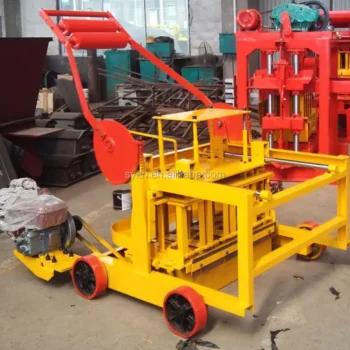
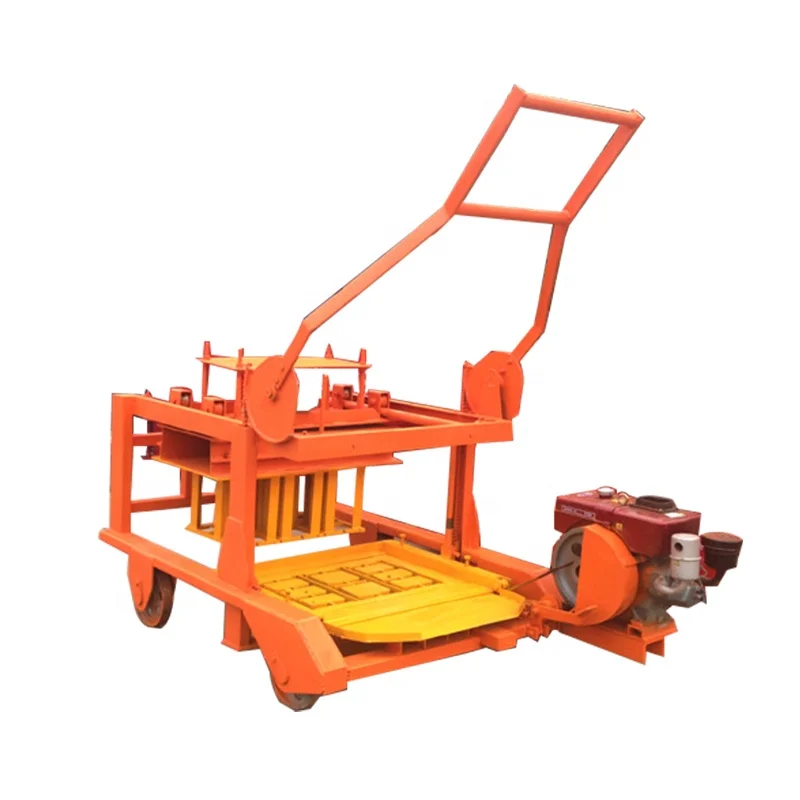
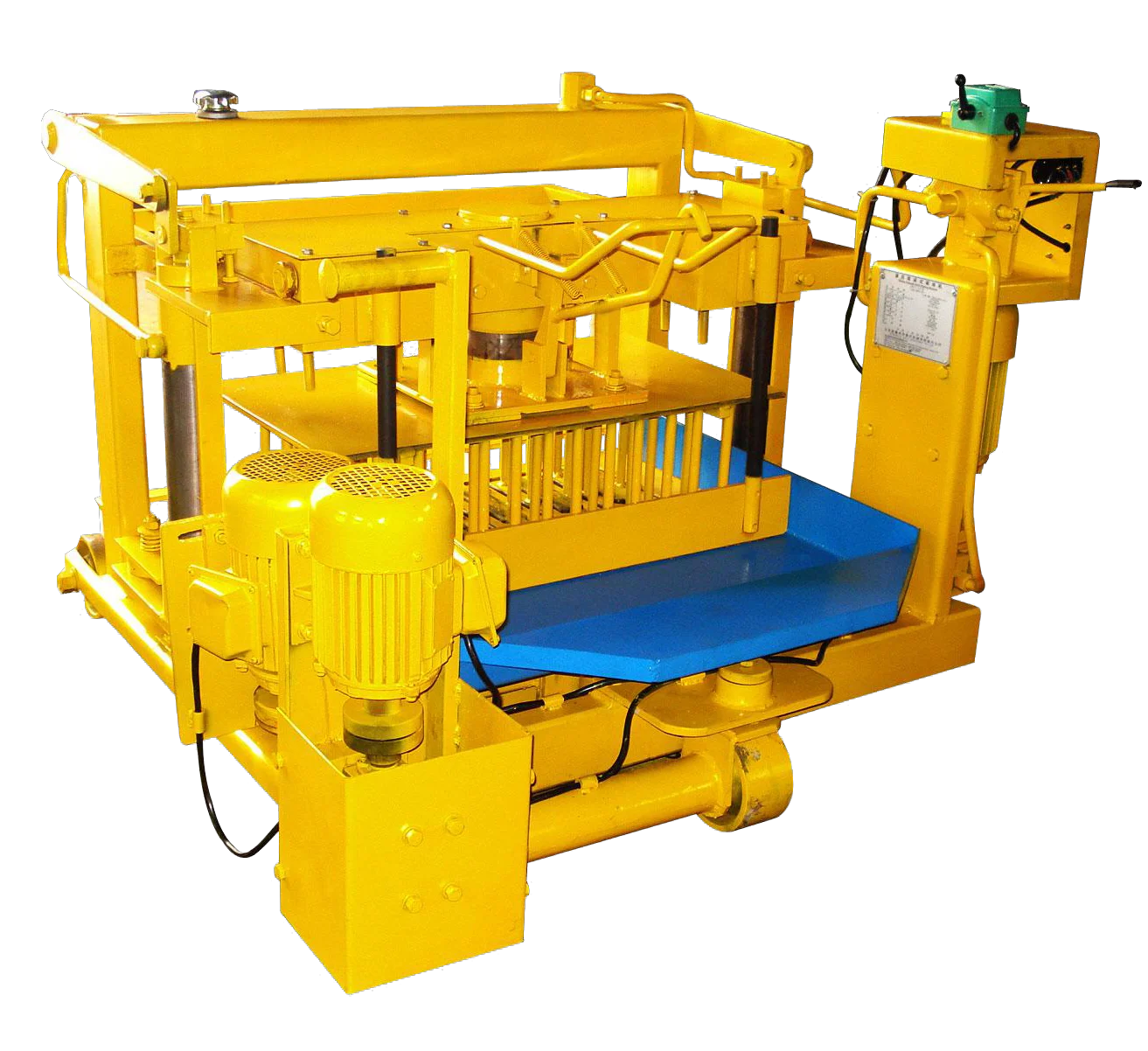
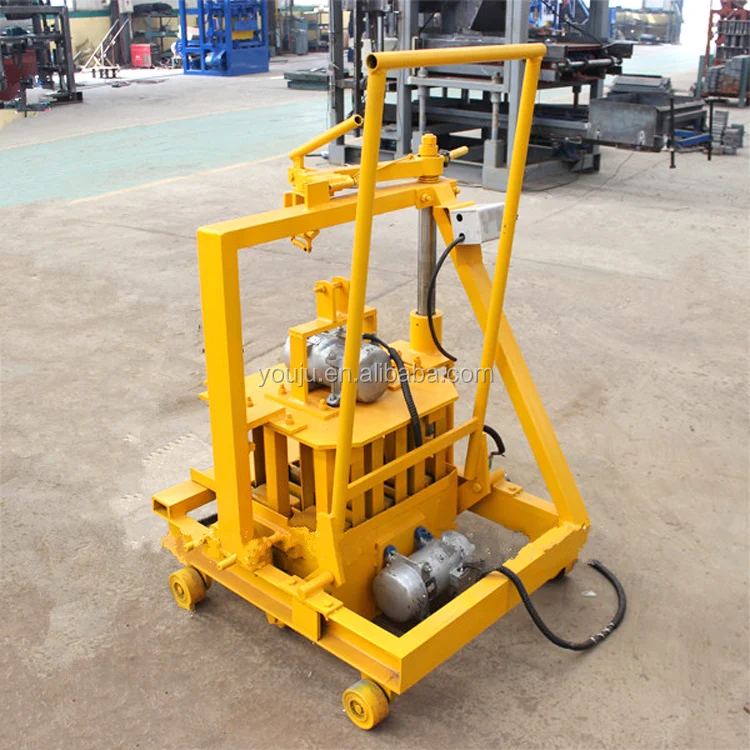
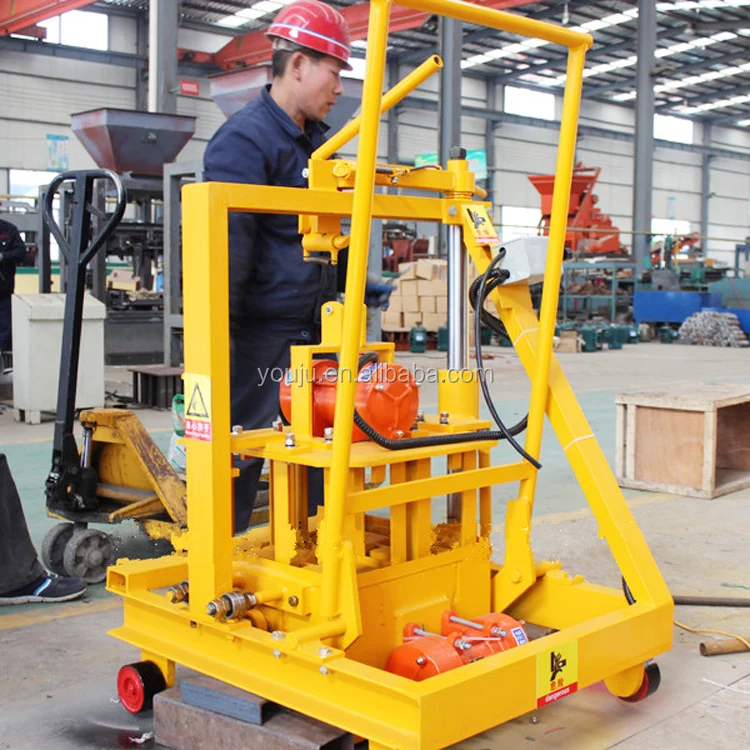
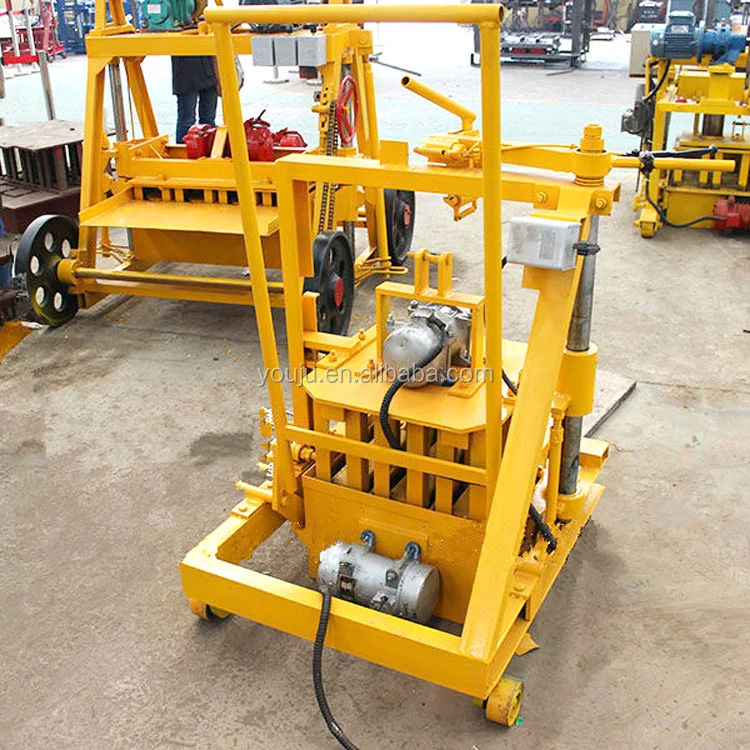
| Product Type | Mobile Block Making Machine |
| Automation Level | Manual mobile operation |
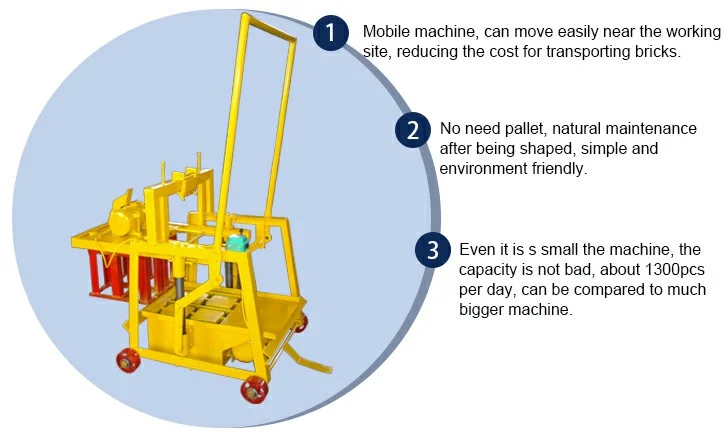
| Pallet Requirement | No pallets required (egg-laying design) |
| Power Source | Electric engine |
| Labour Requirement | 1 to 3 workers |
| Mould Change | Interchangeable moulds for different hollow brick formats |
| Cycle Time (400×200×200mm hollow brick) | 25–30 seconds |
| Output Capacity (400×200×200mm hollow brick) | 2 pcs/mould, 160 pcs/h, 1280 pcs/8hr |
| Cycle Time (400×150×200mm hollow brick) | 25–30 seconds |
| Output Capacity (400×150×200mm hollow brick) | 3 pcs/mould, 240 pcs/h, 4800 pcs/8hr (basis not stated in source) |
| Cycle Time (400×100×200mm hollow brick) | 25–30 seconds |
| Output Capacity (400×100×200mm hollow brick) | 4 pcs/mould, 320 pcs/h, 2560 pcs/8hr |
| Mobility | Free-moving, no fixed plant required |
| Hydraulic Pressure | Not applicable — mechanical/electric type |
| Standards | ISO 9001:2000, CE |
Application Suitability
| Application | Material or Output |
|---|---|
| On-site hollow brick production | Crushed stone, river sand, cement, and local aggregate without a fixed batching plant |
| Small-space or low-investment block production | Limited footprint sites where pallet storage and curing racks are not feasible |
| Construction contractor project sites | Housing and infrastructure projects requiring hollow blocks produced directly at the build location |
| First-time block plant entrepreneurs | Entry-level production with format flexibility across 400×200, 400×150, and 400×100mm hollow bricks |
| Remote or temporary site production | Locations where transporting finished blocks from a central plant is cost-prohibitive |
What "160 Pieces per Hour" Actually Means for Your Format
Capacity only matters when you know exactly which block size it was measured on.
Many mobile block machine quotations state an hourly output without revealing the mould format behind that number. A buyer expecting 320 pieces per hour on 400×200×200mm hollow bricks will be disappointed when the real figure at that size is 160. The QMJ2-45 mobile block making machine specifications listed here tie every output number to a specific mould, cycle time, and block dimension so you can calculate daily production against the format your market actually buys. I have seen contractors arrive on site with a machine rated for a thin partition block, only to discover their primary product — a 200mm-wide load-bearing hollow brick — cuts output in half [NEED_CITE: common miscalculation in mobile block machine capacity planning].
Mould Formats and the Cycle Time Behind Each One
The QMJ2-45 runs interchangeable moulds across three standard hollow brick formats. At 400×200×200mm, each mould produces 2 pieces in a 25–30 second cycle, yielding 160 pieces per hour. Switching to the 400×150×200mm format places 3 pieces per mould within the same cycle window, while the 400×100×200mm partition block format fills 4 cavities per cycle. Understanding which format drives your revenue determines whether this QMJ2-45 mobile block making machine specifications sheet aligns with your actual sales mix, not just a theoretical maximum.
Pallet-Free Operation and What It Removes From Your Cost Sheet
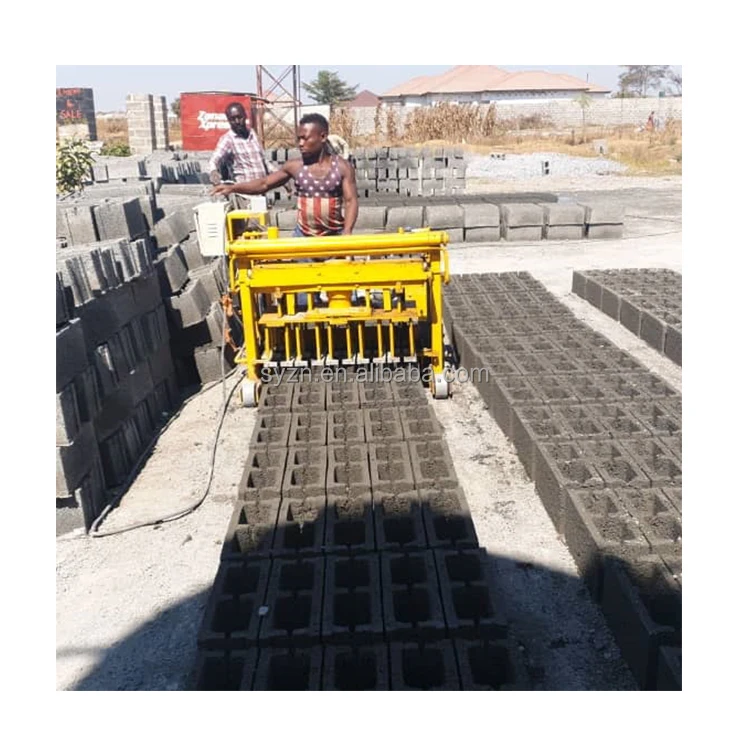
Egg-laying design means the machine deposits blocks directly onto a level concrete floor and moves forward, leaving the product to cure in place. No pallets means no pallet purchase, no pallet return logistics from the curing area back to the machine, and no pallet maintenance budget. For a contractor producing on a project site where space is temporary and infrastructure is minimal, eliminating pallet handling simplifies the entire operation to one machine, a prepared ground surface, and a small crew.
Reading the QMJ2-45 Mobile Block Making Machine Specifications Against Your Local Mix
This machine uses an electric motor driving a mechanical vibration system rather than a hydraulic press circuit. Vibration force and frequency must match the aggregate gradation and cement ratio available locally. When an African buyer once sent us volcanic scoria from their site, standard sand-based vibration settings produced blocks with crumbling edges; two days of remote parameter adjustment brought the density up to standard [NEED_CITE: effect of lightweight volcanic aggregate on vibration compaction in mobile block machines]. That is why we now request a raw material sample before finalising any configuration. The mechanical vibration on the QMJ2-45 is adjustable within a defined range, and the correct setting depends entirely on what you can source within economical hauling distance of your site.
The Hidden Cost of Skipping the Format Question
Ordering a mobile machine without confirming which block format your local construction market specifies leads to a cascade of problems. The mould you need may not be in the supplier’s standard catalogue, requiring a custom drawing and a longer lead time. The vibration setting calibrated at the factory for standard river sand may not compact your local crushed basalt or pumice adequately, producing blocks that fail a compressive strength test on arrival. Voltage and frequency left unconfirmed can stall commissioning for weeks while a replacement motor is shipped [NEED_CITE: electrical compatibility issues in exported construction machinery]. Every one of these delays is avoidable with a structured pre-order specification exchange.
Why Sourcing This Machine Here Reduces Format Risk
Block machinery is our single focus, which means the QMJ2-45 is specified as a matched system — machine, mould, and operating parameters — rather than assembled from unrelated component suppliers. Configuration is set against your actual mix design and target block format, not a catalogue default. Mould design covers the formats your market sells, and custom drawings are available when your local standard differs from our stock range. We confirm voltage, frequency, and control language before production begins so the machine arrives ready to run. Installation support includes on-site commissioning with operator training, and the wear parts and mould replacement list is documented before shipment so your first reorder is straightforward.
Documentation & Verification
- Line layout showing block format assumed in the capacity calculation for your selected mould
- Mould drawing and complete format list confirming compatibility with your local hollow brick standard
- Voltage, frequency, and electrical schematic confirmed against your site supply before production
- Factory test record run on your specified block format with cycle time logged per mould
- Operation and maintenance manual covering daily vibration adjustment and mould change procedure
- Wear parts and mould replacement list with part numbers and availability lead times
Installation, Commissioning & Support
- Requires a level, cured concrete floor surface as the production and curing area for pallet-free egg-laying operation
- Electric motor connection must match confirmed voltage and frequency with a dedicated circuit breaker
- Machine arrives assembled; mould change and vibration calibration performed during on-site commissioning
- Operator training covers cycle timing, mix consistency judgement, and manual mould swap procedure
- Wear parts list provided at delivery with recommended first reorder interval based on your aggregate abrasiveness
- Daily maintenance checklist focuses on vibration mechanism inspection and mould cavity cleaning
Sizing the Machine to Your Project
To confirm whether the QMJ2-45 fits your production plan, share the specific hollow brick formats your market demands, the local aggregate type and cement brand you intend to use, and your target daily output per format. We also need your site voltage and frequency, the floor area available for production and curing, and whether you have existing mixing or material handling equipment that the machine must integrate with. If your aggregate is non-standard — volcanic rock, pumice, recycled demolition concrete — send a sample so we can calibrate vibration parameters before the machine leaves the factory.
Frequently Asked Questions
Q: How is output capacity calculated for each block format on the QMJ2-45?
A: Each capacity figure is based on the mould cavity count for that specific hollow brick dimension and a 25–30 second cycle time. For example, the 400×200×200mm mould holds 2 cavities, producing 160 pieces per hour. We state the format alongside every output number so your daily plan reflects the block size you actually sell.
Q: Which mould formats are available, and can I order a custom size?
A: Standard moulds cover 400×200×200mm, 400×150×200mm, and 400×100×200mm hollow bricks. If your local market requires a different dimension, we can design a custom mould from your drawings. The mould drawing and format list are confirmed before production so you know exactly which products the machine will produce on arrival.
Q: How does local aggregate affect block strength on this pallet-free machine?
A: Vibration force and cycle time must match your aggregate type and cement ratio. Lightweight or highly angular aggregates may require adjusted vibration settings to achieve proper compaction without a hydraulic press. We request a material sample before finalising machine parameters so block strength meets your local standard from the first production run.
Q: What voltage and frequency options are confirmed before shipment?
A: Voltage and frequency are confirmed during the quotation stage based on your site electrical supply. We verify motor rating, wiring configuration, and any control display language before the machine enters production, avoiding commissioning delays caused by electrical mismatch at your destination port.
Q: How long does a mould change take on site, and what is the procedure?
A: Mould interchange on the QMJ2-45 involves releasing the mechanical clamps, lifting the current mould clear, and seating the replacement. A trained operator completes the swap within a single shift break. The operation manual documents the sequence, and training during commissioning ensures your crew can switch formats without external support.