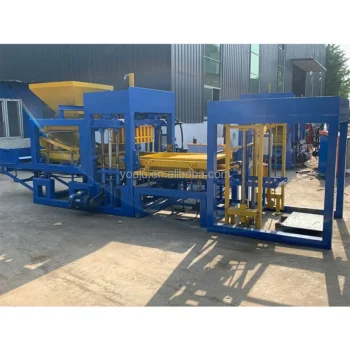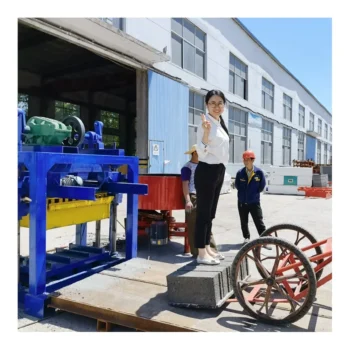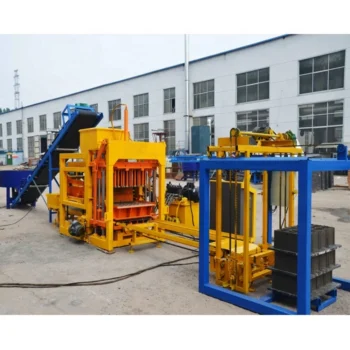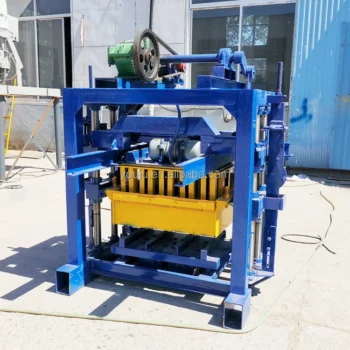
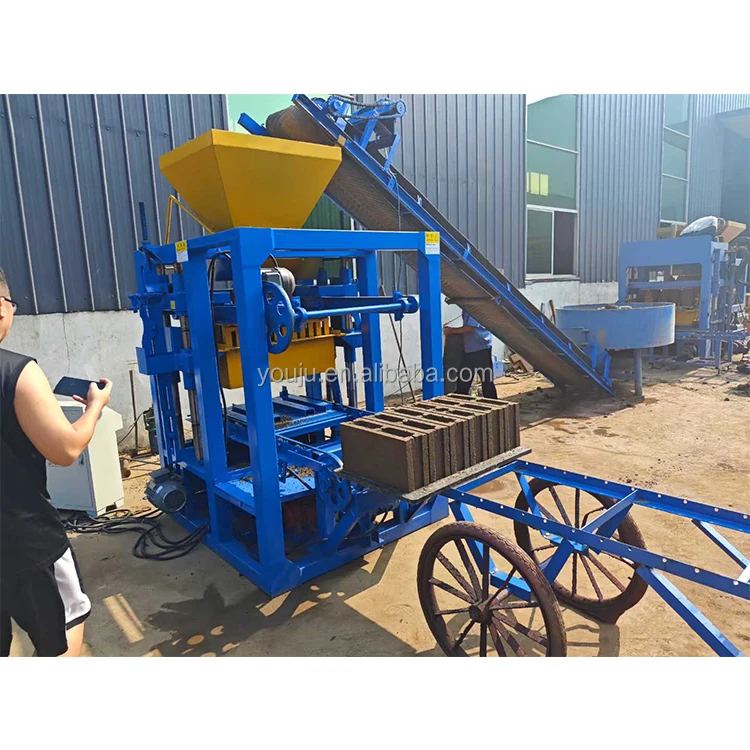
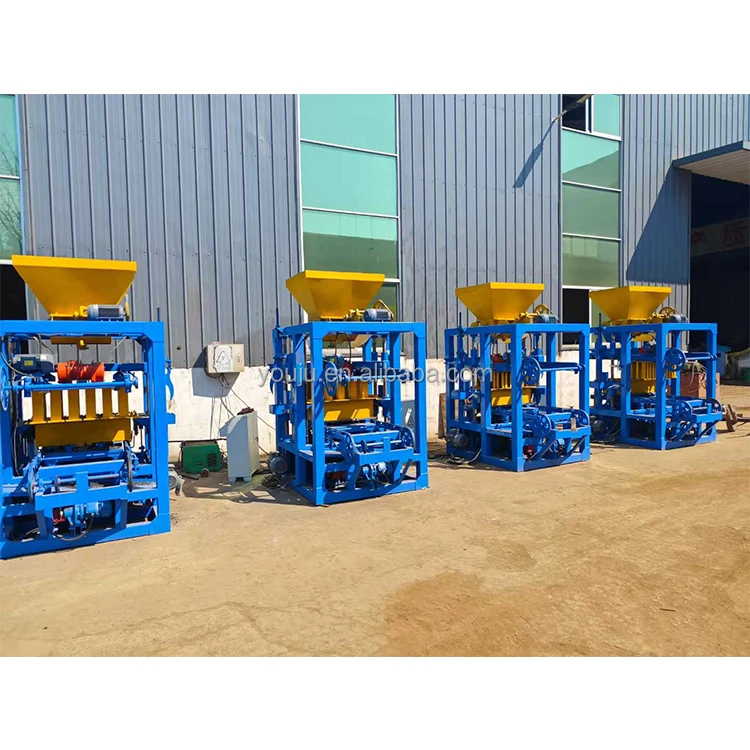
Description
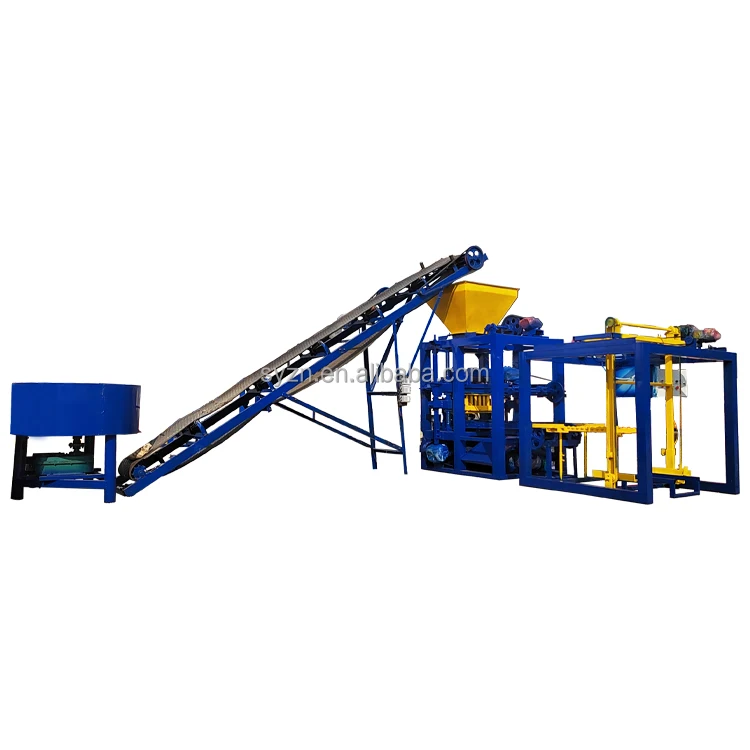
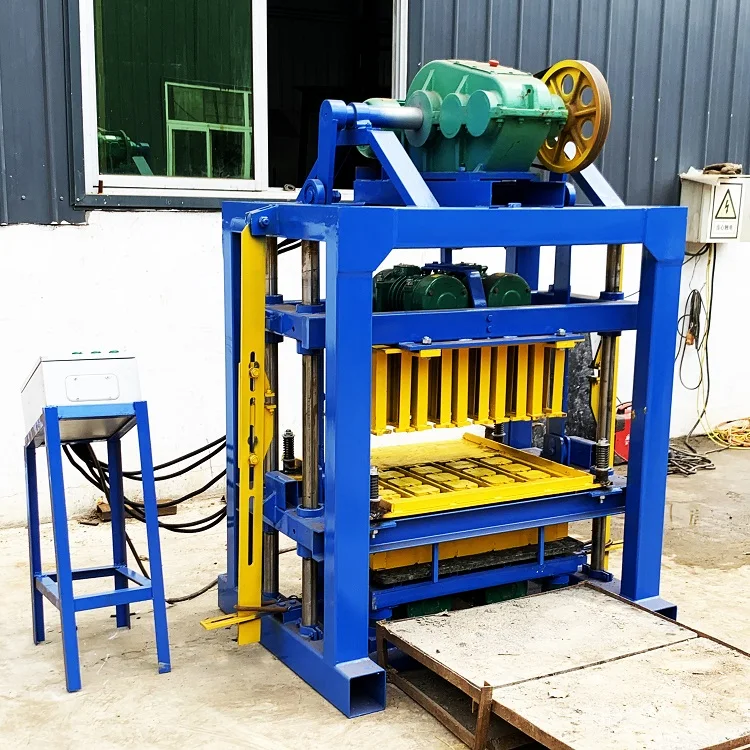
Vibration Force Tuned to Your Aggregate — the QTJ4-26 dual-motor platform vibration system is configured only after reviewing your local stone dust, sand gradation and cement ratio, not shipped with factory-default amplitude settings.
Technical Specifications
| Parameter | Value |
|---|---|
| Model | QTJ4-26 |
| Product Type | Semi-Automatic Concrete Block Making Machine |
| Molding Type | Platform Vibration |
| Overall Dimensions (working state) | 3600mm × 1700mm × 2560mm |
| Net Weight | 1750kg |
| Overall Power | 14.25kW |
| Control System | Electronic controlling part (PLC or relay logic to be confirmed) |
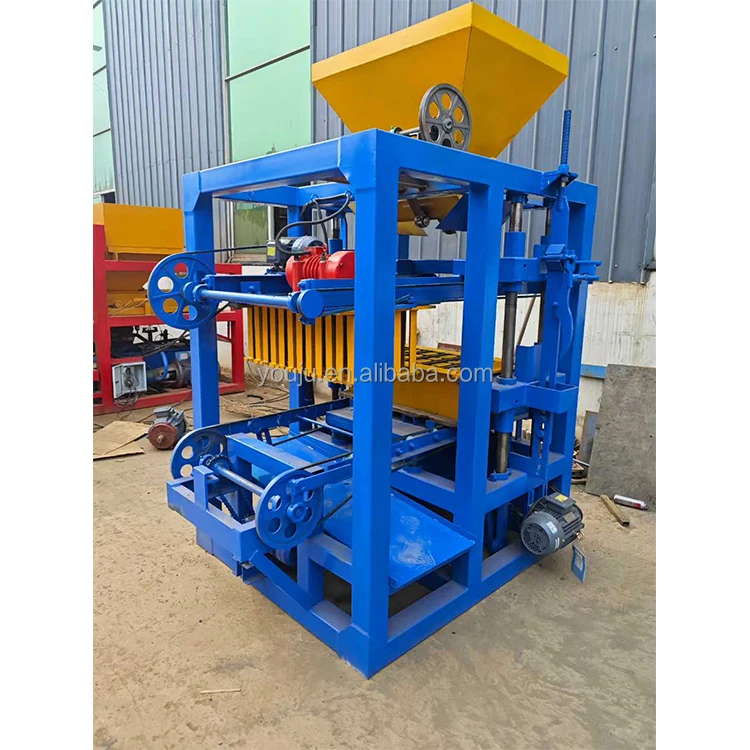
| Vibrating System | Lower platform vibration (2 × 3kW motors) + upper vibration (1.5kW attached device) |
| Elevating System | Cone-shape motor with JZQ250 speed reducer |
| Delivery Device | Cycloidal pin wheel speed reducer, chains, V-belt |
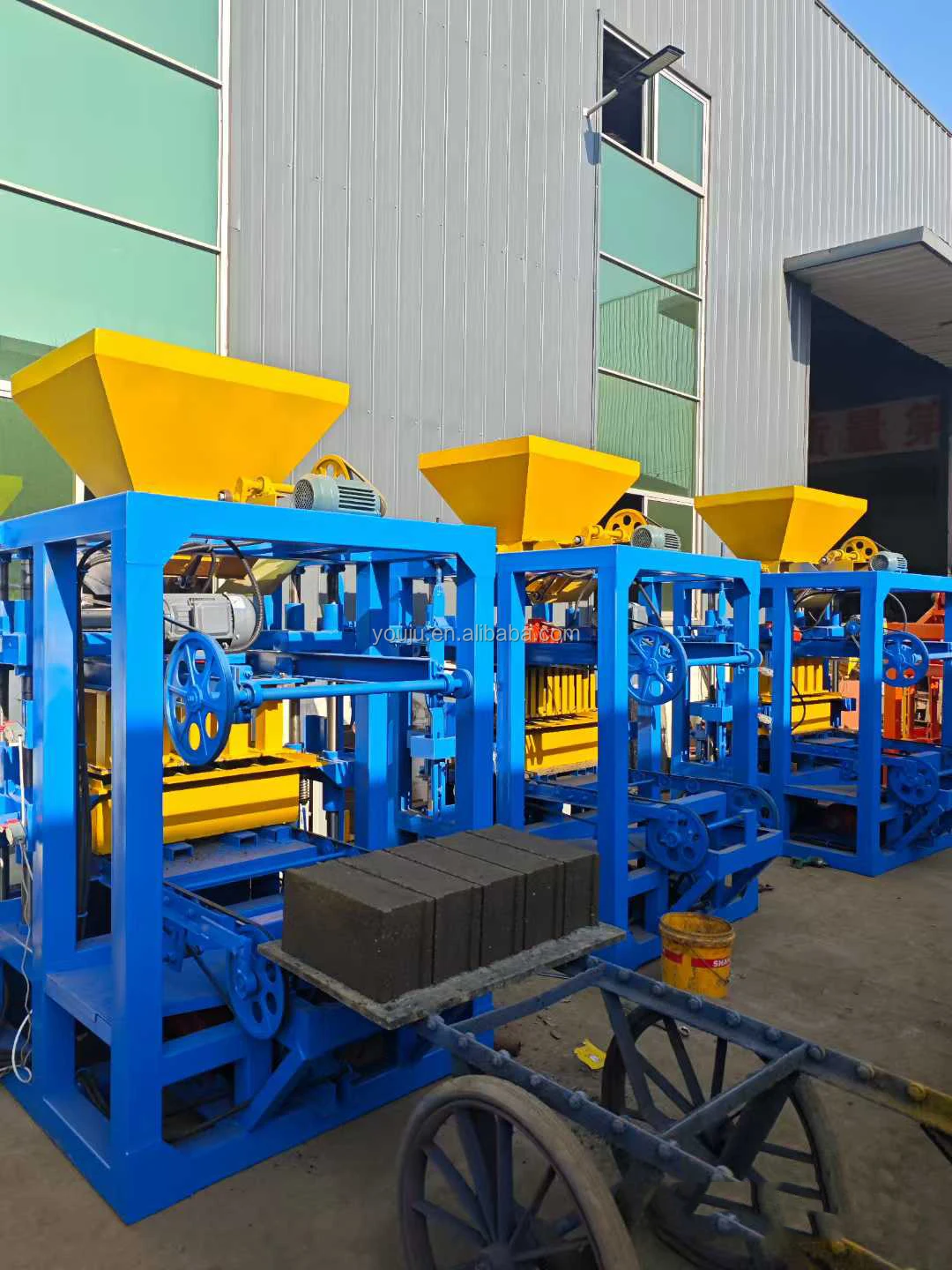
| Machine Frame | Dragon gate style, super steel construction, four vertical wear-resisting shafts |
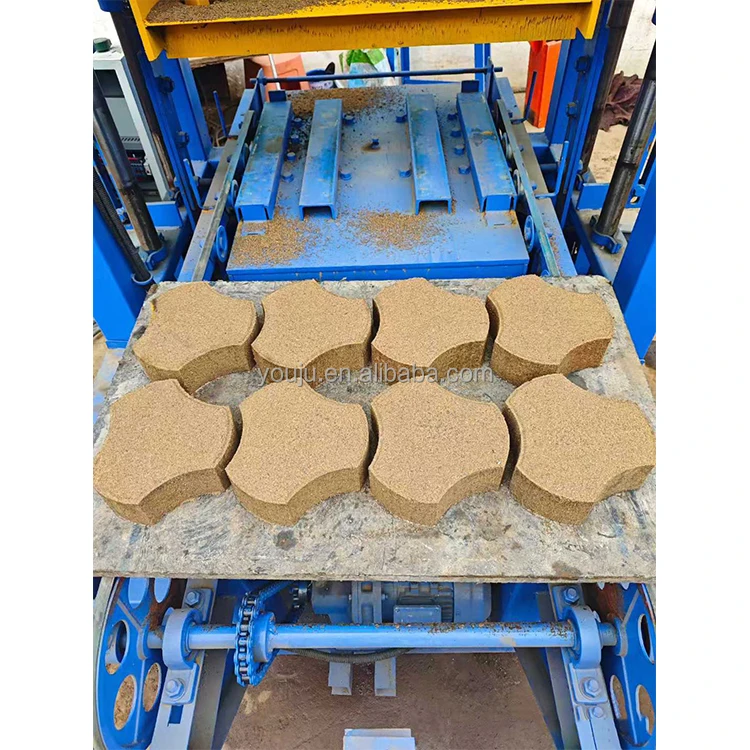
| Pallet Size | 850mm × 450mm |
| Mould Format — Hollow Block | 390mm × 190mm × 190mm (4 pcs/mould) |
| Mould Format — Solid Brick | 240mm × 115mm × 53mm (21 pcs/mould) |
| Cycle Time | Basis not stated in source — confirm block format, material and thickness |
| Output Capacity | Basis not stated in source — confirm block format, material and thickness |
| Automation Level | Semi-automatic, manual pallet handling |
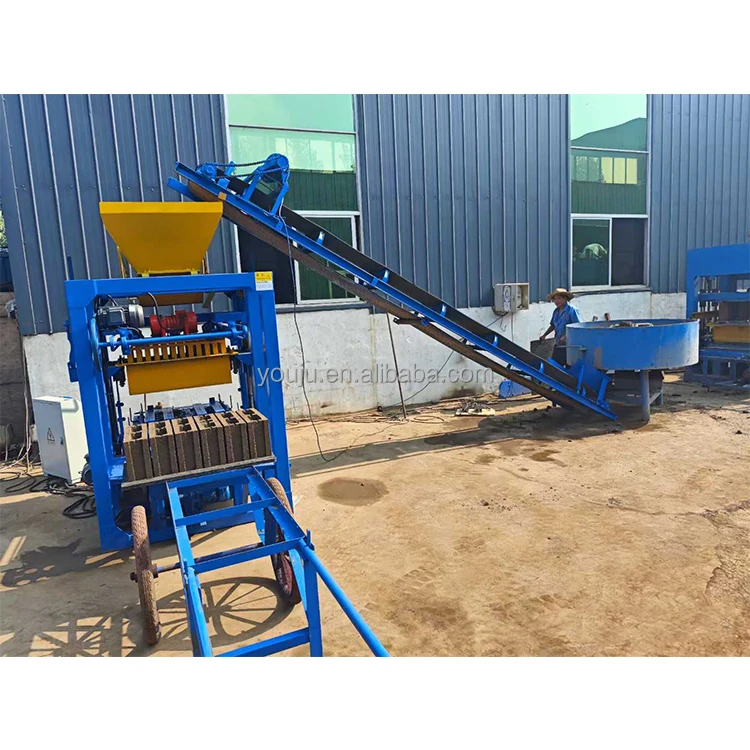
| Support Equipment Included | JQ350 pan mixer, 6m belt conveyor, trolley |
| Optional Equipment | Auto stacker (3–6 layers depending on block height) |
Application Suitability
| Application | Material or Output |
|---|---|
| Hollow block production for small block plants | Crushed stone, sand, cement and water mix for 390×190×190mm wall blocks |
| Solid brick production for housing projects | Fine aggregate and cement mix for 240×115×53mm standard bricks |
| On-site block production for construction contractors | Local quarry dust and river sand blends adapted to project specifications |
| First block plant setup by entrepreneurs | Standard concrete mixes with locally sourced aggregates at moderate investment level |
Why "Pieces per Hour" Means Nothing Without the Block Format Attached
Every capacity figure must name the block format it assumes, or it is not a capacity figure at all.
Sellers routinely quote the QTJ4-26 Hollow Block Making Machine specifications with a single hourly number that actually corresponds to the smallest, fastest-cycling format on the pallet. When the buyer’s real product is a 390×190×190mm hollow block requiring longer vibration and slower demoulding, the daily total drops noticeably below the quoted promise. I have watched a buyer in West Africa commit to a contract based on a brochure number, only to discover on commissioning that the cycle time for his chosen hollow block format was nearly double what the catalogue implied. His curing yard filled up in half a day and the kiln schedule collapsed [NEED_CITE: block format assumptions in capacity quotations].
Matching Mould Format to the Block Your Market Actually Buys
The QTJ4-26 ships with two confirmed mould formats: 390×190×190mm hollow blocks at four pieces per cycle and 240×115×53mm solid bricks at twenty-one pieces per cycle. These two formats occupy the same pallet area but demand very different vibration durations and demoulding speeds. A buyer targeting the hollow block market will run fewer cycles per hour than one producing solid bricks, and any Semi-Automatic Block Machine how to choose decision must start with the format that generates revenue in the buyer’s local market, not the format that produces the highest brochure number.
How Pallet Size Constrains Your Entire Curing Layout
The 850mm × 450mm pallet size is fixed for this machine, and it governs more than the press itself. The buyer’s existing curing racks, forklift tine spacing and yard layout must accommodate this pallet dimension before the machine arrives. I once saw a plant owner receive a semi-automatic press only to find his curing racks were built for a different pallet standard from a previous machine, forcing a complete rack rebuild before the first block could be cured. Confirming pallet compatibility is part of the Hollow Block Making Machine specifications review that should happen before the purchase order is signed [NEED_CITE: pallet standardisation in block plant operations].
Reading the Vibration and Frame Numbers for What They Actually Mean
The lower platform carries two 3kW vibration motors while a 1.5kW upper vibration device compacts the mix from above. This dual-direction vibration must be tuned against the buyer’s specific aggregate gradation and cement content; a mix with high fines or clay contamination absorbs vibration energy differently and may require amplitude adjustment at commissioning. The dragon gate frame with four vertical wear-resisting shafts keeps the mould aligned through thousands of vibration cycles each day, preventing the gradual drift that causes uneven block walls and rejected batches. The JZQ250 speed reducer on the elevating system controls mould lift speed during demoulding, which directly affects whether the freshly pressed block holds its edge or slumps.
The Cost of Skipping the Mix Design Conversation
When a machine is configured against a catalogue-default mix rather than the buyer’s actual local aggregate, the result surfaces weeks after installation. Block strength tests fail, surface finish shows cracking, and the buyer blames the press. In reality the vibration force was never matched to the material being fed. The QTJ4-26 platform vibration system has adjustable parameters, but those parameters must be set against a known mix design, not guessed. I have seen entire container loads of blocks rejected at a port because the vibration settings were calibrated for clean river sand while the buyer was using unwashed quarry dust with high clay content [NEED_CITE: aggregate quality impact on block compressive strength].
What Makes This Supply Source Different for Format-Specific Buyers
The machine, mould, pallet and handling equipment are specified as one matched system rather than sourced from separate suppliers and assembled on site. Every quotation includes a capacity calculation that names the block format assumed, so the buyer can compare the number against actual market demand. Mould design covers the formats the buyer’s local market sells, and custom mould drawings are available when standard sizes do not match local building codes. The automation level is selectable — a buyer can start with manual pallet handling and add the optional auto stacker later without replacing the press. Voltage, frequency and control language are confirmed in writing before production begins, eliminating the commissioning delays that occur when these details are left to assumption.
Documentation & Verification
- Line layout and capacity calculation stating which block format each output figure assumes
- Mould drawing and format list confirming included sizes and any additional mould orders
- Pallet specification sheet with size and material matched to buyer’s curing racks
- Voltage and control language confirmation document signed before production release
- Factory test record run on buyer’s target block format before machine dispatch
Installation, Commissioning & Support
- Foundation pad must support 1750kg net weight plus dynamic vibration load across the 3600mm × 1700mm footprint
- Dedicated electrical circuit required for 14.25kW total power draw; voltage and frequency confirmed pre-production
- Machine arrives with dragon gate frame and vibration platform assembled; elevating system requires on-site alignment
- First-run commissioning includes vibration amplitude tuning against buyer’s local aggregate and mix design
- Operator training covers mould change procedure, pallet loading sequence and daily shaft lubrication schedule
- Wear parts list includes vibration motor mounts, shaft bushings and conveyor belt spares for first reorder
Before You Send the Inquiry
To size the QTJ4-26 correctly for your operation, provide the target block format and daily output requirement, the local aggregate type and any available sieve analysis, and the voltage and frequency standard at your site. If you already have curing racks or forklifts in place, share the pallet dimensions they accept so we can confirm the 850mm × 450mm pallet fits your existing layout. Specify whether you need the semi-automatic configuration with manual pallet handling or plan to integrate the optional auto stacker from the start.
Frequently Asked Questions
Q: What is the realistic daily output for hollow blocks versus solid bricks on this machine?
A: Output depends entirely on which block format is running. The 390×190×190mm hollow block produces four pieces per cycle with longer vibration and demoulding time, while the 240×115×53mm solid brick produces twenty-one pieces per cycle at shorter intervals. We provide a written capacity calculation for your chosen format before order confirmation, not a single brochure number.
Q: How does vibration force need to match my local aggregate and mix design?
A: The dual-motor platform vibration system delivers force from both lower and upper directions. Aggregate with high fines or clay content absorbs vibration differently than clean graded sand, requiring parameter adjustment during commissioning. We request a material report before finalising vibration settings so the QTJ4-26 produces consistent block strength from your actual mix.
Q: What pallet size does this machine use and how do I confirm it fits my site?
A: The QTJ4-26 runs on 850mm × 450mm pallets. Before ordering, verify that your existing curing racks, forklift tines and yard layout accommodate this dimension. If your site was previously set up for a different pallet standard, rack modification may be needed, and we flag this during the specification review stage.
Q: Can I start semi-automatic and add an auto stacker later?
A: Yes. The machine is designed with manual pallet handling as standard, and the optional auto stacker can be integrated later without replacing the press or modifying the frame. The stacker handles three to six layers depending on block height. We recommend confirming the upgrade path at inquiry stage so the base machine is prepared for future connection.