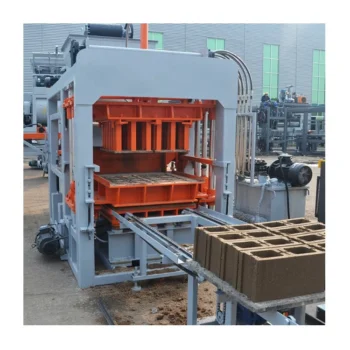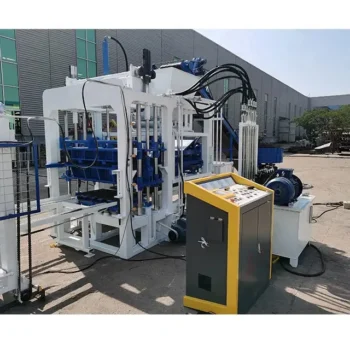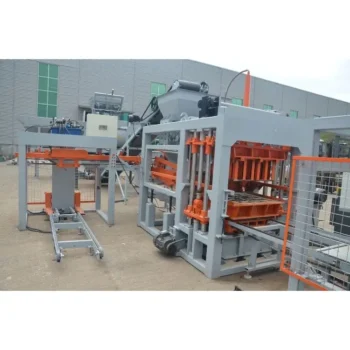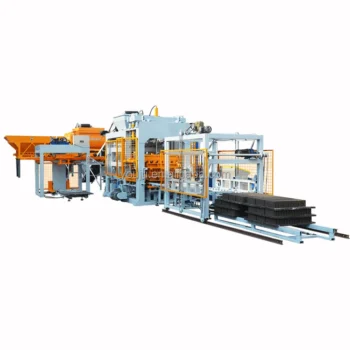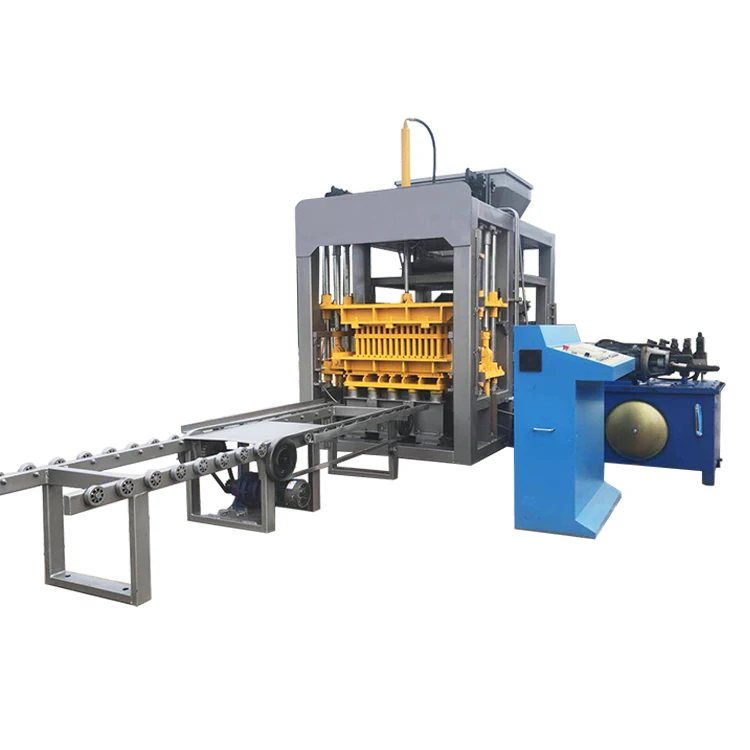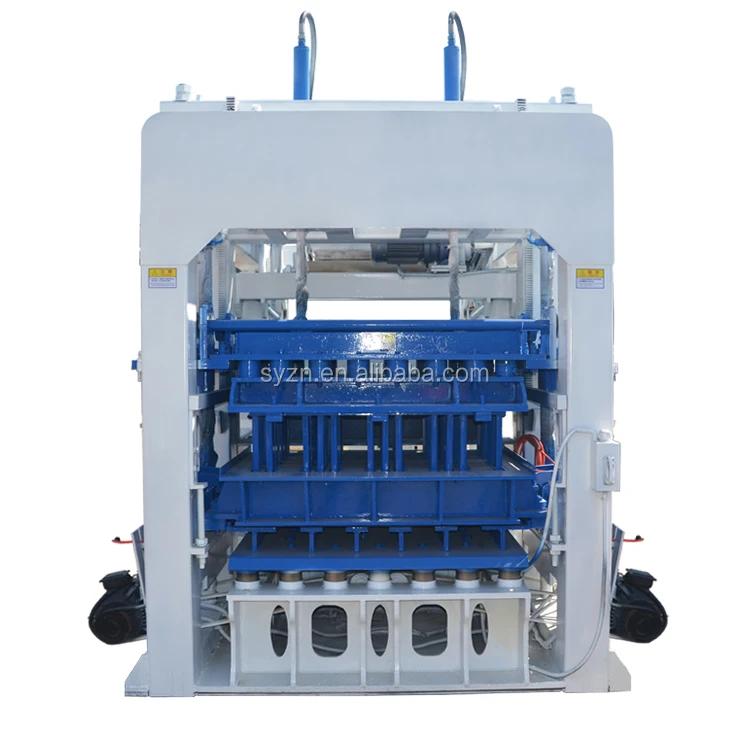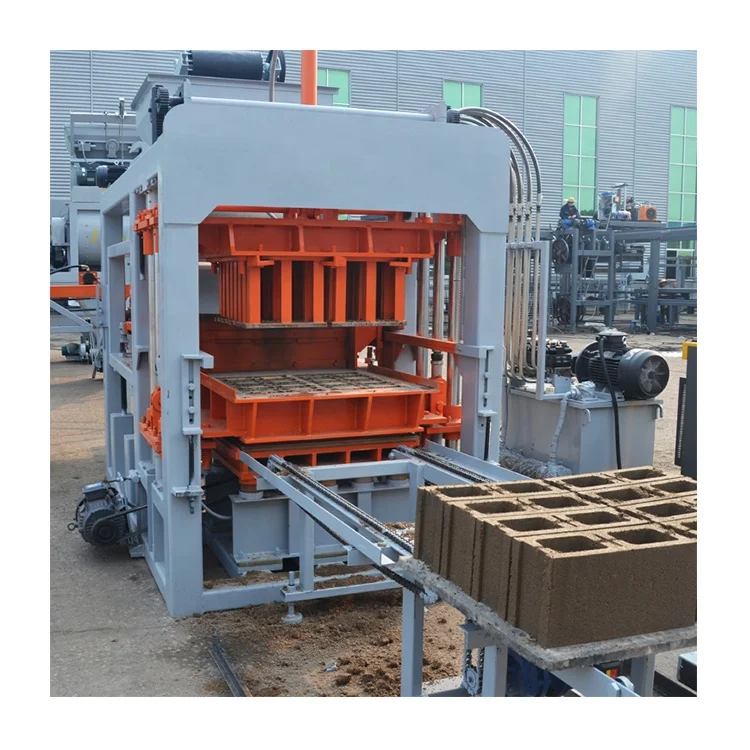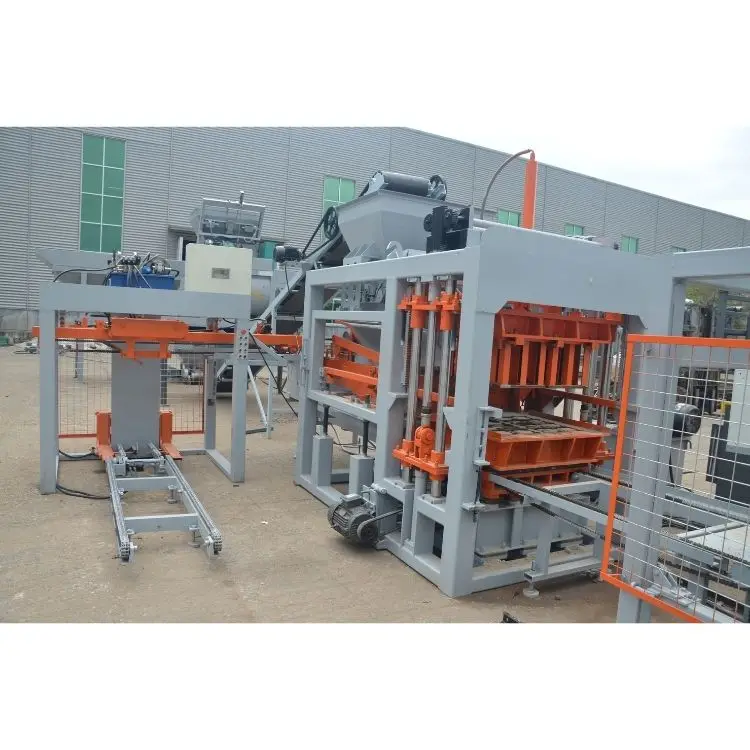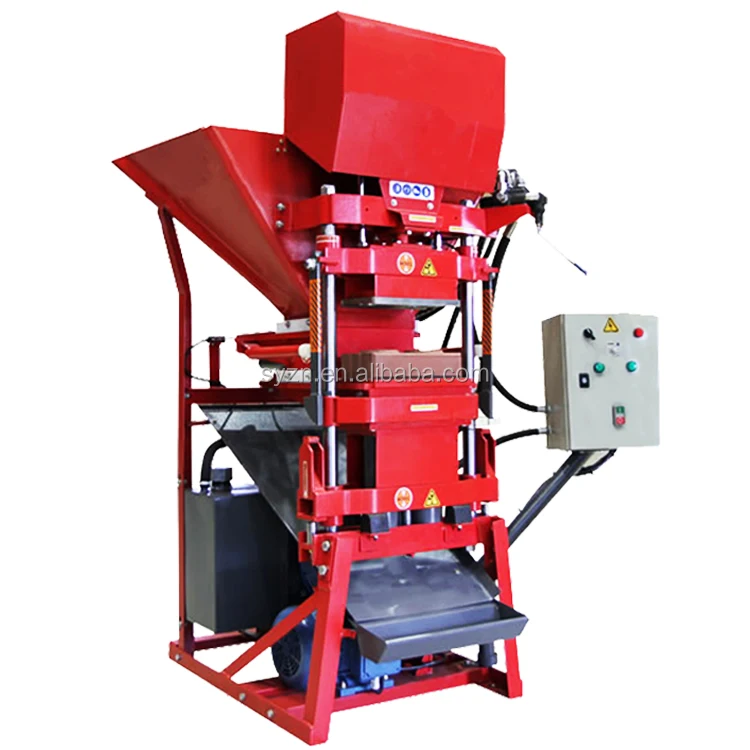

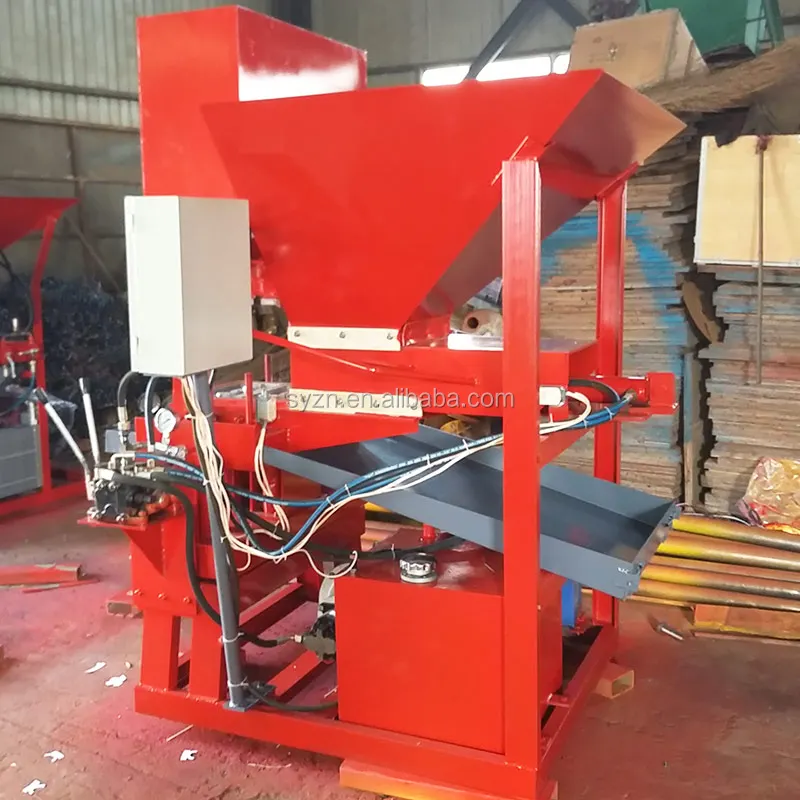

Description
Matched System Sizing — every Eco Master 7000 proposal ties cycle time and output to the buyer’s exact interlocking brick format and local clay properties, not a generic catalogue default.
Technical Specifications
| Parameter | Value |
|---|---|
| Model | Eco Master 7000 |
| Product Type | Hydraulic Interlocking Brick Machine |
| Overall Dimensions (L×W×H) | 1660 × 1400 × 2380 mm |
| Net Weight | 1300 kg |
| Power Source Option | Electric motor or Diesel engine |
| Rated Power | 7.5 kW (electric) / 12 HP (diesel) |
| Hydraulic Pressure | 16 – 21 MPa |
| Cycle Time | 10 – 15 s |
| Productivity (300×150×100 mm interlocking brick) | 2 pcs/mould, 720 pcs/h, 5760 pcs/day (8 h shift) |
| Productivity (250×125×60 mm interlocking brick) | 2 pcs/mould, 720 pcs/h, 5760 pcs/day (8 h shift) |
| Pallet Requirement | Palletless operation |
| Raw Material Compatibility | Clay + Cement (Cement 6–8 %, Clay 80–90 %, Water 3 %) or Full Clay (Clay 97 %, Water 3 %) |
| Voltage & Frequency | 380 V, 3-phase, 50 Hz (configurable to local supply) |
| Automation Level | Semi-automatic or Automatic (selectable per buyer request) |
| Warranty | 1 year (excluding quick-wear parts) |
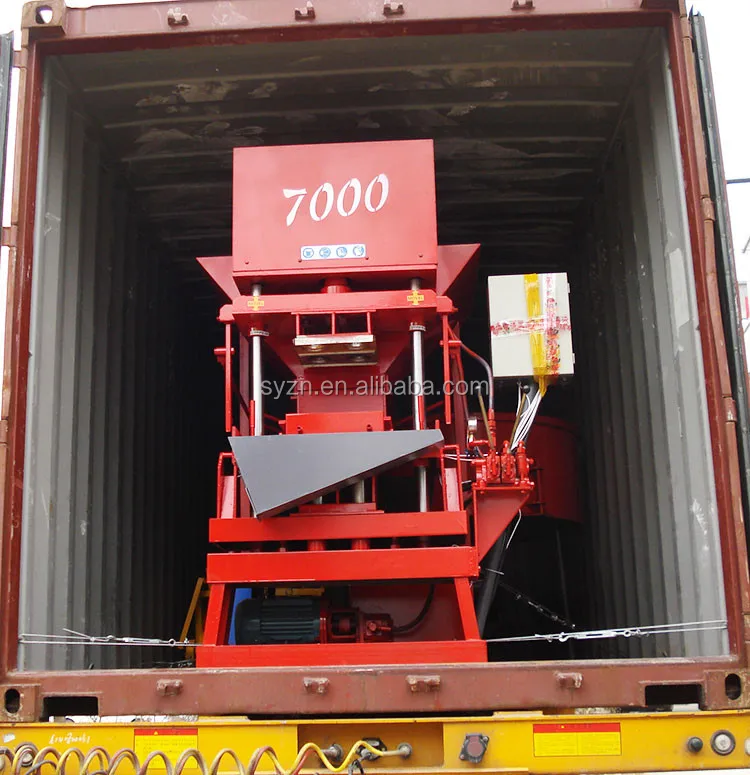
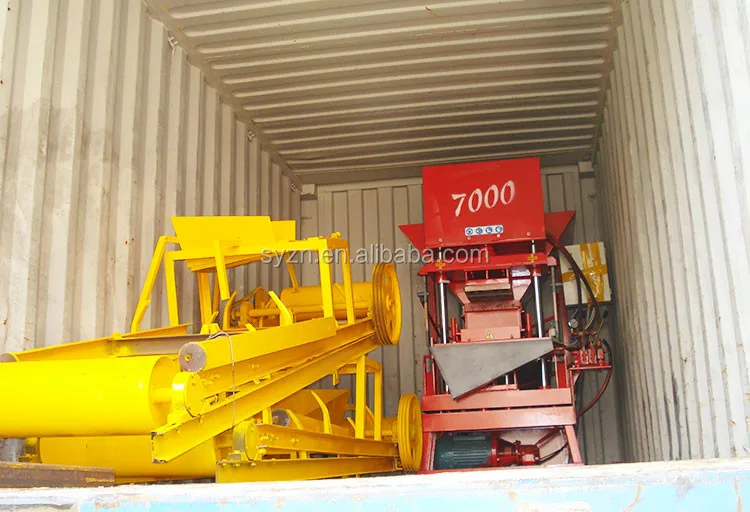
| Assembly State | Fully assembled, nude packing in container |
| Output Capacity (general note) | 4000 – 6000 pcs/day (8 h) (basis not stated in source — confirm block format and material) |
Application Suitability
| Application | Material or Output |
|---|---|
| Interlocking brick production for housing and low-rise commercial builds | Clay-cement blend (6–8 % cement) or full clay, 300×150×100 mm or 250×125×60 mm formats |
| On-site brick production for remote or project-bound construction | Diesel engine configuration, palletless pressing, compact footprint |
| Small-plant paver and interlocking product lines | Hydraulic pressing up to 21 MPa for dense interlocking paver formats |
| Low-capital brick plants in markets without pallet infrastructure | Palletless design eliminates curing-area pallet logistics |
| Product range expansion for existing concrete manufacturers | Mould change capability for multiple interlocking profiles |
What the Interlocking Brick Machine Specifications Leave Out About Real Output
Daily capacity only means something when tied to the exact brick format and mix you will actually run.
Many buyers receive quotations quoting 720 pieces per hour without the supplier specifying which mould is installed or what cycle time was measured against. I have walked onto sites in the Gulf where the Eco Master 7000 class machine was running 20-second cycles instead of the quoted 10–15 seconds because the local clay-cement blend demanded longer compaction. The result was daily output noticeably below the brochure figure and a production schedule that slipped from day one. [NEED_CITE: mismatched cycle time versus quoted capacity in block machine procurement]
The interlocking brick machine specifications on this page state output per format so you can calculate against your actual market product, not a test mould running ideal material.
Capacity by Brick Format, Not by Marketing Claim
When buyers search for how to choose interlocking block machine options, the first number they compare is hourly output. That number is only honest when paired with a specific mould and cycle time. The Eco Master 7000 produces two interlocking brick formats at 2 pieces per mould: the 300×150×100 mm and the 250×125×60 mm, both yielding 720 pieces per hour at 10–15 second cycles and 5760 pieces over an 8-hour shift. If your market sells a third format or a thicker paver profile, the cycle time and daily total will shift accordingly, and that calculation must happen before the purchase order is signed.
Clay Mix Compatibility and Local Material Reality
The Eco Master 7000 is configured for two raw material paths. The first is a clay-cement blend using 80–90 % clay, 6–8 % cement, and 3 % water — a mix that relies on cement hydration for long-term block strength. The second is a full clay path at 97 % clay and 3 % water, which depends entirely on hydraulic compression at 16–21 MPa for green strength and requires a kiln or extended air-cure protocol. I have seen projects in arid regions where the local clay had high sand content that weakened interlocking brick density under full clay pressing. [NEED_CITE: effect of sand content in clay on hydraulic pressed brick strength] Running a trial batch with your actual sourced material before finalizing the configuration is the only way to confirm which path your site should follow.
Hydraulic Pressure, Mould Design, and Block Density
The 16–21 MPa hydraulic pressure range on the Eco Master 7000 determines how tightly the clay or clay-cement mix is compacted before ejection. Higher pressure within that range produces denser interlocking bricks with better compressive strength, but demands a mould steel grade and tolerance that can withstand repeated pressing without profile wear. The palletless design means bricks are ejected directly onto the curing surface, which eliminates pallet purchasing and pallet-handling labour but requires a level, prepared curing area adjacent to the machine. Mould change time is not published in the current specification set and must be confirmed during the proposal stage if your production plan involves switching between the 300×150×100 mm and 250×125×60 mm formats within the same shift.
The Cost of Choosing the Wrong Mould and Mix Combination
A machine ordered with a mould profile your local market does not buy sits idle while you source a replacement. I have visited plants where the interlocking brick format was selected from a catalogue image rather than confirmed against what local contractors and hardware distributors actually stock. The mould arrives, trial production runs, and the bricks do not match the interlocking profile that regional builders specify. The machine then waits weeks for a custom mould redrawn to match the local standard. [NEED_CITE: cost of mould replacement and production downtime in block plants] This delay is entirely avoidable when the buyer provides regional brick format drawings or samples before configuration is locked in.
Why Procurement Through This Channel Reduces Format Risk
Block machinery is our single focus, so the Eco Master 7000 is specified alongside its mould, pallet requirements (or in this case palletless curing layout), and handling sequence as one system rather than separate purchases. We set the configuration against the buyer’s actual clay sample and target interlocking brick format, not a catalogue default mix. Mould design covers the interlocking profiles the buyer’s regional market sells, and custom mould drawings are available when a project specifies a non-standard profile. The automation level is selectable — a buyer can start with semi-automatic operation at lower investment and move to automatic configuration as production volume and labour costs justify the change. [NEED_CITE: block machine configuration matched to buyer material and format] Every proposal includes a capacity calculation sheet that names the exact brick format assumed for each output figure.
Documentation & Verification
- Capacity calculation sheet naming the exact interlocking brick format behind each daily output figure
- Mould drawing and format list confirming which interlocking profiles ship with the machine
- Voltage, frequency, and control language written confirmation before production begins
- Factory test record run on buyer-specified clay-cement proportion or full clay mix
- Operation and maintenance manual covering hydraulic pressure adjustment and mould change procedure
- Wear parts list with part numbers for hydraulic seals and mould wear components
Installation, Commissioning & Support
- Level concrete pad sized to the 1660 × 1400 mm footprint with adjacent palletless curing area
- Dedicated 3-phase circuit matching confirmed voltage and frequency before the Eco Master 7000 is energized
- Machine arrives fully assembled; on-site work is limited to power connection and hydraulic fluid fill
- First-run commissioning includes cycle time verification on buyer’s actual clay-cement or full clay mix
- Operator training covers mould change procedure, pressure adjustment within the 16–21 MPa range, and daily maintenance
- Quick-wear parts list provided at handover with reorder part numbers for hydraulic seals and mould edges
What to Include in Your Inquiry
Send the interlocking brick format your regional market buys most — dimensions, interlocking profile drawing if available, and target daily volume. Include a sample or lab analysis of the clay you plan to source locally so the clay-cement ratio or full clay path can be confirmed before configuration. Specify your site voltage, frequency, and the control language your operators read, as well as whether diesel or electric power suits your project timeline.
Frequently Asked Questions
Q: How is the Eco Master 7000 output capacity calculated and which block format does it assume?
A: Output is stated per specific interlocking brick format. At 2 pieces per mould and a 10–15 second cycle, both the 300×150×100 mm and 250×125×60 mm formats yield 720 pieces per hour and 5760 pieces over an 8-hour shift. Any other format will carry a different cycle time, so the capacity calculation must be redone against your actual target brick before the order is confirmed.
Q: What interlocking brick mould formats are available and what is the mould change procedure?
A: The standard offering includes the 300×150×100 mm and 250×125×60 mm interlocking profiles. Custom mould design to buyer drawings is available for regional formats not covered by these two sizes. Mould change time is confirmed during the proposal stage and depends on the specific mould mounting configuration selected for your automation level.
Q: Can the Eco Master 7000 run on my local clay and cement supply?
A: The machine supports two raw material paths: a clay-cement blend at 6–8 % cement and 80–90 % clay, or a full clay mix at 97 % clay. Local clay properties such as sand content and plasticity directly affect pressed brick density and strength. A trial batch using your sourced material is the standard step before finalizing the configuration.
Q: What voltage, frequency, and control language options are confirmed before shipment?
A: The standard electrical specification is 380 V, 3-phase, 50 Hz, configurable to match the local supply at your site. Voltage and frequency are confirmed in writing before production begins, along with the control display language your operators require. This confirmation step prevents commissioning delays after the machine arrives.
Q: How do I choose between semi-automatic and automatic configuration for my production volume?
A: Semi-automatic operation suits lower initial investment and smaller daily volumes where manual handling of cured bricks is acceptable. Automatic configuration adds pallet feeding, stacking, or cubing functions as production volume grows. The Eco Master 7000 supports an upgrade path, so buyers can begin at semi-automatic level and add automation modules when throughput and labour costs justify the change.