Description
Mould-matched capacity — every output number we quote for the QT5-15 names the exact block size and pieces per mould it was measured against, so your daily plan is not built on a cycle-time guess.
Technical Specifications
| Parameter | Value |
|---|---|
| Model | QT5-15 |
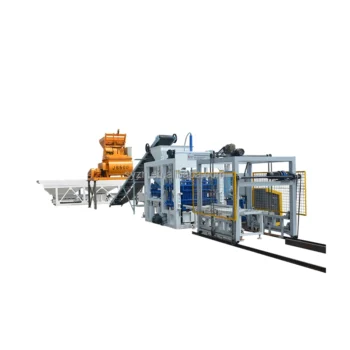
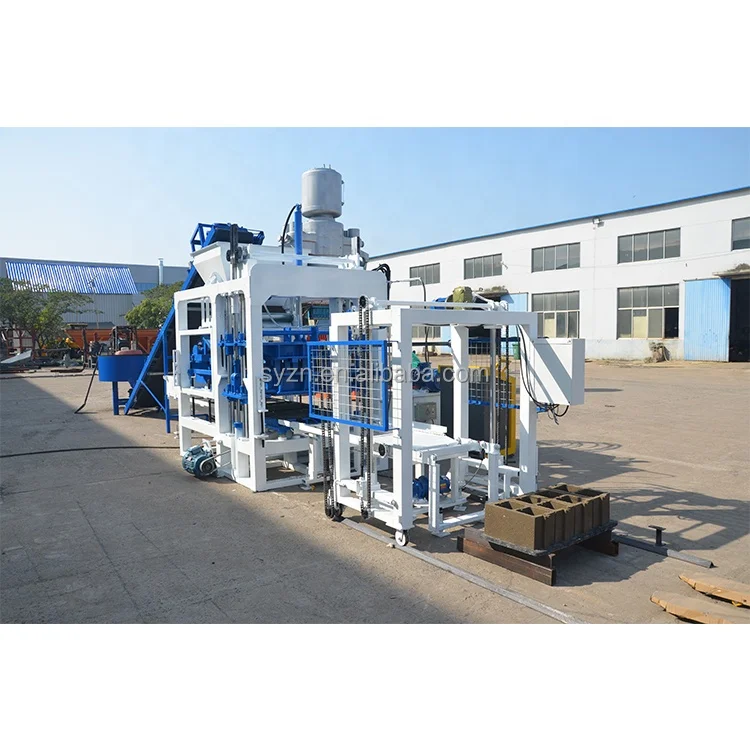
| Product Type | Automatic Concrete Block Making Machine |
| Overall Dimensions (L×W×H) | 7100×1600×2610 mm |
| Molding Cycle | 15 s (basis not stated in source — confirm block format / material / thickness) |
| Vibration Frequency | 0-60 Hz |
| Vibration Force (Exciting Power) | 40 kN |
| Rated Power | 33.5 kW |
| Mixer Model | JS500 |
| Pallet Size | 1100×550 mm |
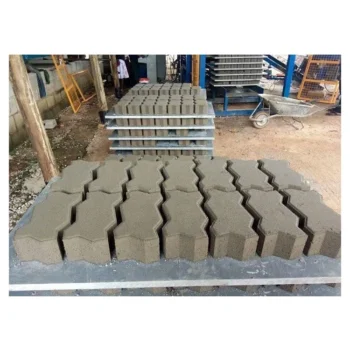
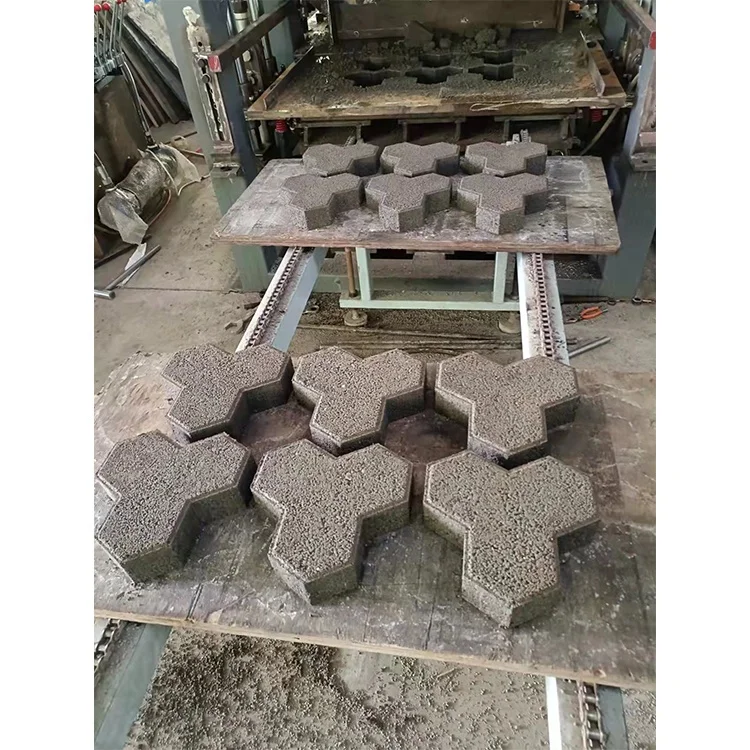
| Applied Products | Paver, solid block, hollow block, curbstone |
| Raw Materials | Crushed stones, sand, cement, dust, fly ash |
| Control System | PLC control system |
| Automation Level | Fully automatic |
| Hydraulic Station | Included (high pressure hydraulic system) |
| Output Capacity | 450 pcs/hr for 400×200×200 mm hollow block / 540 pcs/hr for 400×150×200 mm hollow block / 720 pcs/hr for 400×100×200 mm solid brick |
| Daily Output (8hr) | 3600 pcs for 400×200×200 mm hollow block / 4320 pcs for 400×150×200 mm hollow block / 5760 pcs for 400×100×200 mm solid brick |
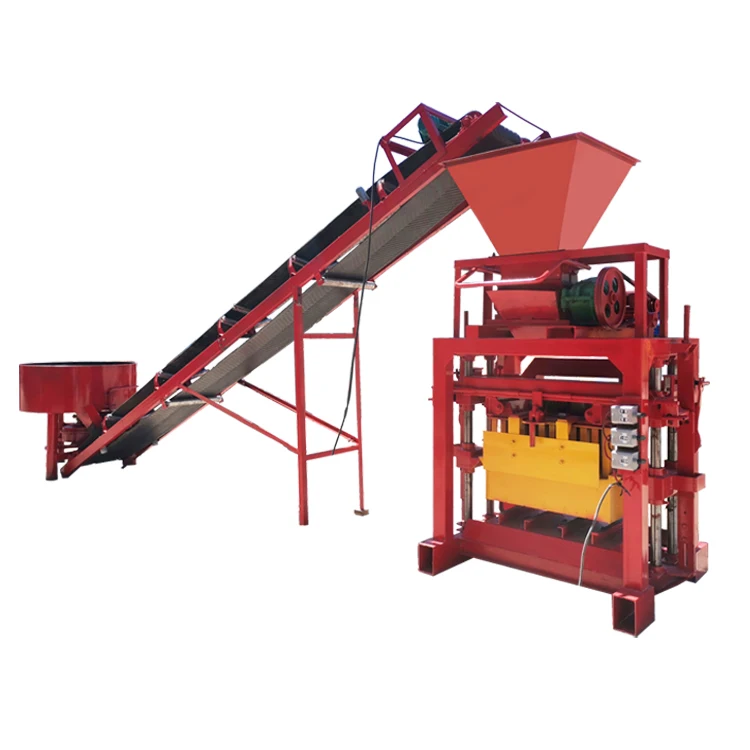
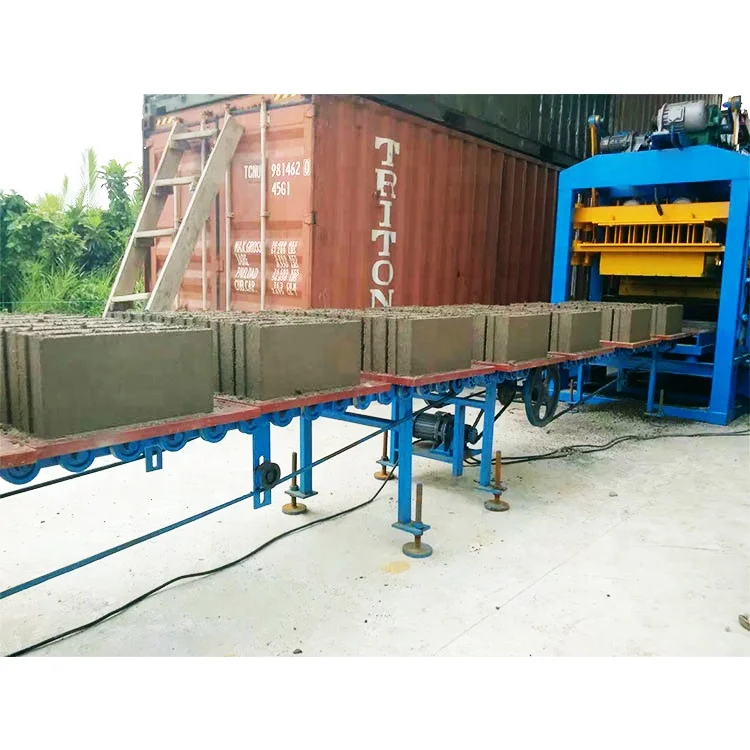
| Included Equipment | Block making machine, hydraulic station, PLC control system, pallet feeder, brick conveyor, block sweeper |
| Free Accessories | Manual hydraulic trolley, spare parts and tools |
Application Suitability
| Application | Material or Output |
|---|---|
| Hollow block production for load-bearing and partition walls | Crushed stone, sand, cement, fly ash mixes on 1100×550 mm pallets |
| Solid brick manufacturing for masonry and paving sub-bases | Sand, cement, dust blends compressed under 40 kN vibration force |
| Paver and curbstone forming for municipal and road infrastructure | Aggregate-rich mixes with surface-finish moulds |
| Fly ash block production near thermal power plants | Fly ash, cement, and crushed stone blends with adjusted moisture |
What "Cycles per Hour" Hides About the automatic concrete block making machine specifications
Real capacity only means something when the block format, mix design, and mould cavity count are written next to the number.
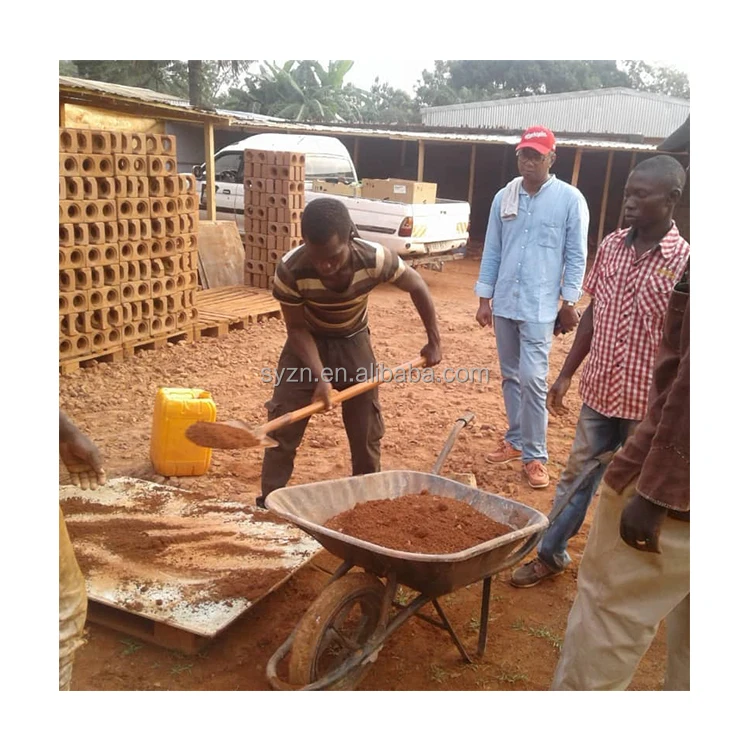
A quotation that promises an output figure without naming the exact block size behind it leaves buyers planning shifts around a phantom number. I once watched a customer in West Africa receive a machine rated for a daily figure that assumed clean river sand, while their local supply ran high in clay content. The resulting blocks cracked during curing, and their actual throughput dropped to nearly half of the contract value. [NEED_CITE: aggregate clay content effect on concrete block compressive strength]. With the QT5-15, the automatic concrete block making machine specifications are stated per format: 450 pieces per hour for a 400×200×200 mm hollow block, 540 for a 400×150×200 mm hollow block, and 720 for a 400×100×200 mm solid brick. That way, you match the machine to the format your market actually orders.
Matching Mould Format to Market Demand
Every block plant sells into a local market where a small number of formats dominate daily orders. The QT5-15 automatic concrete block making machine is configured with changeable moulds so you can produce hollow blocks, solid bricks, pavers, and curbstones on the same press. What matters before you sign is confirming the mould drawing and format list match the products your buyers ask for, including any custom dimensions that fall outside standard catalogue sizes.
Pallet Size Decides Your Curing Layout
The 1100×550 mm pallet is the bridge between the press and your curing racks. Before committing to the QT5-15 block machine capacity by format, walk your curing area and measure the rack spacing, then check the load capacity of the forklift you already run. If your existing pallets are a different size, you either change your rack system or ask us to adjust the pallet spec before production starts — a conversation that costs nothing now but avoids a week of idle time later.
Reading the Press Parameters Against Your Mix
The 40 kN vibration force and the hydraulic pressure inside the QT5-15 station work together to compact the mix into a dense, consistent block. Vibration frequency ranges from 0 to 60 Hz, adjustable through the PLC to suit different aggregate gradings. If your local sand is fine and low in clay, the press can run at higher frequency for tighter surfaces. If your mix contains coarse crushed stone or fly ash, we lower the frequency and raise the pressure so the block holds its edges straight out of the mould. [NEED_CITE: vibration frequency and hydraulic pressure relationship in concrete block forming]. This matching step is where the automatic concrete block making machine specifications stop being catalogue numbers and start being a production recipe.
What a Mis-matched Configuration Costs You on the Floor
When the pallet size does not fit the curing racks, blocks sit on the ground and cure unevenly, producing strength variation that shows up only after the customer stacks them on a wall. When the vibration force is too low for a coarse aggregate, blocks crumble at the corners during de-moulding, and your scrap rate climbs without any alarm on the PLC screen. [NEED_CITE: concrete block corner breakage causes related to vibration and mix design]. When voltage and frequency are assumed instead of confirmed, the hydraulic pump runs hot from day one, and the first service call happens before the warranty paperwork arrives.
Why Buyers Keep This Machine in Their Shortlist
The QT5-15 is specified against the buyer’s actual mix and block format rather than a default catalogue row, so capacity and strength are calculated before the machine is built. Mould design and supply cover the formats the local market sells, including custom drawings when a project calls for non-standard dimensions. Automation level is selectable, meaning a buyer can start with the included pallet feeder, brick conveyor, and block sweeper and add stacking or cubing stations later without replacing the press. The 33.5 kW rated power and JS500 mixer are sized to keep the press fed without over-building the electrical supply for a plant that is still growing. Every quotation ships with a line layout and capacity calculation that names the block format assumed, so there is no gap between the sales promise and the first production shift. [NEED_CITE: machinery documentation standards for export equipment].
Documentation & Verification
- Line layout drawing with capacity stated per block format and mould cavity count
- Mould drawing and format list covering hollow, solid, paver, and curbstone profiles
- Pallet specification sheet cross-checked against buyer curing rack dimensions
- Hydraulic and electrical schematic with voltage and frequency confirmed pre-production
- Factory test record on the buyer’s specified block format before dispatch
- Operation and maintenance manual with PLC language matching operator preference
Installation, Commissioning & Support
- Foundation plan sized for the 7100×1600 mm footprint and dynamic vibration load
- Dedicated electrical circuit matching confirmed voltage and the 33.5 kW rated draw
- Hydraulic station pre-flushed and pressure-set to match the buyer’s block density target
- PLC display language and alarm labels set to operator language before shipping
- Operator training on mould change procedure and cycle adjustment per block format
- Wear parts list with reorder part numbers for mould liners and hydraulic seals
What We Need From You Before Quoting
Send us the block formats your market orders most, along with target daily volume per format and a sample or lab report of your local aggregate. Tell us the voltage and frequency at your site, the PLC display language your operators read, and the dimensions of your existing curing racks so we can confirm the 1100×550 mm pallet fits before the QT5-15 automatic concrete block making machine leaves our floor.
Frequently Asked Questions
Q: How is the QT5-15 output capacity calculated, and which block format is each number based on?
A: Capacity is measured per format: 450 pieces per hour for a 400×200×200 mm hollow block, 540 for a 400×150×200 mm hollow block, and 720 for a 400×100×200 mm solid brick, each at a 15-second moulding cycle. Your actual daily figure depends on mix design and shift length.
Q: What mould formats are available, and how long does a mould change take?
A: Standard moulds cover hollow blocks, solid bricks, pavers, and curbstones sized to your market. Custom moulds are built from buyer drawings. Mould change time depends on format complexity and is confirmed during commissioning training on your floor.
Q: How do I confirm the pallet size matches my curing area and forklift?
A: We provide a pallet specification sheet showing the 1100×550 mm dimensions and material grade. You cross-check this against your curing rack spacing and forklift tine width before we start production, so no rework is needed on arrival.
Q: What voltage, frequency, and PLC language options are available?
A: Voltage and frequency are set to match your site supply, confirmed in writing before manufacturing. PLC display language and alarm labels are programmed to your operator preference, so the screen reads correctly from the first production shift.
Q: Which raw materials has this machine been configured for?
A: The QT5-15 runs crushed stone, sand, cement, dust, and fly ash blends. We ask for your aggregate lab report so vibration force and hydraulic pressure are adjusted to your actual mix, keeping block strength consistent across every format you produce.