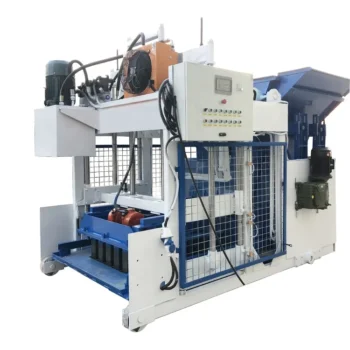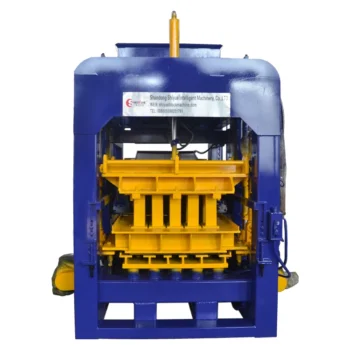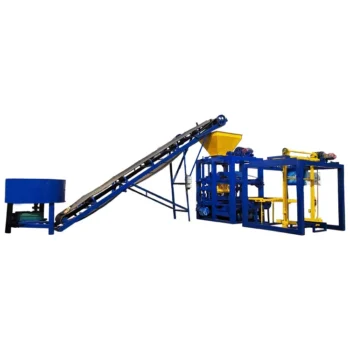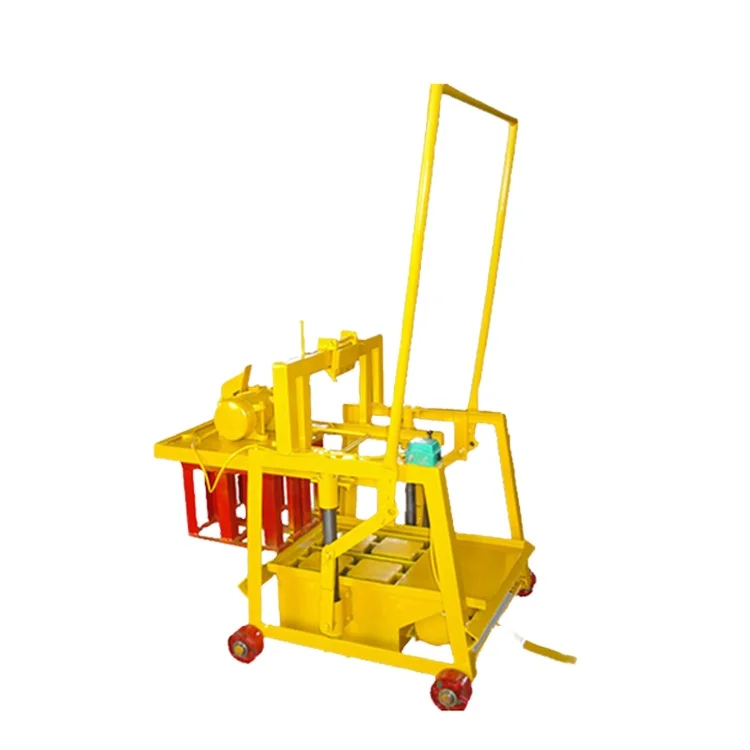
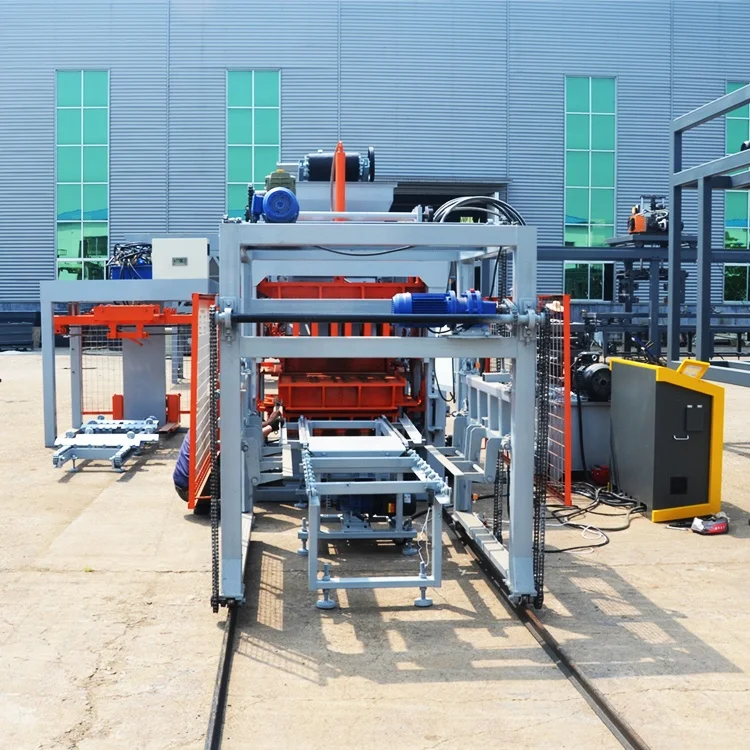


Description
Matched to your actual block format — QT6-15 capacity figures on this page are broken down per mould type and cycle time, not hidden behind a single headline number that leaves buyers guessing what they will really produce each shift.
Technical Specifications
| Parameter | Value |
|---|---|
| Model | QT6-15 |
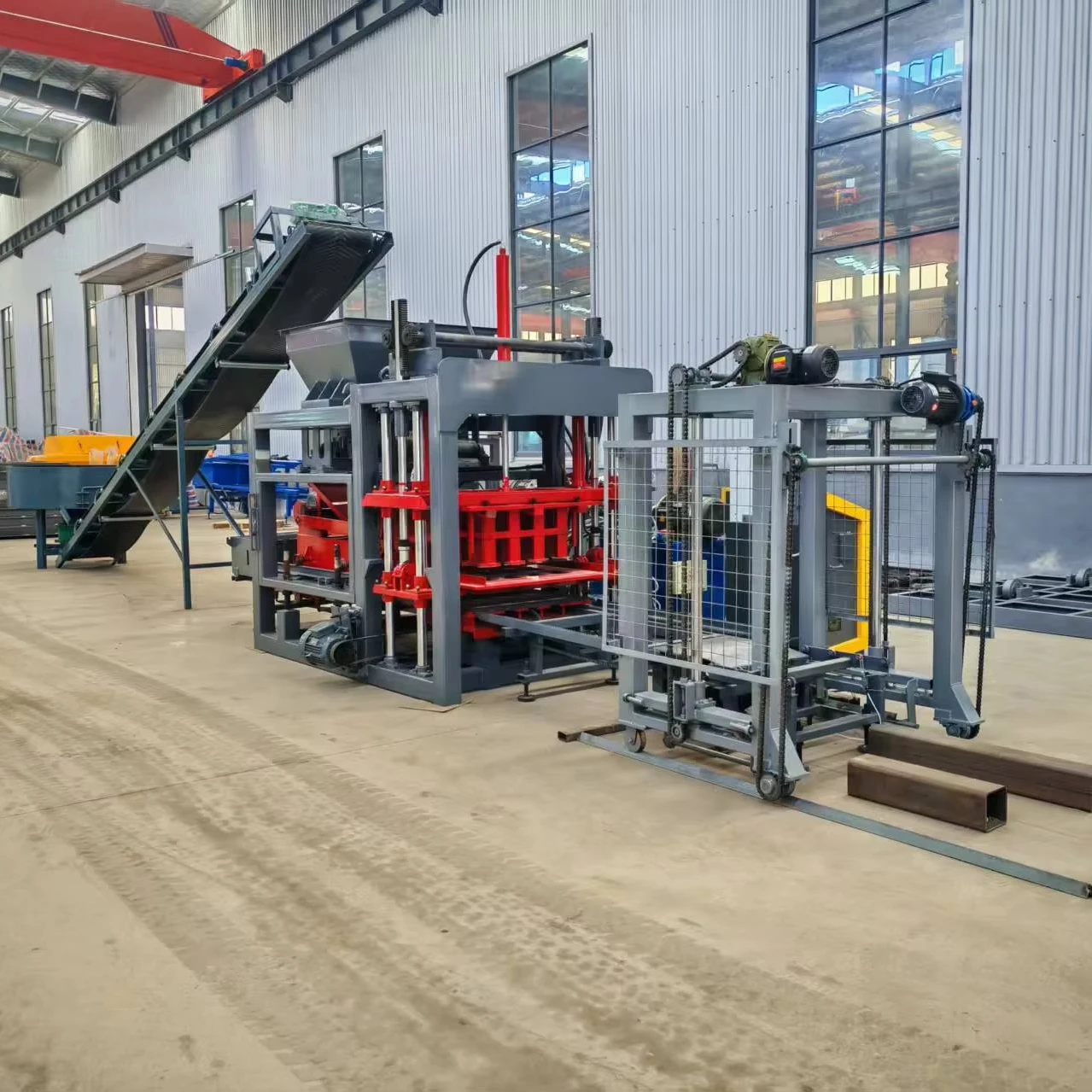
| Product Type | Automatic Hydraulic Block Making Machine |
| Overall Dimensions | 8200 × 1700 × 2950 mm |
| Overall Power | 37 kW |
| Total Mass | 7 T |
| Vibration Form | Platform Vibration |
| Vibration Frequency | 0–60 Hz (adjustable) |
| Vibration Force | 45 kN |
| Hydraulic System | Independent integrated hydraulic station |
| Demolding Method | Hydraulic |
| Pallet Size | 880 × 850 mm |
| Moulding Mode | Automatic loading, vibration moulding |
| Molding Cycle | 15–20 s (basis not stated in source — confirm block format and material) |
| Control System | PLC with touch screen interface |
| Block Compressive Strength | >15 MPa |
| Factory Area Required | 1200 m² |
| Raw Material Adaptability | Waste ash, slag, various aggregates; reduced cement dosage capable |
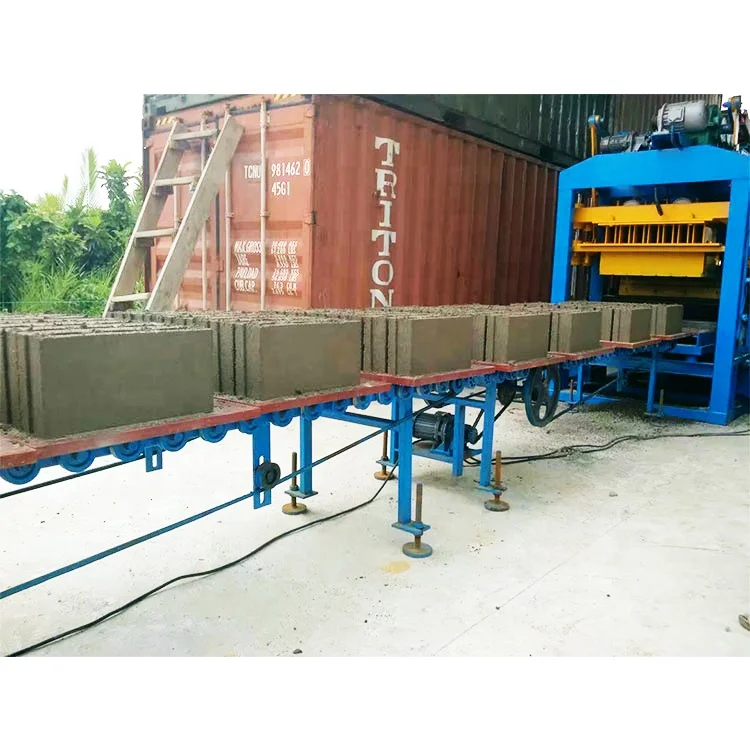
| Output — Hollow Block 400×200×200 mm | 6 pcs/mould, 1080–1440 pcs/h, 8640–11520 pcs/8hr |
| Output — Hollow Block 400×150×200 mm | 8 pcs/mould, 1440–1920 pcs/h, 11520–15360 pcs/8hr |
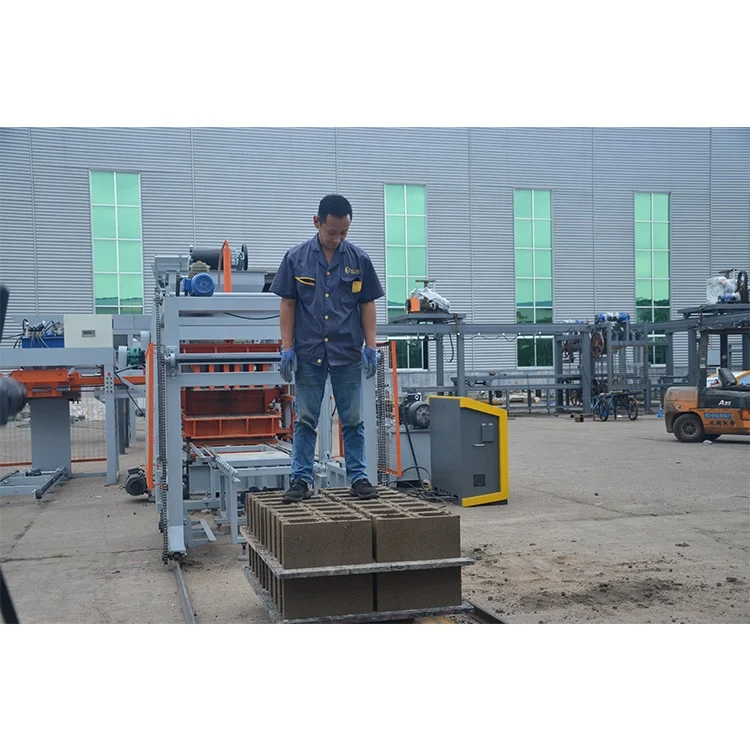
| Output — Solid Brick 240×115×53 mm | 32 pcs/mould, 5760–7680 pcs/h, 46080–61440 pcs/8hr |
| Output — Rectangular Paver 200×100×60 mm | 21 pcs/mould, 17280–23040 pcs/8hr (cycle 20–25 s) |
| Output — Zigzag Paver 225×112.5×60 mm | 15 pcs/mould, 17280–23040 pcs/8hr (cycle 20–25 s) |
Application Suitability
| Application | Material or Output |
|---|---|
| Hollow block production | Crushed stone, river sand, cement, fly ash blends |
| Solid brick production | Slag, waste ash, local fine aggregate with cement binder |
| Rectangular paving block | High-strength aggregate mix for driveways and walkways |
| Zigzag interlocking paver | Interlocking profile for vehicular and pedestrian paving |
| Kerbstone and porous brick | Coarse aggregate with controlled porosity for drainage |
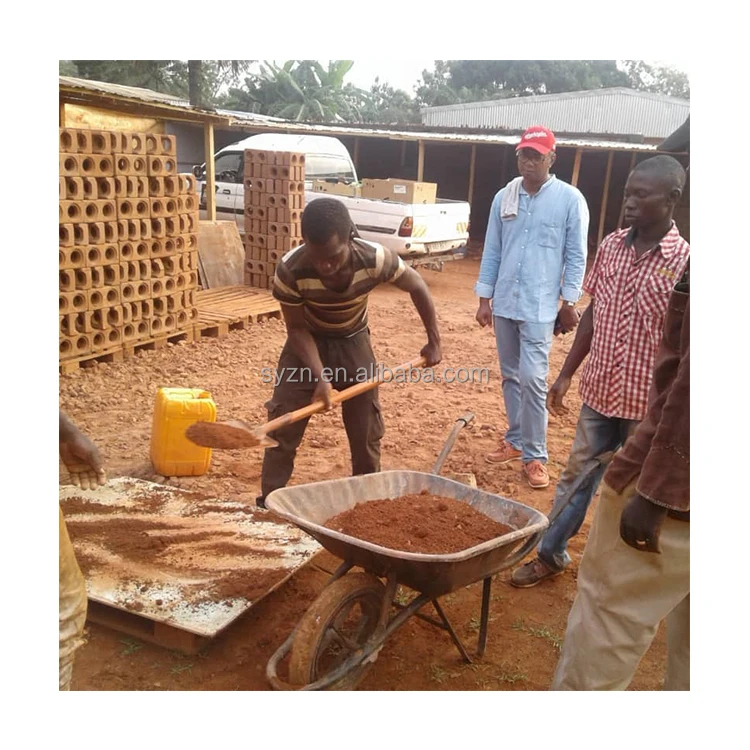
| On-site contractor production | Local aggregate sourced near the building project |
Why a QT6-15 Specification Sheet Without Block Format Is a Red Flag
Capacity means nothing until you know which block the number was measured on.
I have walked onto sites where the owner signed a purchase order based on a headline figure like "1440 pieces per hour," only to discover that number assumed a small solid brick mould — while the market they actually serve demands 400×200×200 mm hollow blocks at a much slower cycle. The daily output they planned their business around was nearly cut in half before the first pallet ever cured. When you evaluate QT6-15 block machine specifications, the first question is never the machine itself; it is the format your customers are buying and how many of that format you need per shift [NEED_CITE: typical block plant daily output planning methods].
Per-Format Capacity: Reading the Numbers Honestly
The QT6-15 is a mid-tier automatic hydraulic press that handles several block formats on a common 880 × 850 mm pallet. Because each format uses a different mould cavity count and demands a different vibration profile, the hourly throughput varies widely across product types. Hollow blocks at 400×200×200 mm yield six pieces per mould cycle, while solid bricks at 240×115×53 mm yield thirty-two. This is not a difference in machine capability — it is geometry. Buyers who size their plant on one number and then switch formats mid-season are often surprised by the gap. The capacity table above lists each format with its own cycle range so you can plan against the product you actually sell, not the product that makes the brochure look best.
Matching the QT6-15 to Your Local Aggregate and Mix
Vibration force and hydraulic pressure are not settings you dial once and forget. The QT6-15 block machine specifications list 45 kN of vibration force and an adjustable 0–60 Hz frequency, which gives the operator room to tune the press to whatever the local quarry is supplying. If your aggregate runs high in fines or clay content, the vibration must be tuned lower with longer cycle to prevent segregation, and the hydraulic pressure must be raised to compensate for the weaker green strength. I once spent a full week on a job in Southeast Asia re-tuning a machine that had been shipped with factory-default vibration parameters calibrated for clean river sand, while the buyer was using crushed limestone with high dust content. Every block cracked during demolding until we matched the frequency curve to his actual mix [NEED_CITE: aggregate moisture and fines impact on block vibration parameters].
Vibration, Pressure, and What They Mean for Block Strength
Three parameters on this machine decide whether your block leaves the curing rack intact or crumbles at the first forklift bump: vibration force, hydraulic demolding pressure, and cycle time. The QT6-15 uses platform vibration, meaning the entire mould table oscillates rather than just the mould walls. This delivers denser compaction for thicker formats like 200 mm hollow blocks but demands a well-graded aggregate to fill the cavity evenly. The independent integrated hydraulic station sits apart from the main vibration zone, which keeps hydraulic seals from fatigue cracking and maintains consistent demolding pressure across a full shift. The stated block compressive strength of greater than 15 MPa is achievable only when the mix design, vibration profile, and curing protocol are all aligned — none of those are machine-only guarantees.
What Happens When Pallet Size and Curing Layout Do Not Match
An 880 × 850 mm pallet is a deliberate mid-range size, but it must fit the curing racks and forklift tines already on your site. If your existing racks were built for 900 × 850 mm pallets from a previous machine, every QT6-15 pallet will sit with a 20 mm overhang on one side, causing racked blocks to tilt during the first critical hours of curing. If your forklift fork spacing was set wider for larger pallets, smaller pallets slip during transport. These are not machine faults — they are integration gaps that surface only after the machine arrives. Confirming pallet compatibility before the order is one of the few zero-cost steps that prevents expensive on-site improvisation [NEED_CITE: pallet handling standards in concrete block production].
Why the Voltage Conversation Must Happen Before Production Starts
A block machine wired for 380 V / 50 Hz that arrives at a site running 440 V / 60 Hz will not simply "run a little fast." The PLC, the vibration motor, and the hydraulic pump motor each respond differently to overvoltage, and the result is usually a tripped breaker on the first start attempt — or worse, a burned motor winding discovered three days into commissioning. Voltage, frequency, and the language on the PLC touch screen are all configurable on the QT6-15, but they must be confirmed in writing before the machine enters the production line. I have seen commissioning delayed by weeks because the control screen shipped in Chinese to a site where the operators read only Spanish. That delay is entirely avoidable with a single email before the factory test.
Why Source This Machine Here
Block machinery is the single focus of this manufacturer, not one product line among many. The QT6-15 is specified as a matched system: press, mould, pallet, and handling equipment are designed together rather than assembled from separate suppliers, which eliminates the integration gaps that cause most on-site failures. Mould design covers the formats your local market actually buys, and custom mould drawings are available when your product range falls outside standard dimensions. The automation level is selectable — a buyer can begin with semi-automatic pallet handling and add stacking and cubing modules later as volume justifies the investment. Configuration is set against your actual mix design and target block format, not pulled from a catalogue default, which is why the pre-order conversation takes longer than a typical machinery quote but saves far more time during commissioning.
Documentation & Verification
- Line layout showing QT6-15 placement and capacity stated per block format
- Mould drawing confirming exact cavity dimensions for your target product
- Pallet specification sheet matched to your curing rack and forklift
- Voltage, frequency, and PLC language confirmation before production
- Factory test record on your chosen block format before dispatch
- Hydraulic and electrical schematic for local maintenance teams
Installation, Commissioning & Support
- 1200 m² factory area requirement confirmed with foundation load plan for the 7 T machine
- 37 kW total power demand verified against site transformer and dedicated circuit
- Dismantling and container loading plan provided with arrival estimate upfront
- On-site commissioning with vibration and hydraulic parameters tuned to your mix
- Operator training covering PLC touch screen navigation and fault diagnosis
- Wear parts and mould replacement list supplied with first shipment
- Curing protocol guidance based on your local climate and aggregate moisture
Before You Send the Inquiry
To give you a QT6-15 block machine specifications sheet that reflects your actual production scenario, the most useful details you can share up front are your target block format with dimensions, your daily output requirement per format, and the local raw materials available including aggregate type and cement source. Equally important are your site voltage and frequency, the PLC display language your operators need, and whether your existing curing racks and forklift are already sized for a specific pallet dimension. If you are adding the QT6-15 to an existing line, let us know the upstream mixer capacity and downstream handling setup so the cycle times can be balanced across stations.
Frequently Asked Questions
Q: How is QT6-15 capacity calculated per block format, and why does the same machine show different hourly outputs?
A: Output depends on how many cavities each mould holds and the cycle time required for that format. A 400×200×200 mm hollow block mould has six cavities with a longer cycle, while a solid brick mould has thirty-two cavities in a shorter cycle. The machine is the same; the geometry and compaction demand are not.
Q: How do I match vibration force and hydraulic pressure to my local aggregate?
A: The QT6-15 offers adjustable 0–60 Hz vibration and independent hydraulic pressure. High-fines or clay-rich aggregates need lower frequency with extended cycle time, while clean coarse aggregate responds to higher frequency. Both parameters are tuned during commissioning against your actual mix sample.
Q: What mould formats are available, and how long does a change take?
A: Standard moulds cover hollow blocks, solid bricks, rectangular pavers, zigzag pavers, kerbstones, and porous bricks. Custom moulds can be designed to buyer drawings. Mould change time depends on the quick-clamp configuration selected and the operator’s familiarity with the procedure.
Q: How is pallet size selected, and what if my curing racks are a different size?
A: The standard 880 × 850 mm pallet must match your existing curing rack spacing and forklift fork width. If your current setup differs, pallet size is confirmed during the pre-order stage so that rack and handling compatibility is resolved before the machine ships.
Q: What electrical and control details must be confirmed before production?
A: Voltage, frequency, and PLC touch screen display language are all configurable and must be confirmed in writing before the QT6-15 enters production. Late changes after the factory test delay shipment and may require rewiring the control cabinet.