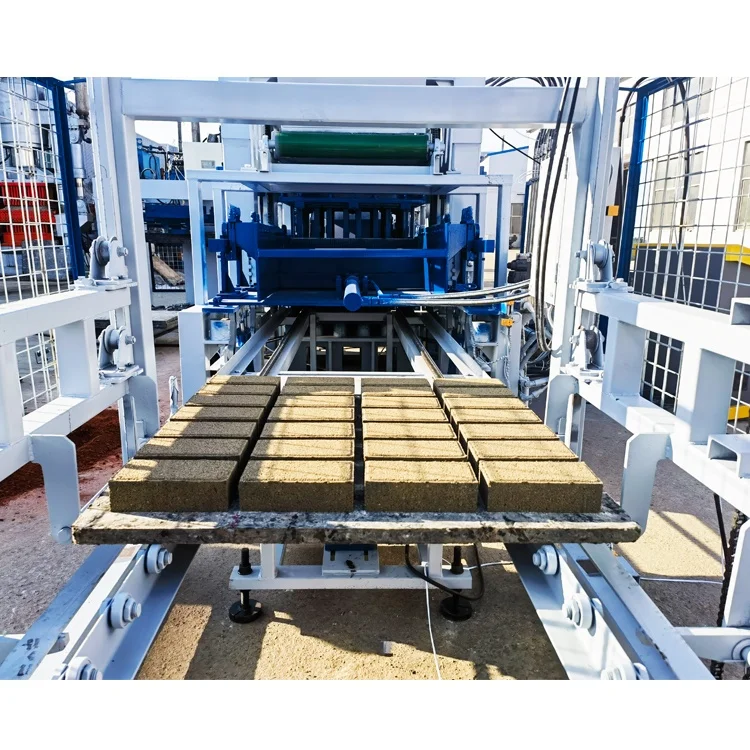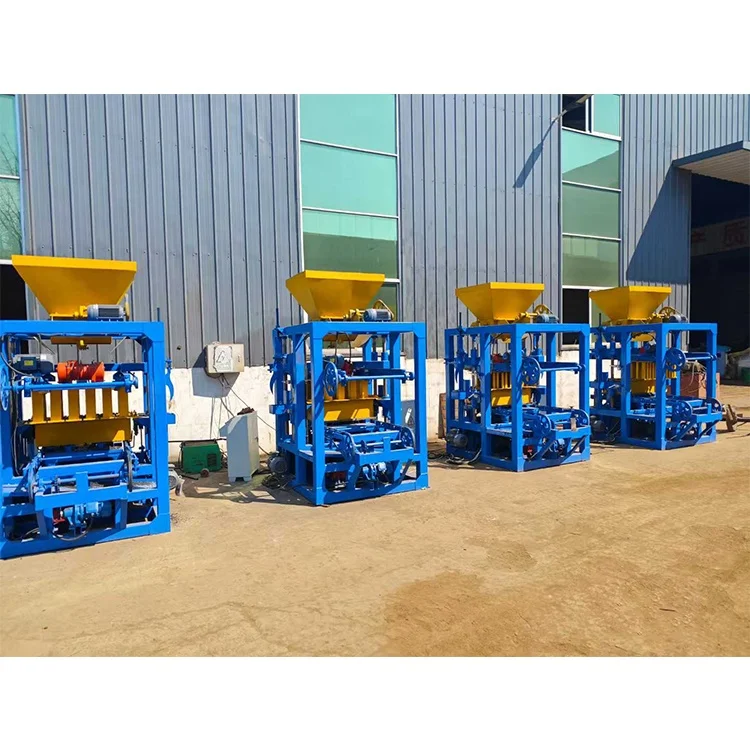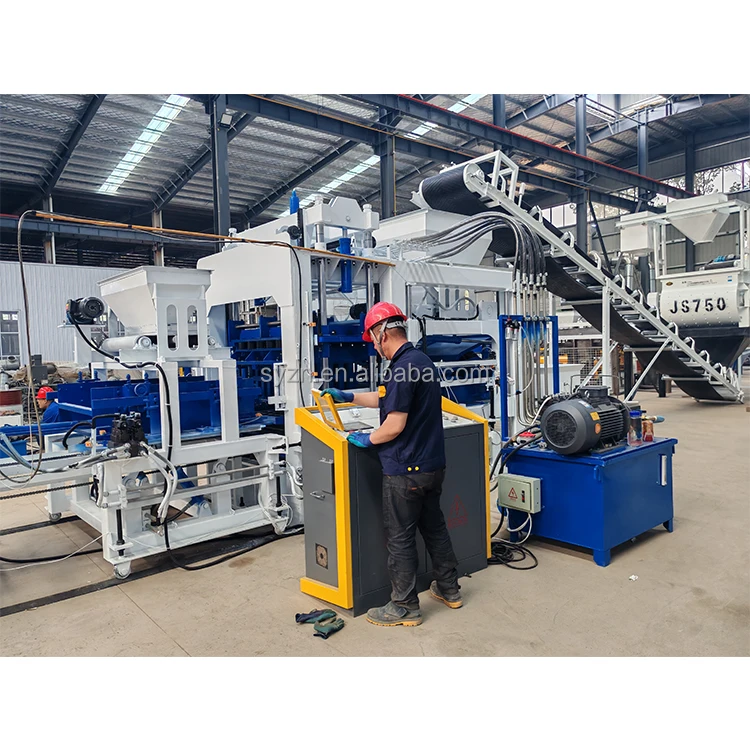

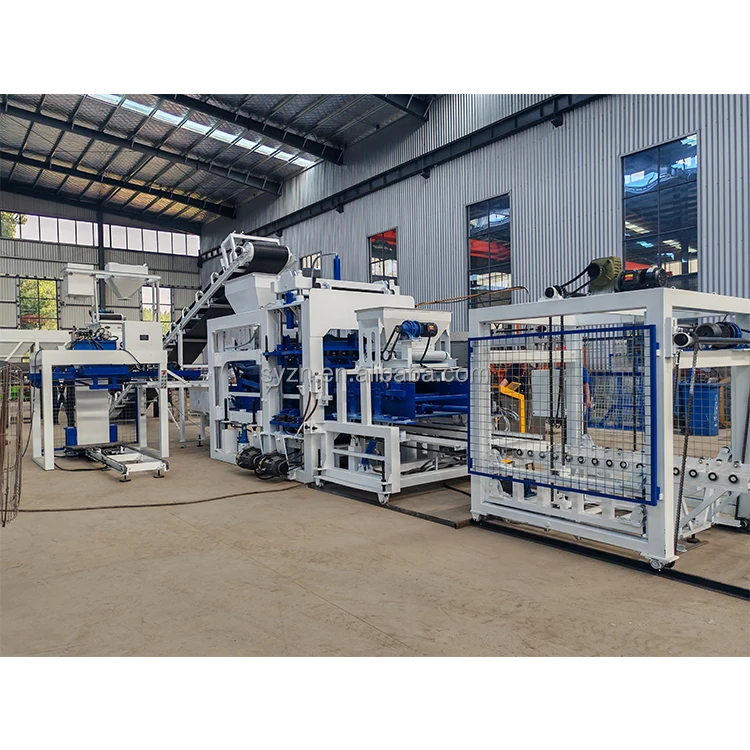
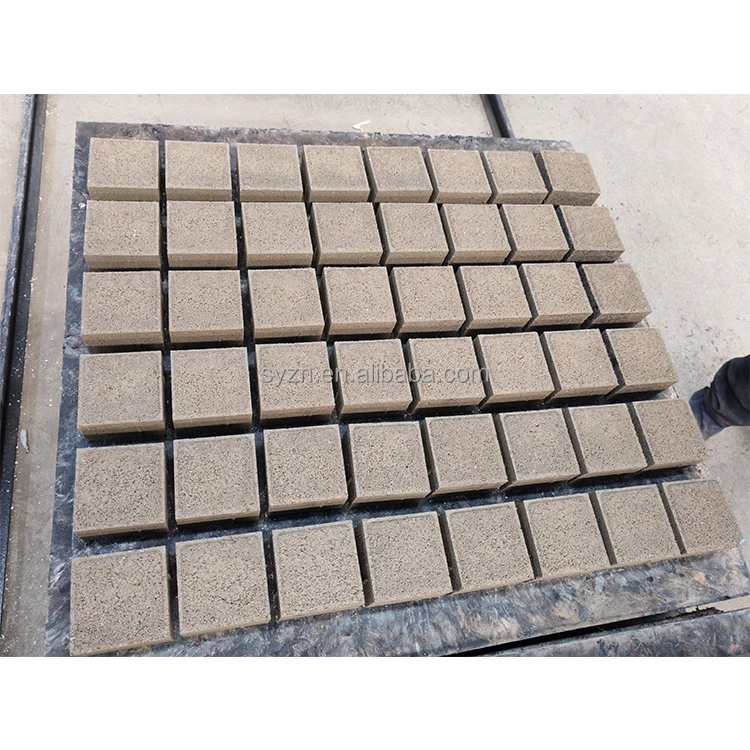
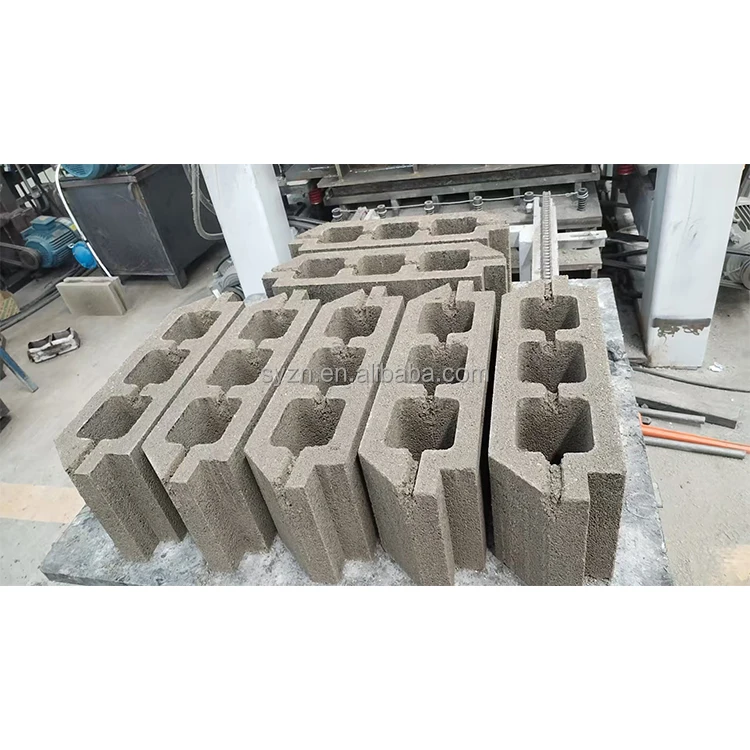

Description
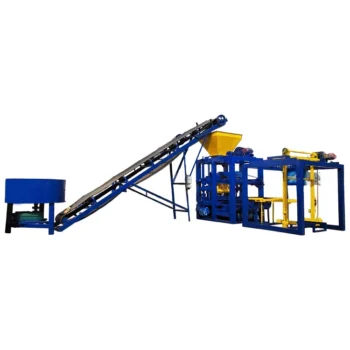
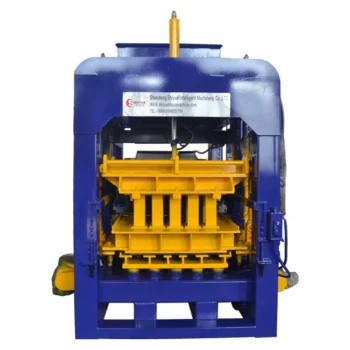
Matched System Specification — The QT8-15 block machine is configured with mould, pallet and vibration parameters aligned to your specific block format and local aggregate rather than shipped as a catalogue default.
Technical Specifications
| Parameter | Value |
|---|---|
| Model | QT8-15 |
| Product Type | Hydraulic Concrete Block Making Machine |
| Overall Dimensions (L×W×H) | 8300×1860×3000 mm |
| Rated Pressure | 21 MPa |
| Main Vibration Form | Platform Vibration |
| Vibration Frequency | 2800–4500 r/min |
| Vibration Force | 45 kN |
| Pallet Size | 950×900 mm |
| Molding Cycle | 15–20 s (basis not stated in source — confirm block format / material / thickness) |
| Overall Power | 55.5 kW |
| Total Mass | 8 T |
| Demolding Method | Hydraulic |
| Factory Area | 300 m² |
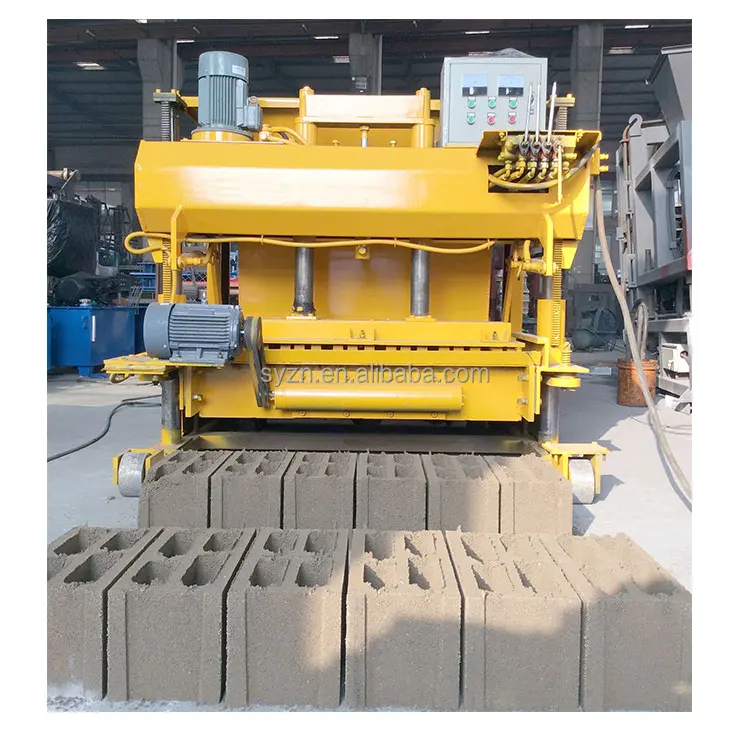
| Applied Products | Hollow blocks, solid blocks, pavers, interlocking blocks, curbstone, colored pavers |
| Raw Materials | Crushed stone, sand, cement, fly ash, gravel, slag, dust |
| Control System | (source value not stated — confirm PLC / MCC configuration) |
| Voltage & Frequency | (source value not stated — confirm against target market) |
Application Suitability
| Application | Material or Output |
|---|---|
| Hollow block production for structural walls | Crushed stone and cement with fly ash filler |
| Solid block production for load-bearing masonry | Sand, gravel and cement at higher density |
| Paving block and colored paver production | Fine aggregate with pigment and cement binder |
| Interlocking brick for landscape and retaining walls | Graded sand and cement mix |
| Curbstone and kerb production | Coarse aggregate with reinforced cement ratio |
What "Cycles per Hour" Leaves Out About QT8-15 Block Machine Specifications
Real daily output depends on the block format you run, not the headline cycle figure.
A QT8-15 hydraulic block machine quoted at a single cycles-per-hour number tells you nothing about what actually leaves the press each shift. Early in my career I watched a line rated for impressive hourly figures fall to roughly sixty percent of that number once the local aggregate was introduced — the vibration time per mould had to be stretched just to hold block integrity, and the daily count collapsed accordingly. When buyers sign off on capacity without knowing which block format was assumed, the gap between quotation and production floor becomes a costly surprise. The QT8-15 block machine specifications must be read against the specific hollow block, solid block or paver you intend to run. [NEED_CITE: block format effect on cycle time in hydraulic presses]
Format-Specific Cycle Time and Honest Output
The 15–20 second molding cycle published for the QT8-15 block machine applies only under a defined block format, material density and thickness. A thin paver releases faster than a deep hollow block because the vibration penetration path is shorter and the hydraulic demolding stroke is reduced. When you request a capacity calculation, the document should state the exact block dimension and mix design behind every output figure so you can compare it against your actual order book.
Mould Selection Against Your Market Demand
The QT8-15 supports hollow block, solid block, paver, interlocking brick and curbstone formats through mould changes on the same platform. The question is not whether the machine can run a format, but whether the mould design matches the block dimensions your local construction market actually buys. Custom mould engineering to buyer drawings ensures you are not forced to sell a size that contractors do not specify. [NEED_CITE: regional block format preferences in construction markets]
Reading the Vibration and Pressure Data
Platform vibration at 2800–4500 r/min paired with 45 kN force and 21 MPa hydraulic pressure defines the compaction energy available per cycle. Higher vibration frequency compacts fine aggregate more effectively, while coarse crushed stone needs sustained force at a slightly lower frequency to settle without segregation. The 21 MPa rated pressure provides the static clamp that holds the mould rigid during vibration, preventing dimensional drift across a production run. If your local aggregate contains a high proportion of fines or clay, the vibration duration per mould will need adjustment, and the QT8-15 block machine specifications should be validated against a trial mix before capacity is locked in.
Pallet Size and Curing Area Coordination
The 950×900 mm pallet size on the QT8-15 determines how many blocks sit on each board and how those boards stack in your curing area. A pallet chosen without checking your existing forklift tine width or curing rack spacing creates handling delays that have nothing to do with the press itself. Before confirming the order, cross-reference the pallet dimensions against your curing zone layout and the pallet material against your climate — wooden pallets absorb moisture differently than PVC or bamboo alternatives, affecting both block release and pallet lifespan.
The Cost of Skipping the Mix-Machine Match
When vibration force and hydraulic pressure are not calibrated to the buyer’s actual mix design, block strength becomes inconsistent across a single production day. I have seen lines where the morning batch passed compressive testing but the afternoon batch — after a slight change in sand moisture — crumbled at the stack. The root cause was never the press hardware; it was the absence of a mix-machine validation step before commissioning. That kind of inconsistency damages relationships with contractors who rely on every block meeting the same load rating. [NEED_CITE: compressive strength variation causes in concrete block production]
Why Sizing the Line Here Reduces Field Rework
Every QT8-15 configuration leaves the factory with mould, pallet and handling equipment specified as a matched set rather than assembled from separate suppliers. Capacity calculations state the block format assumed, so there is no ambiguity between quotation and delivery. Mould drawings are reviewed against the formats your market sells before steel is cut, preventing a situation where you pay for flexibility you cannot use. Voltage, frequency and control language are confirmed against your site before the machine enters production, eliminating commissioning delays caused by electrical mismatch. Factory test records document actual cycle times on your specified format, not a generic benchmark.
Documentation & Verification
- Line layout with capacity stated per block format and mix assumption
- Mould drawing and format list covering every dimension your market requires
- Pallet specification cross-referenced to your curing area and forklift
- Voltage, frequency and PLC display language confirmed before production
- Factory test record on your block format before dispatch
- Hydraulic and electrical schematic for local maintenance reference
Installation, Commissioning & Support
- Foundation plan sized to the 8300×1860 mm footprint and 8 T operating mass
- Dedicated circuit rated for 55.5 kW total power with correct voltage and frequency
- Platform vibration system calibrated to your aggregate during on-site commissioning
- Hydraulic demolding pressure set against your specific block format and release requirement
- Operator training covering mould change procedure and cycle parameter adjustment
- Wear parts and mould maintenance list provided with recommended replacement intervals
Before You Request a Quote
To size the QT8-15 block machine accurately, share the exact block dimensions and formats your market demands, the source and grading of your local aggregate, and your target daily output per format. Confirm your site voltage, frequency and preferred control language so the electrical package is built correctly from the start. If you already have curing racks or forklifts on site, send their specifications so the pallet size and material can be matched before the line layout is finalized.
Frequently Asked Questions
Q: How is QT8-15 capacity calculated per block format?
A: Capacity is calculated by taking the molding cycle for a specific block dimension, adding pallet feed and demolding time, then multiplying by available shift hours. A hollow block at full depth requires longer vibration than a thin paver, so each format produces a different hourly count. We provide a written calculation stating the assumed format and mix.
Q: Which mould formats are available and can custom moulds be designed?
A: Standard moulds cover hollow block, solid block, paver, interlocking brick and curbstone in common dimensions. Custom moulds can be engineered to your drawings when your market requires non-standard sizes or special surface textures. Each mould is tested on the QT8-15 platform before shipment to verify release and dimensional accuracy.
Q: How is vibration force matched to local aggregate and mix design?
A: The platform vibration frequency range of 2800–4500 r/min and 45 kN force are adjusted based on your aggregate grading and cement ratio. Coarse crushed stone typically needs sustained lower-frequency vibration, while fine sand responds better to higher frequency. We validate the setting against a sample mix before confirming the production cycle time.
Q: What pallet size is specified and how does it match existing equipment?
A: The standard pallet size is 950×900 mm, but the material — wood, PVC or bamboo — is selected based on your curing environment and handling equipment. We cross-check pallet dimensions against your forklift tine spacing and curing rack layout to avoid costly mismatches after the machine arrives on site.