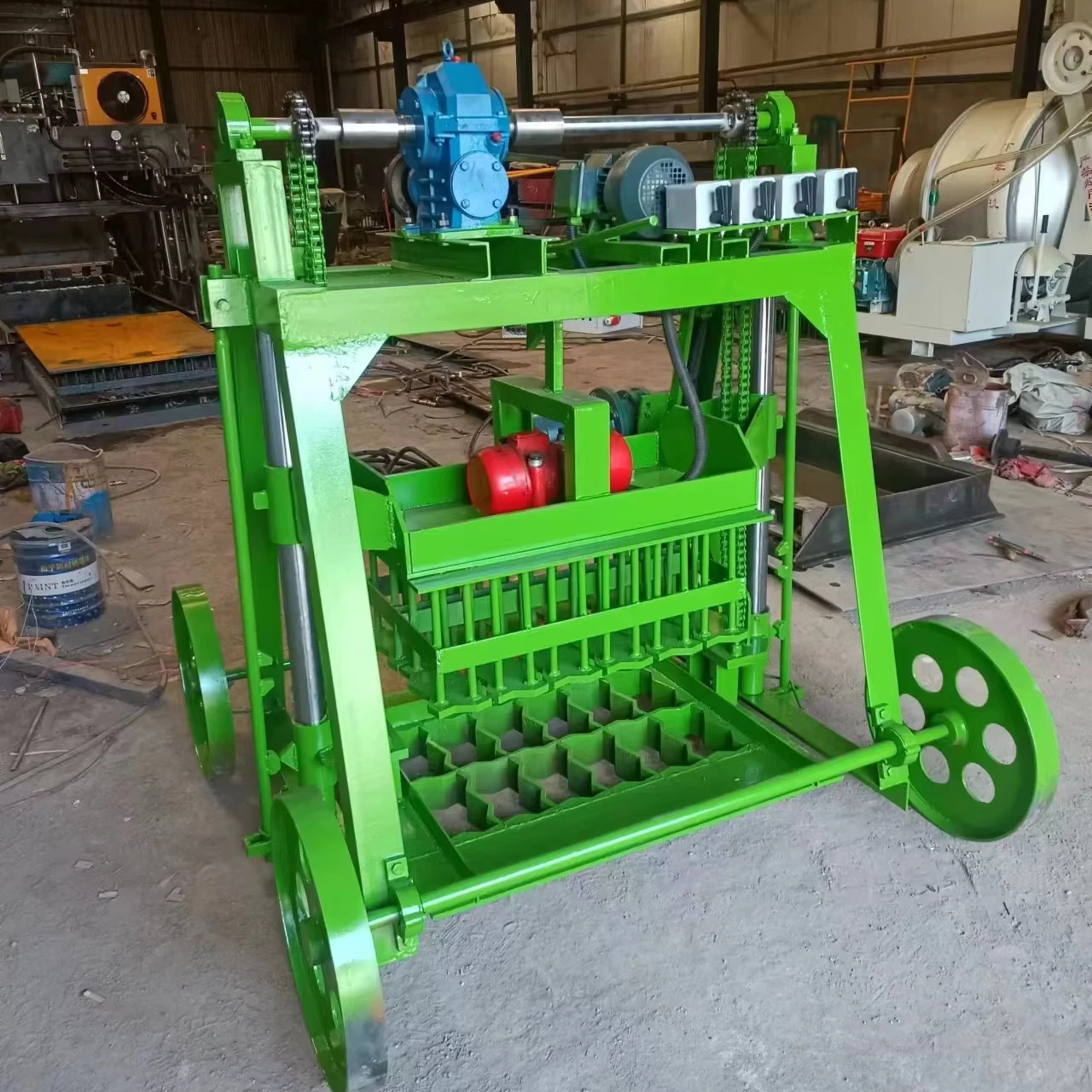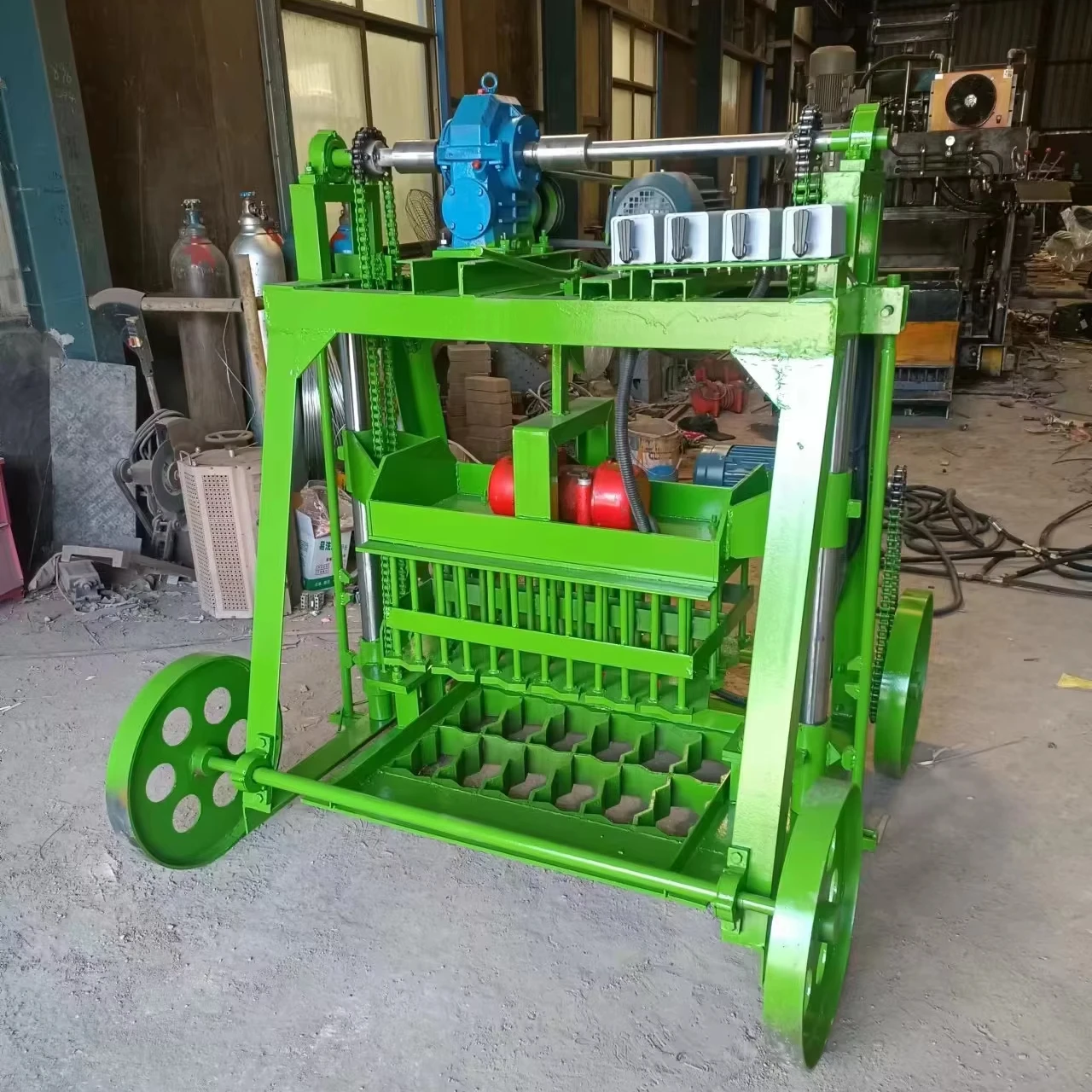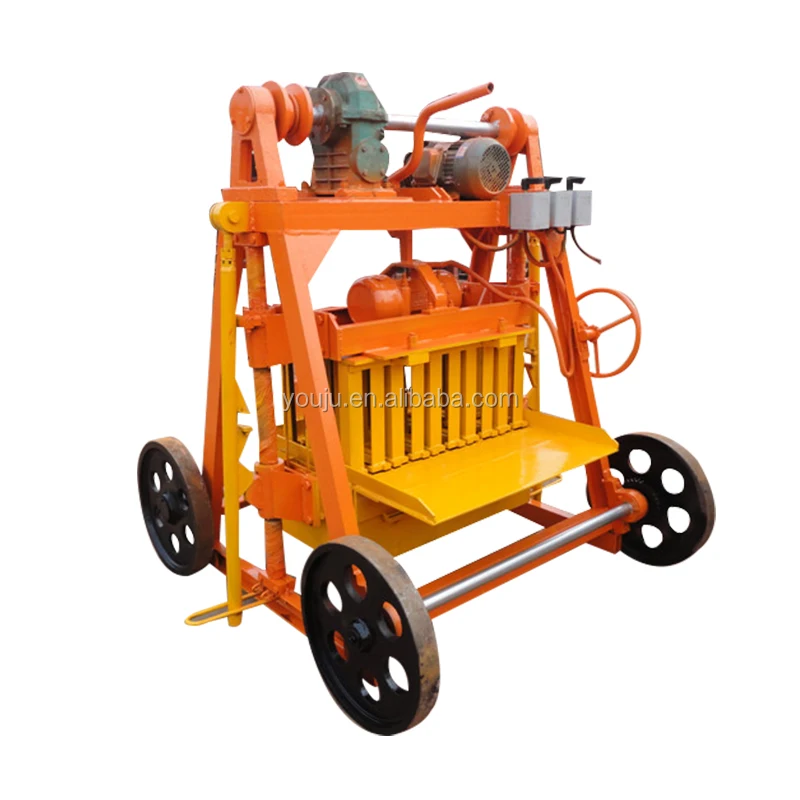


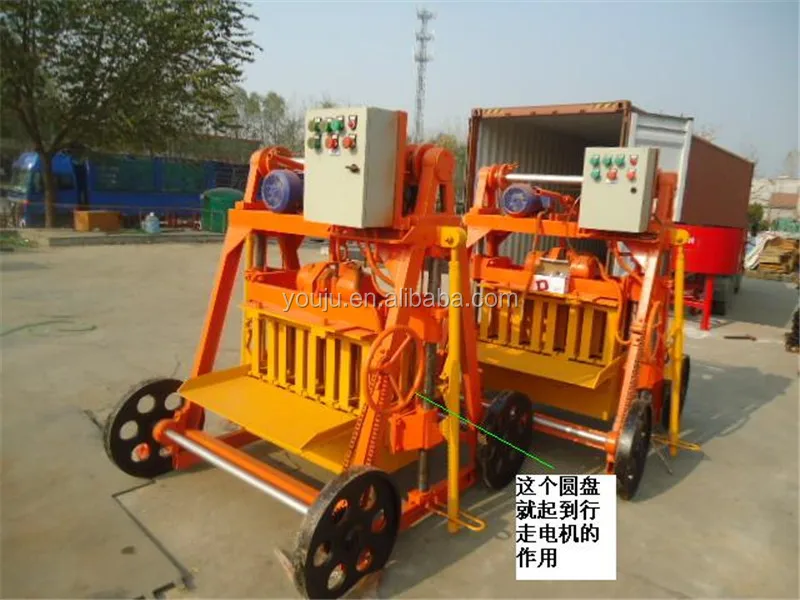
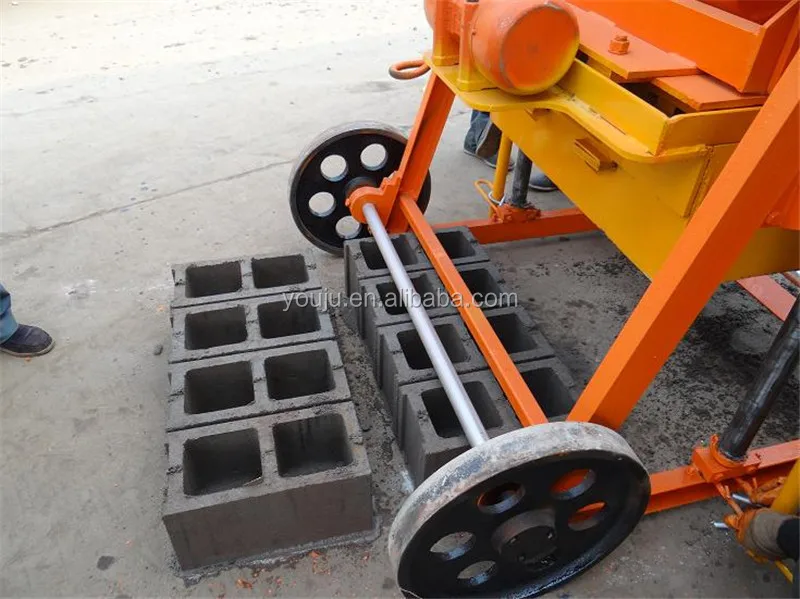

Description
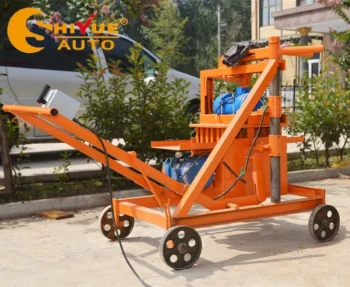
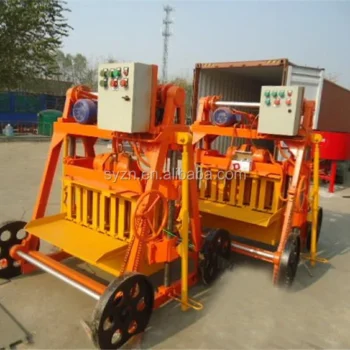
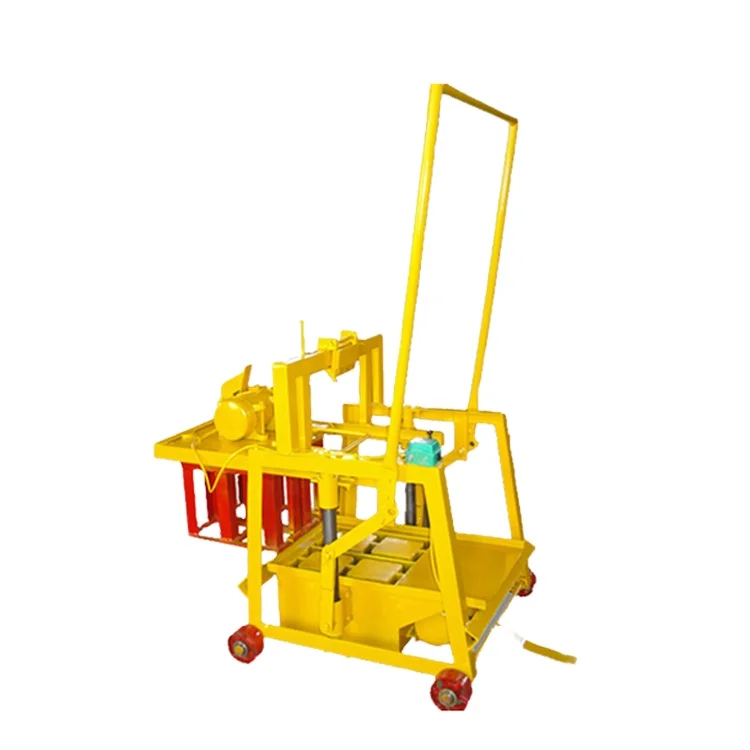
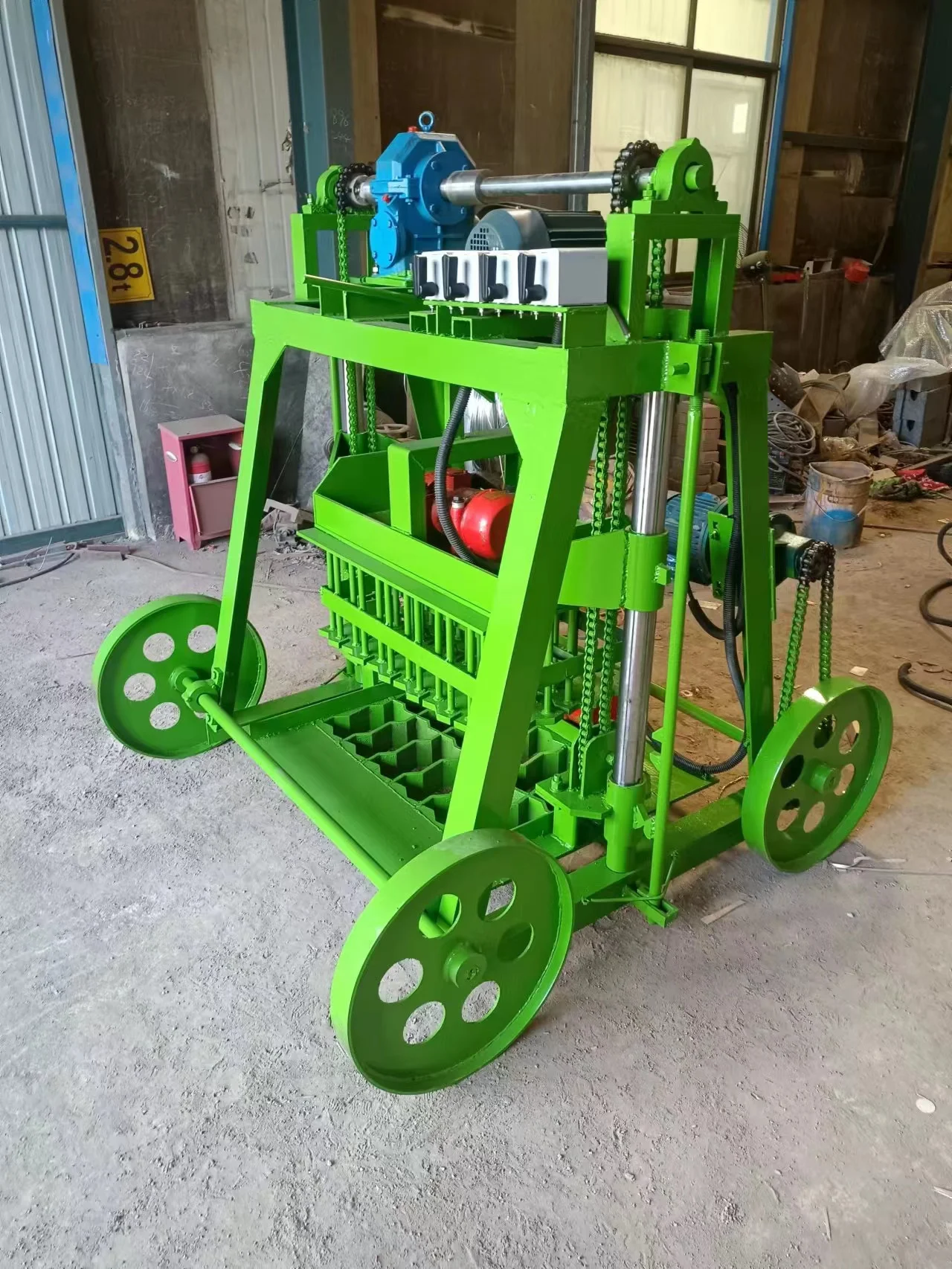
Block machinery as a single focus — we specify the QMJ4-45 as a matched system of machine, mould, and engine so output figures reflect the format you actually sell, not a catalogue default.
Technical Specifications
| Parameter | Value |
|---|---|
| Model | QMJ4-45 |
| Product Type | Mobile Egg-Laying Block Making Machine |
| Molding Capacity | 4 pcs/mould (400×200×200mm hollow block); 5 pcs/mould (400×150×200mm); 6 pcs/mould (400×120×200mm) |
| Productivity (Hollow Block 400×200×200mm) | 3000 pcs/day based on an 8-hour shift |
| Productivity (Hollow Block 400×150×200mm) | 3500 pcs/day based on an 8-hour shift |
| Productivity (Hollow Block 400×120×200mm) | 4500 pcs/day based on an 8-hour shift |
| Molding Cycle | 40–45 s |
| Vibration Frequency | 2400 r/min |
| Vibration Method | Mould vibration (twice-vibration of molding core) |
| Demould Method | Manual |
| Turning Method | Manual |
| Total Power | 6 kW |
| Power Source | Diesel / Petrol engine |
| Pallet Requirement | Not required (egg-laying type, blocks laid directly on ground) |
| Automation Level | Manual / Semi-manual operation |
| Warranty | 1 year (whole machine) |
Application Suitability
| Application | Material or Output |
|---|---|
| On-site hollow block production at construction or development sites | Cement, crushed stone, sand, and water mix without fixed plant infrastructure |
| Small-scale or startup block manufacturing | Hollow blocks in 400×200×200mm, 400×150×200mm, and 400×120×200mm formats |
| Remote or off-grid building projects | Engine-driven operation using locally available diesel or petrol fuel |
| Sites with existing cement working areas | Ground-level egg-laying production eliminating pallet handling and curing rack investment |
What "3000 Blocks per Day" Actually Means for Your Format
Every output number here is tied to a specific block dimension, mould cavity count, and a 40–45 second cycle.
I have watched contractors arrive at a project site with a machine rated at a headline daily figure, only to find the real throughput drops when they switch from the 200mm hollow block to the 150mm partition format their market actually demands. The QMJ4-45 mobile block machine specifications address this by stating capacity per format: 3000 pieces per day assumes the 400×200×200mm block in an 8-hour shift, while the narrower 120mm format reaches 4500 pieces per day under the same conditions. When you compare quotations, ask the supplier which block size their number assumes. [NEED_CITE: common capacity misrepresentation practices in mobile block machine quotations]
Matching Engine Power to Your Site Conditions
The 6 kW diesel or petrol engine removes any dependency on grid voltage, which matters when your project is a housing development thirty kilometers from the nearest substation. Because the QMJ4-45 mobile block machine runs entirely on fuel, you avoid the commissioning delays that come from confirming voltage, frequency, and phase rotation before the electrician even arrives. The trade-off is that engine-driven vibration must be checked against ambient temperature and altitude, both of which affect combustion efficiency and therefore vibration consistency across a full shift.
Egg-Laying Design and What It Removes from Your Budget
By laying blocks directly on a prepared ground surface, this machine eliminates pallets, pallet feeders, and the curing rack infrastructure a stationary line requires. That reduction matters most when your capital is allocated to raw material stock rather than handling equipment. The trade-off is floor space: you need a flat, level cement working area large enough for the day’s output to cure in place before blocks can be moved to storage. [NEED_CITE: ground preparation requirements for egg-laying block production in arid climates]
Reading the Vibration and Cycle Numbers
The 2400 r/min vibration frequency delivered through the twice-vibration molding core system compacts the mix in two stages rather than a single pass, which produces a denser block wall with more uniform strength across the batch. A 40–45 second molding cycle means the operator completes roughly 80 to 90 cycles per hour on a single format. Mould cavity count then determines pieces per cycle: four cavities for the 200mm hollow block, six for the 120mm. Hydraulic pressure is not listed in the source data, so if your local aggregate requires higher compaction force to reach target block strength, request the pressure rating before confirming the order.
The Hidden Cost of Skipping the Mix Design Check
I once saw a contractor order a mobile egg-layer based on a supplier’s standard output chart, then discover on arrival that the desert sand at his project site carried salt content high enough to weaken every block in the first batch. No machine compensates for a mix it was never configured around. With the QMJ4-45, confirming that your local aggregate, cement grade, and water quality match the vibration force and cycle time is the step that prevents a full day of scrapped output. [NEED_CITE: aggregate testing requirements for concrete block compressive strength]
Why Source This Configuration Here
Block machinery is our single focus, so the QMJ4-45 is specified alongside the exact mould formats, engine rating, and spare wear parts list your site needs — not assembled from unrelated suppliers. Capacity calculations we provide state the block format, cycle time, and shift hours assumed, so your procurement team can compare real throughput across tenders. Mould design is available to buyer drawings when your market sells a dimension outside the standard cavity list. Installation support covers engine start-up, vibration calibration to your actual mix, and operator training on the manual demould sequence so your crew is producing within the first shift.
Documentation & Verification
- Machine specification sheet stating output per hollow block format and cycle time
- Mould drawing and format list matching the cavity counts in the table above
- Engine data sheet with fuel consumption and power curve at rated RPM
- Factory test record on your specified block format before dispatch
- Operation and maintenance manual covering daily inspection intervals
- Wear parts and mould replacement schedule with part numbers
Installation, Commissioning & Support
- Flat, level cement working area required for ground-level egg-laying production
- Diesel or petrol fuel supply confirmed against local availability and ambient conditions
- Machine arrives assembled; engine start-up and vibration calibration performed on your mix
- Operator training on manual demould and turning sequence within the first production shift
- Mould change instruction for switching between 200mm, 150mm, and 120mm hollow block formats
- Wear parts list provided with recommended first replacement intervals for vibration components
What We Need from You Before Quoting
Send us the block format your market sells, the local aggregate type and source, and whether diesel or petrol is more accessible at your project site. If you already have a cement working area, share its dimensions so we can confirm whether the daily output volume fits your curing footprint. Let us know your target shift length so the capacity calculation reflects your actual production hours rather than an eight-hour default.
Frequently Asked Questions
Q: How is the daily output figure calculated for each block size?
A: Each number assumes a specific hollow block dimension, mould cavity count, and a 40–45 second cycle over an 8-hour shift. The 200mm format yields 3000 pieces per day from 4 cavities, the 150mm yields 3500 from 5 cavities, and the 120mm yields 4500 from 6 cavities. Real output depends on operator pace, mix consistency, and breaks.
Q: What block formats can the QMJ4-45 produce and how long does a mould change take?
A: Standard moulds cover 400×200×200mm, 400×150×200mm, and 400×120×200mm hollow blocks. Custom mould design is available to buyer drawings for other formats. Mould change is manual; confirm the procedure and expected time with the supplier before ordering if format flexibility is central to your plan.
Q: Does the engine-driven power source affect block quality consistency?
A: Engine-driven vibration is consistent as long as the engine is maintained and operated within its rated RPM range. High ambient temperature or altitude can reduce combustion efficiency, which in turn affects vibration force. Request the engine power curve and discuss your site conditions before confirming the configuration.
Q: What local aggregate and mix design does this machine require?
A: The twice-vibration molding core works with standard cement, crushed stone, and sand mixes. However, local aggregate properties such as salt content, grading, and moisture absorption directly affect block strength. Submit a sample of your local sand and stone so the mix can be matched to the vibration force before production begins.
Q: What spare parts are included and when should the first replacement be scheduled?
A: The standard package includes a wear parts list with part numbers for vibration components and mould surfaces. First replacement timing depends on the abrasiveness of your aggregate and daily production volume. Request the schedule during quotation so you can budget for spares before the first mould or vibration component reaches end of life.