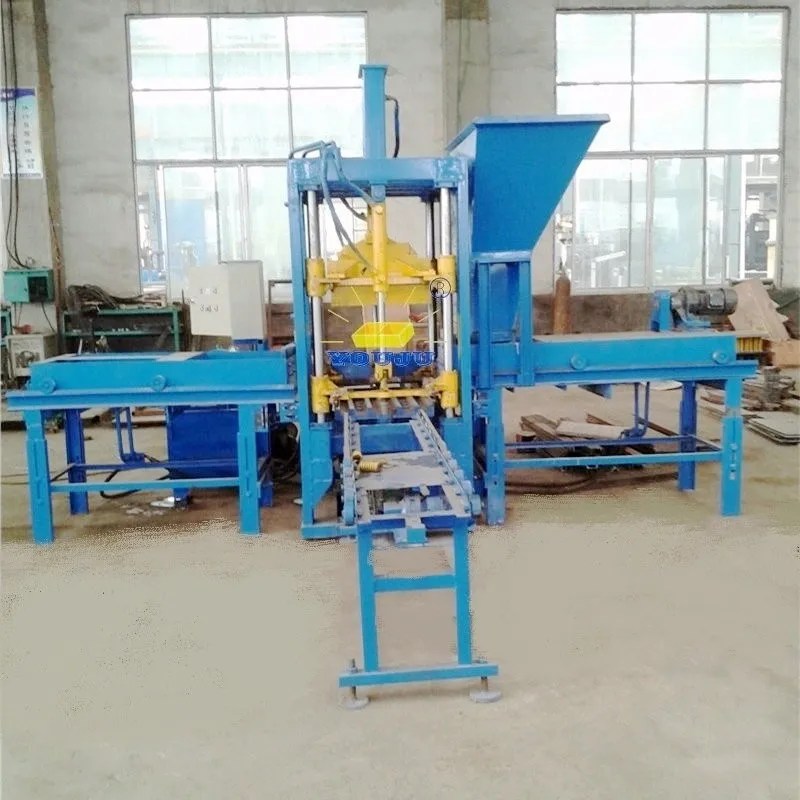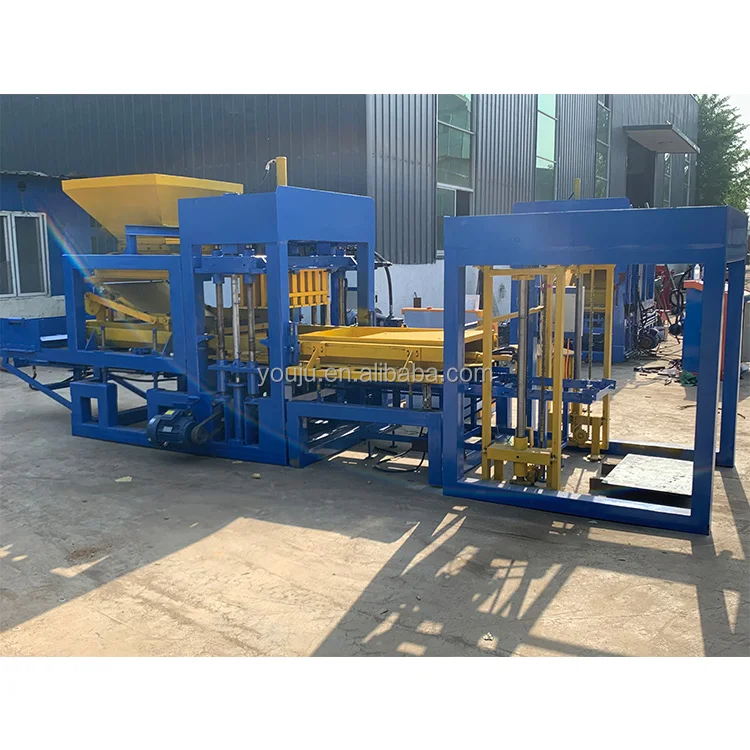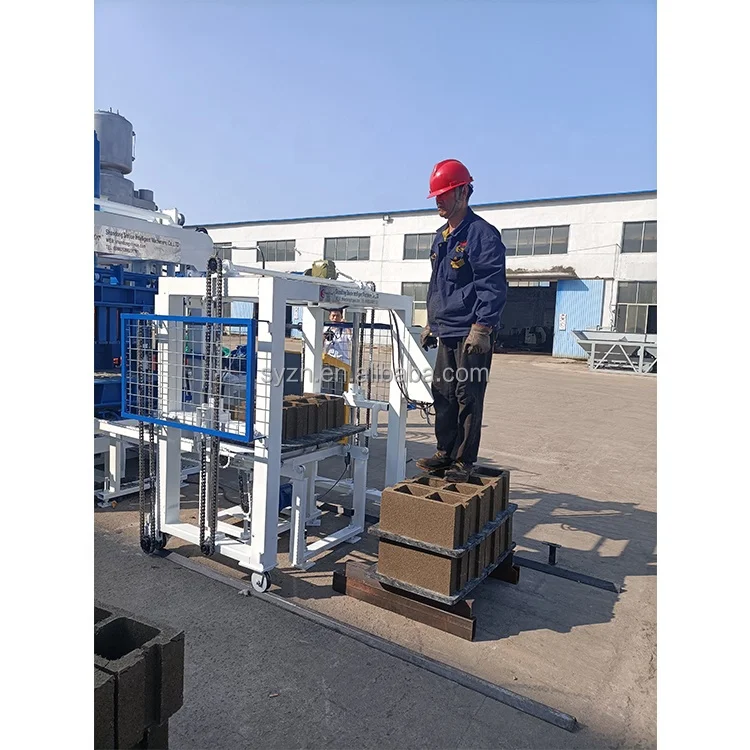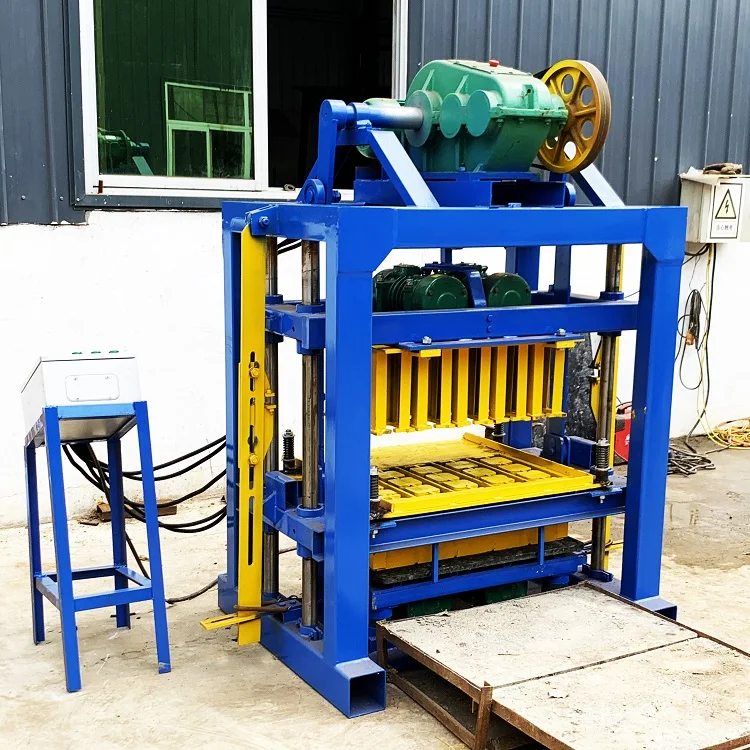
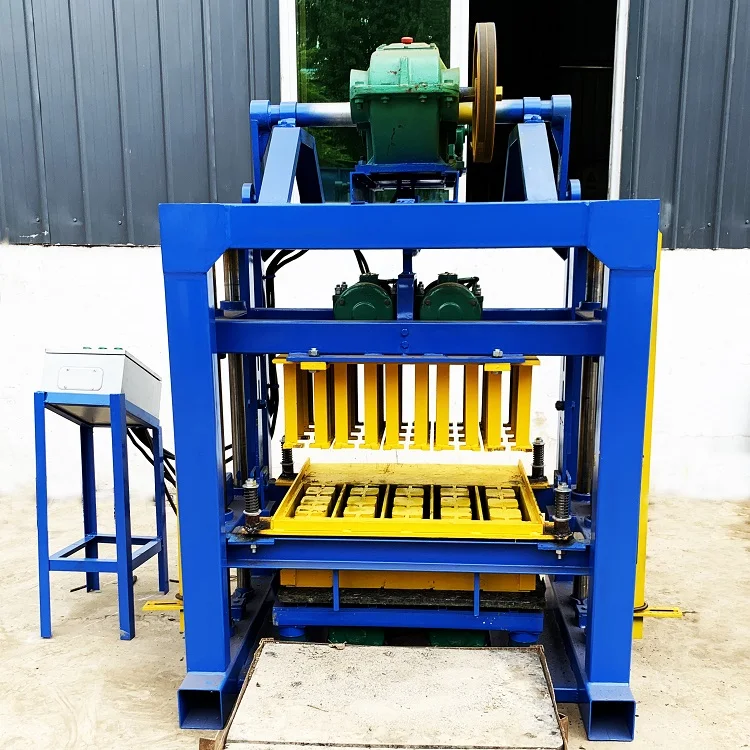
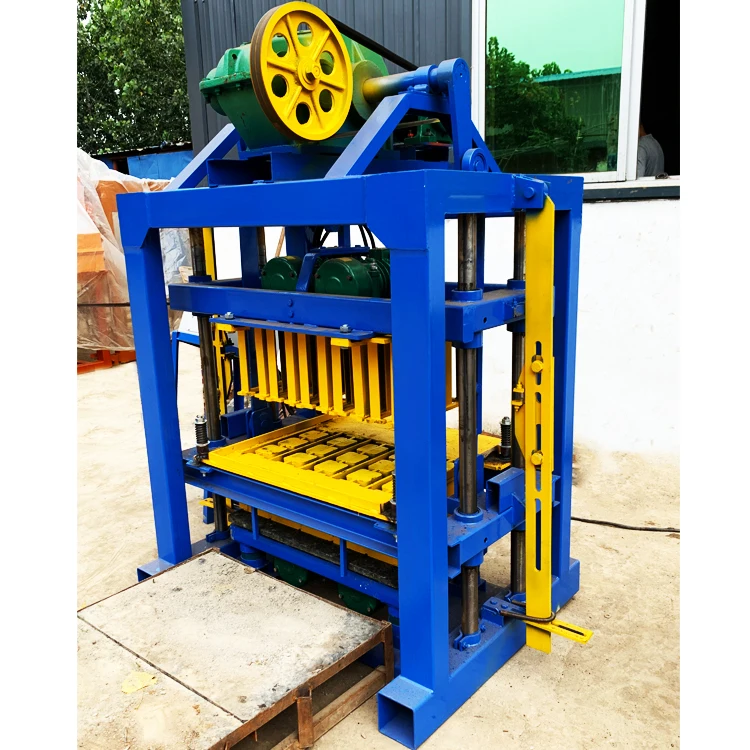
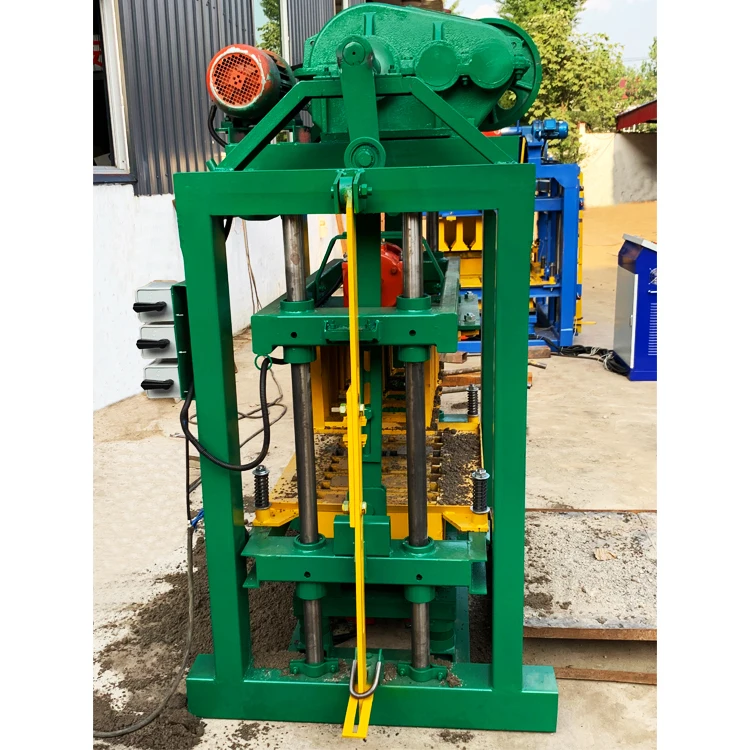
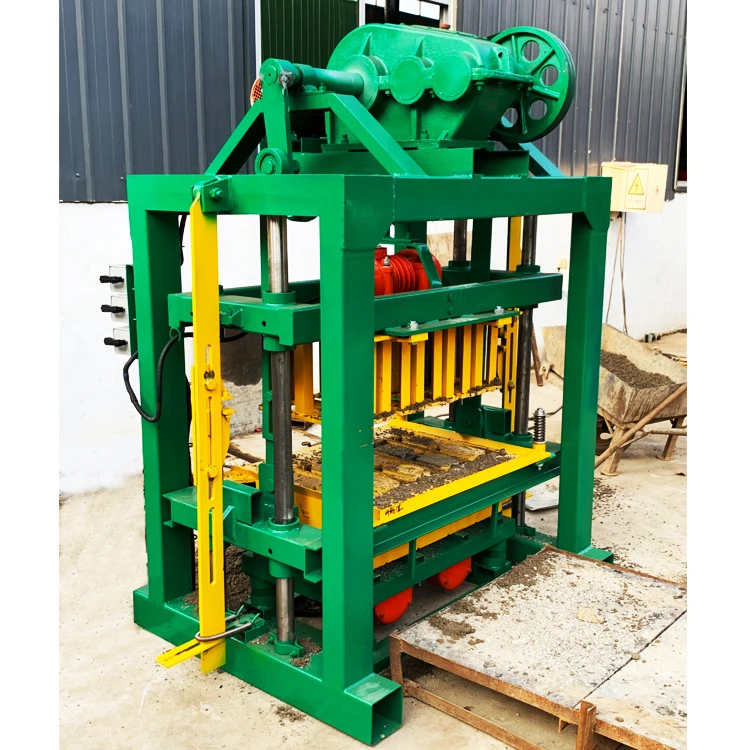
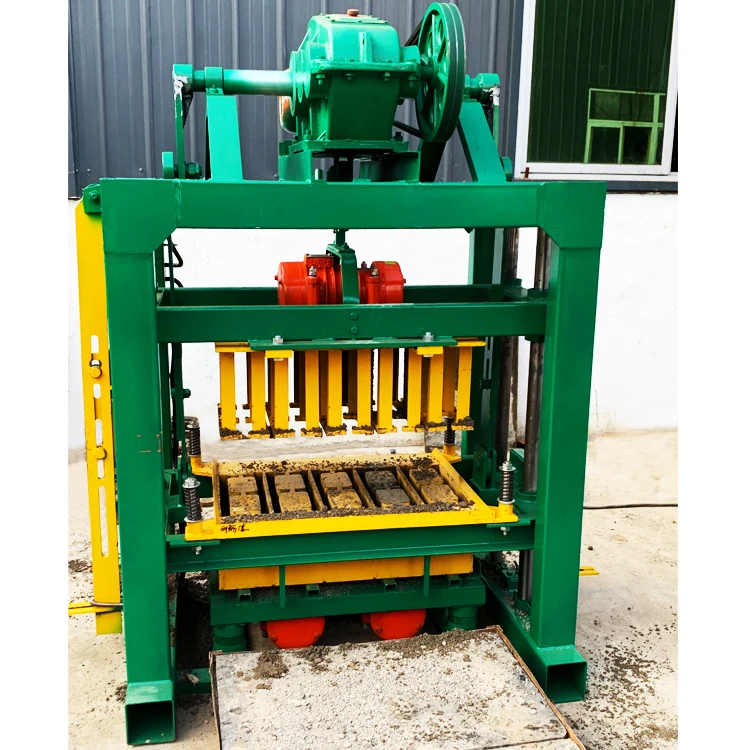
Description
Matched mould-to-machine specification — every QTJ4-40 configuration we quote starts with your block drawing and local aggregate report, not a catalogue default.
Technical Specifications
| Parameter | Value |
|---|---|
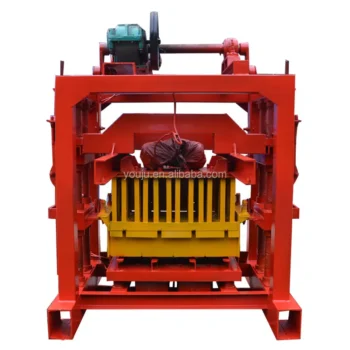
| Model | QTJ4-40 |
| Product Type | Manual Movable Block Making Machine |
| Vibration Form | Platform Vibration |
| Vibration Frequency | 2800 r/min |
| Pallet Size | 850 × 450 mm |
| Overall Dimensions (L × W × H) | 1350 × 1460 × 1800 mm |
| Machine Weight | 1 T |
| Die Operation | Top die push and pull with automatic scraper |
| Automation Level | Manual / semi-manual |
| Required Workers | 1–3 people |
| Factory Area Requirement | 200 m² |
| Recommended Mix Ratio | Cement 8–10%, sand 30–40%, stone 50–60% (approx. 1:4:5) |
| Production Capacity (400 × 200 × 200 mm) | 4 pcs/mould, 360 pcs/h, 2880 pcs/day |
| Production Capacity (400 × 150 × 200 mm) | 5 pcs/mould, 500 pcs/h, 4000 pcs/day |
| Production Capacity (225 × 112.5 × 60 mm) | 9 pcs/mould, 900 pcs/h, 7200 pcs/day |
| General Capacity Claim | 2800 pcs/8h (basis not stated in source — confirm block format and material) |
| Power Source | Engine and motor (rated kW and voltage/frequency to be confirmed per site) |
| Standards | CE declaration referenced |
Application Suitability
| Application | Material or Output |
|---|---|
| Small-scale hollow block plant | Concrete with crushed stone and cement, 400 × 200 × 200 mm format |
| On-site solid block production for housing projects | Cement, sand and gravel mix, 400 × 150 × 200 mm format |
| Interlocking paver manufacturing for local contractors | Colored concrete with fine aggregate, 225 × 112.5 × 60 mm format |
| Curbstone and kerb production | Coarse aggregate concrete with higher cement content |
| Start-up block yard with limited floor space | Any standard format within the 850 × 450 mm pallet envelope |
Why the Block Format Must Come Before the QTJ4-40 Block Machine Specifications Discussion
A capacity number without a stated block size is not a capacity — it is a guess.
I have watched buyers compare two quotations side by side, pick the higher output figure, and then discover after commissioning that the number assumed a small interlocking paver while they actually needed hollow blocks. The real daily tonnage was less than half of what the brochure implied. With the QTJ4-40 block machine specifications, the three reference formats above — 400 × 200 × 200, 400 × 150 × 200, and 225 × 112.5 × 60 — each produce a different cavity count and therefore a different hourly output. Any other number should be treated as provisional until the exact mould drawing is confirmed [NEED_CITE: block capacity calculation standards by format and cycle time].
Platform Vibration Matched to Mould Cavity Count
The 2800 r/min platform vibration is tuned for the mass of a loaded 850 × 450 mm pallet. When the mould has four large hollow cavities, the vibration energy spreads across fewer but heavier units; when it holds nine small interlocking paver cavities, the same frequency compacts lighter units more evenly. This balance is what keeps block density consistent across a shift, and it is the reason the QTJ4-40 block machine specifications list different output tiers rather than a single blanket number.
Mould Change and Format Flexibility on the Shop Floor
The top-die push-and-pull mechanism with an automatic scraper allows the operator to release the block and clear residual mix before the next cycle. Mould change itself is a mechanical swap — unfasten, lift out, lower in, re-fasten — and the time it takes depends on how many formats you run per day. If your market demands two or three formats in a single shift, the downtime between swaps directly affects whether the stated daily output is achievable [NEED_CITE: typical mould change intervals on manual block presses].
How Mix Ratio, Pallet Size and Site Layout Interact
The recommended 1:4:5 cement-sand-stone ratio assumes clean, well-graded aggregate. If your local sand carries a high clay content, the same ratio will produce blocks that crumble at the edges, and you will need to adjust upward on cement or pre-wash the sand. The 850 × 450 mm pallet size also dictates your curing rack dimensions and forklift tine spacing — ordering pallets that do not match your existing handling equipment means rebuilding the curing area from scratch. Always cross-check the QTJ4-40 block machine specifications against your site before the machine ships.
The Hidden Cost of Skipping the Aggregate Report
When a buyer sends only a target output number and skips the raw material photos, the machine arrives configured for a clean river-sand mix that does not exist locally. The result is blocks that fail drop tests, moulds that wear out in weeks instead of months, and a production line that sits idle while the operator experiments with ratios by hand. I have seen this pattern repeat often enough that I now insist on a sieve analysis before any quotation goes out [NEED_CITE: aggregate grading requirements for concrete block production].
Why Sourcing from a Single-Focus Supplier Matters
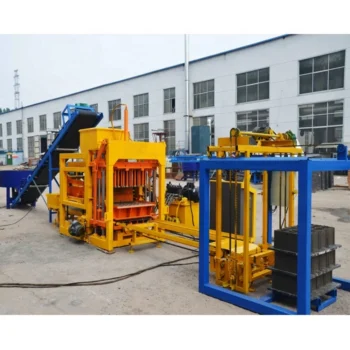
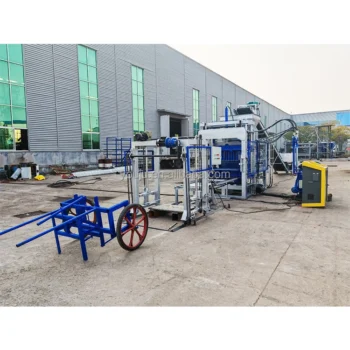
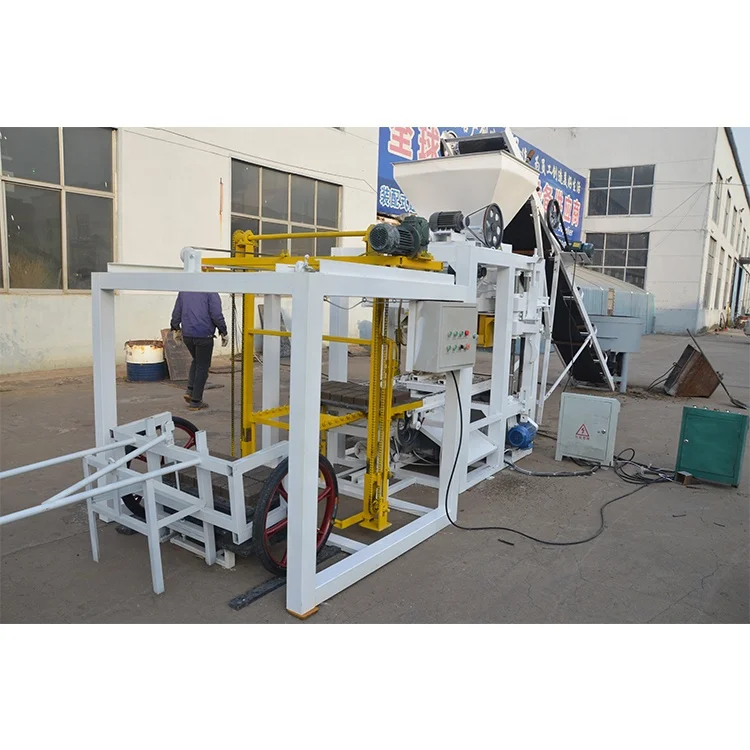
- Block machinery is the only product line here, so the QTJ4-40 press, mould, pallet and handling equipment are specified as one matched system rather than assembled from separate vendors.
- Configuration starts from your actual mix design and target block format, not a catalogue default that may not suit your local aggregate.
- Mould design and supply covers the formats your market actually sells, including custom drawings if your region uses a non-standard kerbstone or interlocking profile.
- Automation level is selectable — you can begin with manual pallet handling and add semi-automatic feeding later as volume grows.
- Installation support includes operator training on the specific formats and mix ratios your plant will run.
Documentation & Verification
- Line layout showing the 200 m² floor plan with curing rack positions matched to 850 × 450 mm pallets
- Capacity calculation sheet stating the exact block format and cavity count behind every output figure
- Mould drawing with dimensional tolerances for your chosen hollow, solid or interlocking format
- Recommended mix ratio adjusted to your submitted sieve analysis and local cement grade
- Voltage, frequency and motor kW confirmation sheet signed before production begins
- Factory test record on your specified block format before dispatch
Installation, Commissioning & Support
- 200 m² floor area with a level concrete slab to accept the 1350 × 1460 mm machine footprint
- Dedicated circuit matching confirmed motor kW and local voltage before the QTJ4-40 is energized
- Movable unit arrives assembled — position, connect power, load pallets and run first cycle the same day
- First-run parameter setting covers vibration duration, scraper timing and mix moisture tolerance
- Operator training on mould swap procedure and daily greasing points for the platform vibration assembly
- Wear parts list covering scraper blades, vibration springs and top-die guide pins with reorder codes
What to Include in Your First Inquiry
Send your target block format with dimensional drawings, the daily output you need for that specific format, and photos or a sieve report of your local sand and stone. Confirm the voltage and frequency available at your site and the language you need on any control interface. If you already have curing racks or forklifts, share their dimensions so the pallet size can be verified before the QTJ4-40 block machine specifications are finalized.
Frequently Asked Questions
Q: How is the QTJ4-40 daily output calculated and which block format does each figure assume?
A: Each output figure in the specification table is tied to a specific block size and mould cavity count. The 2880 pcs/day number assumes 400 × 200 × 200 mm hollow blocks at four cavities per mould. The 4000 pcs/day figure assumes 400 × 150 × 200 mm solid blocks at five cavities, and the 7200 pcs/day figure assumes 225 × 112.5 × 60 mm interlocking pavers at nine cavities. Any other format requires its own calculation.
Q: What pallet size does the QTJ4-40 use and how does it match my existing curing setup?
A: The machine uses 850 × 450 mm pallets. Before ordering, measure your curing rack shelf width and forklift tine spacing to confirm they accept this dimension. If your existing racks were built for a different pallet size, you will need to either adapt the racks or source pallets that bridge the gap. We confirm pallet size and material before the machine enters production.
Q: Can the mix ratio be adjusted for locally available aggregates without losing block strength?
A: The standard 1:4:5 cement-sand-stone ratio is a starting point. If your local sand has high clay content or your stone is poorly graded, the ratio needs adjustment to maintain compaction and compressive strength. Submit a sieve analysis and cement grade certificate with your inquiry, and the mix will be recalculated and tested at the factory before shipment.
Q: How long does a mould change take on this machine and what tools are required?
A: The top-die push-and-pull design allows the operator to release the formed block and clear residual material before unbolting the mould. A swap typically requires basic hand tools and can be completed within a short break between production runs, though exact time depends on operator familiarity and whether alignment pins are pre-set for the incoming format.
Q: What voltage and motor specifications should I confirm before the machine ships?
A: The QTJ4-40 is powered by an engine and electric motor combination, and the rated kW, voltage and frequency must match your site supply. Confirm these values during the quotation stage so the motor winding and any control components are built to your local standard. A confirmation sheet is signed by both parties before production begins.