


Description
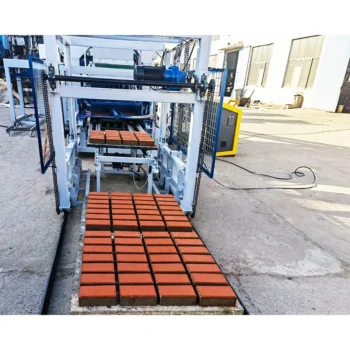
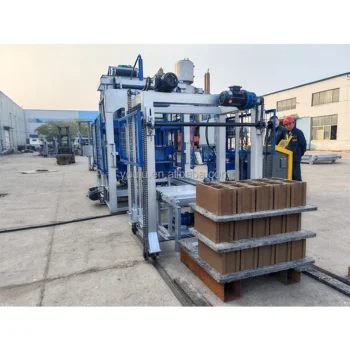
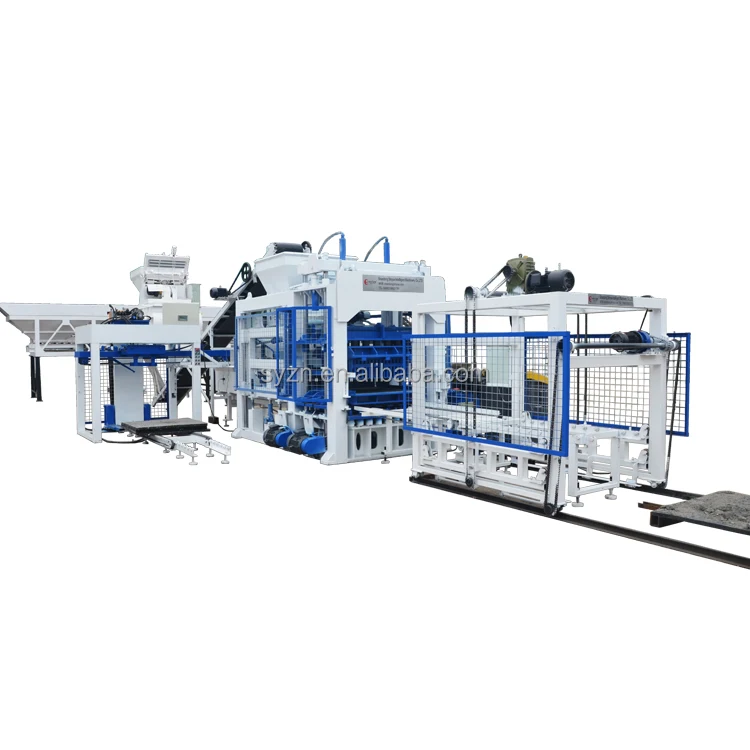
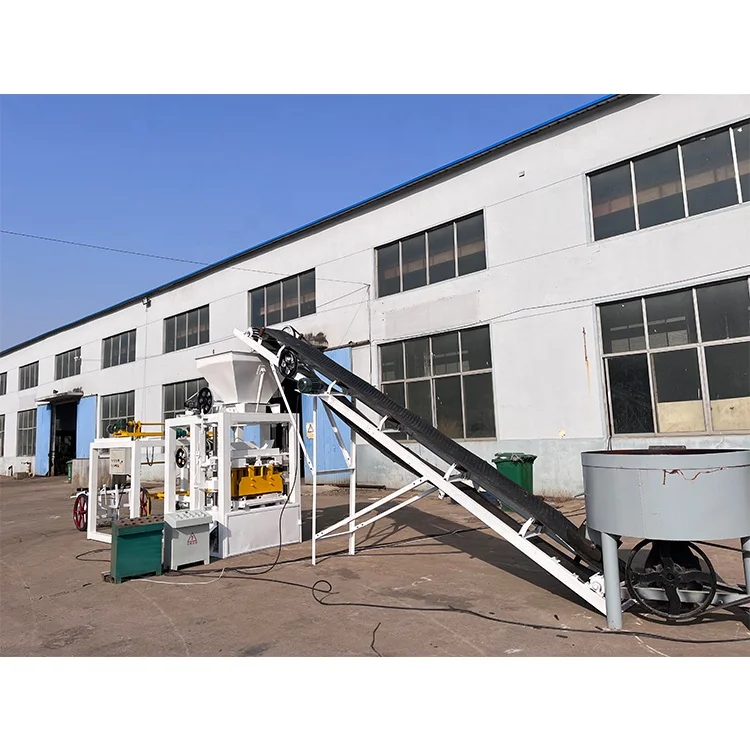
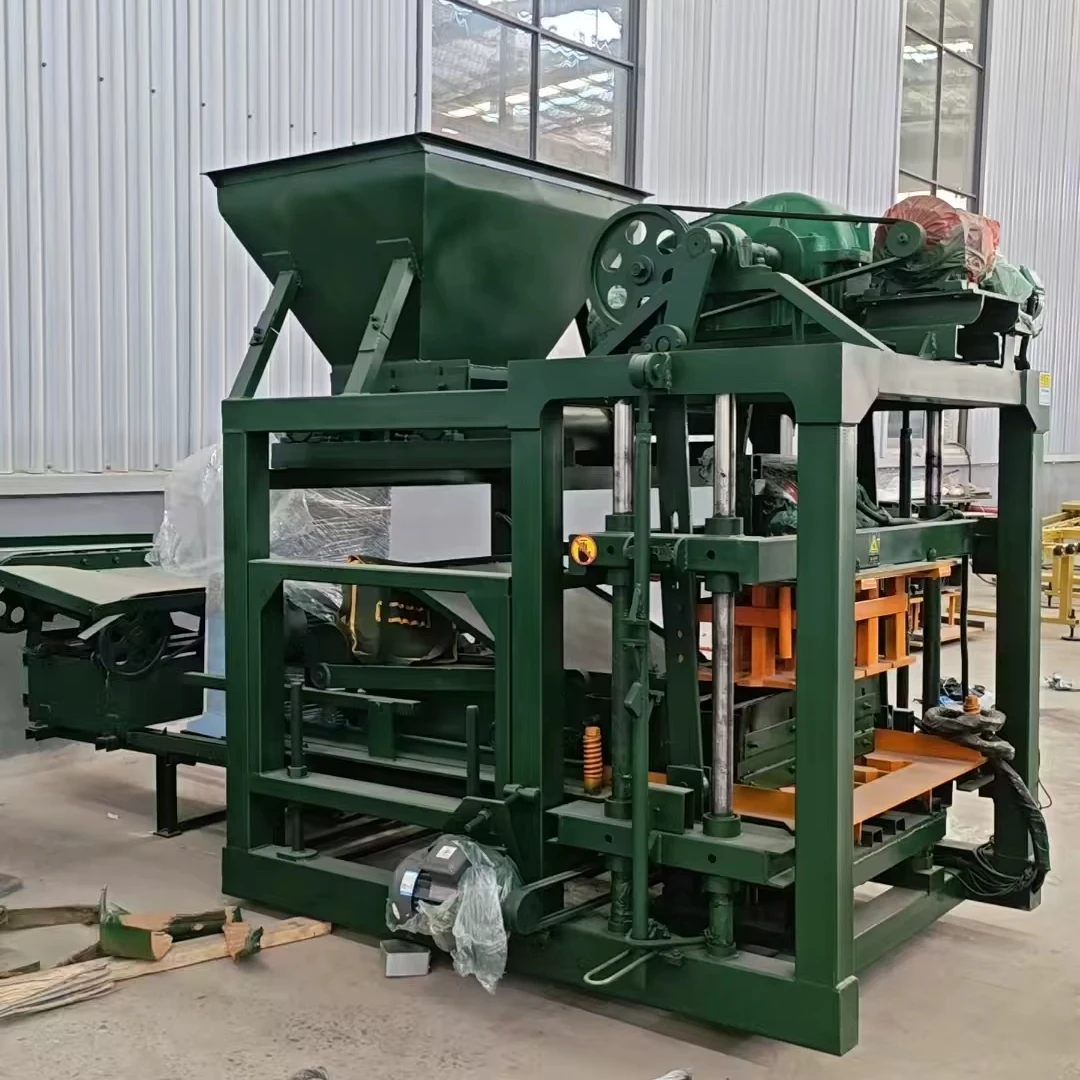
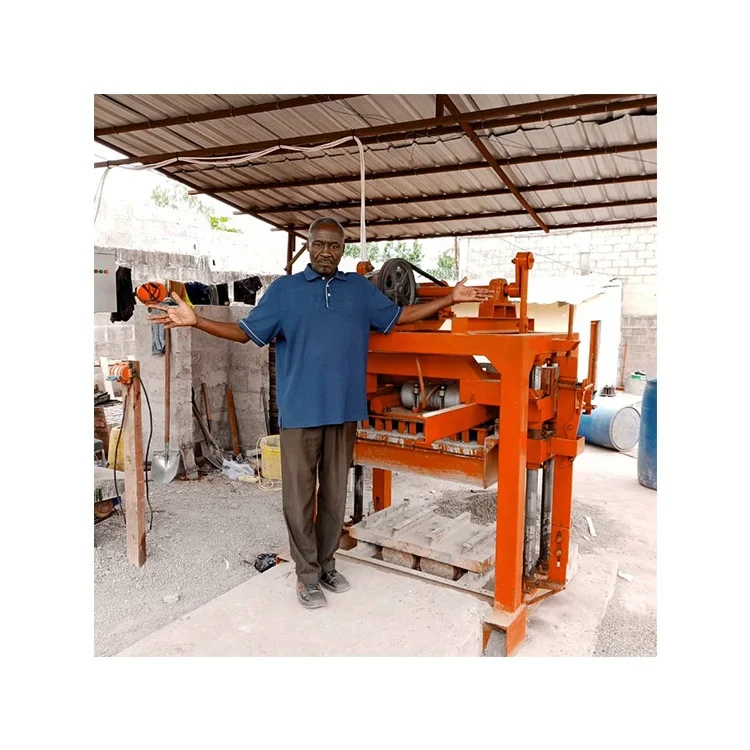
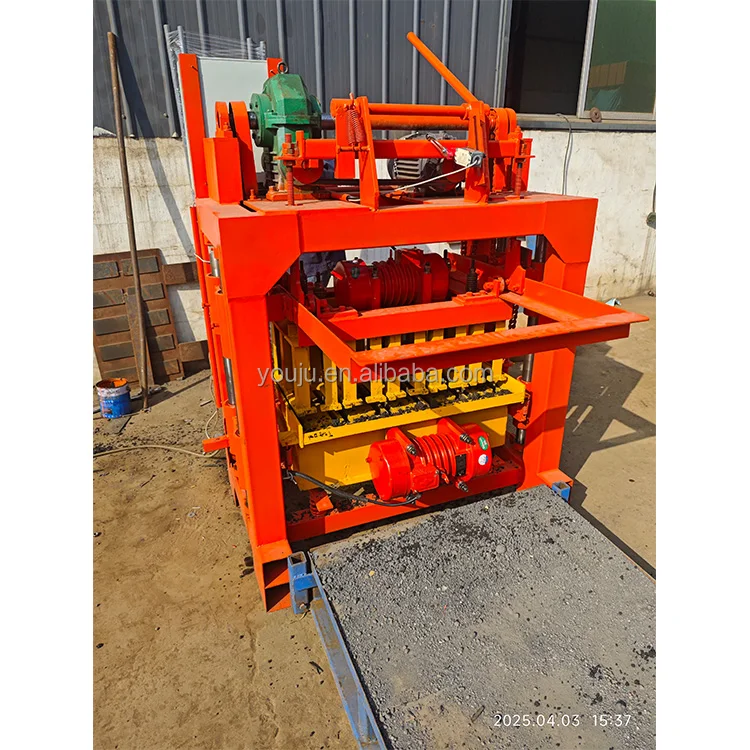
Matched System Design — The QTJ4-40 is specified as one coherent unit of press, mould, pallet and handling, rather than a catalogue default that leaves buyers to source missing components separately.
Technical Specifications
| Parameter | Value |
|---|---|
| Model | QTJ4-40 |
| Product Type | Manual Hydraulic Cement Block Making Machine |
| Category | Stationary block machine |
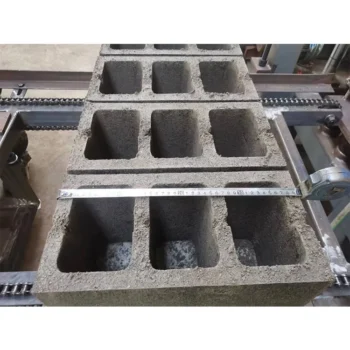
| Capacity (400×200×200mm hollow block, 4 pcs/mould) | 2880 pcs / 8 hours |
| Capacity (400×150×200mm hollow block, 5 pcs/mould) | 4000 pcs / 8 hours |
| Capacity (225×112.5×60mm solid brick, 9 pcs/mould) | 7200 pcs / 8 hours |
| Raw Materials | Concrete, cement, fly ash, crushed stone, sand, dust, gravel, slag |
| Applied Products | Concrete blocks, hollow/solid blocks, pavers, interlocking blocks, curbstone, colored pavers |
| Main Vibration Form | Platform Vibration |
| Vibration Frequency | 2800 r/min |
| Pallet Size | 850 × 450 mm |
| Raw Material Ratio (approx.) | Cement 8–10%, sand 30–40%, stone 50–60% (1:4:5) |
| Machine Weight | 1 T |
| Factory Area Required | 200 m² |
| Overall Dimensions (L × W × H) | 1350 × 1460 × 1800 mm |
| Worker Requirement | 1–3 people |
| Mould Change System | Top die push and pull with automatic scraper |
| Control System | Manual operation (basis not stated in source) |
| Voltage & Frequency | To be confirmed before ordering |
| Hydraulic Pressure | To be confirmed |
| Vibration Force | To be confirmed |
| Mould Change Time | To be confirmed |
| Certification | CE (image shown in source — verify certificate validity) |
Application Suitability
| Application | Material or Output |
|---|---|
| Small-scale hollow block production for local housing | Crushed stone, sand, cement at approx. 1:4:5 ratio |
| Solid brick manufacturing for masonry contractors | Sand, fly ash, cement blends |
| Interlocking paver production for landscaping | Colored concrete mixes with fine aggregate |
| Kerbstone and curb production for road projects | High-strength concrete with coarse gravel |
| On-site block production for construction contractors | Locally sourced aggregate and cement |
What "2880 Blocks per Day" Actually Means for Your Plant
Every capacity number on this page is tied to a specific block size and mould cavity count — no headline cycles without the format behind them.
Buyers often receive a single daily output figure that assumes the most favourable block format, then discover on site that the format their market actually buys produces noticeably fewer pieces per shift. When the QTJ4-40 block machine specifications are reviewed per format, the difference between a 4-cavity hollow block mould and a 9-cavity solid brick mould becomes the defining factor in plant economics, not the press cycle alone. I have seen plants in Southeast Asia plan labour and curing space around the solid brick number, only to find that hollow blocks — their real product — left them with a third of the expected output and idle workers standing around the stacking area [NEED_CITE: per-format capacity planning in small block plants].
Matching the QTJ4-40 to the Block Your Market Sells
The honest starting point for sizing any stationary block machine is the format that moves in your local market, not the format that produces the highest headline number. For the QTJ4-40, that means understanding that 2880 pieces per 8-hour shift applies specifically to 400×200×200mm hollow blocks at 4 cavities per mould, while the same machine running 225×112.5×60mm solid bricks at 9 cavities reaches 7200 pieces per shift. This distinction shapes everything downstream: pallet consumption rate, curing rack space, raw material throughput and the number of workers needed at the stacking end.
Pallet Size and Curing Area — The Overlooked Constraint
The 850×450mm pallet size on this machine is fixed by the press geometry and cannot be changed after build. Before ordering, the buyer must verify that this pallet dimension fits the curing racks already on site or planned for purchase, and that the forklift tine spacing can handle the loaded pallet without edge damage. A mismatch here means either rebuilding curing racks at unexpected cost or watching output pile up on the floor because racks cannot accept the pallets the press is producing. In my experience across Indonesian and Vietnamese block plants, pallet-to-rack incompatibility is the single most common reason a new machine sits idle in the first month [NEED_CITE: pallet and curing rack compatibility in block production].
Platform Vibration and Mould Density
Platform vibration at 2800 r/min works by transmitting force upward through the pallet into the concrete mix, compacting it against the top die. On the QTJ4-40, this is paired with a top-die push-and-pull system and an automatic scraper that levels the mix before compression. The result is consistent block density across the pallet surface, provided the mix design matches the vibration frequency. A mix that is too dry will not consolidate fully; a mix that is too wet will slump when the mould lifts. Getting this balance right requires testing with the buyer’s actual local aggregate, not a standard sand sample from the factory floor.
The Hidden Cost of Skipping the Mix Test
When a machine is configured for a mix the buyer cannot source locally, the consequence is not just lower strength — it is a complete production halt while new ratios are trialled on site. I once watched an Indonesian plant lose nearly two weeks because the volcanic ash in their region absorbed water at a rate completely different from the standard sand used during factory testing, and every block came off the pallet too weak to stack. The cost of shipping a raw material sample before ordering is negligible compared to the cost of commissioning failures, idle workers, and unhappy customers waiting for delivery.
Why Source This Machine Here
Block machinery is the single focus of this operation, which means the QTJ4-40 is never quoted as a bare press with the buyer left to source pallets, moulds and handling separately. Every configuration is set against the buyer’s actual mix design and target block format, not pulled from a catalogue default. Mould design covers the formats the buyer’s market sells, including custom drawings when standard cavity layouts do not match. The automation level is selectable, so a buyer starting with manual pallet handling can add semi-automatic stacking later without replacing the press. Installation support includes operator training on the specific block formats the plant will run first [NEED_CITE: block machine commissioning and operator training scope].
Documentation & Verification
- Line layout and capacity calculation stating the block format assumed for the QTJ4-40
- Machine specification sheet with pallet size, vibration frequency and weight confirmed
- Mould drawing and format list covering all cavity configurations available for 850×450mm pallets
- Voltage, frequency and control language confirmation sheet signed before production begins
- Factory test record on the buyer’s target block format with raw material ratio noted
- Wear parts and mould list with part numbers for first replacement orders
Installation, Commissioning & Support
- 200 m² factory area required with level concrete floor to support 1 T machine weight
- Dedicated power circuit at confirmed voltage and frequency for platform vibration motor
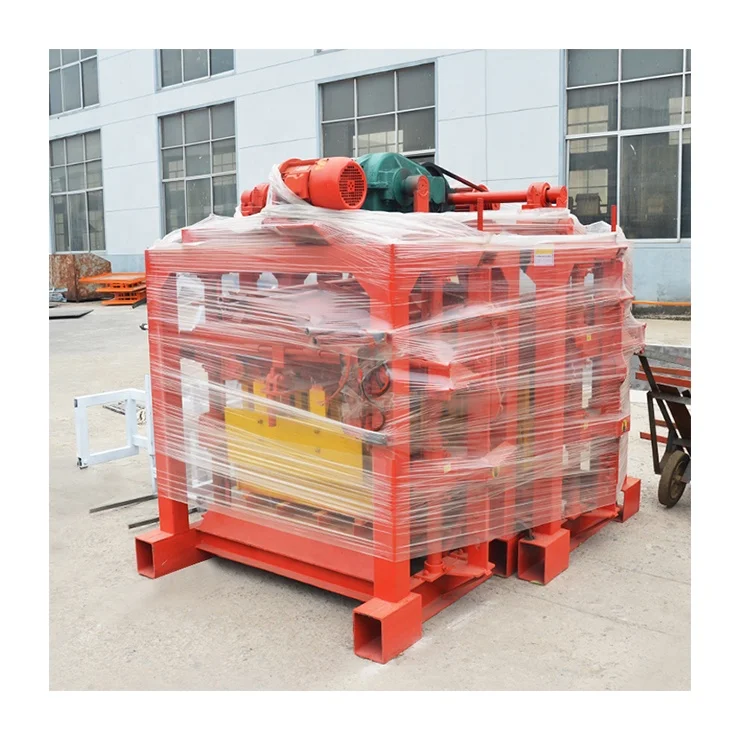
- Machine arrives as a single unit at 1350×1460×1800mm; no major on-site assembly needed
- First-run commissioning includes mix ratio adjustment using buyer’s local aggregate sample
- Operator training covers top-die mould change procedure and scraper adjustment
- Wear parts list provided at delivery with recommended first reorder interval
Before You Send an Inquiry
To configure the QTJ4-40 to your actual production conditions, the most useful information to include is the specific block format your market buys, the raw materials available locally with a sample if possible, and the voltage and frequency standard at your site. If you already have curing racks or a forklift, note the pallet dimensions they accept so the 850×450mm pallet can be verified against your existing equipment.
Frequently Asked Questions
Q: How is the daily output of the QTJ4-40 calculated for different block formats?
A: Output is stated per specific block size and mould cavity count. For example, 2880 pieces per 8-hour shift applies to 400×200×200mm hollow blocks at 4 cavities, while 7200 pieces applies to 225×112.5×60mm solid bricks at 9 cavities. Always request the capacity sheet tied to your actual format.
Q: Which block formats and mould sizes fit the 850×450mm pallet?
A: The pallet accommodates hollow blocks, solid bricks, pavers and interlocking blocks within the pallet footprint. Mould cavity count varies by format — larger hollow blocks use fewer cavities, smaller solid bricks use more. A format list is provided with each quotation.
Q: How long does a mould change take on the QTJ4-40, and what tools are needed?
A: Mould change time depends on operator familiarity and the specific format being switched to. The top-die push-and-pull system with automatic scraper is designed to reduce changeover effort, but exact timing should be confirmed during commissioning training on your site.
Q: What mix design considerations affect block strength on this machine?
A: Platform vibration at 2800 r/min requires a mix that consolidates without slumping. Local aggregate absorption rates, cement percentage and moisture content all influence the outcome. Testing with your actual raw material before ordering avoids costly on-site adjustments.
Q: What voltage and frequency options should be confirmed before the machine is built?
A: Voltage and frequency are not set by default and must match the buyer’s local power supply. This should be confirmed in writing before production begins, along with any control panel language preference, to avoid commissioning delays after the machine arrives.