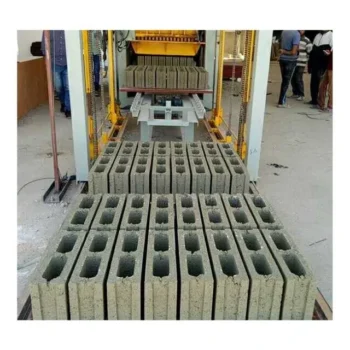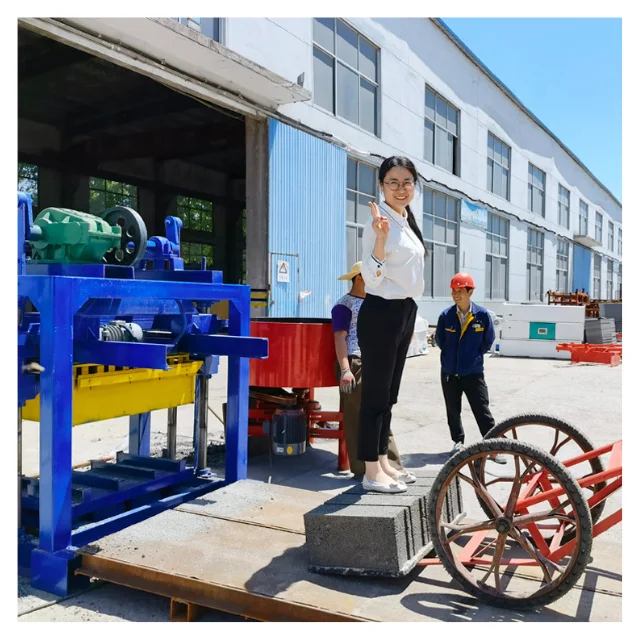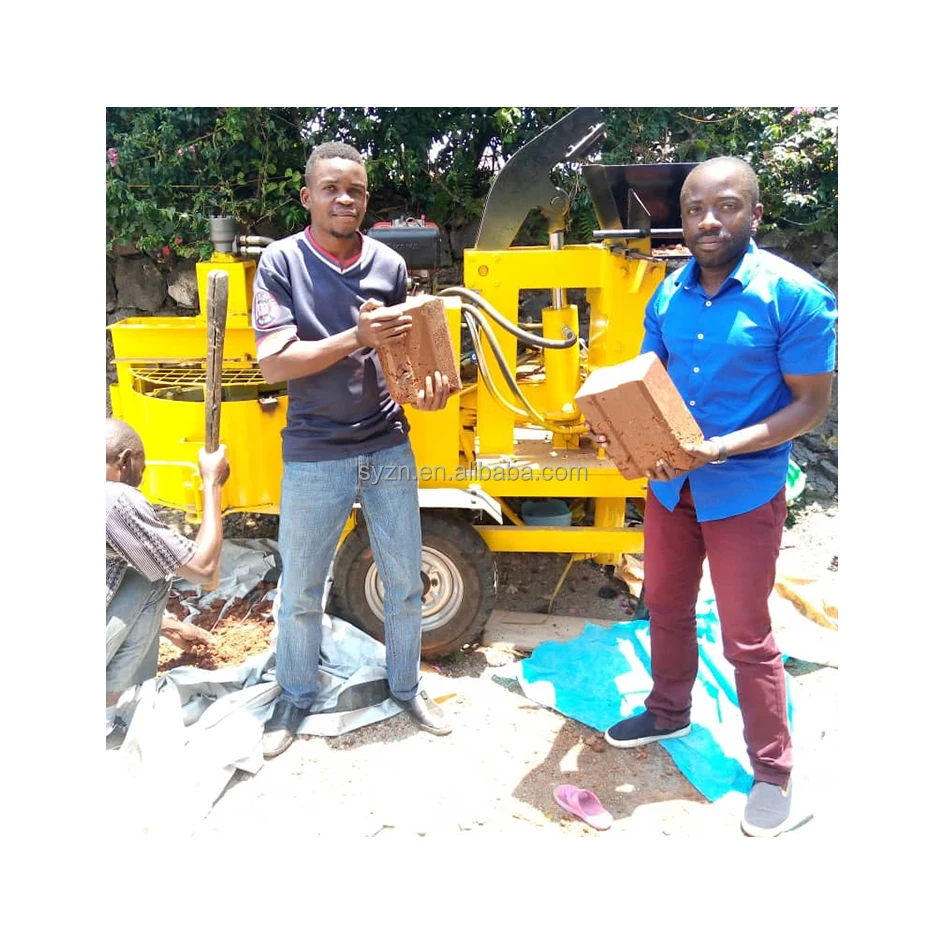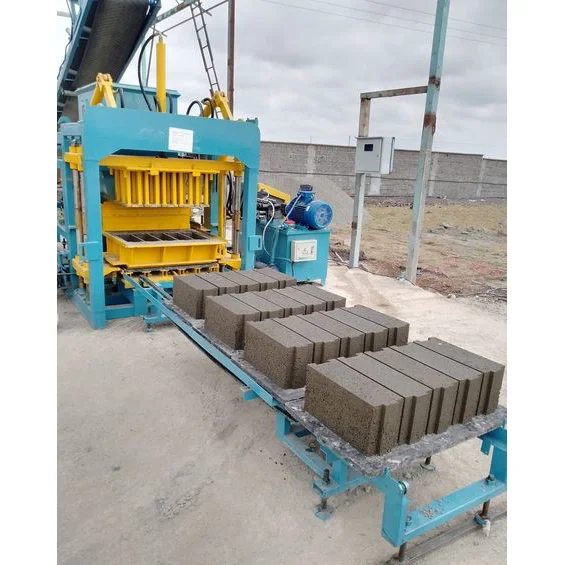


Description
Capacity by Format — every output figure we quote for the QTJ4-40 names the block size and mould it assumes, so buyers compare machines on the product they actually sell.
Technical Specifications
| Parameter | Value |
|---|---|
| Model | QTJ4-40 |
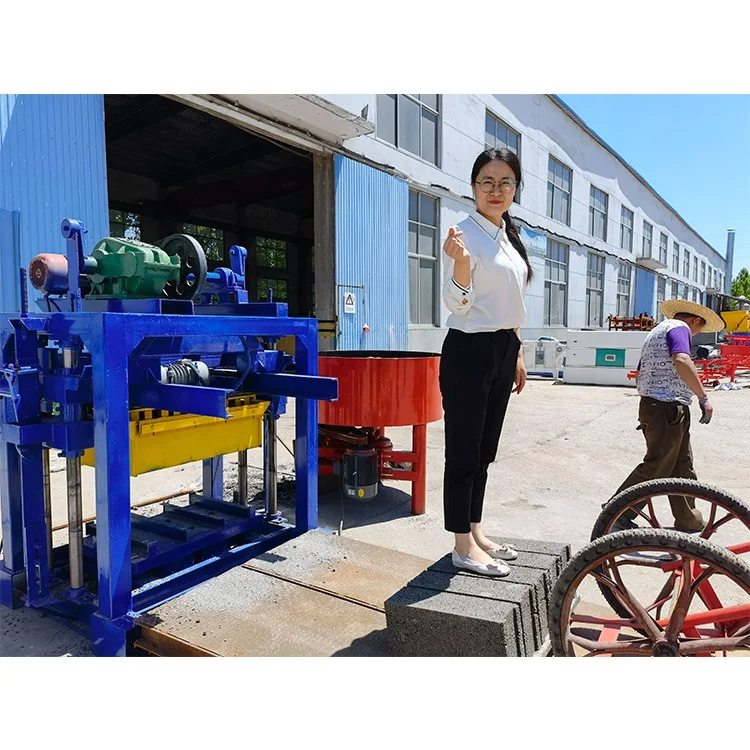
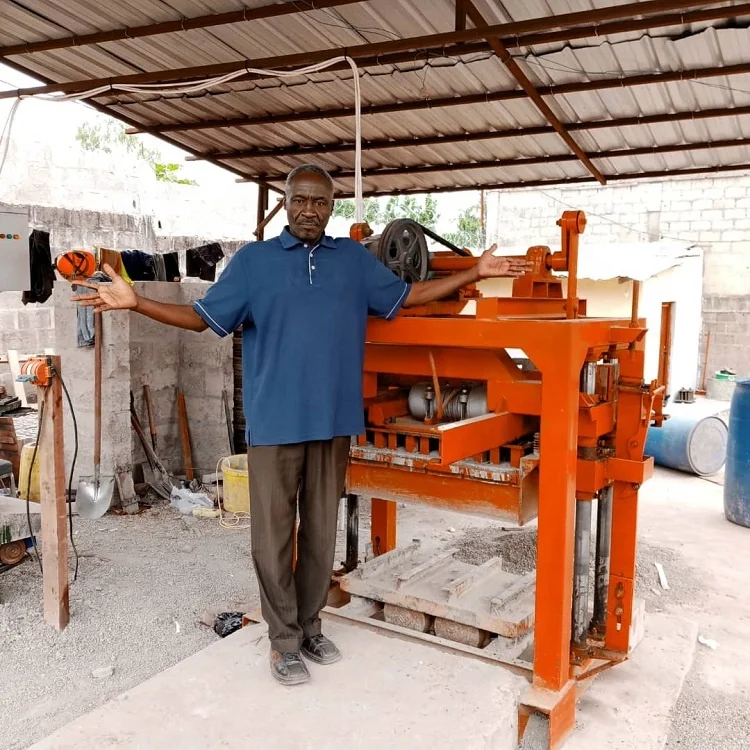
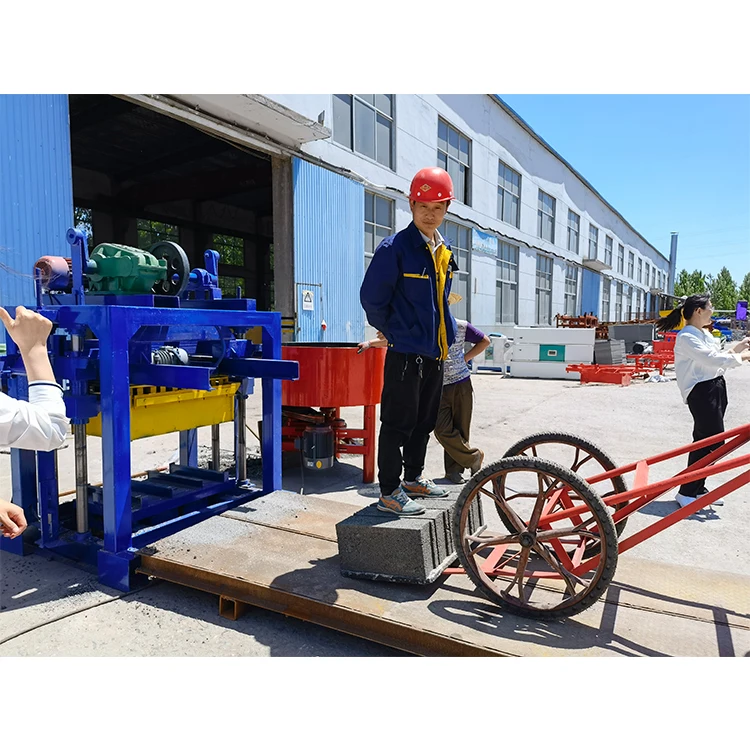
| Product Type | Semi-Automatic Concrete Block Making Machine |
| Rated Power | 10.4 kW |
| Voltage & Frequency | Configured to buyer local supply (to be confirmed before production) |
| Control System | Semi-automatic with top die push-pull and automatic scraper |
| Vibration System | Bed mould vertical vibration + upper mould compression vibration |
| Moulding Cycle | 40 s |
| Pallet Size | 850 × 450 mm |
| Overall Dimensions (L×W×H) | 1350 × 1460 × 1800 mm |
| Net Weight | 1 T |
| Assembly State | Skid-mounted, single-unit press |
| Raw Materials | Concrete, sand, cement, fly ash, lime, gypsum |
| Key Features | Manual pallet handling, dual vibration, top die push-pull alignment |
| Output Figure | Basis |
|---|---|
| 2800 pcs/day | 400×200×200 mm hollow block, 4 pcs/mould |
| 3600 pcs/day | 400×150×200 mm hollow block, 5 pcs/mould |
| 6400 pcs/day | 225×112.5×60 mm solid/paving brick, 9 pcs/mould |
| 360 pcs/h | 400×200×200 mm hollow block |
| 450 pcs/h | 400×150×200 mm hollow block |
| 800 pcs/h | 225×112.5×60 mm solid/paving brick |
Application Suitability
| Application | Material or Output |
|---|---|
| Small-to-medium block production plants | Hollow blocks from crushed stone, sand and cement |
| On-site production for housing projects | Solid bricks and pavers from locally sourced aggregate |
| First block plant for entrepreneurs | Interlocking formats using fly ash or lime blends |
| Supplementary brick line alongside an existing press | Paving and kerb formats within the 850 × 450 mm pallet envelope |
What QTJ4-40 Block Machine Specifications Leave Out When Format Is Ignored
A cycle time only becomes useful once you know which block is in the mould.
Many quotations for semi-automatic presses list a single throughput number without naming the format behind it. I have watched buyers receive a QTJ4-40 block machine, install it, and then discover their primary product — a 400×200×200 mm hollow block — yields noticeably less than the headline figure suggested, because that figure was based on a smaller paving brick the buyer never intended to make. The mismatch surfaces only after the curing racks are full and the contractor is waiting for deliveries [NEED_CITE: common causes of block plant output shortfall].
Matching the Press to the Block You Actually Sell
The QTJ4-40 runs a 40-second moulding cycle regardless of the format loaded. What changes is the piece count per cycle. Four hollow blocks per mould means 360 pieces per hour; nine paving bricks per mould means 800 pieces per hour. Sizing a plant on the QTJ4-40 block machine specifications only works when the target block is named first and the capacity is read against that specific row.
Pallet Size, Curing Area, and the Forklift You Already Own
The 850 × 450 mm pallet is the footprint every downstream decision rests on. Curing rack spacing, forklift tine width, and stacking height all follow from it. A buyer who already operates a rack system built for a different pallet dimension will face re-racking costs or under-utilised curing space. Confirming pallet compatibility before the press ships is one of the simplest ways to protect the layout [NEED_CITE: pallet handling considerations in block plant design].
Vibration, Pressure, and the Mix You Can Actually Source
Dual vibration — vertical from the bed mould and compression from the upper mould — works together with the hydraulic squeeze head to consolidate the mix. The effectiveness of that consolidation depends on the aggregate grading and moisture content the buyer feeds in. A mix designed around a coarse crushed stone available locally will behave differently from a fly-ash-heavy blend specified in a catalogue. Adjusting vibration duration and pressure to the real material is what keeps block strength consistent batch after batch.
Why Mould Change Time Matters More Than Format Count
A press that accepts multiple moulds only delivers flexibility if the operator can swap them within a reasonable window. On the QTJ4-40, the top die push-pull mechanism with automatic scraper keeps the squeeze head and mould cavity aligned, reducing the adjustment needed after a change. Buyers planning two or three formats in a single shift should still rehearse the swap during commissioning so the quoted flexibility survives contact with a real production day.
The Cost of Skipping the Voltage Conversation
Voltage, frequency, and control-display language are easy to confirm and expensive to fix after arrival. A machine wired for 380 V / 50 Hz that lands on a 440 V / 60 Hz site will not commission until a transformer or rewinding is arranged. A control panel displaying in a language the operator cannot read halts training before it starts. Both issues are avoidable when the buyer’s supply details and operator language are locked in before the QTJ4-40 block machine enters production [NEED_CITE: electrical compliance requirements for exported machinery].
Why Source This Machine Through a Format-First Process
Every proposal starts with the buyer’s target block, local aggregate, and daily volume rather than a catalogue page. The mould list, pallet size, and output calculation are matched to those inputs. Voltage, frequency, and display language are confirmed before the press enters assembly. Factory testing runs the actual mould set the buyer ordered, not a placeholder. Pallet and handling specifications are checked against the curing racks and forklift already on site.
Documentation & Verification
- Line layout showing the QTJ4-40 capacity per named block format and mould
- Mould drawing and format list confirming every cavity included in the order
- Pallet specification matched to the buyer’s curing rack dimensions
- Voltage, frequency, and control-language confirmation sheet signed before production
- Factory test record run on the buyer’s mould set prior to dispatch
Installation, Commissioning & Support
- Foundation pad sized to the 1350 × 1460 mm footprint and 1 T operating weight
- Dedicated circuit for the 10.4 kW rated power, breaker rating confirmed to local code
- Skid-mounted delivery allowing offload with a standard site forklift
- First-run mould alignment checked under the top die push-pull mechanism
- Operator training covering manual pallet feed sequence and 40-second cycle timing
- Wear-part list naming the vibration springs and scraper blades for initial stocking
What We Need to Size the QTJ4-40 to Your Project
Send the block format you sell most — dimensions, weight, and target strength class — along with the daily volume your market absorbs. Include your local voltage and frequency, the language your operators read, and the curing rack or floor space available. With those inputs, the capacity calculation and mould selection can be finalised before the quotation.
Frequently Asked Questions
Q: How is the daily output for the QTJ4-40 verified against each block format?
A: Every output figure names the block dimensions, mould cavity count, and the 40-second cycle that produced it. We publish separate rows for hollow blocks and smaller paving bricks so buyers compare against the format they will actually run, not a single headline number.
Q: Which mould formats come with the machine, and how long does a change take?
A: The mould list is agreed during the proposal stage based on the buyer’s market. The top die push-pull and automatic scraper reduce realignment after each swap. We rehearse the change during commissioning so the crew can repeat it within a practical window.
Q: How is the QTJ4-40 configured for my local aggregate rather than a default mix?
A: We ask for the buyer’s sand, stone, and cement sources and adjust vibration duration and pressure settings accordingly. The factory test runs a sample of that mix so density and block strength are checked before the press ships.
Q: Will the 850 × 450 mm pallet fit my existing curing racks and forklift?
A: Pallet size is confirmed against the buyer’s rack spacing and forklift tine dimensions before production. If the existing system was built around a different pallet, we flag the mismatch early so the layout can be adjusted.
Q: What electrical and language details are confirmed before the QTJ4-40 block machine ships?
A: Voltage, frequency, and control-display language are written into the order confirmation. The machine is assembled and tested under those exact settings, so commissioning on site does not begin with an electrical or language mismatch.