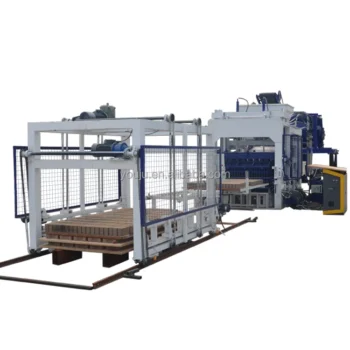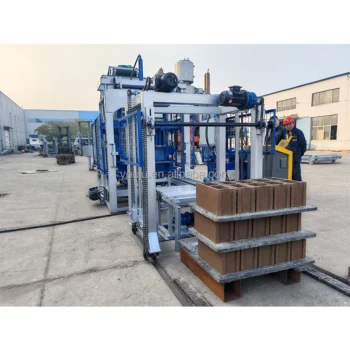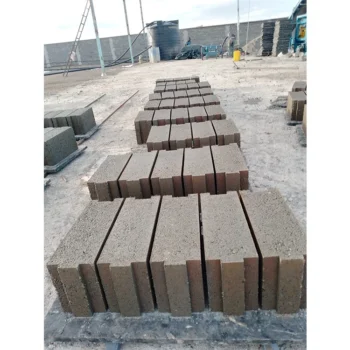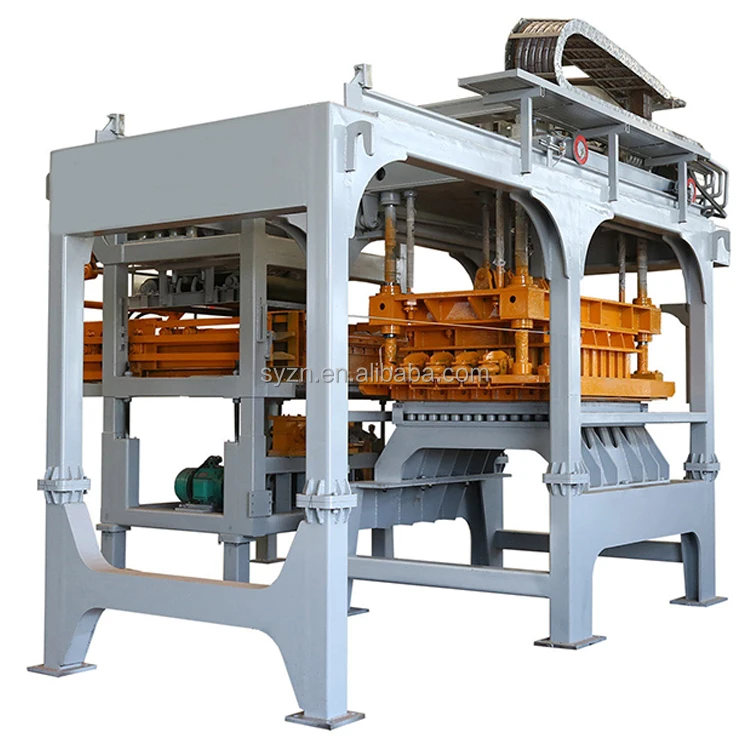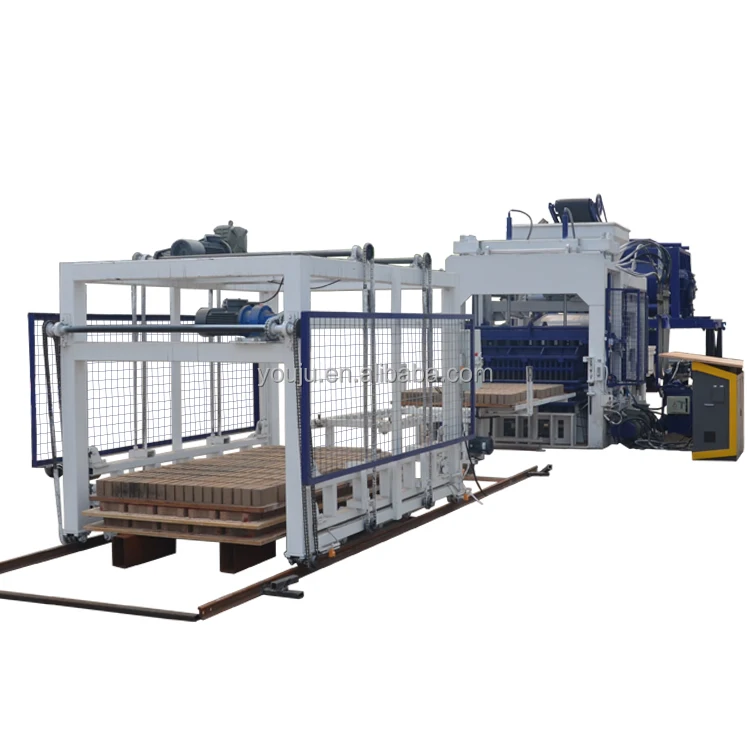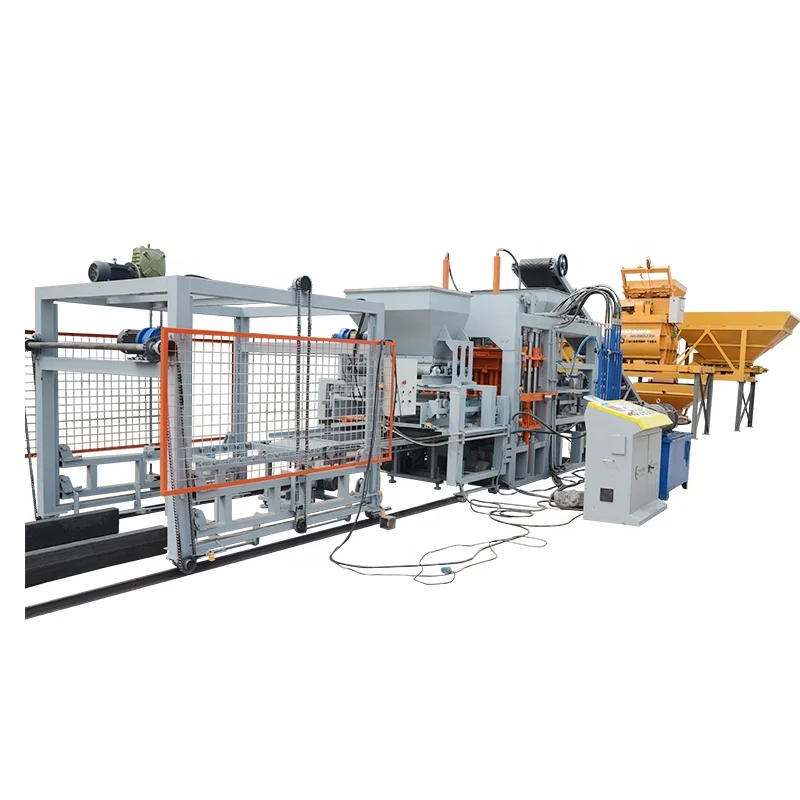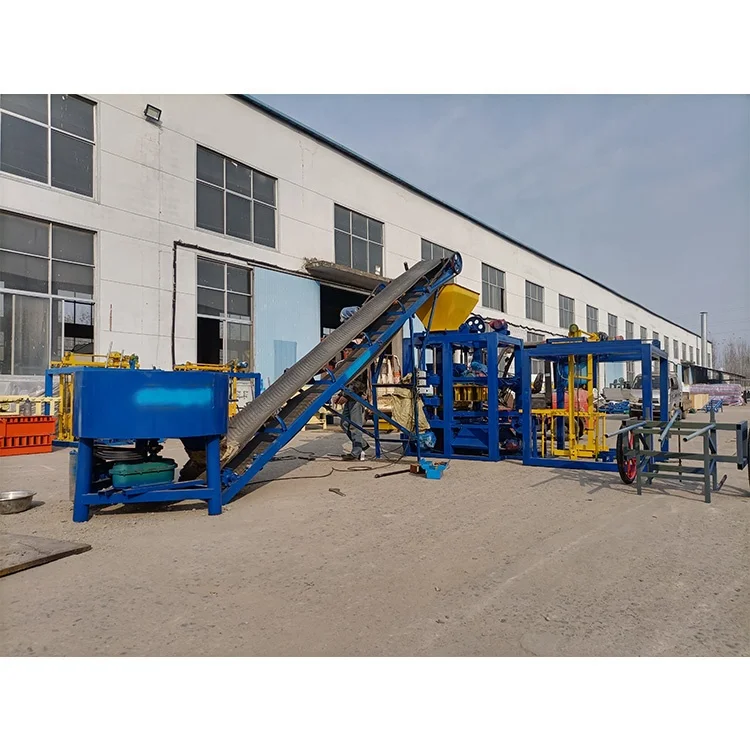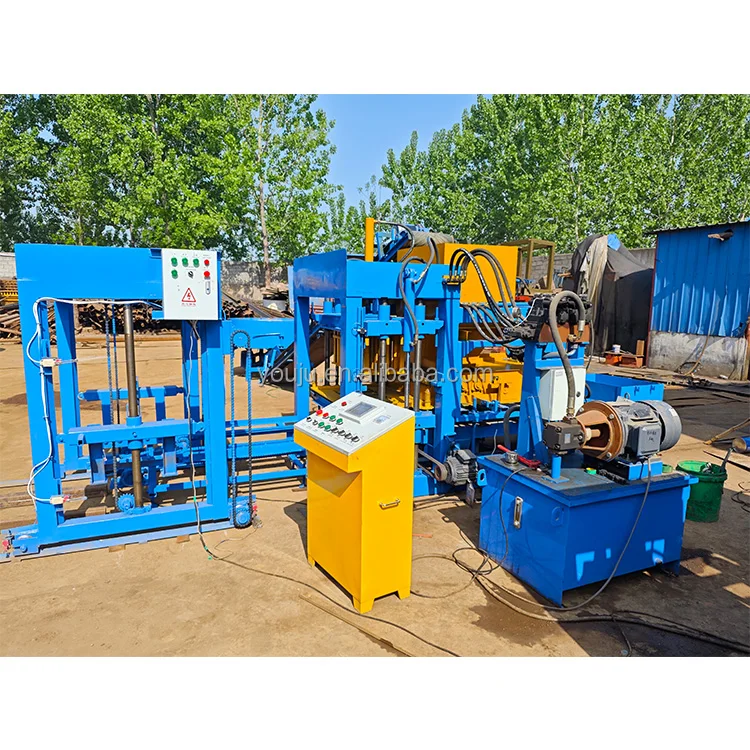
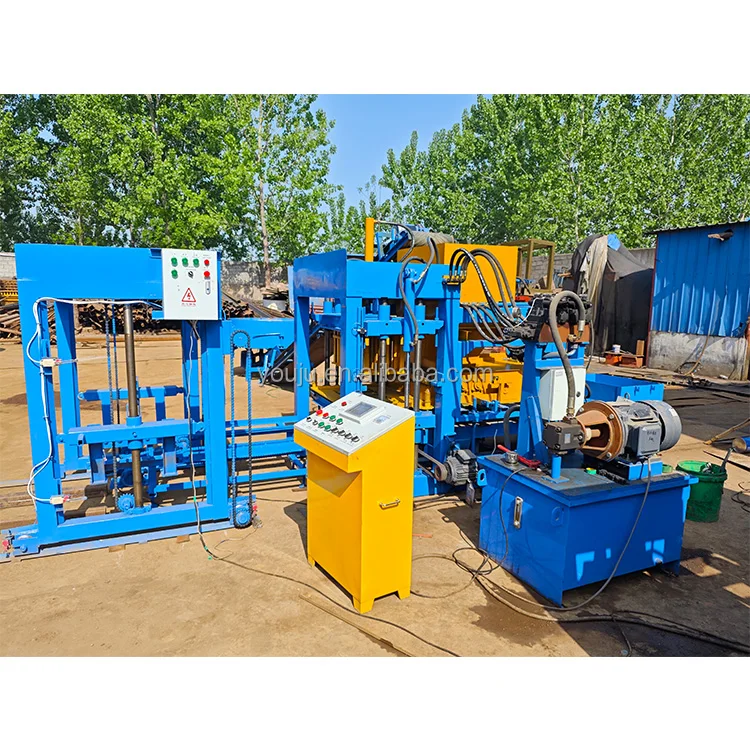
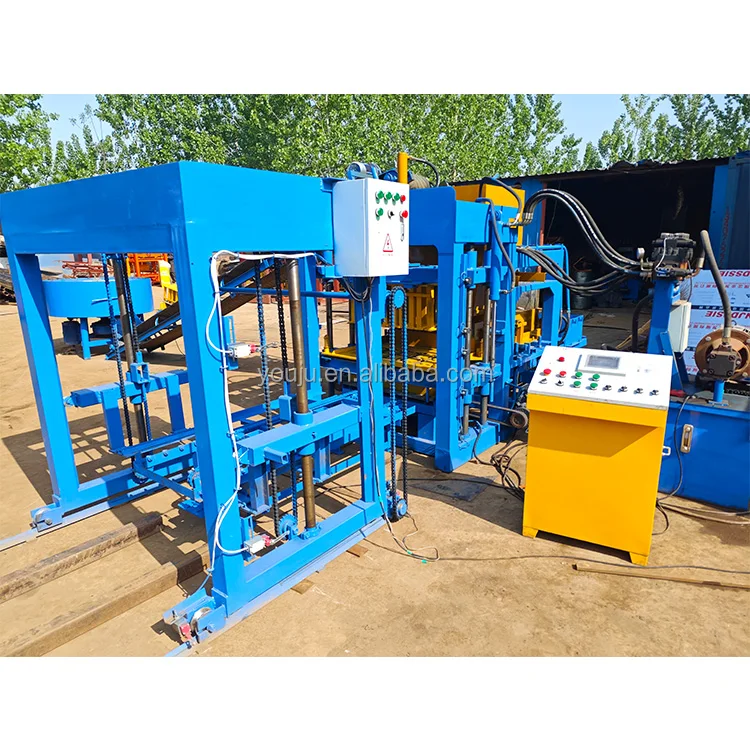
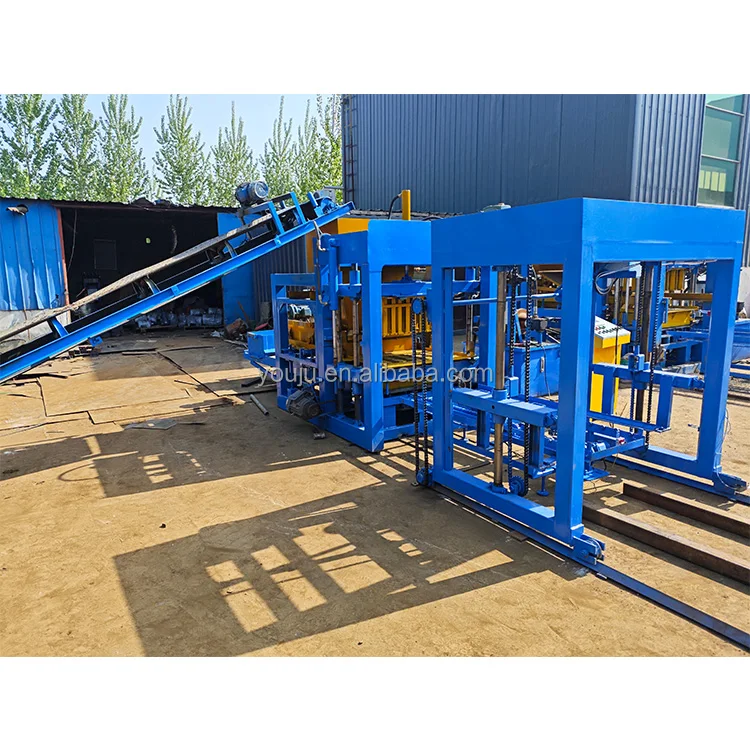
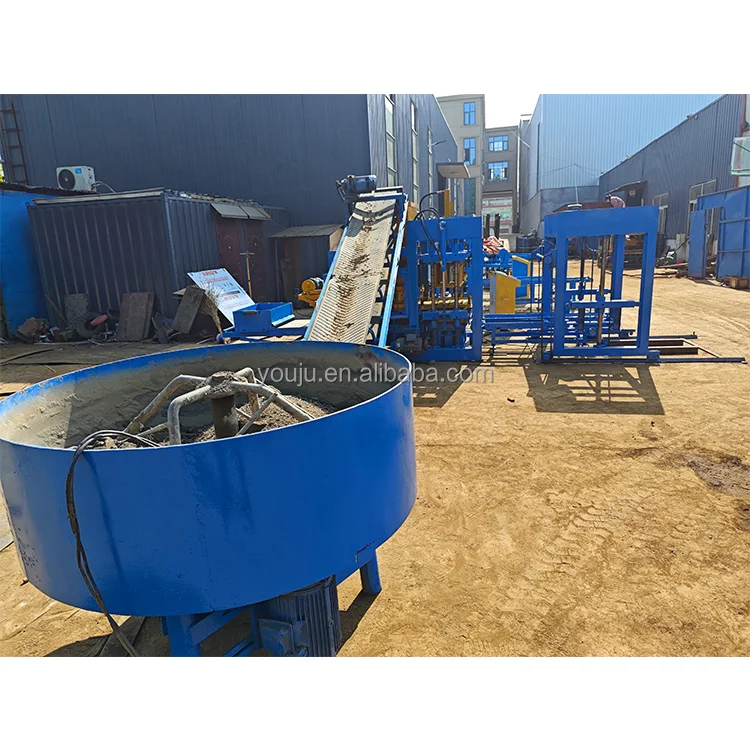
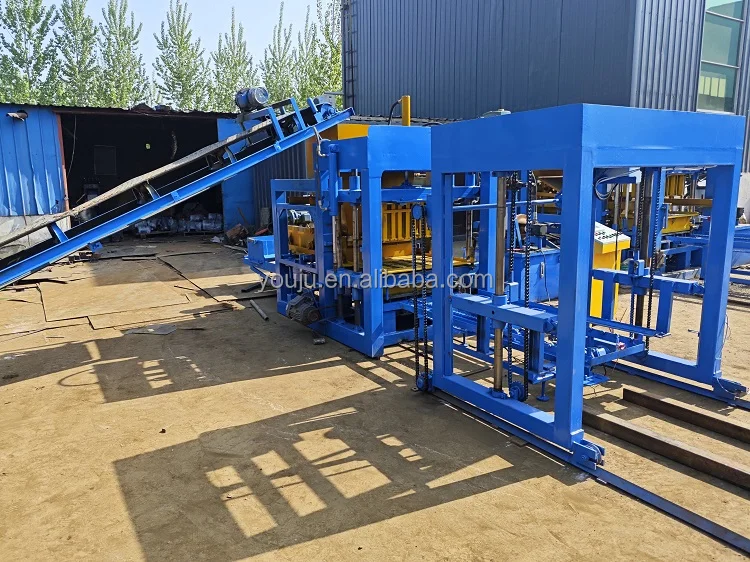
Description
Matched System Sizing — every QTJ4-25 capacity figure is calculated against a specific 400×200×200mm hollow block format so daily output expectations remain realistic before purchase.
Technical Specifications
| Parameter | Value |
|---|---|
| Model | QTJ4-25 |
| Product Type | Semi-Automatic Concrete Block Making Machine |
| Rated Power | 17.9 kW |
| Vibration Force | 60 kN |
| Vibration Frequency | 2800 r/min |
| Molding Cycle | 25 s |
| Output Capacity | 960 pcs/h (based on 400×200×200mm hollow block, 4 pcs/mould) |
| Daily Output | 7680 pcs/day (based on 400×200×200mm hollow block, 4 pcs/mould) |
| Pallet Size | 850×550×20 mm |
| Overall Dimensions (L×W×H) | 6400×1500×2700 mm |
| Total Mass | 2500 kg |
| Control System | Motor-driven with hydraulic station (PLC availability to confirm) |
| Hydraulic System | Equipped for high-pressure stable operation |
| Mould Format | Hollow, solid, paver, curbstone (4/5/6/8 inch and custom) |
| Mould Change Method | Manual change (change time to confirm) |
| Pallet Material | Fiberglass recommended, wooden pallet compatible |
| Assembly State | Host machine + 1 set block mould + JQ350 mixer included |
| Voltage & Frequency | To confirm before production |
| Certification | To confirm |
Application Suitability
| Application | Material or Output |
|---|---|
| Hollow block production for small-to-medium plants | Crushed stone, sand, cement, fly ash blends |
| Solid block manufacturing | Dense aggregate mixes for load-bearing walls |
| Paving block runs for yard and driveway projects | Fine aggregate with pigment for colour layers |
| Curbstone production for municipal contracts | High-cement-ratio mixes for impact resistance |
| On-site block production by contractors | Locally sourced sand and gravel with portable mixer |
| First workshop for entrepreneurs | Standard hollow and solid formats to build market entry |
Why "Cycle Time" Alone Will Mislead Your Daily Plan
Real output depends on the format you actually sell, not the fastest cycle the machine can achieve.
When a quotation lists a single cycle time, buyers often multiply it across an eight-hour shift and plan revenue around that number. The problem is that a 25-second cycle may apply only to a standard 400×200×200mm hollow block; switching to a thinner paver or a taller kerbstone changes the vibration profile, pressing time, and pallet return interval. I have watched plants receive a QTJ4-25 block making machine specifications sheet, run a different format on day one, and wonder why the shift output fell noticeably short of the brochure [NEED_CITE: realistic block output calculation methods by format]. The only way to prevent this is to request a capacity table that lists cycle time and theoretical daily volume for every mould in your order.
How the QTJ4-25 Handles Format Switching
The QTJ4-25 block making machine specifications cover hollow, solid, paver and curbstone formats across common 4, 5, 6 and 8 inch sizes. Mould change is manual, meaning operators unbolt the current mould, lift it clear, lower the replacement, and re-secure it before resuming production. For a workshop that runs one primary format most days and switches only for special orders, this arrangement keeps the initial investment contained. Buyers who plan daily format rotation should discuss the expected change-over duration and tool requirements during the quotation stage so labour scheduling stays accurate.
Pallet Sizing and Curing Area Alignment
Every pallet leaving the QTJ4-25 measures 850×550×20 mm, and this dimension must match both the curing rack spacing and the forklift fork width already on site. Fiberglass pallets are recommended for their dimensional stability across repeated wet-dry cycles, though wooden pallets remain compatible for plants with established timber supply chains. Before confirming an order, measure the curing area aisle width and calculate how many pallets fit in a single rack layer [NEED_CITE: concrete block curing rack spacing guidelines]. Ordering 300 to 500 pallets keeps the press running continuously while earlier batches cure, preventing the machine from idling while operators wait for empty boards.
Reading the Numbers That Matter
The 60 kN vibration force paired with a 2800 r/min frequency drives vertical vibration through the bed mould while the upper mould applies compression vibration, compacting the mix from both directions. This dual action produces consistent block density across formats, provided the hydraulic station maintains steady pressure throughout each 25-second cycle. The 17.9 kW rated power covers the vibration motors, hydraulic pump, and mixer drive, so the site electrical panel must accommodate this draw plus starting surge. Because the machine ships with a JQ350 pan mixer, the combined line power requirement should be verified against local supply capacity before the container leaves the factory.
When a Misconfigured Line Costs More Than the Machine
I once worked with a buyer who ordered a semi-automatic press without confirming the pallet size against his existing curing racks. The pallets arrived wider than the rack slots, forcing him to rebuild every rack before production could start — a delay that ran into weeks and added material costs he had not budgeted. Another buyer skipped the voltage confirmation step; the machine arrived wired for a frequency that his local grid did not support, and the control contactors overheated on the first test run [NEED_CITE: voltage and frequency mismatch risks in exported machinery]. These are not defects in the equipment. They are gaps in the specification conversation that a few emails could have closed before production started.
What We Build Into Every QTJ4-25 Conversation
Block machinery is our single focus, which means the press, mould, pallet, and mixer are specified as one matched system rather than sourced from separate vendors. We set the configuration against the buyer’s actual mix design and local aggregate, adjusting vibration and pressure parameters so the finished block meets strength requirements without forcing a costly material change. Mould design covers the formats the buyer’s market actually sells, and custom drawings are accepted when standard sizes do not fit. Automation level is selectable, so a plant can start semi-automatic and move toward higher automation later without replacing the core press. Installation support and operator training are included so the first production run is not a guessing exercise.
Documentation & Verification
- Capacity calculation sheet stating output per block format, not just cycles per hour
- Mould drawing and format list for every mould included in the order
- Pallet specification covering material, dimensions, and recommended quantity
- Hydraulic and electrical schematic for on-site maintenance reference
- Voltage and control language confirmation record before production begins
- Factory test record on the buyer’s target block format before dispatch
Installation, Commissioning & Support
- Foundation must support 2500 kg static load plus dynamic vibration across the 6400×1500 mm footprint
- Dedicated electrical circuit sized for 17.9 kW continuous draw plus motor starting current
- Machine ships as host unit, one mould set, and JQ350 mixer for straightforward assembly
- First-run parameter setting covers vibration force, hydraulic pressure, and cycle timing per format
- Operator training addresses mould change procedure, pallet handling, and daily lubrication points
- Wear parts list identifies vibration springs, hydraulic seals, and mould liners for reorder planning
Before You Request a Quote
Send the specific block formats your market demands, including dimensions and target daily volume. Share your local aggregate type and any available sieve analysis so the vibration and pressure settings can be matched before the machine enters production. Confirm the voltage, frequency, and preferred control display language for your operators. If you already have curing racks or forklifts on site, provide their dimensions so pallet compatibility is verified at the quotation stage rather than after arrival.
Frequently Asked Questions
Q: What daily output can I expect for the specific hollow block format I sell?
A: The QTJ4-25 is rated at 960 pieces per hour based on a 400×200×200mm hollow block with four cavities per mould, giving roughly 7680 pieces in an eight-hour shift. If your primary format differs in size or wall thickness, cycle time and output will adjust accordingly. Request a per-format capacity table during the quotation stage so your business plan matches reality.
Q: Which pallet material and quantity should I plan for my curing layout?
A: Fiberglass pallets at 850×550×20 mm are recommended for long service life under repeated moisture cycles, though wooden pallets remain an option. A stock of 300 to 500 pallets keeps the machine running while earlier batches cure. Measure your curing rack slots and forklift fork width to confirm the 850×550 mm dimension fits before the order ships.
Q: How long does a mould change take, and what tools do operators need?
A: Mould change on the QTJ4-25 is manual, involving unbolting, lifting, and re-securing the mould assembly. Exact change-over time depends on operator experience and the specific format pair being swapped. Confirm the expected duration and required tool list during the proposal stage so shift schedules account for the stoppage.
Q: Is the machine configured for my local aggregate and mix design?
A: Configuration is set against the buyer’s actual raw material profile, including aggregate grading and cement ratio, so vibration force and hydraulic pressure are matched before dispatch. Provide a sieve analysis or sample description during inquiry. Running an untested mix without parameter adjustment risks inconsistent block strength and surface finish.
Q: What voltage and control language will the machine ship with?
A: Voltage, frequency, and control display language must be confirmed before production begins to avoid commissioning delays on arrival. The QTJ4-25 documentation package includes a written confirmation record of these settings. State your site supply specifications clearly in the inquiry so the electrical panel and motor wiring match your grid from the first test run.