
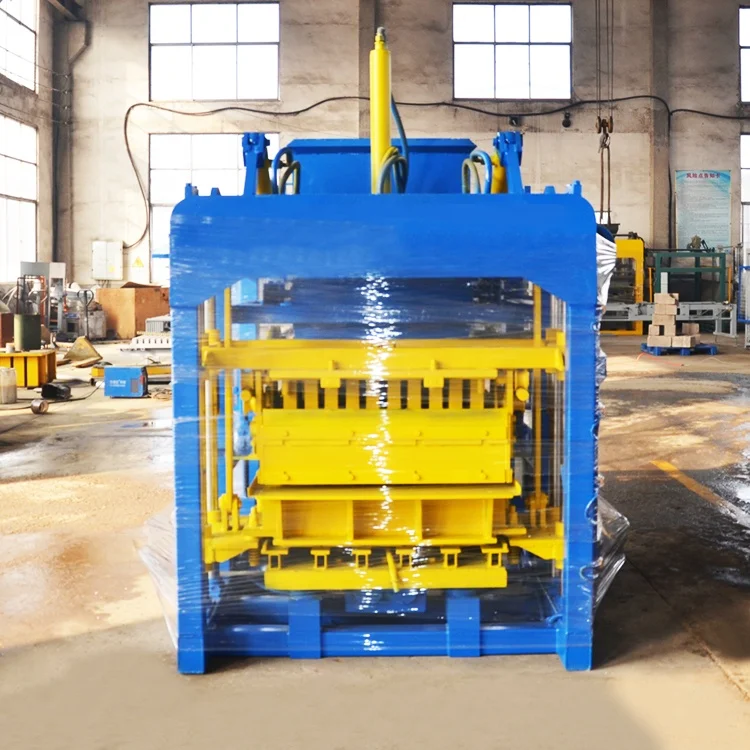
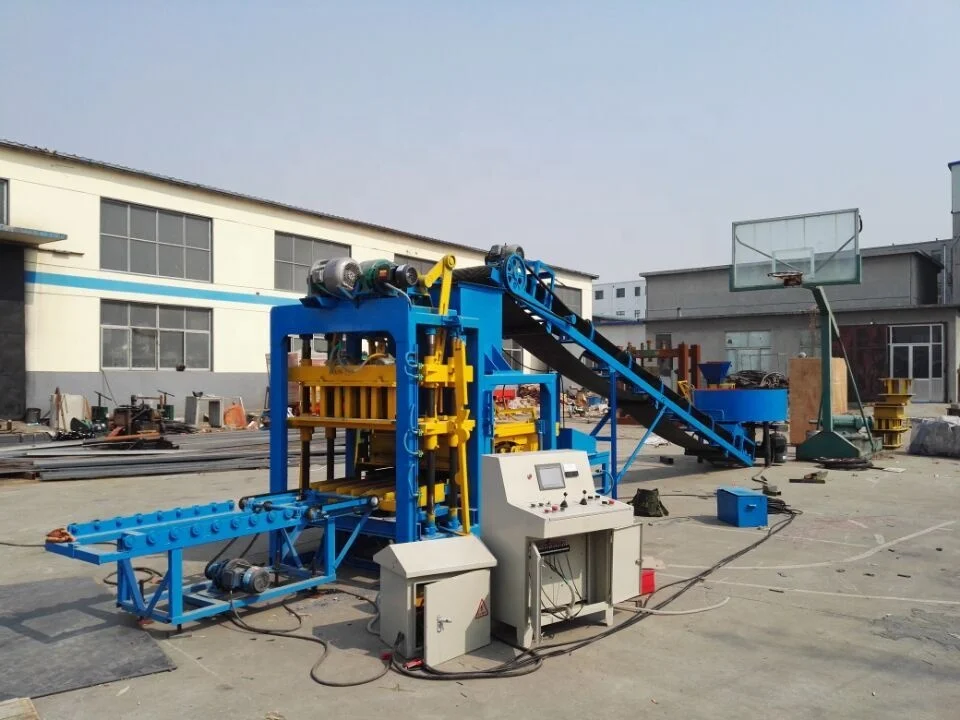

Description
Matched System Sizing — Every output figure for the QTJ4-25 is tied to a specific block size and mould cavity count, so your daily production plan starts from reality, not a catalogue promise.
Technical Specifications
| Parameter | Value |
|---|---|
| Model | QTJ4-25 |
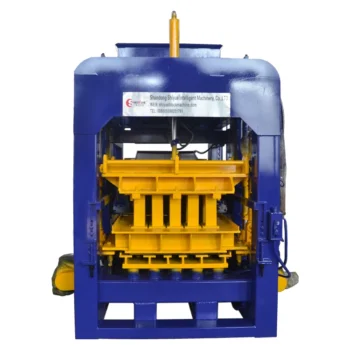
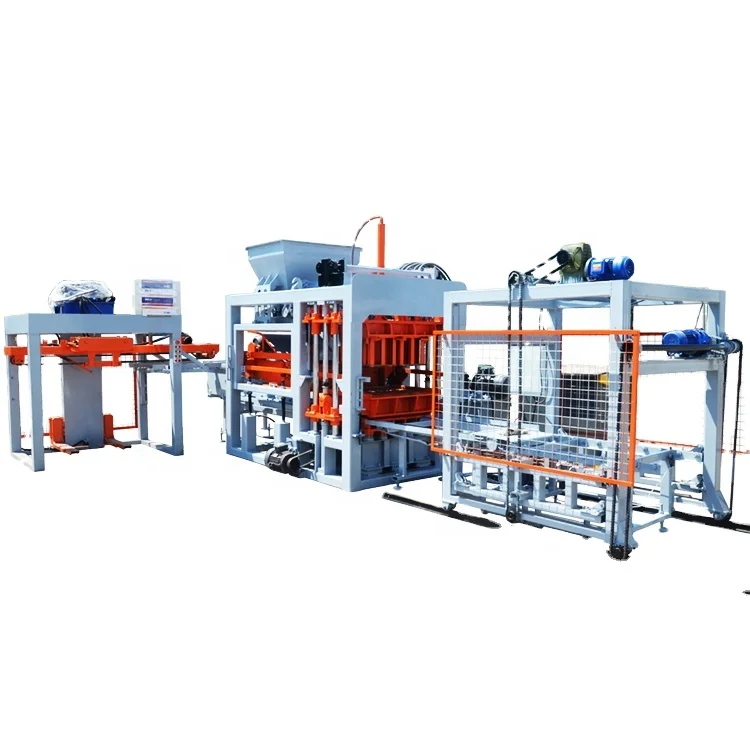
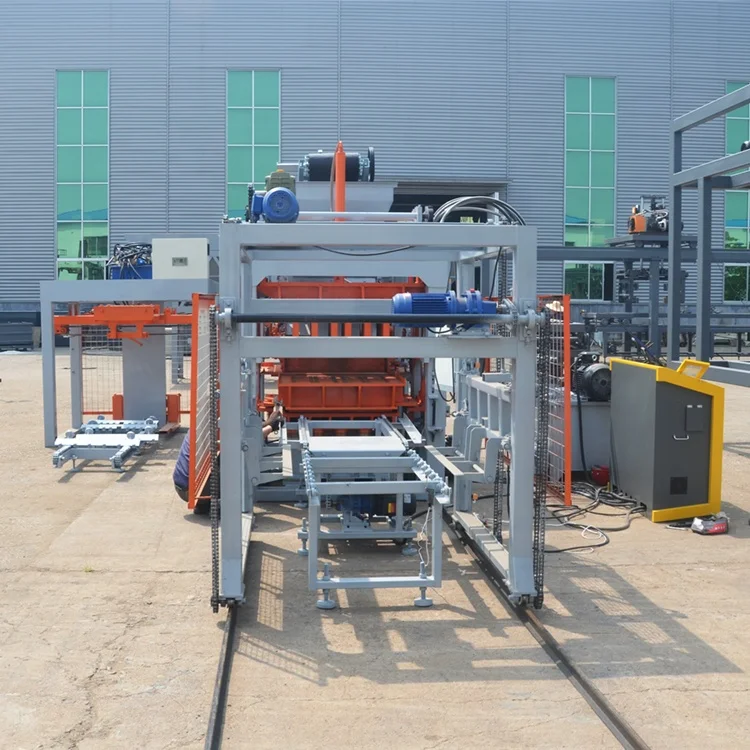
| Product Type | Semi-Automatic Concrete Block Making Machine |
| Overall Dimensions (L×W×H) | 6400×1500×2700 mm |
| Total Weight | 2500 kg |
| Molding Cycle | 25 s |
| Vibration Frequency | 2800-5100 r/min |
| Exciting Force | 60 kN |
| Vibration System | Bed mould vertical vibration + upper mould compression vibration |
| Hydraulic System | Hydraulic station for pressure and stability |
| Total Power | 17.9 kW |
| Mixer Model | JQ350 |
| Pallet Size | 850×550×20 mm |
| Automation Level | Semi-automatic |
| Output: 390×190×190 mm Hollow Block | 480 pcs/h (4 pcs/mould); 3800 pcs per 8-hour shift |
| Output: 400×150×200 mm Hollow Block | 600 pcs/h (5 pcs/mould); 4800 pcs per 8-hour shift |
| Output: 240×115×53 mm Solid Brick | 2100 pcs/h (18 pcs/mould); 17000 pcs per 8-hour shift |
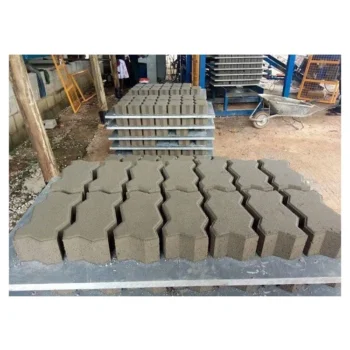
| Applied Products | Concrete hollow blocks (8 inch, 6 inch), solid bricks, pavers |
| Raw Materials | Crushed stones, sand, cement, dust, fly ash |
| Assembly State | Nude packing in 20GP container |
| Standards | CE declaration where applicable |
Application Suitability
| Application | Material or Output |
|---|---|
| Small to medium block production plants | Hollow blocks and solid bricks from crushed stone, sand, and cement |
| On-site production for construction contractors | Hollow blocks using locally sourced aggregate and fly ash |
| Entrepreneurs setting up a first block plant | Standard 8-inch and 6-inch hollow blocks, solid bricks |
| Paving block production for municipal projects | Pavers and interlocking formats from cement and stone dust |
| Existing block producers adding formats | Format changeover with matching moulds for new market requirements |
What "10,000 Blocks a Day" Leaves Out of the QTJ4-25 Block Machine Specifications
Output numbers only mean something when you know exactly which block format and mould cavity count they assume.
I once saw a Middle East buyer receive a semi-automatic block machine rated for a daily output that looked strong on paper. The problem was the capacity figure assumed a standard sand-cement mix. His local red clay aggregate had high stickiness, and the vibration frequency was not matched to that material. Blocks collapsed at demoulding, and the real qualified output dropped to less than half the quoted number. That is the gap many buyers fall into when they compare machines on a single headline figure. With the QTJ4-25, every capacity number above is stated per block format, per mould, per shift.
When you evaluate a semi-automatic block machine, how to choose should start with the product your market actually buys, not the product that gives the best-looking cycle time. [NEED_CITE: common discrepancies between quoted and actual block machine output]
Matching the Block Format to Your Local Market
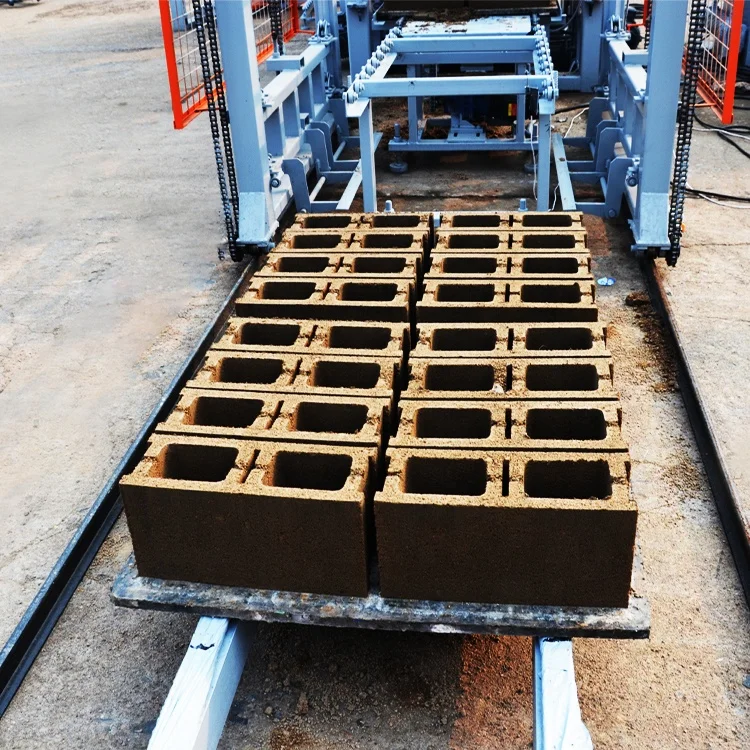
The QTJ4-25 block machine specifications cover three main product families. The 390×190×190 mm hollow block runs at 4 pieces per mould with a 25-second cycle, giving 480 pieces per hour. The 400×150×200 mm hollow block uses a 5-cavity mould at 600 pieces per hour. The 240×115×53 mm solid brick runs 18 pieces per mould at 2100 pieces per hour. These are not interchangeable claims — each one is tied to a specific mould and cycle. Before you commit to a QTJ4-25 semi-automatic block machine, confirm which of these formats your buyers are ordering and in what proportion.
Pallet, Curing Area, and Forklift Compatibility
The pallet size on this machine is 850×550×20 mm. That dimension determines how many blocks you can cure per square metre and whether your existing forklift can handle the loaded pallets. If your curing yard was set up for a different pallet size from a previous machine, you may need to adjust rack spacing or handling equipment. I always ask buyers to measure their curing area and confirm their forklift capacity before we finalise the pallet material — bamboo, plywood, or steel — because each has a different weight and service life. [NEED_CITE: pallet material selection for concrete block curing]
How Vibration Force and Hydraulic Pressure Shape Block Density
The QTJ4-25 delivers 60 kN of exciting force through a dual vibration system: vertical vibration under the bed mould and compression vibration from the upper mould. The vibration frequency range of 2800–5100 r/min allows adjustment for different aggregate types. The hydraulic station provides the pressure that holds the mould halves together during vibration. Together, these two forces determine whether the finished block reaches the compressive strength your local building code requires. A mix that works at 4000 r/min with one aggregate may produce weak blocks at the same setting with a finer sand — which is why we test with the buyer’s actual material before locking in parameters.
The Hidden Cost of Skipping Material Testing
When vibration frequency is not matched to the buyer’s aggregate, the symptoms do not appear in the factory test. They appear three weeks after commissioning, when edge cracking shows up on hollow blocks and the rejection rate climbs. The buyer blames the machine, the supplier blames the mix, and production stalls while both sides argue. Every percentage point of block rejection is material wasted and labour spent on product that cannot be sold. [NEED_CITE: common causes of concrete block cracking after demoulding]
Why Configuration Is Verified Before Production Starts
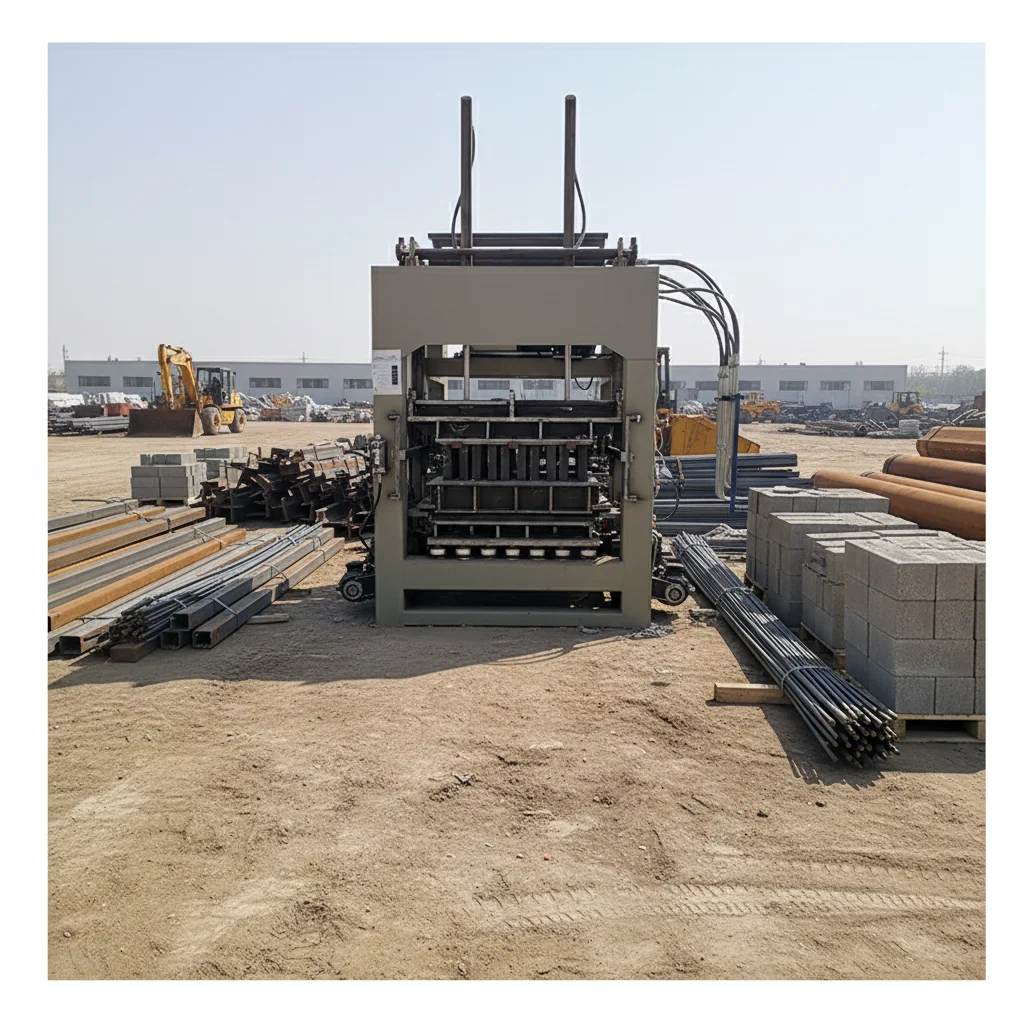
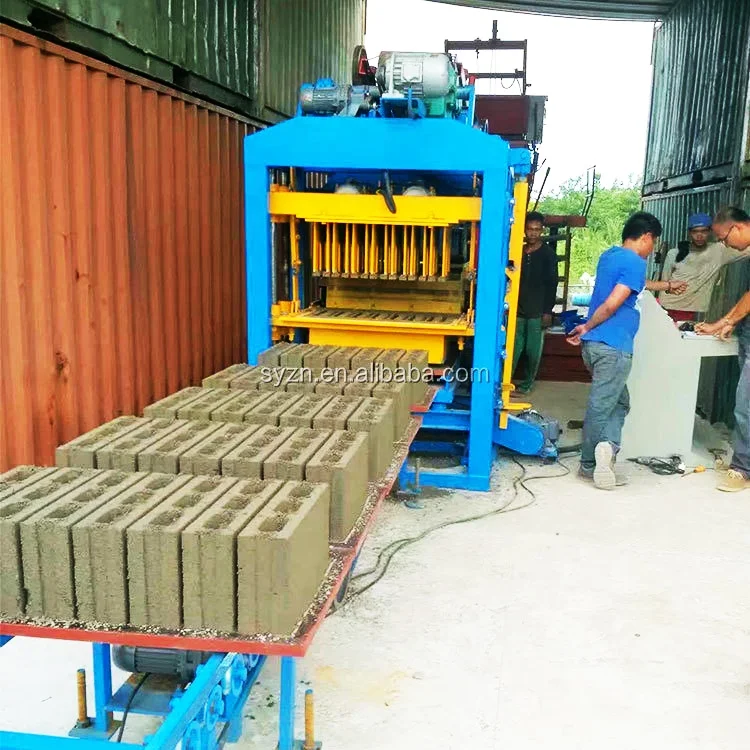
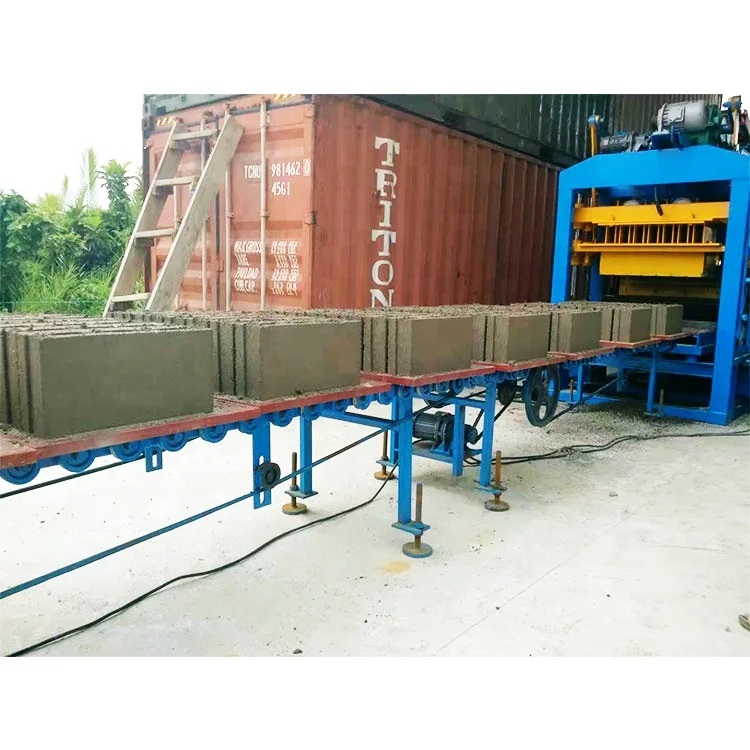
We treat the QTJ4-25 as a matched system: machine, mould, pallet, and JQ350 mixer are specified together so that cycle times align and the press is never waiting on material or pallets. The mould design covers the formats your market sells, and custom moulds can be built to buyer drawings. Voltage, frequency, and control display language are confirmed before production begins, so there is no delay at commissioning. The automation level is selectable — you can start semi-automatic and add automatic pallet feeding or stacking later as your output grows. Every machine ships with a factory test record run on the buyer’s confirmed mix design, not a generic setting.
Documentation & Verification
- Line layout and capacity calculation stating the block format assumed for each output figure
- Mould drawing and format list confirming products matched to buyer’s market
- Pallet specification sheet covering size, material, and curing area compatibility
- Hydraulic and electrical schematic for on-site maintenance reference
- Voltage, frequency, and control language confirmation record before production
- Factory test record run on the buyer’s confirmed aggregate and mix design
Installation, Commissioning & Support
- Foundation pad must support the QTJ4-25 at 2500 kg total weight with vibration isolation
- 17.9 kW total power requires a dedicated three-phase circuit at confirmed voltage and frequency
- Machine ships nude-packed in a 20GP container for straightforward unloading and positioning
- On-site commissioning includes vibration frequency tuning to buyer’s local aggregate
- Operator training covers mould changeover procedure and JQ350 mixer loading sequence
- Wear parts list and mould maintenance schedule provided at handover
What We Need to Size Your QTJ4-25 Line Correctly
Send us the block format your market orders most, along with your target daily output and the aggregate you plan to use. We also need your local voltage and frequency, plus the dimensions of your curing area and the forklift you already have on site. With that information, we can return a line layout with capacity stated per format and a mould list matched to your product range.
Frequently Asked Questions
Q: How is output capacity verified, and which block format does each figure assume?
A: Every output figure for the QTJ4-25 is stated per block format and mould cavity count. The 480 pcs/h figure assumes 390×190×190 mm hollow blocks with a 4-cavity mould; 600 pcs/h assumes 400×150×200 mm with a 5-cavity mould; 2100 pcs/h assumes 240×115×53 mm solid bricks with an 18-cavity mould. Shift totals are calculated from these per-hour rates over 8 hours.
Q: What mould formats are available, and how long does a mould change take?
A: The QTJ4-25 supports 390×190×190 mm and 400×150×200 mm hollow blocks, 240×115×53 mm solid bricks, and paving block formats. Mould change involves releasing the clamping bolts, lifting out the current mould, and seating the replacement — a procedure that two operators can complete within a typical maintenance window. Custom moulds are available to buyer drawings.
Q: How should pallet size and material be chosen to match my curing area and forklift?
A: The standard pallet is 850×550×20 mm. Before shipment, we confirm that this size fits your curing rack spacing and that your forklift can handle loaded pallet weight. Material options include bamboo, plywood, and steel, each with different service life and weight characteristics suited to different production volumes.
Q: What voltage, frequency, and control language options are confirmed before shipment?
A: Voltage and frequency are confirmed during the quotation stage to match your local supply. Control display language is agreed at the same time so operators can read the interface from day one. These details are documented before production begins to prevent commissioning delays.
Q: Which raw material mix designs and local aggregates is the QTJ4-25 configured for?
A: The machine handles crushed stone, sand, cement, dust, and fly ash. Before production, we request a sample of your local aggregate to test vibration frequency and pressure settings. The machine parameters are then matched to your actual material rather than a generic mix, so block strength is consistent from the first production run.