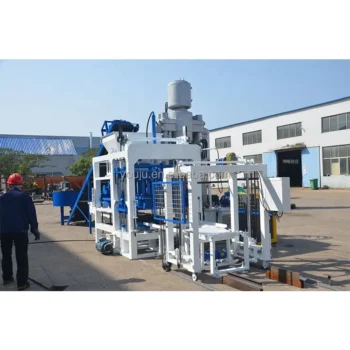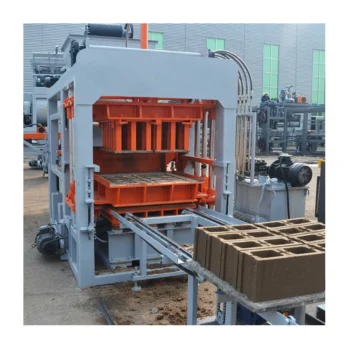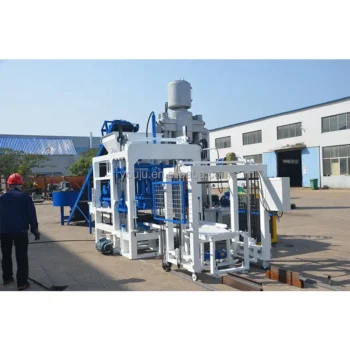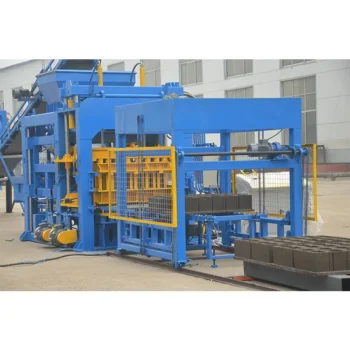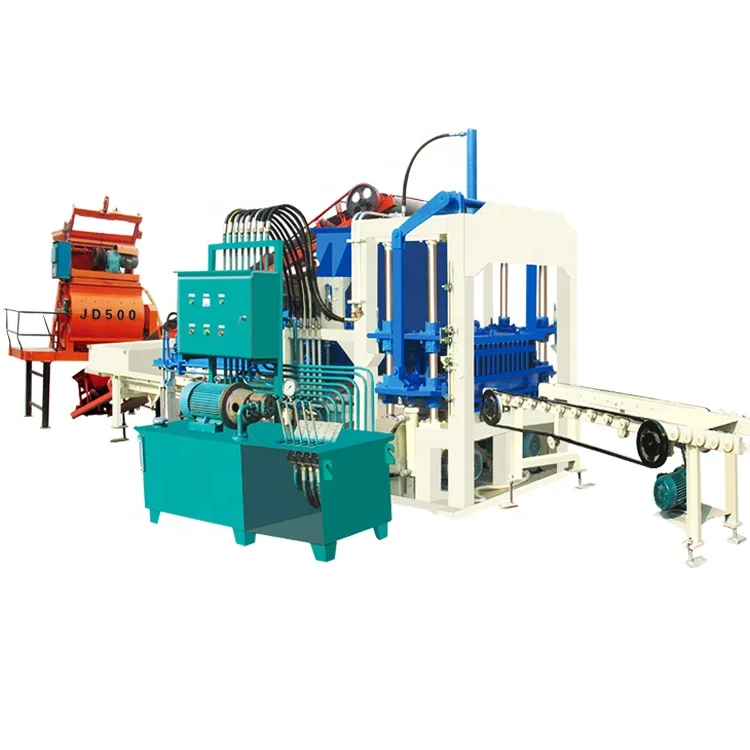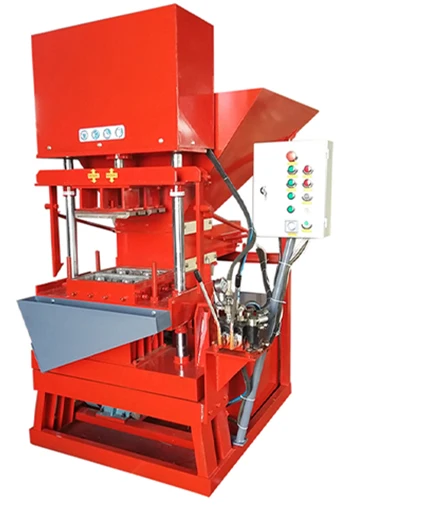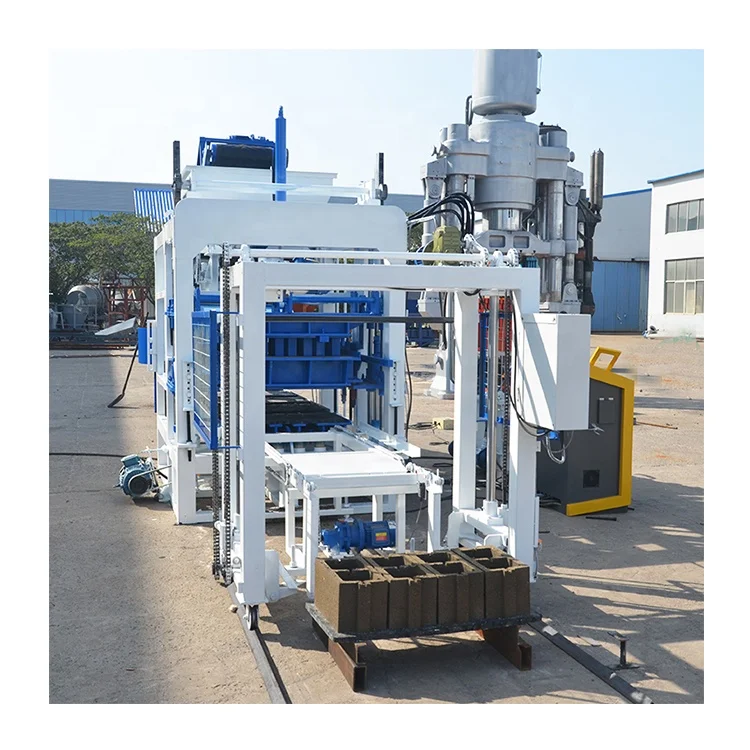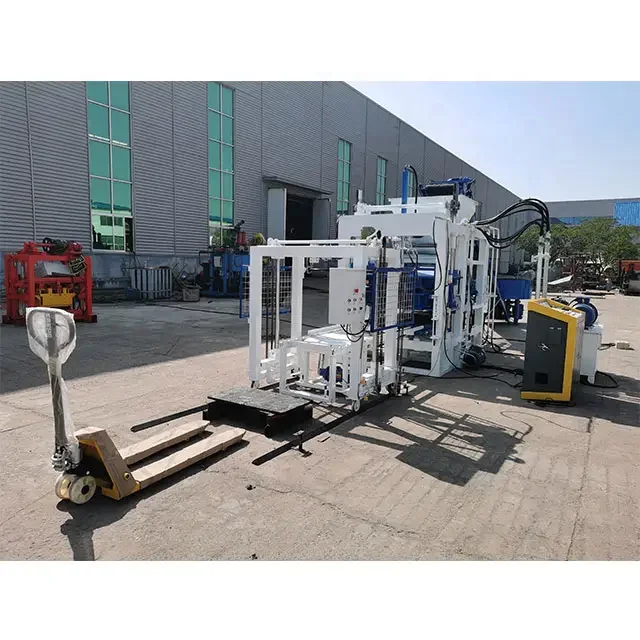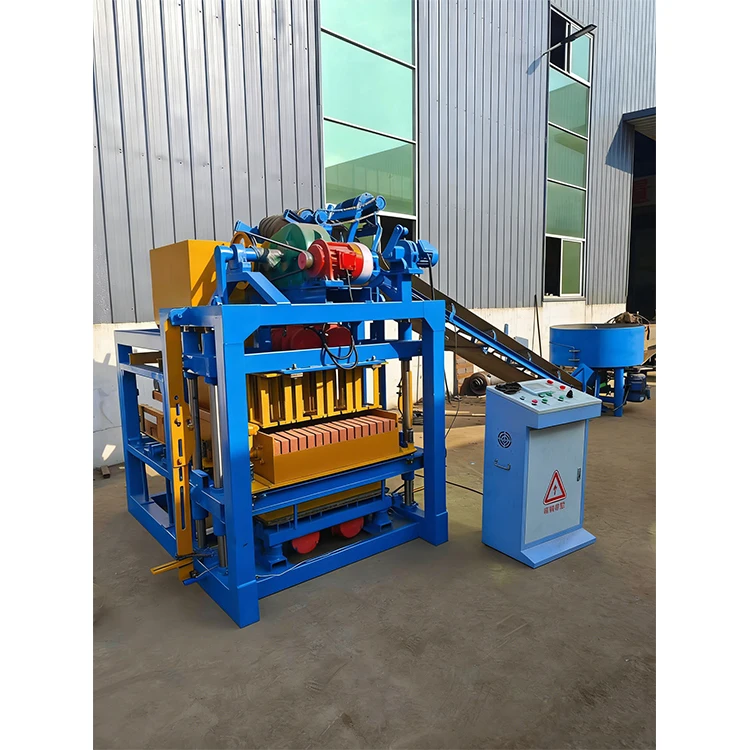
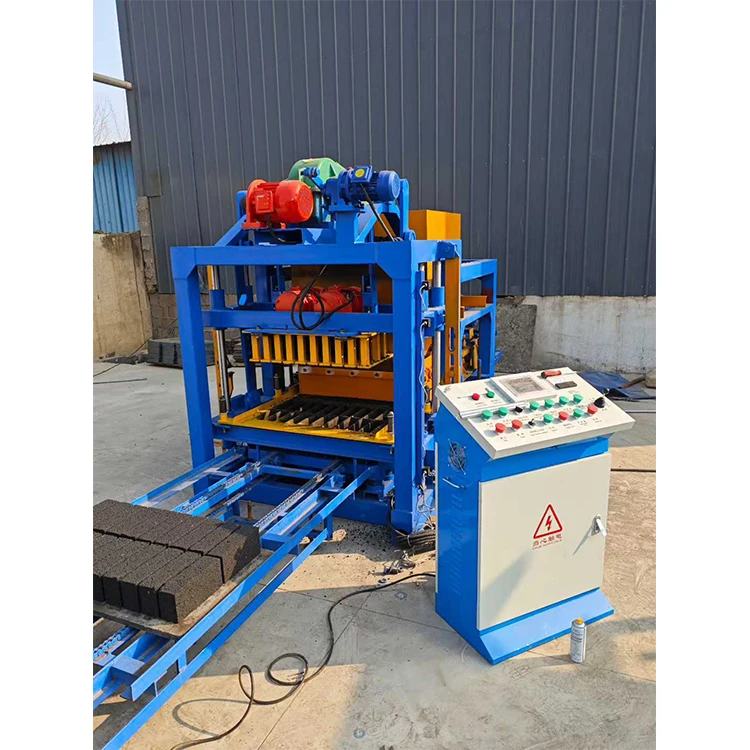
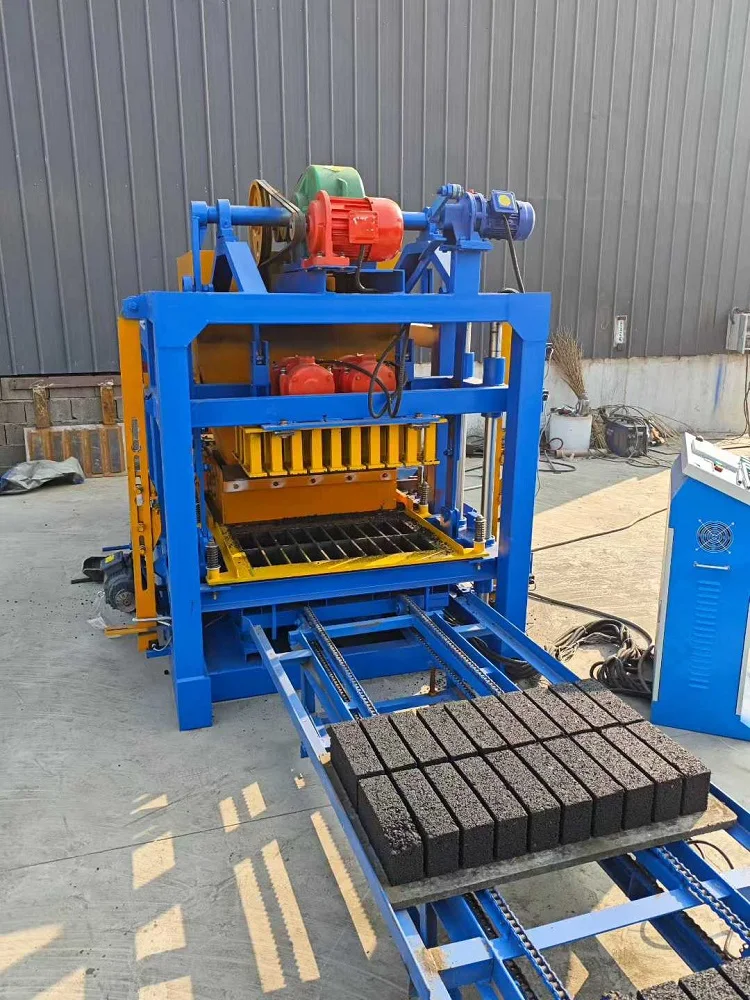
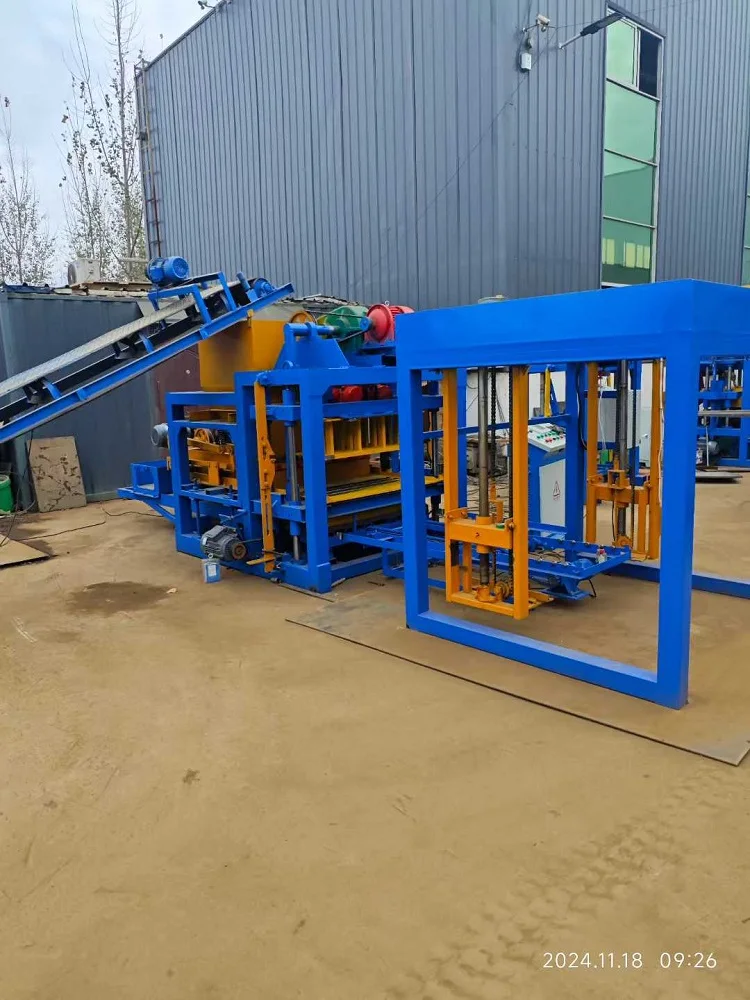
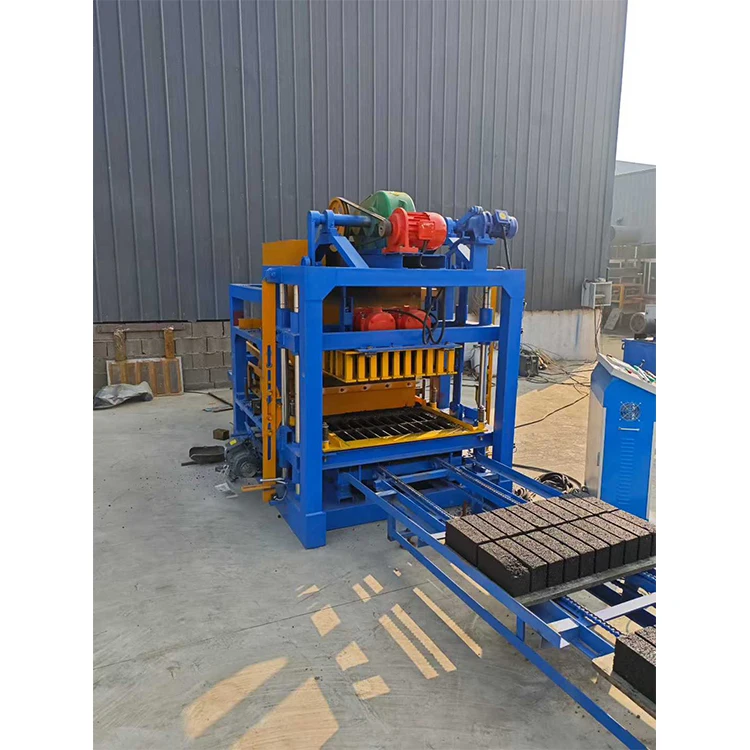
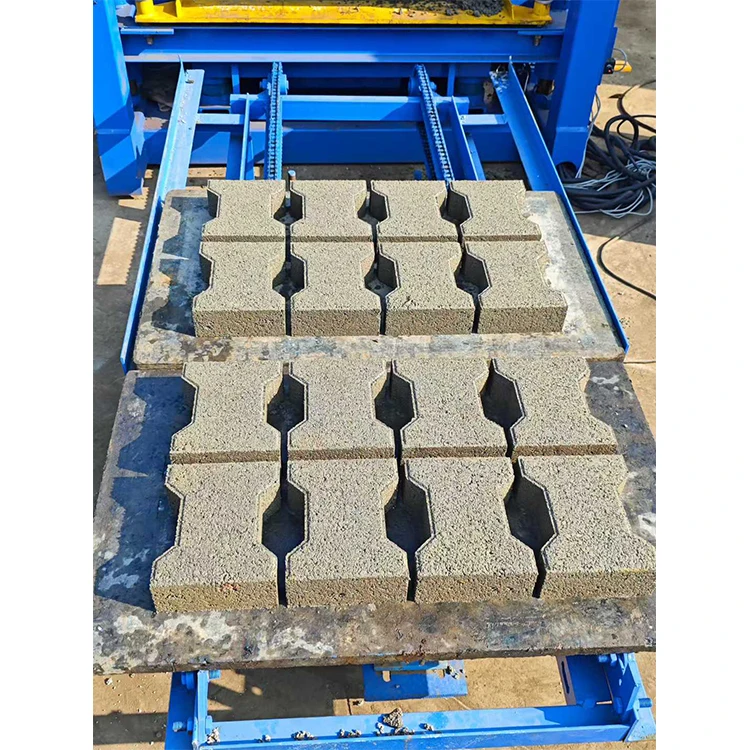
Description
Format-Matched Configuration — capacity calculations for this block machine are stated per specific block format rather than generic hourly figures, ensuring buyers size equipment to their actual market product.
Technical Specifications
| Parameter | Value |
|---|---|
| Model | QTJ4-25 |
| Product Type | Automatic Concrete Block Making Machine |
| Control System | PLC controlled, full automatic |
| Machine Power | 16.58 kW |
| Molding Cycle | 25 seconds |
| Capacity | 4600 pcs / 8 hours (basis not stated in source — confirm block format and material) |
| Machine Weight | 5000 kg |
| Overall Dimensions | 6400 × 1500 × 2700 mm |
| Pallet Size | 850 × 480 mm |
| Vibration System | Vibration motor with large vibration box (non-hydraulic) |
| Motor Brand | Siemens |
| Automation Features | Automatic pallet feeding, material feeding and scraping, block stacking |
| Frame Construction | Thick steel frame |
| Voltage | Configurable according to local supply |
| Warranty | One year with free parts supply |
Application Suitability
| Application | Material or Output |
|---|---|
| Hollow block production | Concrete, sand, cement, crushed stone, water |
| Solid brick manufacturing | Fly ash, lime, cement, sand blends |
| Paving stone production | Crushed stone and cement mixes with fine aggregate |
| Medium-volume block plants | Daily output scaled to local construction demand |
| On-site contractor production | Portable raw material feeds for project-based work |
What "4600 Pieces per Shift" Actually Means for Your Block Format
Capacity numbers without a named block format are not capacity numbers — they are marketing placeholders.
I have watched buyers receive quotations showing impressive shift outputs, only to discover on commissioning day that the figure assumed a small solid brick while their market actually buys 200 mm hollow blocks. The real daily throughput then drops to a fraction of the quoted value. With this automatic concrete block machine, the 25-second cycle applies across formats, but the pieces-per-cycle count changes drastically between a hollow block, a solid brick, and an interlocking paver. [NEED_CITE: block format impact on cycle-based capacity calculations] Before any order is confirmed, the capacity calculation must name the exact format, wall thickness, and target strength so both sides share the same expectation.
Matching Cycle Time to Your Product Mix
A 25-second molding cycle places the QTJ4-25 in a mid-range productivity band, which suits medium-sized plants running two or three block formats on the same line. The PLC-controlled automation holds that cycle constant across batches, removing the variability that manual material feeding typically introduces. When your product range includes both hollow blocks and pavers, the automatic concrete block machine specifications must show how many pieces of each format fit on the 850 × 480 mm pallet per cycle — that is the number that determines real shift output, not a single headline figure.
Pallet Size and Curing Area Alignment
The 850 × 480 mm pallet dimension is not an arbitrary choice; it must match the curing rack spacing and forklift tine width already in your yard. Buyers who skip this check end up rebuilding curing racks or renting different forklifts after the machine arrives. For the QTJ4-25, confirm whether your existing pallet stock is compatible or whether new pallets form part of the supply scope. [NEED_CITE: pallet handling standards in block production]
Reading the Vibration and Pressure Balance
This machine uses a vibration motor system without hydraulic pressure, meaning compaction relies entirely on vibration force and the weight of the mold head. For dry mixes with well-graded crushed stone, this arrangement produces acceptable block density for non-load-bearing hollow blocks and paving stones. However, if your local aggregate contains high clay or fines content, the vibration-only system may struggle to achieve target strength without mix adjustment. That is why requesting a trial run with your own raw material sample matters more than comparing motor power ratings on paper. The Siemens motor provides reliable drive, but motor brand alone does not guarantee block quality — the mix-to-vibration match does.
The Cost of Skipping Format-Level Verification
When buyers accept a single capacity figure and skip format-by-format confirmation, the consequences appear months later: production targets missed, penalty clauses triggered on supply contracts, and emergency mold orders to chase a different block size that was never properly costed. [NEED_CITE: common commissioning disputes in block machinery procurement] These issues trace back to the quotation stage, where a capacity table listing each format, pieces per pallet, and cycles per shift would have flagged the mismatch before money changed hands.
Why Source This Machine Through Our Process
Block machinery is our single focus, which means the QTJ4-25 arrives as a matched system — machine, mold, pallet, and handling specified together rather than assembled from separate vendors. We configure the machine against your actual mix design and local aggregate, not a catalog default. Mold design covers the formats your market sells, with custom drawings available when standard options do not fit. Automation level is selectable, so you can begin with the standard automatic stacker and add upstream batching upgrades later. Every shipment includes voltage and PLC display language confirmed before production starts, avoiding commissioning delays on site.
Documentation & Verification
- Line layout showing pallet flow from feeding through stacking for the QTJ4-25 footprint
- Capacity calculation table listing output per named block format and wall thickness
- Mold drawing pack covering every format included in your order
- Voltage and PLC language confirmation signed off before build
- Factory test record on your raw material sample before dispatch
- Packing photographs with crate and container load plan
Installation, Commissioning & Support
- Foundation plan matched to the 6400 × 1500 mm footprint and 5000 kg static load
- Dedicated circuit sized for 16.58 kW total draw plus starting surge
- Machine shipped partially assembled with vibration box and frame pre-mounted
- On-site commissioning includes cycle timing verification on your chosen block format
- Operator training covers PLC navigation, mold change procedure, and daily maintenance checks
- Wear parts list with reorder codes for vibration motor components and mold liners
Preparing Your Inquiry
To move from general interest to a firm configuration, share the block formats your market demands, including dimensions and target compressive strength. Provide a sample or lab report of your local aggregate and cement type so the mix-to-vibration match can be checked before quotation. Confirm your site voltage and frequency, the PLC display language your operators need, and the curing space available so pallet and rack compatibility is resolved upfront.
Frequently Asked Questions
Q: What is the realistic daily output for 400×200×200 mm hollow blocks versus 200×100×60 mm paving stones?
A: The 25-second cycle time stays constant, but pieces per cycle differ by format because pallet layout changes. For hollow blocks of that size, fewer units fit per pallet than small pavers, so shift output in piece count will be lower for hollow blocks even at identical cycle speed. We provide a per-format capacity table before order confirmation.
Q: Which block formats are compatible with the 850×480 mm pallet?
A: Standard hollow blocks up to 400 mm length, solid bricks, and interlocking pavers all fit within this pallet area. The mold must be designed so cavity arrangement respects pallet edges and leaves clearance for the scraper. Custom mold drawings are prepared against your target format list before production.
Q: How long does a mold change take, and are special tools required?
A: Mold change on this machine involves unbolting the mold box from the vibration table and lifting out the upper punch assembly. With standard hand tools and a basic overhead hoist, the swap can be completed within a shift break. Exact time depends on mold weight and whether quick-release clamps are specified in your configuration.
Q: What mix design works best with the non-hydraulic vibration system?
A: Well-graded crushed stone with controlled fines content and a standard cement ratio gives the vibration motor system the best compaction result. High clay or excess moisture in the aggregate reduces density because there is no hydraulic pressure to compensate. We recommend sending a material sample for a trial run before final mix ratios are locked.
Q: Can the PLC display language and voltage be configured for my country before shipment?
A: Yes. Voltage and frequency are set to your local supply standard during assembly, and the PLC interface language is confirmed in writing before the control panel is wired. This avoids rewiring or translation delays once the machine reaches your site.