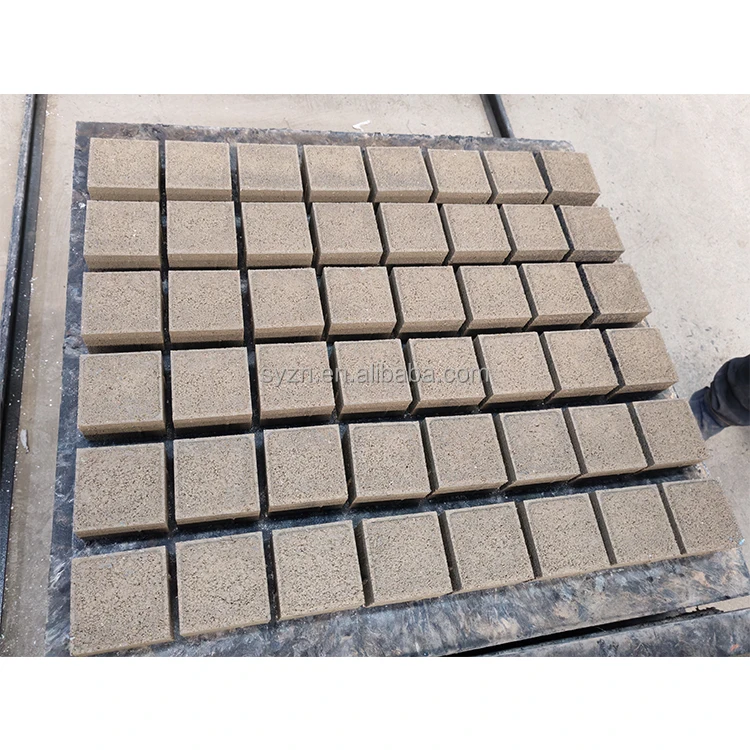

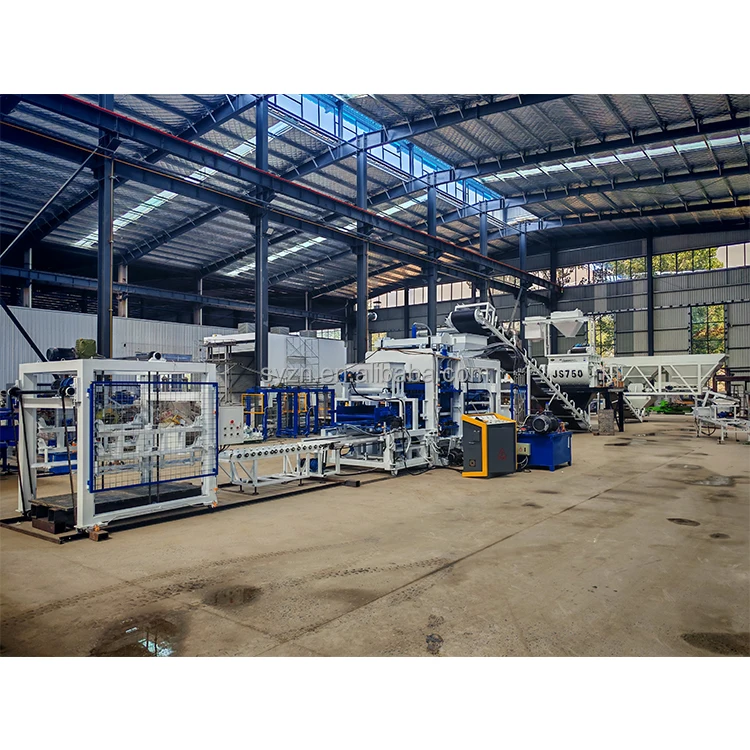

Description
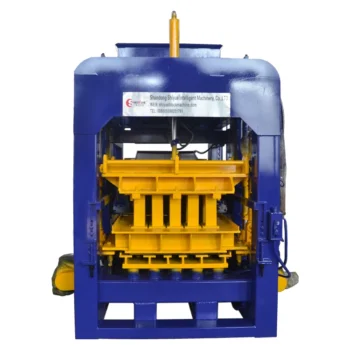
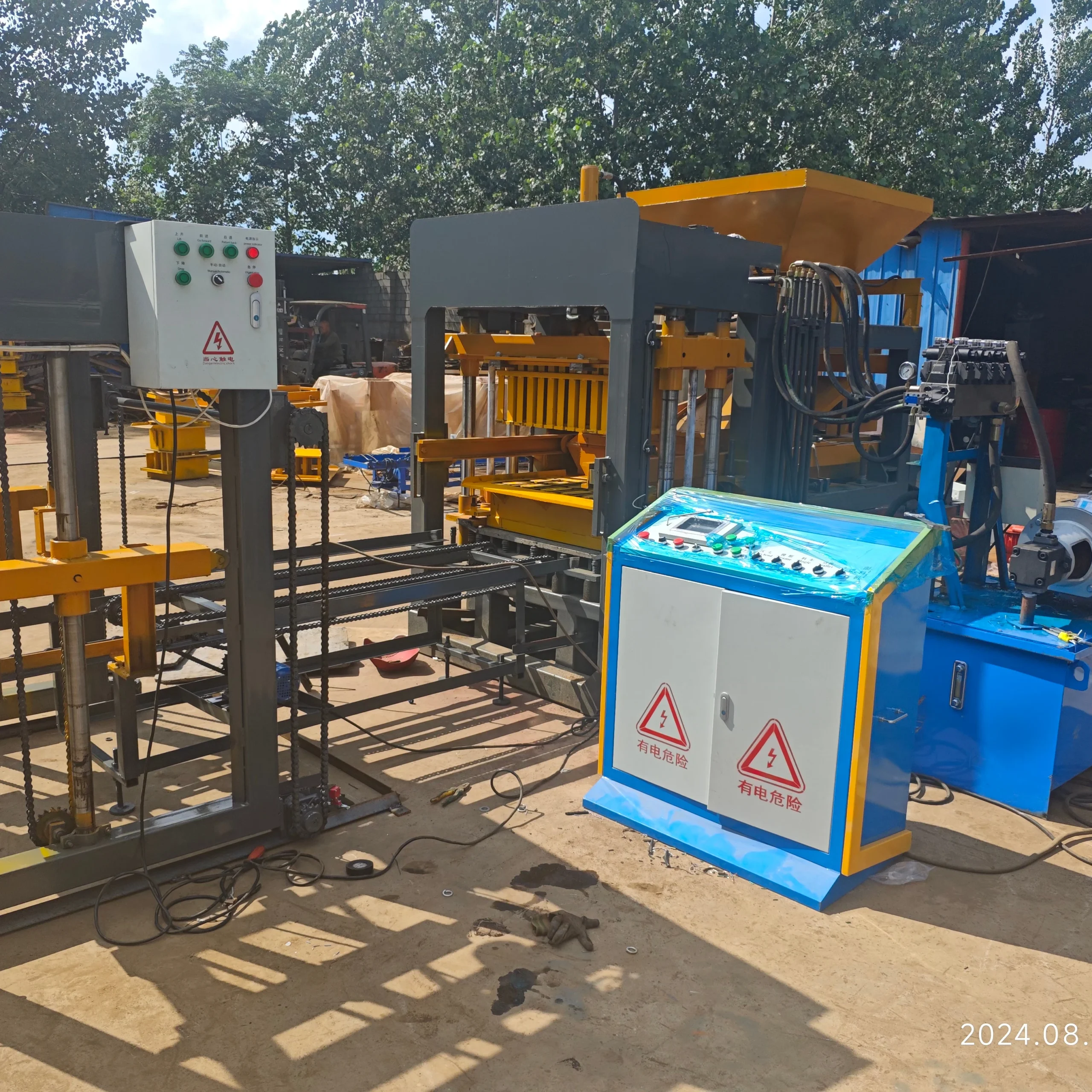
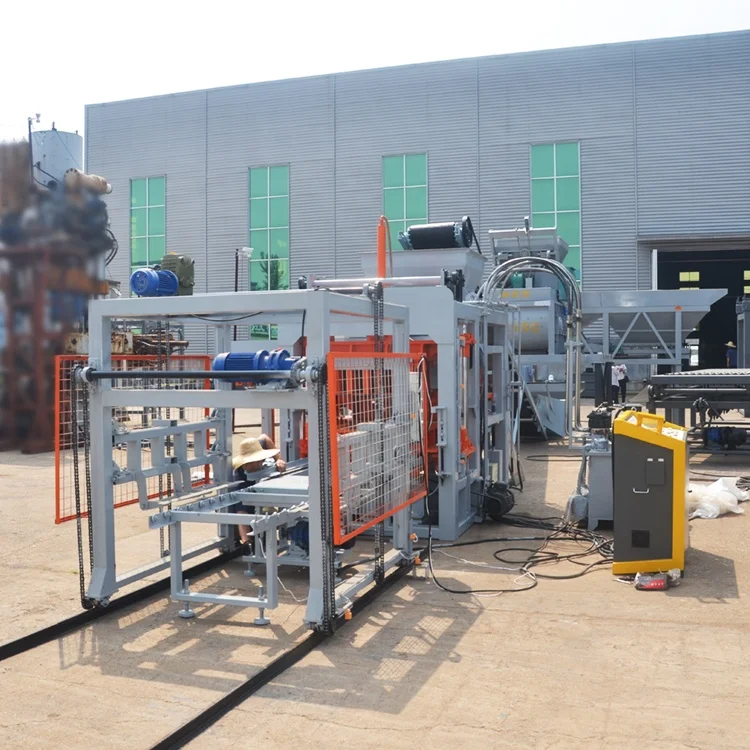
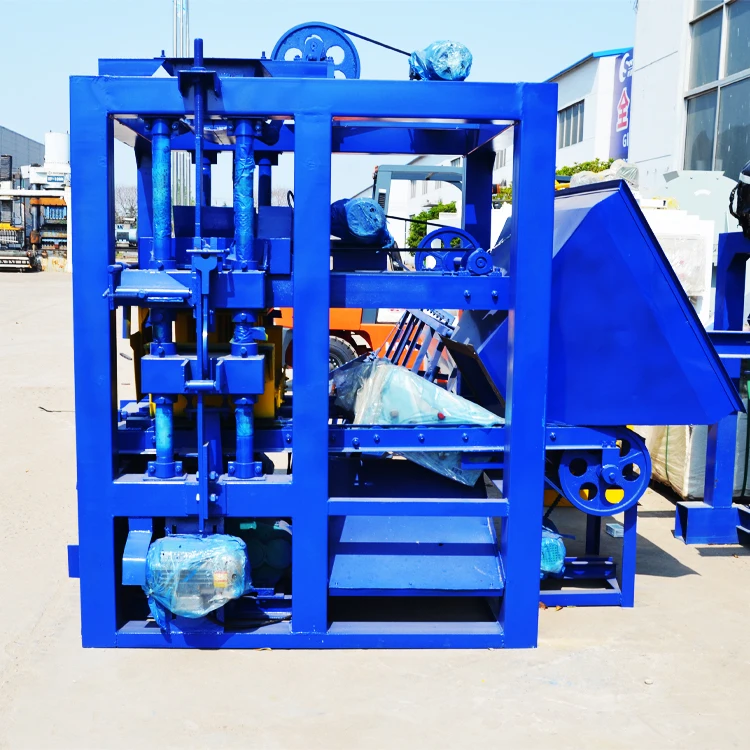
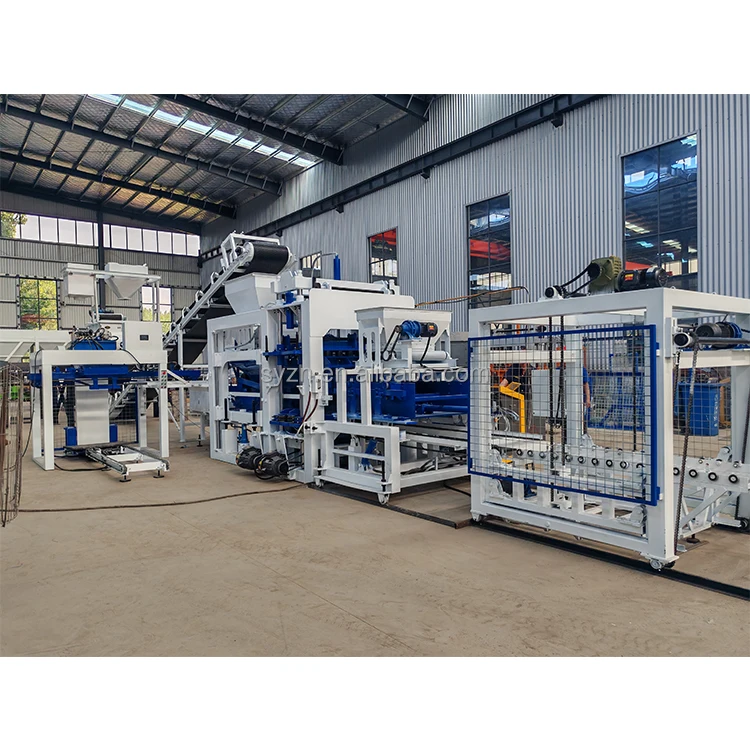
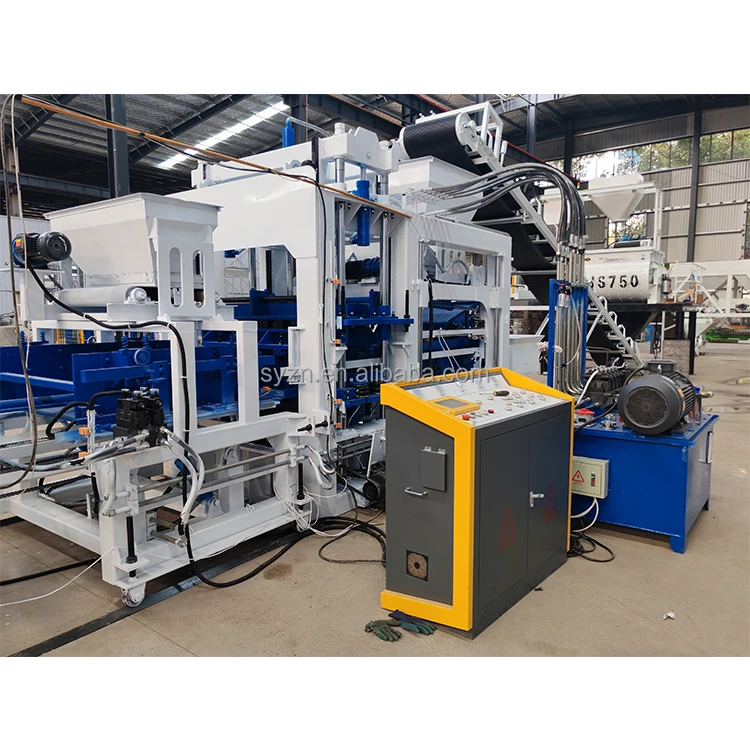
Format-Matched Configuration — every QT8-15 proposal is built around the buyer’s actual block format, local aggregate sample, and target daily output rather than a catalogue default, so machine, mould, pallet and handling are specified as one matched system.
Technical Specifications
| Parameter | Value |
|---|---|
| Product Type | Hydraulic Block Making Machine |
| Model | QT8-15 |
| Overall Dimensions (L×W×H) | 8300×1860×3000 mm |
| Rated Hydraulic Pressure | 21 MPa |
| Main Vibration Form | Platform Vibration |
| Vibration Frequency | 2800–4500 r/min |
| Vibration Force | 45 kN |
| Pallet Size | 950×900 mm |
| Molding Cycle | 15–20 s (basis not stated in source — confirm block format, material, thickness) |
| Overall Power | 55.5 kW |
| Total Mass | 8 T |
| Demolding Method | Hydraulic |
| Recommended Factory Area | 300 m² |
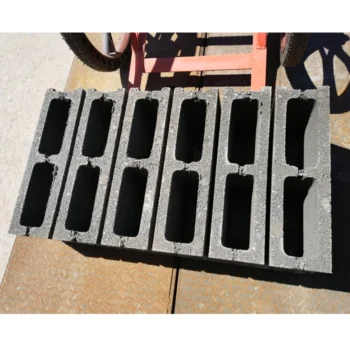
| Applied Products | Hollow blocks, solid blocks, paving blocks, interlocking blocks, curbstones, colored pavers |
| Compatible Raw Materials | Crushed stone, sand, cement, fly ash, gravel, slag, stone dust |
| Warranty | 1 year |
Application Suitability
| Application | Material or Output |
|---|---|
| Hollow block production for wall construction | Crushed stone, sand, cement, fly ash blends |
| Solid concrete block manufacturing | Gravel, sand, cement with varying aggregate gradations |
| Interlocking paver and colored paver runs | Fine sand, cement, pigment, stone dust |
| Curbstone and kerb production | Coarse aggregate, cement, slag blends |
| On-site block production for housing projects | Locally sourced gravel, sand, cement mixes |
What "15–20 Seconds Per Cycle" Leaves Out About QT8-15 Block Machine Specifications
Cycle time only means something when tied to a specific block format, wall thickness, and mix design.
Many quotations list a single molding cycle without revealing which product it was measured on. A 15-second cycle might apply to a thin paver but stretch well past 20 seconds for a tall hollow block with a demanding compaction requirement. When buyers plan daily output around the fastest figure, real production falls short once the actual product mix hits the press. The interlocking brick machine capacity by format must therefore be restated for every SKU the buyer intends to run, not buried in a footnote [NEED_CITE: capacity calculation standards for hydraulic block making equipment].
How Vibration and Pressure Work Together on the QT8-15
The QT8-15 pairs 21 MPa rated hydraulic pressure with 45 kN platform vibration at frequencies between 2800 and 4500 r/min. Neither figure alone determines block density. High pressure without sufficient vibration leaves voids in the core; strong vibration without matched pressure produces a crumbly surface. The ratio must be tuned to the buyer’s local aggregate — a high-clay sand absorbs vibration differently from clean crushed granite, so the same QT8-15 block machine specifications will produce different strength outcomes unless the hydraulic and vibration settings are adjusted to the actual mix.
Matching Pallet Size to Your Curing Yard
A 950×900 mm pallet dictates the footprint of every block leaving the press. Before confirming the order, the buyer’s existing curing racks, forklift fork width, and yard dimensions must align with this pallet size. Racks built for a smaller pallet waste space; forklifts rated below the loaded pallet weight create a handling bottleneck [NEED_CITE: pallet handling and curing area layout planning for block plants]. Choosing pallet material — timber, composite, or steel — also depends on the local climate and curing duration, since warping or moisture absorption changes block flatness over time.
Reading the Specs That Matter Most
Rated hydraulic pressure and vibration force define the upper limit of compaction density. On the QT8-15, 21 MPa and 45 kN are sufficient for standard hollow blocks and interlocking pavers, but dense curbstone formats may need the upper end of the frequency range sustained across the full cycle.
Overall power of 55.5 kW determines transformer sizing and cable cross-section on site. Confirming voltage and frequency before production avoids motor rewinding or starter replacement after the machine arrives.
Molding cycle listed as 15–20 s must be reconfirmed per format. A 200 mm hollow block requires longer compaction and demolding time than a 60 mm paver, so the QT8-15 block machine specifications should arrive as a table showing cycle time for each product the buyer will manufacture.
Hydraulic demolding releases blocks with controlled vertical lift, reducing corner chipping compared to mechanical cam stripping — important when producing interlocking bricks with tight dimensional tolerances.
The Cost of Skipping a Material Test
Sending a local aggregate sample before the order is confirmed seems like extra work, but skipping it leads to costly corrections. A buyer who once ran a high-silt sand through a machine configured for clean crushed stone found that block strength dropped noticeably, and output had to be cut to allow longer curing. Reconfiguring vibration amplitude and adjusting the mix ratio after the machine was already bolted down meant lost production days and replacement wear parts arriving by air freight [NEED_CITE: effects of aggregate gradation and clay content on concrete block strength].
Why Sourcing the QT8-15 Through a Format-Focused Supplier Matters
Block machinery is the single product focus, meaning the QT8-15 press, moulds, pallets, and handling equipment are specified as one system rather than assembled from unrelated vendors. Configuration starts with the buyer’s target block format and local aggregate sample, not a catalogue default. Mould design covers every format the buyer’s market actually sells, including custom drawings when standard moulds do not match. Automation level is selectable, so a plant can start with semi-automatic pallet handling and add automatic stacking later. Installation includes operator training so the crew understands cycle adjustment, mould changeover, and daily hydraulic checks from the first shift.
Documentation & Verification
- Line layout and capacity calculation stating the block format assumed for each output figure
- Mould drawing and format list confirming which products the QT8-15 will produce
- Pallet specification sheet matching size and material to your curing area
- Voltage, frequency, and control language confirmation recorded before production starts
- Factory test run video on your specified block format before dispatch
- Operation and maintenance manual with hydraulic schematic and wear parts list
Installation, Commissioning & Support
- Foundation pad must support 8 T static load plus dynamic vibration across the 8300×1860 mm footprint
- Dedicated 55.5 kW power circuit with voltage and frequency confirmed before wiring
- Machine ships partially dismantled; reassembly and levelling completed on site
- First-run commissioning includes cycle tuning for your specific block format and mix
- Operator training covers mould change procedure, hydraulic pressure checks, and pallet feed alignment
- Wear parts list and mould maintenance schedule provided for the first year of production
Planning Your QT8-15 Inquiry
To receive a configuration that matches your actual production needs, share the block formats you plan to sell, the daily output target for each format, and a sample of your local sand or crushed stone. Include the voltage and frequency available at your site, the PLC display language your operators read, and the dimensions of your existing curing yard. If you already have forklifts or curing racks, note their specifications so pallet size and handling equipment can be aligned before the quotation is issued.
Frequently Asked Questions
Q: What is the realistic daily output of the QT8-15 for each block format I need to produce?
A: Daily output depends on block dimensions, wall thickness, and mix design. A proposal will list cycle time and shift output separately for every format you plan to run, so the capacity figure you see is the one that applies to your actual product — not a generic cycles-per-hour number.
Q: How does mould change time on the QT8-15 affect format flexibility during a working shift?
A: Mould changeover duration varies with mould size and the quick-release mechanism fitted. The proposal includes an estimated change time for each format pair you are likely to switch between, so you can plan shift schedules around the actual downtime rather than discovering it after installation.
Q: Can the QT8-15 be configured for my local aggregate to ensure consistent block strength?
A: Yes. Providing a sample of your sand, crushed stone, or fly ash allows the vibration frequency range and hydraulic pressure settings to be matched to that material. The configuration is then tested at the factory on a mix that mirrors your local supply before the machine ships.
Q: What pallet size does the QT8-15 use, and how should I plan my curing area around it?
A: The standard pallet is 950×900 mm. Your curing racks, forklift capacity, and yard layout should be planned around this dimension. Pallet material — timber, composite, or steel — is selected based on your local climate and curing duration to prevent warping that affects block flatness.
Q: What voltage, frequency, and control language will be confirmed before the QT8-15 ships?
A: Voltage, frequency, and PLC display language are confirmed in writing before production begins. This prevents motor rewinding, contactor replacement, or operator confusion during commissioning. The confirmation is recorded in the factory test documentation you receive with the machine.