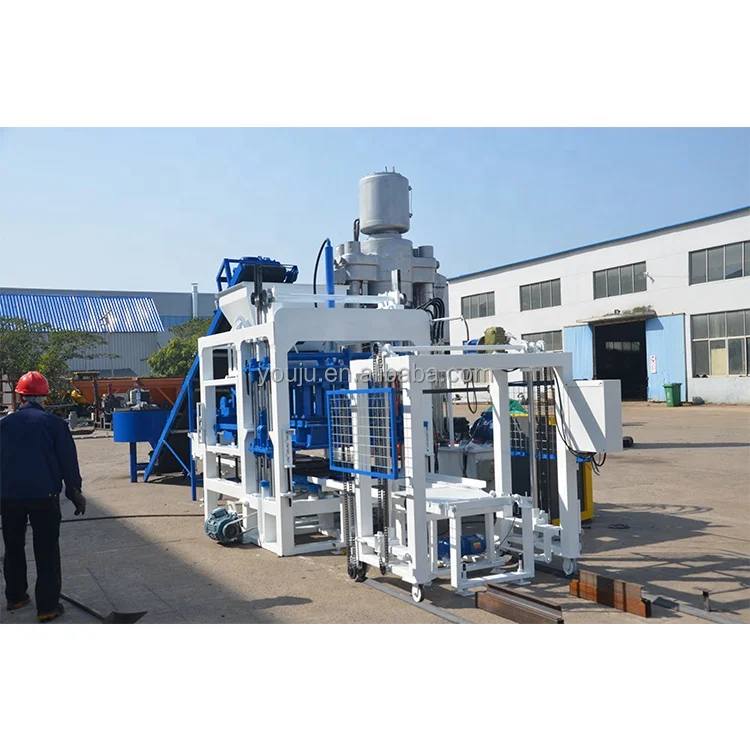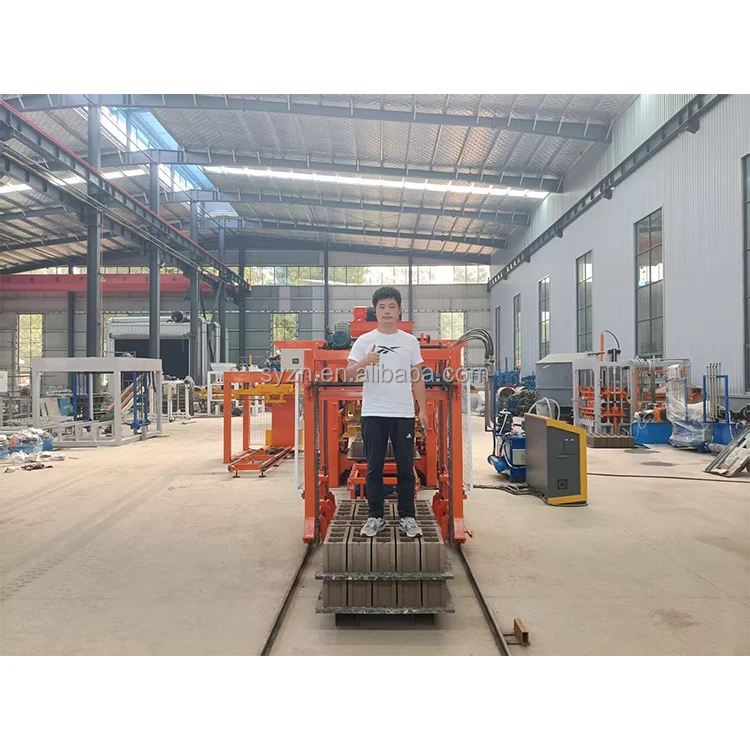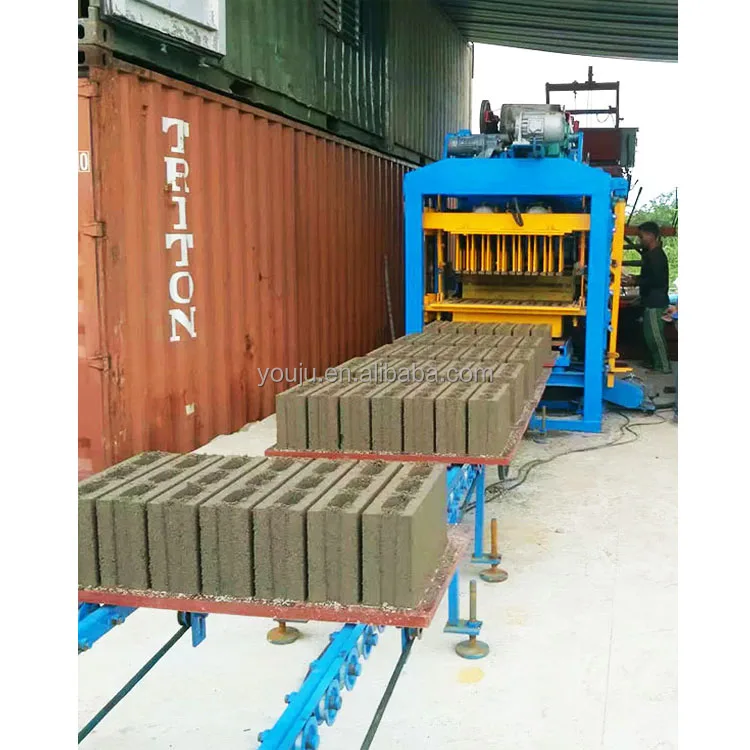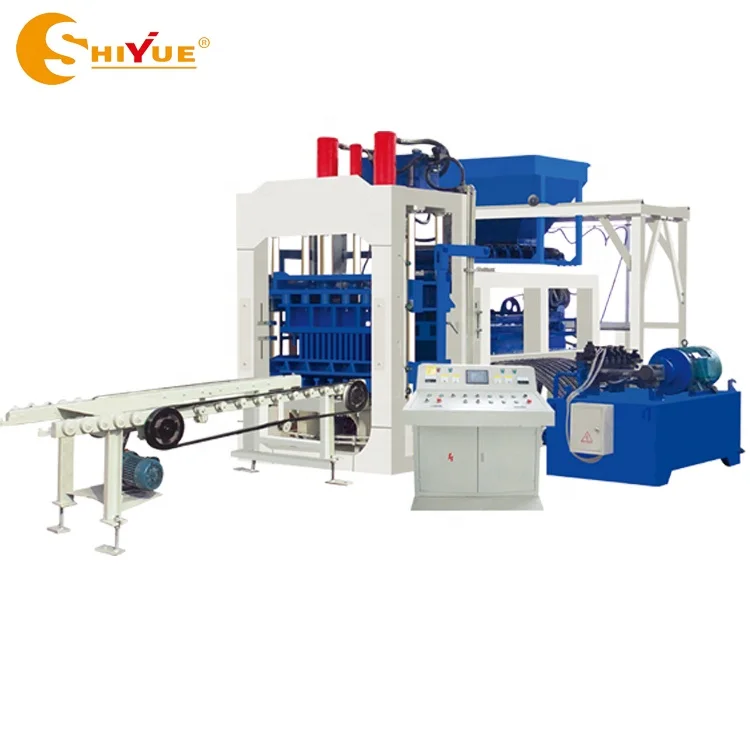
Description
Vibration-Pressure Matching — QT8-15 parameters are set against your actual mix design and aggregate, not copied from a generic catalog default.
Technical Specifications
| Parameter | Value |
|---|---|
| Model | QT8-15 |
| Product Type | Hydraulic Automatic Block Making Machine |
| Overall Dimensions (L×W×H) | 8300 × 1860 × 3000 mm |
| Rated Hydraulic Pressure | 21 MPa |
| Vibration Form | Platform Vibration |
| Vibration Frequency Range | 2800–4500 RPM |
| Pallet Size | 950 × 900 mm |
| Molding Cycle | 15–25 s (basis not stated in source — confirm block format and material) |
| Overall Power | 46 kW |
| Control System | PLC with touch screen interface |
| Hydraulic Station | Independent integrated type |
| Automation Level | High degree of automation, intelligent electronic control |
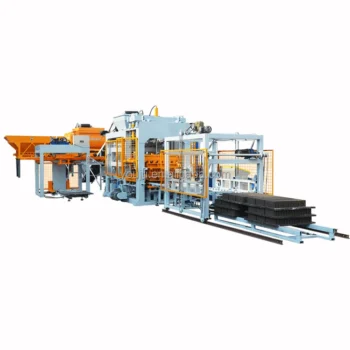
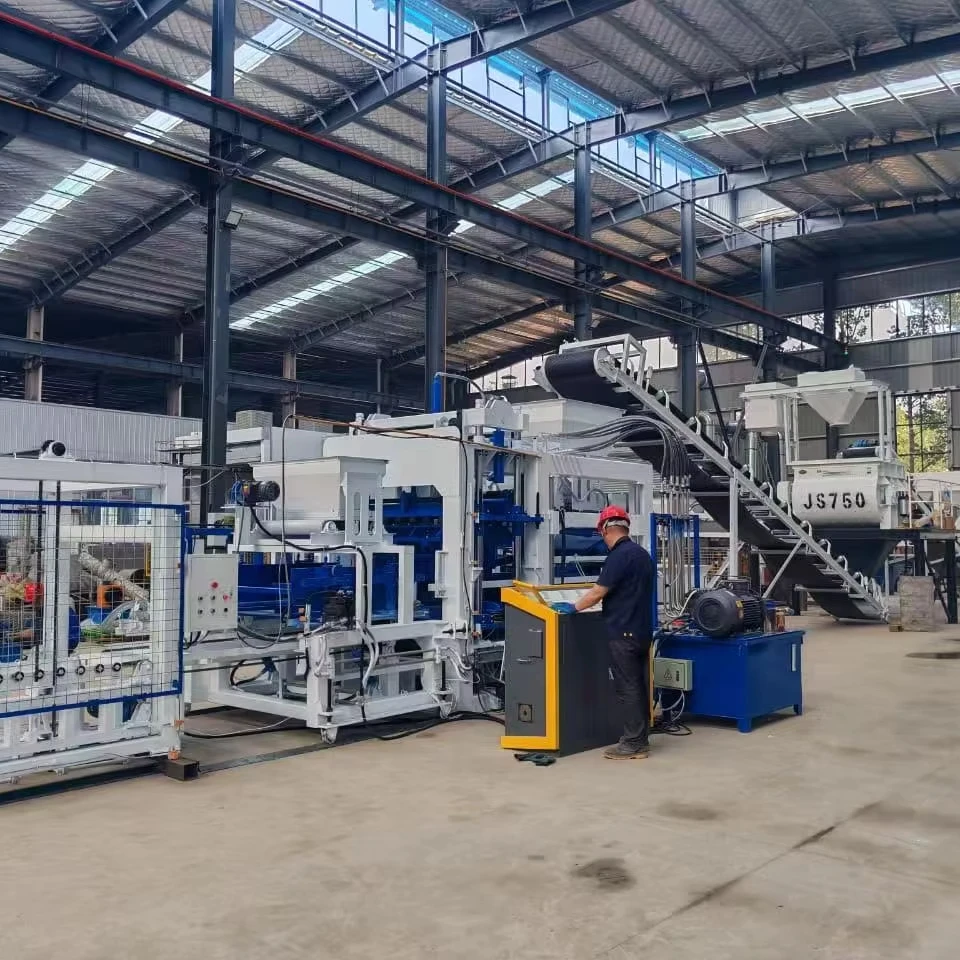
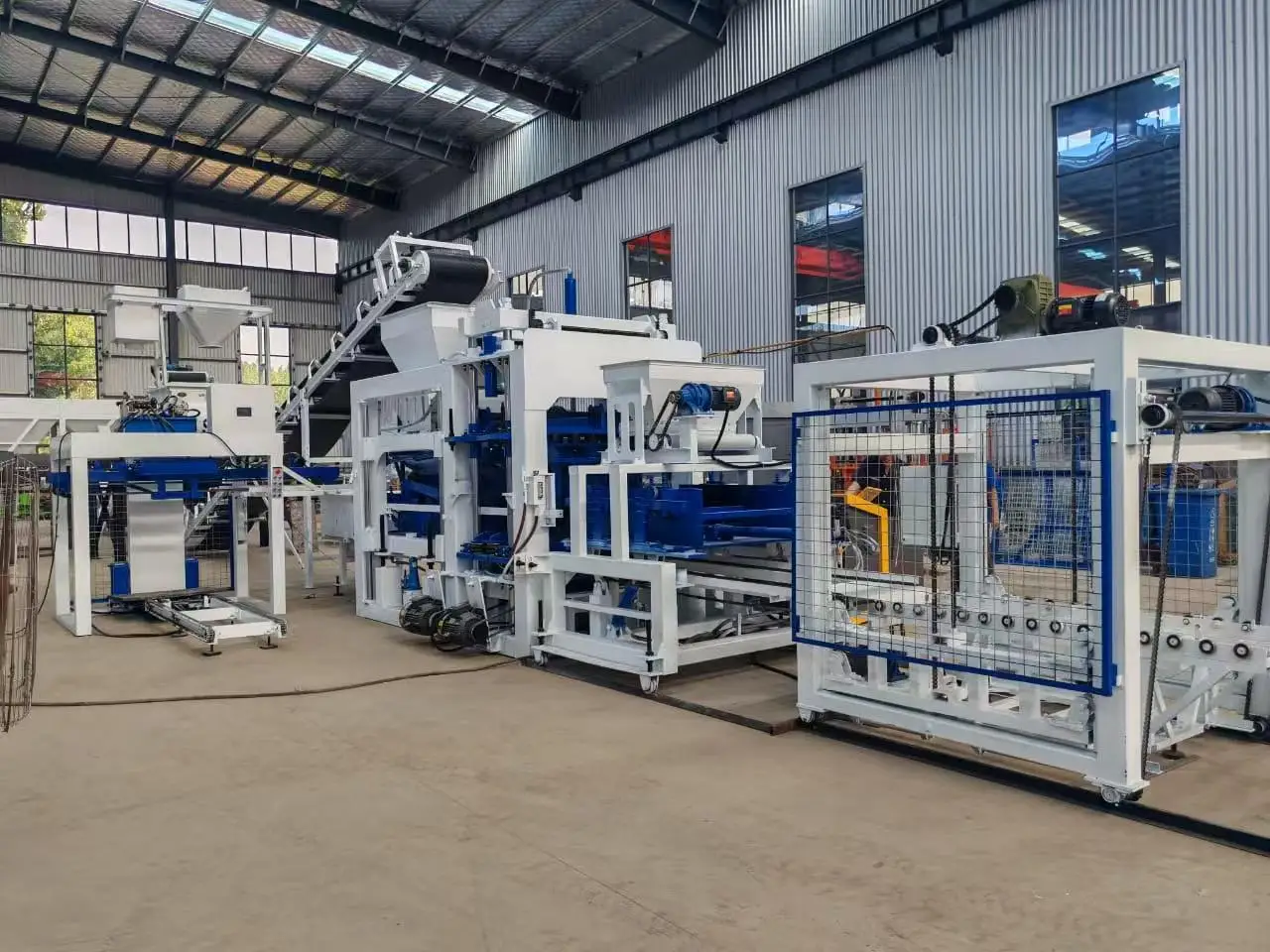
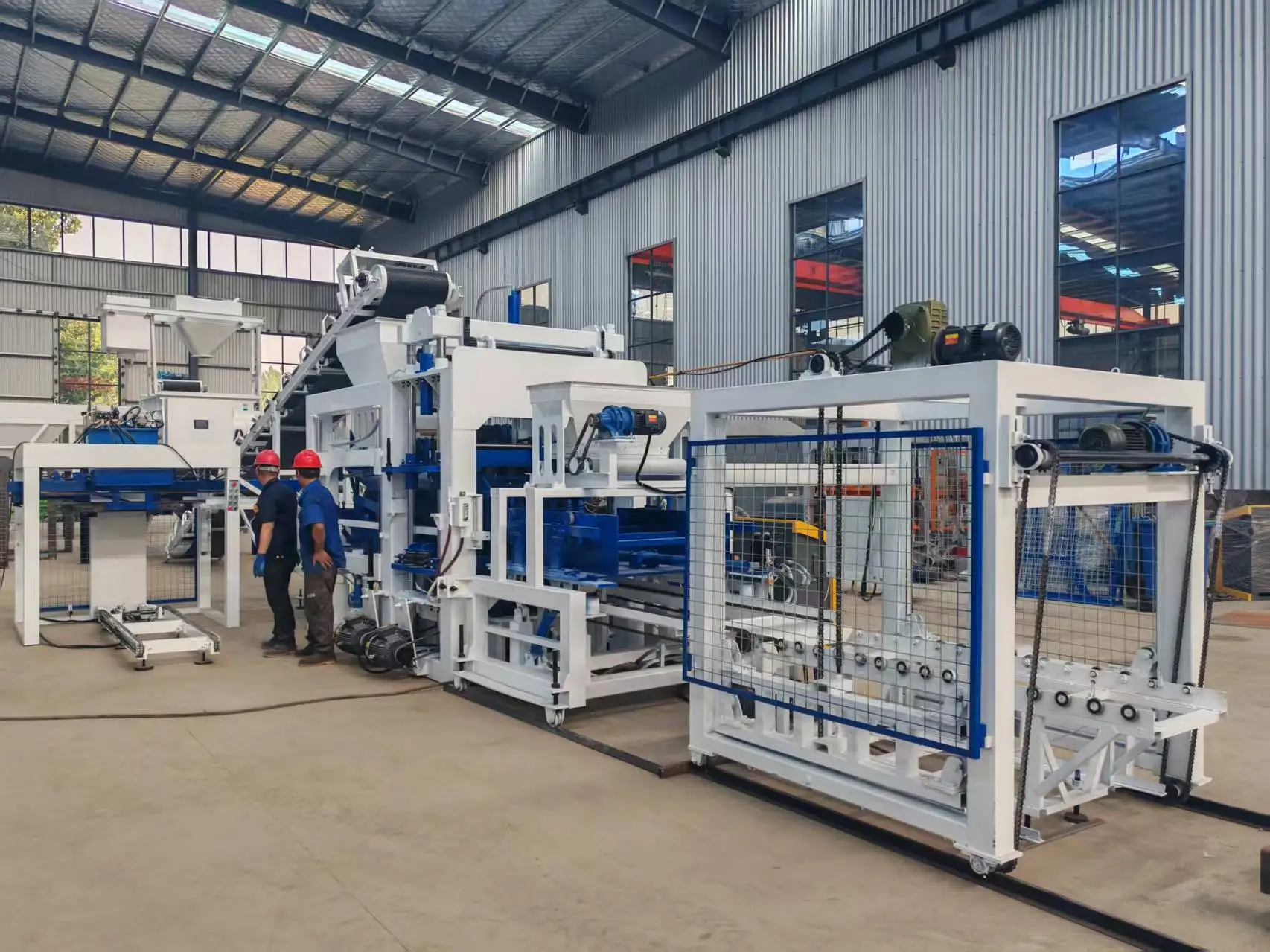
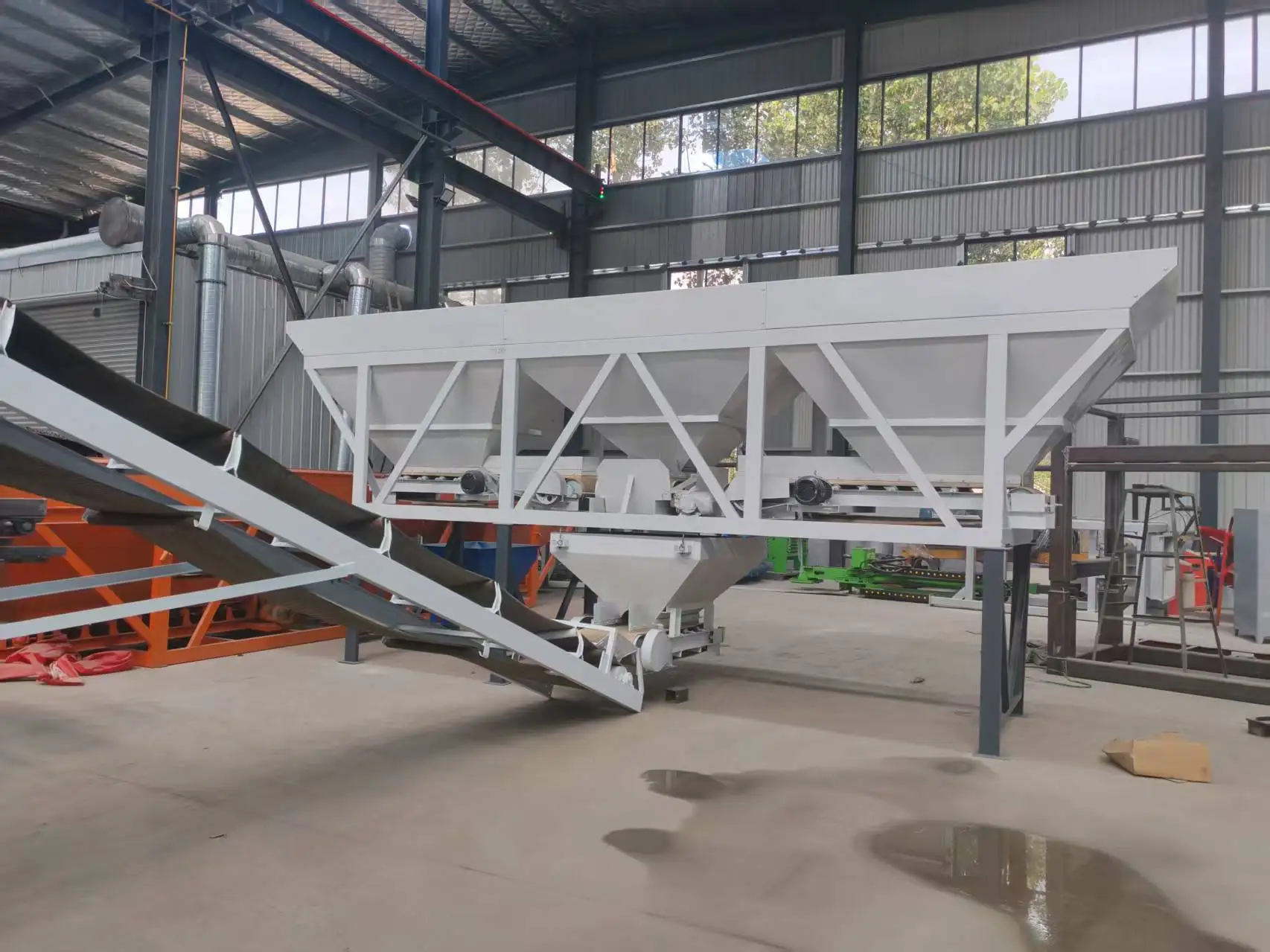
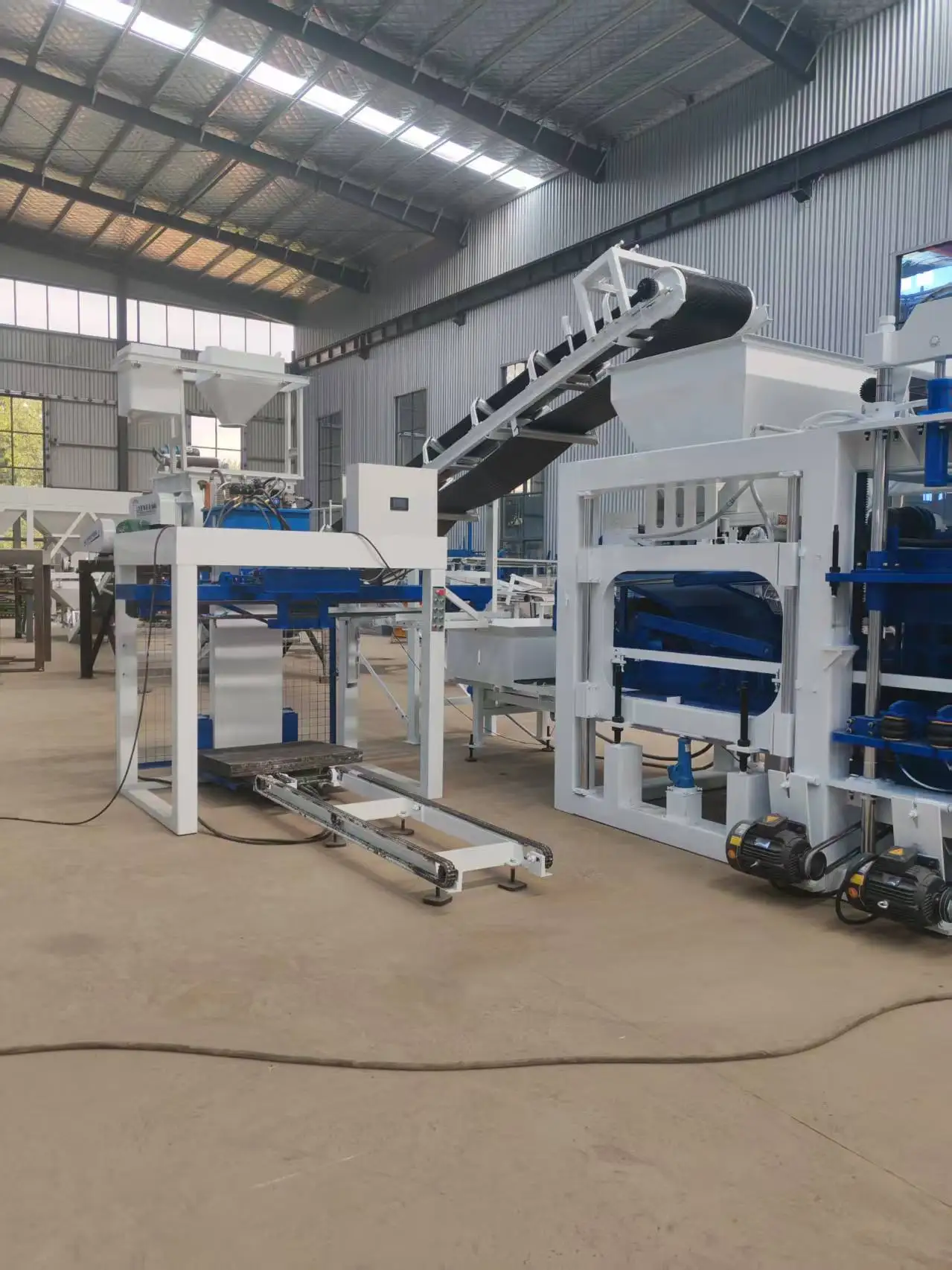
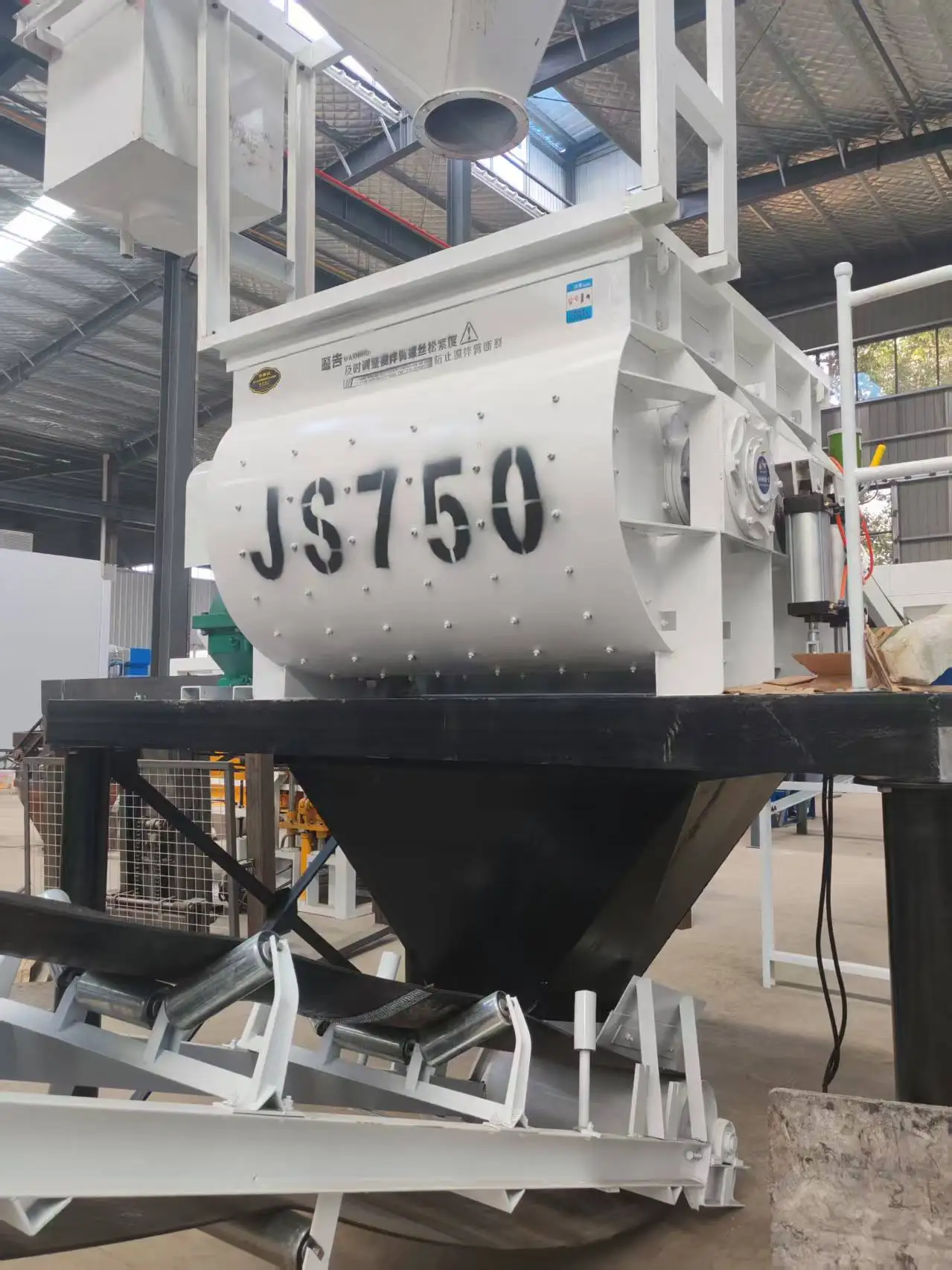
| Support Equipment | JS750 mixer, 8 m belt conveyor, automatic stacker (2 pallets per lift, 3–6 layers) |
| Included Mould | One hollow block mould (additional formats available at extra cost) |
| Voltage & Frequency | To be confirmed with buyer before production |
| PLC Display Language | To be confirmed with buyer before production |
Application Suitability
| Application | Material or Output |
|---|---|
| Hollow block production for wall construction | Crushed stone, cement, sand, and local aggregate blends |
| Solid block manufacturing for load-bearing structures | Dense aggregate mixes requiring high compaction force |
| Paving block production for roads and walkways | Fine aggregate with pigment additives for surface finish |
| Interlocking brick for retaining walls | Interlocking profile moulds with angular aggregate |
| Porous permeable brick for drainage systems | Open-graded aggregate with controlled cement ratio |
What "Cycle Time 15–25 Seconds" Actually Means for Your Output
The QT8-15 block making machine specifications only become meaningful when tied to the exact block format you intend to produce.
I once watched a South American plant owner stare at a pallet of crumbling hollow blocks after signing a contract based on a brochure number. The local stone dust carried high clay content, and the vibration frequency that worked in a dry limestone mix was completely wrong for his material. Three days on the shop floor adjusting pressure curves and frequency taught everyone involved that a molding cycle figure without a stated format is a number waiting to disappoint [NEED_CITE: concrete block mix design and aggregate compatibility standards].
The QT8-15 block making machine specifications list a 15–25 second cycle, but that range spans everything from a thin paving block to a tall hollow block. A buyer who needs 10,000 hollow blocks daily will read that number very differently from one producing solid pavers, and the difference shows up on the first day of production.
Matching Vibration to Your Aggregate Profile
The platform vibration system on this QT8-15 block making machine covers 2800–4500 RPM, a wide band that lets the operator dial in the right frequency for each material. Coarse crushed stone needs sustained high-frequency vibration to settle, while a fine sand mix with high moisture content demands a shorter burst to avoid segregation. The PLC stores these profiles so a shift change does not mean starting the tuning process over.
Pallet Dimensions and Your Existing Curing Yard
A 950 × 900 mm pallet is not an arbitrary choice — it must fit the curing racks already welded in your yard and match the fork spacing on the forklift you own. When a pallet arrives that is fifty millimeters too wide for the rack slots, blocks sit on the floor curing unevenly, and the automatic stacker has nothing to pick. Confirming this dimension against your site before production prevents a costly mismatch [NEED_CITE: pallet handling and curing rack alignment in block plants].
Reading the Pressure and Vibration Relationship
The 21 MPa rated hydraulic pressure and the adjustable vibration frequency work as a pair. Pressure alone compresses the mix, but without sufficient vibration the aggregate particles bridge and leave voids inside the block. Too much vibration at low pressure pushes cement paste to the surface and leaves a weak core. The QT8-15 lets the operator adjust both independently through the touch screen, finding the balance that produces consistent 15 MPa comprehensive strength for the target format. The independent hydraulic station sits isolated from the main frame vibration, which keeps seals and valves from wearing prematurely under constant shaking.
When the Wrong Configuration Follows You Home
Choosing a machine configured for a standard limestone mix when your quarry supplies high-clay stone dust means every block leaves the press under-compacted. The vibration frequency that was never adjusted for your material produces blocks that chip at the edges during pallet handling and fail drop tests at the construction site. Mould changes that should take minutes stretch into half a shift because the quick-change system was never specified, and the format flexibility you paid for sits unused in the corner of the workshop [NEED_CITE: block mould change procedures and downtime impact].
Why Sourcing the QT8-15 Through This Channel Matters
Block machinery is our single focus, so the QT8-15 arrives as a matched system — press, mould, pallet, mixer, and stacker specified together rather than assembled from separate purchase orders. Every configuration is set against your local aggregate sample and target block format, not pulled from a default table. Mould design covers the formats your market actually buys, with custom drawings when standard profiles do not match. The automation level is selectable, meaning a buyer can begin with semi-automatic pallet handling and add the full stacker later as volume grows. Installation includes operator training on the PLC interface, and wear parts and replacement moulds remain available for the life of the machine.
Documentation & Verification
- Line layout showing capacity calculation stated per block format for the QT8-15
- Mould drawing and format list confirming cycle time for each product type
- Pallet specification sheet matched to your curing rack dimensions and forklift
- Voltage, frequency, and PLC display language confirmation signed before production
- Factory test record on your specified block format before dispatch
- Hydraulic and electrical schematic for on-site maintenance reference
Installation, Commissioning & Support
- Foundation plan sized to the 8300 × 1860 mm footprint with vibration isolation pads
- Dedicated 46 kW power circuit with confirmed voltage and frequency before energizing
- Machine arrives dismantled for container loading; reassembly supervised on site
- First-run parameter tuning against your aggregate sample and target block strength
- Operator training on the PLC touch screen covering cycle adjustment and fault codes
- Wear parts list and mould maintenance schedule provided at handover
Before You Request a Quotation
Send the exact block dimensions you sell most, your daily volume target, and a sample description of your local aggregate so the QT8-15 block making machine specifications can be configured around real production conditions rather than catalog assumptions. Include your site voltage, frequency, and preferred PLC language to keep commissioning on schedule. If you already have curing racks or a forklift, share the dimensions so pallet sizing is confirmed before the machine enters production.
Frequently Asked Questions
Q: What is the realistic daily output of the QT8-15 for my specific block format?
A: The molding cycle ranges from 15 to 25 seconds, but actual output depends entirely on block format, material density, and curing logistics. We provide a capacity calculation document that states daily output for your exact hollow, solid, or paving block dimensions before you place an order, so the number you plan around matches what the press actually delivers on your floor.
Q: How long does a mould change take, and what tools are required?
A: Mould change time depends on the quick-change system specified. A standard bolt-on mould requires manual alignment and fastening, while an optional quick-clamp system reduces the changeover significantly. We confirm the system type and provide the required tool list during configuration so you know the time commitment before committing to multiple formats.
Q: How are vibration force and hydraulic pressure matched to my local aggregate?
A: We request an aggregate sample description or lab report during the inquiry stage. The 2800–4500 RPM vibration range and 21 MPa hydraulic pressure are then adjusted on the PLC to match your material’s particle size, moisture content, and cement ratio, producing consistent compaction across every production run.
Q: What pallet size and material does the machine use, and will it fit my curing setup?
A: The QT8-15 uses a 950 × 900 mm pallet. Material options include bamboo, steel, or composite, selected based on your curing environment and block weight. We verify these dimensions against your existing rack spacing and forklift fork width before production begins to avoid on-site handling problems.
Q: What block strength can I expect, and how is it verified?
A: The machine is rated for blocks reaching up to 15 MPa comprehensive strength under matched mix conditions. During factory testing, sample blocks from your specified format are pressed and tested, and the results are included in the dispatch documentation so you have a verified baseline before the machine ships.