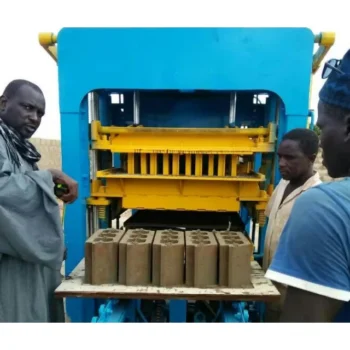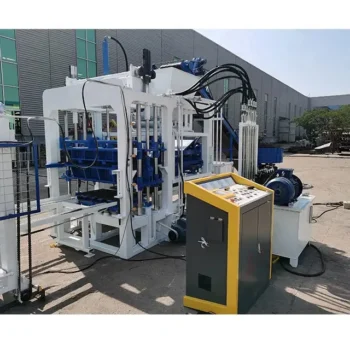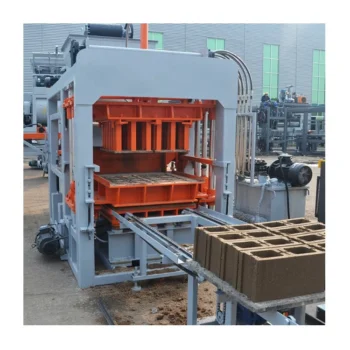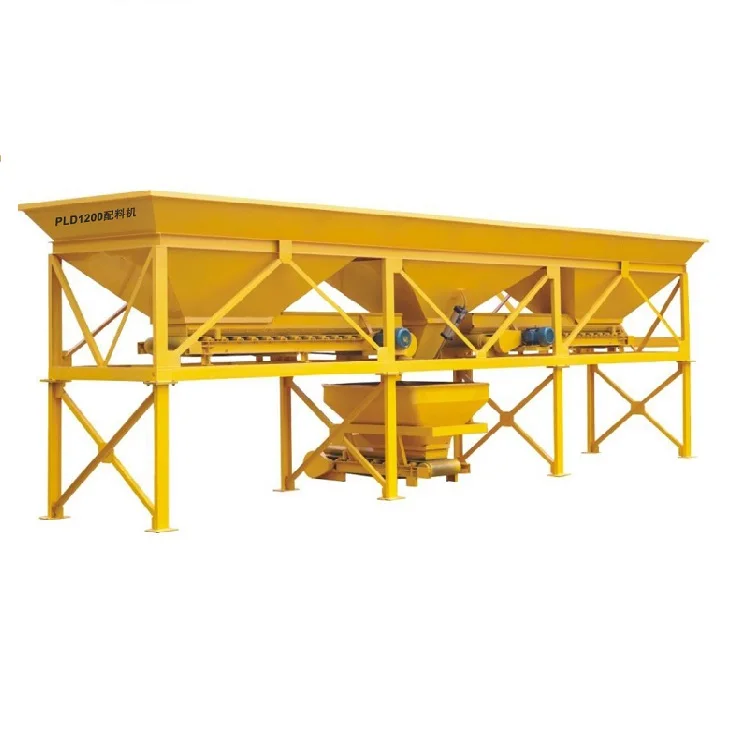
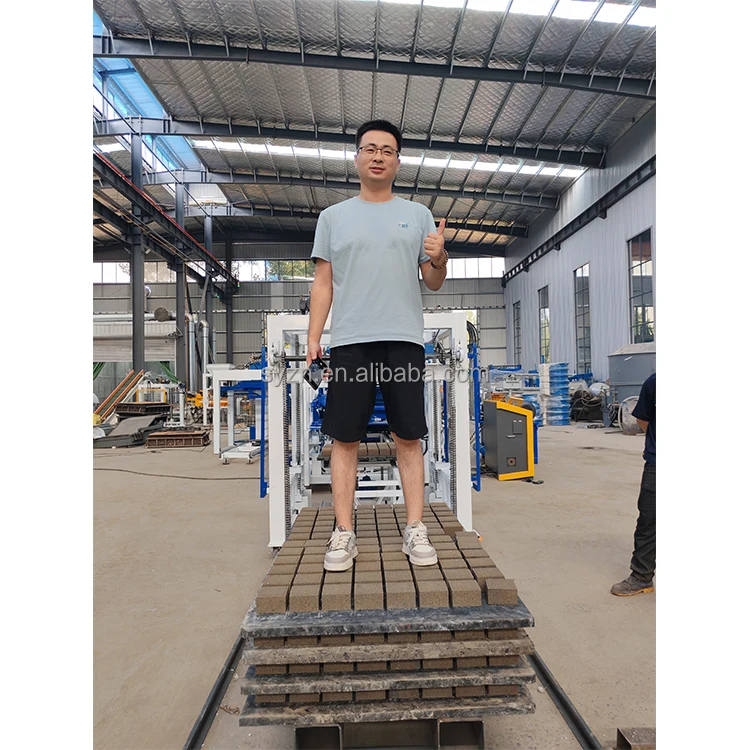
Description
Honest Capacity by Format — every cycle time and pallet count for the QT8-15 is validated against your target block shape and local aggregate before quotation.
Technical Specifications
| Parameter | Value |
|---|---|
| Model | QT8-15 |
| Product Type | Automatic Hydraulic Block Making Machine |
| Overall Dimensions (L×W×H) | 8300 x 1860 x 3000 mm |
| Rated Pressure | 32 MPa (verify against final configuration) |
| Vibration Form | Platform Vibration |
| Vibration Frequency | 2800-4500 RPM |
| Pallet Size | 950 x 900 mm |
| Molding Cycle | 15-25s (basis not stated in source — confirm block format and material) |
| Overall Power | 47 kW |
| Control System | PLC with touch screen human-computer interface |
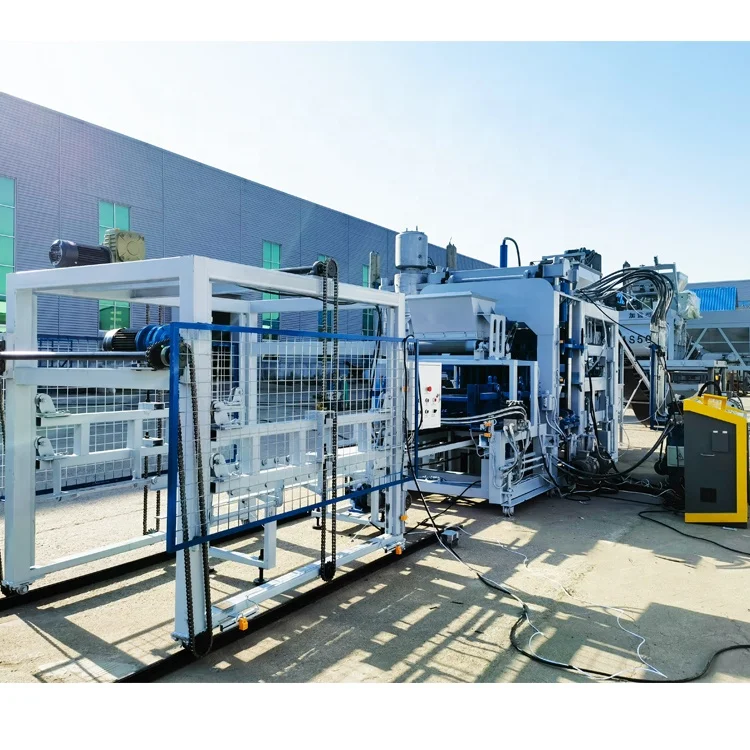
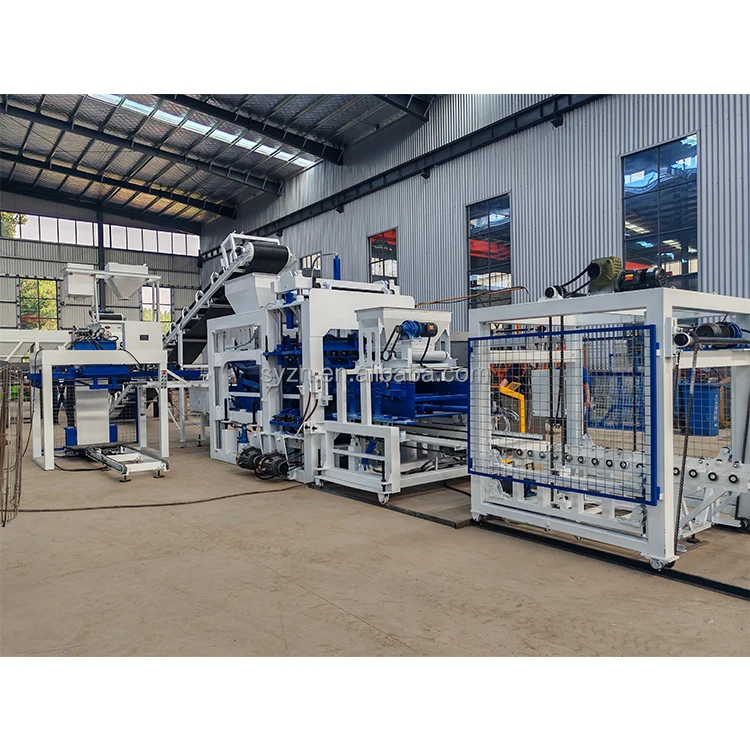
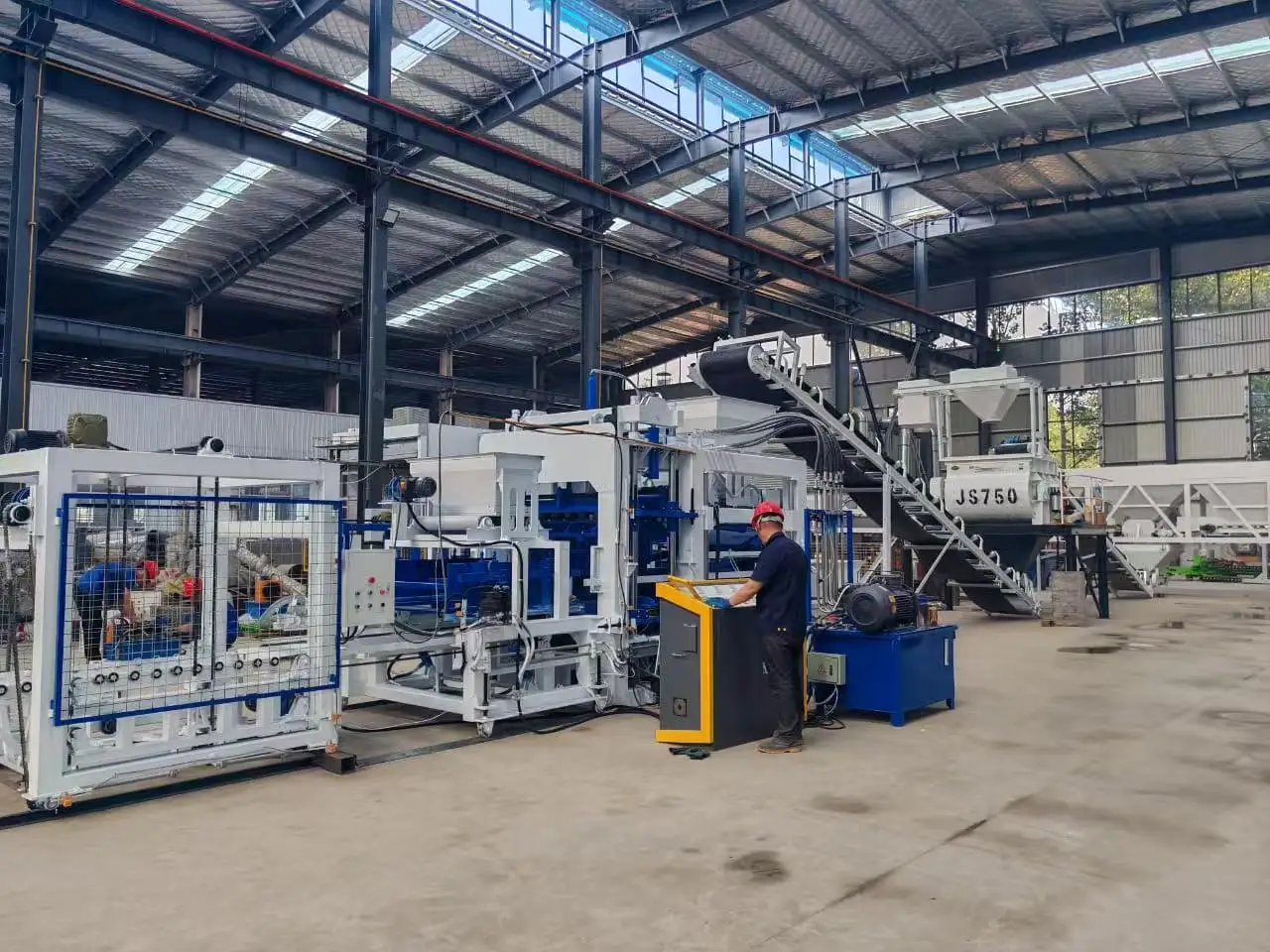
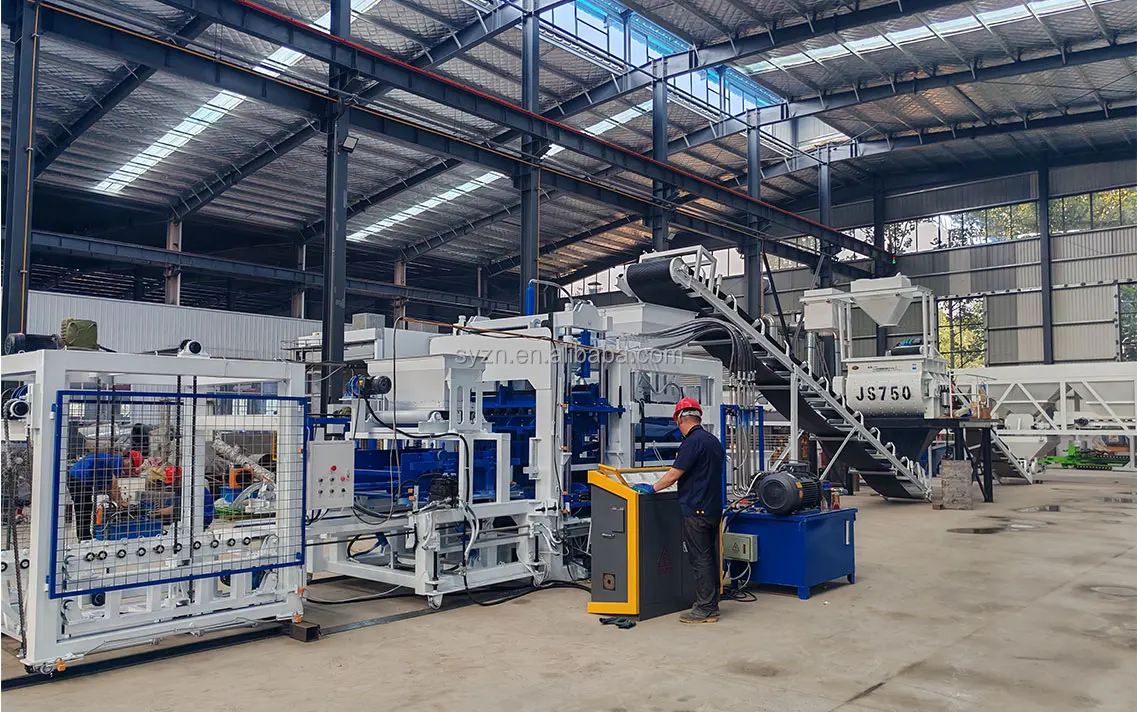
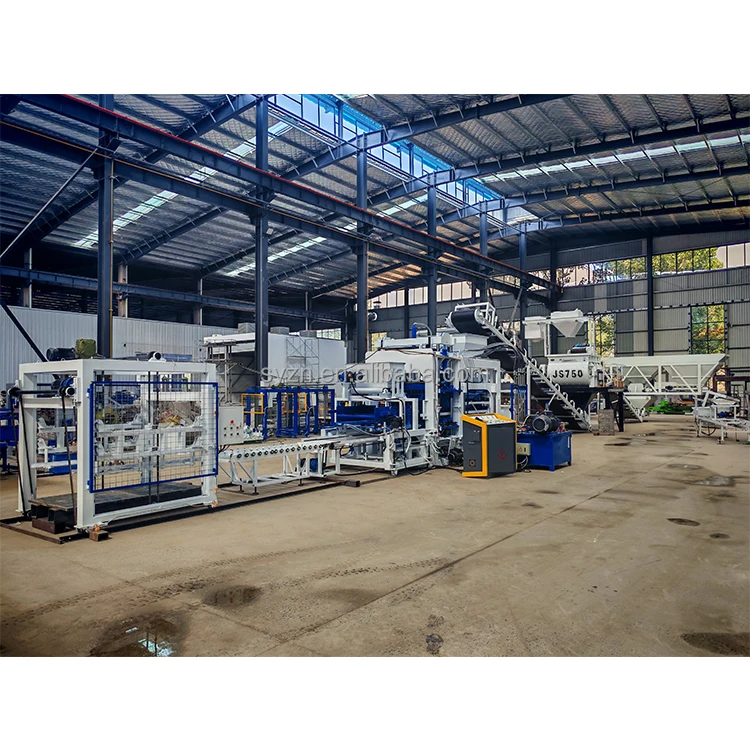
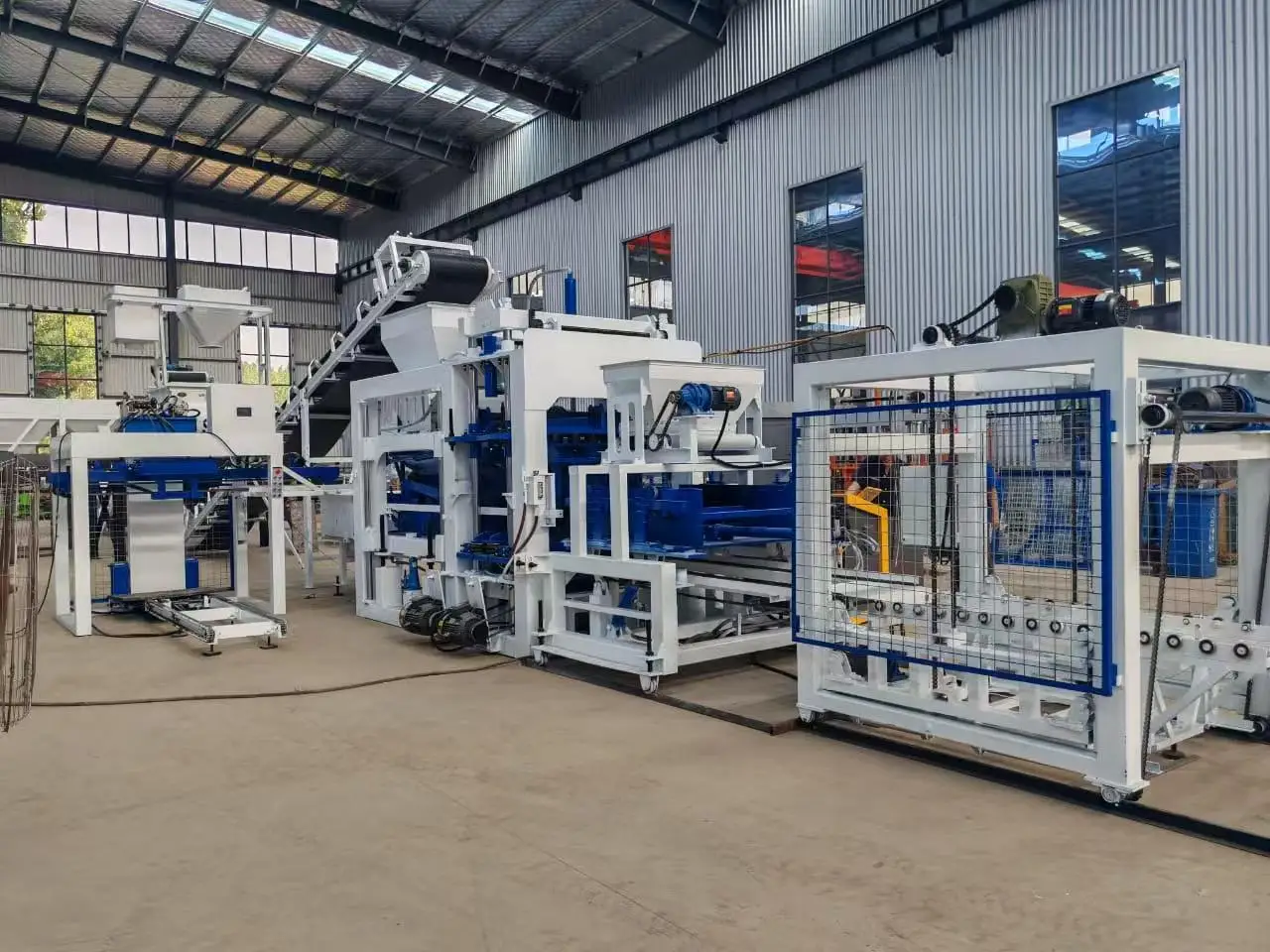
| Automation Level | Automatic (pallet feeder, host machine, block conveyor, hydraulic station, PLC) |
| Hydraulic System | Independent integrated hydraulic station |
| Block Comprehensive Strength | Up to 15 MPa |
| Support Equipment Included | JS750 mixer, 8m belt conveyor, automatic stacker |
| Mould Change | Interchangeable moulds for different block formats |
Application Suitability
| Application | Material or Output |
|---|---|
| Hollow block production | Crushed stone, river sand, cement, fly ash |
| Solid masonry block | Local aggregate blends, quarry dust, cement |
| Paving block | High-strength concrete mix with fine aggregate |
| Interlocking brick | Graded sand and cement with pigment additives |
| Kerbstone and porch brick | Coarse aggregate with adjusted vibration parameters |
Why Catalogue Capacity Figures Fail on Your Shop Floor
Real daily output depends on the exact block format, mix design, and pallet handling rhythm — not a peak-cycle headline.
I have seen technical buyers sign off on automatic block making machine capacity by format sheets that only quote the fastest possible cycle on the smallest solid block. When the plant starts running the 200mm hollow block that actually dominates their market, the cycle stretches and daily throughput drops to a fraction of the promised number. The QT8-15 block machine specifications must be read against the specific product you intend to manufacture [NEED_CITE: realistic daily output calculation methods for concrete block plants]. A fifteen-second cycle on a thin paver does not translate to the same pace on a tall hollow block requiring longer vibration and deeper fill.
Matching Vibration and Pressure to Your Block Format
The QT8-15 pairs platform vibration at 2800-4500 RPM with hydraulic pressure reaching 32 MPa. This combination determines how densely the concrete compacts inside the mould cavity. A hollow block with thin walls needs high-frequency vibration to settle the mix into narrow spaces, while a thick paving block benefits from sustained pressure over a longer dwell. The PLC touch screen lets the operator store separate recipes, adjusting feeding time and vibration duration for each format rather than forcing every block through a single default cycle.
Pallet Size and Curing Area Alignment
The 950 x 900 mm pallet defines how many blocks you produce per cycle and how your curing racks must be dimensioned. If your existing forklift tines or curing chambers were built around a different pallet footprint, the mismatch creates bottlenecks downstream of the press. Before we confirm the QT8-15 for your line, we cross-check this pallet size against your curing layout and handling equipment to avoid a situation where freshly pressed blocks sit idle waiting for rack space [NEED_CITE: pallet handling logistics in concrete block curing].
Reading the QT8-15 Block Machine Specifications for Production Planning
The 8300 x 1860 x 3000 mm footprint of the host machine is only one station in the line. The JS750 mixer and 8m belt conveyor must feed at a rate that keeps the press cycle uninterrupted, and the automatic stacker has to clear pallets fast enough so the host is never left waiting. Overall power of 47 kW covers the press, hydraulic station, and conveyor motors, so your electrical supply must account for starting surge across all stations simultaneously. Molding cycle ranges from 15 to 25 seconds, but the exact figure for your target format must be confirmed through a trial run with your actual aggregate and cement ratio.
The Hidden Cost of a Mould Change That Eats the Shift
Buyers invest in interchangeable moulds expecting format flexibility, only to discover that changing from hollow block to paver takes most of a working shift because the clamping system and alignment pins were never specified for quick release. When the QT8-15 sits idle during a prolonged changeover, the daily output loss outweighs the margin gained from the second product line. Specifying mould change procedure and expected duration before purchase prevents this bottleneck [NEED_CITE: mould changeover time benchmarks in block making machinery].
Why Technical Buyers Source the QT8-15 Here
The machine, mould, pallet, and handling equipment are specified as one matched system rather than assembled from separate suppliers, so cycle times align across every station. Configuration is set against your actual mix design and local aggregate, not a catalogue default that assumes washed river sand. Mould design covers the formats your market sells, and custom drawings are accepted when standard cavities do not match your product range. Automation level is selectable, allowing a buyer to start with the semi-automatic pallet handling option and add the full stacker later. Installation support includes operator training on recipe storage and mould change procedure.
Documentation & Verification
- Line layout showing capacity per block format assumed for the QT8-15
- Mould drawing and format list with changeover procedure noted
- Pallet specification cross-checked against your curing rack dimensions
- Factory test record run on your specified mix and target block type
- Hydraulic and electrical schematic matching the shipped configuration
- Voltage and PLC display language confirmation before production
Installation, Commissioning & Support
- Foundation plan accounts for the 8300 mm host length plus conveyor run
- Electrical supply sized for 47 kW total with dedicated circuit for hydraulic station
- Machine shipped in production line configuration, reassembled on-site
- PLC recipes calibrated during commissioning for your local aggregate moisture
- Operator training covers mould change, recipe adjustment, and daily checks
- Wear parts list identifies hydraulic seals and vibration motor bearings for stocking
Preparing Your Inquiry
Send us the exact block dimensions and wall thickness that represent your highest-volume product, along with the local aggregate type and cement ratio you plan to run. Include your workshop length and ceiling height so the 8300 x 1860 x 3000 mm host plus the JS750 mixer and 8m belt conveyor can be plotted in a line layout. Confirm your site voltage and frequency, and specify the language you need on the PLC touch screen so the operator interface is ready on day one.
Frequently Asked Questions
Q: How is the QT8-15 capacity calculated for each block format?
A: Capacity is calculated by running your target block dimensions through the molding cycle range of 15-25 seconds, then multiplying by pallet count and shift hours. Each figure states which block format it assumes, so you can compare output across hollow, solid, and paving configurations before choosing your mould set.
Q: What mould formats does the QT8-15 support, and how long is a change?
A: The platform accepts hollow, solid, paving, interlocking, and kerbstone moulds. Changeover time depends on the clamping system specified in your configuration. We confirm the procedure and expected duration during the quotation stage so you can plan product rotation without losing a full shift.
Q: How are vibration and pressure tuned to my local aggregate?
A: We request a sample of your aggregate and a trial mix, then adjust the 2800-4500 RPM vibration frequency and hydraulic pressure in our test workshop. The resulting parameters are saved as a recipe on the PLC, ensuring block strength meets your requirement from the first production day.
Q: Is the 950 x 900 mm pallet compatible with my curing system?
A: We verify pallet dimensions against your existing curing racks and forklift before confirming the order. If your infrastructure uses a different footprint, we adjust the pallet specification or advise on rack modification so blocks flow from press to curing without manual re-stacking.
Q: What daily output can I expect on my main block type?
A: Daily output depends on the block height, wall thickness, and mix design you run. Once we confirm your target format and receive a material sample, we provide a capacity calculation document that states the assumed cycle time and shift hours, giving you a realistic forecast rather than a peak-cycle headline.