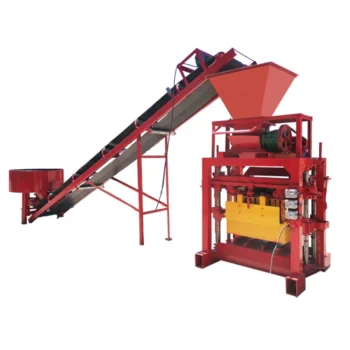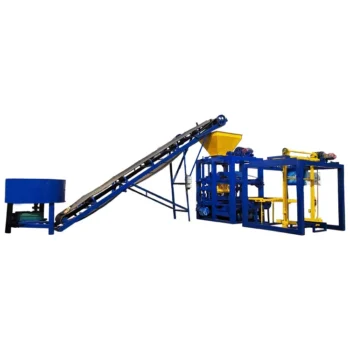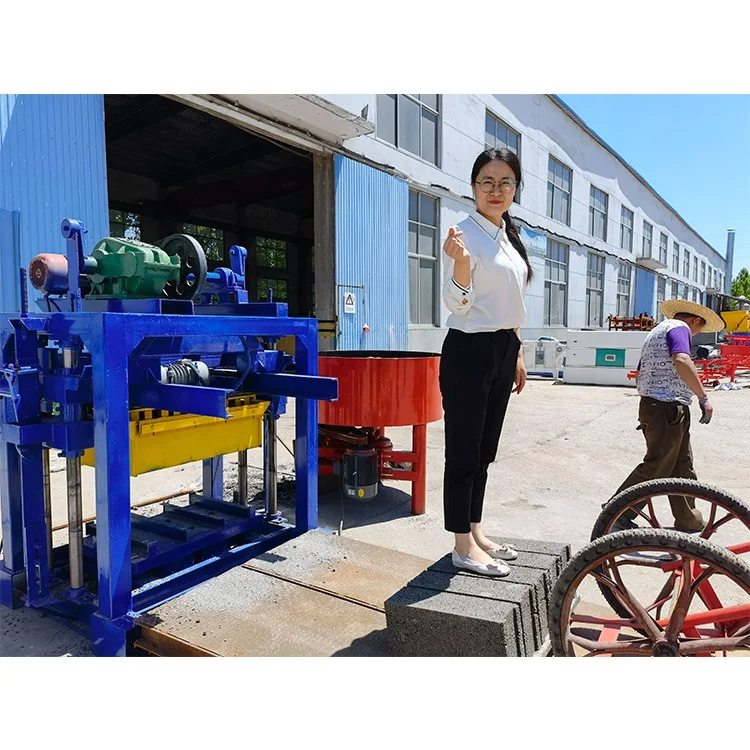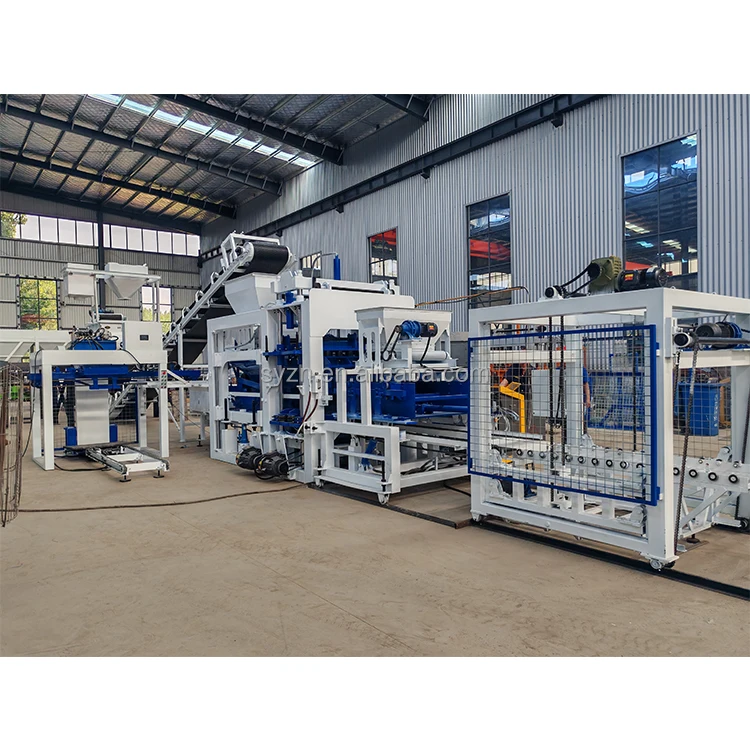

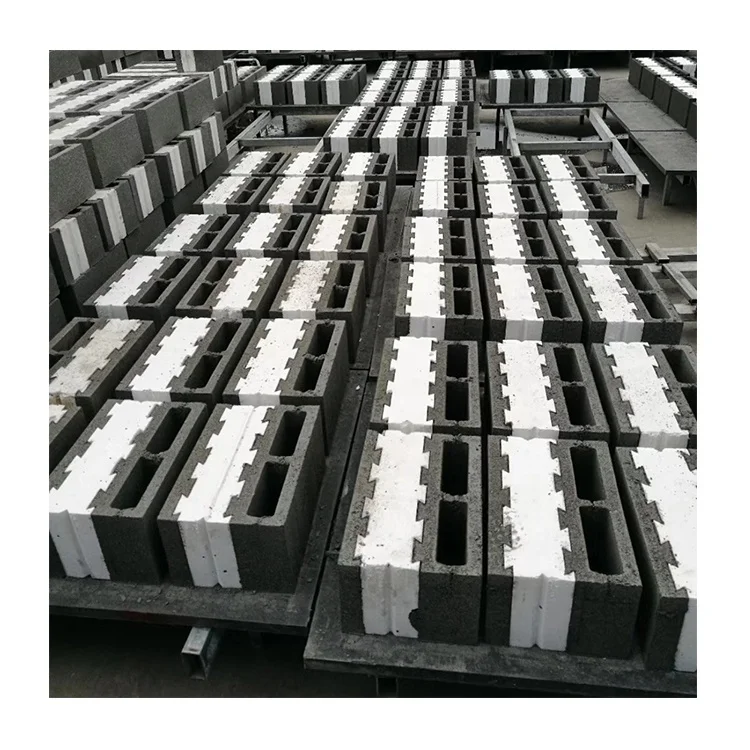
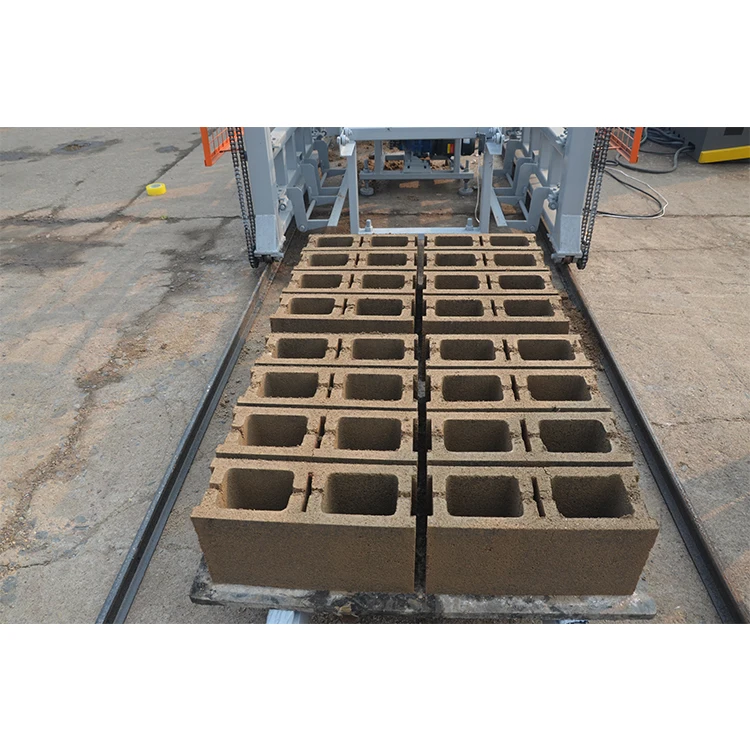

Description
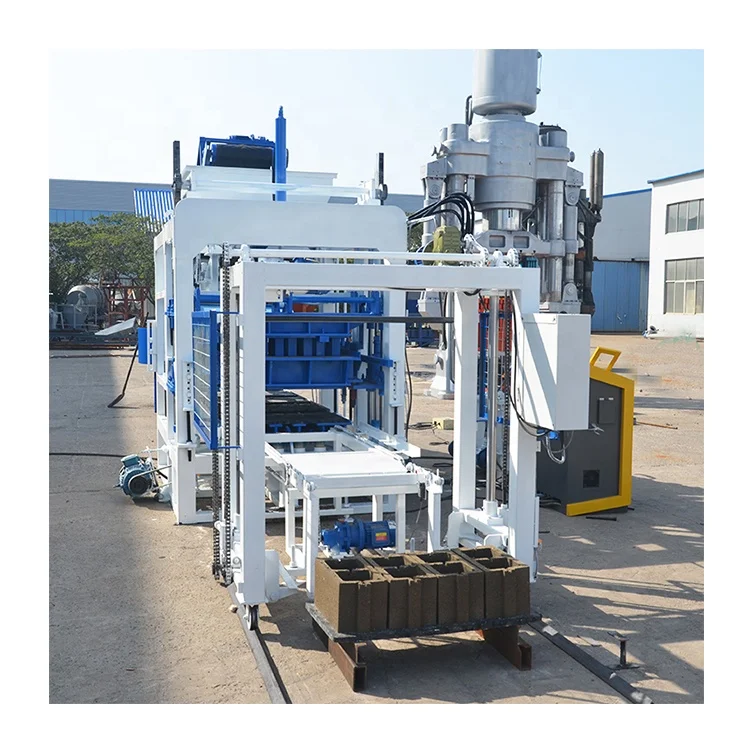
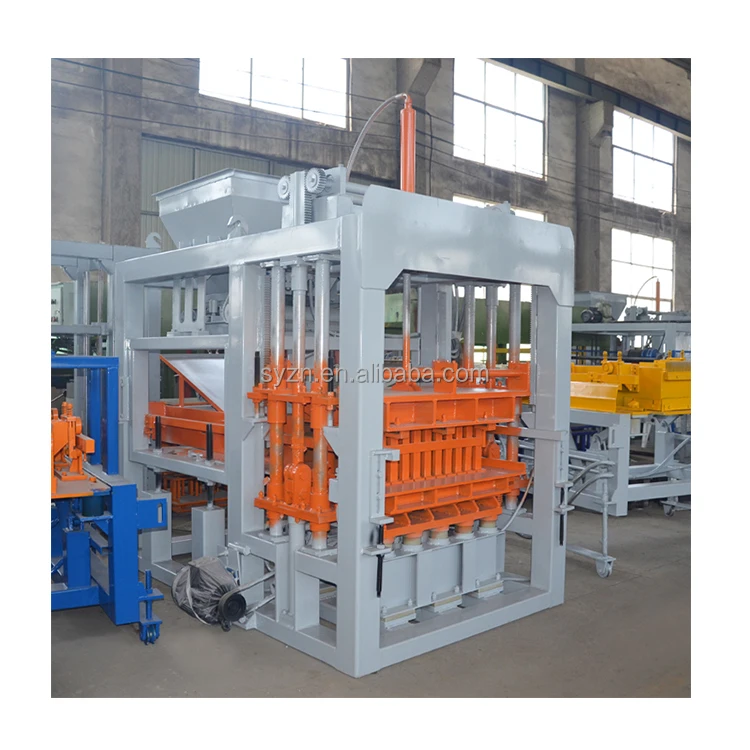
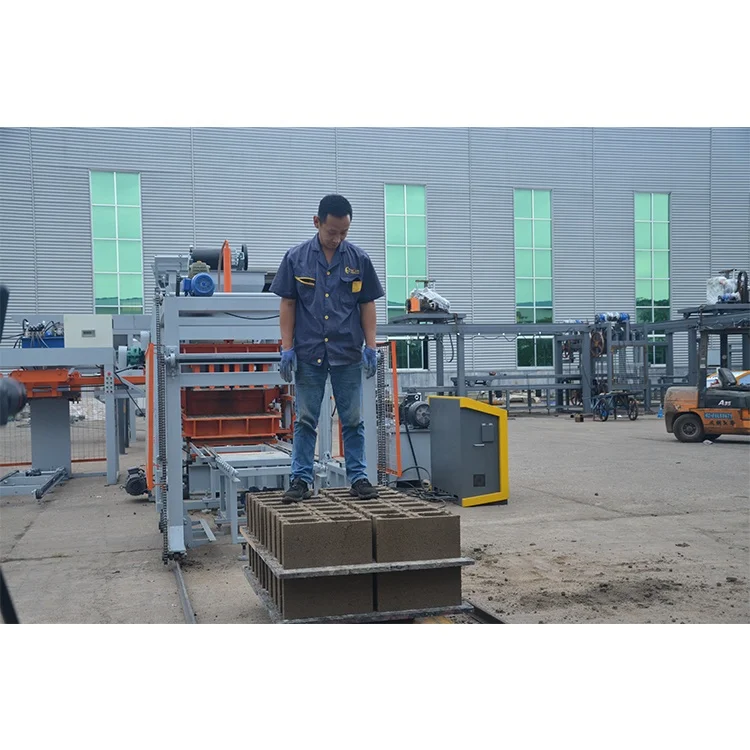
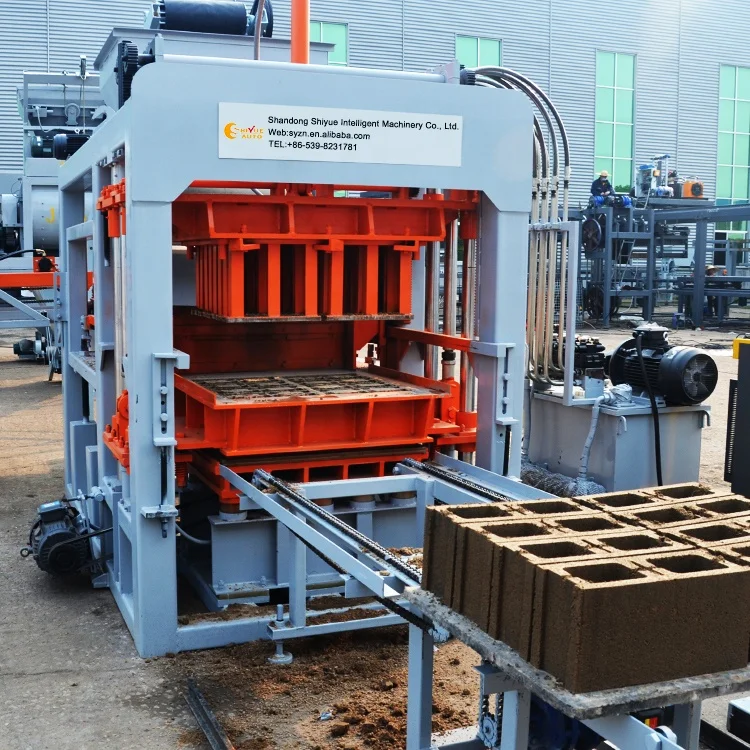
Configuration matched to block format — QT6-15 output figures are stated per named mould, not a single headline number.
Technical Specifications
| Parameter | Value |
|---|---|
| Model | QT6-15 |
| Product Type | Hydraulic Hollow Block Making Machine |
| Overall Dimensions | 8200×1700×2950 mm |
| Pallet Size | 880×850 mm |
| Vibration Force | 45 kN |
| Vibration Frequency | 0-60 Hz |
| Vibration Form | Platform Vibration |
| Moulding Mode | Automatic loading, vibration moulding |
| Demolding Method | Hydraulic |
| Overall Power | 37 kW |
| Total Mass | 7 T |
| Factory Area Required | 1200 m² |
| Control System | PLC with touch screen interface |
| Molding Cycle (Hollow block) | 15-20 s |
| Molding Cycle (Paver) | 20-25 s |
| Output: 400×200×200 mm hollow block | 1080-1440 pcs/hour, 8640-11520 pcs/8hr |
| Output: 400×150×200 mm hollow block | 1440-1920 pcs/hour, 11520-15360 pcs/8hr |
| Output: 240×115×53 mm solid brick | 5760-7680 pcs/hour, 46080-61440 pcs/8hr |
| Output: 200×100×60 mm rectangular paver | 2160-2880 pcs/hour, 17280-23040 pcs/8hr |
| Output: 225×112.5×60 mm zigzag paver | 2160-2880 pcs/hour, 17280-23040 pcs/8hr |
| Block Compressive Strength | >15 MPa |
| Hydraulic System | Independent integrated hydraulic station |
| Fault Diagnosis | Built-in with action interlock logic |
| Automation Level | Automatic (PLC-controlled with touch screen) |
| CE Declaration | Available where applicable |
Application Suitability
| Application | Material or Output |
|---|---|
| Hollow block 400×200×200 mm | Concrete with local aggregates, fly ash, slag |
| Hollow block 400×150×200 mm | Standard concrete mix, lightweight aggregate blends |
| Solid brick 240×115×53 mm | Dense concrete, crusher dust and cement |
| Rectangular paving brick 200×100×60 mm | High-strength concrete, fine aggregate |
| Zigzag paving brick 225×112.5×60 mm | Interlocking paver mix, colour oxide optional |
| Non-bearing partition blocks | Waste ash and slag blends with reduced cement dosage |
What "1080 Pieces per Hour" Leaves Out About Block Output
Every capacity figure on the QT6-15 hollow block making machine specifications sheet is tied to a named block format and mould.
Capacity numbers in brochures often hide the format assumption behind a single headline. A machine running 400×200×200 mm hollow blocks cycles slower than one pressing 240×115×53 mm solid bricks, yet both get lumped under the same "pieces per hour" claim. When the buyer arrives on site and runs the format their market actually buys, the shift output falls short. I have watched plant managers in Southeast Asia re-do their entire delivery schedule after week one because the quoted number assumed a block they never intended to sell [NEED_CITE: block format impact on cycle time in concrete masonry production].
Cycle Time by Block Format
The QT6-15 hollow block making machine specifications list two distinct cycle ranges: 15-20 seconds for hollow blocks and solid bricks, and 20-25 seconds for rectangular and zigzag pavers. This split matters because paver moulds require longer vibration dwell to achieve the surface finish and density buyers expect. A plant switching between 400×200×200 mm hollow blocks in the morning and 200×100×60 mm pavers after lunch must plan the shift around two different output rates. Quoting a single cycle time across all formats would overstate one product and understate the other.
Pallet Size and the Curing Area Match
The 880×850 mm pallet governs how many blocks the press produces per cycle and how those blocks travel through the curing yard. If the buyer’s existing forklift tines are spaced for a different pallet width, every loaded board becomes a handling risk. Curing rack spacing must accept this pallet dimension or the boards stack on the floor, slowing turnover. I always ask for the buyer’s forklift model and rack drawings before confirming pallet size, because a mismatch here stalls the line long before the press itself is at fault [NEED_CITE: pallet handling compatibility in block plant logistics].
Hydraulic Pressure, Vibration Force, and Block Density
Block compressive strength above 15 MPa depends on the QT6-15’s 45 kN vibration force working together with hydraulic pressure during the demolding stroke. The independent integrated hydraulic station sits apart from the main vibration zone, which keeps pressure stable cycle after cycle. When local aggregate is finer than the standard sand used in factory testing — volcanic ash in the Philippines, for instance — the vibration frequency and pressure must be re-tuned to avoid weak blocks. Running the default settings on an unfamiliar mix is the fastest way to lose strength without seeing an obvious fault code on the PLC screen.
Format Change Time and Lost Production
Mould change on the QT6-15 determines how quickly a plant can respond to a new order for a different block size. If the change takes most of a shift, the format flexibility the buyer paid for disappears. The actual time depends on how the mould is clamped, how many bolts must be removed, and whether the operator has the correct spanner set ready. Confirming the mould change procedure and required tooling before the machine ships avoids a half-day standstill on the first format switch.
When the Wrong Configuration Costs a Full Season
Choosing a pallet size without checking the curing yard means boards pile up on the ground, slowing strength gain and tying up capital in work-in-progress stock. Selecting a PLC display language the operator cannot read forces the plant owner to keep a translator on the floor, adding overhead every shift. Leaving voltage and frequency unconfirmed until the machine arrives can delay commissioning by weeks while transformers or panels are sourced locally [NEED_CITE: voltage and frequency standards by export market]. Each of these oversights compounds: the press runs, but the line around it does not keep pace.
Why Procurement Should Start with the Block, Not the Press
Every QT6-15 is configured against the buyer’s actual block format and local aggregate, not a catalogue default. Mould drawings cover the hollow block, solid brick, and paver dimensions the buyer’s market sells, and custom mould design to buyer drawings is available when standard sizes do not fit. The pallet specification is cross-checked against the curing rack system and forklift fleet before the order is finalised. Voltage, frequency, and PLC display language are confirmed in writing so commissioning proceeds on arrival, not after a parts hunt. The machine, mould, pallet, and handling equipment are specified as one matched system rather than assembled from separate suppliers [NEED_CITE: CE machinery directive requirements for industrial equipment].
Documentation & Verification
- Line layout showing capacity per named block format before order placement
- Mould drawing and format list covering every dimension the buyer intends to produce
- Pallet specification sheet detailing size, material, and load rating
- Voltage and PLC display language confirmation document signed before production
- Factory test record run on buyer’s target block format prior to dispatch
- Hydraulic and electrical schematic for on-site troubleshooting
Installation, Commissioning & Support
- Foundation plan based on 8200×1700 mm footprint and 7 T mass for level concrete pad
- Dedicated 37 kW power circuit matching confirmed voltage and frequency
- Independent hydraulic station pre-filled and pressure-set to buyer’s mix requirement
- PLC touch screen loaded with confirmed display language before crate is sealed
- Operator training covering mould change procedure and fault diagnosis interlocks
- Wear parts list with hydraulic seals and vibration motor bearings itemised for first reorder
What We Need to Quote Accurately
To size the QT6-15 correctly, share the block format your market sells most — dimensions, target compressive strength, and daily volume. Provide a sample or description of the local aggregate so the vibration and pressure settings can be matched to it. Confirm your site voltage, frequency, preferred PLC language, existing forklift model, and curing rack dimensions so pallets and handling fit the plant from day one.
Frequently Asked Questions
Q: How is the capacity of the QT6-15 calculated, and which block format does each figure assume?
A: Every output figure on the QT6-15 hollow block making machine specifications sheet is tied to a specific block size. The 1080-1440 pcs/hour rate applies to 400×200×200 mm hollow blocks at a 15-20 second cycle, while 2160-2880 pcs/hour applies to 200×100×60 mm pavers at 20-25 seconds. Shift totals assume continuous running for eight hours.
Q: What mould formats are available, and can custom moulds be designed to buyer drawings?
A: Standard moulds cover 400×200×200 mm and 400×150×200 mm hollow blocks, 240×115×53 mm solid bricks, and rectangular and zigzag pavers. If your market requires a dimension outside this range, custom moulds can be engineered from buyer-supplied drawings, including face texture and interlocking features.
Q: How does the pallet size of 880×850 mm relate to my curing area and existing forklift?
A: The 880×850 mm pallet must fit between your curing rack uprights and sit safely on your forklift tines. We ask for rack spacing and forklift model before finalising the pallet order so boards move from press to yard without manual re-handling or tipping risk.
Q: What voltage, frequency, and PLC language options are confirmed before shipment?
A: Voltage and frequency are set to match the buyer’s local supply and confirmed in writing before production begins. The PLC touch screen display language is agreed at the same stage so operators can read fault codes and cycle parameters from the first day of commissioning.
Q: What is the realistic mould change time between hollow block and paver formats?
A: Mould change time depends on the clamping method and operator familiarity. We supply the mould change procedure, required tooling list, and recommended bolt torque values with every machine so the first format switch can be planned into the shift schedule rather than discovered on the shop floor.