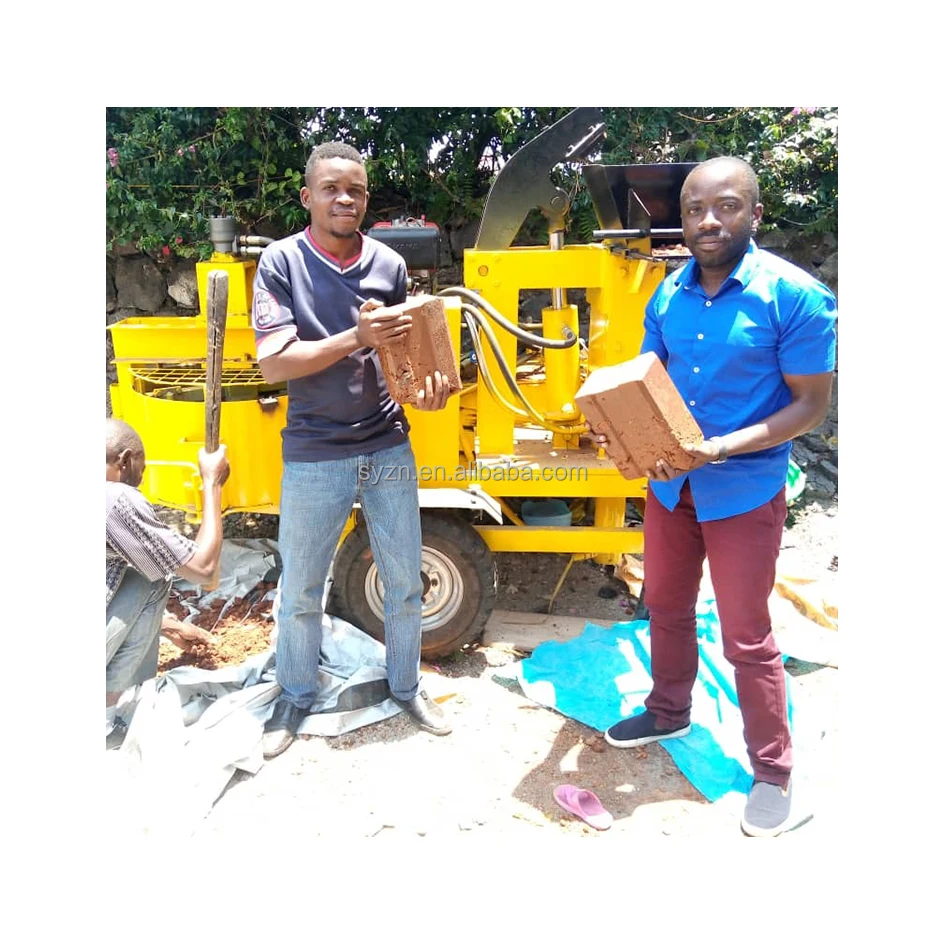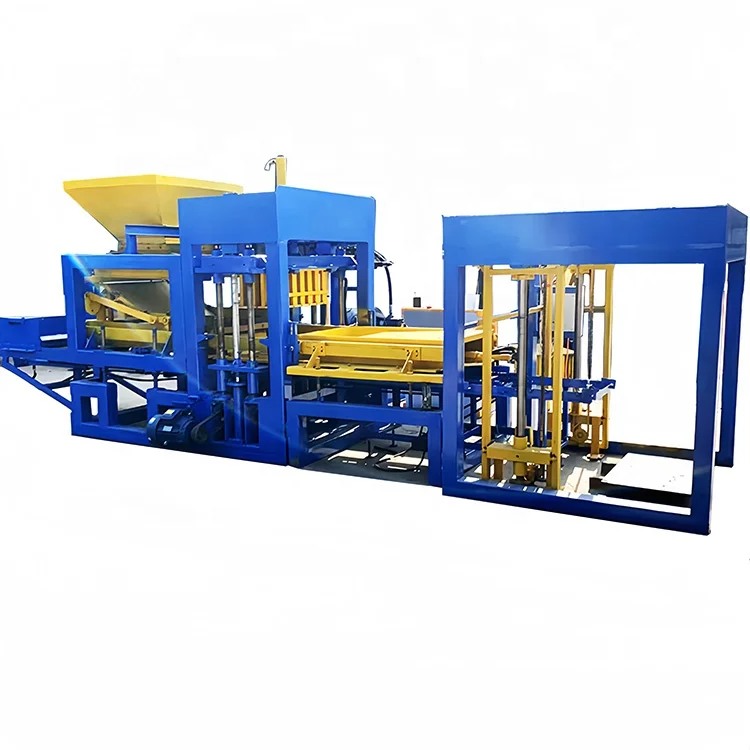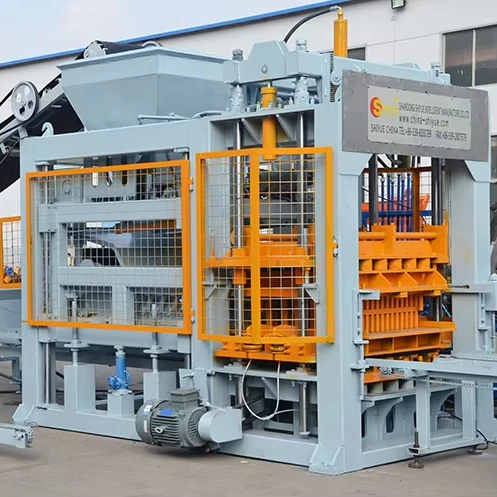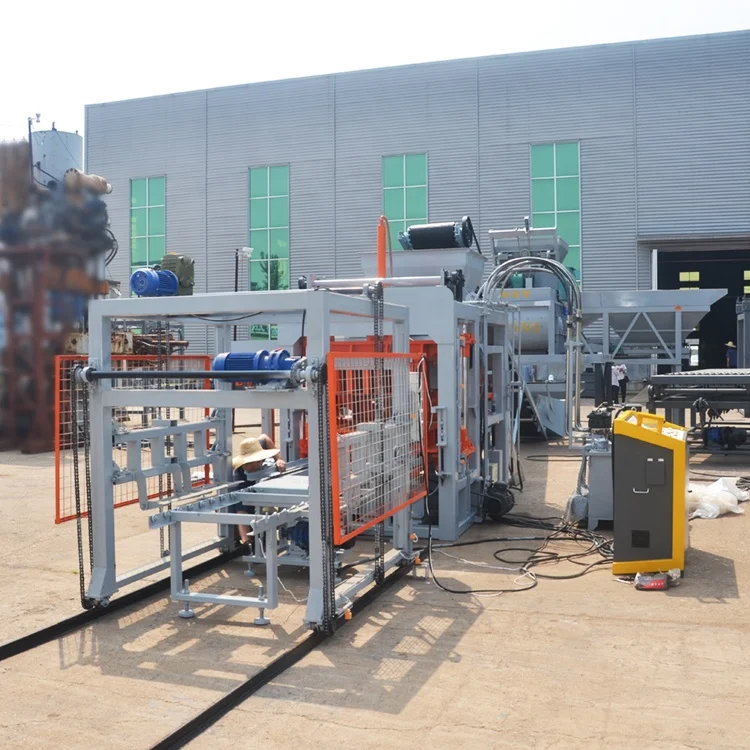


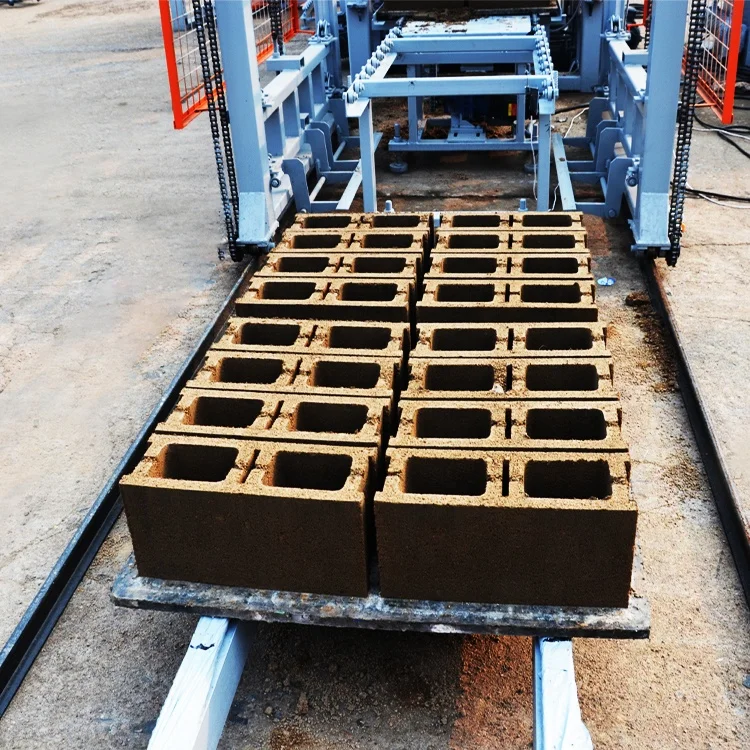
Description
Hydraulic and mould matched to your mix — the QT6-15 is configured against your target block format, local aggregate and vibration force requirement rather than a default catalogue setting.
Technical Specifications
| Parameter | Value |
|---|---|
| Model | QT6-15 |
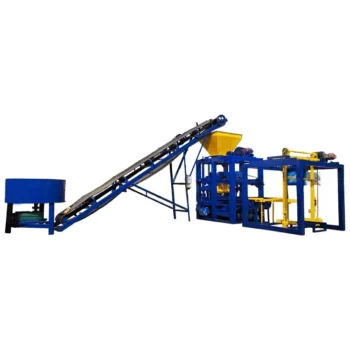
| Product Type | Hydraulic Hollow Block Making Machine |
| Overall Dimensions (L×W×H) | 8200×1700×2950 mm |
| Vibration Frequency | 0-60 Hz |
| Vibration Form | Platform Vibration |
| Moulding Mode | Load automatically, vibration moulding |
| Pallet Size | 880×850 mm |
| Molding Cycle | 15-20 s |
| Overall Power | 37 kW |
| Vibration Force | 45 kN |
| Total Mass | 7 T |
| Demolding Method | Hydraulic |
| Factory Area | 1200 m² |
| Control System | PLC with touch screen |
| Output Capacity (Hollow Block 400×200×200 mm) | 1080-1440 pcs/hour (8640-11520 pcs/8hr) |
| Output Capacity (Hollow Block 400×150×200 mm) | 1440-1920 pcs/hour (11520-15360 pcs/8hr) |
| Output Capacity (Solid Brick 240×115×53 mm) | 5760-7680 pcs/hour (46080-61440 pcs/8hr) |
| Output Capacity (Rectangular Paver 200×100×60 mm) | 17280-23040 pcs/8hr, cycle 20-25 s |
| Output Capacity (Zigzag Paver 225×112.5×60 mm) | 17280-23040 pcs/8hr, cycle 20-25 s |
| Hydraulic System | Independent integrated hydraulic station |
| Block Compressive Strength | >15 MPa |
| Warranty | 1 year for whole machine (excluding spare parts) |
Application Suitability
| Application | Material or Output |
|---|---|
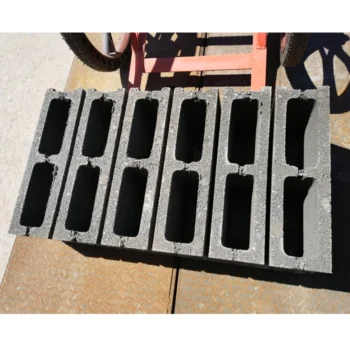
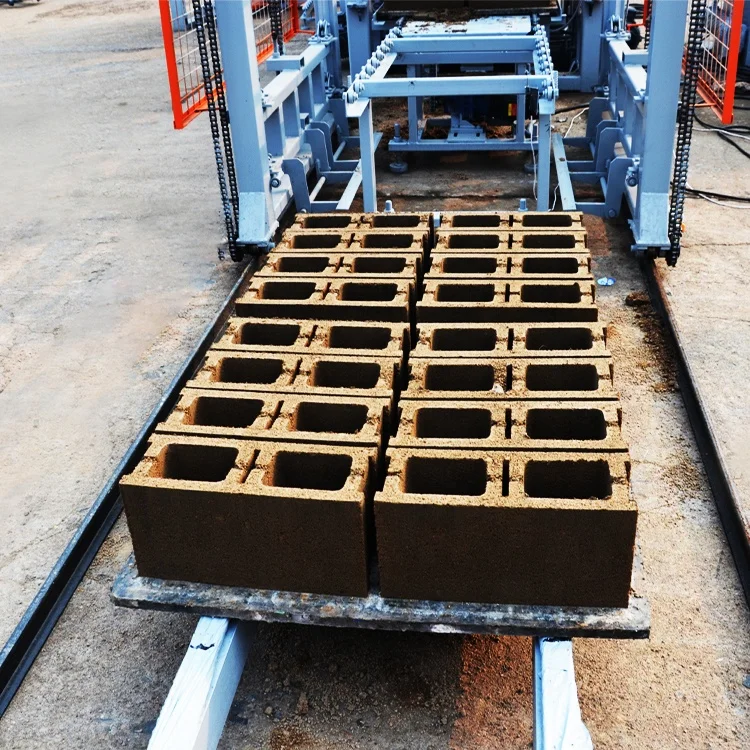
| Hollow block production | Crushed stone, sand and cement mixes for 400×200×200 mm and 400×150×200 mm formats |
| Solid brick production | Cement-reduced mixes forming 240×115×53 mm bricks for load-bearing walls |
| Rectangular paver production | High-density aggregate blends producing 200×100×60 mm paving units |
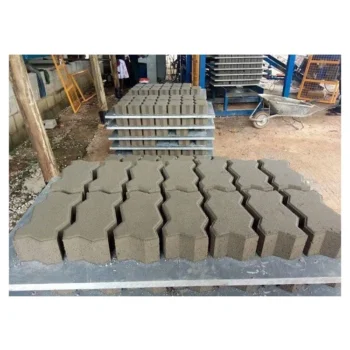
| Zigzag paver production | Interlocking 225×112.5×60 mm pavers for driveways and public walkways |
| On-site block production | Construction contractors producing bearing and non-bearing blocks directly at project locations |
What "Cycle Time" Means When You Change Block Formats
A single cycle time figure hides the real daily output of your plant.
When evaluating QT6-15 block machine specifications how to choose the right configuration, buyers often see one molding cycle number and assume it applies to every product the machine can run. In practice, a 400×200×200 mm hollow block completes its press cycle faster than a 200×100×60 mm rectangular paver because the paver requires longer vibration to reach full density at a smaller thickness. If you plan to run pavers three days a week and hollow blocks the other two, your weekly throughput calculation must use the correct cycle time for each format. I have seen plants miss their first contract deadline because the capacity quote assumed one format while the buyer’s purchase orders required another [NEED_CITE: block format impact on daily production scheduling].
Matching Mould Selection to Your Market
The QT6-15 supports hollow block, solid brick, rectangular paver and zigzag paver formats through interchangeable moulds. Before confirming an order, the exact mould list should reflect what your local construction market actually specifies — not what a catalogue suggests. If your region is moving toward interlocking pavers for municipal projects, the zigzag paver mould at 225×112.5×60 mm becomes a primary tool rather than an accessory. Understanding QT6-15 block machine specifications how to choose the correct mould set prevents you from paying for formats you will never run while missing the ones your customers demand weekly.
Platform Vibration and Hydraulic Demolding as a Paired System
The 0-60 Hz platform vibration works together with 45 kN vibration force and independent hydraulic demolding to produce blocks above 15 MPa compressive strength. Platform vibration transmits energy through the pallet into the entire mould cavity simultaneously, which is why it suits both tall hollow blocks and thin pavers. The hydraulic station is mounted separately from the main frame so that continuous vibration does not degrade valve seals and hose fittings over time [NEED_CITE: hydraulic isolation in vibrating block presses]. This separation also means hydraulic pressure remains stable during the demolding stroke, reducing the risk of cracked block edges as the mould lifts away.
Reading the Numbers That Actually Matter
The 880×850 mm pallet size determines how many blocks form per cycle, but it also dictates what curing racks and forklifts you need downstream. If your existing curing area was built around a different pallet dimension, switching pallets across your entire operation is a cost that never appears in the machine quotation. The 37 kW overall power draw tells you the electrical supply requirement at the panel, and the PLC touch screen control language must match your operators before the machine is wired in. Molding cycle times of 15-20 seconds for hollow blocks and 20-25 seconds for pavers define the actual press rhythm — these are the figures that drive your per-shift output calculation, not a single headline number.
The Cost of Skipping Pallet and Voltage Confirmation
When pallet size is chosen from a catalogue default instead of measured against your curing racks, the result is either wasted floor space or a complete rack replacement project after the machine arrives. Voltage and frequency left unconfirmed can mean a motor that runs hot from day one or a PLC that displays fault codes in a language your maintenance team cannot read [NEED_CITE: electrical specification mismatches in exported machinery]. These are not warranty claims — they are commissioning delays that push your first revenue-producing week back by weeks or months while the correct components ship overseas.
Why Buyers Specify This Machine Here
The QT6-15 is treated as one matched system where machine, mould, pallet and hydraulic pressure are set against your actual mix design and target block format. Configuration starts from your local aggregate characteristics and the compressive strength your market requires, not from a standard settings sheet. Mould design covers the specific formats your buyers order, with custom drawings available for non-standard dimensions. Automation level is selectable so you can begin with manual pallet handling and add automatic stacking later. Installation support includes operator training on the PLC touch screen and hydraulic station maintenance routines.
Documentation & Verification
- Line layout with capacity calculation stating the exact block format for each output figure
- Mould drawing and format list covering every block size in your purchase plan
- Hydraulic and electrical schematic matching the confirmed voltage and frequency
- Factory test record run on your specified mix proportion before dispatch
- Wear parts list identifying mould liners and hydraulic seals by part number
Installation, Commissioning & Support
- Foundation pad must support 7 T total mass across the 8200×1700 mm footprint
- Dedicated 37 kW circuit with voltage and frequency confirmed before wiring
- Independent hydraulic station commissioned separately from the vibration platform
- PLC touch screen language and fault diagnosis parameters set during first power-on
- Mould change procedure trained on your primary and secondary block formats
- Pallet feeding alignment verified against 880×850 mm pallet specification
What to Prepare Before You Request a Quote
To size the QT6-15 accurately, share the primary block format your market buys, the daily output you need per format, and a sample description of your local sand or aggregate including moisture and clay content. Confirm the voltage and frequency at your plant, the language your operators read on a touch screen, and whether your existing curing racks match the 880×850 mm pallet or need adjustment.
Frequently Asked Questions
Q: How is QT6-15 capacity verified per block format and what cycle time does each format run?
A: Each capacity figure is tied to a specific block dimension. Hollow blocks at 400×200×200 mm run a 15-20 second cycle producing 8640-11520 pieces per 8-hour shift. Pavers at 200×100×60 mm require 20-25 seconds and produce 17280-23040 pieces per shift. Your quotation includes a capacity table listing every format you intend to run with its corresponding cycle time.
Q: Which mould formats are available and what is the realistic mould change time?
A: Standard moulds cover hollow block, solid brick, rectangular paver and zigzag paver formats. Custom moulds can be designed to buyer drawings for non-standard sizes. Mould change time depends on the mould locking mechanism specified and whether your operators have been trained on the procedure — this should be confirmed during commissioning, not left as a catalogue default figure.
Q: How is vibration force matched to my local aggregate and mix design?
A: The QT6-15 delivers 45 kN vibration force at 0-60 Hz through platform vibration. The frequency and hydraulic pressure are adjusted during commissioning based on your specific aggregate type, cement proportion and target compressive strength. If your local sand has high clay content, vibration parameters must compensate to prevent mould clogging and maintain block density above 15 MPa.
Q: What pallet size does the QT6-15 use and how does it affect my curing area?
A: The machine uses 880×850 mm pallets. Before ordering, this dimension must be checked against your existing curing rack spacing and forklift fork width. If your racks were built for a different pallet size, you will need to either modify the racks or request an alternative pallet dimension — both options carry cost and lead time implications that should be resolved before production starts.
Q: Which voltage, frequency and PLC language are confirmed before shipment?
A: Voltage and frequency must match your plant electrical supply exactly. The PLC touch screen display language is set to your operators’ working language before the control panel is wired. These three items are confirmed in writing before the machine enters production so that no commissioning time is lost to electrical conversion or interface translation after arrival.