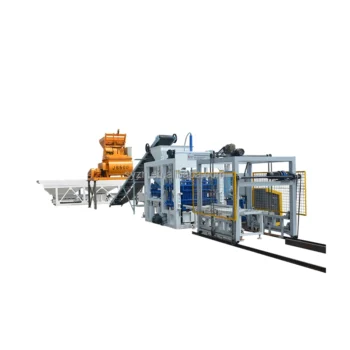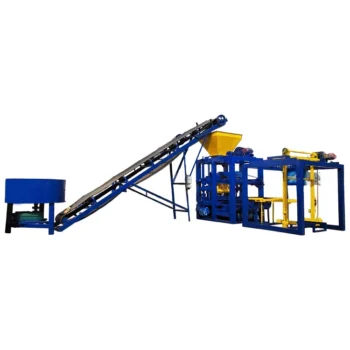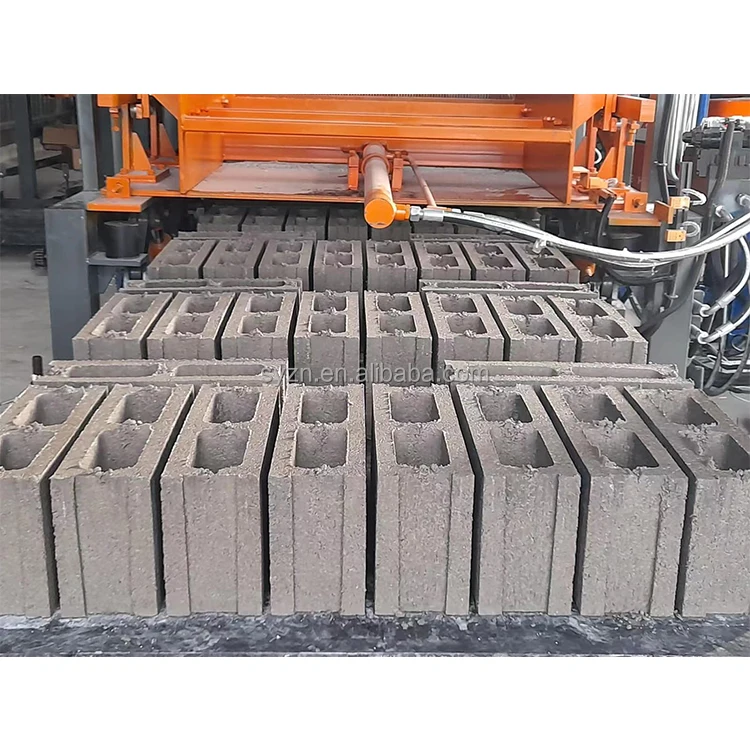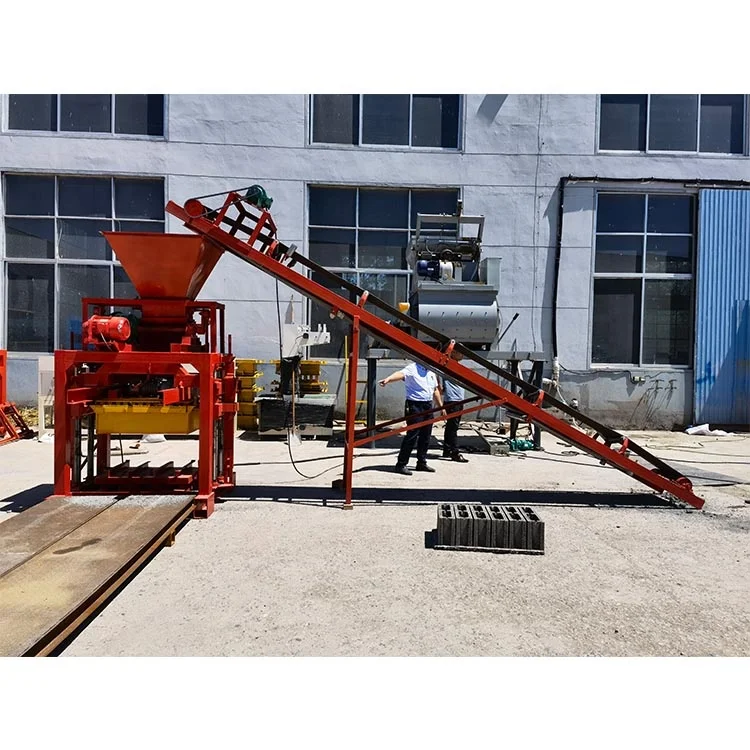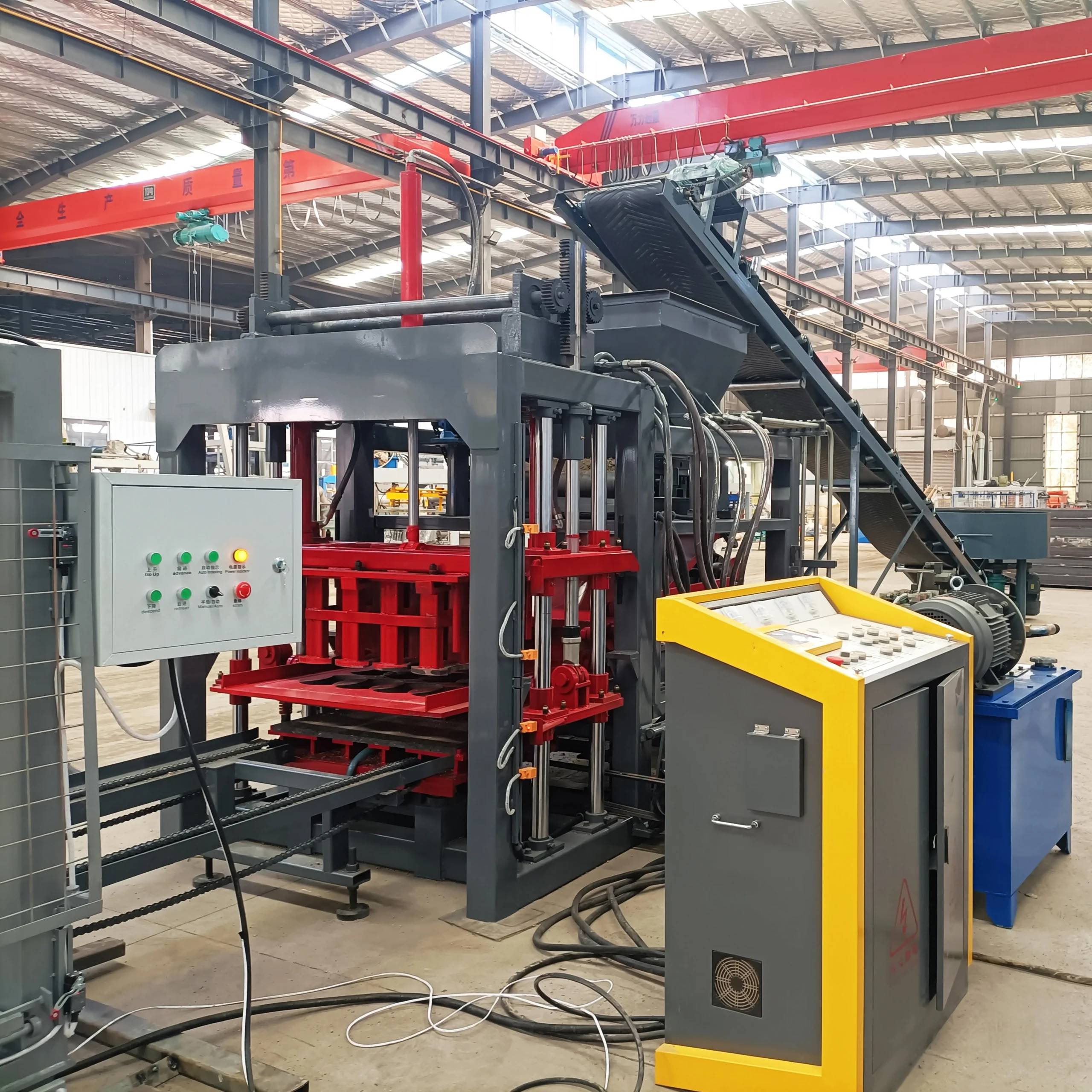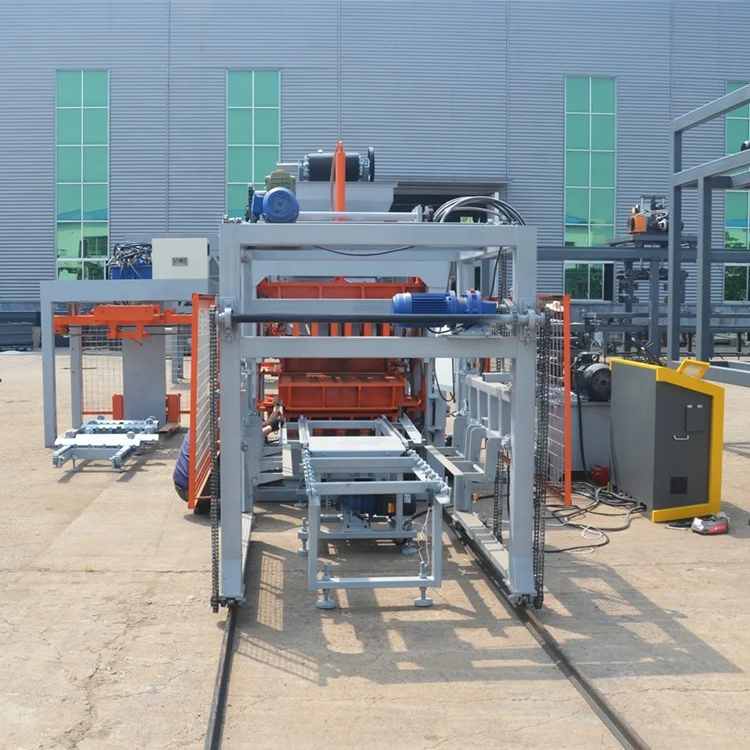
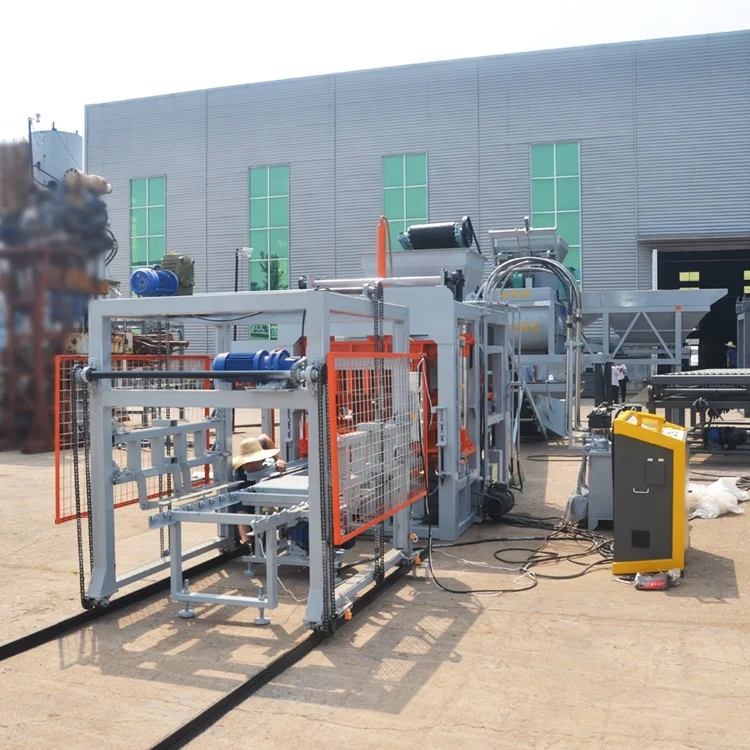
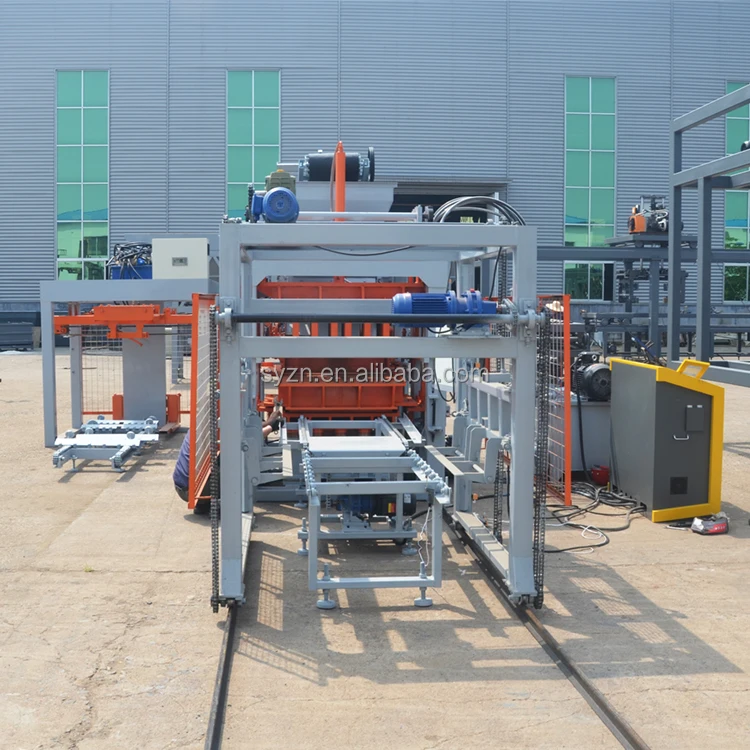


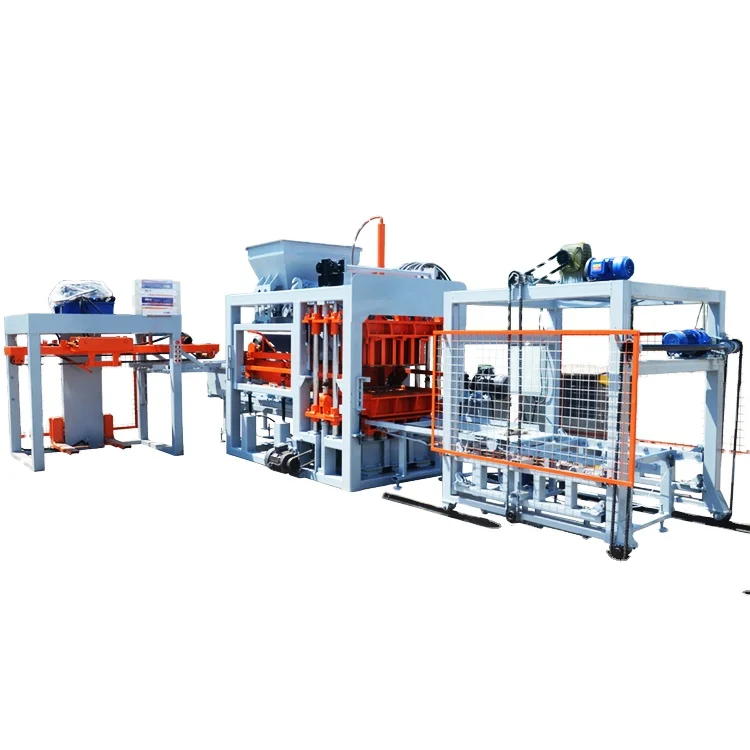

Description
Per-Format Capacity Sizing — Every QT6-15 output figure is tied to a named block format, mould cavity count, and cycle time so your daily plan matches the product your market actually buys.
Technical Specifications
| Parameter | Value |
|---|---|
| Model | QT6-15 |
| Product Type | Hydraulic Hollow Block Making Machine |
| Overall Dimensions (L×W×H) | 8200×1700×2950 mm |
| Total Mass | 7 T |
| Overall Power | 37 kW |
| Vibration Frequency | 0–60 Hz |
| Vibration Form | Platform Vibration |
| Vibration Force | 45 kN |
| Moulding Mode | Automatic loading, vibration moulding |
| Demolding Method | Hydraulic |
| Pallet Size | 880×850 mm |
| Molding Cycle | 15–20 s (basis not stated in source — confirm block format / material / thickness) |
| Factory Area Required | 1200 m² |
| Control System | PLC with touch screen HMI |
| Compressive Strength of Blocks | >15 MPa |
| Output Capacity — Hollow Block 400×200×200 mm | 1,080–1,440 pcs/h (6 pcs/mould, 15–20 s cycle) |
| Output Capacity — Hollow Block 400×150×200 mm | 1,440–1,920 pcs/h (8 pcs/mould, 15–20 s cycle) |
| Output Capacity — Solid Brick 240×115×53 mm | 5,760–7,680 pcs/h (32 pcs/mould, 15–20 s cycle) |
| Output Capacity — Rectangular Paver 200×100×60 mm | 2,160–2,880 pcs/h (21 pcs/mould, 20–25 s cycle) |
| Output Capacity — Zigzag Paver 225×112.5×60 mm | 2,160–2,880 pcs/h (15 pcs/mould, 20–25 s cycle) |
| Hydraulic System | Independent integrated hydraulic station |
| Raw Material Compatibility | Waste ash, slag, and various aggregates; cement dosage reducible |
| Assembly State | Fully assembled main press; line peripherals configured separately |
| Standards | CE (referenced in company documentation capability; confirm per shipment) |
Application Suitability
| Application | Material or Output |
|---|---|
| Hollow block production | Crushed stone, sand, cement, and waste ash mixes for 400×200×200 mm and 400×150×200 mm formats |
| Solid brick manufacturing | Fine aggregate and cement blends for 240×115×53 mm bricks |
| Rectangular paving brick runs | Graded aggregate with pigment layers for 200×100×60 mm pavers |
| Interlocking paver production | Crushed stone and cement mixes for 225×112.5×60 mm zigzag format |
What "15–20 Second Cycle Time" Leaves Out About QT6-15 Block Machine Specifications
Cycle time is only meaningful when tied to a specific block format, mould cavity count, and mix design.
A machine quoted at a single cycle time across every format hides the fact that denser paver mixes require longer vibration and higher hydraulic pressure than lightweight hollow blocks. I once spent three weeks on-site in Jordan re-tuning pressure and timing because the local volcanic aggregate behaved nothing like the standard sand used in factory testing. When you evaluate QT6-15 block machine specifications, the cycle range must be confirmed against your actual target format and raw material, not assumed from a catalogue default [NEED_CITE: block machine cycle time testing standards].
Matching the Press to Your Best-Selling Block Format
The QT6-15 ships with an 880×850 mm pallet that sets the upper boundary for every mould you can run. A 400×200×200 mm hollow block fills six cavities per cycle, while the same pallet holds thirty-two solid brick cavities. Choosing which format to prioritise determines not only hourly output but also the vibration force and hydraulic pressure the PLC must apply. This is where QT6-15 block machine specifications move from brochure numbers to a real production plan.
How Local Aggregate Changes Everything About Output
Volcanic tuff, crushed limestone, river sand, and recycled concrete each absorb vibration energy differently. Lighter aggregates may need reduced vibration force to avoid micro-cracking during demolding, while angular crushed stone demands longer vibration to achieve full compaction. The independent hydraulic station on this press sits isolated from platform vibration, keeping pressure stable regardless of the mix running through the mould [NEED_CITE: effect of aggregate type on concrete block compressive strength]. Without testing your specific material, any quoted daily output is only an estimate.
Reading Vibration Force and Hydraulic Pressure Together
Platform vibration at up to 60 Hz with 45 kN of force compacts the mix inside the mould, while hydraulic pressure during demolding holds the block together as it lifts free. If vibration is too high for a lightweight mix, the block surface spalls before it reaches the curing rack. If hydraulic pressure is too low for a dense paver mix, edges crumble on release. The PLC touch screen lets operators store separate recipes for each format so the QT6-15 block machine specifications translate into repeatable results shift after shift.
Pallet Size, Curing Area, and the Forklift You Already Own
An 880×850 mm pallet must travel from the press to the curing rack and back. If your existing curing racks were built for a different pallet dimension, every rack slot needs re-welding before the first block is produced. The same applies to forklift tine spacing. Confirming pallet size against your current infrastructure avoids a costly retrofit that delays commissioning by days or weeks [NEED_CITE: pallet handling standards in concrete block plants].
The Cost of Skipping Mix-Design Verification
When vibration force and cycle timing are set for a default sand-cement mix that your region cannot source, the blocks leave the press too weak or too brittle. Strength drops below the 15 MPa threshold, curing cracks multiply, and daily output falls because rejected blocks must be re-pressed. Buyers who skip the mix-design conversation before production often discover the real problem only after the machine arrives and the first test run fails [NEED_CITE: concrete block compressive strength testing methods].
Why Sizing the QT6-15 to Your Format Matters Here
Machine, mould, pallet, and handling equipment are specified as one matched system rather than sourced from separate suppliers. Configuration is set against your actual mix design and local aggregate, not a catalogue default. Mould design covers the formats your market sells, including custom drawings when standard cavities do not match. The automation level is selectable, so you can start with semi-automatic pallet handling and add stacking later. Installation support includes on-site operator training so the PLC recipes are tuned before the first production shift.
Documentation & Verification
- Line layout with capacity calculation stating the exact block format assumed for each output figure
- Mould drawing and format list confirming every cavity count on the 880×850 mm pallet
- Voltage, frequency, and PLC display language confirmed in writing before production begins
- Factory test record run on your specified block format before dispatch
- Hydraulic and electrical schematic matching the as-built independent station
- Packing photographs showing dismantling and container loading sequence
Installation, Commissioning & Support
- 1200 m² factory area requirement confirmed against your site plan before the QT6-15 ships
- 37 kW overall power verified against local supply and dedicated circuit sizing
- Main press arrives fully assembled; pallet feeder and stacker bolt on during commissioning
- PLC recipes tuned on-site for your aggregate, block format, and target compressive strength
- Operator training covers mould change procedure, fault diagnosis, and daily maintenance checkpoints
- Wear parts list provided with mould cavity inserts and hydraulic seal kits identified by part number
Before You Request a Quote
Send your target block format dimensions, the daily output you need to hit, and a sample or description of your local aggregate. Include your site voltage and frequency, the PLC language your operators read, and whether you already have pallets, curing racks, and a forklift on-site. If you plan to run both hollow blocks and pavers, tell us which format represents the majority of your sales so the QT6-15 is configured around that priority.
Frequently Asked Questions
Q: How is QT6-15 output capacity verified for my specific block format and mix design?
A: We run a factory test using your aggregate sample and target format before the machine ships. Cycle time, vibration force, and hydraulic pressure are recorded for that exact combination, so the capacity figure you receive reflects your real production conditions rather than a generic catalogue assumption.
Q: Which mould formats fit the 880×850 mm pallet, and how long does a mould change take?
A: The pallet accepts hollow block, solid brick, rectangular paver, and zigzag paver moulds. Change time depends on whether your line includes a quick-change carriage or manual bolt-on system; we confirm the method and expected duration during the configuration stage before you commit.
Q: What vibration force and hydraulic pressure are needed for my local aggregate and target block strength?
A: Lightweight volcanic or recycled aggregates generally need lower vibration force to prevent micro-cracking, while dense crushed stone requires longer vibration at full 45 kN. Hydraulic demolding pressure is then matched so the block lifts cleanly. Both values are finalised during the on-site test run.
Q: Is the cycle time the same for hollow blocks and paving bricks on this machine?
A: No. Hollow blocks at 15–20 seconds per cycle are lighter and need less compaction. Paving bricks at 20–25 seconds require denser mixes and longer vibration to meet surface wear standards. The PLC stores separate recipes so switching formats does not require manual re-entry of timing parameters.
Q: How are pallet size and material chosen to match my existing curing area and forklift?
A: We confirm your curing rack slot dimensions and forklift tine spacing before the pallet order is placed. If your existing infrastructure uses a different size, we adjust the pallet specification or advise on rack modifications so the QT6-15 integrates without delays at commissioning.