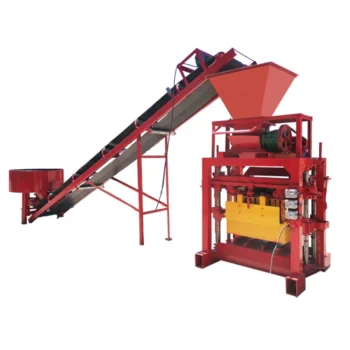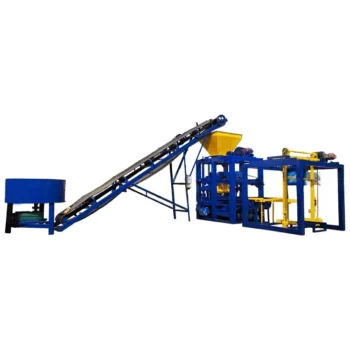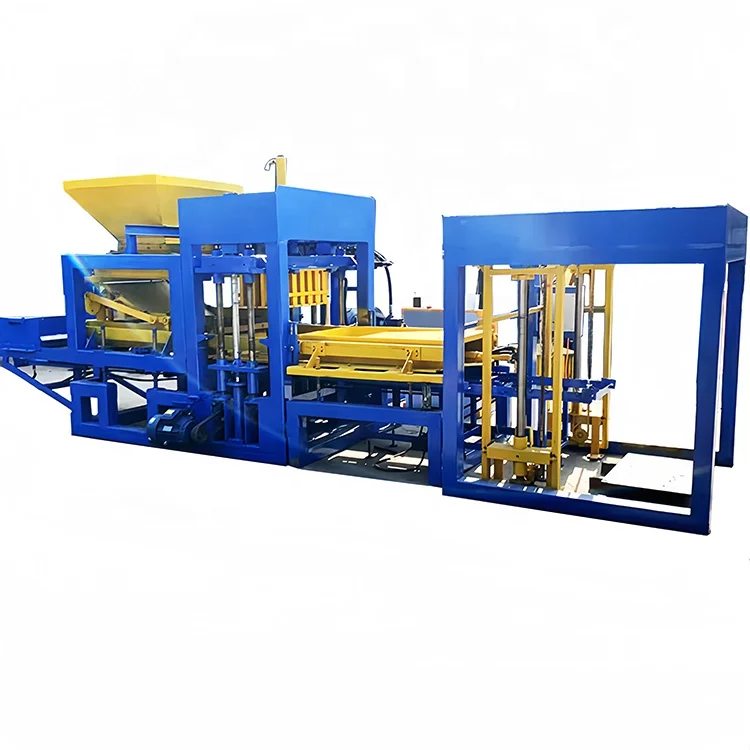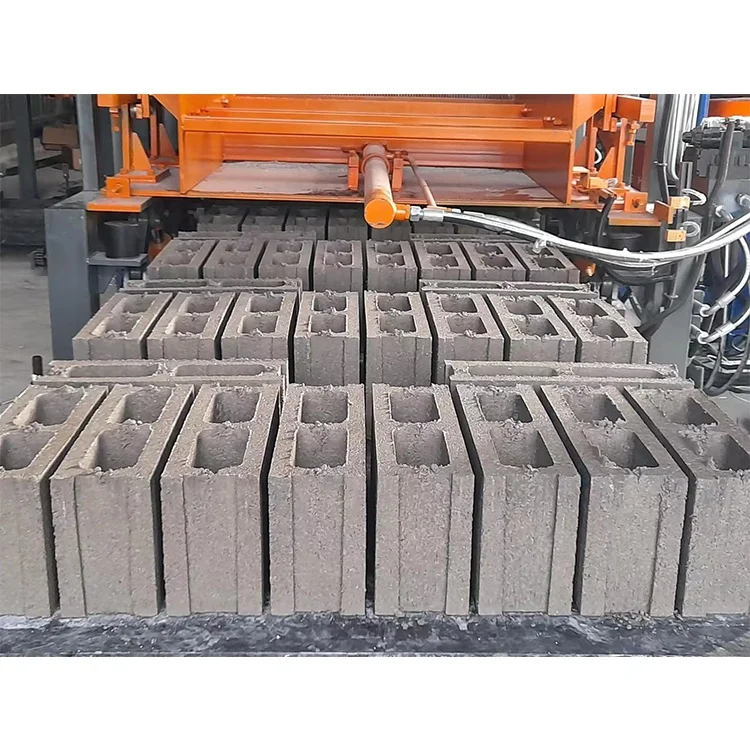


Description
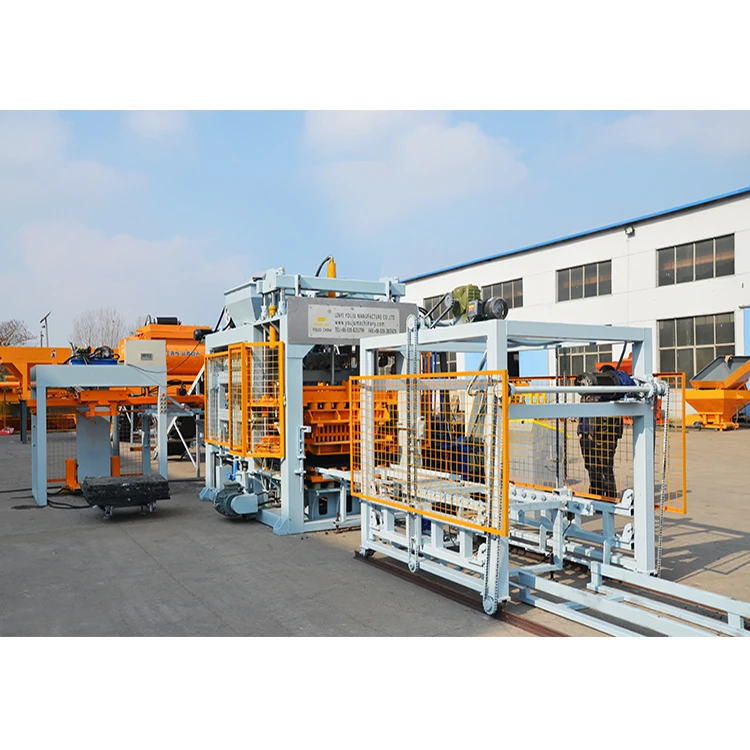
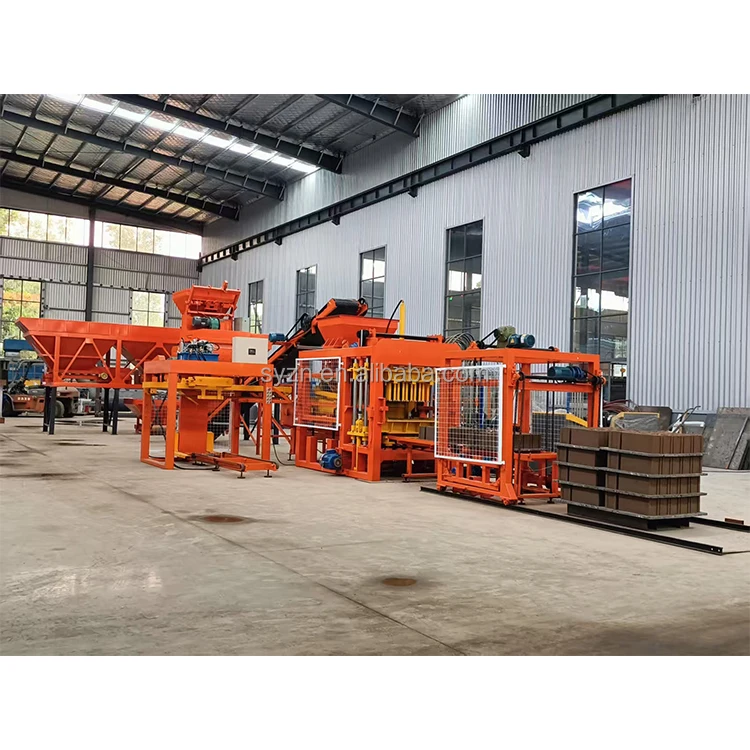
Mould and Machine Matched — The QT6-15 is specified with cycle times stated per block format, not a single generic output claim, so buyers know exactly what daily volume each mould delivers before signing.
Technical Specifications
| Parameter | Value |
|---|---|
| Product Type | Hydraulic Concrete Block Making Machine |
| Model | QT6-15 |
| Overall Dimensions (L×W×H) | 8200 × 1700 × 2950 mm |
| Total Mass | 7 T |
| Overall Power | 37 kW |
| Vibration Force | 45 kN |
| Vibration Frequency | 0–60 Hz, adjustable |
| Vibration Form | Platform vibration |
| Moulding Mode | Automatic loading, vibration moulding |
| Demolding Method | Hydraulic |
| Pallet Size | 880 × 850 mm |
| Molding Cycle | 15–20 s (basis not stated in source — confirm block format, material and thickness) |
| Output — Hollow Block 400×200×200 mm | 8,640–11,520 pcs / 8 hr (6 pcs/mould, 15–20 s cycle) |
| Output — Hollow Block 400×150×200 mm | 11,520–15,360 pcs / 8 hr (8 pcs/mould, 15–20 s cycle) |
| Output — Solid Brick 240×115×53 mm | 46,080–61,440 pcs / 8 hr (32 pcs/mould, 15–20 s cycle) |
| Output — Rectangular Paver 200×100×60 mm | 17,280–23,040 pcs / 8 hr (21 pcs/mould, 20–25 s cycle) |
| Output — Zigzag Paver 225×112.5×60 mm | 17,280–23,040 pcs / 8 hr (15 pcs/mould, 20–25 s cycle) |
| Control System | PLC with touch screen, fault diagnosis, safe logic interlock |
| Hydraulic System | Independent integrated hydraulic station |
| Compressive Strength of Blocks | More than 15 MPa (source value — verify against manufacturer catalog) |
| Recommended Factory Area | 1,200 m² |
| Voltage & Frequency | Configurable — confirm before order |
| PLC Display Language | Configurable — confirm before order |
| Warranty | 1 year for whole machine (excluding spare parts) |
Application Suitability
| Application | Material or Output |
|---|---|
| Hollow block production for load-bearing walls | Crushed stone, sand, cement, fly ash blends |
| Solid brick manufacturing for partition walls | Local aggregate with cement binder |
| Rectangular paving brick for walkways and yards | High-density concrete mix with fine aggregate |
| Zigzag interlocking paver for driveways | Pigmented concrete mix, coarse and fine aggregate |
| On-site block production for housing projects | Waste ash, slag, locally sourced sand and gravel |
| Bearing and non-bearing block for commercial builds | Varied mix designs depending on structural requirement |
What "Pieces per Hour" Hides About QT6-15 Block Machine Specifications
Capacity numbers mean nothing unless the block format, mould cavity count and cycle time are all stated together.
I have watched buyers compare two quotations side by side, pick the one with the higher hourly number, and then discover after commissioning that the figure assumed a small solid brick while they needed hollow blocks. The real daily output fell to less than half of what they planned their delivery trucks around. When reviewing QT6-15 block machine specifications, every capacity line in this sheet ties back to a specific format, cavity count and cycle range — because that is the only honest way to size a machine to your actual product [NEED_CITE: common causes of block plant capacity shortfalls in emerging markets].
Cycle Time Varies by Format, Not Just by Machine
The QT6-15 block machine specifications list a 15–20 second cycle for hollow blocks and solid bricks, but pavers require 20–25 seconds due to the denser mix and higher vibration energy needed for a smooth face. Buyers who plan a single shift around the fastest cycle will overestimate paver output by a noticeable margin. This is why the capacity table above separates each format rather than collapsing them into one headline number.
Pallet Size Decides What Happens After the Press
The 880 × 850 mm pallet is the physical link between the press and your curing area. If your existing racks or forklift are sized for a different pallet, every wet block coming off the line has to be re-stacked by hand before it can move to curing. I always ask buyers to send a photo of their curing yard and forklift nameplate before we finalise the pallet spec, because a mismatch here turns an automatic line into a manual one [NEED_CITE: pallet handling compatibility standards in block production].
Matching Vibration Force to Your Local Aggregate
The 45 kN platform vibration at 0–60 Hz adjustable frequency is designed to compact a range of aggregates from fine sand to coarse crushed stone. However, the frequency that works for a porous paver mix will leave a hollow block under-compacted if the aggregate grading changes. The PLC touch screen lets operators store separate recipes, but the starting point must be set against your actual mix design — not a catalogue default.
Reading the Specs That Actually Affect Block Strength
The independent integrated hydraulic station sits apart from the main frame vibration, which keeps seals and valves away from the dust and shock that shorten component life. Hydraulic pressure and the 45 kN vibration force work together: pressure squeezes the mix while vibration settles fines into voids. If either is under-set for your aggregate, the compressive strength drops below the 15 MPa target. The safe logic interlock in the PLC prevents the mould from lifting before pressure is fully released, protecting both the block edges and the mould box from damage that would otherwise show up as chipped corners on every tenth pallet.
The Cost of Skipping Format Confirmation Before Order
When a buyer signs a contract that lists only "block machine" without naming the exact mould formats, the factory ships whatever is in stock. I have seen lines arrive with a 400 × 200 × 200 mm hollow block mould when the local market actually buys 400 × 150 × 200 mm. Swapping moulds later means waiting for international freight while the press sits idle, and the original mould may not even fit the cavity pattern the buyer planned their pallet purchase around [NEED_CITE: financial impact of mould mismatches in export block machinery orders].
Why Sizing Starts with Your Block, Not the Machine
Shandong Shiyue Intelligent Machinery builds the QT6-15 as part of a matched system where the machine, mould, pallet and handling equipment are specified together. Capacity calculations are provided per format, not as a single brochure number. Mould drawings are confirmed against the buyer’s market requirements before production begins, and custom mould design is available for non-standard formats. The automation level is selectable, so a plant can start with manual pallet handling and add automatic stacking later without replacing the press. Voltage, frequency and PLC display language are confirmed in writing before the machine enters assembly, preventing commissioning delays on site.
Documentation & Verification
- Line layout drawing with capacity stated per block format for the QT6-15
- Mould drawing and format list confirming every cavity included in your order
- Pallet specification sheet matched to your curing rack dimensions
- Voltage, frequency and PLC language confirmation signed before production
- Factory test record run on your target block format before dispatch
- Hydraulic and electrical schematic for your maintenance team
Installation, Commissioning & Support
- Foundation plan sized to the 8200 × 1700 mm footprint and 7 T operating mass
- Dedicated power circuit for the 37 kW total load with correct voltage and frequency
- Hydraulic station filled and bled on site before first vibration cycle
- PLC touch screen loaded with your language and initial mix recipes at startup
- Operator training on mould change procedure and fault diagnosis screen
- Spare mould cores, hydraulic seals and pallet stock agreed before shipment
Preparing Your Inquiry
To size the QT6-15 accurately, share the block formats your market actually buys, the daily volume you need per format, and the local aggregate you plan to use. Tell us your site voltage and frequency, the PLC language your operators read, and whether you already have curing racks and forklifts on site. With those details we can return a capacity calculation that matches your real production day, not a catalogue assumption.
Frequently Asked Questions
Q: How is QT6-15 capacity calculated per block format, and what cycle time does each format require?
A: Every capacity figure on this page states the block dimensions, mould cavity count and cycle time range used in the calculation. Hollow blocks run at 15–20 seconds, while pavers need 20–25 seconds due to mix density. Daily output is then the per-cycle yield multiplied by the cycles achievable in an eight-hour shift, with allowances for pallet exchange and mould reset.
Q: Which mould formats are included, and how long does a mould change take on this machine?
A: The quotation lists every mould format confirmed during the proposal stage — hollow block, solid brick, rectangular paver or zigzag paver. Mould change time depends on the bolt pattern and hydraulic clamp configuration specified for your line. We confirm the expected changeover duration during the proposal so you know how much shift time format switching will consume.
Q: How should the machine be configured to match my local aggregate and mix design?
A: We ask for a sample of your aggregate and your target mix ratio before finalising vibration frequency and hydraulic pressure settings. The PLC stores separate recipes per format, so operators can switch between a porous paver mix and a hollow block mix without manual recalibration each shift.
Q: Is pallet size 880×850 mm compatible with my existing curing racks and forklift?
A: Compatibility depends on your rack slot width and forklift tine spacing. Send us a photo and dimensions of your current curing setup, and we will confirm whether the standard pallet fits or whether a different size should be specified before the machine enters production.
Q: What voltage, frequency and PLC language options are available, and when must they be confirmed?
A: Voltage and frequency are configurable to match your site supply, and the PLC touch screen can display in several languages. All three must be confirmed in writing before the machine enters assembly, because changing them after wiring is complete causes commissioning delays and additional cost on site.