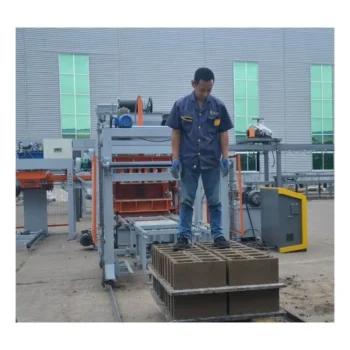



Description
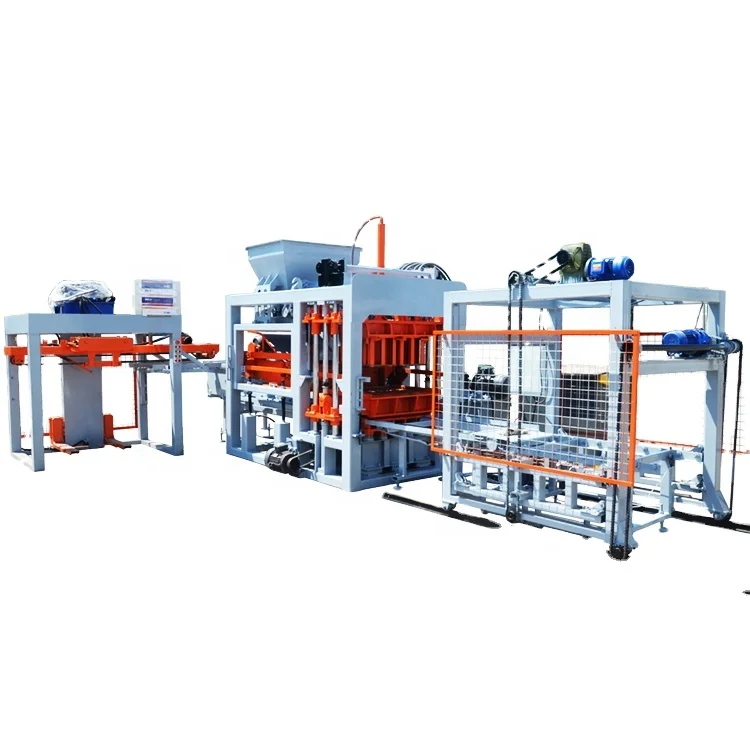
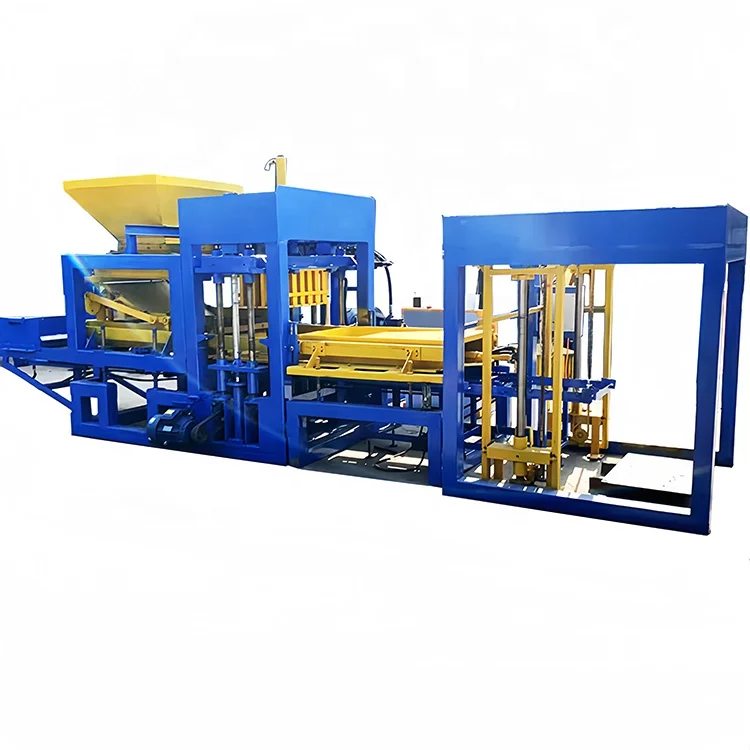
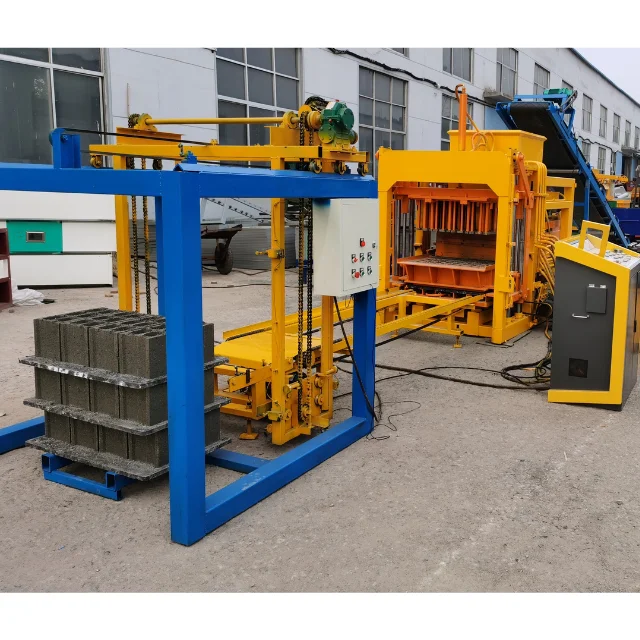
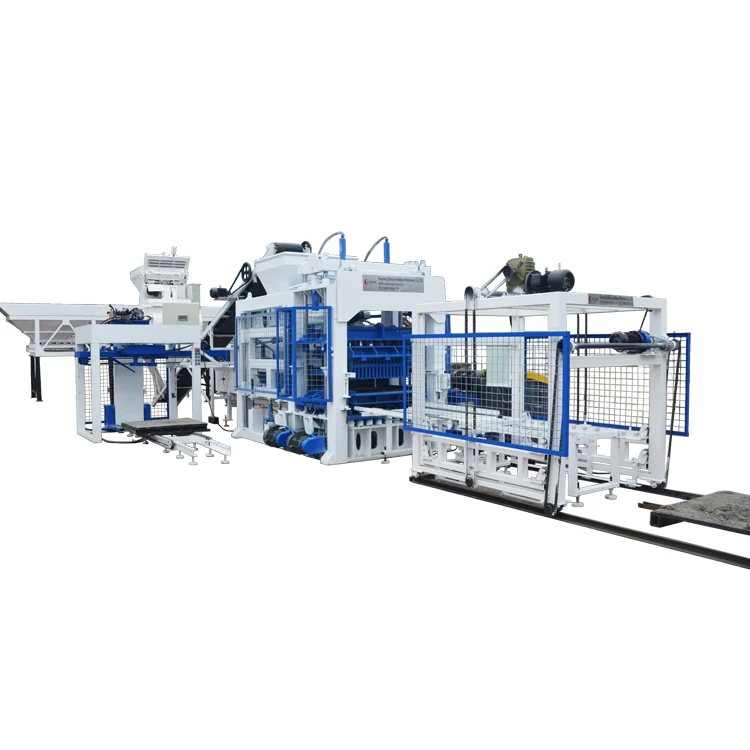
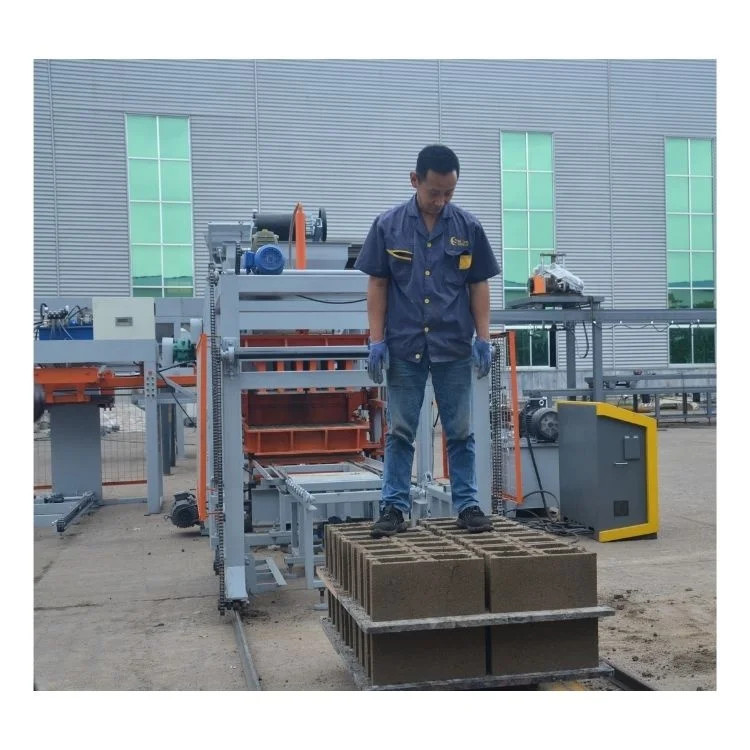
Matched System Design — Every QT6-15 block machine configuration pairs press, mould, pallet and handling based on your actual block format rather than a catalogue default.
Technical Specifications
| Parameter | Value |
|---|---|
| Model | QT6-15 |
| Product Type | Automatic Concrete Block Making Machine |
| Dimension | 7350 × 1780 × 2950 mm |
| Rated Pressure | 16 MPa |
| Main Vibration | Platform |
| Vibration Frequency | 4600 r/min |
| Vibration System | Twice-vibration of molding core |
| Pallet Size | 880 × 700 mm |
| Molding Cycle | 15-20 s (basis not stated in source) |
| Overall Power | 30.5 kW |
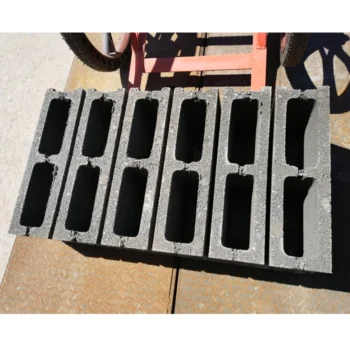
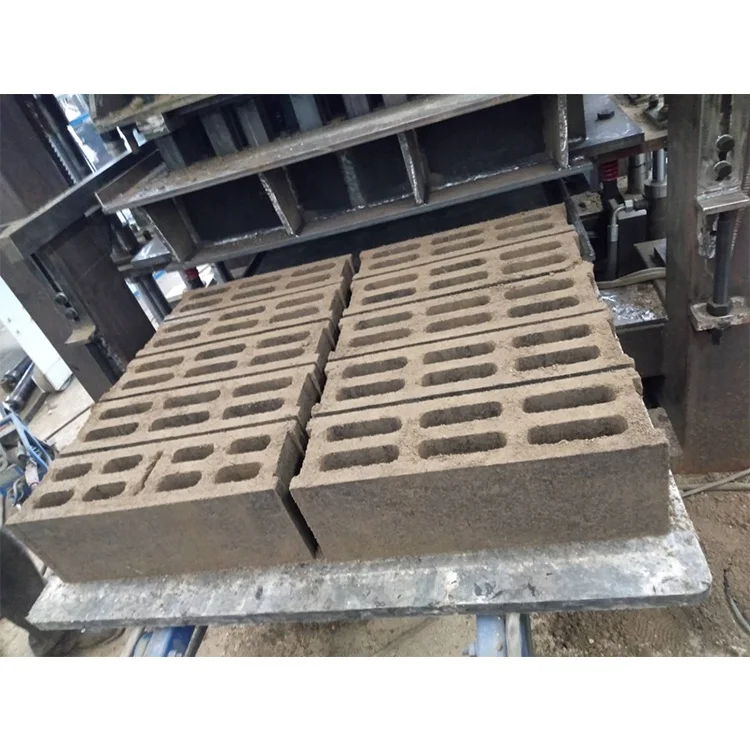
| Capacity (Hollow brick 400×200×200mm) | 6 pcs/mold, 1080 pcs/hour, 8640 pcs/day |
| Capacity (Porous brick 240×115×90mm) | 14 pcs/mold, 2800 pcs/hour, 22400 pcs/day |
| Capacity (Standard brick 240×115×53mm) | 30 pcs/mold, 6800 pcs/hour, 54400 pcs/day |
| Raw Materials | Crushed stone, sand, cement, fly ash, cinder, slag, gangue, gravel, perlite |
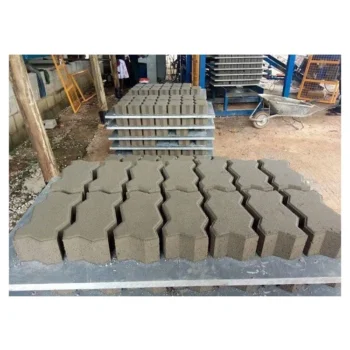
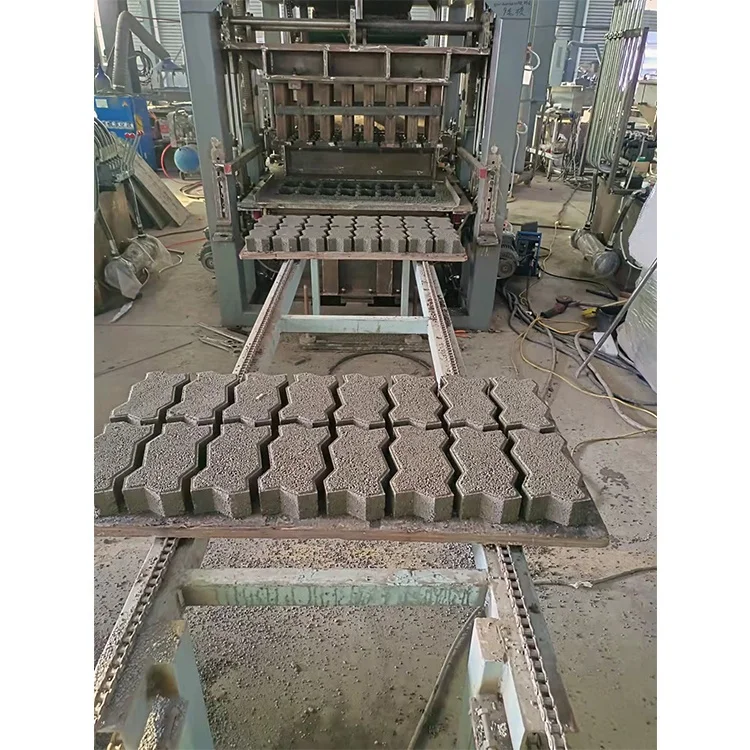
| Applied Products | Concrete blocks, hollow/solid/cellular masonry, paving stones, kerbstones, interlocking blocks, grass blocks |
| Standards | CE, SGS, ISO 9001 |
Application Suitability
| Application | Material or Output |
|---|---|
| Hollow block production for building walls | Crushed stone, sand, cement, fly ash blends |
| Interlocking paver manufacturing | Face-mix concrete with fine aggregate |
| Kerbstone and edger production | Dense concrete mix with coarse gravel |
| Porous brick for load-bearing masonry | Cement, sand, and industrial waste aggregates |
| Landscaping and garden products | Permeable concrete with perlite or slag |
| Slope protection block molding | Heavy aggregate mix with high cement content |
What "8640 Pieces per Day" Actually Means for QT6-15 Block Machine Specifications
Capacity numbers only hold true when the block format, mix design and local aggregate are defined before the contract is signed.
A catalogue may state a daily output figure, but that number assumes a specific block size, a particular vibration cycle, and a raw material blend that compacts predictably. I have seen projects where the quoted capacity for a QT6-15 block machine was based on standard bricks, while the buyer needed hollow blocks — and the real throughput dropped to a fraction of the stated figure. The local aggregate moisture content, the fines percentage, and the cement ratio all shift the molding cycle [NEED_CITE: effect of aggregate moisture on concrete block cycle time]. Without confirming these variables upfront, the capacity table becomes a marketing sheet instead of a planning tool.
Matching Mould Formats to Your Market Demand
The QT6-15 block machine supports hollow, porous, standard, interlocking and paving block formats through mould change on a single press. The 880 × 700 mm pallet defines the maximum mold footprint, and each format occupies that area differently — a hollow block mold yields fewer pieces per cycle than a standard brick mold. Choosing the right mold set depends on which format your local construction market actually specifies, not on the longest list a supplier can offer.
Pallet Size and Curing Area Alignment
An 880 × 700 mm pallet must fit your existing curing racks, forklift tines and stacking area. If your curing yard was built around a different pallet dimension, you will face daily handling friction — workers re-stacking wet blocks by hand or forklifts unable to lift loaded pallets cleanly. Confirm the pallet specification against your site infrastructure before the QT6-15 block machine ships, because changing pallet size after production starts means replacing the entire pallet inventory [NEED_CITE: pallet handling compatibility in block plants].
How Vibration and Pressure Shape Block Density
The platform vibration at 4600 r/min works together with 16 MPa hydraulic pressure to compact the concrete mix inside the mold cavity. Higher vibration frequency liquefies the mix temporarily, allowing aggregate particles to settle densely, while hydraulic pressure holds the mold closed against the upward force. The twice-vibration system on the molding core adds a second consolidation phase that reduces voids in taller formats like hollow blocks. This combination determines whether a block meets the compressive strength your local building code requires — and whether that strength stays consistent from the first block of the shift to the last [NEED_CITE: vibration and hydraulic pressure relationship in concrete block forming].
When the Wrong Configuration Costs You a Shift
Selecting a QT6-15 block machine without confirming voltage, frequency and PLC display language can stall commissioning for days after the container arrives. A machine wired for a voltage standard your site does not supply sits idle while transformers are sourced. Similarly, if the control panel displays in a language your operators cannot read, every parameter adjustment becomes guesswork, and inconsistent settings lead to blocks that fail strength tests [NEED_CITE: PLC language and voltage mismatch in exported machinery]. These delays are entirely preventable when confirmed before dispatch.
Why Buyers Source the QT6-15 Block Machine Through This Configuration Process
Block machinery is the single product focus here, so the press, mold, pallet and handling equipment are specified as one matched system rather than assembled from unrelated suppliers. Every QT6-15 configuration is set against the buyer’s actual mix design, local aggregate characteristics and target block format instead of a catalogue default. Mold design covers the formats your regional market sells, with custom drawings available when standard options do not fit. The automation level is selectable, allowing a plant to start with semi-automatic pallet handling and add stacking later. Installation support includes on-site commissioning and operator training so the crew can run the machine independently from the first week.
Documentation & Verification
- Line layout showing QT6-15 placement with capacity calculation per confirmed block format
- Mold drawing and format list with cycle time stated for each block type
- Pallet specification matched to your curing rack dimensions and forklift capacity
- Hydraulic and electrical schematic with voltage and frequency confirmed for your site
- Factory test record using your target mix design before dispatch
- Operation and maintenance manual in your preferred control language
Installation, Commissioning & Support
- Foundation plan sized to QT6-15 footprint of 7350 × 1780 mm with vibration isolation requirements
- Dedicated power circuit for 30.5 kW overall load with voltage confirmed before wiring
- Machine shipped in dismantled state with reassembly sequence and lifting points marked
- First-run commissioning with molding cycle adjusted to your local aggregate and cement ratio
- Operator training covering mold change procedure, PLC navigation and daily maintenance checks
- Wear parts list with reorder intervals for vibration springs, hydraulic seals and mold liners
What to Include in Your QT6-15 Block Machine Inquiry
Share your target block format with dimensions, the daily output you need for that specific format, and the raw materials available in your area including aggregate type and source. Confirm your site voltage, frequency, and the language you need on the PLC display. If you have existing curing racks or forklifts, provide their specifications so the pallet size can be cross-checked before the configuration is finalized.
Frequently Asked Questions
Q: How is capacity calculated and which block format does each QT6-15 figure assume?
A: Each capacity figure is tied to a specific block format. The QT6-15 produces 8640 hollow bricks per day based on 400×200×200mm size at 6 pieces per mold, and 54400 standard bricks per day based on 240×115×53mm at 30 pieces per mold. Your actual output depends on your local aggregate, mix design and confirmed molding cycle.
Q: What mould formats are available and how long does a mould change take?
A: Available formats include hollow block, porous brick, standard brick, interlocking paver, kerbstone and grass block molds within the 880×700mm pallet envelope. Mold change time depends on the quick-release system fitted and operator familiarity — confirm the expected changeover duration during commissioning training for your specific mold set.
Q: How do I match the 880×700mm pallet to my existing curing racks and forklift?
A: Measure your curing rack shelf width and spacing, and check your forklift tine length and load capacity. The 880×700mm pallet must sit fully supported on your racks and be liftable when loaded with wet blocks. Share these measurements during the configuration stage so pallet material and thickness are selected accordingly.
Q: Can the QT6-15 be configured for my local aggregate and mix design?
A: Yes. Vibration frequency, hydraulic pressure and molding cycle are adjustable to match your aggregate gradation, moisture content and cement ratio. A factory test using your confirmed mix proportions validates block density and strength before the machine ships, reducing trial-and-error during on-site commissioning.