
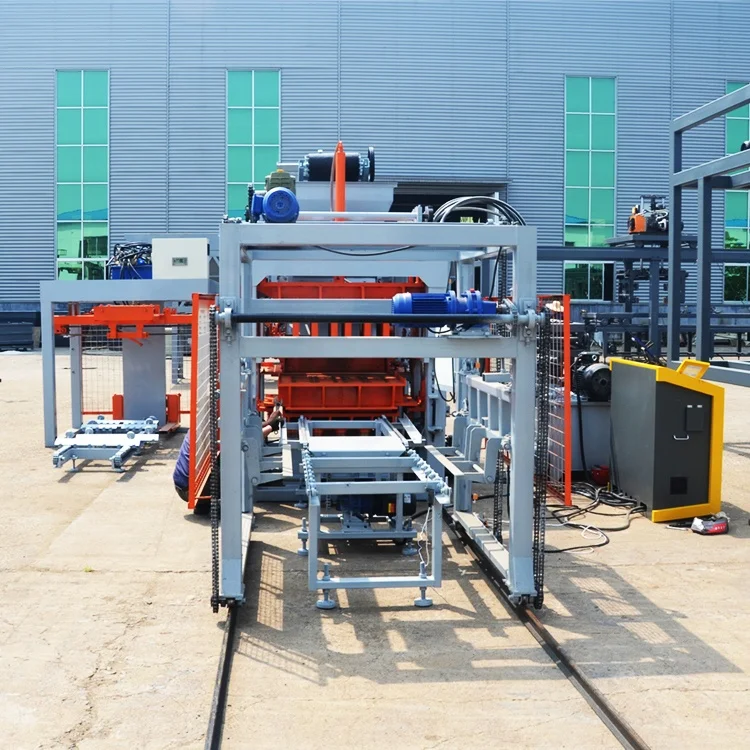
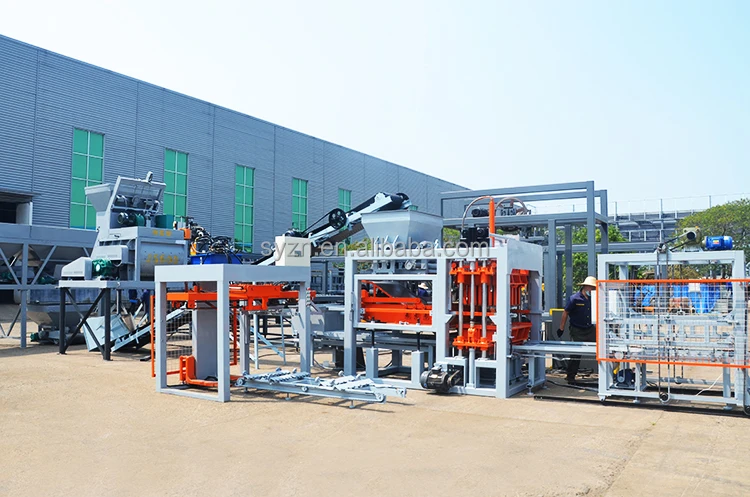


Description
Honest Capacity by Format — The QT6-15 block making machine specifications quote output per block type rather than a single unqualified number, so the daily tonnage you plan against matches what the line actually produces.
Technical Specifications
| Parameter | Value |
|---|---|
| Model | QT6-15 |
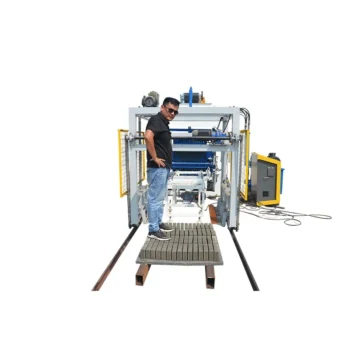
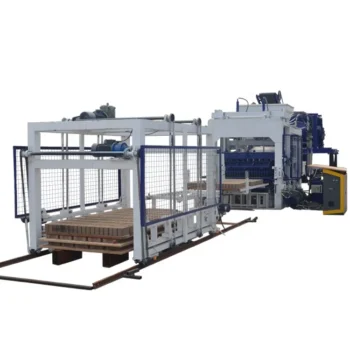
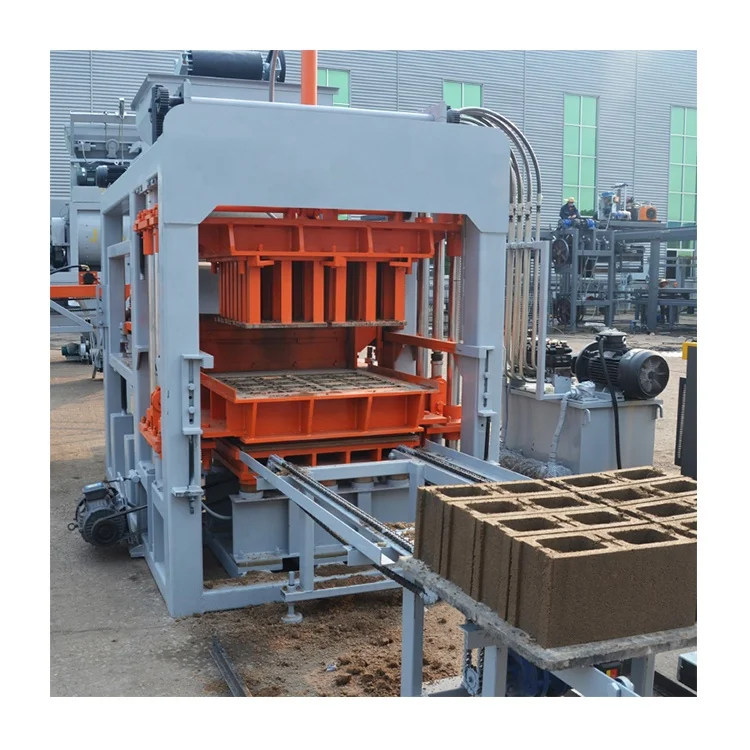
| Product Type | Fully Automatic Hydraulic Vibration Block Making Machine |
| Overall Dimensions (L×W×H) | 7400 × 1900 × 2660 mm |
| Molding Cycle | 15–25 s |
| Vibration Frequency | 4600 r/min |
| Vibration Force | 40–50 kN |
| Total Power | 31.25 kW |
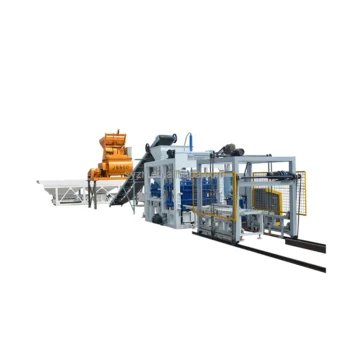
| Mixer Model | JQ350 |
| Pallet Size | 850 × 550 × 25 mm |
| Total Weight | 7 T |
| Control System | PLC control system |
| Hydraulic Station | Included |
| Included Auxiliary Equipment | Pallet feeder, brick conveyor, block sweeper, manual hydraulic trolley |
| Output (Hollow Block 400×200×200 mm) | 9600–13440 pcs per 8-hour shift, based on a 15–20 s cycle |
| Output (Hollow Block 400×150×200 mm) | 14400–19200 pcs per 8-hour shift, based on a 15–20 s cycle |
| Output (Solid Brick 240×115×53 mm) | 16200–19440 pcs per 8-hour shift, based on a 15–20 s cycle |
| Automation Level | Fully automatic |
| Applied Products | Paver, solid block, hollow block, curbstone |
| Raw Materials | Crushed stones, sand, cement, dust, fly ash |
Application Suitability
| Application | Material or Output |
|---|---|
| Hollow block production for masonry walls | Crushed stone, sand, cement, fly ash; 400×200×200 mm and 400×150×200 mm formats |
| Solid brick manufacturing for load-bearing structures | Sand, cement, stone dust; 240×115×53 mm format |
| Paver and interlocking block production | Cement, fine aggregate, pigment layers; curbstone and paving formats |
| On-site block production for housing projects | Locally sourced aggregate with cement binder; matched to project-specific block dimensions |
Why "Pieces per Hour" Without a Block Format Is Meaningless
Capacity numbers only matter when tied to a specific block size and cycle time.
I have watched buyers sign contracts based on a headline figure like "1,200 pieces per hour," only to discover on commissioning day that the number assumed a small solid brick while their market demands 400×200 mm hollow blocks. The QT6-15 block making machine specifications address this directly: each capacity row names the exact block format and the cycle window behind it. A 400×200×200 mm hollow block runs at 15–20 seconds per cycle and yields 9,600–13,440 units over an eight-hour shift. A smaller 400×150×200 mm hollow block pushes that to 14,400–19,200 units in the same window. Without these distinctions, a plant owner cannot size raw material orders, curing rack space, or delivery schedules with any confidence [NEED_CITE: block production capacity calculation standards by format].
Matching the Machine to Your Market’s Block Format
Every regional construction market favors a different block profile. In West Africa, 9-inch hollow blocks dominate load-bearing walls, while Southeast Asian projects often specify interlocking pavers for drainage. The QT6-15 block making machine specifications list mould compatibility across hollow block, solid brick, paver, and curbstone formats, so the machine can follow the market rather than forcing the market to follow the machine.
The pallet size of 850 × 550 × 25 mm determines the mould footprint. Before placing an order, verify that this pallet dimension fits your existing curing racks and that your forklift can handle the loaded weight. A mismatch here means buying new racks or replacing handling equipment — costs that never appear in the machine quotation [NEED_CITE: pallet and curing rack compatibility in block plants].
How Vibration and Hydraulic Pressure Shape Block Density
Block strength is not just a cement-ratio question. The 40–50 kN vibration force at 4,600 r/min works together with the hydraulic station to compact the mix evenly across the mould cavity. If your local aggregate contains a high proportion of fine dust or volcanic ash, the vibration amplitude may need adjustment to achieve uniform density without segregation. A machine configured for clean river sand will produce weak, crumbling blocks when fed crusher dust — the vibration energy dissipates through the fines instead of consolidating the matrix.
This is why a technical review of your aggregate sieve analysis should happen before the QT6-15 is configured, not after it arrives. The PLC control system stores cycle parameters per mould, so once the right vibration duration and hydraulic pressure are dialed in for your specific mix, every shift operator produces blocks at the same density. Batch-to-batch consistency in compressive strength is what separates a reliable supplier from one whose blocks get rejected at the construction site.
Reading the Specs That Actually Affect Your Output
The 31.25 kW total power draw tells you the electrical infrastructure required: a dedicated circuit with adequate breaker capacity, not a shared workshop line that dips every time the compressor kicks in. Voltage and frequency must be confirmed in writing before production begins, because a 380V/50Hz machine rewired on-site for a 440V/60Hz grid will burn out the vibration motor within weeks.
The JQ350 mixer sits upstream of the press. Its batch volume must match the QT6-15 cycle rate; if the mixer takes 90 seconds per batch while the press cycles every 15 seconds, the press waits idle for raw material and your actual hourly output drops well below the stated range. Line balancing — matching mixer output to press consumption — is where most block plants lose capacity they thought they had purchased.
Mould change time is not stated in the source data. If your business plan assumes switching between hollow blocks in the morning and pavers in the afternoon, confirm the changeover procedure and duration before you commit. A two-hour mould swap on a machine advertised for "multi-format flexibility" effectively kills the afternoon production window [NEED_CITE: mould changeover procedures in hydraulic block machines].
The Cost of Skipping Configuration Verification
Buyers who order from a catalogue page without submitting their aggregate analysis often receive a machine tuned for Chinese river sand. When that machine meets local laterite or crusher dust, the blocks emerge under-compacted. Retooling the vibration settings and sourcing a different mould coating to handle abrasive fines costs time and money that should have been addressed during the proposal stage. Equally, arriving at a job site to find the control panel displays in a language your operators cannot read delays commissioning by days while translated overlays are sourced.
Why Buyers Specify Through This Range
Block machinery is the single focus of the production line offered here, meaning the press, mould, pallet, and auxiliary handling are configured as one system rather than assembled from unrelated suppliers. The capacity calculation you receive states the block format assumed for every output figure. Mould design covers the formats your market actually buys, including custom drawings when standard moulds do not match local dimensions. Automation starts at fully automatic with PLC control and pallet feeding, so you are not paying for manual stations you planned to automate anyway. Installation support includes operator training on the specific mould formats shipped with your machine.
Documentation & Verification
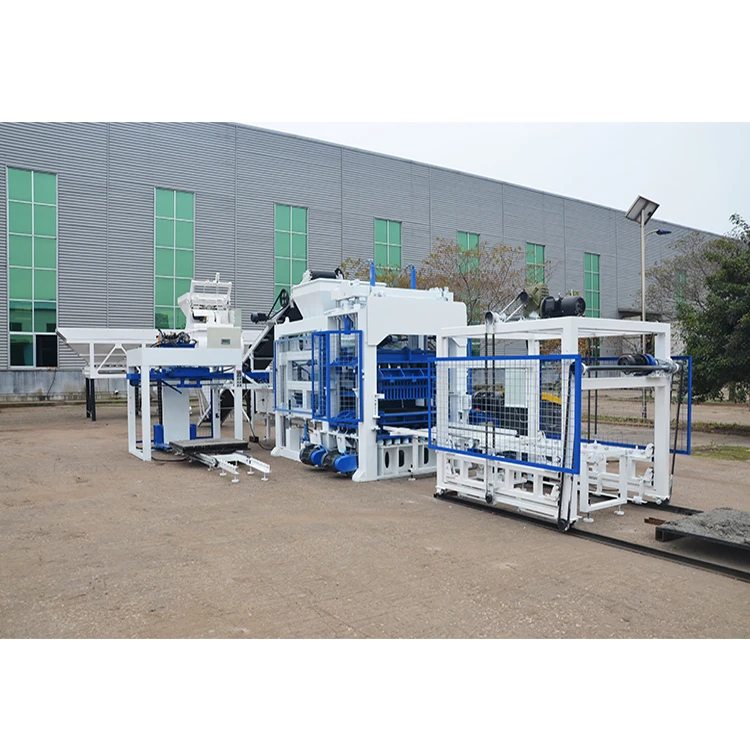
- Line layout showing capacity calculation per block format for the QT6-15
- Mould drawing and format list confirming paver, hollow, solid, and curbstone compatibility
- Pallet specification sheet matched to your curing rack dimensions and forklift rating
- Hydraulic and electrical schematic with confirmed voltage and frequency
- Factory test record on your specified block format before dispatch
- Operation and maintenance manual in your confirmed PLC display language
Installation, Commissioning & Support
- Foundation pad sized for the 7400 × 1900 mm footprint and 7-tonne operating weight
- Dedicated electrical circuit rated for 31.25 kW at your confirmed voltage and frequency
- Mixer and pallet feeder alignment verified during on-site commissioning
- PLC parameter set loaded for each shipped mould format before first production run
- Operator training covering mould change procedure and daily maintenance checks
- Wear parts and mould replacement list provided with recommended reorder intervals
Preparing Your Technical Inquiry
To receive a configuration proposal that reflects your actual production conditions, share the block formats your market sells and the daily output you need per format. Include your local aggregate sieve analysis or a representative sample, your site voltage and frequency, and the curing rack and forklift specifications you already have on site.
Frequently Asked Questions
Q: How is capacity calculated per block format on the QT6-15?
A: Each output figure is tied to a named block dimension and its cycle window. For the 400×200×200 mm hollow block, the cycle runs 15–20 seconds, yielding 9,600–13,440 pieces per eight-hour shift. Smaller formats like the 400×150×200 mm hollow block produce more units in the same cycle window because more cavities fit on the 850 × 550 mm pallet.
Q: Which mould formats ship with the machine and how long does a changeover take?
A: The QT6-15 supports hollow block, solid brick, paver, and curbstone moulds. The specific moulds included depend on your order configuration. Mould change time is not published in standard documentation, so request the changeover procedure and duration for your chosen formats before confirming the order.
Q: How are vibration force and hydraulic pressure matched to my aggregate?
A: The 40–50 kN vibration force and hydraulic station settings are adjusted based on your aggregate sieve analysis and mix design. Fine materials like fly ash or crusher dust require different vibration duration and pressure profiles than coarse river sand to achieve consistent block density and compressive strength.
Q: Will the 850 × 550 mm pallet work with my existing curing racks?
A: You must verify rack slot width, spacing, and forklift capacity against the pallet dimensions before ordering. If your current racks were built for a different pallet size, you will need to modify or replace them. Confirming this during the proposal stage avoids unexpected capital expense after delivery.
Q: What electrical and control language details are confirmed before shipment?
A: Voltage, frequency, and PLC display language are confirmed in writing during the order process. The 31.25 kW total power requirement must be matched to your site supply. Requesting these confirmations in the purchase documentation prevents commissioning delays when the machine arrives at your plant [NEED_CITE: industrial equipment electrical standards by destination market].