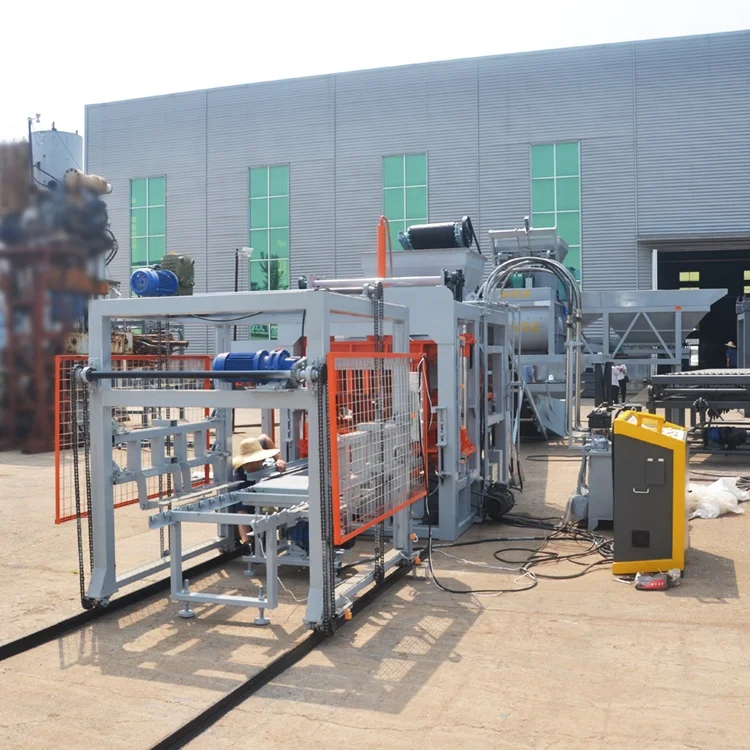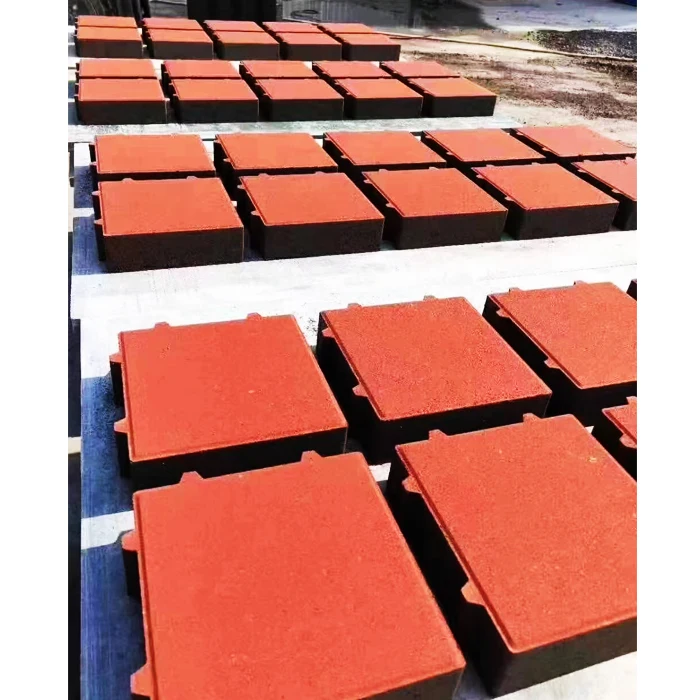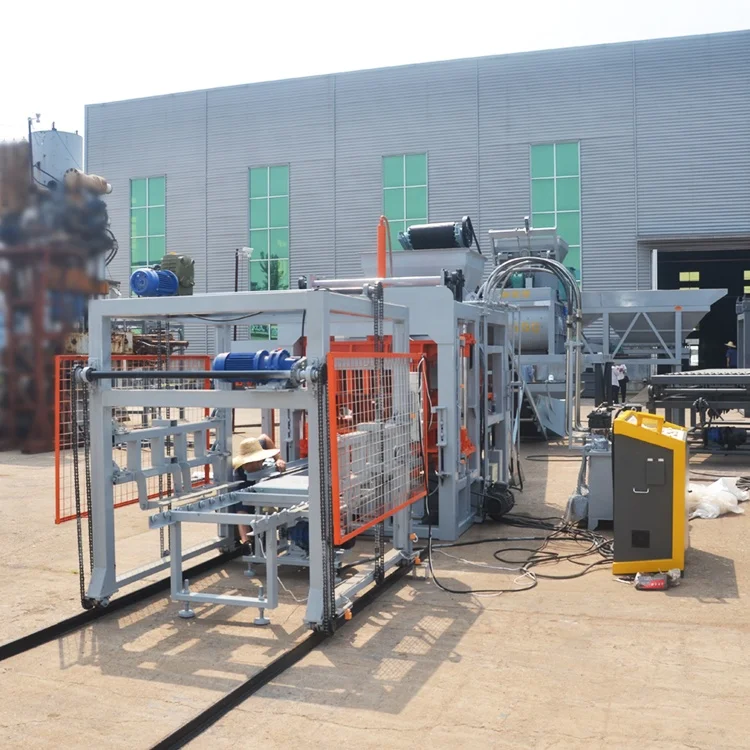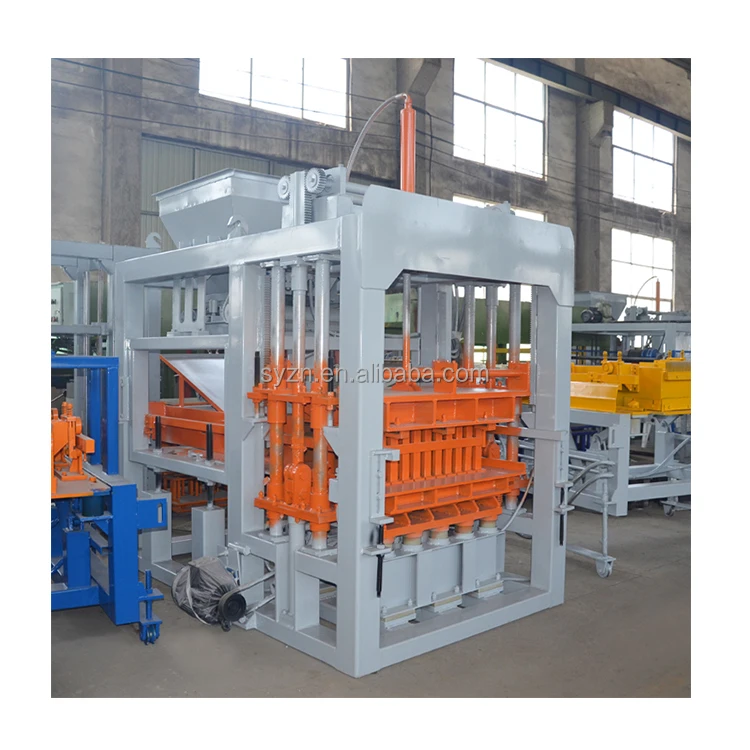
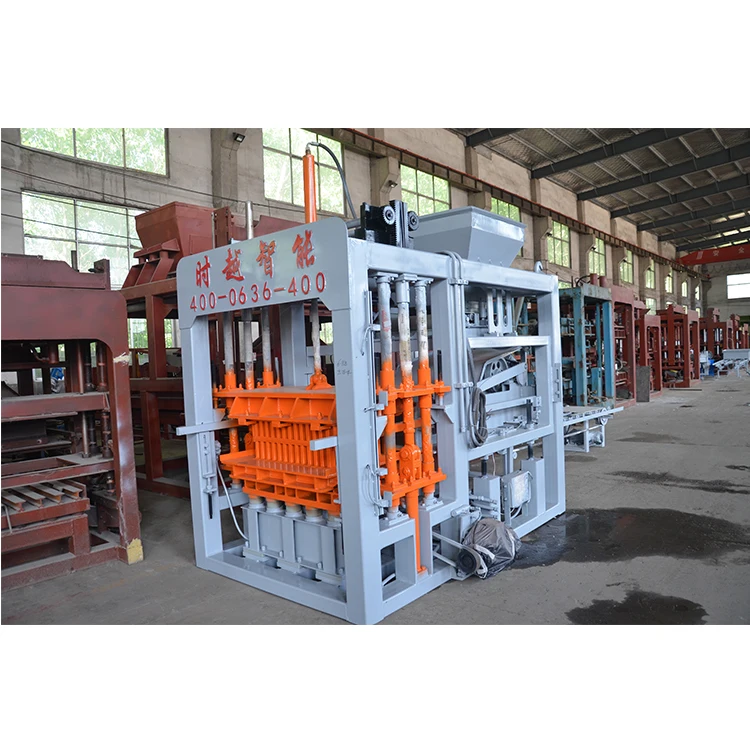
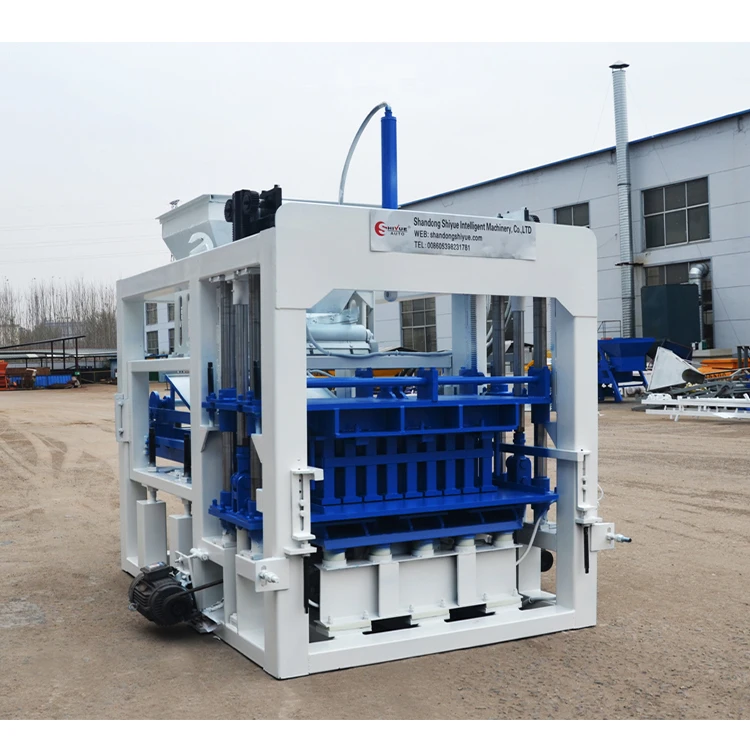
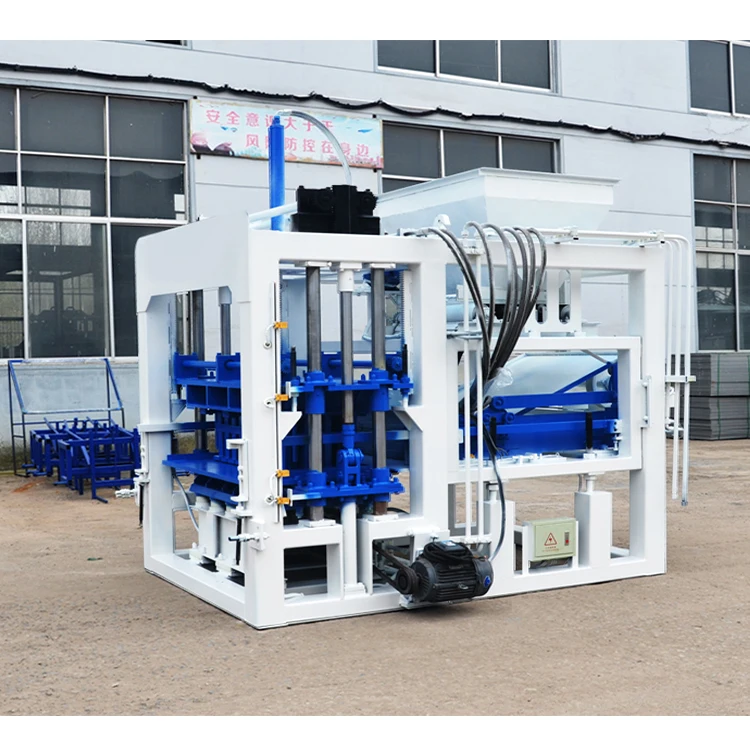
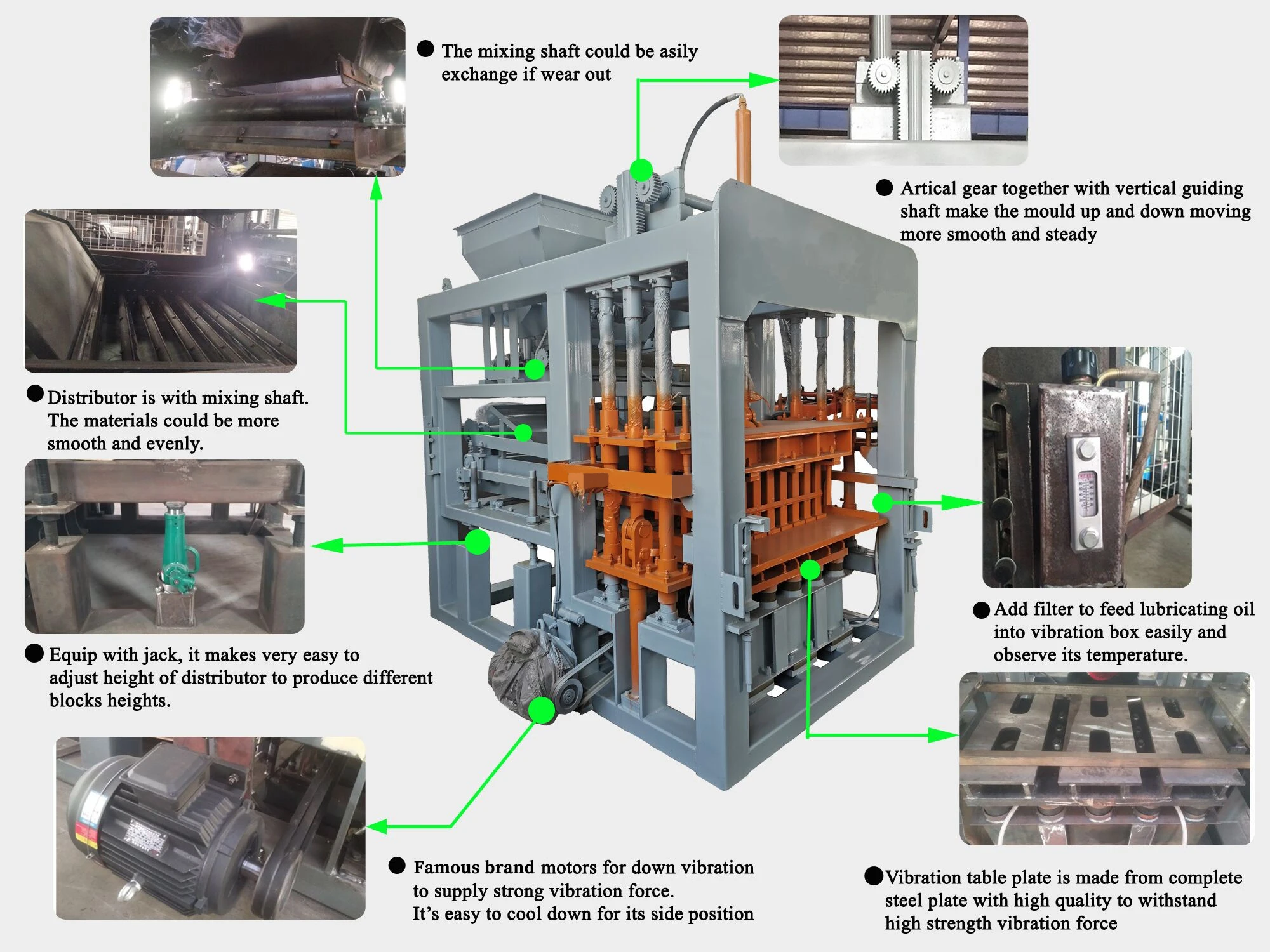
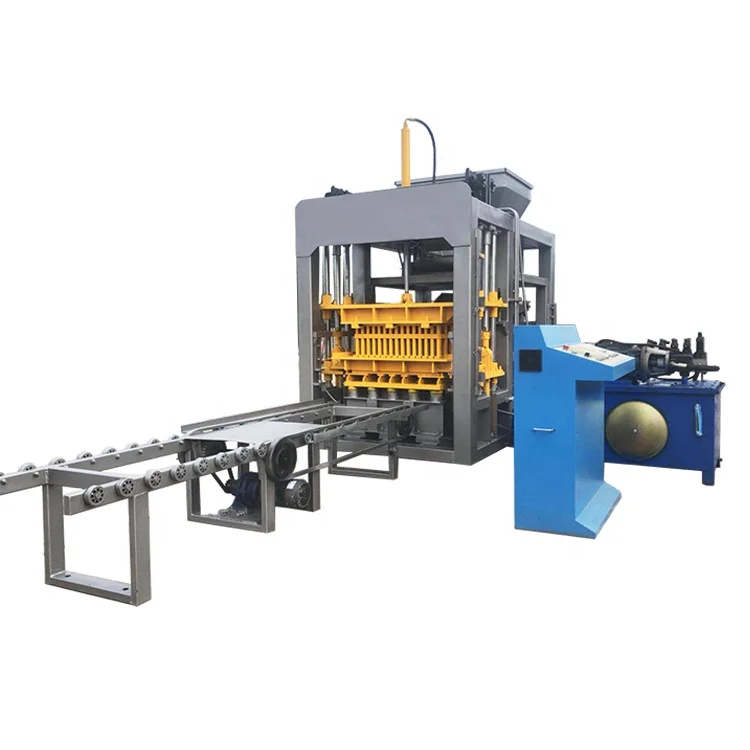
Description
Per-format capacity — every output figure here is tied to a specific block dimension and cycle time, not a single headline number.
Technical Specifications
| Parameter | Value |
|---|---|
| Model | QT5-15 |
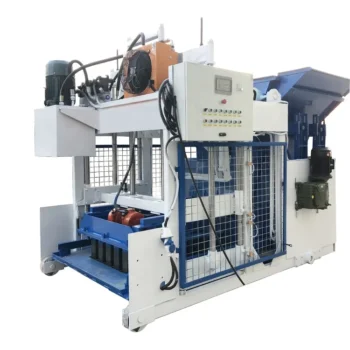
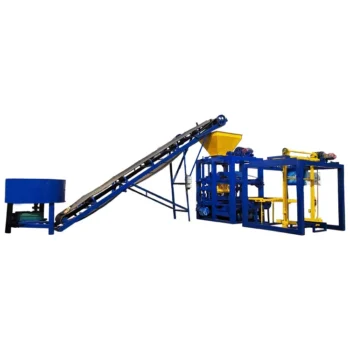
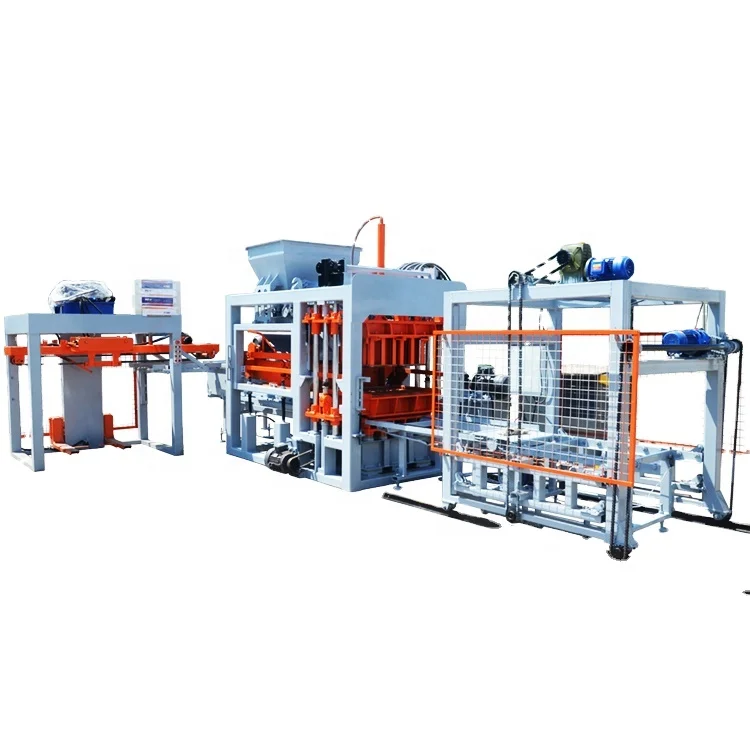
| Product Type | Fully Automatic Hydraulic Cement Brick Making Machine |
| Overall Dimensions (L×W×H) | 7400×1950×2800 mm |
| Total Mass | 5000 kg |
| Vibration Force | 80 kN |
| Vibration Frequency | 0-60 Hz |
| Vibration Form | Platform Vibration |
| Moulding Mode | Load automatically, vibration moulding |
| Pallet Size | 1100×550 mm |
| Molding Cycle | 15-20 s (basis not stated in source — confirm block format / material / thickness) |
| Overall Power | 32 kW |
| Demolding Method | Hydraulic |
| Control System | PLC with touch screen interface |
| Hydraulic System | Independent integrated hydraulic station |
| Block Compressive Strength | More than 15 MPa |
| Recommended Factory Area | 1000 m² |
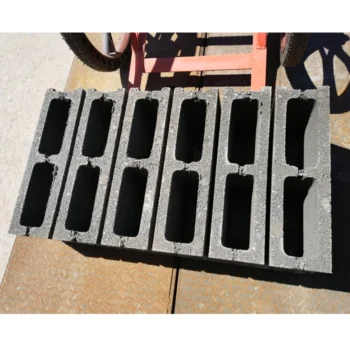
| Output: Hollow block 400×200×200 mm | 900-1200 pcs/h, 7200-9600 pcs/8hr |
| Output: Hollow block 400×150×200 mm | 1080-1440 pcs/h, 8640-11520 pcs/8hr |
| Output: Solid brick 240×115×53 mm | 5760-7680 pcs/h, 46080-61440 pcs/8hr |
| Output: Rectangular paver 200×100×60 mm | 3600-4500 pcs/h (cycle 20-25 s), 28800-36000 pcs/8hr |
| Output: Zigzag brick 225×112.5×60 mm | 2304-2880 pcs/h (cycle 20-25 s), 18432-23040 pcs/8hr |
| Raw Material Compatibility | Fly ash (up to 70%), slag, gangue, sand, crushed stone, cement, water |
| Automation Level | Fully automatic (pallet feeding, material feeding, vibrating, demoulding) |
| Warranty | 1 year for whole machine (excluding spare parts) |
Application Suitability
| Application | Material or Output |
|---|---|
| Hollow block production | Fly ash, slag, sand and cement mixes; 400×200×200 mm and 400×150×200 mm formats |
| Solid brick production | Dense aggregate and cement; 240×115×53 mm standard brick |
| Paving brick production | Crushed stone and sand blends; 200×100×60 mm rectangular and 225×112.5×60 mm zigzag formats |
| Interlocking and porous brick | Custom mould configurations on the 1100×550 mm pallet |
| On-site project block making | Housing and development contractors producing locally sourced aggregate mixes |
What "900 Pieces per Hour" Actually Means on the QT5-15 Block Machine
Capacity only matters when you know which block format the number belongs to.
Sellers often quote a single cycle rate and let buyers assume it applies to every mould on the machine. In practice, a hollow block that is 200 mm tall needs a longer vibration window than a 60 mm paver, and the mix water content shifts that window further. When I first ran a machine of this class in West Africa, the local red-clay aggregate absorbed water at a rate the river-sand trials never predicted, so the quoted cycle time was unreachable on day one. The QT5-15 block machine specifications list separate hourly and eight-hour outputs for each format, so you can match the figure to the product your market actually orders [NEED_CITE: block format assumptions in capacity quotations].
Format-Matched Cycle Times and Honest Daily Output
The QT5-15 block machine specifications assign a distinct molding cycle to every listed format. Hollow blocks at 400×200×200 mm run at 15-20 seconds per cycle, yielding 7,200-9,600 pieces across an eight-hour shift. Step down to the 150 mm wide hollow block and the cycle stays in the same range while output rises to 8,640-11,520 pieces per shift because each pallet carries more cavities. Rectangular pavers and zigzag bricks move to a 20-25 second cycle, reflecting the extra consolidation time denser surface finishes demand.
Pallet Size as a Line-Planning Constraint
An 1100×550 mm pallet determines how many blocks sit on each board, how many boards fit a curing rack tier, and which forklift tine length you need. Buyers who confirm pallet dimensions after the machine arrives often discover their existing racks are 50 mm too narrow per tier. The QT5-15 ships with the pallet size declared upfront, giving plant planners a fixed variable to build the curing and handling layout around. Locking the pallet spec early prevents a bottleneck that no amount of press speed can fix [NEED_CITE: pallet and curing rack compatibility planning].
Reading the Core Parameters Beyond the Brochure
Vibration force of 80 kN combined with platform vibration means energy transfers through the mould table rather than the mould walls, concentrating compaction at the block base where strength matters most for load-bearing hollow units. The 0-60 Hz adjustable frequency lets operators dial the amplitude to the aggregate gradation — coarser crushed stone needs a lower frequency with higher amplitude, while fine fly-ash mixes respond better to higher frequency. The independent integrated hydraulic station sits apart from the vibration zone, keeping seals and valve spools away from the high-frequency shock that shortens component life. Overall power of 32 kW must be supported by a dedicated circuit sized for the starting inrush of the vibration motors, not just the continuous running load.
The Cost of Skipping Format-Level Verification
When a buyer signs off on a capacity number without asking which block format it assumes, the first production run reveals the gap. The machine is not defective — it simply cannot compress a 200 mm hollow block in the same cycle the brochure used for a 53 mm solid brick. Pallet mismatches surface later: boards that overhang the curing rack warp under wet block weight, and forklift operators spend extra trips moving shorter stacks. Voltage and control-language oversights delay commissioning by days while panels are re-wired or PLC strings are re-flashed [NEED_CITE: voltage and frequency standards by export market]. These are all avoidable if the QT5-15 block machine specifications are read format by format before the purchase order is cut.
Why Sourcing This Class of Machine Here Makes Sense
Block machinery is the sole product focus, so the press, mould, pallet and handling equipment are specified as a matched set rather than assembled from separate vendors. Configuration is built around the buyer’s actual mix design and local aggregate, not a catalogue default. Mould design covers every format the buyer’s market sells, with custom drawings accepted for non-standard profiles. Automation level is selectable — a plant can start with the semi-automatic tier and add automatic stacking later without replacing the press. Installation includes on-site commissioning and operator training so the crew understands cycle adjustment before the service engineer leaves.
Documentation & Verification
- Line layout and capacity calculation stating the block format behind each QT5-15 output figure
- Mould drawing and format list delivered before order confirmation, including custom profiles
- Hydraulic and electrical schematic matching the shipped configuration
- Voltage, frequency and PLC display language confirmation recorded in writing
- Factory test record with measured cycle times on the buyer’s requested block format
Installation, Commissioning & Support
- 1000 m² recommended area accommodates the 7400 mm machine length plus curing rack rows
- 32 kW total power requires a dedicated breaker panel separate from lighting circuits
- PLC touch screen language configured before dispatch to avoid on-site reprogramming delays
- Hydraulic station filled and bled during commissioning to match local ambient temperature
- Mould change procedure trained on-site so format switches fit within a single shift window
- Wear parts list supplied with hydraulic seal and vibration motor bearing part numbers
What to Include in Your First Enquiry
Tell us the exact block formats your market orders most, including dimensions and target compressive strength. Share your locally available aggregate type and any fly-ash or slag source so we can run a mix trial before the machine is configured. Confirm your site voltage, frequency and preferred PLC display language to keep commissioning on schedule.
Frequently Asked Questions
Q: How is QT5-15 capacity calculated and what block format does each figure assume?
A: Each capacity line in the specification table is tied to a named block dimension. The hollow block 400×200×200 mm figure assumes a 15-20 second cycle, while pavers at 200×100×60 mm use a 20-25 second cycle. Always match the capacity row to the format you intend to produce most.
Q: How do I match the 1100×550 mm pallet to my existing curing area and forklift?
A: Measure your curing rack internal width and tier spacing, then compare to the pallet footprint plus a handling margin. Check that your forklift tine length exceeds 550 mm and that the mast lift height clears the top rack tier loaded with wet blocks.
Q: What is the realistic mould change time between formats on the QT5-15?
A: The QT5-15 uses a simple mould replacement system. Actual change time depends on operator familiarity and whether the new mould is pre-staged. Plan for a portion of a shift when switching for the first time, dropping to a shorter window once the crew has repeated the procedure.
Q: How should I confirm voltage, frequency and PLC language before production starts?
A: Provide your site electrical specification in writing during the enquiry stage. The manufacturer records the agreed voltage, frequency and PLC display language before production begins, so the control panel arrives ready to power on without re-wiring or re-flashing.
Q: Which block formats and mould options are available, and can I order custom moulds?
A: Standard moulds cover hollow blocks, solid bricks, rectangular pavers, zigzag bricks and interlocking profiles listed in the specification table. Custom mould designs are accepted against buyer-supplied drawings, with sample blocks produced during the factory test to verify dimensions.