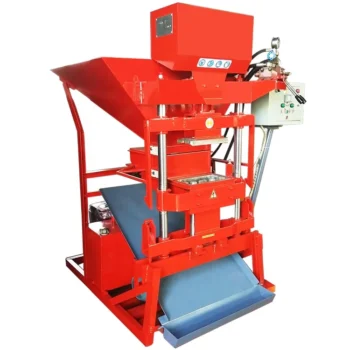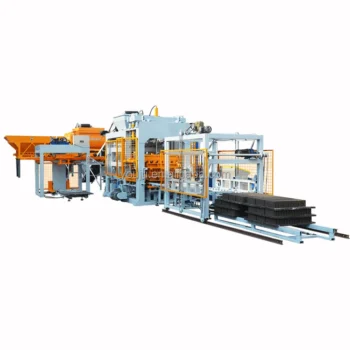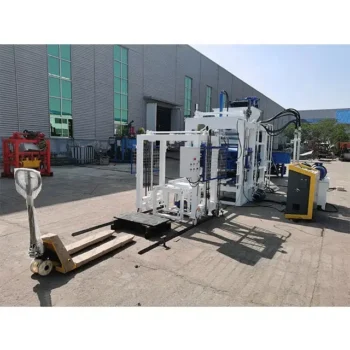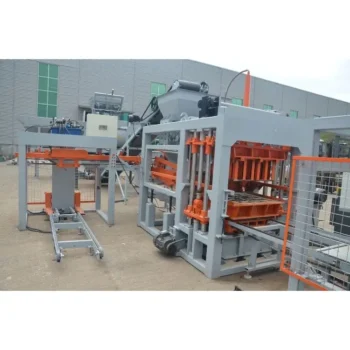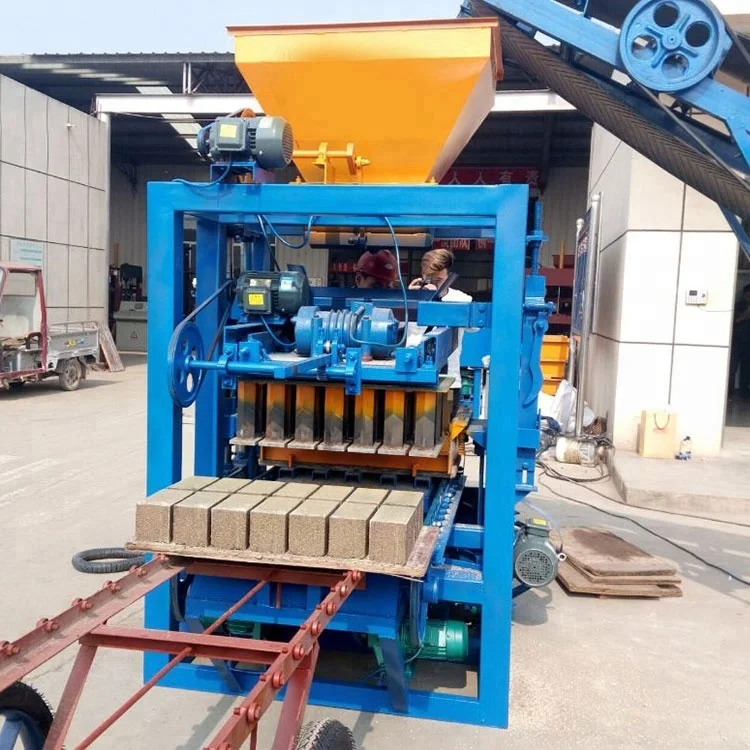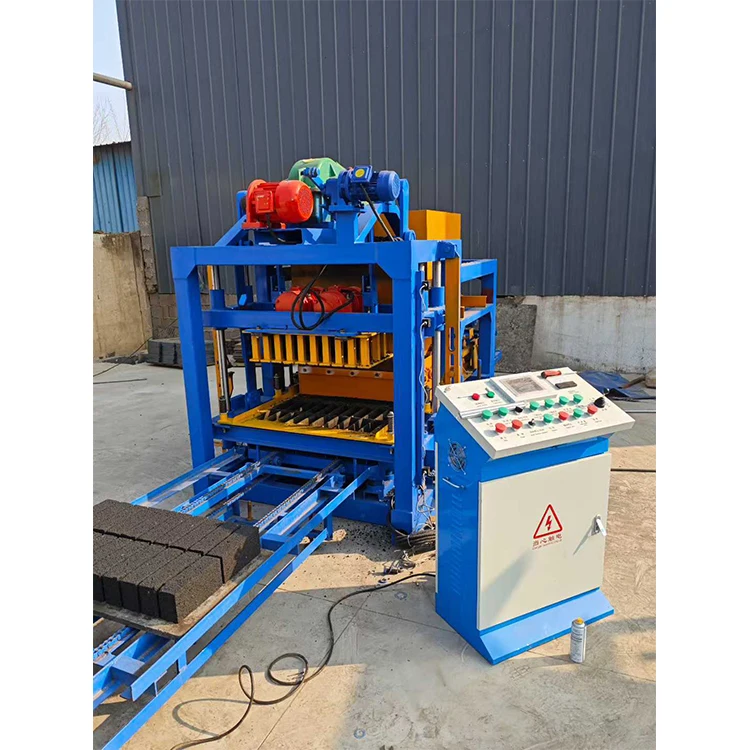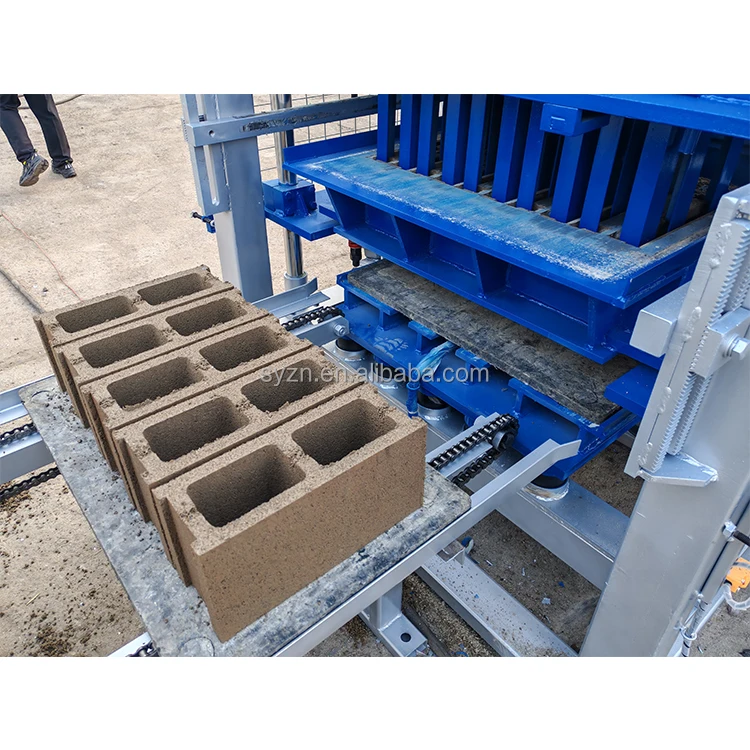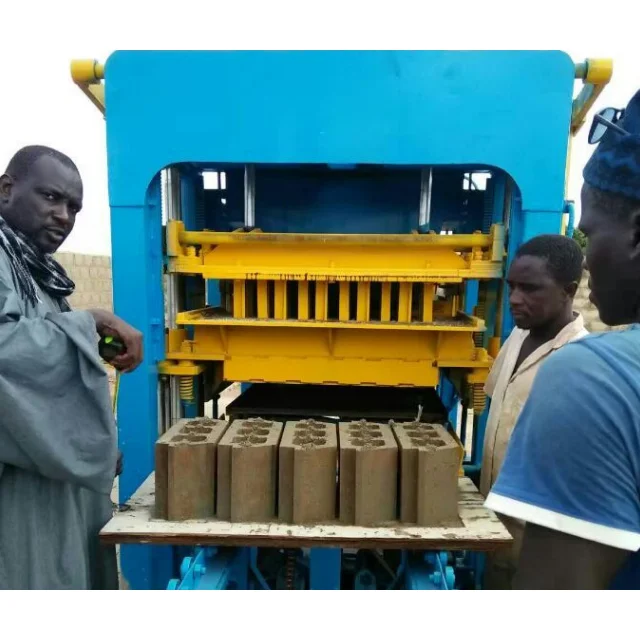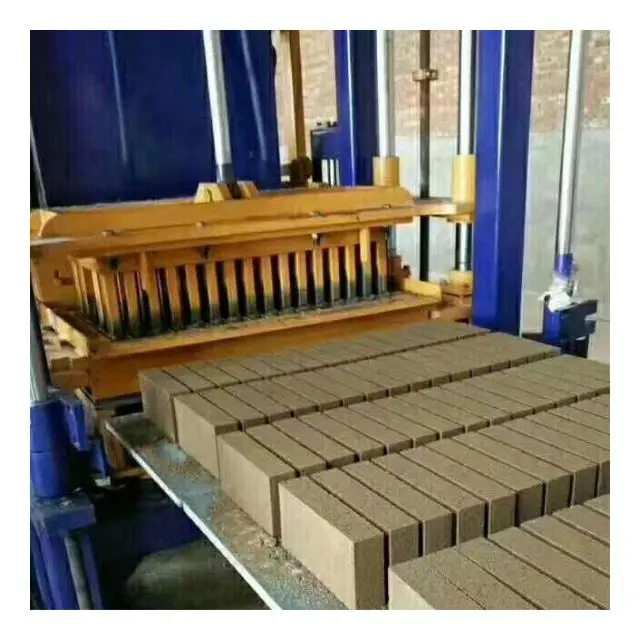
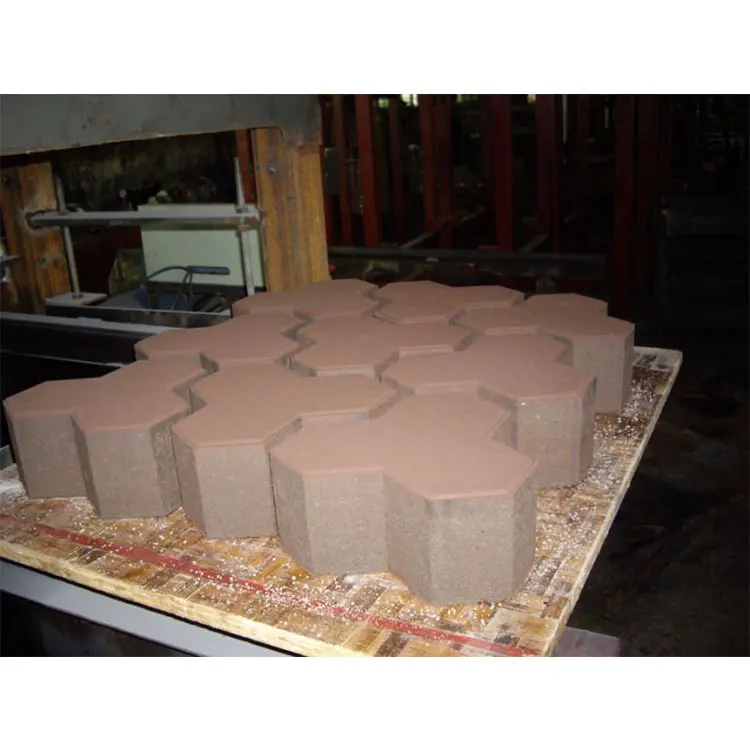
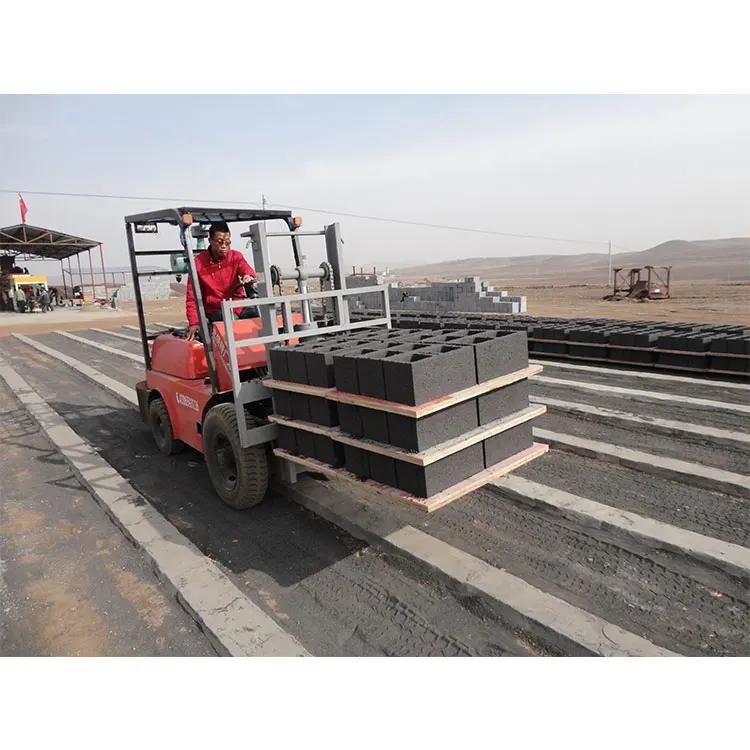
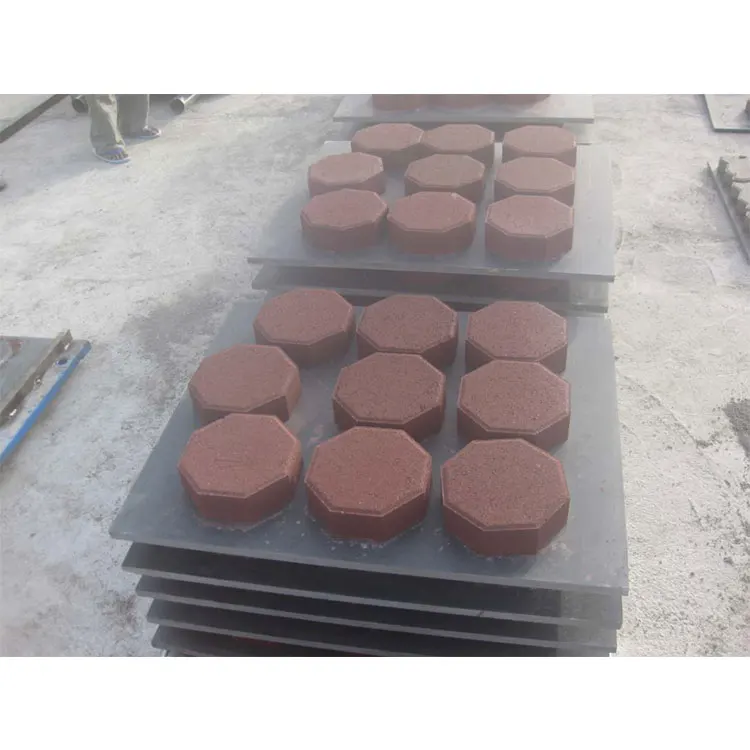
Description
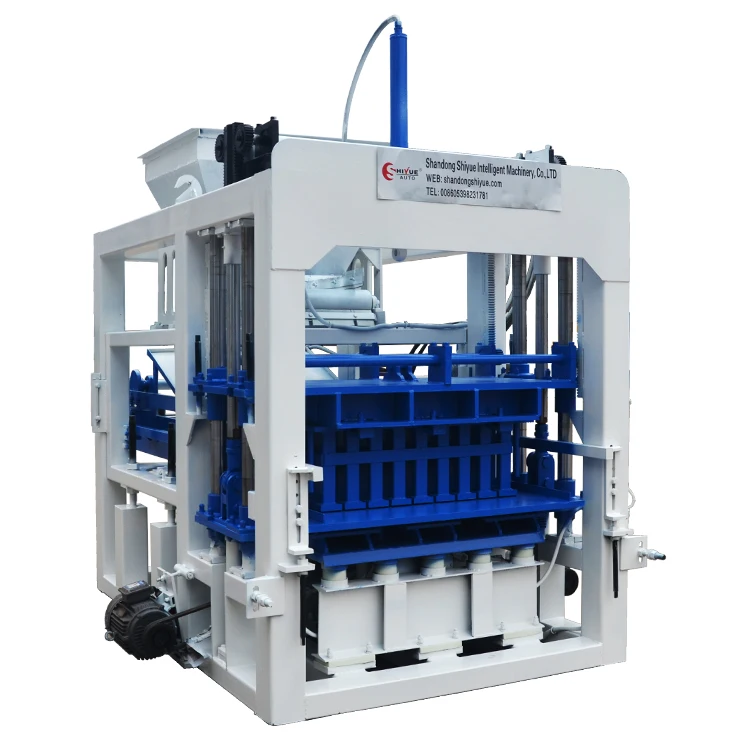
Realistic Per-Format Output — every QT5-15 capacity figure in this document is tied to a specific block dimension, mould cavity count and cycle time so buyers can plan against the format they actually sell.
Technical Specifications
| Parameter | Value |
|---|---|
| Model | QT5-15 |
| Product Type | Automatic Concrete Block Making Machine |
| Overall Dimensions (L×W×H) | 7400 × 1950 × 2800 mm |
| Pallet Size | 1100 × 550 mm |
| Vibration Form | Platform vibration |
| Vibration Frequency | 4500–5100 RPM |
| Brick Height Range | 50–200 mm |
| Molding Cycle | 15–20 s |
| Rated Power | 30.5 kW |
| Net Weight | 6200 kg |
| Control System | PLC with touch screen interface |
| Hydraulic System | Independent integrated pump station |
| Block Compressive Strength | ≥ 15 MPa |
| Automation Level | Full automatic (mechanical, hydraulic, computer control) |
| Fault Diagnosis | Integrated safety logic circuit with fault diagnosis |
| Raw Material Compatibility | Fly ash, cinder, coal gangue, river sand, gravel, cement, industrial waste residue |
| Color Product Capability | Yes, with optional color material feeding machine |
| Mould Change | Quick-change mould system (changeover time basis not stated in source) |
| Voltage & Frequency | Basis not stated in source — confirm with supplier |
| Output: 400×200×200 mm hollow block | 5 pcs/mould, 1200 pcs/h, 9600 pcs/day (8 h) |
| Output: 400×150×200 mm hollow block | 6 pcs/mould, 1437 pcs/h, 11500 pcs/day (8 h) |
| Output: 240×115×90 mm porous brick | 16 pcs/mould, 2880 pcs/h, 23040 pcs/day (8 h) |
| Output: 240×115×53 mm solid brick | 32 pcs/mould, 7680 pcs/h, 61440 pcs/day (8 h) |
| Output: 225×112.5×60 mm interlocking block | 16 pcs/mould, 2000 pcs/h, 16000 pcs/day (8 h) |
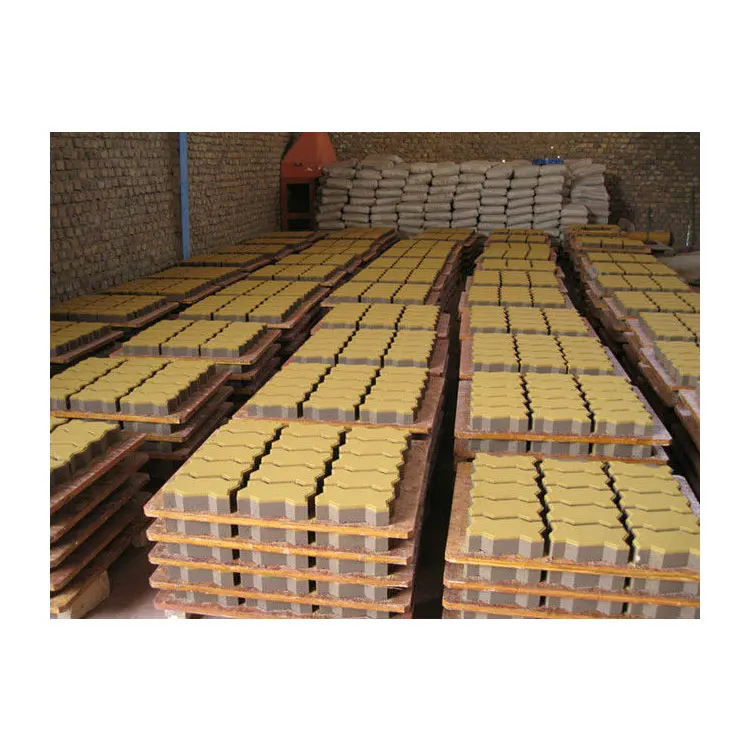
| Output: 200×100×60 mm paving block | 20 pcs/mould, 4800 pcs/h, 38400 pcs/day (8 h) |
Application Suitability
| Application | Material or Output |
|---|---|
| Hollow block production for residential and commercial walls | Fly ash, river sand, gravel, cement blends |
| Solid brick manufacturing for load-bearing masonry | Cinder, coal gangue, crushed stone mixes |
| Paving block and road kerb for municipal infrastructure | High-strength aggregate and cement ratios |
| Interlocking block for slope protection and retaining walls | Coarse aggregate with adjusted vibration frequency |
| Porous brick for thermal-insulated wall systems | Lightweight aggregate and industrial waste residue |
| Colored concrete products for landscaping and architectural facades | Pigmented face mix via optional color feeder |
What "9600 Blocks per Day" Actually Means on the QT5-15 Automatic Block Machine
Every output number on this page is anchored to a named block size and a stated cycle window, not a single headline figure.
When a quotation says "high output" without naming the format, buyers often discover on commissioning day that their primary product — say a 400×200×200 mm hollow block — runs slower than the brochure implied. I have watched a West African plant lose an entire shift because the capacity calculation assumed a thin solid brick the customer never intended to produce. The QT5-15 automatic block machine specifications table above ties each throughput figure to its exact mould cavity count, so a buyer targeting 400×150×200 mm hollow blocks can plan around 1437 pieces per hour while a buyer running 240×115×53 mm solid bricks works from 7680 pieces per hour. [NEED_CITE: common block format standards by regional market]
Mould Selection Drives the Real Daily Tonnes
A block plant earns revenue per block sold, not per machine cycle. The QT5-15 automatic block machine accepts quick-change moulds spanning hollow block, solid brick, paving block, interlocking block, porous brick and kerbstone formats, and the supplier supports custom mould design to buyer drawings. That means a producer adding 225×112.5×60 mm interlocking blocks for a new road contract can order the mould upfront and confirm cycle time before the first container ships.
Honest Capacity Planning by Block Format
Capacity planning only works when the assumed format is explicit. The six-row output table above was built from the QT5-15 automatic block machine specifications released by the factory, listing cavity count, hourly rate and eight-hour shift total for each dimension. Buyers can cross-reference those numbers against their own market mix and curing rack capacity to verify the line will actually meet daily dispatch targets. [NEED_CITE: block plant daily dispatch planning methods]
Vibration Force, Hydraulic Pressure and Block Density
Block compressive strength of ≥ 15 MPa depends on vibration frequency and hydraulic pressure working together against the buyer’s specific mix. The platform vibration runs 4500–5100 RPM while the independent hydraulic pump station sits isolated from the main frame, reducing dust and vibration contamination that would otherwise degrade valve response over successive shifts. When the aggregate is coarse river sand with high silt content — a condition I encountered on a Côte d’Ivoire project — vibration amplitude and hold time must be adjusted or block faces come out crumbly.
Pallet Size and Curing Area Geometry
The 1100 × 550 mm pallet dictates how many blocks travel through curing at once. Buyers must match that pallet footprint to existing rack spacing and forklift tine width; otherwise blocks stack by hand in the yard and the automatic line degenerates into a semi-manual operation. Confirming pallet dimensions before the order is placed prevents curing bottlenecks that no amount of press speed can fix. [NEED_CITE: pallet-to-curing-rack compatibility standards]
When the Wrong Configuration Costs More Than the Machine
A machine ordered at catalogue default settings may arrive with a PLC menu in a language the operators cannot read, a voltage mismatch that trips the site breaker, or a mould set that produces a format the local market will not buy. Each of these issues delays revenue while still consuming capital and shipping costs. The pain is never a single line item; it compounds through idle labour, missed project deadlines and strained customer relationships.
Why Technical Buyers Source the QT5-15 Automatic Block Machine Here
Block machinery is the sole product focus, so the press, mould, pallet and handling equipment are specified as one matched system. Configuration is set against the buyer’s actual mix design, local aggregate and target format rather than a catalogue default. Mould drawings cover the formats the buyer’s market sells, and custom designs are accepted against buyer-supplied drawings. Automation level is selectable, allowing a plant to start semi-automatic and add stacking or cubing later. Installation includes on-site commissioning and operator training so the first production run meets compressive strength targets from day one.
Documentation & Verification
- Line layout and capacity calculation stating the exact block format assumed for each output row
- Mould drawing and format list covering every block size the buyer’s market requires
- Pallet specification sheet confirming 1100 × 550 mm dimensions and material grade
- Hydraulic and electrical schematic matching the as-built QT5-15 wiring
- Voltage, frequency and PLC display language confirmation recorded before production
- Factory test record documenting cycle time and block strength on the buyer’s chosen format
Installation, Commissioning & Support
- Foundation plan sized for 7400 × 1950 mm footprint and 6200 kg static load
- Dedicated power circuit rated for 30.5 kW total draw with confirmed voltage and frequency
- Machine shipped in dismantled state with reassembly supervised on site
- PLC touch screen parameters loaded with buyer’s block format and cycle time before first run
- Operator training covering mould changeover, fault diagnosis logic and daily maintenance
- Wear parts list and hydraulic seal kit supplied for the first replacement interval
- Curing rack layout coordinated to 1100 × 550 mm pallet flow and forklift access
What to Include in Your Technical Inquiry
Send the exact block formats your market sells, the daily volume you need per format, and a sample of your local aggregate so the factory can run a trial mix. State your site voltage, frequency and preferred PLC language up front. If you already own curing racks or forklifts, include their dimensions so pallet compatibility is resolved before the order is confirmed.
Frequently Asked Questions
Q: How do I verify the real daily output of the QT5-15 for my specific block?
A: Output must be quoted per block format, not as a single machine number. The specification table above lists pcs/mould, pcs/hour and pcs/day (8 h) for six formats. Share your target block dimensions and the supplier will confirm cycle time against that exact mould, then issue a written capacity calculation tied to your product.
Q: Can I order custom moulds for block sizes not in the standard range?
A: Yes. The supplier accepts custom mould designs against buyer-supplied drawings and will return a mould drawing for approval before tooling begins. Confirm cavity count and expected cycle time so daily output can be recalculated for the non-standard format.
Q: Does the 1100 × 550 mm pallet fit my existing curing racks?
A: Pallet size must match rack spacing, forklift tine width and yard layout. Provide rack dimensions and forklift model in your inquiry. If a mismatch exists, the pallet or rack must be adjusted before shipment to avoid manual stacking after arrival.
Q: How is vibration force adjusted for my local aggregate?
A: The platform vibration range is 4500–5100 RPM, and hydraulic pressure is tuned against the buyer’s mix sample. Send a representative aggregate sample so the factory can set pressure and frequency to achieve ≥ 15 MPa compressive strength on your specific material blend.
Q: What electrical details must be confirmed before production starts?
A: Voltage, frequency and PLC display language must be agreed and recorded before the machine enters assembly. Late changes delay commissioning, so include these details in your first technical inquiry alongside your target block formats and daily output requirements.