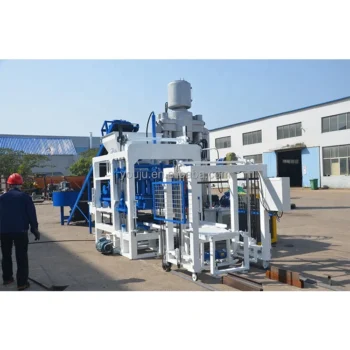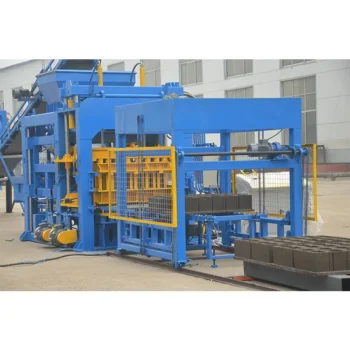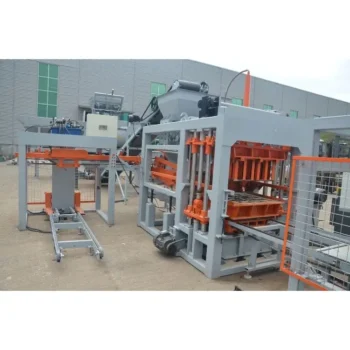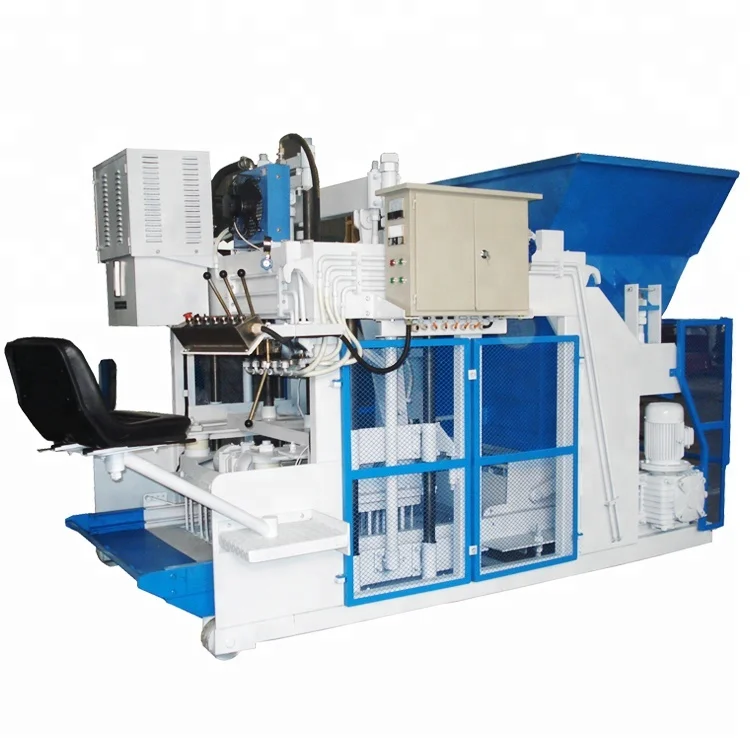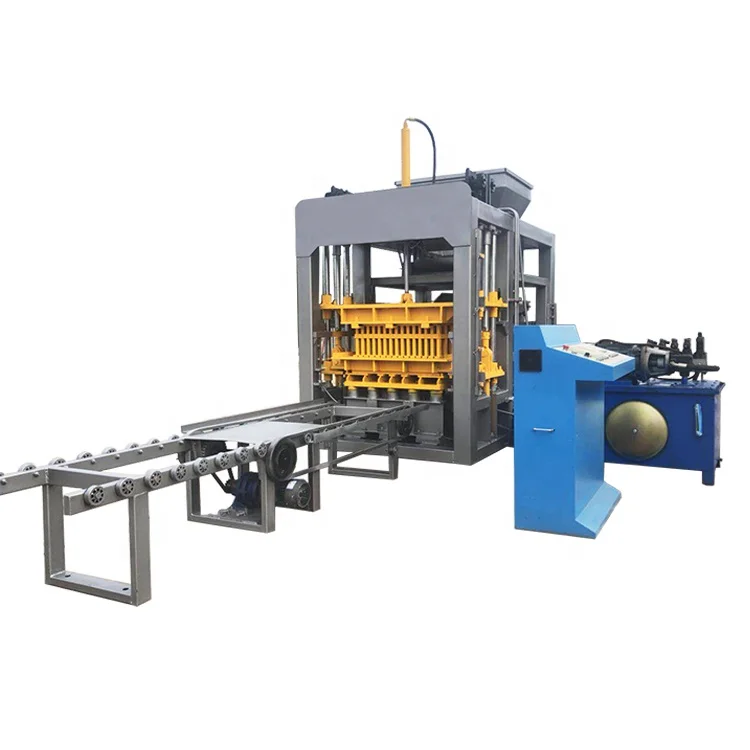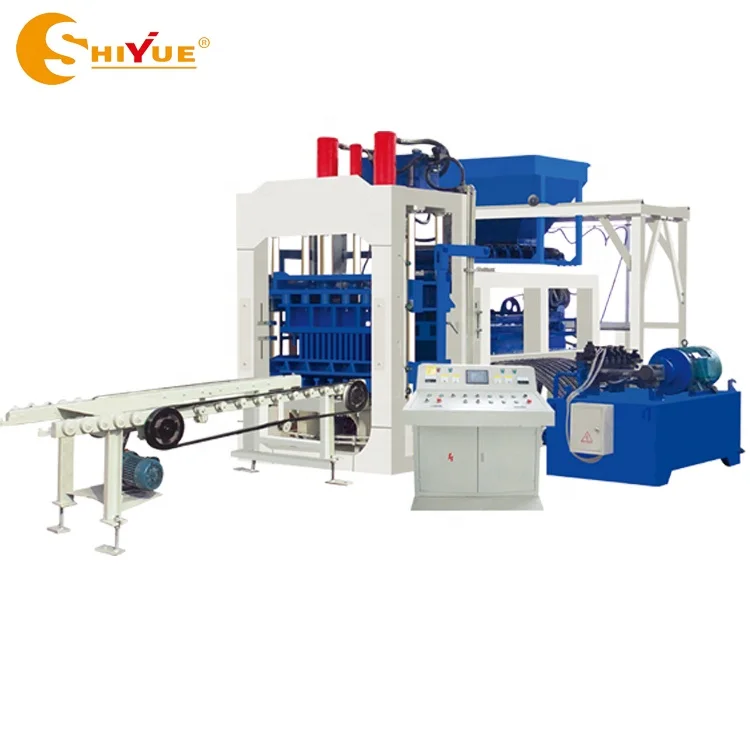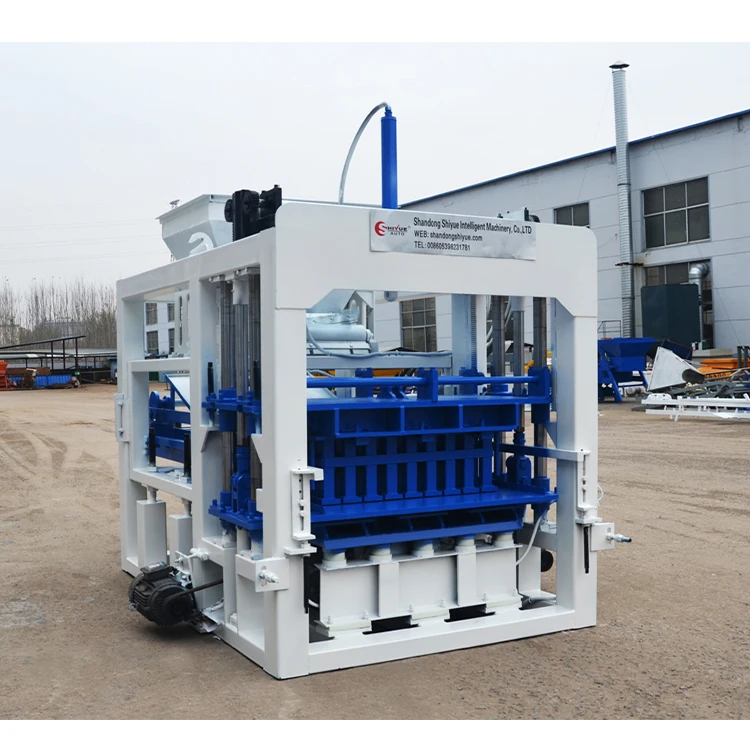
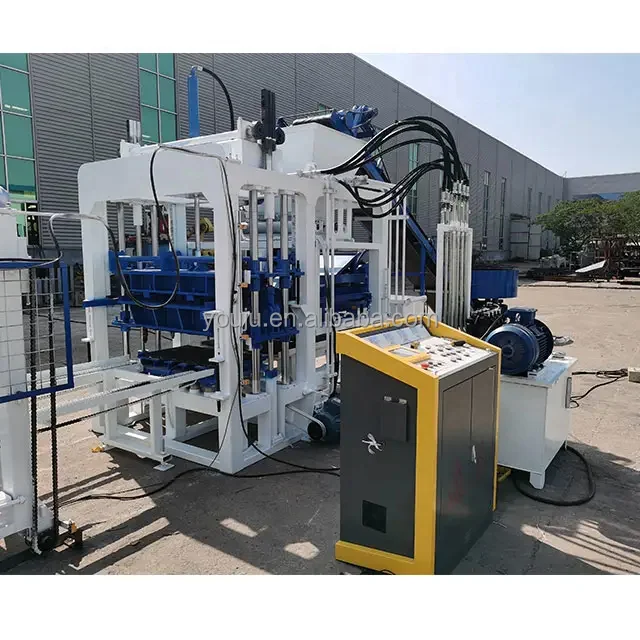
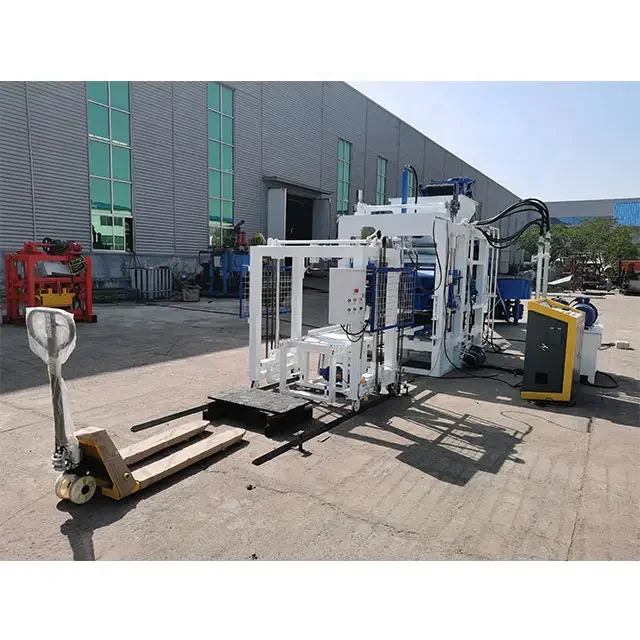
Description
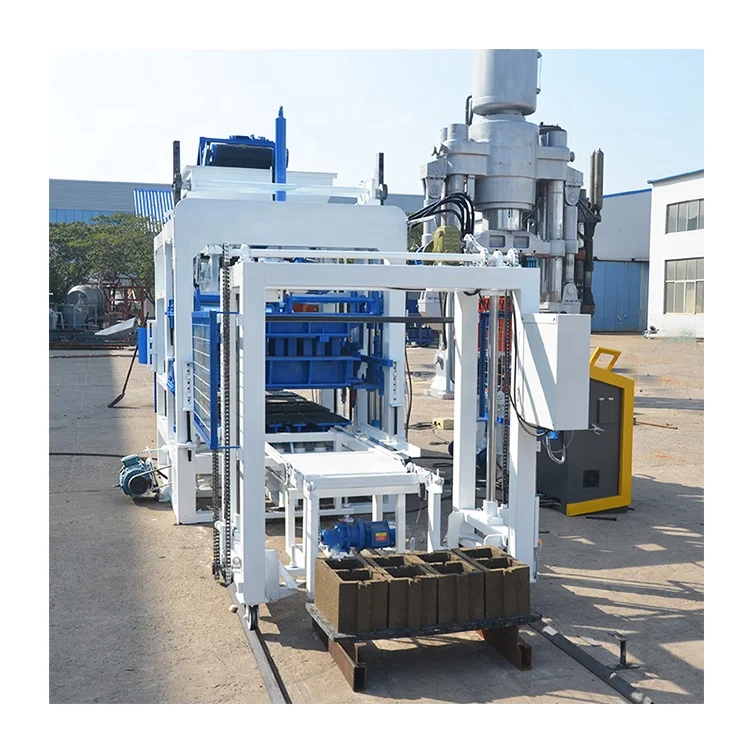
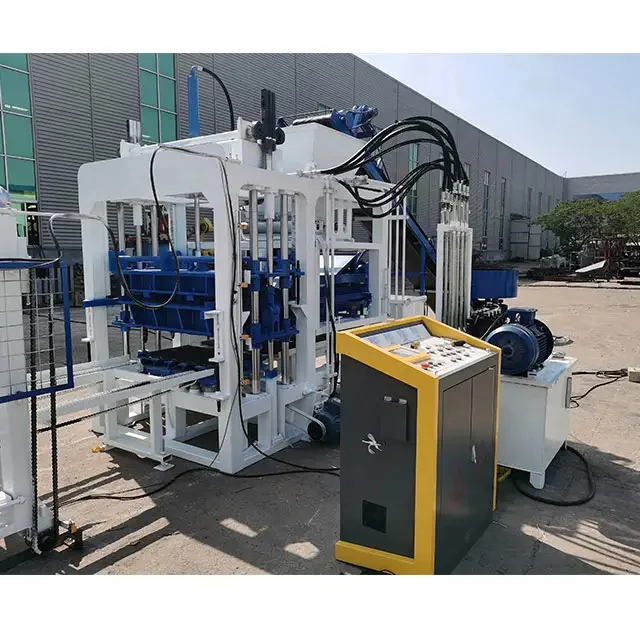
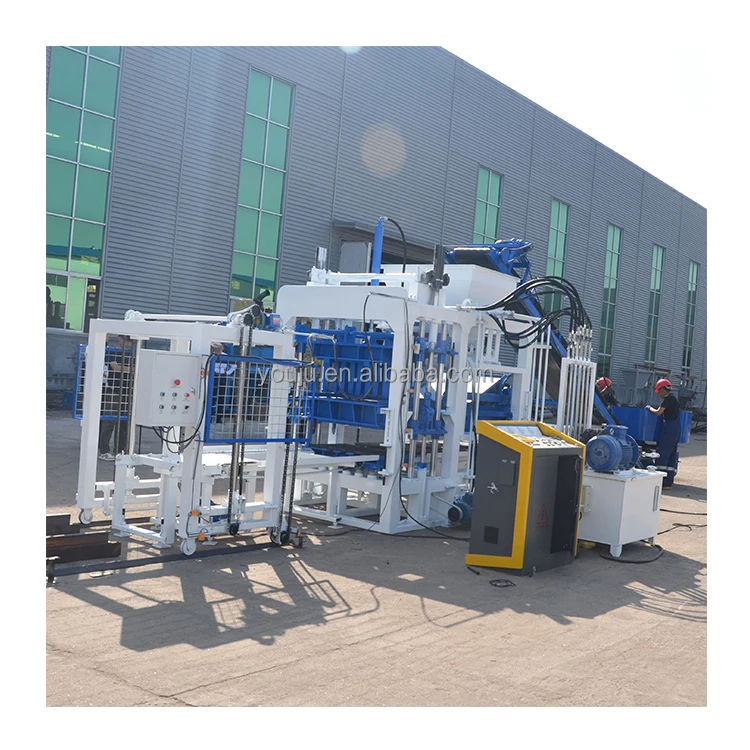
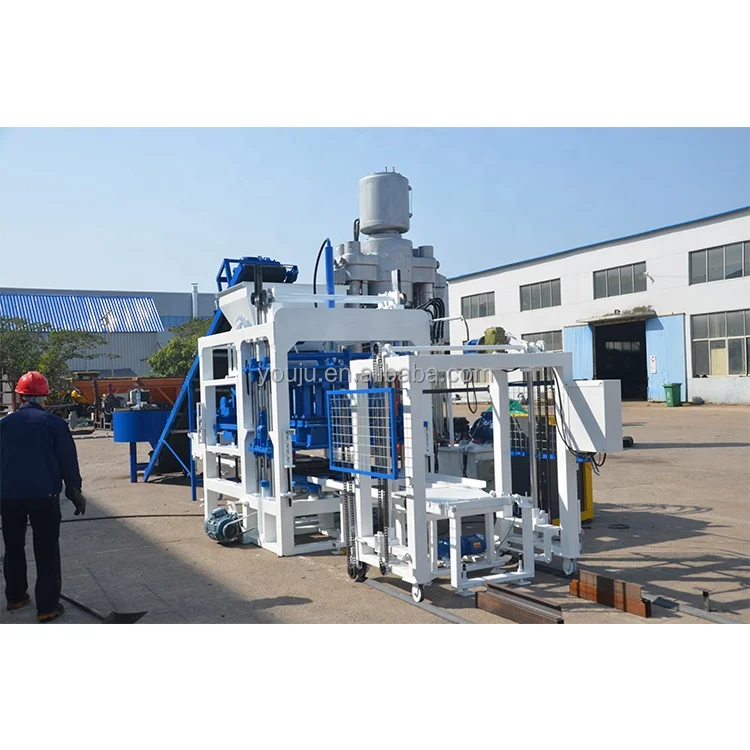
Matched System Engineering — the QT4-18 block machine, mould, pallet and handling are specified as one coordinated unit against the buyer’s actual block format and local raw material.
Technical Specifications
| Parameter | Value |
|---|---|
| Model | QT4-18 |
| Product Type | Automatic Concrete Block Making Machine |
| Overall Dimensions (L×W×H) | 2500 × 1750 × 2200 mm |
| Rated Hydraulic Pressure | 16 MPa |
| Vibration Form | Platform Vibration |
| Pallet Size | 950 × 550 mm |
| Molding Cycle | 18–25 s (basis to be confirmed per block format) |
| Overall Power | 27.5 kW |
| Control System | PLC with frequency converter |
| Electrical Components | Schneider |
| Mould Lifting Mechanism | Double-sided synchronous gears |
| Material Feeder | Distribution belt hopper |
| Automation Level | Automatic (hydro-cylinder pallet feeder, automatic block conveyor) |
| Supporting Equipment Options | JQ500 pan mixer, 6 m or 8 m belt conveyor, stacker, block clamper, cement silo, batching plant, trolley |
| Mould Configuration | One free hollow mould included; extra moulds available and customizable |
| Voltage & Frequency | Configurable — confirm with manufacturer before production |
| Net Weight | Confirm with manufacturer |
| Vibration Force | Confirm with manufacturer |
| Output Capacity | Confirm per block format basis |
Application Suitability
| Application | Material or Output |
|---|---|
| Hollow block production for masonry walls | Crushed stone, sand, cement, water |
| Solid block production for load-bearing structures | Dense aggregate blends with cement binder |
| Paving block production for walkways and driveways | Fine aggregate with colour pigment options |
| On-site block production for housing projects | Locally sourced aggregate matched to regional supply |
| Block plant format expansion | Custom mould designs for kerbstones, interlocking bricks, porous blocks |
What "Cycle Time 18–25 Seconds" Actually Means for Your Daily Output
The QT4-18 concrete block machine specifications only translate into real daily volume when the cycle time is tied to the exact block format you produce.
Catalogue sheets often quote a single cycle time without stating whether it applies to a small solid paver or a large hollow block. In practice, a 400 × 200 × 200 mm hollow block demands longer vibration and a slower hydraulic ramp than a 200 × 100 × 60 mm paving brick. Buyers who miss this detail arrive at their plant expecting one throughput and find the actual output noticeably lower. I have walked onto sites in Latin America where the machine was running perfectly — the problem was that the quoted cycle never matched the format the operator was actually pressing. [NEED_CITE: relationship between block dimensions, vibration duration and achievable cycles per hour in hydraulic block presses]
Matching Mould Format to the Block You Actually Sell
The QT4-18 comes with one hollow mould included and supports additional custom moulds built to buyer drawings. Before specifying which formats to add, it is worth mapping your local market demand — which block sizes move off the yard fastest, which ones your competitors already oversupply, and where a niche format like a porous brick or interlocking paver could capture margin. The double-sided synchronous gear lifting mechanism keeps the mould aligned during changeover, protecting both mould life and block geometry.
Why Local Aggregate Changes Everything About Machine Setup
Volcanic scoria, river gravel, crushed limestone, and manufactured sand all behave differently under vibration and pressure. The 16 MPa rated hydraulic pressure and platform vibration on the QT4-18 need to be tuned against the specific density and abrasiveness of whatever aggregate is available within hauling distance of your plant. A configuration set for one material and then run on another will produce inconsistent block strength, visible cracking, and higher mould wear. Sending a sample of your local aggregate before the machine ships allows the vibration force and pressure to be matched rather than left at a catalogue default. [NEED_CITE: effect of aggregate type and gradation on concrete block compressive strength and surface finish]
Reading the Specs That Matter for Block Quality
The platform vibration system works in combination with the 16 MPa hydraulic pressure to compact the concrete mix into the mould cavity. Higher vibration frequency helps fine aggregates flow into detailed mould features — important for paving blocks with textured faces — while sustained hydraulic pressure ensures the block holds its shape during extraction. The 950 × 550 mm pallet size determines how many blocks are produced per cycle; it also needs to fit your existing curing rack dimensions and forklift tine spacing. The PLC with frequency converter gives the operator control over vibration duration and pressure ramp, so adjustments for different block formats are made at the panel rather than through manual valve changes. The distribution belt hopper feeds material evenly across the mould box, reducing density variation from one side of the block to the other.
The Cost of Skipping Pallet and Curing Yard Coordination
Choosing a pallet size without checking your curing area layout leads to pallets that do not fit the rack spacing or are too heavy for your forklift once loaded with wet blocks. Operators then spend time rearranging stock by hand, and damaged pallets become a recurring consumable cost. I have seen plants where the block machine ran smoothly but the curing yard became the bottleneck because pallet dimensions were never cross-referenced with the racking system already on site. [NEED_CITE: pallet handling inefficiencies and their impact on effective block plant throughput]
Why Buyers Choose This Configuration Source
Block machinery is the single focus here, so the QT4-18 is not assembled from unrelated component suppliers — the press, mould, pallet, and handling equipment are specified as a matched line. Configuration is set against your actual mix design and local aggregate, not a generic catalogue table. Mould design covers the formats your market sells, including custom drawings when standard options do not fit. Automation level is selectable: start with the included automatic pallet feeder and conveyor, then add stacking or cubing as volume grows. Installation support includes on-site commissioning with operator training so the crew understands how to adjust PLC parameters for different block formats.
Documentation & Verification
- Capacity calculation stating the exact block format assumed for each output figure
- Mould drawing and format list confirming configured block types
- Voltage, frequency, and PLC display language confirmed before production
- Hydraulic and electrical schematic for on-site troubleshooting
- Factory test record run on your specified block format before dispatch
- Pallet specification matched to your curing yard and forklift
Installation, Commissioning & Support
- Foundation pad sized to the 2500 × 1750 mm footprint with level tolerance for vibration stability
- Dedicated electrical circuit for the 27.5 kW total power draw with correct voltage and frequency confirmed
- Machine arrives with mould and pallet feeder pre-assembled; belt conveyor and mixer positioned and connected on site
- First production run supervised to set PLC vibration and pressure parameters for your block format
- Operator training covers mould change procedure using the double-sided synchronous gear mechanism
- Wear parts list and mould maintenance schedule provided at handover
What to Prepare Before Requesting a Proposal
To receive an accurate QT4-18 concrete block machine specifications proposal, share the block formats your market demands, the daily output target per format, and a description of the aggregate available locally. Include your site voltage and frequency, the PLC display language your operators need, and the dimensions of your existing curing area and forklift. If you have upstream batching or downstream stacking already in place, note the make and capacity so the line can be matched end to end.
Frequently Asked Questions
Q: How is daily output calculated and which block format is assumed for the QT4-18?
A: Output is calculated from the moulding cycle time applied to the number of blocks per pallet, then multiplied by working hours. The cycle time varies by block format — a hollow block requires longer vibration than a small paver. The proposal states the cycle and output for each specific format you plan to produce, so you can compare the numbers against your actual product mix.
Q: What mould formats are available and how long does a mould change take on the QT4-18?
A: The machine ships with one hollow mould and accepts additional custom moulds for solid blocks, pavers, kerbstones, and interlocking bricks. The double-sided synchronous gear lifting system keeps alignment precise during removal and installation. Exact changeover time depends on operator familiarity and is confirmed during commissioning training on site.
Q: How is the machine configured for my local aggregate and mix design?
A: Rather than shipping a catalogue default, the vibration force and hydraulic pressure are adjusted after reviewing your local aggregate sample and target mix. This ensures the platform vibration compacts the specific material properly and block strength remains consistent across production runs.
Q: What pallet size and material should I choose based on my curing area and forklift?
A: The standard 950 × 550 mm pallet is the baseline. The final material — hardwood, bamboo composite, or steel — is selected based on your curing environment, rack spacing, and forklift capacity. Pallets that are too heavy when loaded with wet blocks create handling delays that reduce effective output.
Q: Which voltage, frequency, and control language options are confirmed before shipment?
A: Voltage and frequency are confirmed during the proposal stage to match your site supply, avoiding transformer costs or motor damage on arrival. The PLC display language is set to your operator preference so the crew can read parameters and alarms without translation during commissioning.