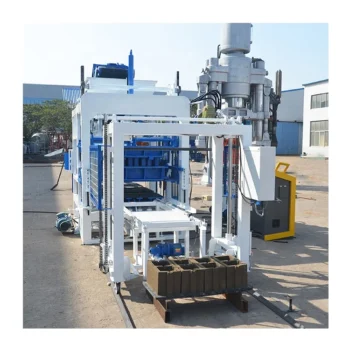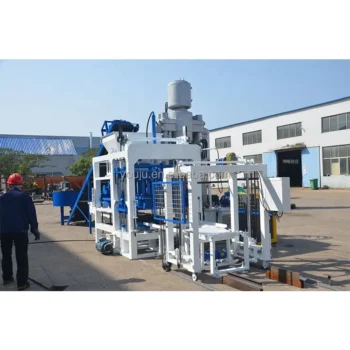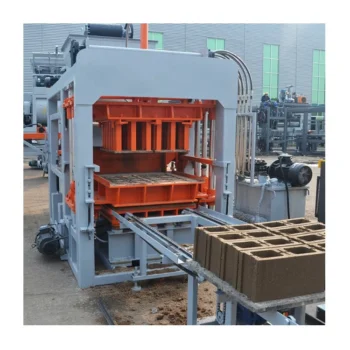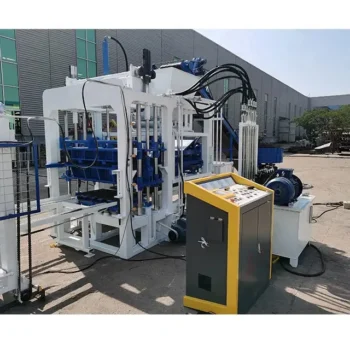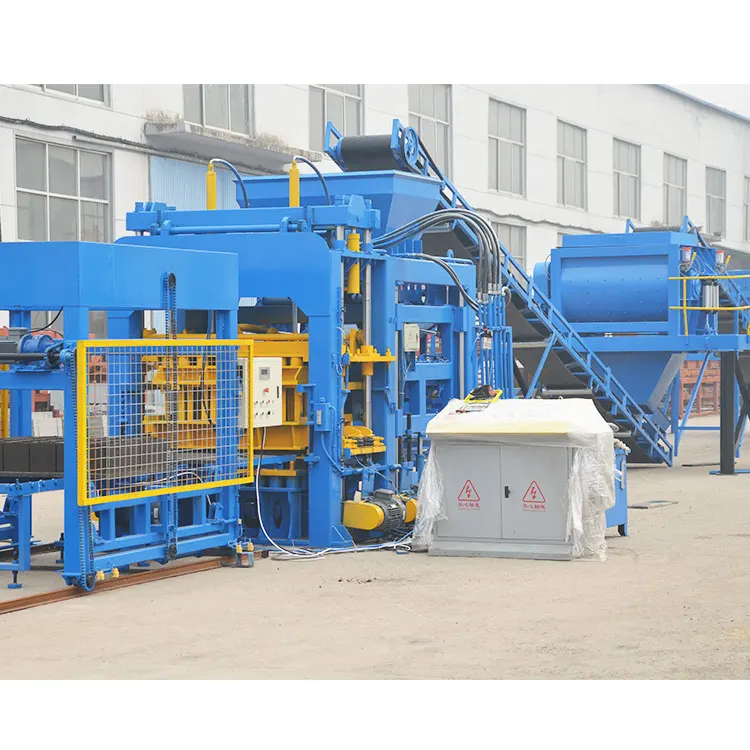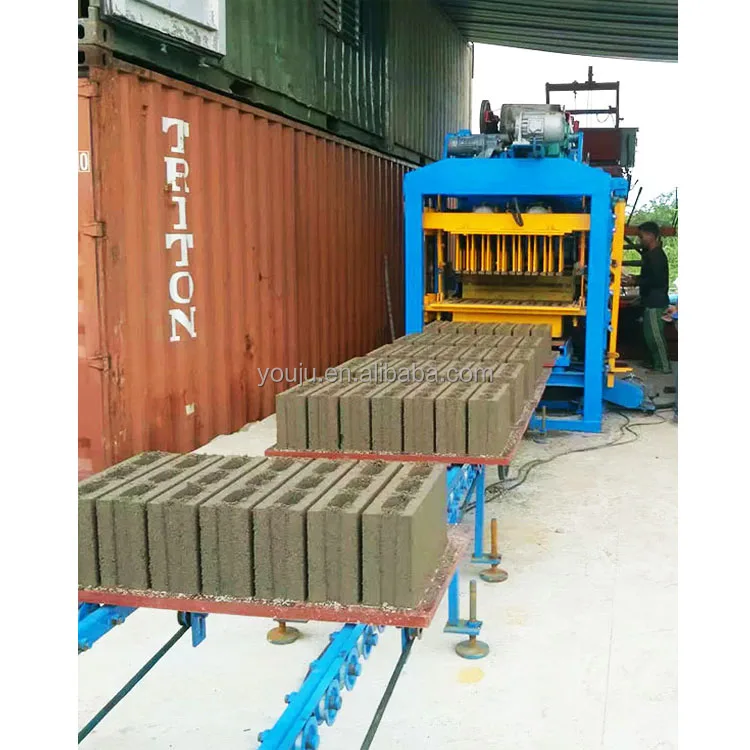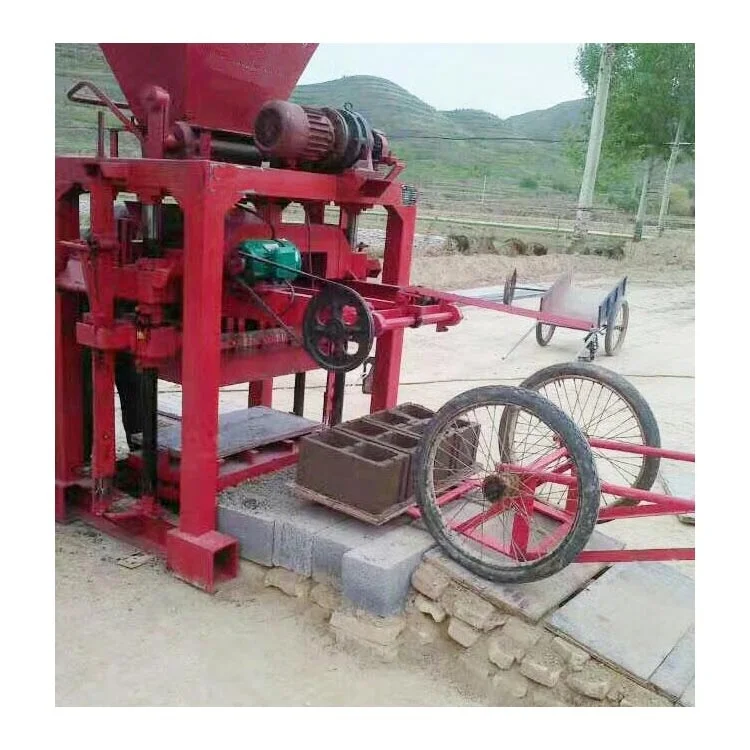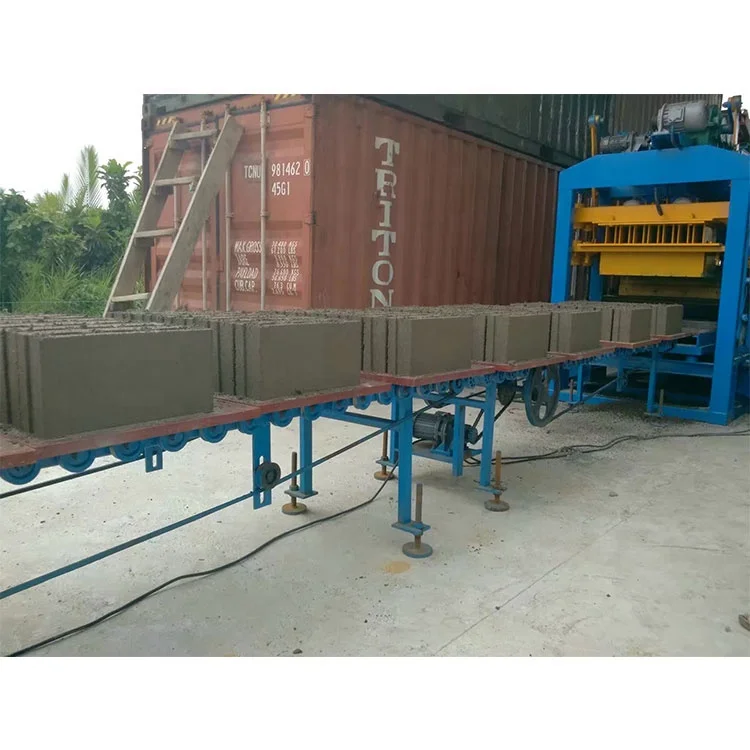
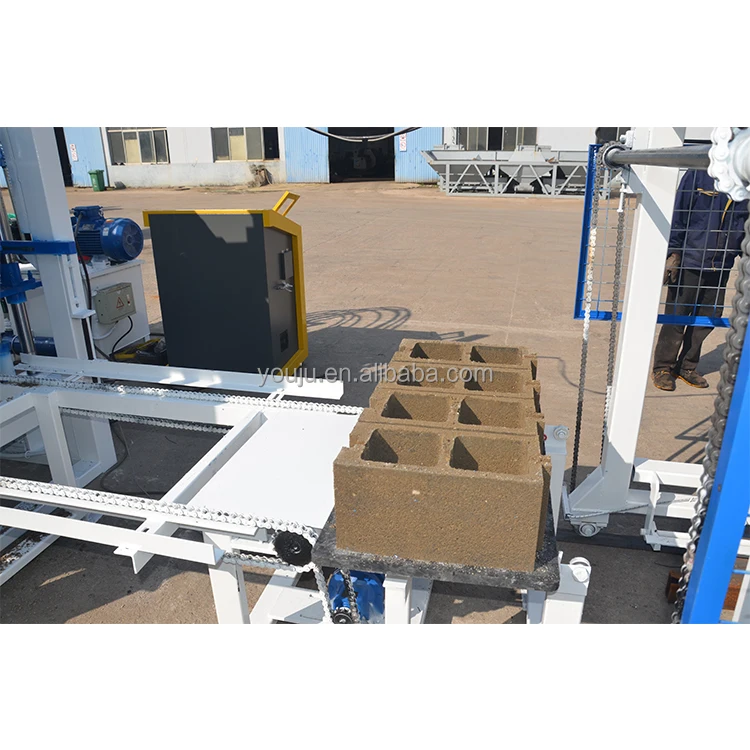
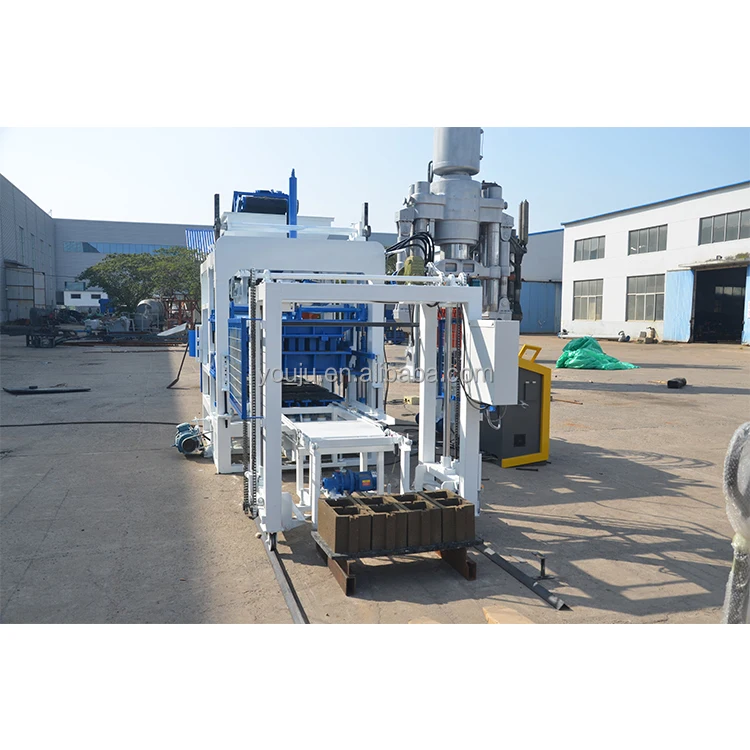
Description
Format-Matched Capacity — every output figure for the QT4-18 is calculated against a named block format and pallet cycle, not a generic strokes-per-hour claim, so buyers see what their specific product actually yields per shift.
Technical Specifications
| Parameter | Value |
|---|---|
| Model | QT4-18 |
| Product Type | Semi-Automatic Concrete Block Making Machine |
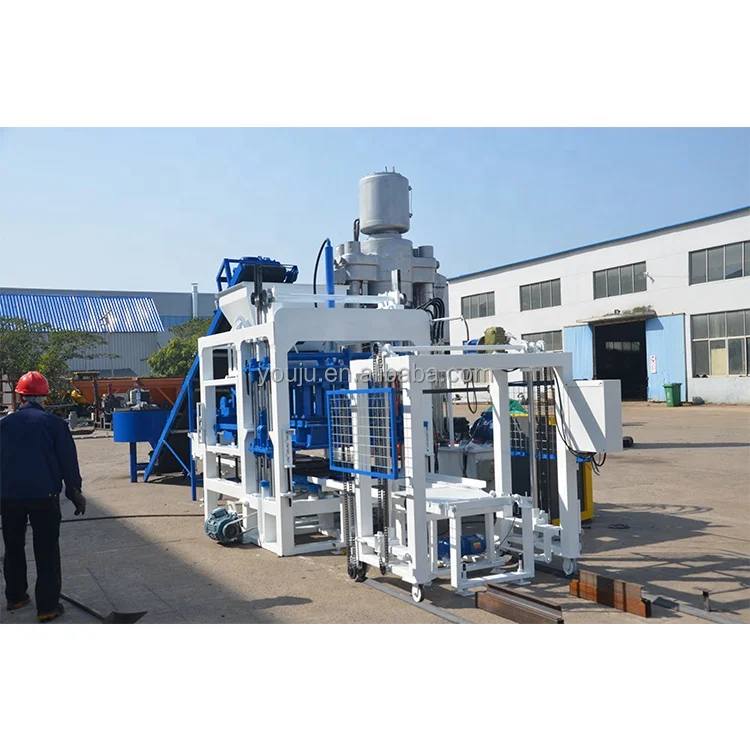
| Overall Dimension | 2500×1750×2200 mm |
| Rated Pressure | 16 MPa |
| Vibration Form | Platform Vibration |
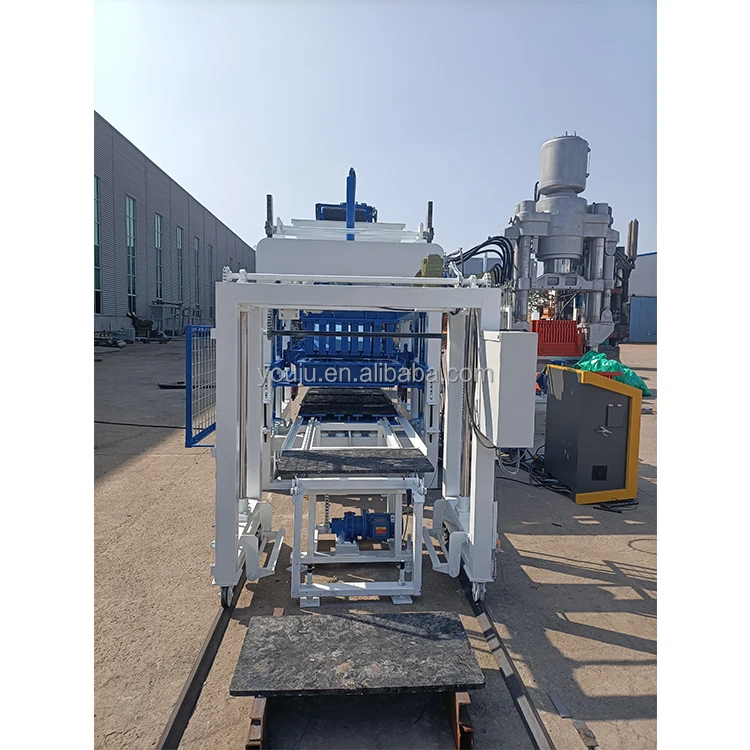
| Pallet Size | 950×550 mm |
| Molding Cycle | 18–25 s (basis not stated in source — confirm block format and material) |
| Overall Power | 27.5 kW |
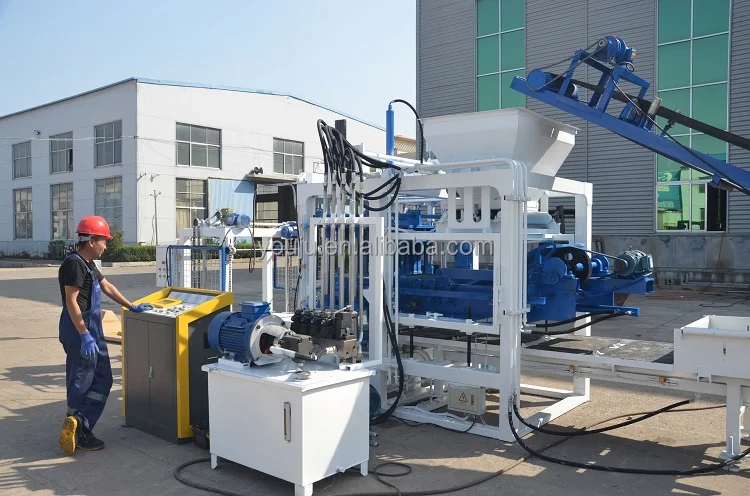
| Control System | PLC control with frequency converter (brand and language to be confirmed) |
| Mould Lifting Mechanism | Double-sided synchronous gears |
| Electrical Components | Schneider (full list to be confirmed) |
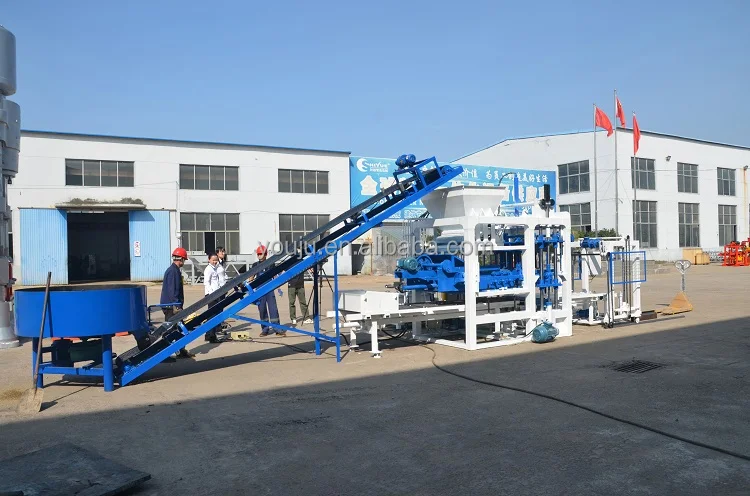
| Feeding System | Distribution belt hopper |
| Mixer (Support Equipment) | JQ500 concrete pan mixer |
| Belt Conveyor | 8 m (6 m optional) |
| Automation Level | Semi-automatic |
| Voltage & Frequency | Configurable to buyer site (to be confirmed before production) |
| Mould Format | Hollow block included; additional formats customizable (full list to be confirmed) |
| Mould Change Method | Manual bolt release and conveyor-assisted swap (change time to be confirmed) |
| Stacking Method | Stacker takes blocks layer by layer; manual transfer to curing yard |
| Output Capacity | To be calculated per block format, mix design, and shift length (basis not stated in source) |
| Standards | CE (declaration basis to be confirmed) |
Application Suitability
| Application | Material or Output |
|---|---|
| Hollow block production for small-to-medium block plants | Crushed stone, sand, cement, and water at standard ratios |
| Paving block and kerbstone production for site contractors | Fine aggregate and pigment mixes on 950×550 mm pallets |
| Solid block manufacturing for housing projects | Local sand or desert sand with adjusted vibration and pressure settings |
| Entrepreneur first-line setups with upgrade path | Semi-automatic operation with future stacking and cubing expansion |
What "18-Second Cycle Time" Actually Means for Your Daily Output
The QT4-18 semi-automatic block machine specifications how to choose guide starts with the format you will actually sell, not the fastest cycle the press can achieve.
Many quotations list a cycle time or pieces-per-hour figure without stating which block format that number assumes. A 100 mm solid block and a 200 mm hollow block demand very different vibration durations and hydraulic dwell times on the same press. Running a format the machine was not timed for means either under-compacted blocks that crack during curing or cycles stretched well past the quoted rate. Having spent weeks on Middle East sites adjusting vibration and pressure after a buyer switched from standard sand to local desert fines, I know that the first-week output rarely matches the brochure until the mix and the machine are tuned together [NEED_CITE: vibration force and hydraulic pressure matching to local aggregate properties].
Matching the Mould to the Block Your Market Actually Buys
The QT4-18 ships with a hollow block mould as standard, but most buyers need two or three formats from day one — paving blocks, solid blocks, or interlocking bricks. Each format changes the mould height, vibration amplitude, and hydraulic dwell sequence inside the QT4-18 semi-automatic block machine specifications how to choose conversation. Custom moulds are designed to the buyer’s drawings, so the cavity count and block dimensions reflect local market demand rather than a catalogue default. Mould lifting uses double-sided synchronous gears, which keeps the upper mould level during demoulding and reduces edge chipping on softer mixes.
Pallet Sizing Against the Curing Yard You Already Have
A 950×550 mm pallet is the baseline for the QT4-18, but that dimension only matters if it matches the curing rack spacing and forklift fork width at the buyer’s site. Ordering a pallet size without checking the existing yard layout leads to double-handling — blocks are pulled off one pallet and restacked onto another just to fit the rack. Before production begins, the pallet specification is confirmed against the buyer’s curing area dimensions and handling equipment. This step is part of the QT4-18 semi-automatic block machine specifications how to choose checklist and prevents costly re-handling once the line is running [NEED_CITE: pallet and curing rack dimensional coordination in block plant layout].
Reading the Specs That Determine Block Strength
Platform vibration combined with 16 MPa rated hydraulic pressure defines the compaction energy delivered to each block. Higher vibration amplitude densifies the mix, but without sufficient hydraulic hold pressure the block springs back when the mould lifts. The 18–25 second molding cycle range reflects different dwell requirements: a thin paving block needs a shorter cycle, while a 200 mm hollow block demands longer vibration to consolidate the deeper cavity walls. The frequency converter allows the operator to tune vibration frequency to the specific aggregate gradation — finer desert sand typically requires a higher frequency than coarse crushed stone. Double-sided synchronous gears ensure the upper mould descends evenly, so the top face of every block is flat and dimensionally consistent. Electrical components from Schneider, subject to final confirmation, provide reliable switching in dusty and humid plant environments.
The Cost of Skipping the Format and Mix Conversation
When a QT4-18 is ordered without confirming the block format, local aggregate, and pallet size together, the first month on site becomes a series of costly adjustments. Blocks crack during curing because vibration was set for a different sand type. Pallets do not fit the existing curing racks, forcing the crew to hand-stack output on the floor. Mould changes take most of a shift because the bolt pattern and lifting procedure were never walked through with the operator. These issues do not show up in a quotation that only lists cycle time and overall power — they surface only when the machine meets the buyer’s actual materials and site conditions [NEED_CITE: common commissioning failures in exported block making equipment].
Why Buyers Source the QT4-18 Through This Configuration Process
Block machinery is the single focus here, which means the QT4-18 is specified as a matched system — press, mould, pallet, mixer, and conveyor — rather than assembled from separate suppliers. The configuration is set against the buyer’s mix design and target block format, not pulled from a catalogue default. Mould design covers the formats the buyer’s market actually sells, including custom drawings for non-standard dimensions. Automation level is selectable, so a buyer can start semi-automatic and add automatic stacking or cubing later without replacing the press. Installation support includes on-site commissioning and operator training, so the crew understands mould change procedures, vibration tuning, and daily maintenance before the first production shift.
Documentation & Verification
- Line layout and capacity calculation stating the exact block format assumed for each output figure
- Mould drawing and format list confirming which formats are included and which are custom-designed
- Voltage, frequency, and PLC display language confirmation sheet signed before production begins
- Factory test record and packing photographs provided before container loading
- Operation and maintenance manual with wear parts and mould replacement schedule
Installation, Commissioning & Support
- Foundation pad sized to the 2500×1750 mm footprint with anchor bolt layout provided before shipment
- Dedicated 27.5 kW electrical circuit with confirmed voltage and frequency matching the buyer’s site supply
- Machine dismantled for container loading; reassembly supervised on site during commissioning
- First-run vibration and pressure calibration performed with the buyer’s actual mix and aggregate
- Operator training covers mould change procedure, PLC navigation, and daily lubrication points
- Wear parts list supplied with recommended reorder intervals for hydraulic seals and mould liners
What to Include in Your Inquiry
To size the QT4-18 correctly, share the block formats you plan to produce, the target daily output per format, and the local aggregate type available at your site. Confirm your existing curing yard dimensions, forklift specifications, and the voltage and frequency at your plant so the pallet size and electrical configuration can be locked in before production starts.
Frequently Asked Questions
Q: How is the QT4-18 output capacity calculated per block format?
A: Output is calculated by multiplying the confirmed molding cycle for a specific block format by the number of cavities in that mould, then adjusted for realistic shift duration, pallet handling time, and mixer feed rate. Every capacity document states the exact format, mix, and pallet cycle assumed, so the figure reflects what the line will actually produce per shift.
Q: Which mould formats come standard and how are custom moulds quoted?
A: A hollow block mould is included as standard. Additional formats — paving blocks, solid blocks, interlocking bricks — are designed to the buyer’s dimensional drawings and quoted separately. Each custom mould is tested on the QT4-18 press before shipment to verify cycle time and block dimensions.
Q: How long does a full mould change take on the QT4-18?
A: Mould change involves manual bolt release and a conveyor-assisted swap of the mould box. The exact change time depends on operator familiarity and whether the next mould is pre-staged beside the press. Operators are trained during commissioning to perform the swap efficiently without requiring special lifting equipment.
Q: How is pallet size selected to match the buyer’s curing yard?
A: The standard 950×550 mm pallet is confirmed against the buyer’s curing rack spacing and forklift fork width before production. If the existing yard layout requires a different pallet dimension, the press feed and stacking stations are adjusted accordingly so blocks move from press to rack without double-handling.
Q: What voltage, frequency, and PLC language options are available?
A: Voltage and frequency are configured to the buyer’s site electrical supply, and the PLC display language is confirmed before production begins. A signed confirmation sheet covering all three parameters is required before the machine enters the build phase to avoid commissioning delays on arrival.