


Description
[Matched Mould Configuration] — QT4-15A block making machine specifications are calculated per block format with cavity counts, not quoted as a single blanket cycle rate that leaves daily volume to guesswork.
Technical Specifications
| Parameter | Value |
|---|---|
| Model | QT4-15A |
| Product Type | Fully Automatic Hydraulic Block Making Machine |
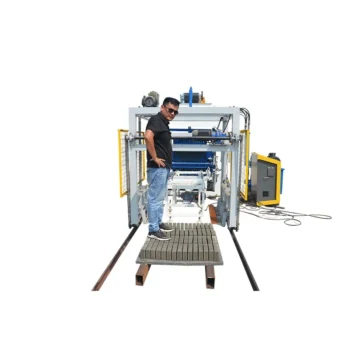
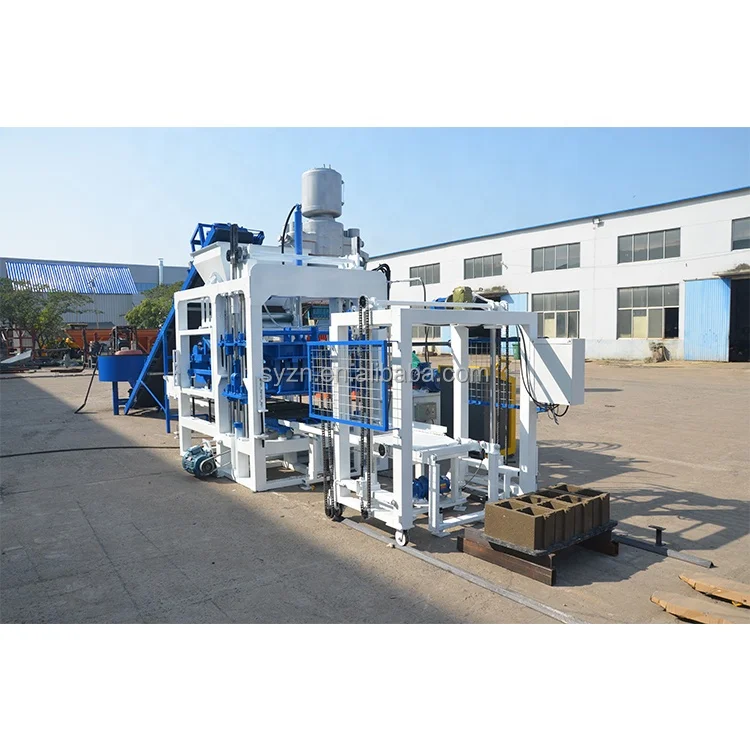
| Overall Dimensions (L×W×H) | 7100×1600×2610 mm |
| Total Weight | 3 T |
| Vibration Frequency | 4600 r/min |
| Vibration Force | 40-50 kN |
| Total Power | 18.45 kW |
| Molding Cycle | 15-25s (basis not stated in source — confirm block format / material / thickness) |
| Pallet Size | 850×550×25 mm |
| Mixer Model | JQ350 |
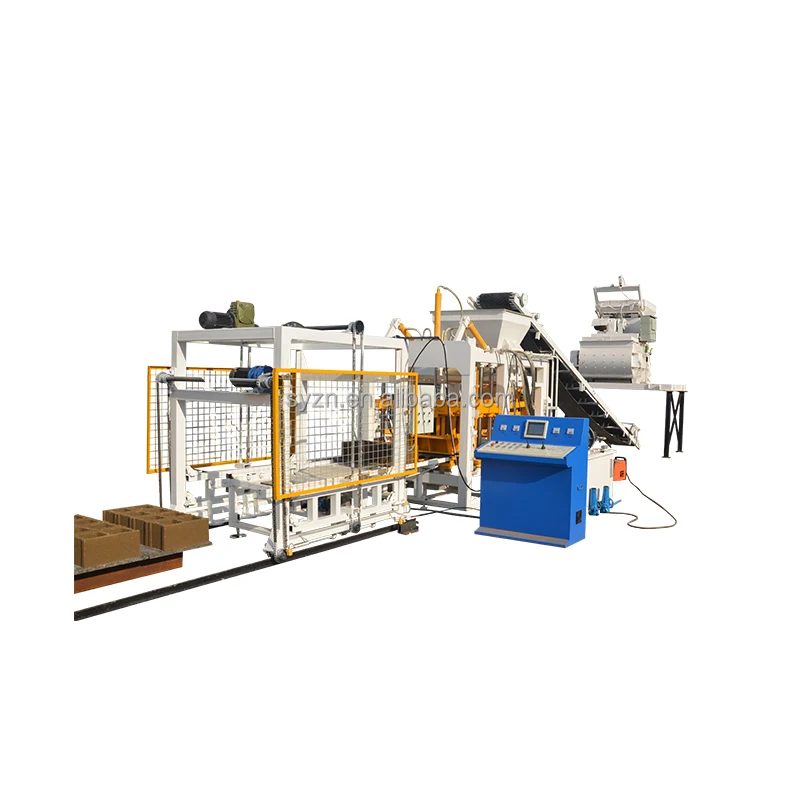
| Control System | PLC control system |
| Hydraulic Station | Included |
| Automation Level | Fully automatic with PLC |
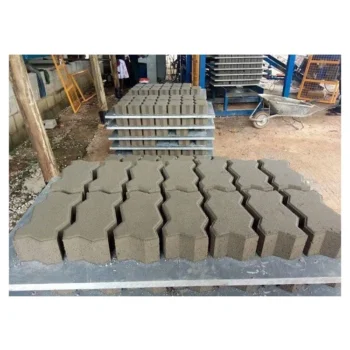
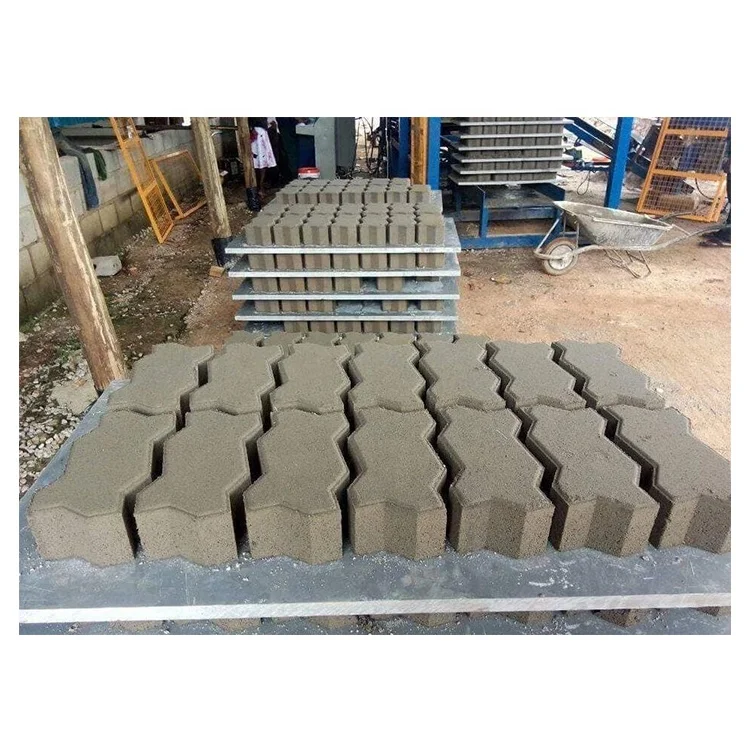
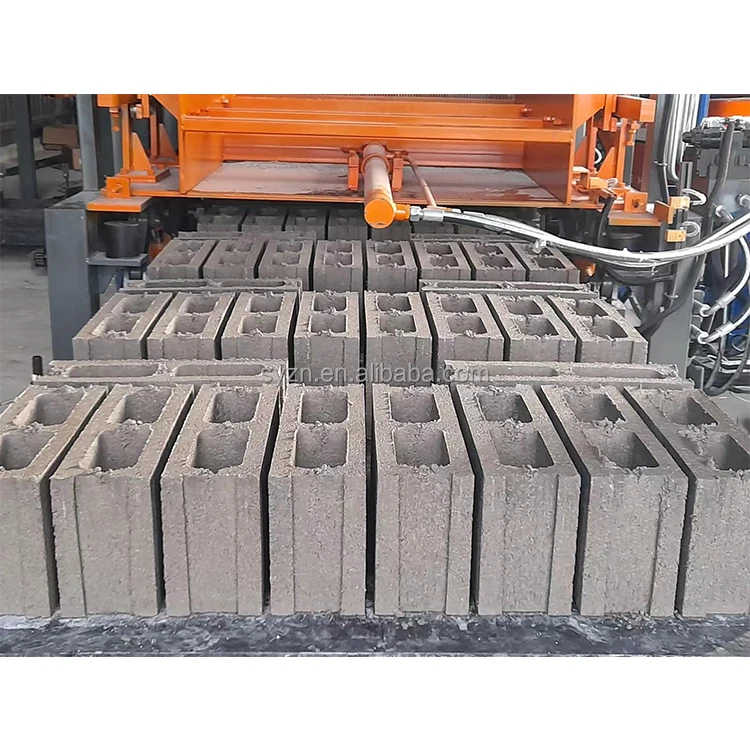
| Applied Products | Paver, solid block, hollow block, curbstone |
| Raw Materials | Crushed stones, sand, cement, dust, fly ash |
| Output (Hollow block 400×200×200mm) | 408 pcs/hr, 3264 pcs/8hr (based on 4 pcs/mould) |
| Output (Hollow block 400×150×200mm) | 510 pcs/hr, 4080 pcs/8hr (based on 5 pcs/mould) |
| Output (Solid brick 240×115×53mm) | 2100 pcs/hr, 17000 pcs/8hr (based on 18 pcs/mould) |
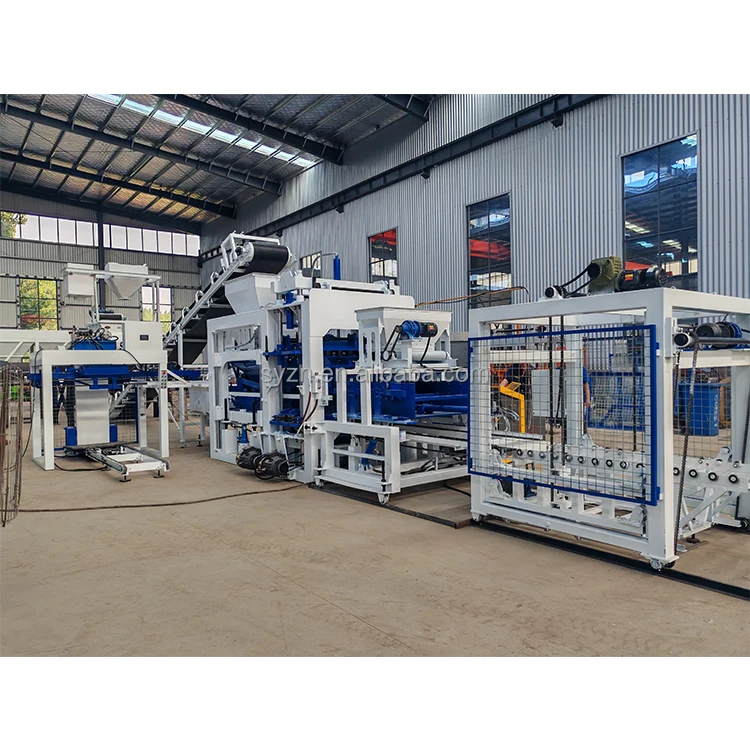
| Included Equipment | Block making machine, hydraulic station, PLC control system, pallet feeder, brick conveyor, block sweeper |
| Free Parts | Manual hydraulic trolley, spare parts and tools |
Application Suitability
| Application | Material or Output |
|---|---|
| Hollow block production | Crushed stone, sand, cement, fly ash (400×200×200mm or 400×150×200mm formats) |
| Solid brick production | Sand, cement, dust, fly ash (240×115×53mm format) |
| Concrete paver manufacturing | Crushed stones, sand, cement with local aggregate variations |
| Curbstone and kerb production | Heavy mix designs with larger aggregate fractions |
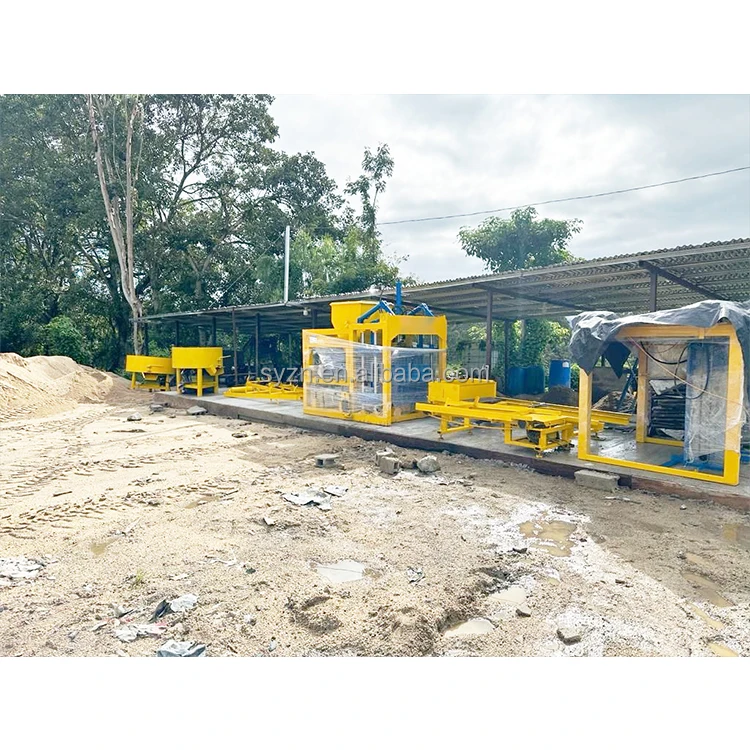
| On-site project block making | Locally sourced aggregate including volcanic ash or regional dust |
Why "Cycles Per Hour" Means Nothing Without the Block Format
Capacity must always state which block size and mould cavity count produced the number, otherwise the daily output target you planned against will not match what the machine actually delivers on your floor.
Suppliers often quote a peak cycle rate derived from their smallest, lightest solid brick, then let the buyer assume that rate applies to the 400×200×200mm hollow block that actually makes up the bulk of local sales. When the machine arrives and the real format runs at half the advertised speed, the entire project schedule unravels. Every output figure for how to choose QT4-15A in this guide is tied directly to a named block dimension and a specific mould cavity count. [NEED_CITE: honest block machine capacity quoting standards]
Matching Mould Formats to Your Actual Market Demand
The QT4-15A covers pavers, solid blocks, hollow blocks, and curbstones through dedicated moulds, each with a different cavity count that directly sets the hourly output. A buyer whose market runs primarily on 400×200×200mm hollow blocks needs to plan around the 4-cavity rate, not the 18-cavity solid brick figure. Understanding block making machine specifications per format prevents the common mistake of sizing a plant around a capacity number that only exists when running a format you may never produce.
Vibration Force and Mix Design Must Align Before Shipment
The 40-50 kN vibration force paired with the hydraulic station determines whether your specific local aggregate produces a dense, consistent block or a friable one that fails compressive strength tests. I once saw a line in Ecuador stall for weeks because the machine was calibrated for standard river sand at the factory, then shipped to a site using volcanic ash aggregate that demanded different pressure and vibration parameters. The block making machine specifications mean very little if the force profile does not match what you are actually feeding into the mixer. [NEED_CITE: aggregate variation impact on block compressive strength]
Reading the Specs That Actually Determine Block Quality
The vibration frequency of 4600 r/min and vibration force of 40-50 kN work together to compact the concrete mix into the mould. Higher frequency with insufficient force produces a smooth surface but weak core; higher force with low frequency cracks the block edges. The pallet size of 850×550×25 mm dictates your curing rack dimensions and the forklift tine spacing you need — order the wrong pallet spec and your existing curing infrastructure becomes unusable. The 18.45 kW total power draw tells your electrician whether the current site supply needs a dedicated circuit or a transformer upgrade before the machine can be commissioned. The JQ350 mixer must be matched to the cycle time so the press is never starved of material between strokes.
What Happens When Pallet and Voltage Are Decided After Arrival
Choosing pallet material and thickness without checking the buyer’s curing area layout means pallets warp under local humidity, and blocks crack before they reach full cure strength. Leaving voltage, frequency, and PLC display language to be sorted on-site delays commissioning by days or weeks while the wrong contactors and fuses are sourced locally. These are not minor configuration details — they are the difference between a machine that produces saleable block on day one and one that sits idle while you wait for parts. [NEED_CITE: common commissioning delays from unconfirmed electrical specifications]
What We Configure Before the QT4-15A Leaves the Factory
The machine, mould, pallet, and handling equipment are specified as one matched system, not assembled from separate suppliers who shift blame when cycle times do not align. We set the vibration and hydraulic parameters against the buyer’s actual mix design and local aggregate sample, not a catalogue default. Mould design covers the specific formats your regional market sells, including custom drawings where standard cavity counts do not match your pallet size. The automation level is defined upfront so you know exactly which stations — pallet feeder, brick conveyor, block sweeper — are included and which remain manual.
Documentation & Verification
- Line layout and capacity calculation stating the block format assumed for each output figure
- Mould drawing and format list confirming included and optional block sizes
- Pallet specification matched to your curing rack dimensions and forklift capacity
- Voltage, frequency, and PLC display language confirmation before production begins
- Factory test record on your specified block format and mix design before dispatch
Installation, Commissioning & Support
- Foundation plan based on the 7100×1600×2610 mm footprint and 3 T operating weight
- Electrical supply verified for the 18.45 kW total load and confirmed voltage and frequency
- PLC display language set to operator preference before the control panel is sealed
- On-site commissioning with vibration and hydraulic parameters tuned to local aggregate
- Operator training covering mould change procedure and daily maintenance checkpoints
- Wear parts list and first replacement schedule provided at handover
What We Need From You to Build the Right Configuration
Send us the exact block formats your market demands, including dimensions and target daily volume for each. Provide a sample or analysis of your local aggregate so we can match vibration force and hydraulic pressure to your actual mix. Confirm your site voltage, frequency, preferred PLC language, and the forklift and curing rack setup you already have in place so the pallet specification aligns from day one.
Frequently Asked Questions
Q: How is the QT4-15A capacity calculated per block format, and what is the realistic 8-hour output?
A: Each output figure is tied to a specific block size and mould cavity count. For a 400×200×200mm hollow block with a 4-cavity mould, the rate is 408 pieces per hour or 3264 per 8-hour shift. Solid brick at 240×115×53mm with an 18-cavity mould runs at 2100 pieces per hour. The molding cycle of 15-25 seconds varies by format and material thickness, so confirm your target product before relying on any single number.
Q: Which mould formats are included, and how long does a mould change take?
A: The machine supports paver, solid block, hollow block, and curbstone formats. Which specific moulds ship with the machine depends on your configuration order. Mould change time is not stated in the base specifications — confirm the change method and expected duration during the proposal stage so you can plan shift schedules around format switching.
Q: How do I match vibration force and hydraulic pressure to my local mix design?
A: The 40-50 kN vibration force and included hydraulic station must be calibrated to your specific aggregate type, cement ratio, and target block strength. Send a sample of your local material before production so the factory can run a test cycle and adjust parameters. Skipping this step risks blocks that crumble or fail compressive strength tests once production begins on-site.
Q: What pallet size does the QT4-15A require, and how does it fit my existing setup?
A: The pallet size is 850×550×25 mm. Before confirming your order, cross-check this against your curing rack dimensions, forklift tine spacing, and the pallet material best suited to your local humidity. A mismatch here means your existing handling equipment cannot move loaded pallets, or pallets degrade faster than expected under local conditions.
Q: What voltage and PLC language options are available, and how are they confirmed?
A: Voltage and frequency are configurable to your target market but are not stated in the base specification sheet — they must be confirmed before production. The PLC display language is also set during the order process. Both are verified on the factory test record before dispatch so there are no commissioning delays when the machine arrives at your site.