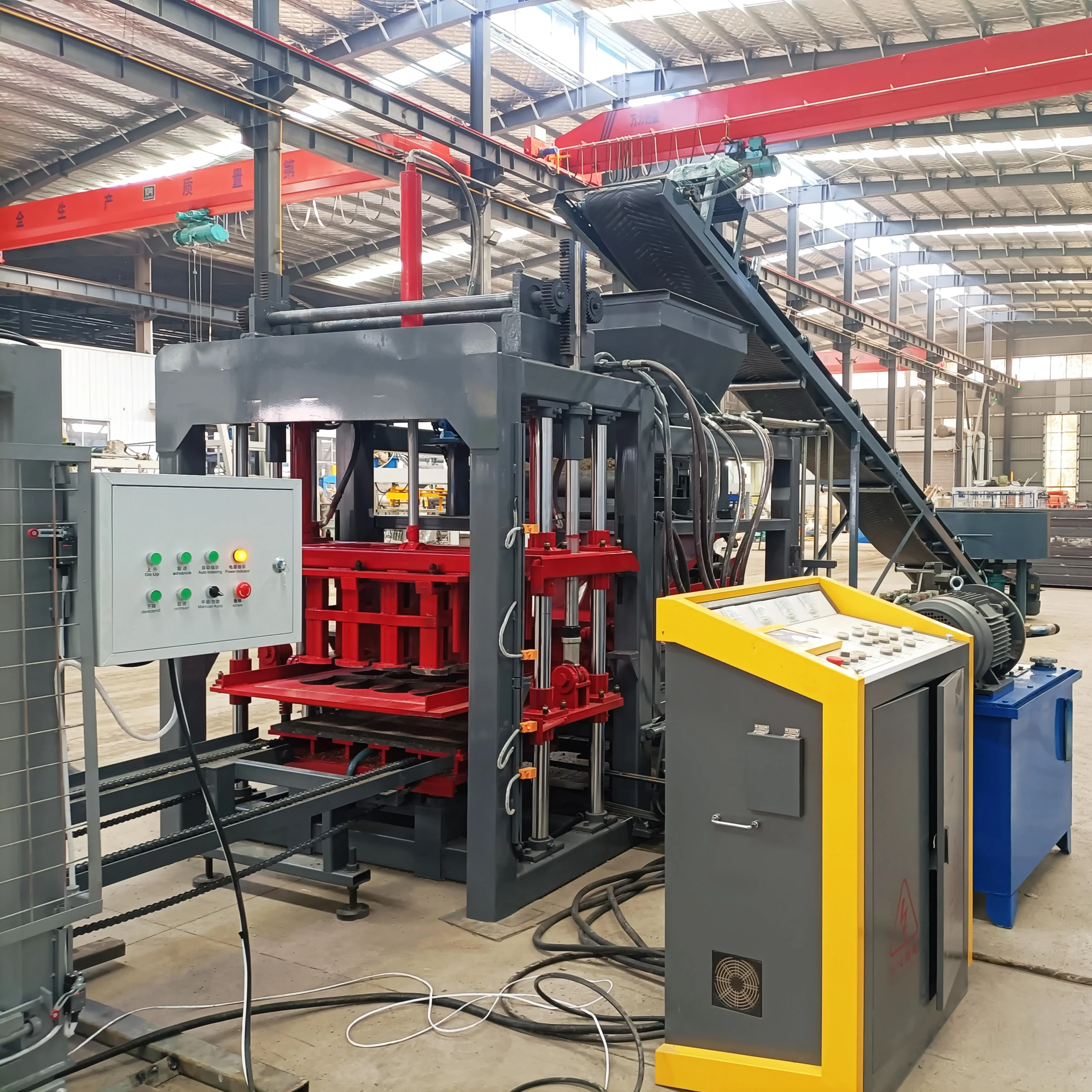
Description
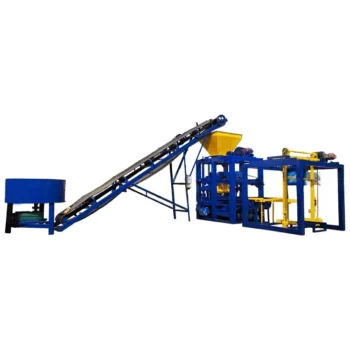
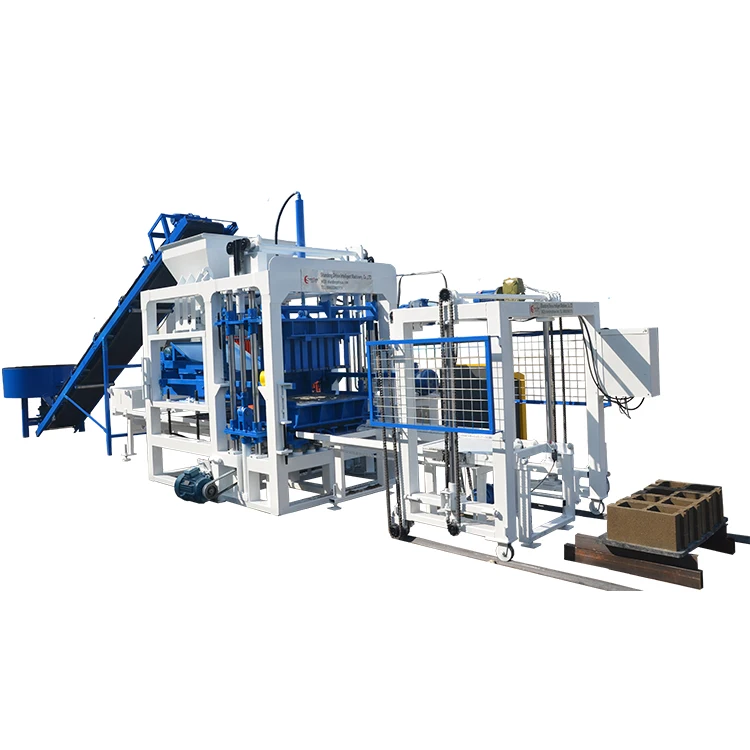
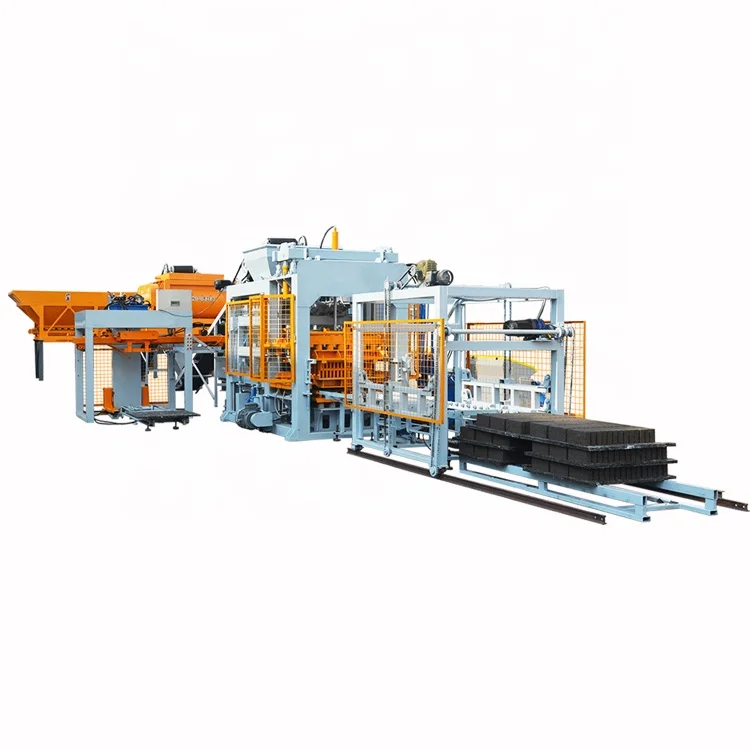
Configured to the Block You Sell — The QT4-15A automatic concrete brick making machine is sized against your target format, local aggregate and pallet flow rather than shipped as a generic catalogue unit.
Technical Specifications
| Parameter | Value |
|---|---|
| Model | QT4-15A |
| Product Type | Fully Automatic Concrete Brick Making Machine |
| Overall Dimensions (L×W×H) | 4100×1600×2600 mm |
| Total Mass | 4 T |
| Rated Pressure | 16–21 MPa |
| Vibration Force | 55 kN |
| Main Vibration Form | Platform Vibration |
| Vibration Frequency | 4200 r/min |
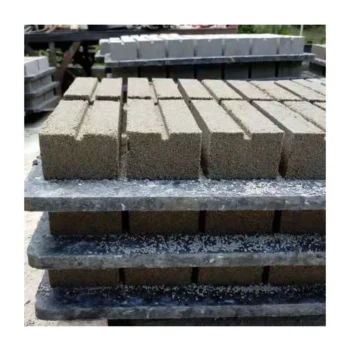
| Pallet Size | 880×550 mm |
| Molding Cycle | 25–30 s (basis not stated in source — confirm block format / material / thickness) |
| Overall Power | 18.45 kW |
| Demolding Method | Hydraulic |
| Factory Area | 300 m² |
| Raw Materials | Crushed stone, sand, cement, fly ash, gravel, slag |
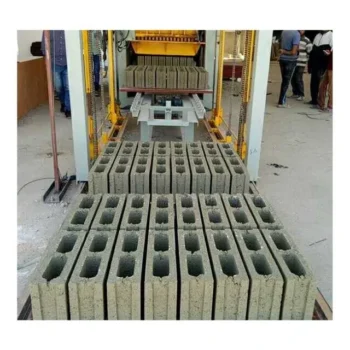
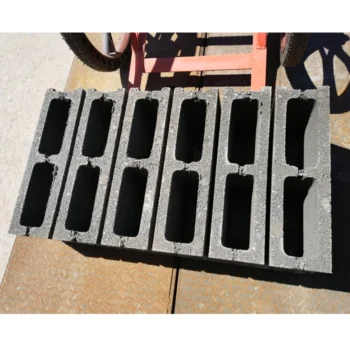
| Applied Products | Hollow blocks, solid blocks, pavers, interlocking blocks, curbstone, colored pavers |
| Automation Level | Fully automatic |
Application Suitability
| Application | Material or Output |
|---|---|
| Hollow block production for wall construction | Crushed stone, sand, cement and fly ash blends |
| Solid block manufacturing for load-bearing walls | Gravel and cement mixes with controlled moisture |
| Paving block and colored paver runs | Fine aggregate with pigment dosing |
| Interlocking brick for retaining walls | Sand-cement blends with low-slump consistency |
| Curbstone and kerb production | Coarse aggregate with high-pressure compaction |
| Porous brick for permeable surfaces | Open-graded aggregate with reduced cement content |
What "25–30 Seconds per Cycle" Actually Means for Your Output
A cycle time is only meaningful when tied to a specific block format, mix design and pallet size.
Buyers routinely receive quotations listing a molding cycle without the block format that figure assumes. A 25-second cycle on a thin paver does not translate to the same hourly output on a 200 mm hollow block. When you select an automatic concrete brick making machine, the capacity calculation must state the exact product dimensions and raw material blend used for the test. Without that anchor, your daily production forecast becomes guesswork. I have seen buyers commit to a machine based on a cycle number that was validated on a format they never intended to produce. [NEED_CITE: capacity calculation standards for concrete block making equipment]
Matching Vibration Force to Your Mix Design
The QT4-15A delivers 55 kN of vibration force through platform vibration at 4200 r/min. That energy must be matched to the aggregate gradation and moisture content of your actual mix. A high-fines material such as fly ash absorbs vibration differently from coarse crushed stone, and the resulting block density shifts accordingly. When we configure this automatic concrete brick making machine, the vibration frequency and hydraulic pressure are set against samples of your local raw material, not a default laboratory blend.
Pallet Size and the Curing Area Problem
The 880×550 mm pallet governs how many blocks fit per cycle, but it also determines your curing rack layout and forklift handling pattern. A pallet chosen without regard to existing curing space forces you to rebuild the yard or handle wet blocks by hand. Before the QT4-15A ships, we confirm that the pallet dimensions align with your curing area footprint and the fork tine spacing of the equipment already on site. [NEED_CITE: pallet handling and curing logistics in block plant design]
Reading the Specs That Matter
Rated pressure between 16 and 21 MPa, combined with the 55 kN vibration force, determines the compaction density your blocks will reach. Higher pressure squeezes more air from the mix but requires a stiffer concrete consistency to avoid deformation during demolding. The hydraulic demolding method on the QT4-15A reduces surface cracking compared to mechanical ejection, which matters when you are producing pavers with tight dimensional tolerances. Overall power of 18.45 kW places this machine within a standard three-phase supply envelope, but the exact voltage and frequency must be confirmed before the electrical cabinet is wired.
The Cost of Skipping Format Confirmation
When a buyer accepts a quotation without specifying the target block format and mix, the machine arrives configured for conditions that do not exist on their site. The vibration force may be too aggressive for a lightweight aggregate blend, causing surface spalling. The molding cycle stretches because the local sand has higher clay content than assumed. The pallet size forces a manual restacking step that eliminates the labour saving the automatic system was supposed to deliver. These mismatches surface on day one of production and cost far more to correct remotely than they would have taken to resolve during the proposal stage. [NEED_CITE: common causes of block machine commissioning delays]
Why Buyers Source This Model Through Us
Block machinery is our single focus, so the QT4-15A is specified as a matched system — press, mould, pallet and handling — rather than assembled from separate suppliers. Every configuration starts with the buyer’s actual block format and local aggregate sample, not a catalogue default. Mould design covers the dimensions your market sells, including custom drawings when standard formats do not fit. Automation level is selectable, allowing a semi-automatic start with an upgrade path to full stacking and cubing. Installation support includes operator training so your crew can run the machine independently before our technician leaves site.
Documentation & Verification
- Line layout and capacity calculation stating the block format assumed for the QT4-15A cycle time
- Mould drawing and format list showing exact dimensions the machine will produce
- Pallet specification with material grade and load rating matched to your curing racks
- Hydraulic and electrical schematic for the QT4-15A including voltage and frequency confirmation
- Factory test record on your specified block format before dispatch
- Wear parts and mould list with part numbers for reordering
Installation, Commissioning & Support
- Foundation plan based on the 4100×1600 mm footprint and 4 T operating mass of the QT4-15A
- Electrical supply verification for the 18.45 kW total power draw, confirming voltage and phase
- Machine dismantling for container loading and reassembly sequence on arrival
- First-run parameter setting against your raw material blend and target block format
- Operator training covering mould change, pallet loading and hydraulic system checks
- Wear parts inventory and reorder lead times discussed before shipment
What We Need to Quote the Right Configuration
Share the block format and dimensions your market demands, along with the local aggregate source and any available mix design data. Confirm the voltage, frequency and control display language for your site. Let us know the pallet handling and curing setup you already have in place so the line layout accounts for existing equipment.
Frequently Asked Questions
Q: How is the 25–30 second molding cycle verified for the QT4-15A?
A: The cycle time is measured during factory testing on a specific block format, mix design and pallet type. We document the exact product dimensions and material blend used for the test and include that data in the capacity calculation sent with the quotation. Without those parameters, the number alone is not a reliable basis for output planning.
Q: What pallet size does the QT4-15A use, and how does it affect my curing layout?
A: The machine runs on 880×550 mm pallets. That dimension determines how many blocks are produced per cycle and how pallets stack on your curing racks. We confirm pallet size against your existing rack spacing and forklift fork width before the order is finalised.
Q: Can the QT4-15A be matched to my local aggregate and mix design?
A: Yes. We ask for details on your sand, gravel or fly ash source and request a sample mix proportion. The vibration force and hydraulic pressure are then adjusted so block strength and surface finish match your requirements rather than a generic laboratory formula.
Q: Which mould formats are available, and how long does a mould change take?
A: Moulds are supplied for hollow blocks, solid blocks, pavers, interlocking bricks, curbstones and colored pavers. Custom moulds can be designed from your drawings. Mould change time depends on the format pair and the clamping system specified, which we confirm during the proposal stage.
Q: Are voltage, frequency and control language confirmed before the QT4-15A ships?
A: These parameters are agreed during the quotation phase and written into the production order. The electrical cabinet is wired to your specified voltage and frequency, and the PLC display language is set before the factory test so the machine arrives ready for commissioning.