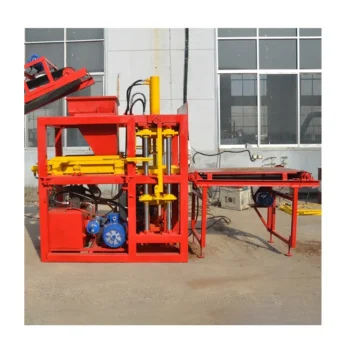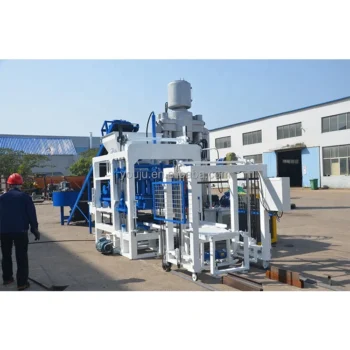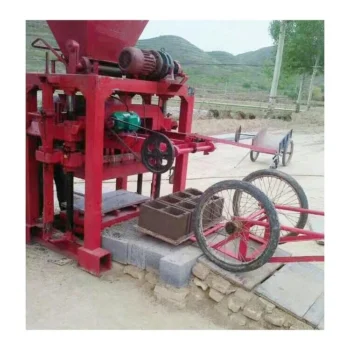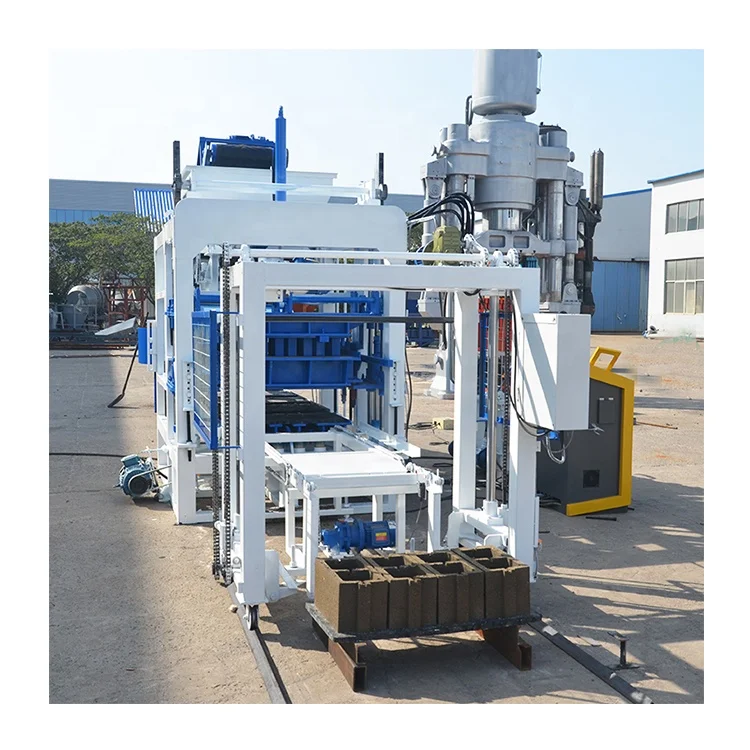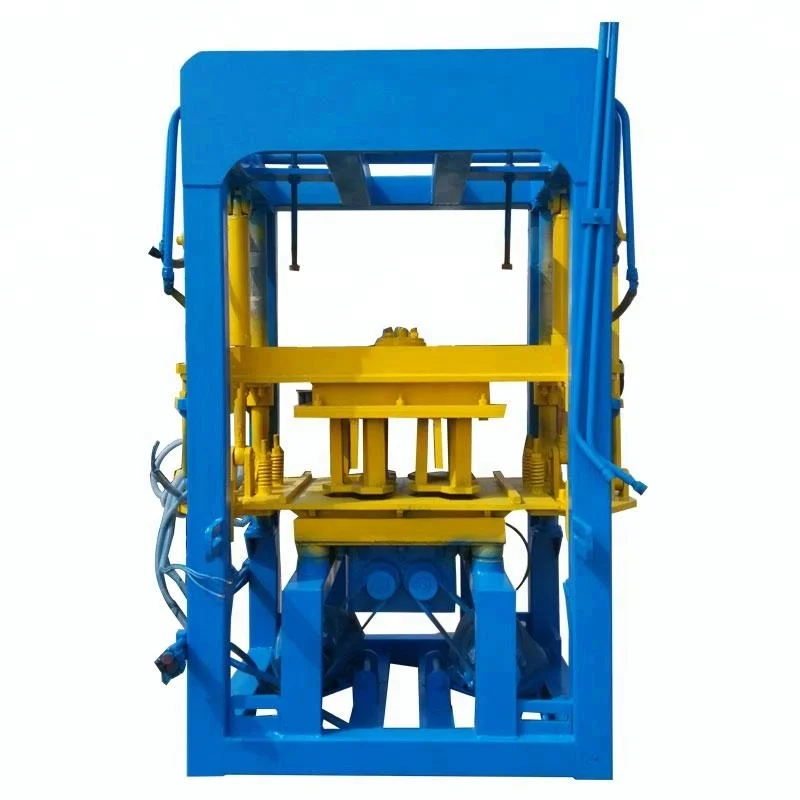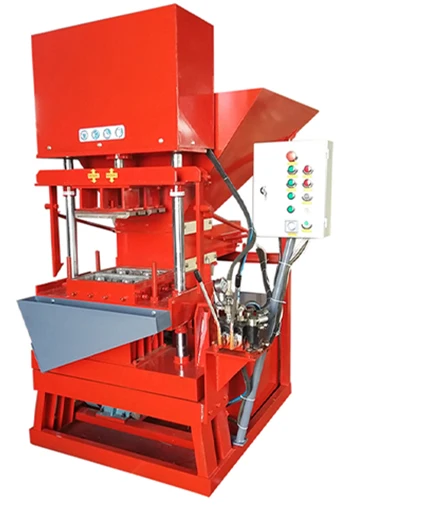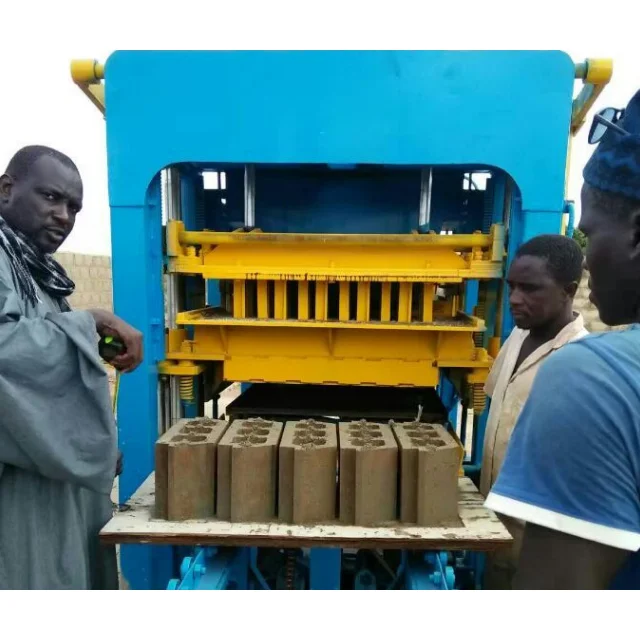


Description
Matched mould, pressure and cycle to your block — we configure the QT4-15 against your local aggregate and target format before quoting output, so capacity numbers on paper hold up on the shop floor.
Technical Specifications
| Parameter | Value |
|---|---|
| Model | QT4-15 |
| Product Type | Hydraulic Concrete Block Making Machine |
| Overall Dimensions (L×W×H) | 7100 x 1600 x 2610 mm |
| Rated Pressure | 16 MPa |
| Vibration Form | Platform Vibration |
| Pallet Size | 1020 x 570 mm |
| Molding Cycle | 15–25 s (basis not stated in source) |
| Overall Power | 27.5 kW |
| Control System | PLC electronic console |
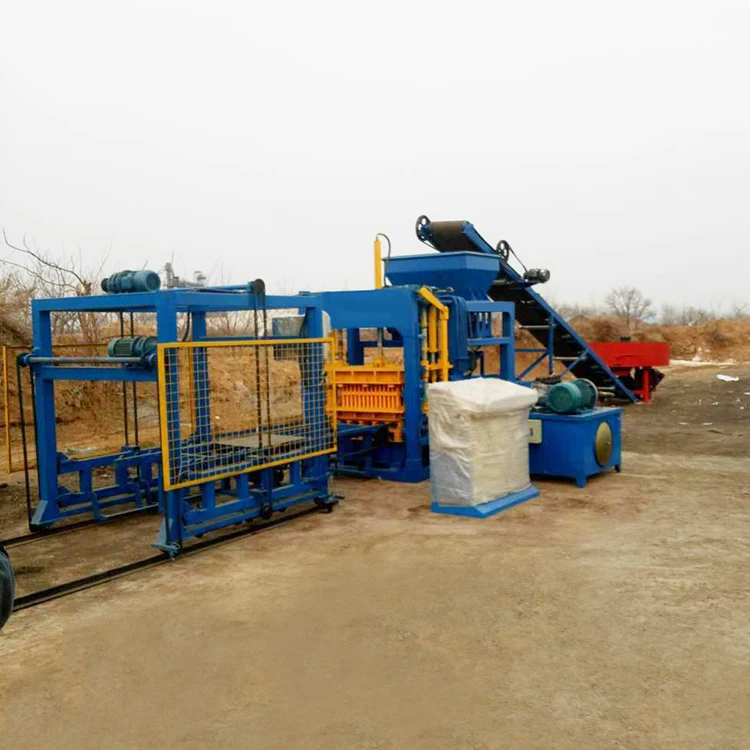
| Automation Level | Automatic (feeder, pallet conveyor, block conveyor integrated) |
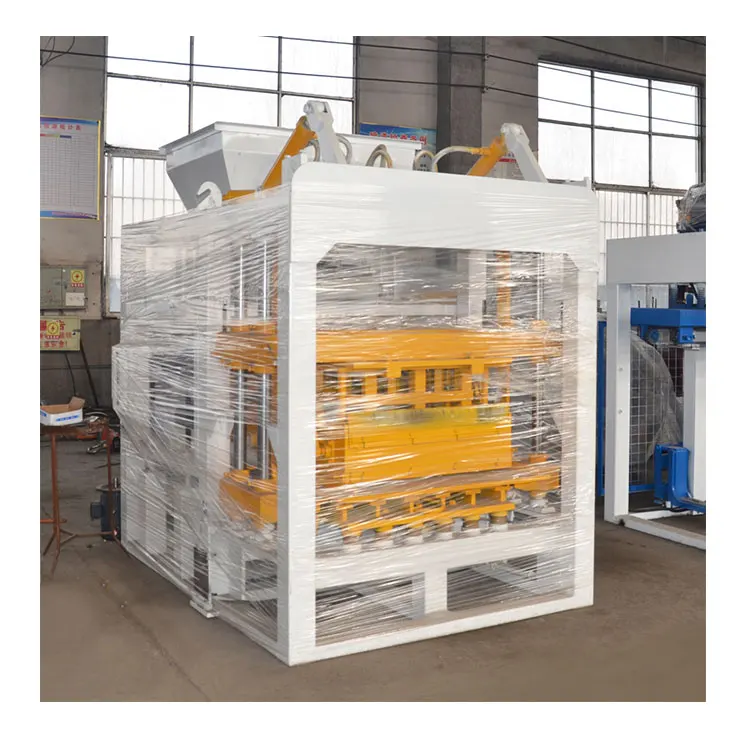
| Assembly State | Mixer, pallet conveyor, molding machine, block conveyor, hydraulic station, electronic console |
| Voltage & Frequency | Configurable per buyer’s site supply |
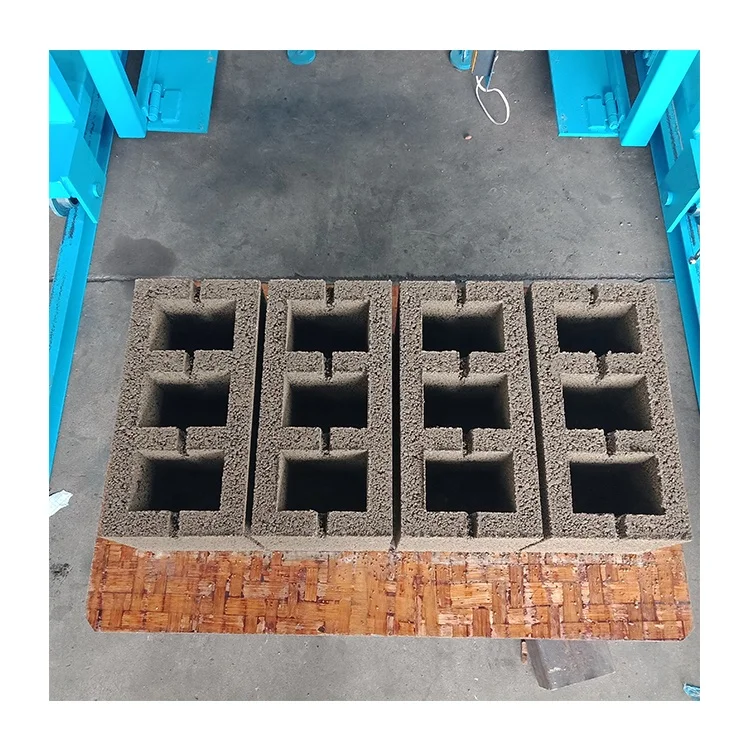
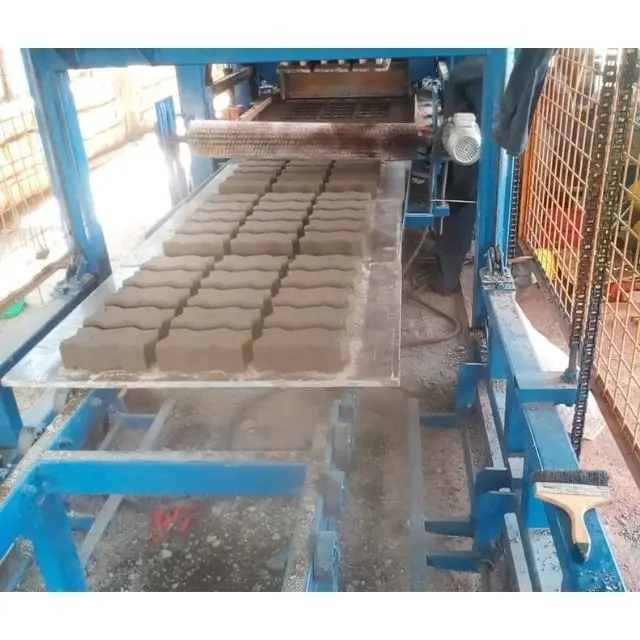
| Mould Compatibility | Interlocking, hollow, paving formats |
Application Suitability
| Application | Material or Output |
|---|---|
| Hollow block production for masonry walls | Cement, crushed stone, sand, fly ash or local aggregate blends |
| Interlocking brick runs for housing and landscaping | Concrete mixes with finer aggregate for tighter dimensional tolerance |
| Paving block manufacturing for yards and walkways | High-strength mix designs with coarser aggregate and lower water-cement ratio |
| On-site block production for construction contractors | Raw materials sourced within hauling distance of the project |
| Small block plant start-up targeting local building material distributors | Semi-finished concrete products sized to regional market standards |
What "15-25 Second Cycle" Actually Means for Your Output
Cycle time is only meaningful when tied to the exact block format you plan to sell.
A single number like "15-25 seconds" covers everything from a thin paving block to a tall hollow block, yet each format demands a different vibration duration, pressure hold time and mould fill depth. Quoting a daily output figure without naming the block format behind it is how buyers end up with machines that cannot meet their production targets once the correct mould is installed [NEED_CITE: block format and cycle time relationship]. Before any QT4-15 concrete block machine specifications are finalized, the cycle must be verified against your chosen block dimensions, wall thickness and mix design. Without that step, capacity claims remain theoretical.
Mould Format Determines Where the QT4-15 Fits Your Market
The QT4-15 concrete block machine specifications gain practical value only when matched to the moulds your customers actually order. A hollow block mould with thin walls cycles faster but demands finer aggregate to fill narrow cavities, while an interlocking brick mould requires longer vibration to compact a denser profile. This machine accommodates both through platform vibration and 16 MPa rated pressure, yet the operator must adjust cycle parameters each time a mould is swapped. Understanding which formats dominate your local market determines whether the QT4-15 earns its keep or sits idle between short runs.
Pallet Size Locks in Your Curing Yard Layout
The 1020 x 570 mm pallet is not an arbitrary choice — it must travel from the press through the block conveyor to the curing rack and eventually onto a forklift. If your existing curing area uses narrower pallets or your forklift tines are spaced for a different width, every pallet movement becomes a manual workaround. We confirm pallet dimensions against your site infrastructure before production begins [NEED_CITE: pallet size and curing yard compatibility], ensuring the QT4-15 integrates into your curing workflow without requiring a yard redesign.
Reading the Pressure and Vibration Figures Together
Rated pressure at 16 MPa and platform vibration work as a pair during compaction. Pressure squeezes the mix into the mould cavity, while vibration fluidizes the concrete so it fills corners and edges. A mix with coarse crushed stone needs more vibration amplitude to settle, whereas a finer sand-heavy mix responds to shorter vibration bursts. The QT4-15’s PLC electronic console lets the operator store profiles for different block formats, so switching from hollow blocks in the morning to paving blocks in the afternoon does not require trial-and-error adjustments on every batch.
What Happens When Voltage Is Confirmed After Shipment
Shipping a QT4-15 concrete block machine with the wrong voltage and frequency configuration is a mistake that surfaces only when the electrician tries to energize the panel on site. The PLC console, hydraulic pump motor and vibration motors each draw from the same three-phase supply, so a 380V machine arriving at a 415V site will either trip protection devices or burn out windings within hours. A transformer can bridge the gap, but sourcing and installing one locally adds weeks of downtime to a project that was already on a tight schedule [NEED_CITE: industrial voltage mismatch consequences in export markets]. Locking in local voltage, frequency and PLC display language at the quotation stage prevents this entirely.
Why We Configure Before We Quote
Our approach starts with your target block format, local aggregate sample and daily output requirement rather than a catalogue price list. Machine, mould, pallet and handling equipment are specified as one matched system, eliminating the gap between what was quoted and what arrives in the container. Factory testing runs your chosen mould on the actual press, producing sample blocks you can evaluate for strength and dimension before the machine leaves our facility. We confirm voltage, frequency and PLC display language in writing before production, so commissioning begins on arrival — not after parts are air-freighted from China.
Documentation & Verification
- Line layout showing QT4-15 placement with block format noted beside each capacity figure
- Mould drawing and format list covering the hollow, interlocking and paving profiles your market requires
- Factory test record from a production run on your specified mould before dispatch
- Voltage and frequency confirmation sheet signed off prior to electrical panel assembly
- Hydraulic and electrical schematic for on-site maintenance reference
Installation, Commissioning & Support
- Foundation pad sized to the QT4-15 footprint of 7100 x 1600 mm with anchor bolt plan
- Dedicated three-phase circuit matching confirmed voltage and frequency for the 27.5 kW total load
- Machine assembled on site from shipped modules with hydraulic station and PLC console connected
- First-run cycle parameter tuning for your selected block format and local mix design
- Operator training covering mould change procedure, pallet conveyor adjustment and PLC fault reading
- Wear parts list identifying hydraulic seals and vibration motor brushes with recommended replacement intervals
What We Need to Size the QT4-15 to Your Project
Provide the exact block format, wall thickness and daily output target so we can calculate cycle time and line capacity against that specific mould. Confirm your site voltage, frequency and preferred PLC display language to avoid electrical rework after arrival. Share your local aggregate type and any existing curing yard dimensions so pallet size and handling equipment can be matched to your infrastructure.
Frequently Asked Questions
Q: How is daily output calculated, and which block format does each figure assume?
A: We calculate output by multiplying the molding cycle for a specific block format by available production hours, accounting for pallet travel and mixer refill intervals. Every capacity figure we quote names the exact hollow, interlocking or paving block dimensions behind it. If you change formats later, we recalculate so expectations stay realistic.
Q: Which mould formats fit the 1020 x 570 mm pallet, and how fast can they be swapped?
A: Hollow, interlocking and paving moulds are designed for this pallet size. Swap time depends on whether the mould uses bolt-on or quick-clamp mounting — a detail we confirm during configuration. We supply the correct mounting hardware and adjustment procedure so format changeover fits within a planned break rather than consuming half a shift.
Q: How do I match vibration and pressure to my local aggregate and mix?
A: Coarse crushed stone needs longer vibration to settle into thin-walled mould cavities, while fine sand blends compact quickly under pressure. We review your aggregate gradation and test mix samples during factory commissioning, then store the resulting cycle parameters in the PLC so operators can recall them by block format.
Q: What voltage, frequency and PLC language will the machine arrive with?
A: These are confirmed in writing before production begins. We document your site supply specifications and preferred display language on a signed confirmation sheet, then verify them during factory testing. This prevents the situation where a machine arrives with the wrong electrical configuration and waits weeks for a replacement component.
Q: Which block strength targets can this pressure and vibration combination achieve?
A: The 16 MPa rated pressure and platform vibration can produce blocks meeting standard compressive strength requirements for load-bearing and non-load-bearing masonry, provided the mix design and curing protocol are correct. We verify strength on sample blocks during factory testing using your specified mix, so results are documented before shipment.