


Description
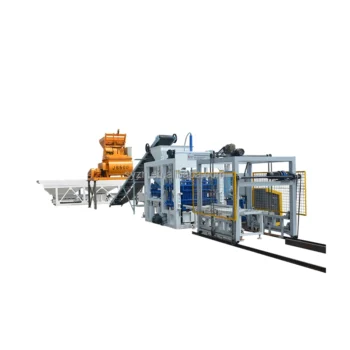
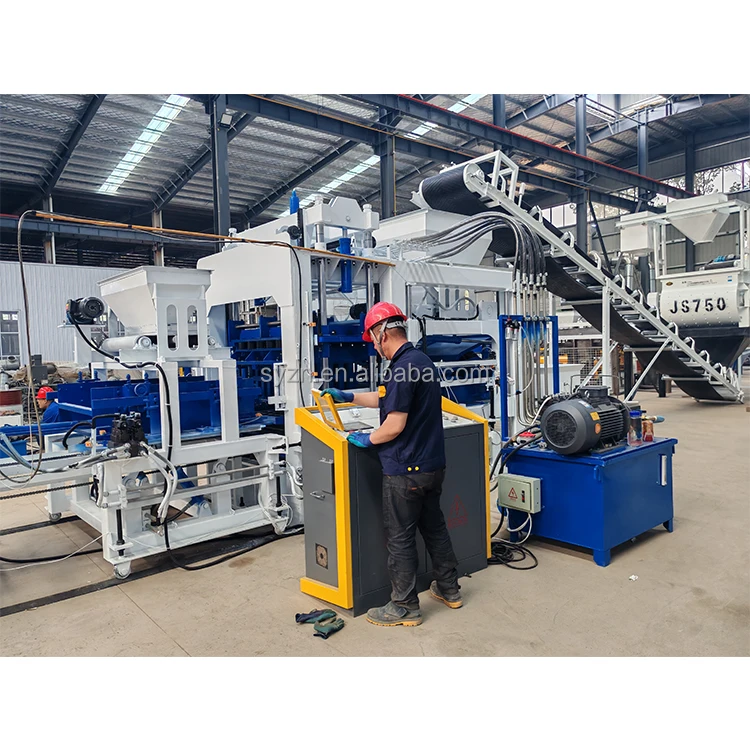
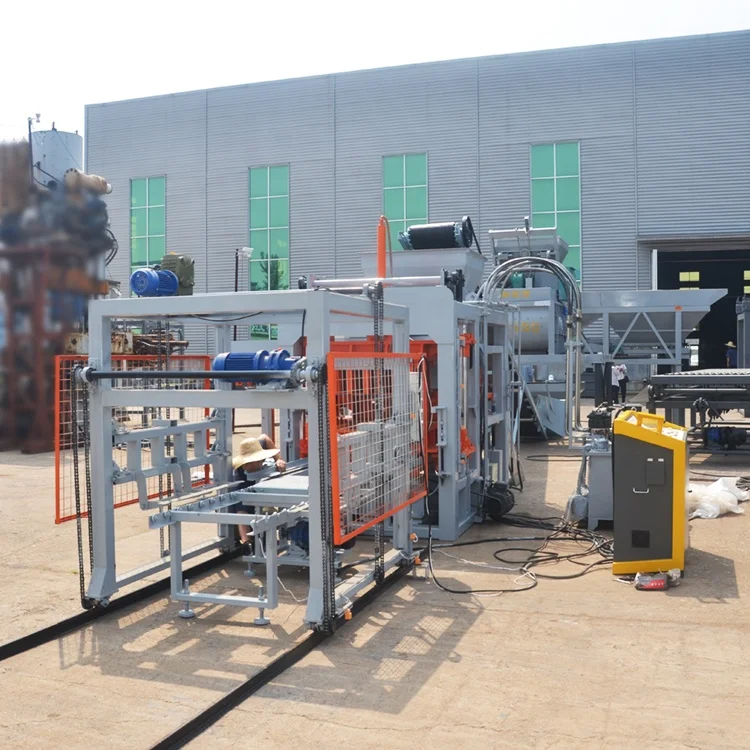
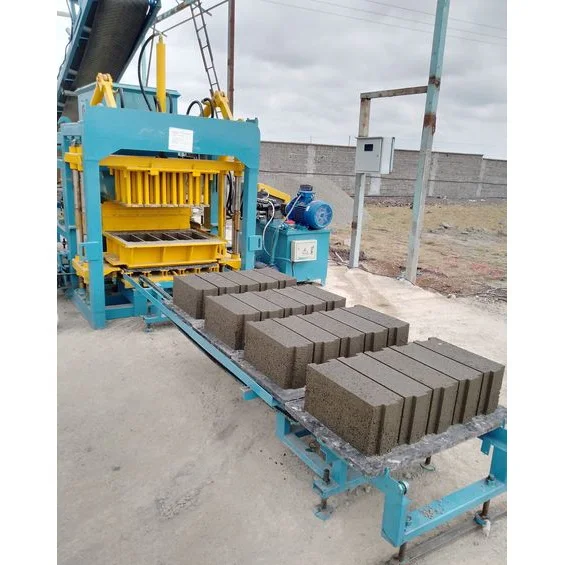
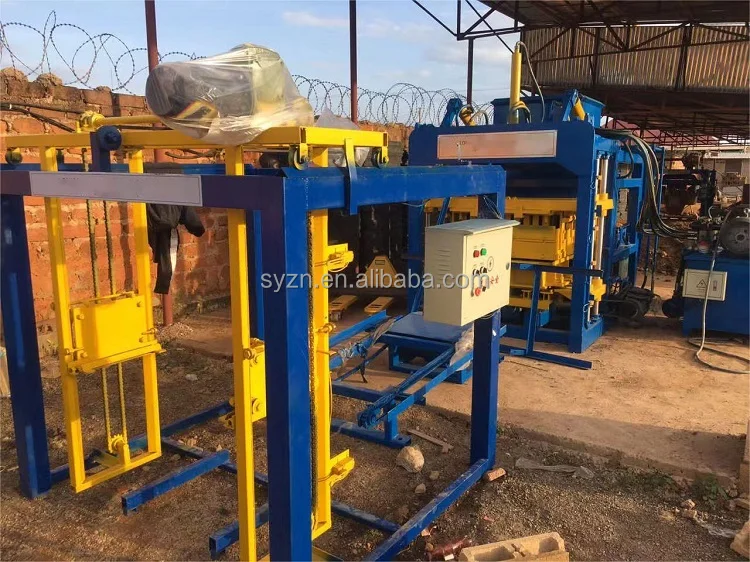
Matched System Sizing — QT4-15 block machine specifications are calculated per target format, with mould, pallet, and handling configured as one production cell rather than isolated components.
Technical Specifications
| Parameter | Value |
|---|---|
| Model | QT4-15A |
| Product Type | Automatic Hydraulic Concrete Block Making Machine |
| Overall Dimensions | 7100 × 1600 × 2610 mm |
| Molding Cycle | 15–25 s |
| Vibration Frequency | 4600 r/min |
| Exciting Power | 40–50 kN |
| Rated Power | 18.45 kW |
| Mixer Model | JQ350 |
| Pallet Size | 850 × 550 × 25 mm |
| Net Weight | 3 T |
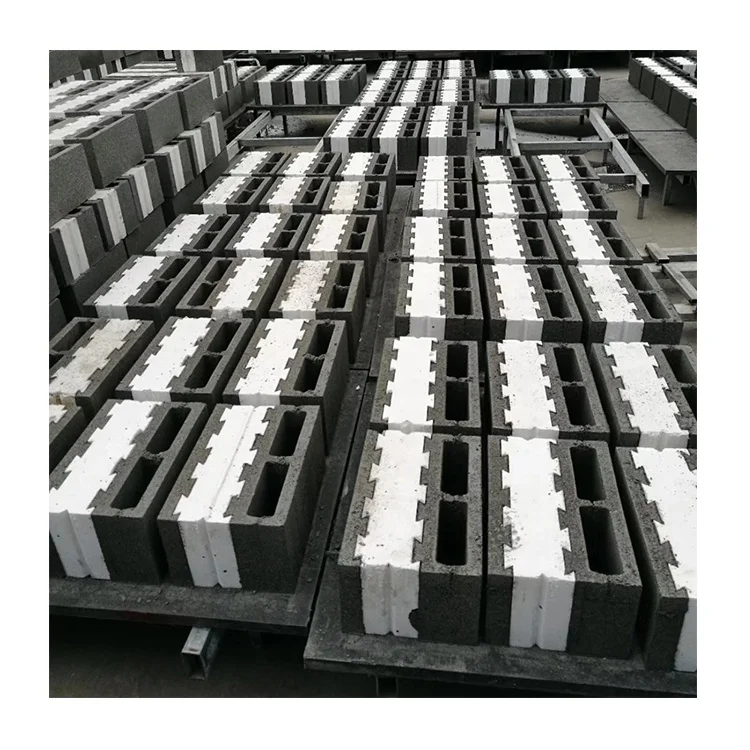
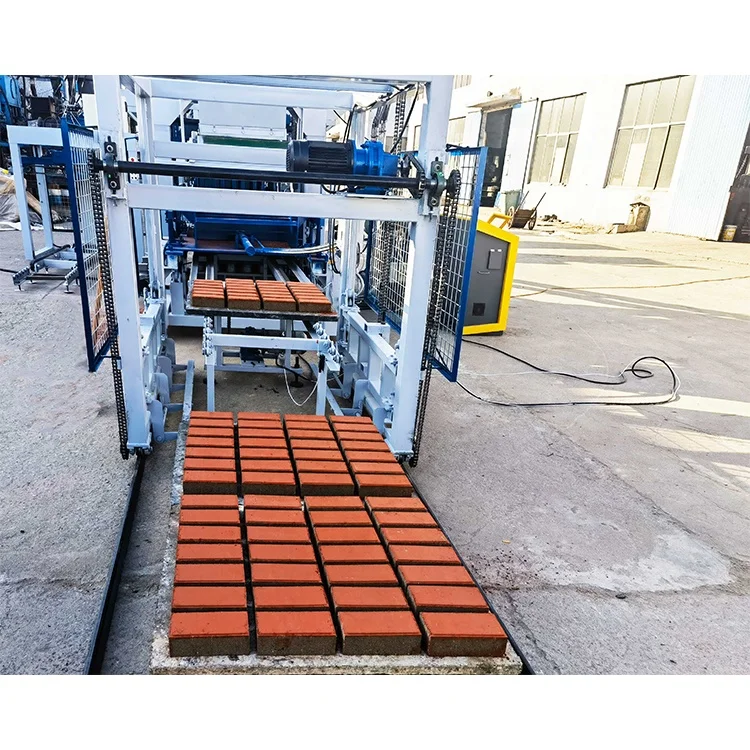
| Applied Products | Paver, solid brick, hollow block, curbstone |
| Raw Materials | Crushed stones, sand, cement, dust, fly ash |
| Output (400×200×200 mm hollow, 4 pcs/mould) | 408 pcs/h; 3,264 pcs per 8 hr shift |
| Output (400×150×200 mm hollow, 5 pcs/mould) | 510 pcs/h; 4,080 pcs per 8 hr shift |
| Output (240×115×53 mm solid brick, 18 pcs/mould) | 2,100 pcs/h; 17,000 pcs per 8 hr shift |
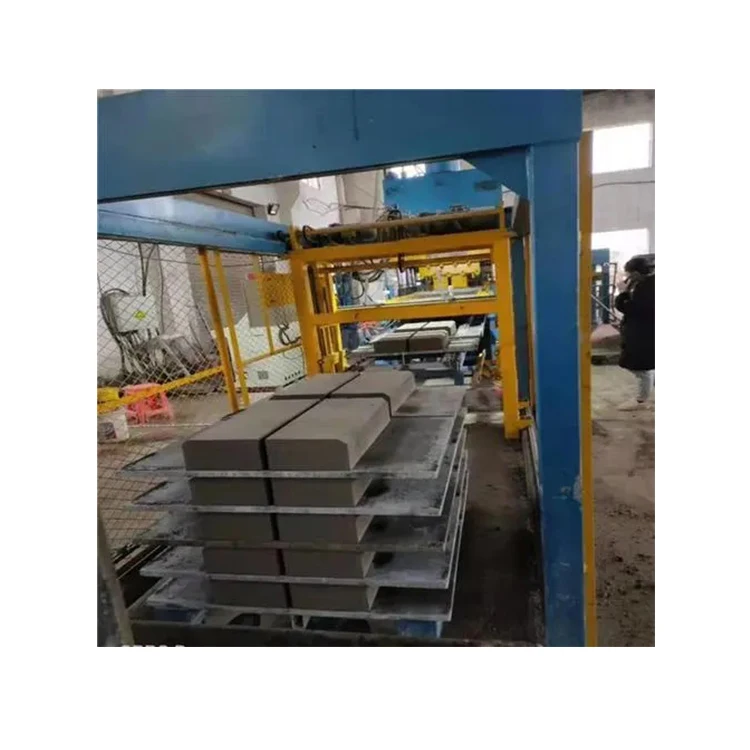
| Stacking Method | Automatic stacker with trolley transfer |
| Control System | PLC or relay (to be confirmed per buyer requirement) |
| Voltage & Frequency | Configurable per destination market |
Application Suitability
| Application | Material or Output |
|---|---|
| Hollow block production for load-bearing walls | Crushed stone, sand, cement, fly ash blends |
| Solid brick manufacturing for partition and infill | Local aggregate with cement binder |
| Paving stone production for walkways and yards | High-density mix with fine aggregate |
| Kerbstone and curb unit forming | Coarse aggregate mix with extended vibration |
| On-site contractor block production | Mobile batching with locally sourced sand and dust |
What "408 Pieces per Hour" Actually Means for QT4-15 Block Machine Specifications
Every capacity figure must name the block format behind it, or it means nothing on the shop floor.
I once watched a buyer in West Africa receive a machine whose quotation promised impressive hourly output. The number assumed a hollow block format his market did not buy. When he switched to the solid brick his customers actually ordered, the cycle time and mould cavity count changed the equation entirely. The QT4-15 block machine specifications on this page tie every output number to a named format, pallet count, and shift length so your business plan rests on verifiable data [NEED_CITE: block format demand variation by regional construction market].
Mould-to-Market Alignment Before the Order
A machine is only as flexible as its mould library allows. The QT4-15 accepts interchangeable moulds for hollow blocks, solid bricks, pavers, and kerbstones, each with a distinct cavity count and vibration profile. Choosing which formats to include at the order stage determines whether you can serve multiple buyer segments from one press or remain locked to a single product. Mould drawings are confirmed against your market survey before production begins, so the formats you need are the formats that arrive.
Pallet Size as a System Constraint, Not an Afterthought
The 850 × 550 × 25 mm pallet dimension governs curing rack spacing, forklift tine width, and stacking geometry. If your existing curing area was laid out for a different pallet footprint, every downstream handling step becomes a workaround. We confirm pallet material — fibreglass or locally sourced timber — and match it to your ambient curing conditions and handling equipment before the machine enters assembly. This prevents the situation where freshly pressed blocks sit waiting because the racks do not accept the pallets the machine feeds [NEED_CITE: pallet curing compatibility in concrete block production].
Reading the Vibration and Pressure Numbers Together
Exciting power rated at 40–50 kN and a vibration frequency of 4600 r/min define how densely the aggregate particles pack during forming. Hydraulic pressure works alongside this vibration to compress the mix from above while the bed mould vibrates vertically. When these two forces are balanced for your specific aggregate gradation and cement content, the result is uniform block density across the pallet. An imbalance — too much vibration for a lean mix, or insufficient pressure for a stiff blend — produces blocks that pass visual inspection but fail compressive strength tests at the curing stage.
The Cost of Overlooking Format-Specific Cycle Times
A mould change that consumes most of a shift erases the format flexibility the buyer invested in. When cycle time, mould weight, and clamping mechanism are not evaluated against the number of daily format switches your production plan requires, the machine sits idle while operators wrestle with alignment pins and hydraulic lines. These losses accumulate quietly because they are not captured in any headline capacity figure [NEED_CITE: mould change downtime impact on block plant utilization].
Why Technical Buyers Source This Configuration Here
Block machinery remains the single focus across our engineering and assembly work, meaning the press, mould, pallet, and handling equipment are specified as one matched cell rather than assembled from unrelated suppliers. The QT4-15 is configured against the buyer’s actual mix design and target block format, not a catalogue default. Mould design and supply cover the formats your market sells, with custom drawings accommodated when standard options do not match. Automation level is selectable, allowing a plant to start at semi-automatic hydraulic operation and add stacker upgrades later. Every shipment is accompanied by a factory test record run on the buyer’s specified format, so capacity claims are verified before the crate closes.
Documentation & Verification
- Line layout showing capacity per block format assumed in the calculation
- Mould drawing set with cavity count and format list for each included mould
- Pallet material and dimension sheet matched to buyer curing area
- Voltage, frequency, and control language confirmation before assembly
- Factory test record on buyer-specified block format prior to dispatch
Installation, Commissioning & Support
- Foundation plan scaled to the 7100 × 1600 mm machine footprint and 3 T operating weight
- Dedicated power circuit sized for 18.45 kW rated draw plus mixer starting surge
- Machine shipped partially dismantled with reassembly guided by hydraulic schematic
- First-run parameter tuning for vibration frequency and hydraulic pressure on local aggregate
- Operator training covering mould change procedure and daily pallet inspection routine
- Wear parts list identifying hydraulic seals and vibration motor bearings for initial spares stock
What to Prepare Before Requesting a Quote
Send a sample of your local aggregate — crushed stone, sand, or fly ash — along with the block formats your market currently buys and the daily volume each format requires. Confirm your site voltage and frequency, the control display language your operators read, and the pallet dimensions your existing curing racks accept. If you plan to run multiple formats in one shift, note the expected changeover frequency so the mould clamping system is specified accordingly.
Frequently Asked Questions
Q: How is QT4-15 capacity calculated, and which block format does each figure assume?
A: Each output figure on this page names the exact block dimensions, cavity count per mould, and shift length behind it. The 408 pieces per hour assumes a 400×200×200 mm hollow block at four cavities per cycle. Switching to a different format changes both the cavity count and the cycle time, so the corresponding hourly and daily totals are recalculated and stated separately.
Q: What mould formats are available, and what is the mould change time in practice?
A: Standard moulds cover hollow blocks, solid bricks, pavers, and kerbstones in dimensions common to your regional market. Custom formats are produced from buyer-supplied drawings. Mould change time depends on the clamping system selected at the order stage and is confirmed in the factory test record before shipment so you can plan shift schedules accurately.
Q: How are vibration force and hydraulic pressure matched to my local aggregate?
A: We request a raw material sample and your target mix ratio before configuration. The 40–50 kN exciting force and hydraulic pressure are then balanced for your aggregate gradation, ensuring uniform density. The factory test runs your mix on the assembled machine, and parameters are recorded for reference during commissioning.
Q: What pallet size and material should I choose based on my curing setup?
A: The standard 850 × 550 × 25 mm pallet fits most small-to-medium curing rack systems. Material choice between fibreglass and timber depends on your ambient humidity and handling equipment. We confirm the selection against your existing forklift tine width and rack spacing before the pallets enter production.
Q: Is voltage, frequency, and control language confirmed before shipment?
A: Yes. Voltage and frequency are set to your site supply, and the PLC or relay display language is confirmed in writing before the electrical panel is wired. This avoids commissioning delays caused by mismatched power supply or unreadable control screens once the machine arrives at your facility [NEED_CITE: electrical standard variation by import market].