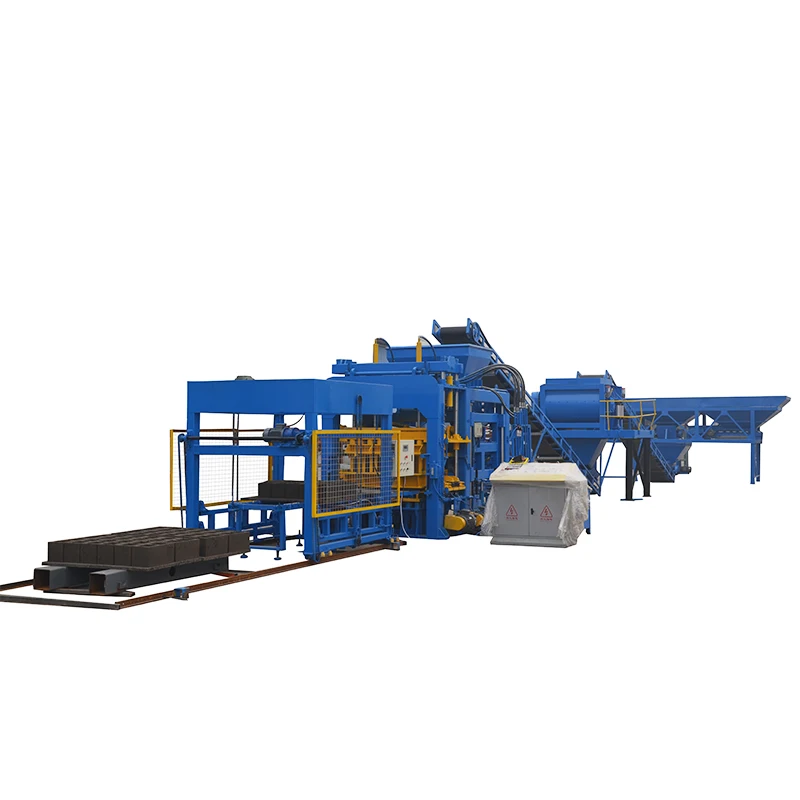
Description
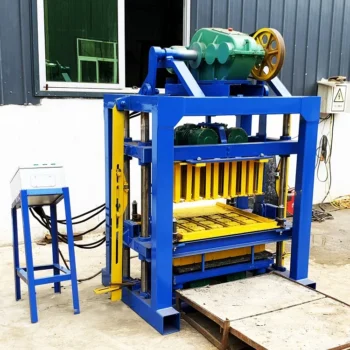
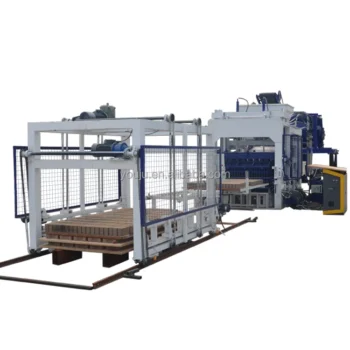
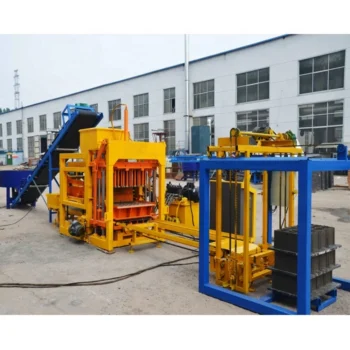
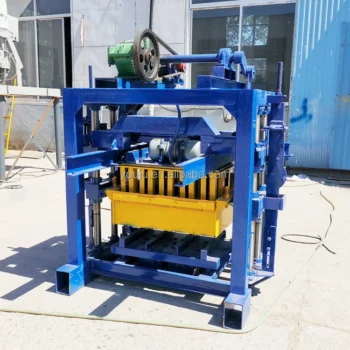
Matched System Design — the QT12-15 is specified as a complete press-plus-line package where pallet size, mould cavity count, and batching capacity are verified against your target block format before production begins, not assembled from mismatched catalogue defaults.
Technical Specifications
| Parameter | Value |
|---|---|
| Model | QT12-15 |
| Product Type | Automatic Concrete Block Making Machine |
| Overall Dimensions (L×W×H) | 9350 × 2520 × 2950 mm |
| Total Mass | 12,000 kg |
| Overall Power | 52 kW |
| Pallet Size | 1300 × 900 mm |
| Vibration Form | Platform Vibration |
| Cycle Time | 15–25 s (basis not stated in source — confirm block format and material) |
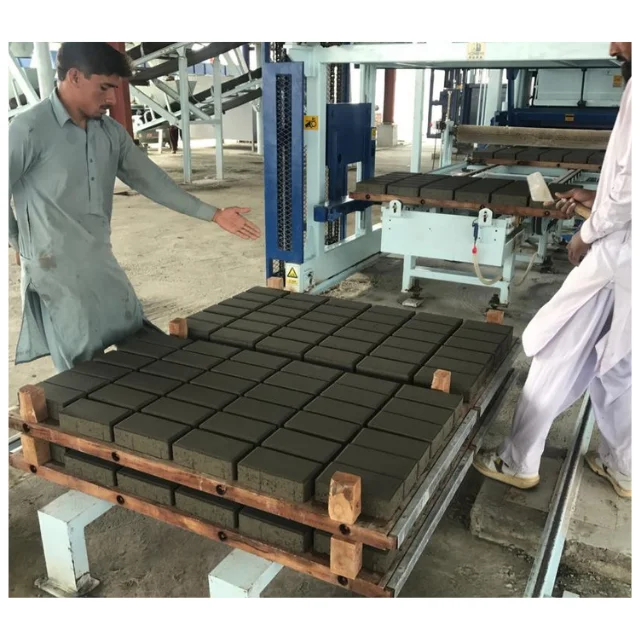
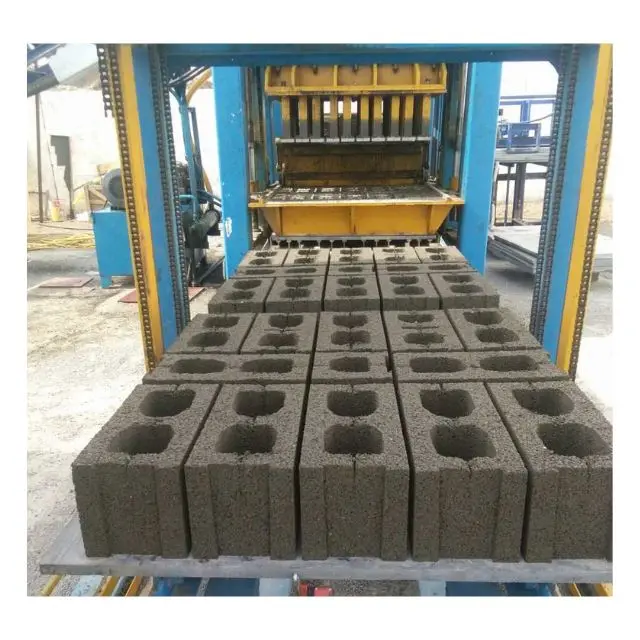
| Mould Formats | Hollow block, solid brick, pavement brick, road kerb, slope protection brick, planting grass brick; custom mould to buyer drawings |
| Automation Level | Automatic production line |
| Control System | Electrical PLC cabinet |
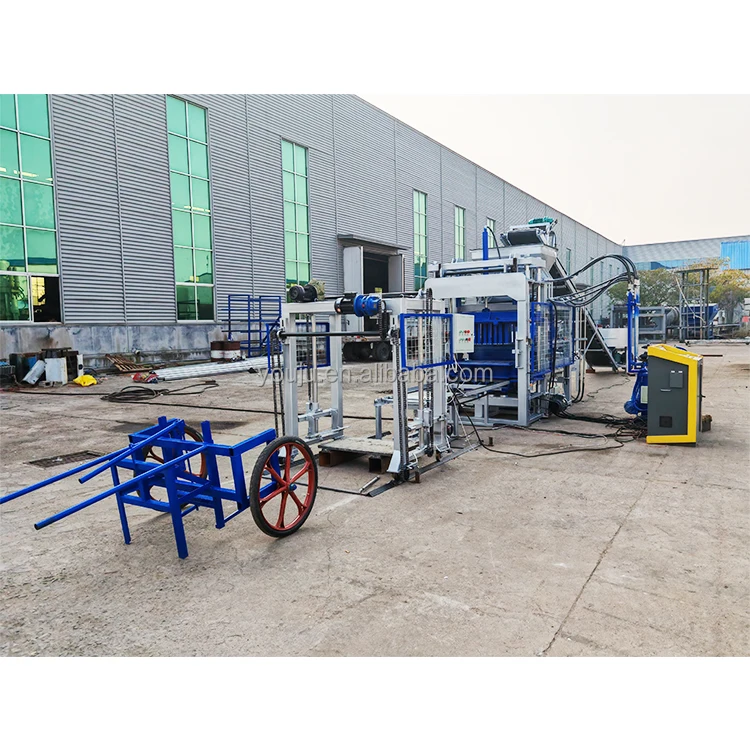
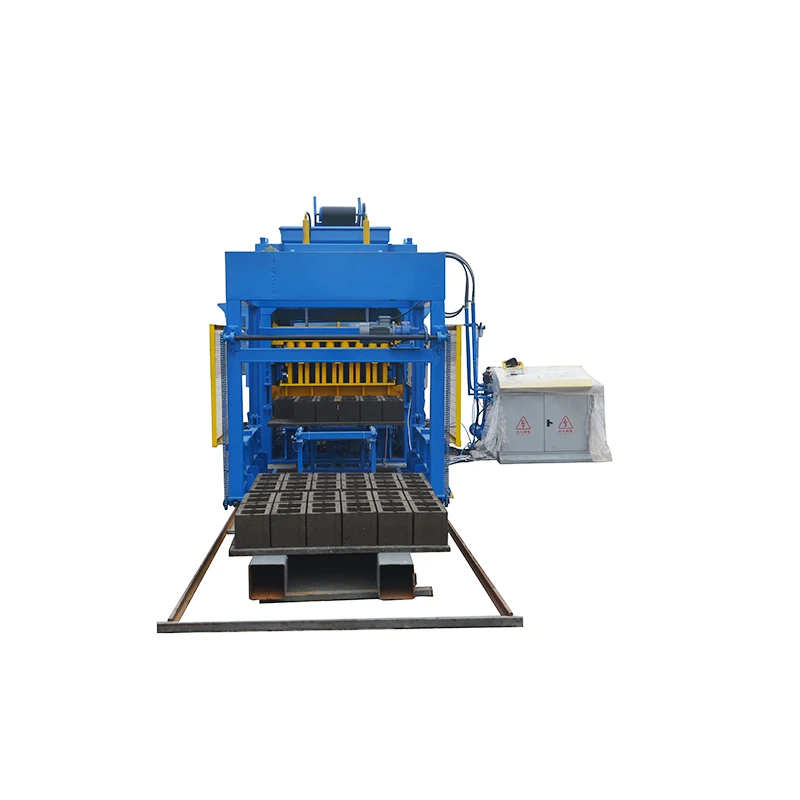
| Line Composition | Pallet feeder, molding machine, storage hopper, block conveyor, hydraulic station, electrical PLC cabinet |
| Simple Line Configuration | PL1200 batching machine, JS500 or JS750 mixer, 8 m conveyor belt, stacker |
| Raw Materials | Fly ash, slag, gangue, river sand, gravel, cement, other industrial wastes |
| Color Paver Option | Yes, with additional color machine |
| Standards | CE declaration where applicable |
Application Suitability
| Application | Material or Output |
|---|---|
| Hollow block production for building walls | Crushed stone, river sand, and cement blends |
| Solid brick manufacturing | Fly ash, slag, and cement mixes |
| Pavement and interlocking paver production | Fine aggregate with cement and optional color pigment |
| Road kerb and slope protection block forming | Coarse gravel and cement at higher compaction |
| Planting grass brick for permeable surfaces | Porous aggregate mix with controlled moisture |
| On-site block production for housing projects | Locally sourced sand, gravel, and cement |
What "Blocks per Hour" Actually Means for the QT12-15 Automatic Concrete Block Making Machine Specifications
A cycle time of 15–25 seconds only translates to real output once the block format, cavity count, and material are defined.
Suppliers frequently quote a single hourly figure based on a small solid brick, then ship a machine expected to run large hollow blocks where each cycle takes longer and produces fewer units per pallet. On projects I have commissioned across East Africa, buyers discovered after arrival that their daily output fell far short of the quoted number because the capacity was calculated on a format they never intended to sell. The QT12-15 automatic concrete block making machine specifications must be read against your specific target block dimensions and local aggregate before any daily output claim holds weight [NEED_CITE: block format and cycle time relationship in concrete masonry production].
Matching Pallet Size to Your Curing Area and Handling Equipment
The 1300 × 900 mm pallet defines how many blocks fit per cycle and how the wet output moves through your curing zone. If your existing forklift forks, curing racks, or yard layout were built around a different pallet footprint, every pallet handled becomes a friction point. Confirming pallet material — bamboo, PVC, or steel — against your climate and curing duration prevents warping and replacement surprises within the first production season.
Mould Selection and Format Changeover Reality
This machine covers hollow blocks, solid bricks, pavers, kerbstones, slope protection bricks, and grass bricks through interchangeable moulds, with custom mould design available to buyer drawings. The real question is how many cavities fit on the 1300 × 900 mm pallet for your specific format, and how long a physical mould change takes on the shop floor. A machine advertised for multi-format flexibility loses its advantage if each changeover consumes most of a shift [NEED_CITE: mould change procedures and downtime in block production].
How Vibration and Pressure Interact with Local Aggregate
Platform vibration compacts the mix against the mould walls, while hydraulic pressure consolidates from above. The balance between vibration force and hydraulic pressure must match the gradation and moisture sensitivity of your local sand, gravel, or fly ash. In my fieldwork with volcanic aggregate in Kenya, standard vibration settings produced cracked hollow blocks until we adjusted both parameters over several days of trials. The QT12-15 automatic concrete block making machine specifications should be paired with a mix design trial using your actual raw materials before the machine is finalized.
Reading the Line Composition as a System
The included pallet feeder, storage hopper, block conveyor, and hydraulic station mean the press is not waiting on upstream or downstream bottlenecks. When the PL1200 batching machine and JS500 or JS750 mixer are matched to the press cycle, the storage hopper keeps material available without interrupting the molding sequence. Specifying the block conveyor length and stacker type against your yard distance determines whether fresh blocks move smoothly to curing or pile up at the machine outlet.
The Hidden Cost of Unconfirmed Electrical and Control Details
Voltage, frequency, and PLC display language are often left to assumption until the machine arrives and will not start. A 52 kW line configured for 380 V / 50 Hz connected to a 440 V / 60 Hz supply will trip breakers or damage motors on the first run. I have stood in plants where the operator could not read the PLC fault codes because the display language was never specified, turning a minor sensor issue into a multi-day shutdown. These three items must be confirmed in writing before production begins [NEED_CITE: industrial voltage and frequency standards by region].
Why Buyers Source This Line Here
Block machinery is the sole focus of this manufacturing operation, so the QT12-15 press, mould, pallet, and handling equipment are specified as one matched system rather than sourced from separate vendors. Configuration is set against your actual mix design and local aggregate, not a catalogue default that assumes materials unavailable in your region. Mould design and supply covers the formats your market actually sells, including custom drawings when standard cavity layouts do not fit. Automation level is selectable, allowing a buyer to start with semi-automatic pallet handling and upgrade to full stacking later. Installation includes on-site commissioning and operator training so your crew can run the line independently from the first week.
Documentation & Verification
- Line layout drawing with capacity calculation stated per your target block format
- Mould drawing and cavity count list for each confirmed format before production
- Pallet specification sheet including material, dimensions, and load rating
- Voltage, frequency, and PLC display language confirmation signed before build
- Factory test record run on a mix profile matching your raw material description
- Hydraulic and electrical schematic for your maintenance team reference
Installation, Commissioning & Support
- Foundation plan sized to the 9350 × 2520 mm footprint and 12,000 kg operating mass
- Dedicated 52 kW power circuit confirmed for your local voltage and frequency before shipment
- Machine dismantled for container loading with reassembly supervised on your site
- First-run commissioning with vibration and pressure adjusted to your local aggregate sample
- Operator training covering PLC controls, mould change procedure, and daily maintenance points
- Wear parts and mould maintenance list provided with recommended replacement intervals
Preparing Your Inquiry
Share the exact block dimensions your market sells, the local aggregate type available, and your target daily output so the capacity calculation reflects reality. Include your site voltage and frequency, preferred PLC display language, and whether your existing curing area and forklift are built around a specific pallet size. If you are adding formats to an existing line, tell us what equipment you already run upstream and downstream so the QT12-15 automatic concrete block making machine specifications integrate without bottlenecks.
Frequently Asked Questions
Q: What is the realistic daily output of the QT12-15 for my specific block format?
A: Daily output depends on the block dimensions, cavity count per pallet, and cycle time for your material. A 15–25 second cycle means different things for a small solid brick versus a large hollow block. We calculate output per format using your confirmed mould drawing and mix design, not a single generic number.
Q: How do I match the mould cavity count to my market’s block dimensions?
A: The 1300 × 900 mm pallet limits how many cavities fit per cycle. We provide a mould drawing showing exact cavity count and layout for each block format you plan to produce, confirmed before manufacturing begins so there are no surprises on arrival.
Q: Can the vibration and pressure be adjusted to my local aggregate?
A: Platform vibration and hydraulic pressure settings are adjusted during commissioning based on your actual raw material sample. This ensures consistent block strength whether you use river sand, crushed volcanic stone, fly ash, or locally available gravel blends.
Q: Will the 1300 × 900 mm pallet work with my existing curing area?
A: We verify pallet size against your curing rack spacing, yard layout, and forklift fork dimensions before confirming the order. Pallet material — bamboo, PVC, or steel — is selected based on your climate and expected curing duration to avoid premature replacement.
Q: How long does a mould change take between block formats?
A: Mould change time depends on the format size and whether quick-release fittings are specified. We confirm the expected changeover duration for your selected formats during the proposal stage so you can plan shift schedules around realistic format flexibility.