
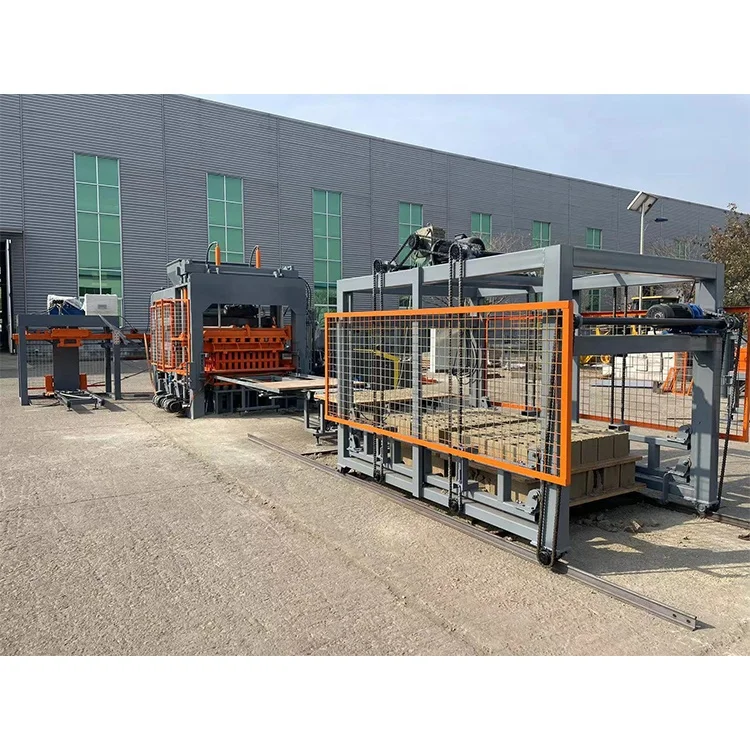


Description
Format-Matched Capacity — QT10-15 output figures are calculated against the exact block size and pieces-per-mould count you intend to run, not a single catalogue number that conceals the real daily volume behind an assumed format.
Technical Specifications
| Parameter | Value |
|---|---|
| Model | QT10-15 |
| Product Type | Automatic Block Paver Machine |
| Moulding Cycle | 15–20 s (basis not stated in source — confirm block format / material / thickness); 20–25 s (basis not stated in source — confirm block format / material / thickness for pavers) |
| Output Capacity | 1,800–2,400 pcs/h based on 400×200×200 mm hollow block, 10 pcs/mould |
| Output Capacity | 2,160–2,880 pcs/h based on 400×150×200 mm block, 12 pcs/mould |
| Output Capacity | 8,928–11,160 pcs/h based on 240×115×53 mm solid brick, 62 pcs/mould |
| Output Capacity | 5,184–6,480 pcs/h based on 200×100×60 mm paver, 27 pcs/mould |
| Output Capacity | 4,032–5,040 pcs/h based on 225×112.5×60 mm paver, 24 pcs/mould |
| Daily Output (8 h shift) | 14,400–19,200 pcs (400×200×200 mm); 17,280–23,040 pcs (400×150×200 mm); 71,424–89,280 pcs (240×115×53 mm); 41,472–51,840 pcs (200×100×60 mm); 32,256–40,320 pcs (225×112.5×60 mm) |
| Control System | PLC control cabinet |
| Hydraulic System | Independent integrated hydraulic station |
| Vibration System | Vertical station mode resonance with automatic FM-AM adjustment |
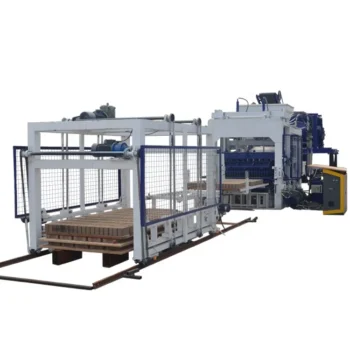
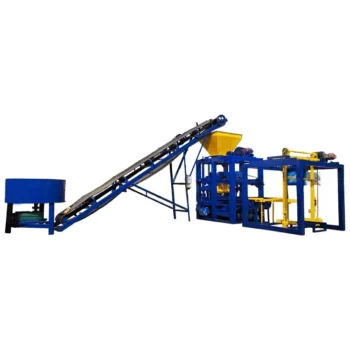
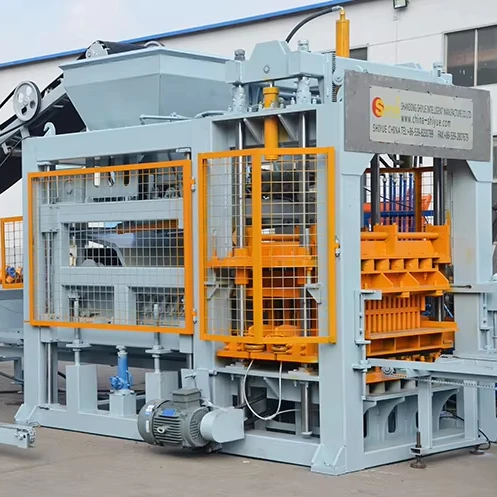
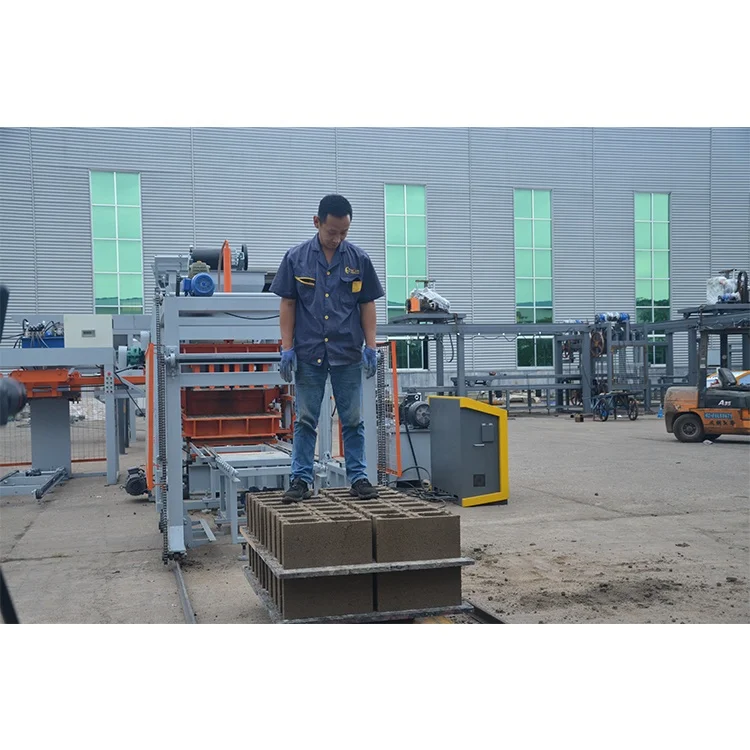
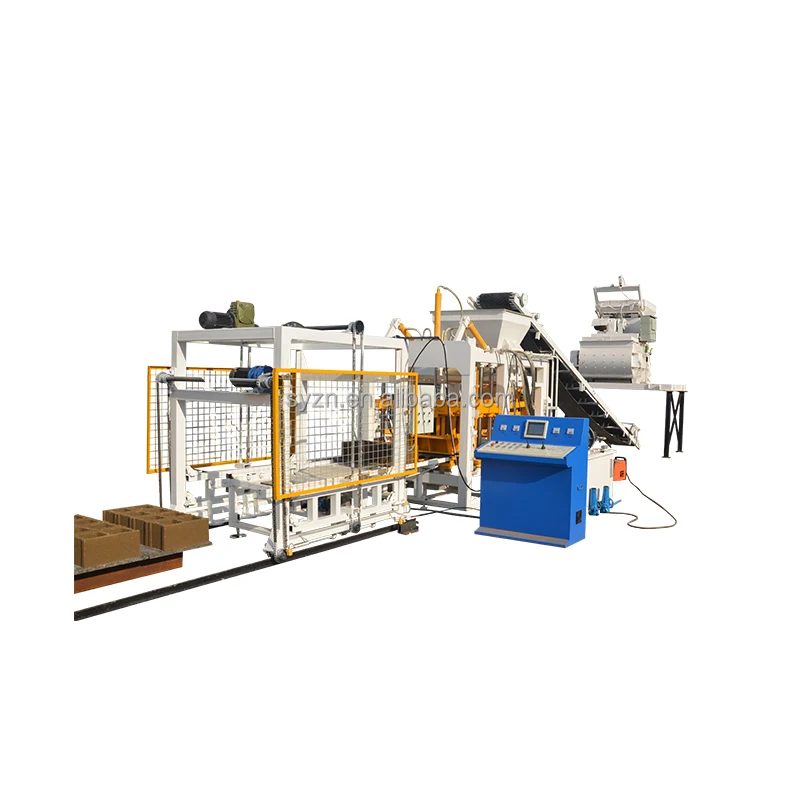
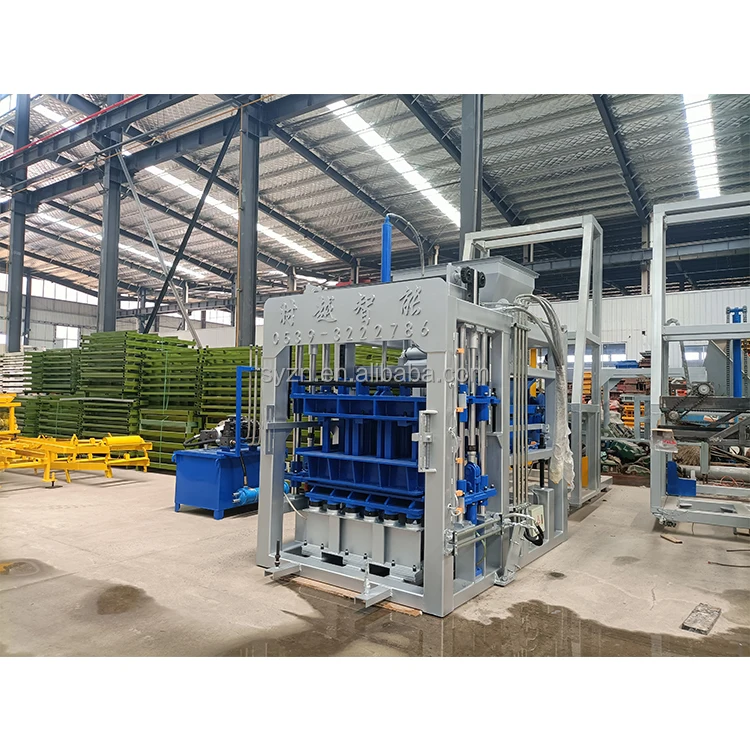
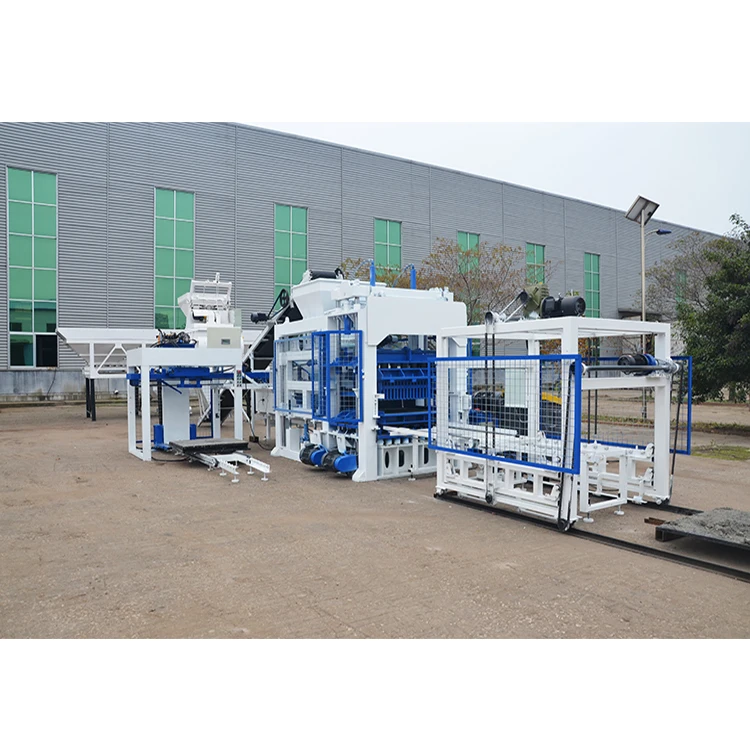
| Components | Pallet feed machine, block making machine, storage hopper, conveyor, hydraulic unit, PLC control cabinet |
| Automation Level | Automatic |
| Mould Change | Simple replacement of mould for format change (source value — verify mould change time against manufacturer catalog) |
| Assembly State | Multi-function with one machine via mould change |
| Warranty | 1 year for whole machine excluding spare parts |
| Standards | CE (not explicitly stated in source — verify with supplier) |
Application Suitability
| Application | Material or Output |
|---|---|
| Hollow block production | Crushed stone, cement, sand aggregate for 400×200×200 mm and 400×150×200 mm cavity blocks |
| Solid brick production | Cement and fine aggregate blends for 240×115×53 mm standard bricks |
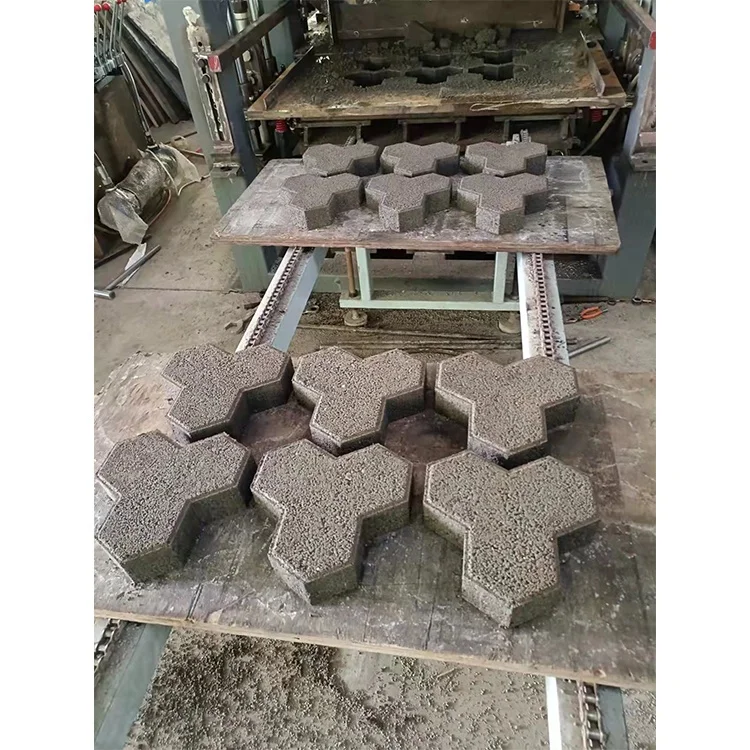
| Interlocking paver production | High-density concrete mixes for 200×100×60 mm and 225×112.5×60 mm paving units |
| On-site contractor block production | Locally sourced aggregate for housing project hollow and solid formats |
| Multi-format concrete product manufacturing | Switching between hollow block, solid brick, and paver on a single press via mould change |
Why "Pieces per Hour" Means Nothing Without the Block Format Attached
Every QT10-15 block machine specifications figure here names the exact block dimension and pieces-per-mould count behind it.
A capacity number printed on a brochure typically assumes a single reference block — often the largest format the press can handle. Buyers who need smaller formats or pavers discover after installation that real throughput falls well short of the headline figure because cycle time and mould cavity count differ. With the QT10-15 automatic block paver machine, the output table above breaks capacity down across five distinct formats, from 400×200×200 mm hollow block to 240×115×53 mm solid brick. This way, the daily output you plan around actually matches the product your market demands [NEED_CITE: block format demand variation by regional construction code].
Cycle Time by Format — Where the Numbers Come From
Moulding cycle on the QT10-15 ranges from 15 to 25 seconds depending on whether the press is running hollow blocks or denser paver formats. The vibration system uses vertical station mode resonance with automatic FM-AM adjustment, which means the QT10-15 block machine specifications shift their frequency and amplitude to suit the density of the mix sitting in the mould at any given moment. Hollow blocks compact faster because the cavity reduces the concrete volume per cycle, while interlocking pavers need longer press time to reach the compressive strength required for vehicular traffic.
Mould Swap and Format Flexibility
The QT10-15 operates as a multi-function press — one host machine covers hollow block, multicellular brick, standard solid brick, and at least two paver dimensions through mould replacement. A production plant running hollow block during the first shift and pavers during the second needs the mould change to finish within a predictable window so downtime stays contained [NEED_CITE: typical mould change procedures for hydraulic block presses]. Verifying the actual mould change time against the manufacturer’s procedure sheet is essential before committing the changeover into a daily production schedule.
Reading the Specs — What Matters for Block Density and Strength
Hydraulic pressure and vibration force together determine the green strength of every block leaving the press. The QT10-15 uses an independent integrated hydraulic station, physically separated from the vibration table so that continuous high-frequency shaking does not degrade hydraulic seals or cause pressure drift over a long shift. Vertical station mode resonance delivers vibration directly upward through the mould cavity, compacting the mix from the base rather than relying on lateral shaking alone. Automatic FM-AM adjustment means the vibration controller reads the load resistance of the current mix and modulates frequency and amplitude in real time — critical when local aggregate density varies between deliveries. The PLC control cabinet centralises cycle parameters, allowing operators to store separate recipes for each block format and recall them at the touch of a screen rather than re-entering values manually.
When the Wrong Specification Costs You a Month of Production
Sizing a block press without confirming pallet size against your existing curing racks and forklift capacity leads to pallets that cannot enter the drying area or cannot be moved by the equipment already on site. Voltage and frequency mismatches discovered after the QT10-15 arrives at the port can delay commissioning by weeks while transformers or replacement motors are sourced [NEED_CITE: voltage and frequency standards by export market]. Equally, a mix design that works in the factory test bay may produce under-strength blocks when the buyer’s local sand has a different fines content or moisture retention profile, forcing a material change or a costly reconfiguration of the vibration and pressure settings.
Why Buyers Spec Their QT10-15 Here
Block machinery is the single focus of this supply chain, so the press, mould, pallet, and handling equipment are specified as one matched system rather than assembled from separate vendors. Configuration starts with the buyer’s target block format, local aggregate sample, and realistic daily output, not a catalogue default. Mould design covers the formats the buyer’s market actually sells, with custom drawings available when standard cavity layouts do not match local dimensions. Automation level is selectable — a buyer can begin with the current automatic setup and plan future upgrades to stacking or cubing without replacing the host press. Installation and commissioning include operator training on the PLC recipes and mould change procedure specific to the formats ordered.
Documentation & Verification
- Line layout and capacity calculation naming the block format assumed for every QT10-15 output figure
- Mould drawing and format list confirming included cavities and available custom designs
- Voltage, frequency, and PLC display language confirmation signed off before production starts
- Hydraulic and electrical schematic with wear parts and mould list for first replacement planning
- Factory test record run on the buyer’s specified block dimensions before dispatch
Installation, Commissioning & Support
- Foundation plan referencing the QT10-15 vibration table footprint and dynamic load rating
- Dedicated electrical circuit sized to the machine’s hydraulic pump and vibration motor combined draw
- Assembly sequence for host press, pallet feeder, storage hopper, and conveyor on-site
- First-run parameter tuning against the buyer’s local aggregate sample and target block strength
- PLC recipe programming for each ordered block format with operator walkthrough
- Wear parts list covering mould liners, hydraulic seals, and vibration springs with reorder intervals
Before You Request a Quote
To size the QT10-15 to your production line, share the specific block formats your market requires, including dimensions and target compressive strength. Provide a sample or analysis of your local aggregate — sand type, maximum particle size, and typical moisture content — so vibration and pressure settings can be matched before build. Confirm your site voltage, frequency, and preferred PLC display language to avoid delays at commissioning.
Frequently Asked Questions
Q: How is QT10-15 output capacity verified and what block format is each figure based on?
A: Each capacity line in the specification table states the block dimensions and pieces-per-mould count it assumes. Daily output is calculated from an eight-hour shift against those exact parameters. If your target format differs from the five listed, a revised cycle time and capacity projection are prepared using your block drawing before quotation.
Q: What mould formats are available and how long does a change take?
A: Standard moulds cover 400×200×200 mm hollow, 400×150×200 mm block, 240×115×53 mm solid brick, and two paver sizes. Custom moulds are built to buyer drawings. Mould change time should be verified against the current procedure sheet to ensure it fits your planned changeover schedule.
Q: How is the machine configured to match my local aggregate?
A: Buyers are asked to send an aggregate sample before build. Vibration frequency, amplitude range, and hydraulic pressure are then set against that material’s density and fines content to achieve consistent green strength across the production run.
Q: What pallet size does the QT10-15 require and is it compatible with my curing setup?
A: Pallet dimensions are selected during configuration to match the ordered mould footprint. The chosen pallet size is cross-checked against your existing curing rack spacing and forklift capacity to confirm compatibility before the order is finalised.
Q: What voltage, frequency, and PLC language options are confirmed before shipment?
A: Voltage and frequency are matched to your site supply and confirmed in writing before production begins. PLC display language is agreed at the same stage so the control interface is readable by your operators from the first day of commissioning.