

Description
Matched system specification — machine, mould, pallet and handling configured against your actual block format and local aggregate, not a catalogue default.
Technical Specifications
| Parameter | Value |
|---|---|
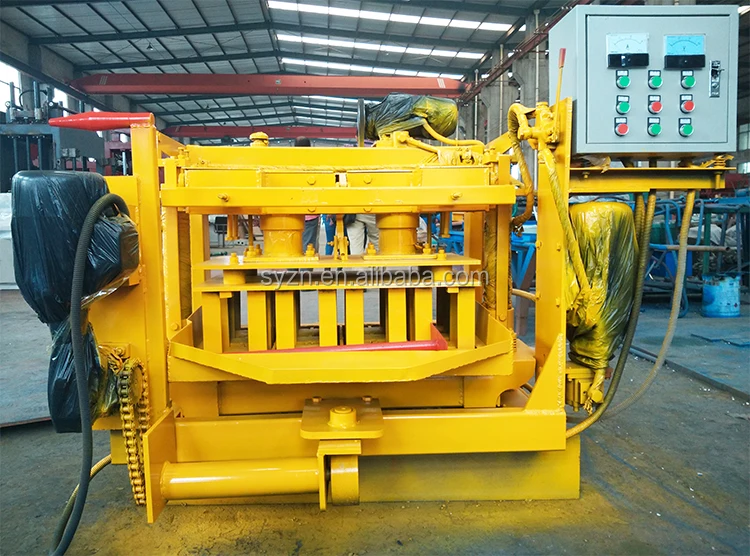
| Model | QMY4-30 |
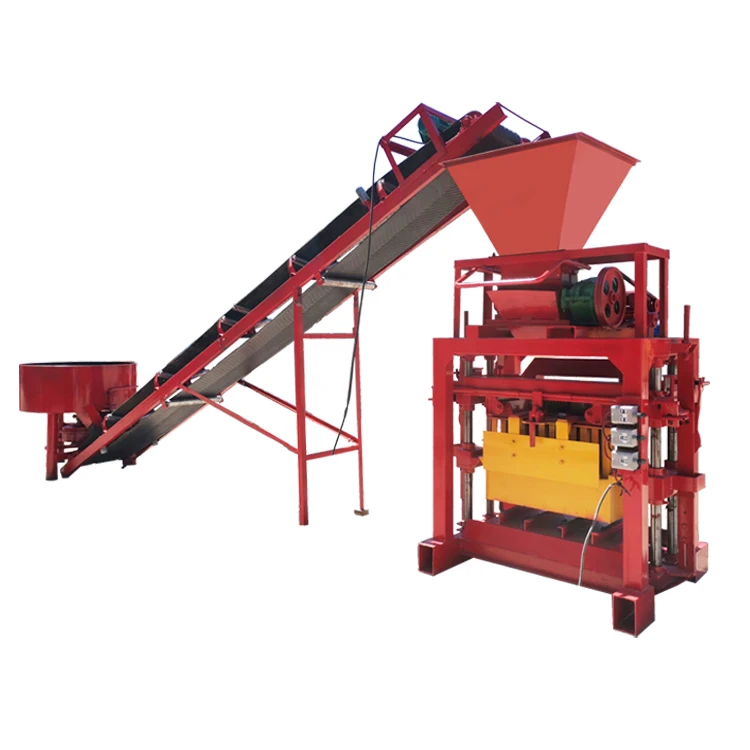
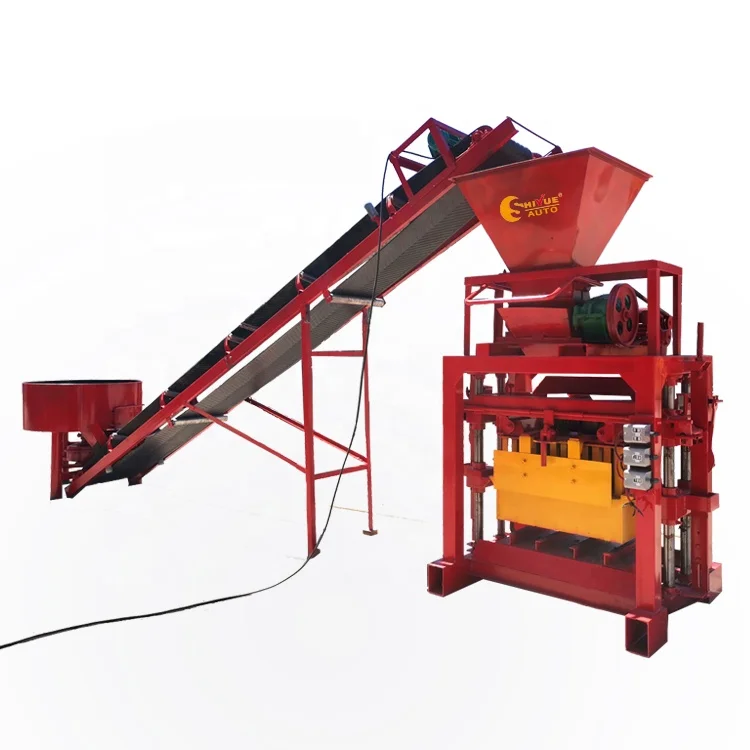
| Product Type | Diesel Engine Mobile Block Making Machine |
| Overall Dimensions (L×W×H) | 1300 x 1500 x 1000 mm |
| Net Weight | 950 kg – 1000 kg |
| Vibration Method | Mold Vibration |
| Vibration Force | 28.6 kN |
| Vibration Frequency | 4500 r/min |
| Total Power | 5.95 kW |
| Power Source | Diesel Engine |
| Voltage Options | 220V / 380V |
| Molding Cycle | 30 s |
| Output Capacity | 3000 pcs/day (8 hours) (basis not stated in source — confirm block format / material / thickness) |
| Raw Material Compatibility | Concrete, sand, cement, fly ash, lime, gypsum, stone dust, construction waste, slag, river sand, coal gangue |
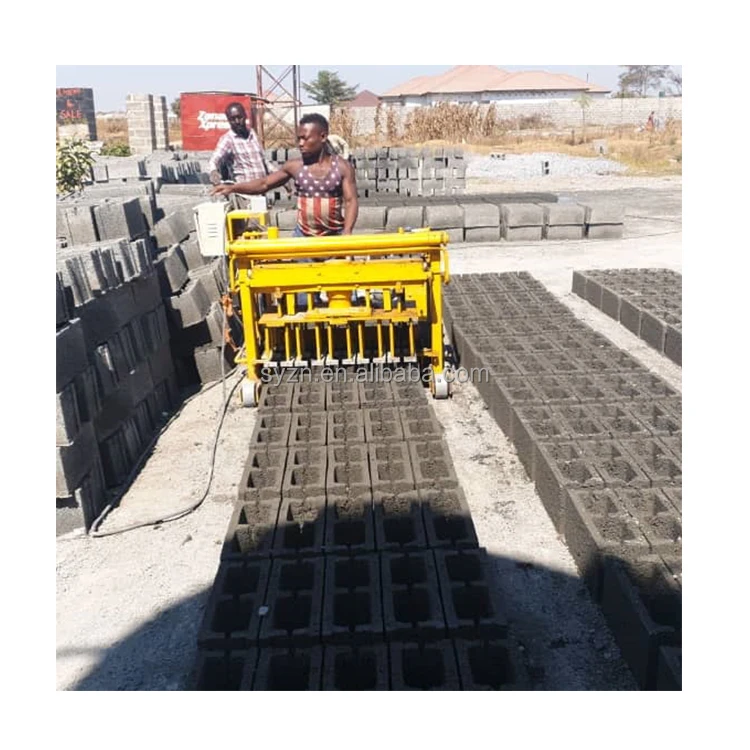
| Assembly State | Mobile / Portable (egg-laying type) |
| Mould Format | Customizable to buyer design |
| Automation Level | Manual operation with vibratory motor and hydraulic pump |
Application Suitability
| Application | Material or Output |
|---|---|
| On-site construction block production | Crushed stone, cement, sand mixes for solid and hollow blocks |
| Remote or rural block manufacturing | Fly ash, stone dust, coal gangue with cement binder |
| Coastal and desert area production | River sand, desert sand, gypsum and lime blends |
| Small-scale paver and interlocking brick output | Slag, mine tailings, construction waste with cement |
| Housing project local supply | Porcelain granule, sandrock and local aggregate combinations |
What a 30-Second Molding Cycle Actually Means for Your Output
Cycle time is only half the equation — block format, cavity count and operator handling determine what you actually produce in a day.
Most mobile block making machine specifications quote a single headline output number without revealing which block size it assumes. On a project site in the Middle East, I watched a client run a QMY4-30 expecting the brochure figure, only to discover their local sand was too clay-heavy and their chosen hollow block format required longer vibration. The real daily count fell noticeably short of the quoted capacity [NEED_CITE: block output calculation methodology for egg-laying machines]. The QMY4-30 mobile block making machine specifications must be read against your specific block format and mix design to mean anything practical.
Matching Cycle Time to Your Block Format
A 30-second press cycle does not translate directly into blocks per hour. Between each press, the operator repositions the mobile unit, checks alignment, and allows the freshly laid block to set before the machine advances. For larger hollow blocks with fewer cavities per mould, the effective rate per block is reasonable. For smaller solid bricks with more cavities, the press does more work per cycle but handling time remains similar. Requesting a format-specific capacity calculation is the only way to know what your day looks like before the machine arrives.
Raw Material Compatibility and Local Aggregate
The QMY4-30 accepts a wide material range — fly ash, stone dust, slag, river sand, construction waste, coal gangue — but each aggregate behaves differently under 28.6 kN of mold vibration. Clay-heavy sand requires adjusted cement ratios and potentially longer vibration to achieve target block strength [NEED_CITE: aggregate compatibility requirements for mobile block machines]. Confirming your local material profile before configuration prevents the situation where the machine runs smoothly but the blocks fail a compressive strength test.
Interpreting the Core Specifications for Production
The 28.6 kN vibration force delivered through mold vibration directly compacts the mix inside the mould cavity. This force must be matched to your aggregate’s particle size and cement content; too little vibration leaves voids in dense mixes, while excessive vibration on a fine sand mix can cause segregation. The 4500 r/min frequency works well for standard concrete mixes but needs evaluation against very coarse or very fine local materials. The diesel engine power source at 5.95 kW total power means you operate independently of grid supply — critical for remote construction sites, mining areas, or regions where electricity is unreliable. Voltage options of 220V or 380V apply to the vibratory motor and hydraulic pump circuits and must be confirmed against your local supply before the machine leaves the factory.
The Cost of Skipping Format-Specific Configuration
Ordering a mobile block machine on cycle time alone leads to consequences that appear only after installation. Blocks that crack during curing because the vibration force was not matched to a high-clay aggregate. Moulds that produce a format your local market does not buy, forcing an expensive custom order months later. Voltage mismatch discovered when the electrician arrives for commissioning [NEED_CITE: voltage mismatch consequences for imported industrial machinery]. These issues do not show up in the quotation but dominate the first weeks of production.
Why Sourcing Through a Format-Focused Supplier Matters
Every QMY4-30 configuration begins with your target block format, local aggregate sample, and site conditions — not a catalogue page. Mould design covers the formats your market actually sells, including custom drawings when your region requires a non-standard interlocking profile or kerbstone dimension. The machine, mould, and handling are specified as one system so nothing arrives mismatched. Documentation includes a capacity calculation that names the block format assumed, not a single unverifiable number. Support extends through installation, operator training, and a wear parts list so your first mould replacement is already planned [NEED_CITE: mobile block machine documentation standards for export].
Documentation & Verification
- Capacity calculation sheet stating the exact block format and cavity count assumed
- Mould drawing with dimensions and format list matching your market requirements
- Voltage, frequency, and motor specification confirmed before production begins
- Factory test record on your chosen block format before dispatch
- Wear parts and mould replacement list supplied with the machine
Installation, Commissioning & Support
- Flat compacted ground required for egg-laying operation across the 1300 x 1500 mm footprint
- Diesel engine eliminates grid dependence; 220V/380V circuits need local electrician verification
- Machine ships assembled; operator positions and advances manually on-site
- First-run vibration timing adjusted to your aggregate during commissioning
- Mould change procedure and cycle adjustment covered in operator training
- Wear parts identified in supplied list for predictable first replacement ordering
Preparing Your Inquiry for an Accurate Configuration
To receive a QMY4-30 proposal that reflects your actual production reality, include your target block formats with dimensions, the local aggregate type and source, daily output expectation per format, and site voltage and frequency. If you have an existing block design drawing or a sample from a competitor you need to match, attach it with the inquiry. Stating your curing area conditions and available handling equipment helps align the mould and pallet recommendation to your site.
Frequently Asked Questions
Q: How is the 3000 pcs/day capacity figure calculated for the QMY4-30?
A: That figure appears in source material without stating which block format, mould cavity count, or material mix it assumes. The realistic daily output changes significantly between a large hollow block and a small solid brick. We provide a format-specific capacity calculation with your quotation so the number is tied to your actual product, not a generic benchmark.
Q: What block formats can the QMY4-30 produce and how is the mould changed?
A: The mould is customizable to buyer drawings — hollow, solid, paving, interlocking or kerbstone formats are all possible within the machine’s mould envelope. Mould change on this manual mobile unit involves unbolting the existing mould and fitting the replacement. We supply a format list and change procedure so you know the time required before you order a second mould.
Q: What if my local sand or stone dust differs from standard concrete aggregate?
A: Local aggregate composition — particularly clay content, particle size distribution, and moisture retention — affects block strength and surface finish. We request a material sample or detailed description before finalizing vibration settings and recommending a mix ratio. This prevents the situation where blocks crack or fail compression testing after the machine is running.
Q: Can I supply my own block design drawing for a custom mould?
A: Yes. Custom mould design to buyer drawings is a standard part of the QMY4-30 offering. Submit your drawing with dimensions, draft angles, and target block weight. The mould is manufactured and tested on the machine before shipment so format compatibility is confirmed before it reaches your site.
Q: How do I confirm the correct voltage and frequency before the machine ships?
A: Voltage options include 220V and 380V for the vibratory motor and hydraulic pump circuits. State your country, local supply voltage, frequency in Hz, and phase configuration with your inquiry. We confirm these parameters in writing before production begins to avoid commissioning delays when the machine arrives.