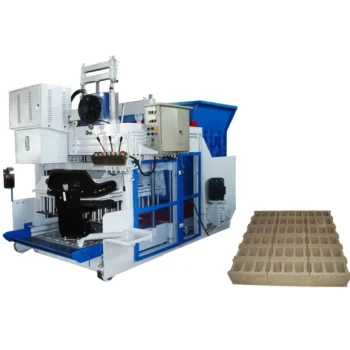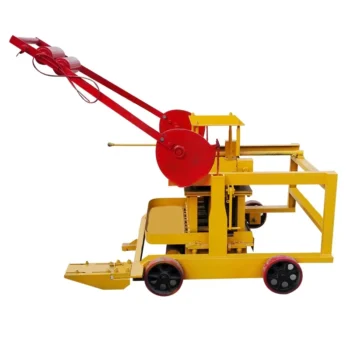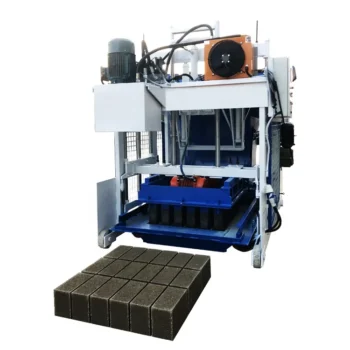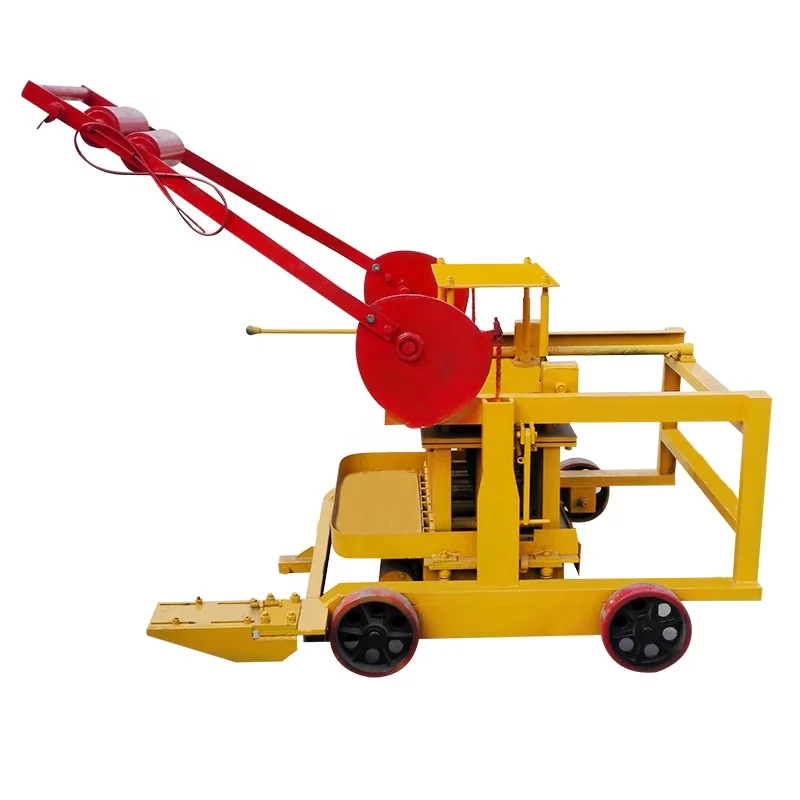

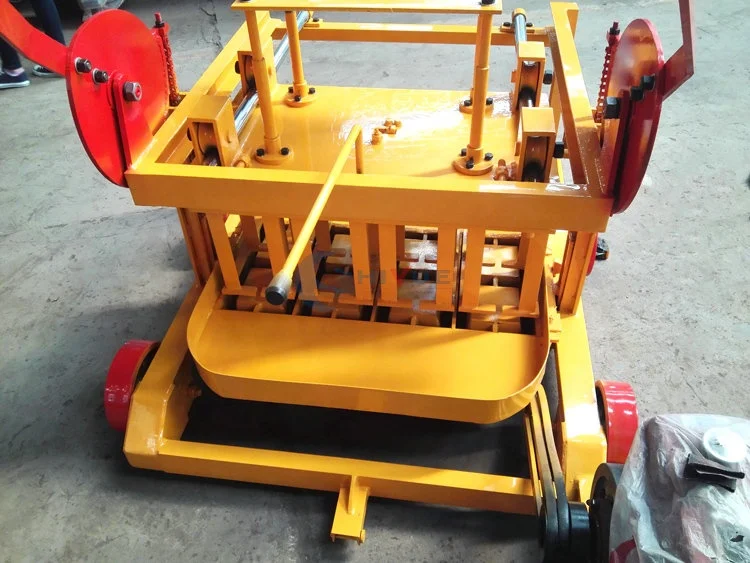

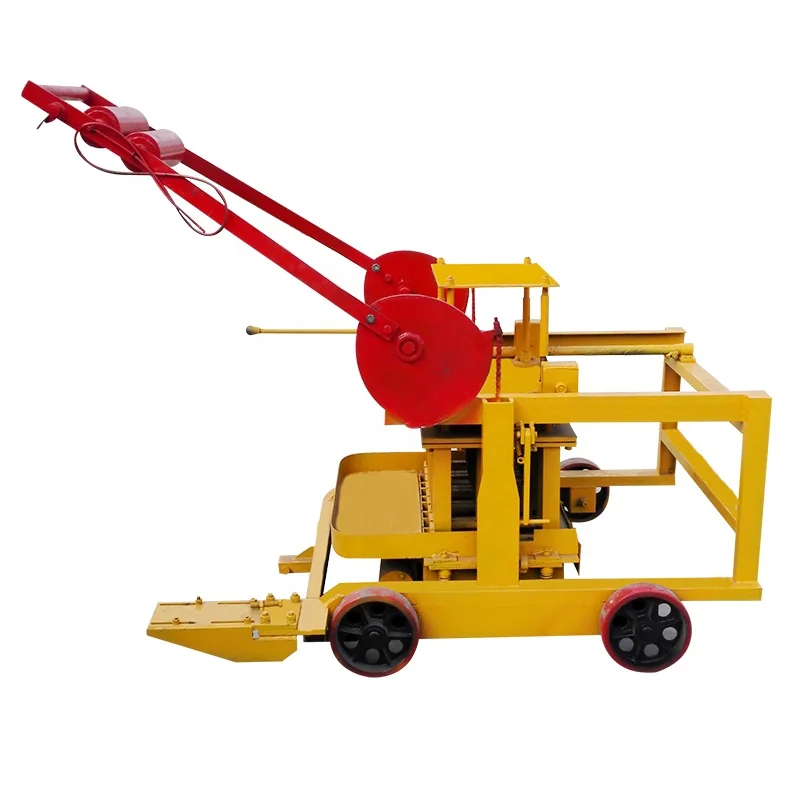
Description
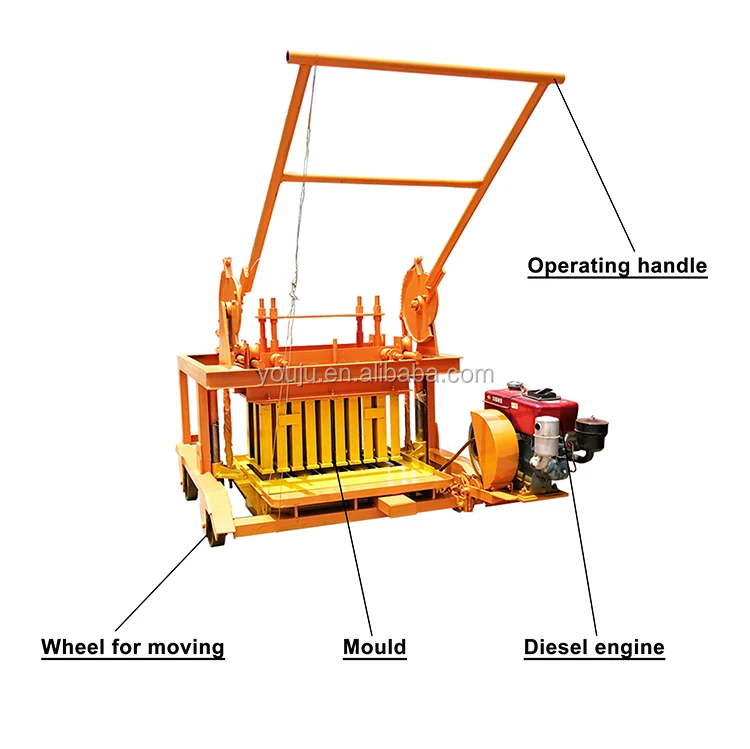
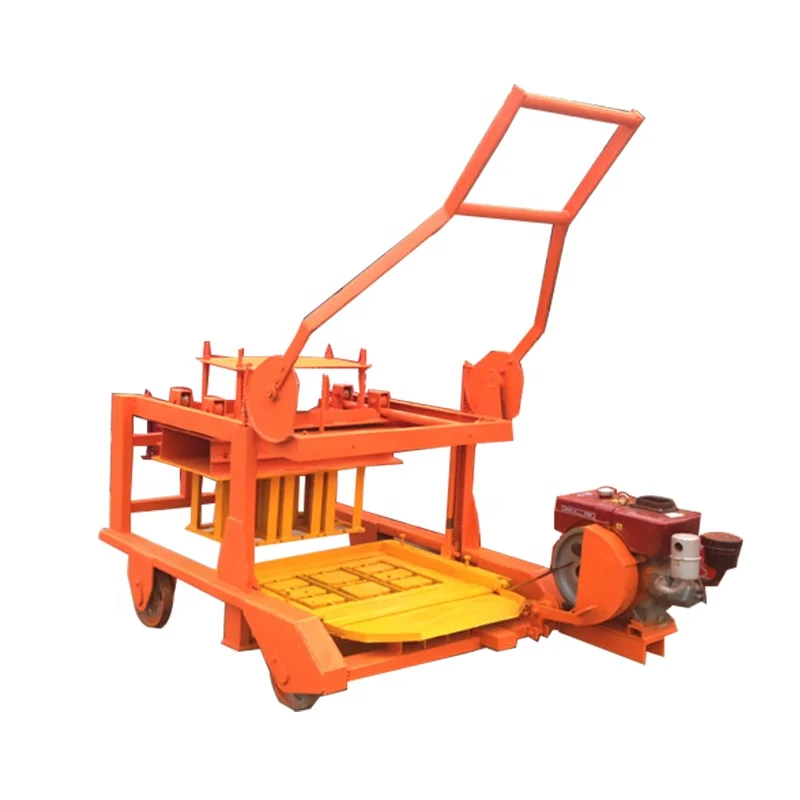
Matched System Configuration — The QMR4-45 mobile block machine, mixer, and moulds are specified as one coordinated line matched to your target block format and local aggregate, not pulled from separate catalogues.
Technical Specifications
| Parameter | Value |
|---|---|
| Model | QMR4-45 |
| Product Type | Mobile Concrete Block Making Machine |
| Power Source | Diesel / Electric (configurable) |
| Engine Power | 8 hp |
| Molding Cycle | 45s (basis not stated in source — confirm block format, material, and thickness) |
| Molding Form | Vibration and Pressure |
| Vibration Force | 60 KN |
| Total Weight | 800 kg |
| Overall Dimensions | 2420 × 1320 × 1650 mm |
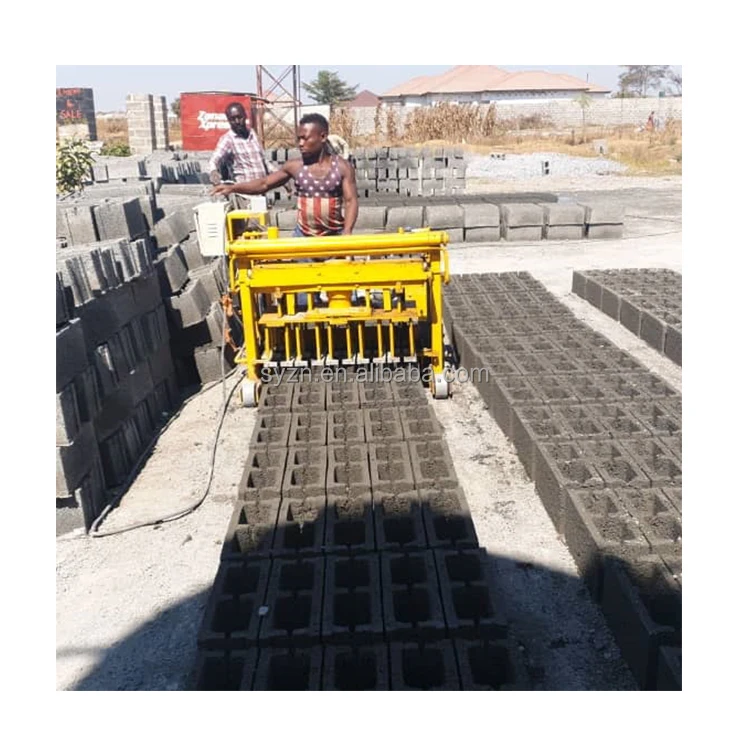
| Pallet Requirement | No pallet needed (egg-laying type) |
| Basic Equipment | JZC350 Diesel Concrete Mixer or JQ350 Diesel Concrete Mixer (Electric Generating Unit); Trolley |
| Automation Level | Manual |
| Block Formats | Paver brick, hollow block, concrete block, solid brick, fly ash brick |
Application Suitability
| Application | Material or Output |
|---|---|
| On-site project block production | Crushed stone, sand, and cement mixes laid directly on a prepared concrete floor |
| Small-scale paver manufacturing | Fine aggregate and cement for interlocking paving bricks |
| Remote or rural block supply | Fly ash, sand, and cement for solid and hollow formats |
| First-plant entrepreneur setup | Low-investment entry with option to add handling and automation later |
What "One Cycle Every 45 Seconds" Leaves Out
The 45-second cycle figure means very little unless you know which block format, wall thickness, and aggregate type it assumes.
Many QMR4-45 mobile block machine specifications are quoted as a single headline number. A 45-second press cycle on a small solid brick is fundamentally different from the same claim on a large hollow block requiring higher vibration energy and longer consolidation. When the assumed format is never stated, buyers end up comparing machines that are not actually producing the same product. I have seen project contractors arrive on site expecting daily volumes that simply never materialise because the capacity quote was based on a format they were not even producing [NEED_CITE: block format assumptions in cycle time claims]. The QMR4-45 mobile block machine specifications on this page are presented with that caveat up front — always confirm which format the 45-second cycle actually references before sizing your labour and curing area.
Matching Vibration Force to Your Local Mix
The QMR4-45 mobile block machine delivers 60 KN of vibration force, which is the starting point for achieving block density and compressive strength. However, vibration alone does not determine block quality — it must be paired with a mix design that your local aggregate can actually support. High-clay sand, for example, absorbs vibration energy differently than clean crushed granite, and the resulting blocks may crack during demoulding or curing if the ratio is not adjusted. Early in my career I watched an entire batch of hollow blocks crack because the sand contained too much silt and nobody checked before the first production run. That is why we always ask for a sample of your local raw material before finalising the machine and mould configuration.
Mould Format Coverage and Custom Design
Format flexibility is one of the primary reasons buyers choose a mobile egg-laying machine over a static press. The QMR4-45 supports hollow blocks, solid bricks, pavers, and fly ash bricks through mould changes on the same chassis. If your local market demands a format that is not in the standard catalogue, custom moulds can be designed to your drawings. What matters is that the mould weight and cavity count stay within the vibration force envelope of the machine — a mould that is too heavy or has too many cavities will produce inconsistent compaction. We verify this during the configuration stage so you are not discovering limitations after the first shift [NEED_CITE: mould weight limits relative to vibration force rating].
How Core Parameters Shape Your Daily Output
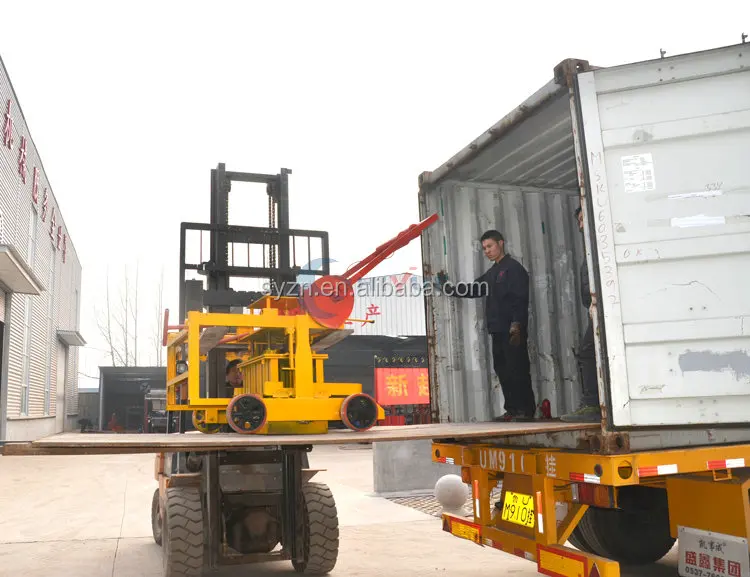
The 8 hp diesel engine powers both the vibration motor and the mixer, meaning the QMR4-45 mobile block machine can operate on sites with no grid electricity at all — a decisive advantage for remote housing projects or road-side paver production. The 800 kg total weight provides enough mass to resist excessive movement during vibration, but it also means the machine can be repositioned by hand or with a small trolley as blocks are laid in rows. The absence of pallets eliminates a major recurring cost and curing bottleneck; blocks are laid directly on the ground, which means your floor preparation and curing schedule become the real constraints on output rather than pallet inventory. The 2420 × 1320 × 1650 mm footprint fits inside a standard 20-foot container for shipping and can be manoeuvred through narrow site access points. When you calculate realistic daily volume, factor in mixer loading time, mould change intervals if you run multiple formats, and the walking speed of the operator — not just the press cycle itself.
The Hidden Cost of Skipping the Raw Material Check
When a mobile block machine is configured without testing local aggregate, the consequences do not appear on day one. Blocks may pass a visual inspection fresh from the mould, only to crack during the curing week or fail a compression test when the project engineer samples them. By then, thousands of blocks have already been laid. I once saw a contractor scrap two full truckloads of hollow blocks because the local sand had a high clay content that nobody had tested before production started. The cost was not the machine — it was the wasted cement, the lost week of project time, and the reputation hit with the site inspector [NEED_CITE: aggregate testing standards for concrete block production]. Always share your material source before the mould and vibration settings are locked in.
Why Buyers Source This Machine Through Our Configuration Process
Block machinery is the single focus of our workshop, so the QMR4-45 machine, its diesel mixer, trolley, and every mould are specified as one matched system rather than assembled from unrelated suppliers. The configuration is set against your actual mix design and target block format, not a catalogue default that assumes clean river sand and standard cement ratios. Custom mould design is available for any format your market sells, built to your drawings and tested before shipment. The manual automation level keeps the initial investment low while leaving a clear path to add pallet handling and stacking equipment as your volume grows. Installation and commissioning support includes operator training on your specific mix, so the crew is not learning through trial and error on live production.
Documentation & Verification
- Line layout and capacity calculation stating the exact block format assumed for each output figure
- Mould drawing and format list confirming every block size included in your quotation
- Machine specification sheet with vibration force, engine rating, and overall dimensions verified
- Hydraulic and electrical schematic for the diesel or electric variant you selected
- Factory test record showing production on your specified block format before dispatch
- Wear parts and mould availability list with first replacement intervals noted
Installation, Commissioning & Support
- A level concrete floor is required; the QMR4-45 lays blocks directly on prepared ground without pallets
- Diesel variant requires no fixed power connection; electric variant needs voltage and frequency confirmation before shipment
- Machine ships partially assembled — vibration assembly, engine, and trolley are bolted together on site
- First-day production run supervised to adjust vibration time and mix water ratio to your aggregate
- Operator training covers mould change procedure, daily greasing points, and belt tension checks
- Wear parts list supplied with recommended first-order quantities for vibration springs and mould liners
What We Need to Size Your Machine Correctly
Before we quote a configuration, we need to know which block formats your market actually sells and the daily volume you need to sustain. Share a sample or source description of your local sand and aggregate so we can match the vibration settings and mould design to your material. If you are choosing the electric variant, confirm your site voltage and frequency along with the preferred PLC display language. Finally, let us know whether the machine will operate on a prepared concrete slab or an earthen surface, as this affects both block quality and curing planning.
Frequently Asked Questions
Q: How is daily output calculated and which block format does the 45-second cycle time assume?
A: The 45-second cycle is a base figure that must be confirmed against the specific block format, wall thickness, and aggregate you plan to run. A small solid brick completes a cycle much faster than a large hollow block because the vibration energy requirement and mould fill time differ. We calculate daily output per format and state the assumption clearly in the capacity document so you can plan labour and curing area accurately.
Q: What mould formats are available and can I get a custom mould built to my own drawings?
A: Standard moulds cover hollow blocks, solid bricks, pavers, and fly ash bricks in common sizes. If your market demands a non-standard format, custom moulds can be designed and manufactured to your drawings. We verify that the mould weight and cavity count stay within the 60 KN vibration force envelope of the QMR4-45 to ensure consistent compaction across every cavity.
Q: How does vibration force interact with my local aggregate to affect block strength?
A: The 60 KN vibration force compacts the mix inside the mould, but the result depends on aggregate shape, clay content, and cement ratio. Sandy material with high silt content absorbs vibration differently than clean crushed stone, which can lead to cracking or low compressive strength. We ask for a material sample or source description so the mix and vibration time can be adjusted before your first production run.
Q: What supporting equipment comes with the QMR4-45 and what do I need to source locally?
A: The basic package includes either a JZC350 diesel concrete mixer or a JQ350 diesel mixer with an electric generating unit, plus a trolley for material transport. You will need to source raw materials, water supply, and a prepared concrete floor for block laying locally. Pallets are not required because the machine is an egg-laying type that deposits blocks directly on the ground.