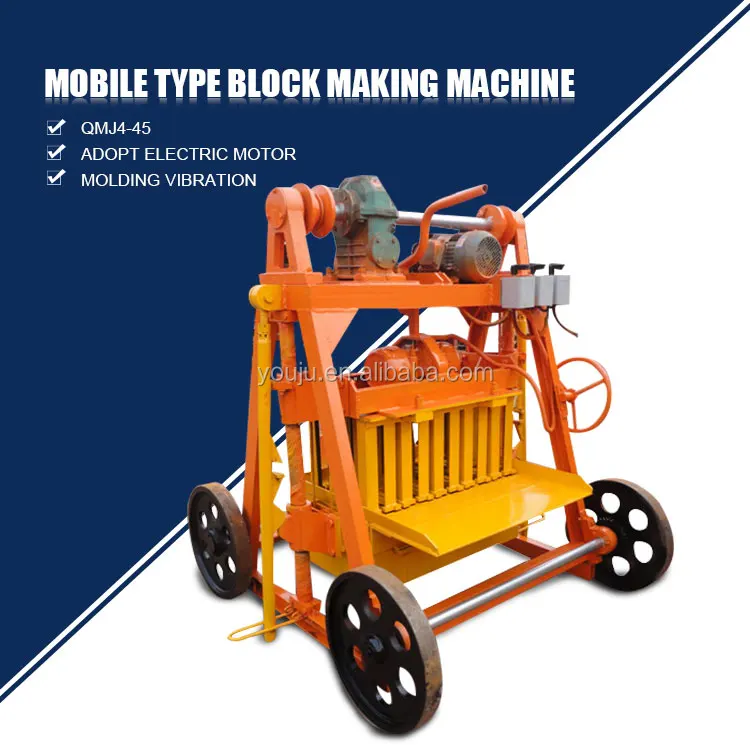


Description
Format-matched configuration — every QMJ4-45 mobile block machine ships with a mould list tied to the buyer’s actual hollow block dimensions and a capacity sheet that names the format behind every output figure.
Technical Specifications
| Parameter | Value |
|---|---|
| Model | QMJ4-45 |
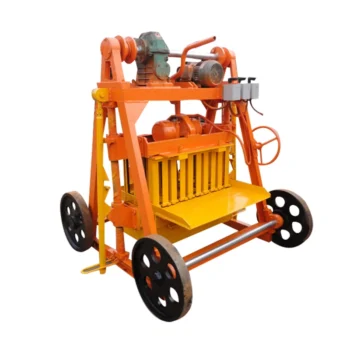
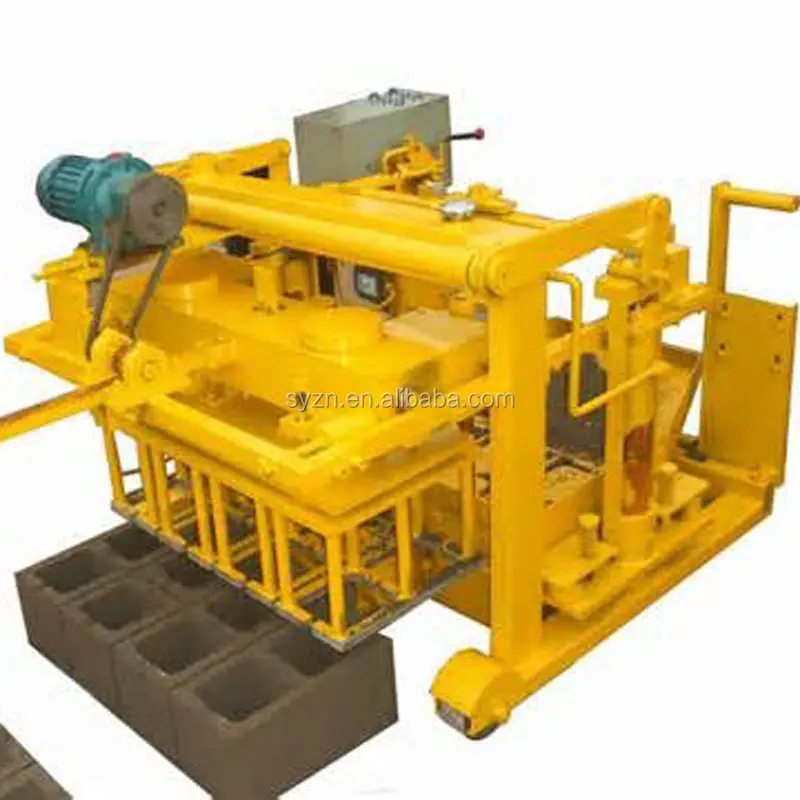
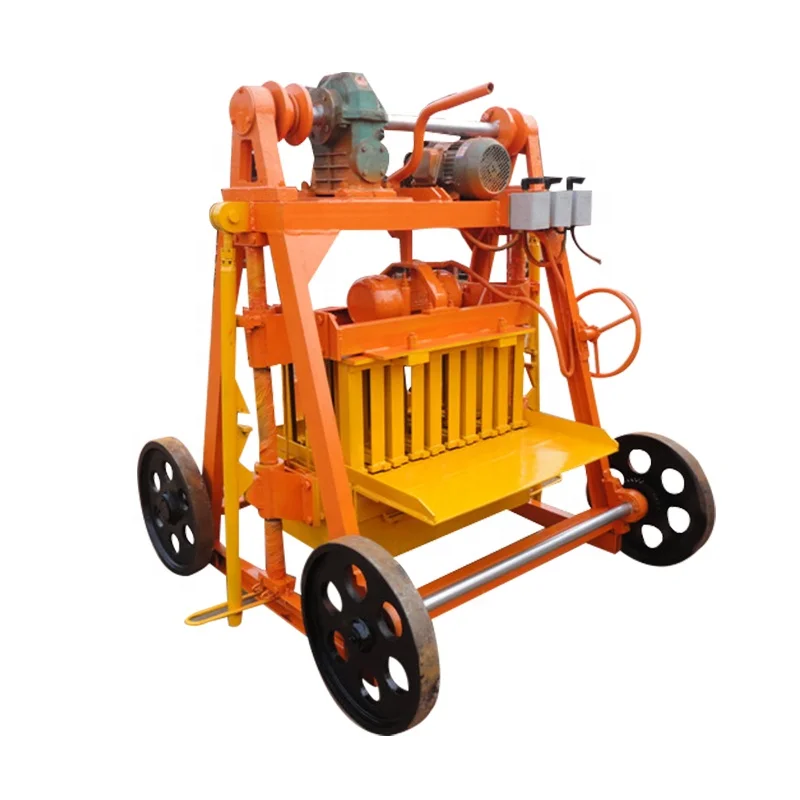
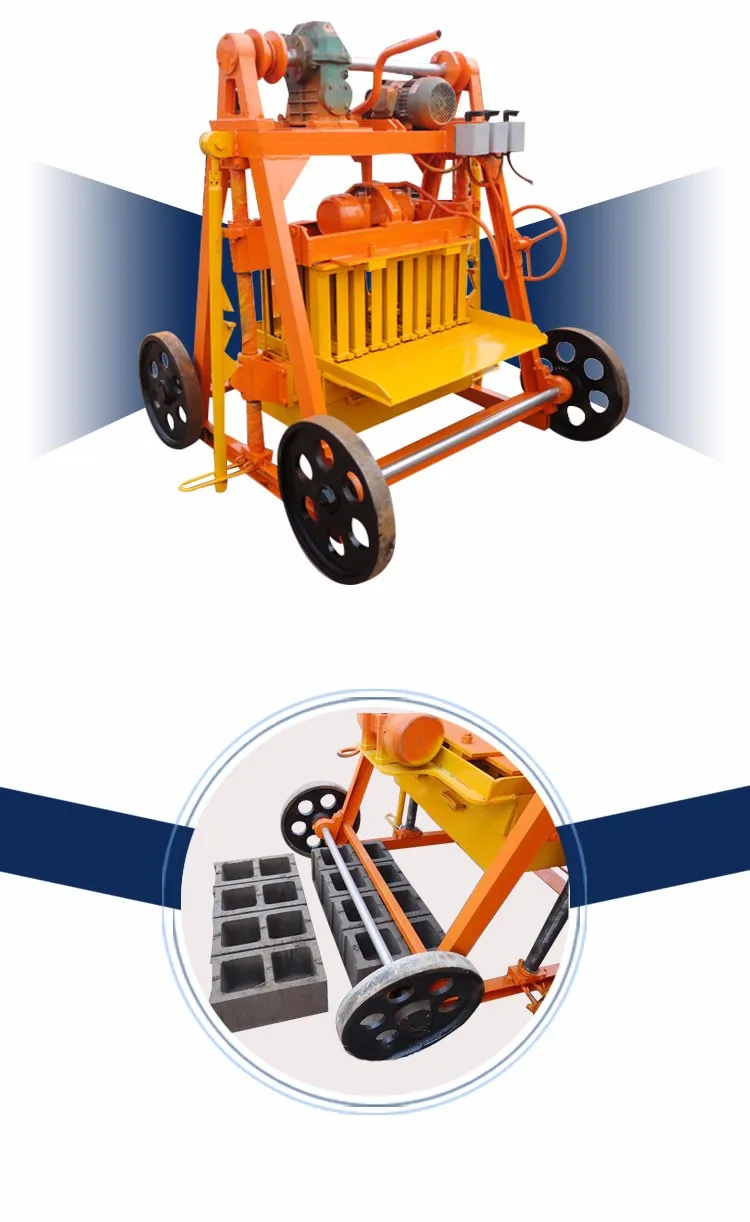
| Product Type | Mobile Egg-Laying Block Making Machine |
| Vibration Method | Mold vibration (twice-vibration molding core) |
| Vibration Frequency | 2400 r/m |
| Molding Cycle | 45 seconds |
| Molding Capacity | 4 pcs/mold (basis: standard hollow block) |
| Hollow Block Output (400×200×200mm) | 3000 pcs/day (8-hour shift, 4 pcs/mold, 40–45s cycle) |
| Hollow Block Output (400×150×200mm) | 3500 pcs/day (8-hour shift, 5 pcs/mold, 40–45s cycle) |
| Hollow Block Output (400×120×200mm) | 4500 pcs/day (8-hour shift, 6 pcs/mold, 40–45s cycle) |
| Demold Method | Manual |
| Turning Method | Manual |
| Total Power | 6 kW |
| Power Source | Diesel / Petrol engine (electric optional) |
| Automation Level | Manual operation |
| Warranty | One year for the whole machine |
Application Suitability
| Application | Material or Output |
|---|---|
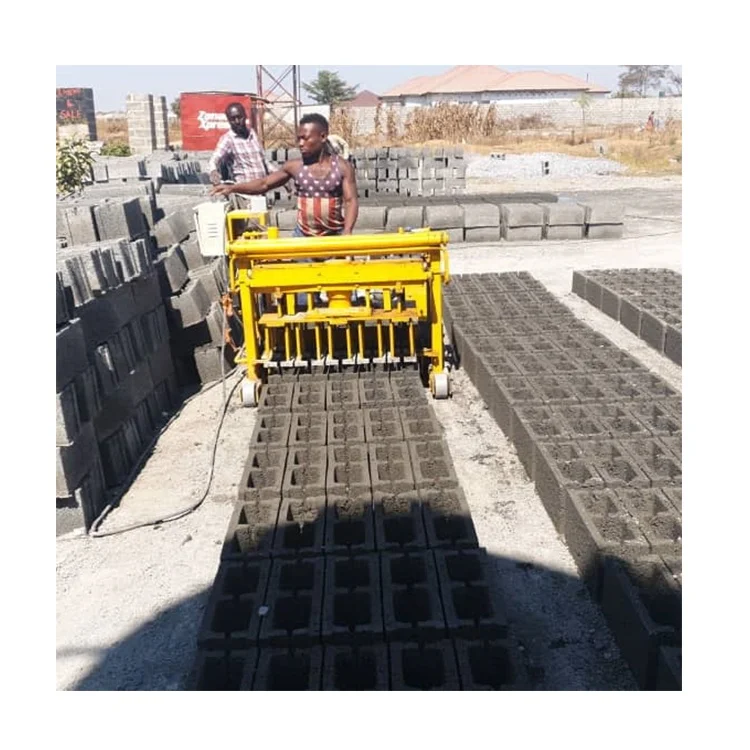
| On-site hollow block production for housing projects | Crushed stone, river sand, cement mixes laid directly on cured concrete floors |
| Garden path and landscape paver runs | Fine aggregate and cement blends for small-format paving bricks |
| Small contractor yards producing standard bricks | Local sand and gravel with manual batching |
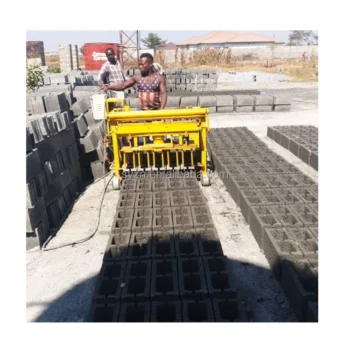
| Remote construction sites without grid power | Diesel-powered operation on uneven ground with prepared flat surfaces |
What "3000 Blocks a Day" Actually Means on Site
Output figures only hold weight when the block format, shift length, and cycle time are written next to them.
I have watched crews in West Africa unpack a mobile egg-layer and chase a daily target that was never going to happen with their chosen mould. A supplier quotes a headline number, but that number assumes a specific hollow block size and an uninterrupted eight-hour run. Switch to a wider format and the same QMJ4-45 mobile block machine specifications tell a different story — fewer cavities per mould, fewer blocks per cycle, and a daily total that drops accordingly [NEED_CITE: capacity calculation methodology for egg-laying block machines]. The only way to avoid that gap is to see the output line tied to the exact dimension you intend to sell.
Matching Mould Format to Local Market Demand
The QMJ4-45 mobile block machine specifications cover three common hollow block dimensions, each with its own cavity count and daily throughput. Buyers in markets where 400×150×200mm blocks dominate will see different economics than those selling the narrower 120mm partition block. Confirming which format moves fastest in your area before ordering ensures the mould package matches real demand rather than a catalogue default.
Power Source Selection for Off-Grid Sites
Sites without a stable three-phase supply benefit from the diesel or petrol engine option that replaces the standard electric motor. The 6 kW total power requirement is modest, but even a small generator must handle the vibration motor’s starting current. Engine-driven configuration removes the grid dependency entirely, letting the QMJ4-45 mobile block machine operate in rural project yards where electricity may not arrive for months [NEED_CITE: off-grid power requirements for mobile block making equipment].
Reading the Specs That Shape Block Quality
Vibration frequency at 2400 r/m works together with the twice-vibration molding core to compact the mix in two stages — an initial settling pulse followed by a higher-energy consolidation stroke. This sequence matters more than peak frequency alone because it determines how thoroughly the concrete fills the mould corners, especially on hollow blocks with thin webs. The 45-second molding cycle includes both vibration stages and the manual demold lift, so operators who rush the cycle shorten compaction time and weaken the block. Total power of 6 kW must be available continuously; voltage drop on long cable runs can reduce effective vibration force and produce inconsistent density across a batch. Diesel engines must be governed to hold steady RPM under the cyclic load of the vibration motor, otherwise frequency fluctuates and block strength varies from piece to piece.
The Cost of Skipping the Mix Design Conversation
A mobile egg-layer applies vibration directly through the mould with no hydraulic press assist, so the mix design carries more of the compaction burden than it would on a stationary hydraulic machine. If the local sand has a high clay or silt content, the same vibration frequency will produce a softer block than expected [NEED_CITE: effect of aggregate fines on egg-layer block density]. I have seen entire production runs crumble at the edges because the mix was designed for a hydraulic press and never adjusted for the lower compaction force of an egg-laying format. The fix is a sample test before the machine ships, not a week after it arrives.
Why Buyers Source This Range Here
Configuration starts with the buyer’s target block format and local aggregate, not a stock list. Every QMJ4-45 ships with a mould drawing and format list so the buyer can verify cavity count and dimensions before production begins. The machine, mould, and any supporting pallets or handling tools are specified as one matched set from a single source focused exclusively on block machinery. Automation level is selectable, so a contractor can begin with manual operation and add semi-automatic upgrades as volume grows. Installation support includes on-site commissioning and operator training so the crew understands cycle timing and mix adjustment from day one.
Documentation & Verification
- Capacity calculation sheet naming the hollow block format behind each daily output figure
- Mould drawing and format list showing available cavity counts and dimensions
- Machine specification sheet confirming vibration frequency, power source, and cycle time
- Factory test record on the buyer’s specified block format before dispatch
- Operation and maintenance manual with wear parts and mould replacement schedule
Installation, Commissioning & Support
- Flat concrete floor of at least 100 mm thickness required for egg-laying operation with the QMJ4-45
- Dedicated power circuit rated for 6 kW continuous load with engine option eliminating grid dependence
- Machine arrives fully assembled; only the vibration motor and mould require bolt-on mounting at site
- First-day commissioning covers vibration timing, cycle pacing, and mix adjustment to local aggregate
- Operator training addresses manual demold technique and mould change procedure for format switching
- Wear parts list identifies high-friction components with recommended inspection intervals
What to Prepare Before You Enquire
Send the exact hollow block dimensions your market sells, along with a photo or lab report of your local sand and aggregate. Confirm whether your site has grid power or needs an engine-driven unit, and state the daily output you need based on your project timeline. If you already have a curing area, share its dimensions so pallet and handling recommendations can be aligned.
Frequently Asked Questions
Q: What is the realistic daily output for my specific hollow block size?
A: The QMJ4-45 produces 3000 pieces per eight-hour day on 400×200×200mm blocks, 3500 on 400×150×200mm, and 4500 on 400×120×200mm, each based on a 40–45 second cycle. If your format differs, request a recalculation tied to your exact mould cavity count before placing an order.
Q: Which mould formats are available and how long does a mould change take?
A: Standard moulds cover the three hollow block dimensions listed in the specifications, and custom moulds can be built to buyer drawings. Mould change is manual and requires unbolting the vibration table fixture; a trained operator completes the swap within a single shift once familiar with the procedure.
Q: Can the QMJ4-45 work with my local aggregate and mix design?
A: The machine relies on vibration alone without hydraulic press force, so mix proportions must suit egg-laying compaction. Provide a sample or lab analysis of your sand and aggregate before shipment so the vibration parameters and cycle time can be adjusted to your material.
Q: What ground conditions are needed for on-site production without pallets?
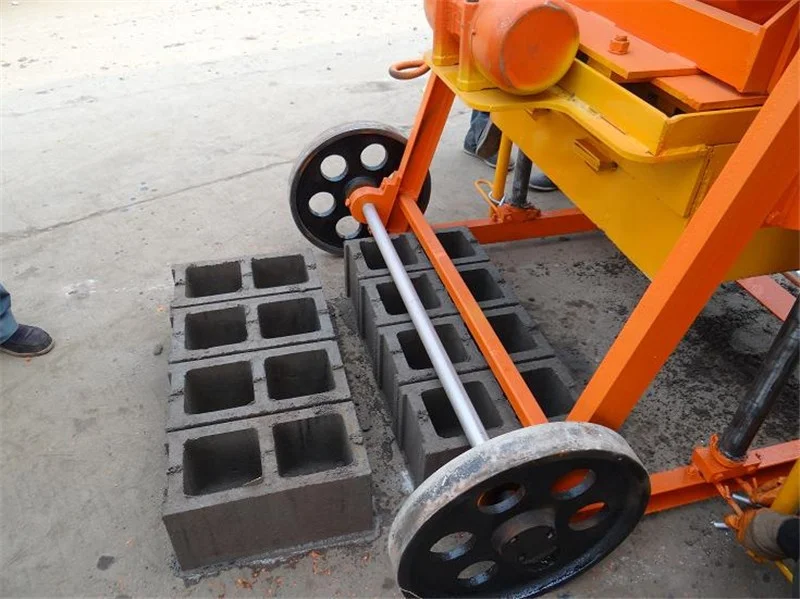
A: Egg-laying operation requires a smooth, level concrete surface with sufficient curing area adjacent to the machine path. The QMJ4-45 deposits blocks directly onto the floor, so the surface must be hard enough to bear wet concrete weight without deformation.
Q: How do I confirm the power source matches my site conditions?
A: The QMJ4-45 is available with a diesel or petrol engine for sites without stable electricity, or with an electric motor where grid power exists. State your available voltage and frequency at the enquiry stage so the correct drive system is fitted before dispatch.