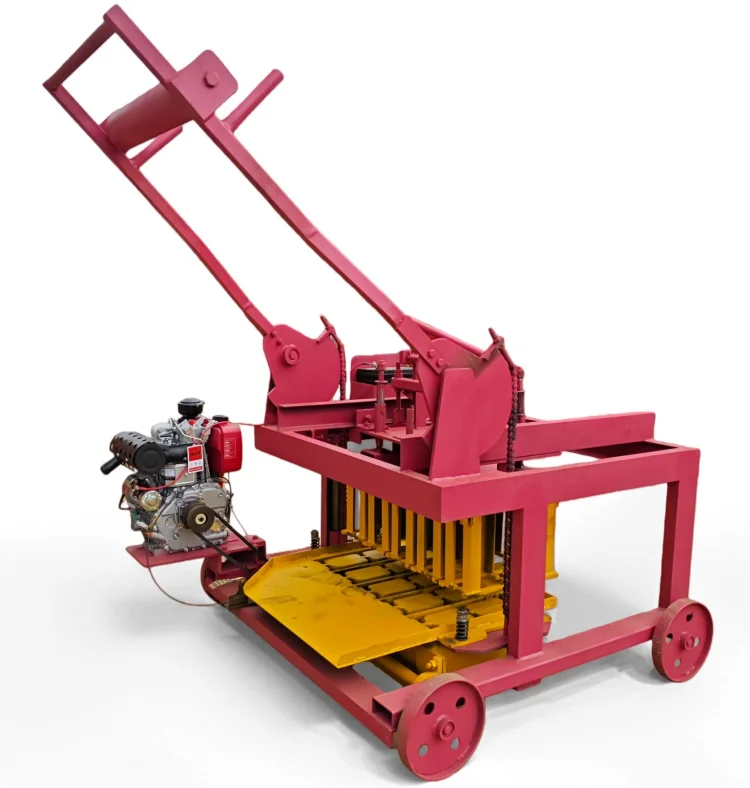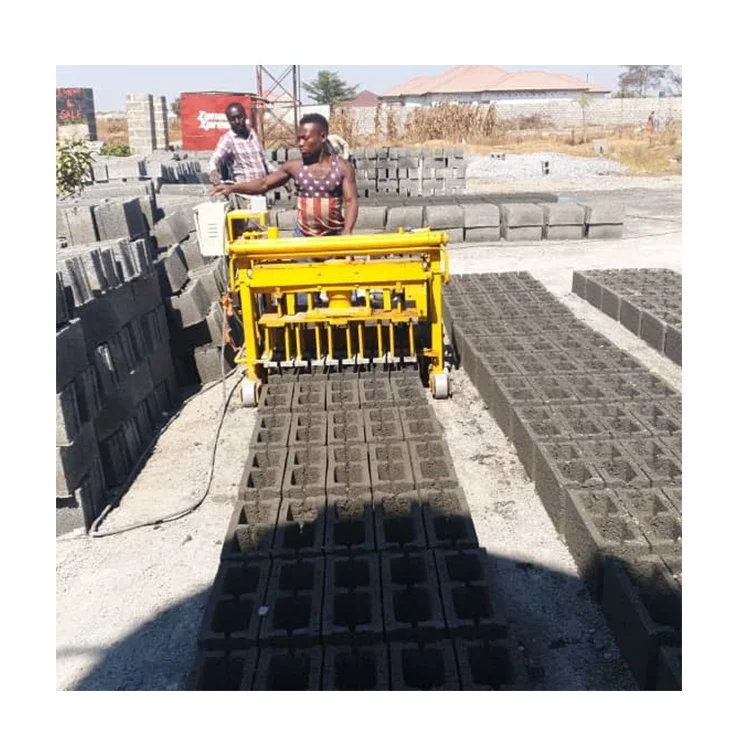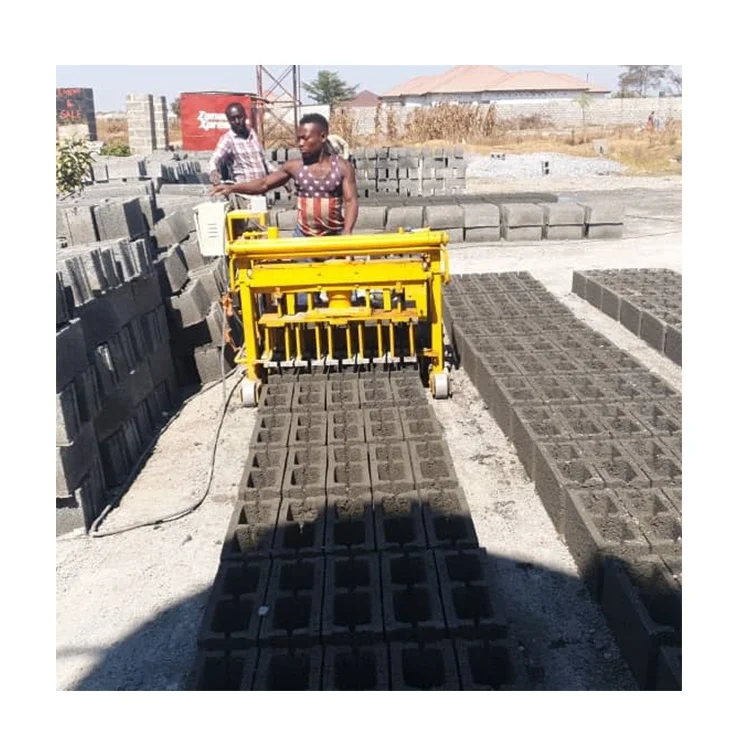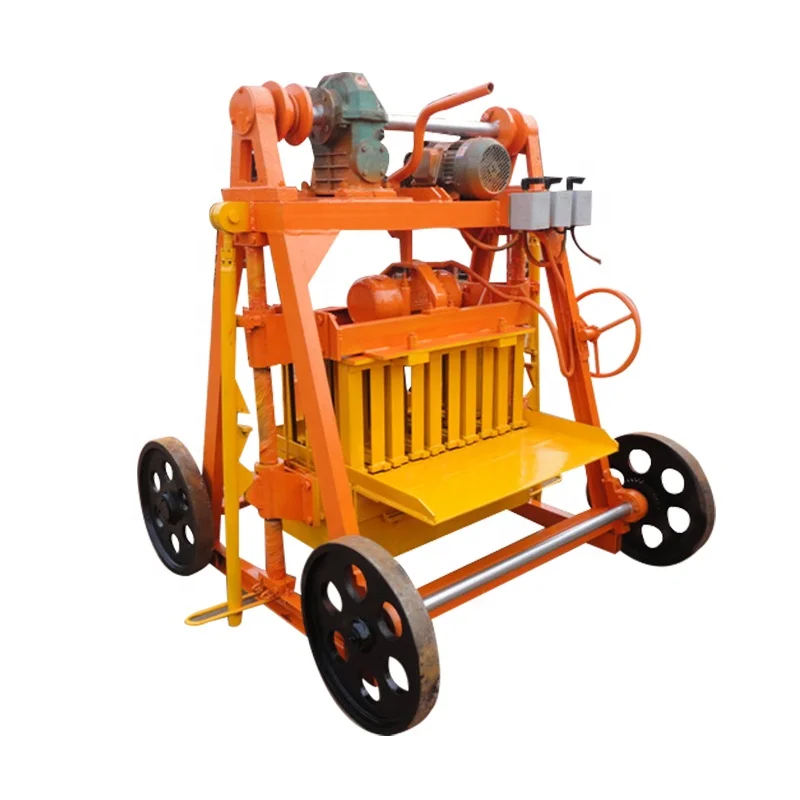



Description
Format-Matched Capacity — every QMJ4-45 output figure we quote is tied to a specific hollow block dimension and cycle time, so your daily count reflects what you will actually produce on site.
Technical Specifications
| Parameter | Value |
|---|---|
| Model | QMJ4-45 |
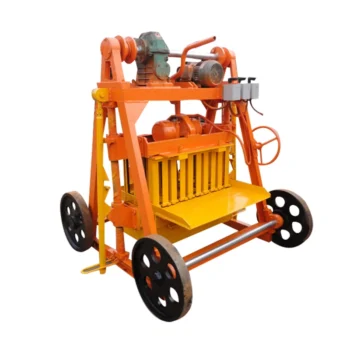
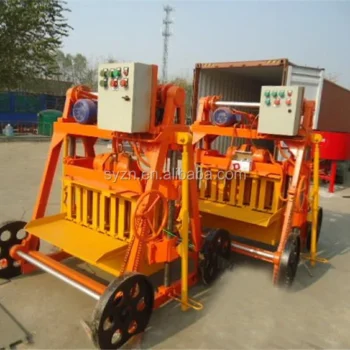
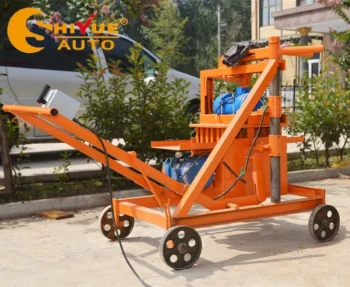
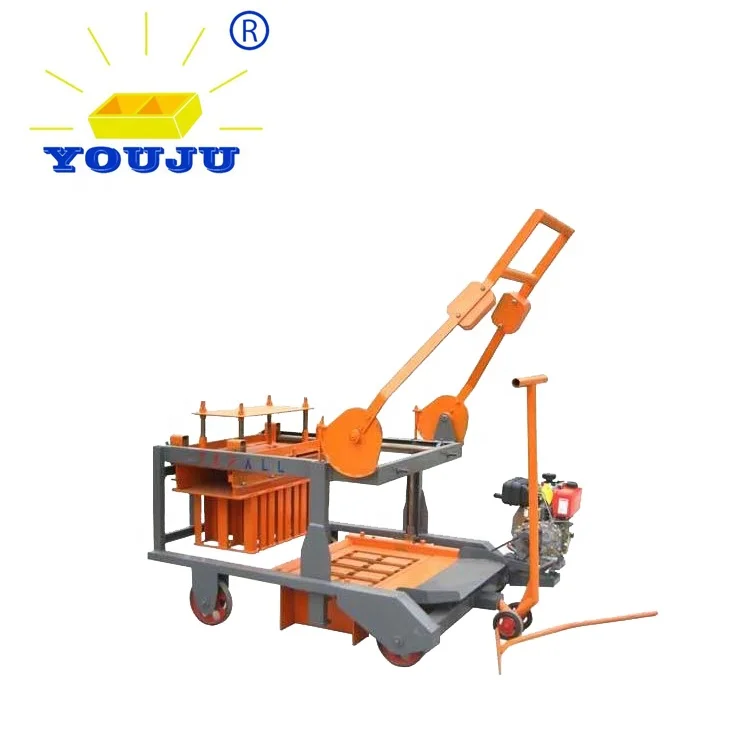
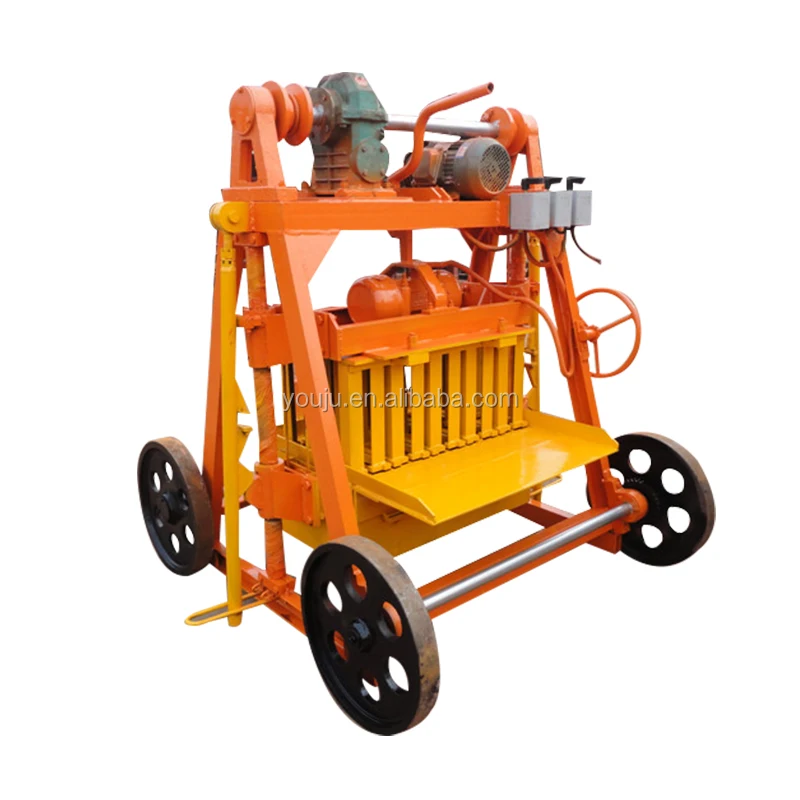
| Product Type | Mobile Egg Laying Block Making Machine |
| Molding Capacity | 4 pcs/mould for 400×200×200 mm hollow block; 5 pcs for 400×150×200 mm; 6 pcs for 400×120×200 mm |
| Molding Cycle | 40–45 seconds |
| Daily Productivity | 3,000 pcs/day (400×200×200 mm), 3,500 pcs/day (400×150×200 mm), 4,500 pcs/day (400×120×200 mm) — based on 8-hour shift |
| Vibration Method | Mold vibration, twice-vibration molding core |
| Vibration Frequency | 2,400 r/m |
| Demold Method | Manual |
| Turning Method | Manual |
| Automation Level | Manual operation |
| Total Power | 6 kW |
| Power Source | Diesel or petrol engine |
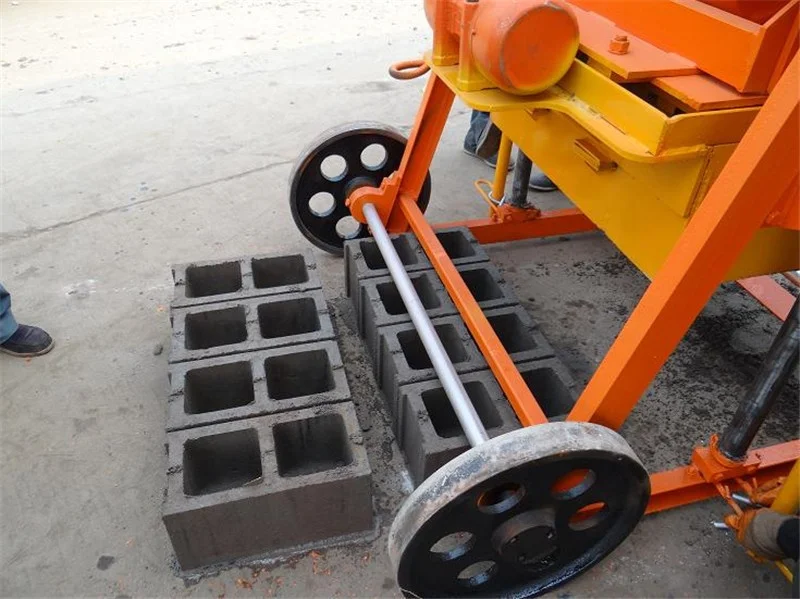
| Pallet Consumption | None required — egg-laying operation deposits blocks directly on ground |
Application Suitability
| Application | Material or Output |
|---|---|
| On-site hollow block production for building contractors | Crushed stone, river sand, cement, water — mixed locally |
| Small-scale block yard serving rural housing projects | 400×200×200 mm and 400×150×200 mm hollow blocks from standard aggregate |
| DIY and self-build construction in off-grid locations | Blocks cured on compacted earth or concrete floor without pallet racking |
| First block plant for entrepreneurs with limited capital | Manual operation entry point with diesel engine for sites without grid power |
What "2,600–4,000 Pieces per Day" Actually Means for Mobile Block Machine Specifications
Daily output changes the moment you switch block formats.
Most mobile block machine specifications sheets quote a single productivity band without naming the block size behind it. I have watched buyers in West Africa and Southeast Asia receive machines expecting the upper end of that range, only to find their 400×200×200 mm hollow blocks cap production well below the headline number. The gap is not a defect — it is simple geometry. A mould that holds four large blocks per cycle will always yield fewer pieces than one holding six smaller blocks in the same 40–45 second window. When you choose how to choose a mobile block machine, start by pinning down the exact format your market buys, then match the cycle and mould count to that format rather than chasing a generic daily total [NEED_CITE: block format influence on mobile machine daily output].
Matching Vibration Force to Your Local Aggregate
The QMJ4-45 runs a twice-vibration molding core at 2,400 r/m, which suits standard crushed stone and river sand mixes common across most export markets. However, laterite, volcanic ash, and high-clay aggregates absorb vibration differently. I once set up a unit in a region where the local red soil required us to adjust the vibration amplitude and mould clearance before block density reached acceptable levels. Before we ship, we ask for a sample of your aggregate and run a test cycle to confirm the vibration force matches your actual mix, not a laboratory default. This step takes a few days and prevents the most common mobile block machine specifications mismatch buyers discover after arrival.
Off-Grid Power Without Compromising Cycle Consistency
Diesel and petrol engine options mean the machine operates where grid electricity is unreliable or absent entirely. The 6 kW total power requirement is modest enough for a single-cylinder diesel to cover, keeping fuel cost proportional to output. Manual demold and manual turning keep the operator count low — typically two people can run the full cycle from mixing to laying. For buyers comparing how to choose between electric and engine-driven mobile machines, the deciding factor is often site infrastructure rather than machine capability. Engine-driven units eliminate the voltage and frequency confirmation step altogether, removing one variable from commissioning [NEED_CITE: diesel versus electric drive considerations for mobile block equipment].
Reading the Specification Sheet Beyond the Headline Number
Molding cycle time of 40–45 seconds applies across all three standard hollow block formats, but the pieces-per-mould count is what separates a 3,000-piece day from a 4,500-piece day. The 400×120×200 mm partition block mould holds six cavities, while the 400×200×200 mm load-bearing mould holds four. Vibration frequency at 2,400 r/m is fixed; what changes is how that energy distributes across a larger or smaller mould plate. Manual demold means the operator controls stripping speed — rushing this step on high-cavity moulds risks corner damage, while a measured pull preserves block edges. Total power of 6 kW covers vibration motor and hydraulic assist, leaving adequate headroom for continuous eight-hour operation without thermal derating. Understanding these mobile block machine specifications in relation to your target format prevents the most frequent capacity disappointment buyers report.
The Cost of Skipping Format-Level Capacity Calculation
When a buyer orders based on a single productivity figure and later discovers the machine produces fewer blocks in the format they actually sell, the loss compounds quickly. Labour cost stays fixed, curing space still needs to be prepared, and the project timeline stretches. I have seen contractors delay an entire housing phase because the block yard could not keep pace once the correct mould was installed. This is not a warranty issue — the machine performs exactly as its cycle and cavity count dictate. The fix upstream is simple: confirm the block format first, then calculate daily output from that format’s specific mould and cycle combination [NEED_CITE: capacity miscalculation impact on construction project timelines].
Why Buyers Source This Machine Through Our Line
We treat block machinery as a single focus area, which means the QMJ4-45 mould, engine mount, and handling accessories are specified together rather than assembled from unrelated suppliers. Configuration starts with your local aggregate and target block dimensions, not a catalogue default. Mould design covers the formats your market actually moves, and custom drawings are available when standard sizes do not match local building codes. Documentation ships with the machine — not after you ask for it — and includes the format-specific capacity calculation so your production plan is built on confirmed numbers. Operator training covers cycle pacing and demold technique, which directly affect block strength on a manual machine.
Documentation & Verification
- Line layout drawing showing egg-laying path and curing area footprint for your block format
- Capacity calculation sheet stating output per mould size at 40–45 second cycle
- Mould drawing and format list covering all hollow block dimensions ordered
- Power source confirmation letter specifying diesel or petrol engine model and fuel grade
- Factory test record with measured cycle times for each mould cavity count
Installation, Commissioning & Support
- Ground preparation guide specifying minimum curing area for 3,000–4,500 blocks per shift depending on format
- Engine break-in procedure and recommended fuel-to-oil ratio for the 6 kW diesel or petrol unit
- On-site commissioning includes vibration frequency verification against your local aggregate sample
- Mould swap training so operators can change between 4-cavity and 6-cavity dies without extended downtime
- Wear parts list identifying high-contact components with recommended first replacement interval
- Operator manual with illustrated demold sequence to reduce corner breakage during early production runs
What We Need to Configure Your Machine Correctly
Tell us which hollow block dimensions your market demands and the daily volume each format requires. Share a description or sample of your local aggregate — sand type, stone size, and any clay content — so we can match vibration settings before dispatch. Let us know whether grid power is available or a diesel engine is the practical choice for your site, and confirm the language your operators will need for any printed manuals.
Frequently Asked Questions
Q: How is the 2,600–4,000 pieces per day figure calculated for the QMJ4-45?
A: That range spans three standard hollow block formats. The lower end reflects the 400×200×200 mm block at 4 pieces per mould and roughly 3,000 per eight-hour shift. The upper end reflects the 400×120×200 mm partition block at 6 pieces per mould and approximately 4,500 per shift. Your actual output depends on which format you run and how consistently your crew maintains the 40–45 second cycle.
Q: Can the QMJ4-45 handle laterite or high-clay aggregate?
A: It can, but the vibration parameters and mould clearance must be adjusted to match. High-clay mixes absorb vibration energy differently from clean crushed stone, which affects block density and demold quality. We request a sample of your local material before dispatch and run a test cycle to confirm settings.
Q: Is a diesel engine mandatory, or can the machine run on grid electricity?
A: The standard configuration offers diesel or petrol engine drive for off-grid flexibility. If your site has stable three-phase power, an electric motor option is available, and we confirm voltage and frequency before production to avoid commissioning delays.
Q: What curing area do I need for egg-laying operation without pallets?
A: Egg-laying deposits blocks directly on the ground, eliminating pallet purchase and handling. You need a flat, compacted surface large enough to hold one shift’s output — roughly 3,000 to 4,500 blocks depending on format — plus walking space between rows for curing inspection and water sprinkling.
Q: How long does a mould change take on this manual machine?
A: Mould swap involves removing the retaining bolts, lifting the old die, and seating the new one. On the QMJ4-45, two operators can complete the change in a short period once they have practiced the sequence. We cover the procedure during commissioning so your crew is confident before independent operation.