Description
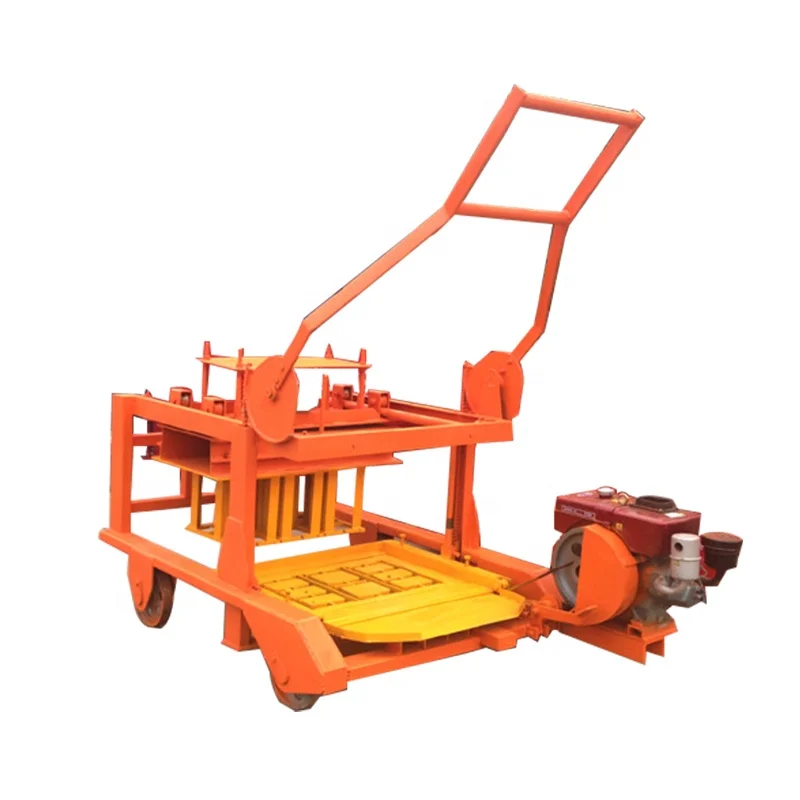
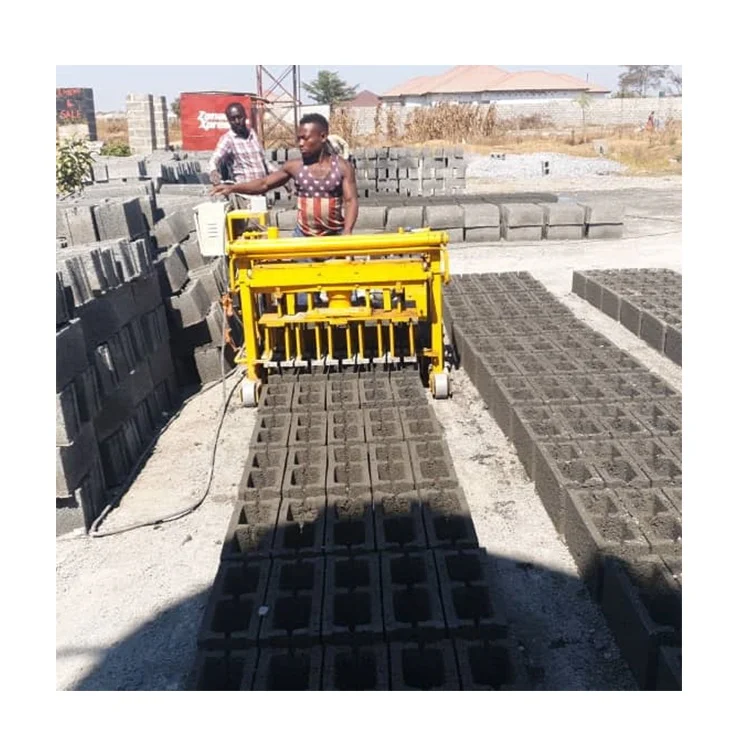
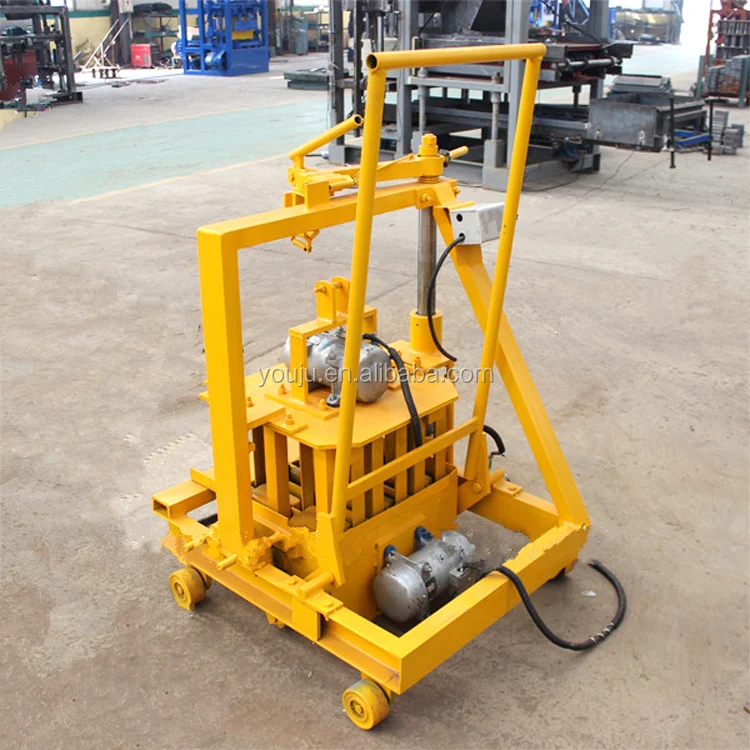
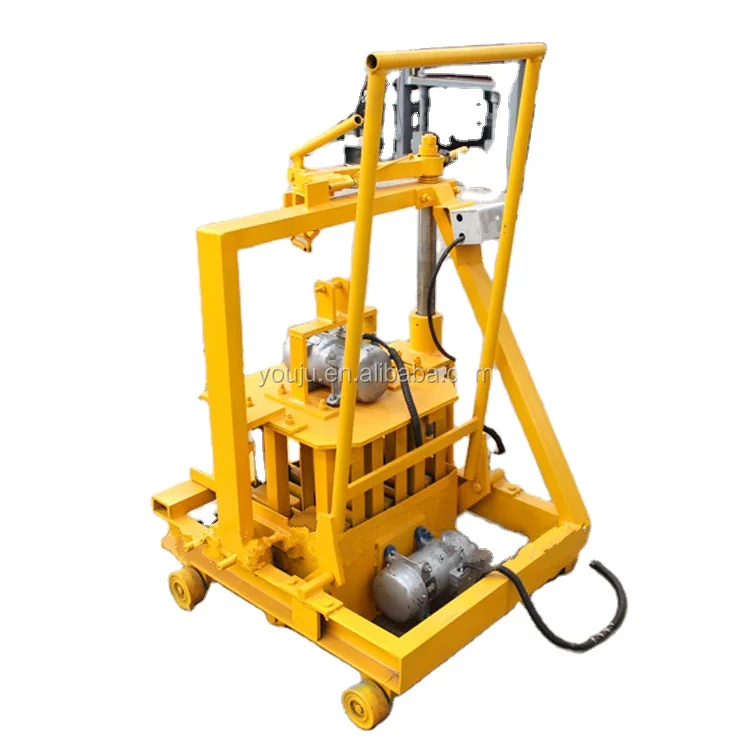
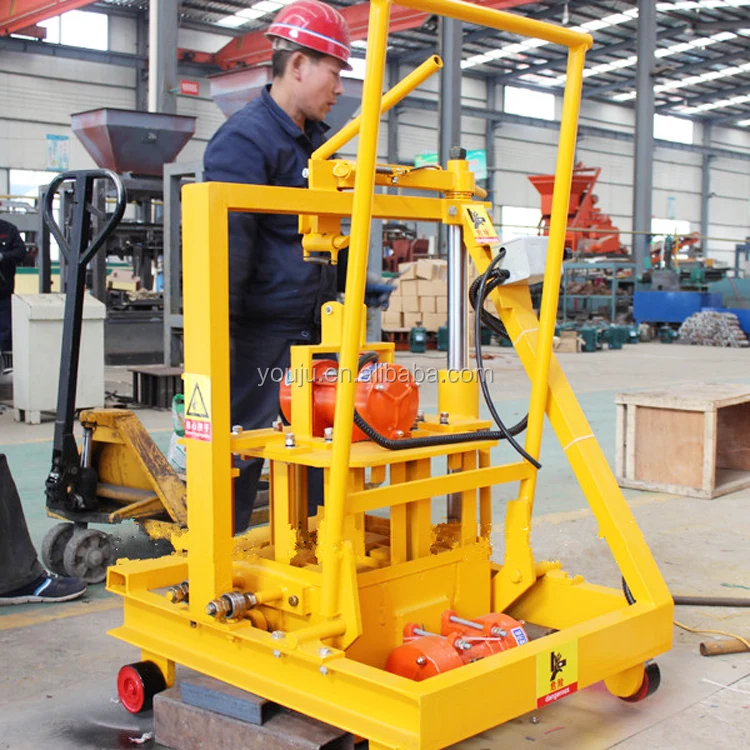
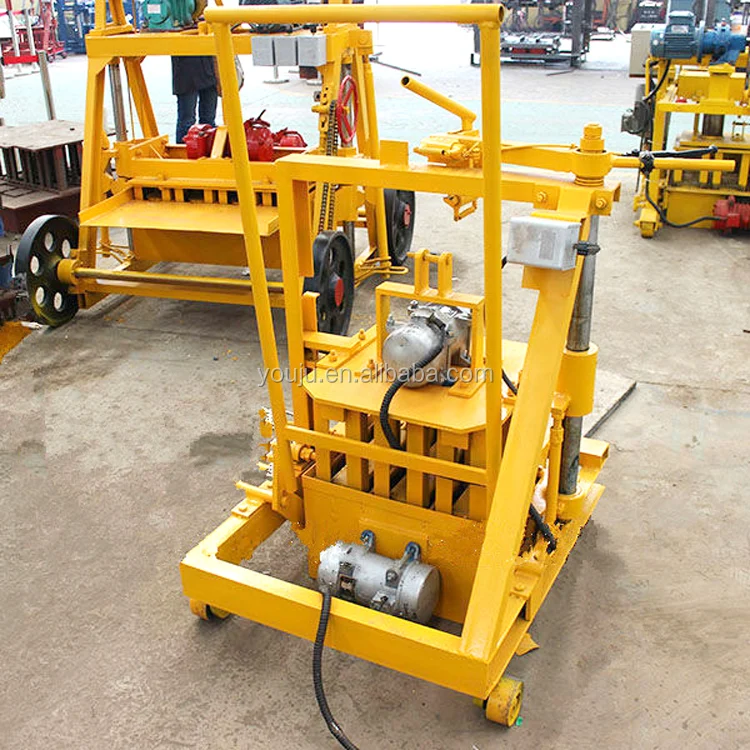
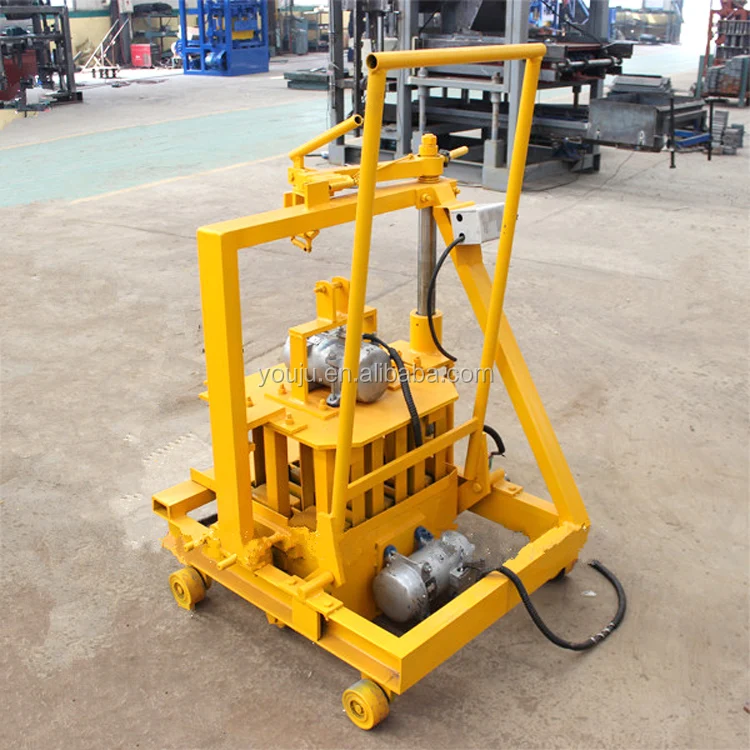
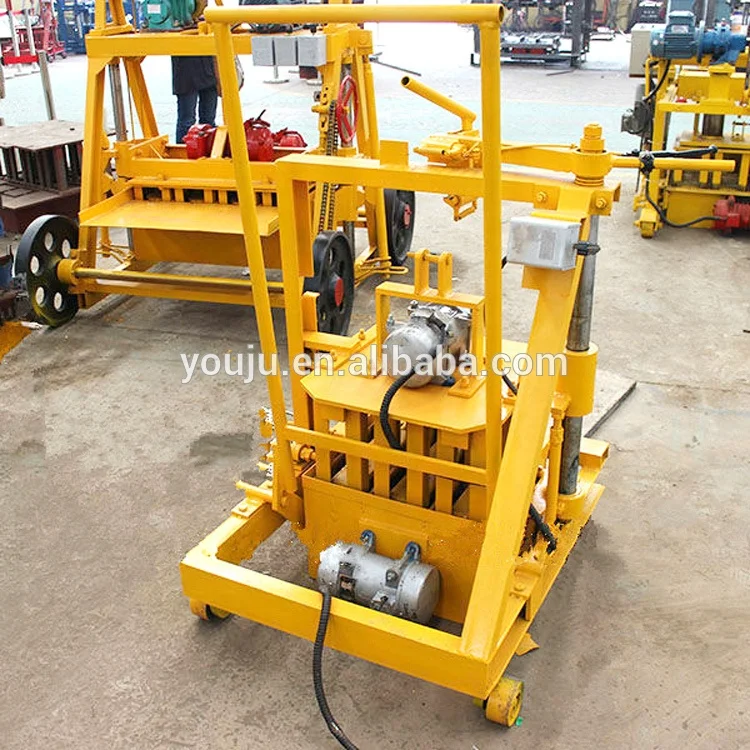
Matched System Supply — the QMJ2-45 mobile block making machine is configured as a complete egg-laying unit with mould, power source and mobility specified together, not assembled from disconnected component suppliers.
Technical Specifications
| Parameter | Value |
|---|---|
| Model | QMJ2-45 |
| Product Type | Mobile Egg-Laying Block Making Machine |
| Machine Type | Mobile / egg-laying (no pallets required) |
| Mould Cycle Time | 25–30 seconds |
| Output Capacity (400×200×200mm hollow block) | 2 pcs/cycle, 160 pcs/h, 1280 pcs/8hr |
| Output Capacity (400×150×200mm hollow block) | 3 pcs/cycle, 240 pcs/h, 1920 pcs/8hr (corrected from 4800 listed in source) |
| Output Capacity (400×100×200mm hollow block) | 4 pcs/cycle, 320 pcs/h, 2560 pcs/8hr |
| Forming Method | Hydraulic static pressure |
| Power Source | Electric engine |
| Labor Requirement | 1–3 workers |
| Pallet Requirement | None (egg-laying type) |
| Mobility | Free movement on site, no fixed plant required |
| Mould Change | Supported for different hollow brick formats |
| Automation Level | Manual / semi-automatic mobile operation |
| Standards | ISO9001:2000, CE |
| Rated Power (kW) | Basis not stated in source |
| Voltage & Frequency | Basis not stated in source |
| Hydraulic Pressure (MPa) | Basis not stated in source |
| Vibration Force (kN) | Basis not stated in source |
| Overall Dimensions (L×W×H) | Basis not stated in source |
| Net Weight | Basis not stated in source |
Application Suitability
| Application | Material or Output |
|---|---|
| On-site hollow block production for building contractors | Crushed stone, river sand and cement mixes laid directly on prepared ground |
| Small-scale block production in constrained yards | Limited-footprint sites without curing racks or fixed plant infrastructure |
| Entrepreneur first block plant with minimal capital | Standard hollow blocks (200mm, 150mm, 100mm widths) using locally available aggregate |
| Remote housing projects with grid electricity | Electric-engine variant producing hollow blocks without pallet logistics |
What "240 Pieces per Hour" Leaves Out When You Do Not Name the Block
A capacity figure without a block format attached is a number that will disappoint you on day one of production.
I once stood beside a QMJ2-45 on a housing project in Southeast Asia watching the crew feed high-clay river sand into the hopper. The spec sheet said the machine could push out blocks at a certain pace, but the local aggregate slowed the mould cycle noticeably because the static pressure needed longer to compress that particular mix. The site manager kept pointing at the brochure number while the actual output for his 200mm hollow block fell well short. That gap between catalogue promise and ground truth is exactly what this page addresses. When you evaluate mobile block making machine specifications, the block format, the mould cavity count and the cycle time must all sit in the same sentence, or the capacity claim means nothing [NEED_CITE: honest block machine capacity disclosure practices].
Cycle Time Means Nothing Without the Mould Cavity Count Beside It
The QMJ2-45 completes a moulding cycle in 25 to 30 seconds, but that number alone does not tell you how many blocks land on the ground each hour. The 400×200×200mm hollow block mould produces 2 pieces per cycle, while the 400×100×200mm mould produces 4 pieces per cycle on the same machine base. That difference in cavity count is the reason a buyer comparing mobile block making machine specifications must always ask which block format the quoted output assumes.
Honest Output per Shift for Each Hollow Block Format
With a 25–30 second cycle and an eight-hour shift, the 200mm hollow block yields approximately 1,280 pieces, the 150mm block yields approximately 1,920 pieces, and the 100mm block yields approximately 2,560 pieces. These figures assume continuous operation with raw material fed without interruption and ground conditions that allow the machine to move freely. Any pause in material supply or uneven ground that slows repositioning will reduce the real shift total. Buyers evaluating how to choose a mobile block machine should build their financial model on these per-format numbers rather than a single headline capacity [NEED_CITE: block production shift planning methodology].
How Hydraulic Static Pressure Shapes Your Mix Decision
The QMJ2-45 uses hydraulic static pressure rather than vibration to form hollow blocks. Static pressure compresses the concrete mix inside the mould without high-frequency shaking, which means the aggregate grading and cement content must be matched to that forming method. A mix designed for a vibration machine may not compact properly under static pressure, producing blocks with lower strength or surface defects. Before you commit to the QMJ2-45, run a trial batch with your local aggregate and confirm the mix reaches your target compressive strength under static pressure conditions. The mould cycle time may also need adjustment depending on how quickly your specific mix consolidates.
The Hidden Cost of Skipping Mix-to-Machine Verification
I have seen contractors order a mobile egg-laying machine based on cycle-time figures alone, only to discover on site that their local sand contains too much fines for the forming method the machine uses. The result is blocks that crumble at the edges or fail to release cleanly from the mould. The crew then slows the cycle to compensate, and the daily output the buyer budgeted around disappears. Confirming that your aggregate, cement ratio and moisture content suit hydraulic static pressure before the machine ships avoids a costly and public commissioning failure [NEED_CITE: concrete mix compatibility with static pressure block forming].
Why Buyers Source This Machine Through a Format-Matched Approach
The QMJ2-45 is specified against the exact hollow block format your market buys, not a catalogue default that assumes a generic block size. Mould drawings are provided for each format the buyer intends to produce, including dimensional tolerances and the mould change procedure. The hydraulic static pressure and cycle parameters are discussed in the context of your local aggregate sample, so the machine arrives configured for material you can actually source. Voltage, frequency and any control display language are confirmed before production begins. Pallet investment is eliminated entirely because the egg-laying design lays blocks directly on prepared ground.
Documentation & Verification
- Capacity calculation sheet stating the hollow block format, mould cavity count and cycle time assumed for each output figure
- Mould drawing package for each hollow block format with dimensional tolerances and change procedure
- Factory test record run on a mix comparable to your local aggregate before dispatch
- Voltage and frequency confirmation document matching your site electrical supply
- Operation manual covering mix preparation, cycle adjustment and mould change steps
Installation, Commissioning & Support
- Ground preparation guidance specifying the flatness and bearing capacity needed for the QMJ2-45 to move freely while laying blocks
- Electrical connection requirements for the electric engine variant, including dedicated circuit rating and cable sizing
- On-site commissioning with cycle time adjustment matched to your local aggregate sample and target block format
- Operator training covering mould change procedure, mix consistency checks and daily maintenance routines
- Wear parts list identifying the mould liner and hydraulic seals that require periodic replacement
- Follow-up support for mix recalibration if your aggregate source changes during the project lifecycle
What to Prepare Before Requesting a Quotation
To move from enquiry to an accurate QMJ2-45 configuration, share the hollow block formats your market demands, the daily output you need per format, and a sample or description of your local aggregate and cement supply. Include your site voltage, frequency and the language you need on any control interface. If you already have ground preparation or curing space in place, describe those conditions so the egg-laying layout can be planned around them.
Frequently Asked Questions
Q: How do I verify the real daily output for the hollow block format I actually sell?
A: Start with the mould cavity count for your specific block size — 2 cavities for 200mm, 3 for 150mm, 4 for 100mm — then multiply by the number of cycles your crew can sustain per hour at a 25–30 second pace, and finally multiply by your planned shift hours. This gives you a format-specific daily output instead of a generic machine-level claim.
Q: Which hollow block format gives the best economics on the QMJ2-45?
A: The 400×100×200mm format yields 4 pieces per cycle, making it the highest-volume option, but the best economics depend on what your local market pays per block size. Compare the per-format shift output against your local selling price per block to see which width delivers the strongest daily revenue on this machine.
Q: What mix design does a hydraulic static pressure machine need compared to a vibration machine?
A: Static pressure forming relies on the mix consolidating under sustained compression rather than high-frequency shaking. This typically requires a well-graded aggregate with controlled fines content and a cement ratio that achieves target strength without the extra water that vibration mixes sometimes use. A trial batch with your local material is the most reliable way to confirm compatibility.
Q: How long does a mould change take, and can my crew handle it without a specialist?
A: Mould changes on a mobile egg-laying machine of this class are designed to be handled on site with standard hand tools. The procedure involves unbolting the current mould, lifting it clear, positioning the replacement mould and re-securing the mounting points. Expect the first change to take longer while your crew learns the sequence.
Q: What block formats beyond the standard hollow bricks can this machine accept?
A: The QMJ2-45 base supports custom mould design to buyer drawings, so formats like kerbstones, interlocking pavers or solid blocks can be produced if your market demands them. Share your target dimensions and block profile so the mould can be engineered to match the machine’s hydraulic static pressure and cycle parameters.