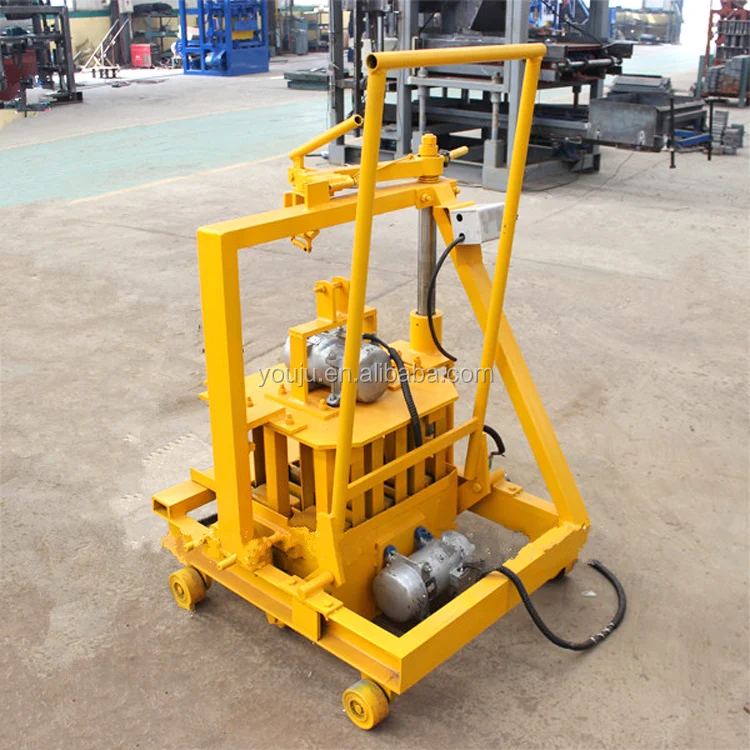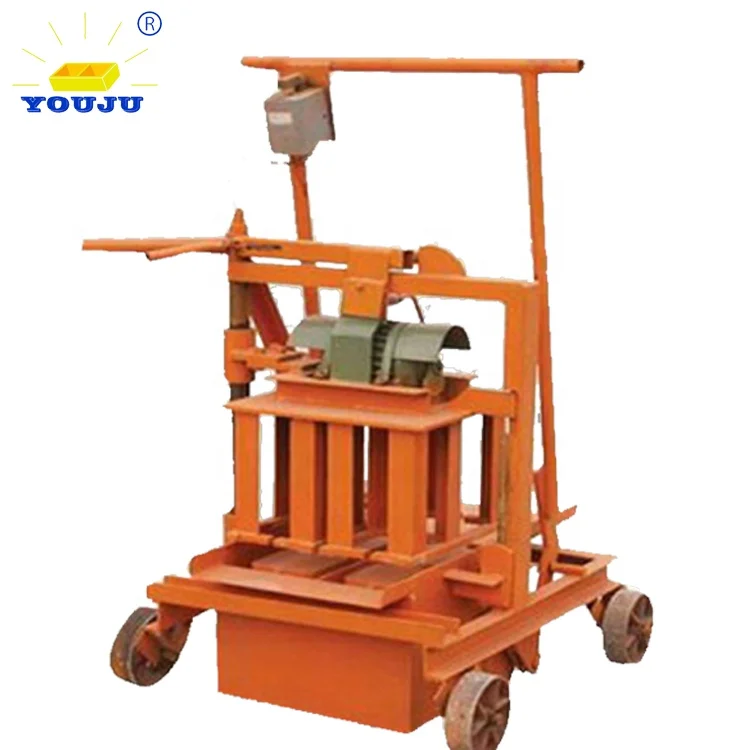
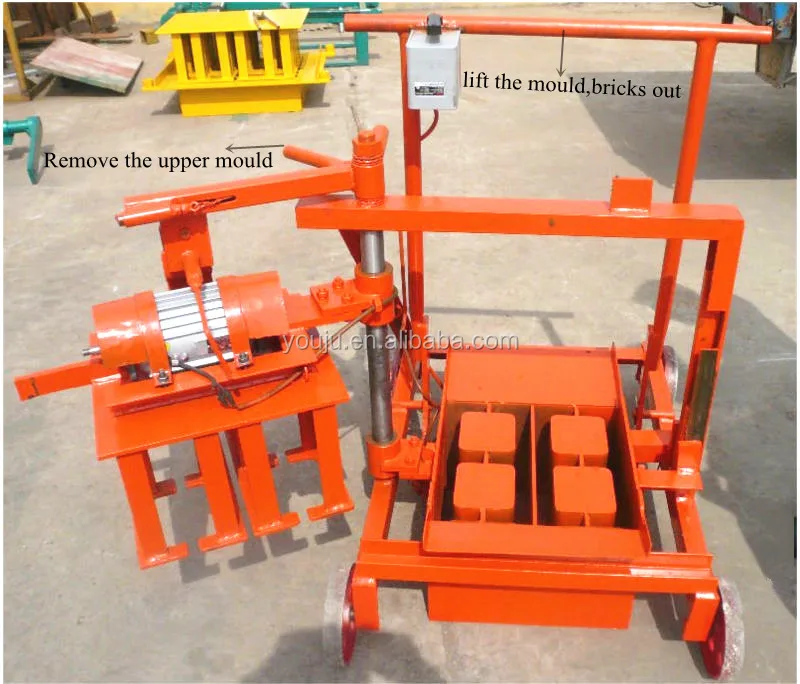
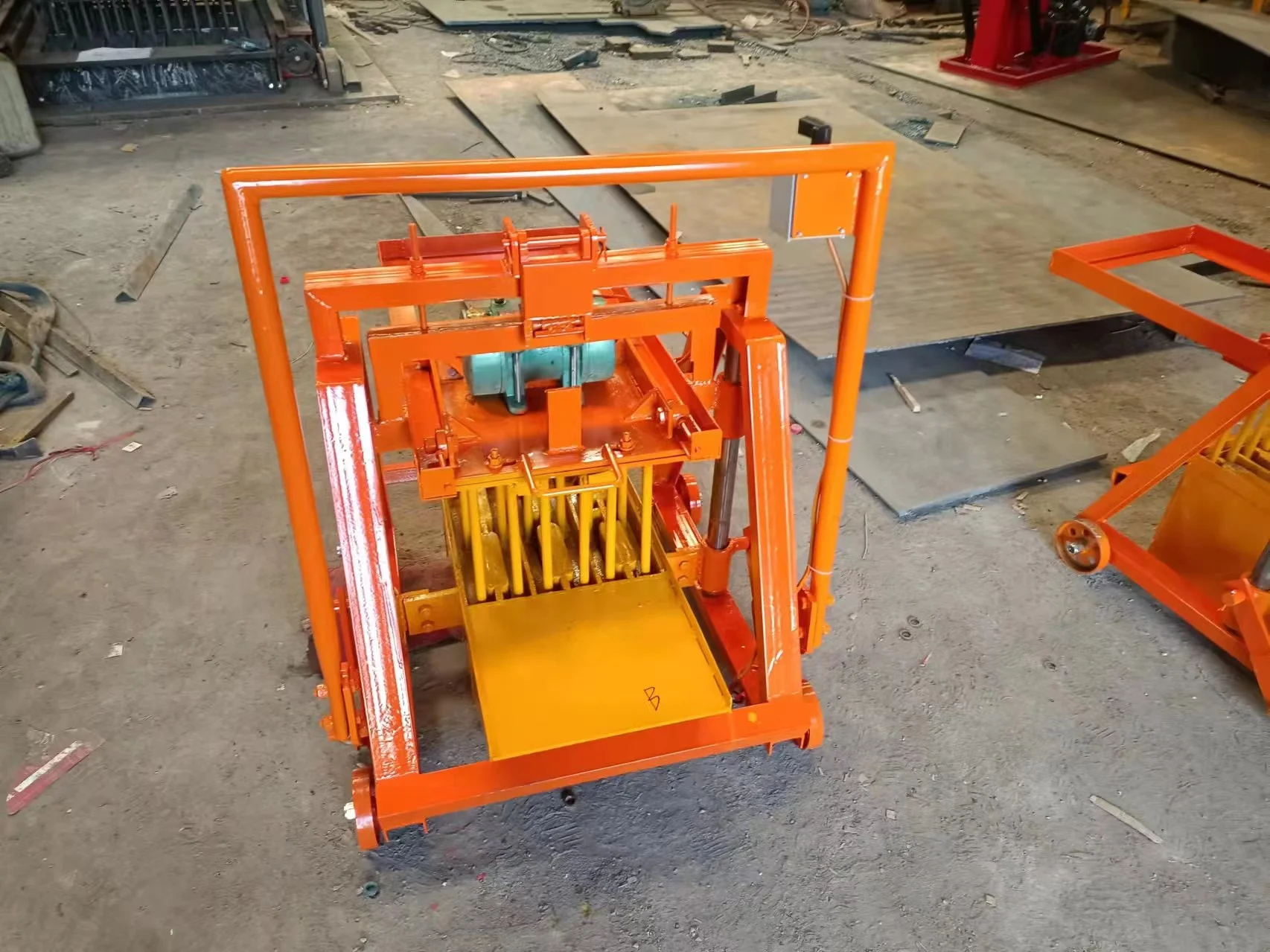
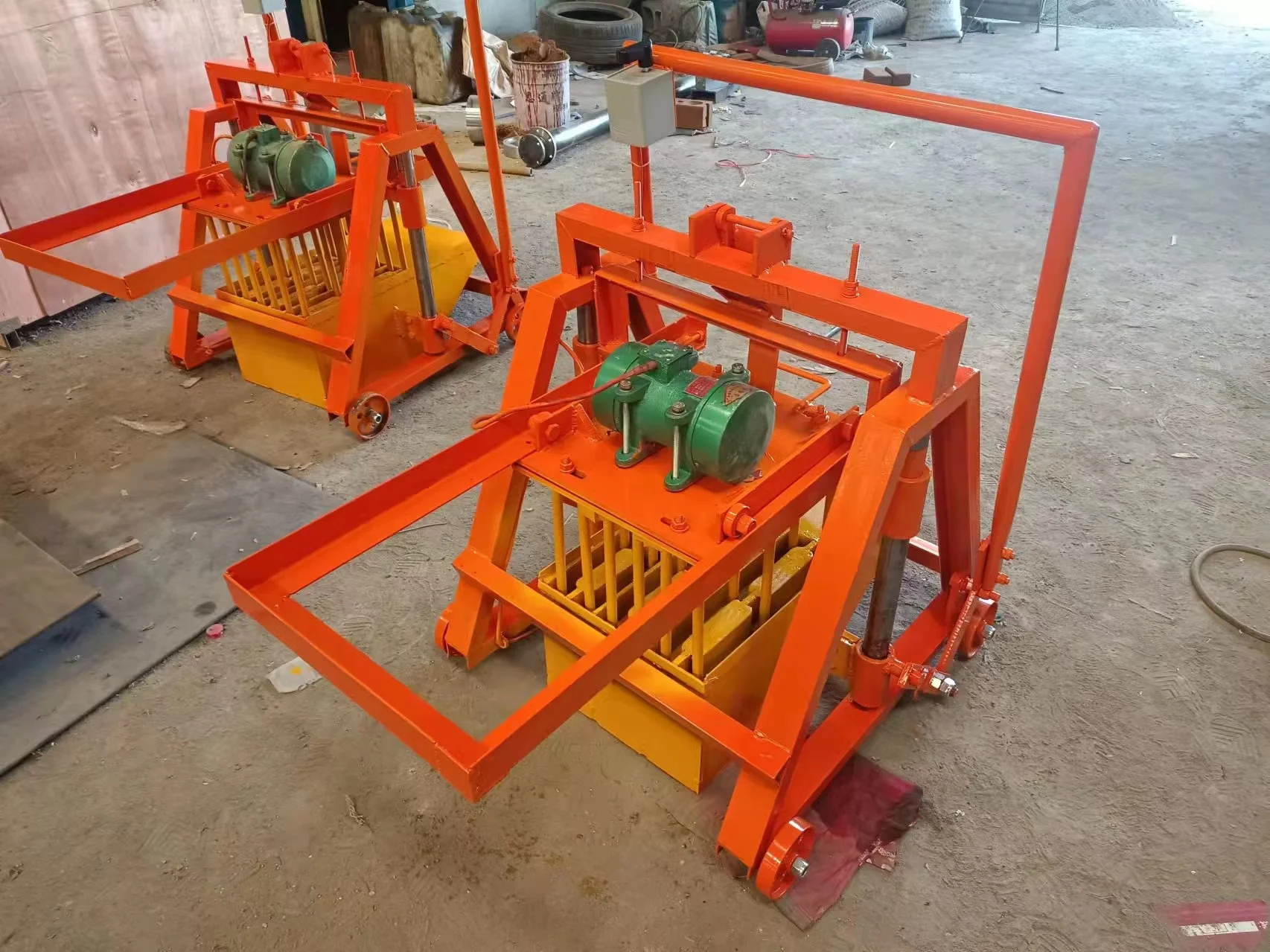
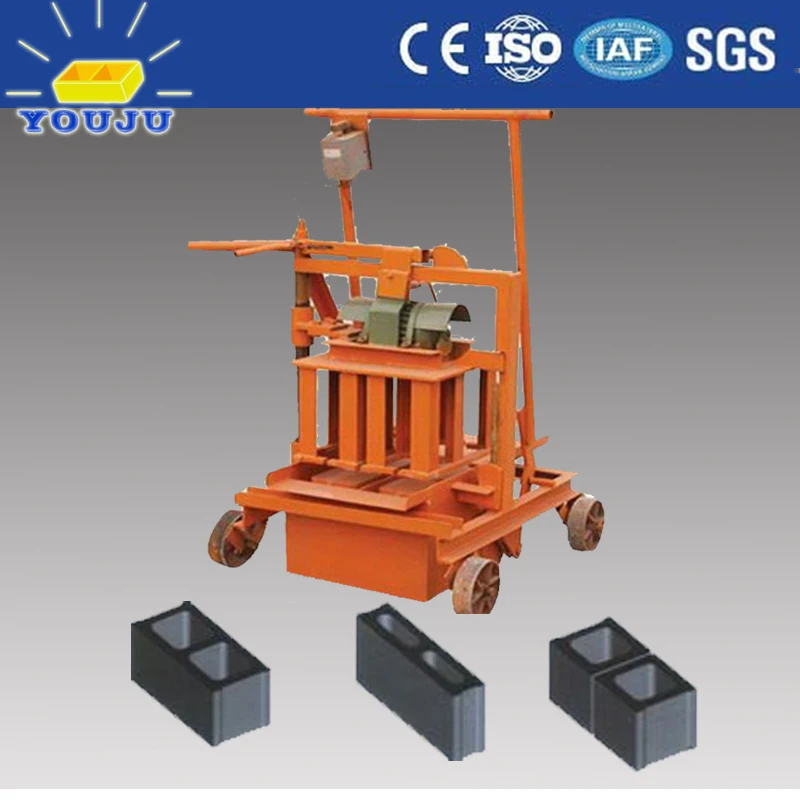
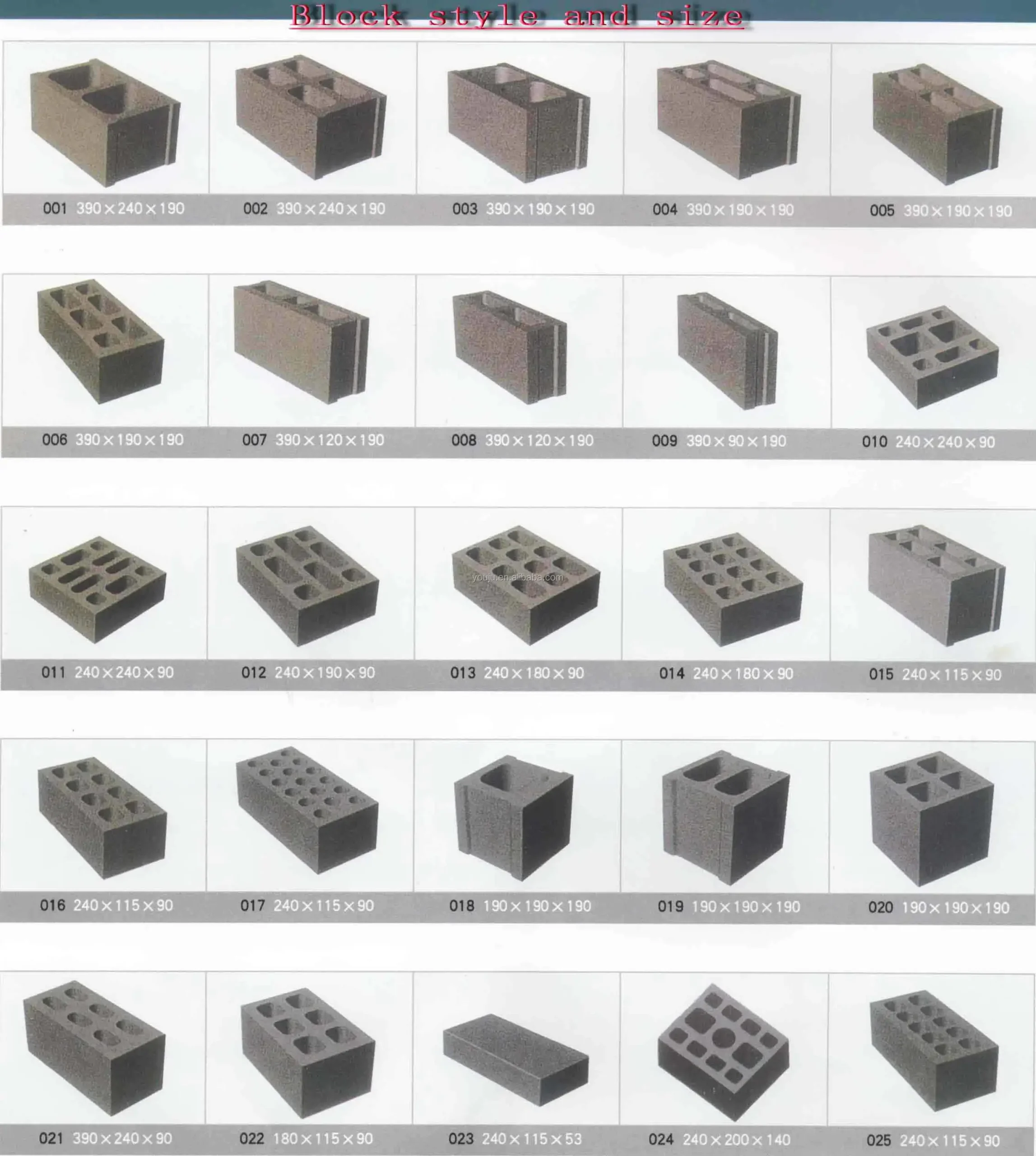
Description
Matched Mould and Machine — every hollow brick format is paired with its own cycle time and cavity count so you calculate real shift output before you commit.
Technical Specifications
| Parameter | Value |
|---|---|
| Model | QMJ2-45 |
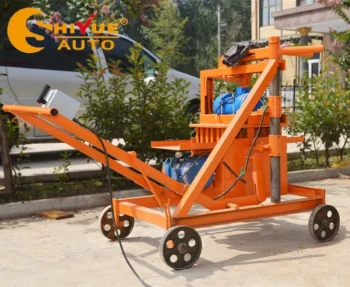
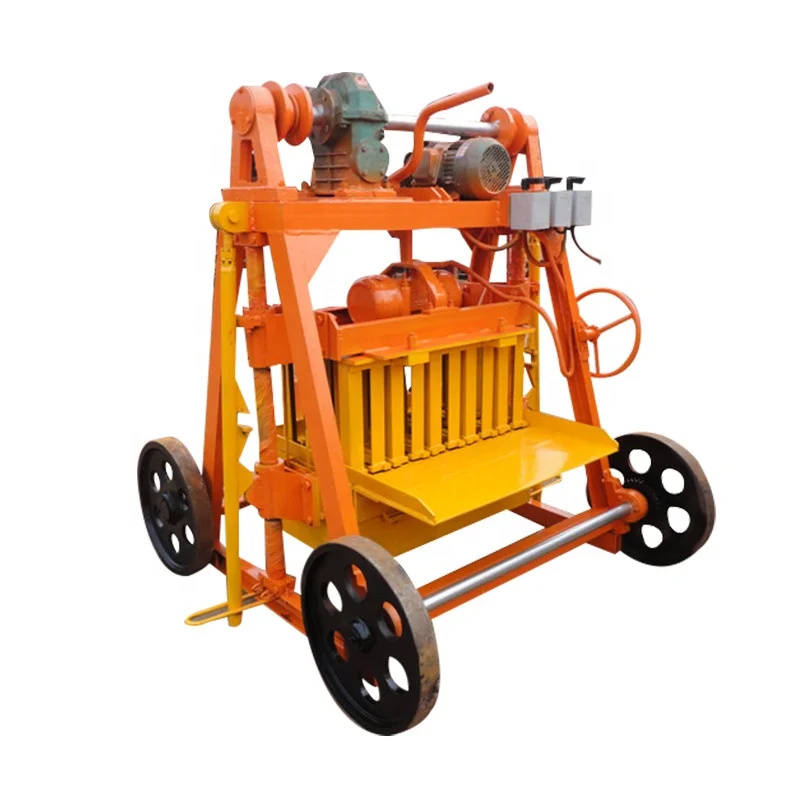
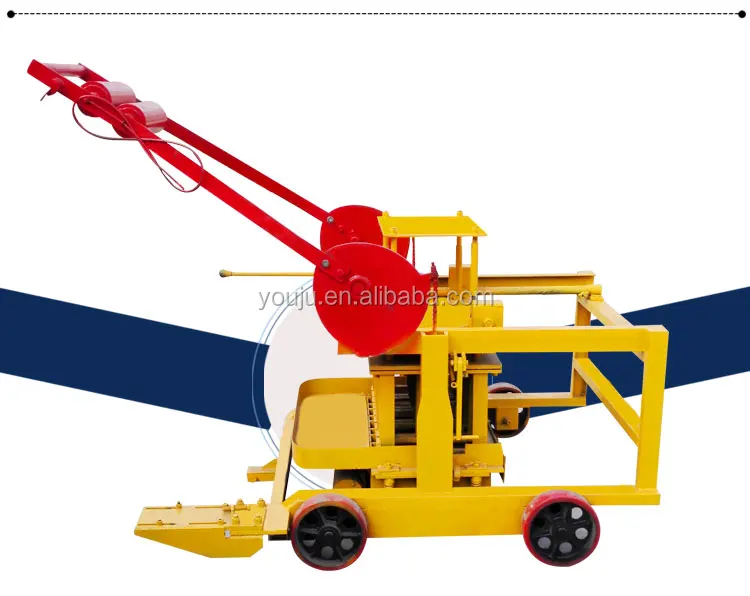
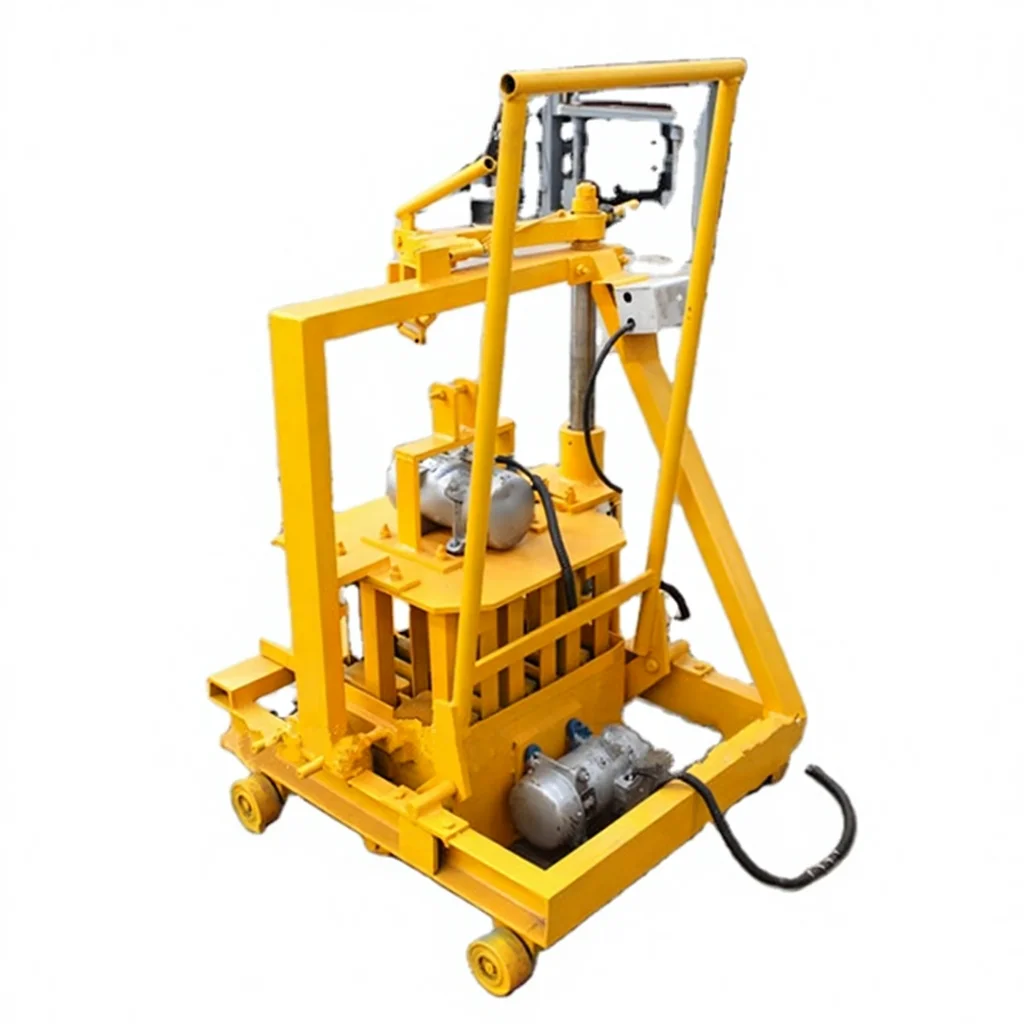
| Product Type | Manual mobile egg-laying block machine |
| Automation Level | Manual (1–3 operators required) |
| Pallet Requirement | No pallets required |
| Power Source | Diesel engine |
| Mould Change | Manual, supports multiple hollow brick formats |
| Mobility | Free-moving on-site, no fixed plant required |
| Output Capacity (400×200×200 mm) | 160 pcs/h based on 2 pcs/mould, 25–30 s cycle |
| Output Capacity (400×150×200 mm) | 240 pcs/h based on 3 pcs/mould, 25–30 s cycle |
| Output Capacity (400×100×200 mm) | 320 pcs/h based on 4 pcs/mould, 25–30 s cycle |
| Output per 8-hour Shift (400×200×200 mm) | 1,280 pcs |
| Output per 8-hour Shift (400×150×200 mm) | 1,920 pcs (basis to be confirmed) |
| Output per 8-hour Shift (400×100×200 mm) | 2,560 pcs |
| Cycle Time | 25–30 s per mould |
| Control System | Manual operation, no PLC |
| Voltage & Frequency | Not applicable (diesel engine driven) |
| Certification | ISO 9001:2000, CE |
Application Suitability
| Application | Material or Output |
|---|---|
| On-site hollow block production | Crushed stone, sand, cement — laid directly on the ground without pallets |
| Small-scale rural building projects | 400×200×200 mm and 400×150×200 mm hollow bricks for load-bearing and partition walls |
| Remote construction sites with no grid power | Diesel-driven operation using locally sourced aggregate and cement |
| First-stage block production | Low initial investment entry point for entrepreneurs producing 400×100×200 mm hollow bricks |
| Housing project on-site supply | Producing hollow blocks at the project location to cut transport cost and handling breakage |
What a "Pieces per Hour" Figure Hides From You
A capacity number without a block format attached is meaningless for planning your shift.
When I first started quoting mobile block machines to overseas buyers, I would write "320 pcs/h" on the offer sheet and think I had done my job. The buyer would place the order, receive the QMJ2-45 mobile block machine, run it on 400×200×200 mm hollow blocks, and then call me asking why they were only getting 160 pieces. Both numbers were correct — they just belonged to different moulds. The confusion cost a week of trust-rebuilding and a rushed mould swap conversation that should have happened before production. [NEED_CITE: common causes of output expectation mismatch in manual block production]
Mould Cavities and Cycle Time Define Your Day
The QMJ2-45 mobile block machine is a manual egg-laying press with no pallet dependency, which means every block it produces sits directly on the ground where it falls. That simplicity cuts your investment in half by eliminating pallet purchase and pallet storage, but it also means your curing area layout is fixed by the path the machine travels. The 25–30 second cycle time stays roughly constant across formats because the operator rhythm — feed, vibrate, move — does not change. What changes is the cavity count inside the mould: two cavities for 200 mm wide blocks, three for 150 mm, and four for 100 mm partitions. Multiply cavities by cycles per hour and you get the format-specific output table above, which is the only honest way to plan how many blocks you can lay in an eight-hour shift.
Ground Conditions Decide Whether Egg-Laying Works at All
Egg-laying production demands a flat, compacted surface that will not settle under the weight of wet concrete blocks. I once visited a site in West Africa where the operator had chosen a freshly backfilled area as the production floor. The ground looked level when dry, but after three days of curing water and rain the surface turned uneven, and the bottom course of blocks cracked along the settlement lines. For the QMJ2-45, the ground preparation area should extend well beyond the daily production footprint to account for curing space, aggregate stockpiles, and water access — all without pallet racks taking up room. [NEED_CITE: site preparation requirements for pallet-free block laying]
Reading the Vibration and Pressure Gap
The specs sheet for this machine does not state a hydraulic pressure rating or a vibration force value, and that absence matters. On a manual egg-laying press, the vibration comes from an electric or diesel-driven vibrator motor bolted to the mould box, and the compaction force is largely the weight of the machine plus the operator pressing down on the handle. When the local aggregate shifts from smooth river sand to angular crushed volcanic rock — something I have watched happen mid-project more than once — the mix needs more vibration energy to consolidate around the sharp particles. Without documented vibration force and hydraulic pressure figures, the buyer has no baseline to adjust against when the aggregate changes, and block density drops without warning. Always request the vibrator motor rating and machine weight before shipment so you can compare them to your mix design requirements.
Choosing the Mould That Matches Your Market
Block markets are local. In one region the 400×200×200 mm hollow block is the standard load-bearing unit; three hundred kilometres away, builders use 150 mm walls and treat the 200 mm block as overkill. The QMJ2-45 mobile block machine supports manual mould changes across these hollow brick formats, but the time it takes to unbolt one mould, lift it off, and seat the next one is real production time lost. If your orders fluctuate between two formats within the same week, plan your production schedule around batch days — all 200 mm blocks on Monday, all 100 mm partition blocks on Tuesday — rather than swapping moulds mid-shift and losing output to changeover.
The Cost of Skipping Ground Prep
A pallet-free machine removes a large line item from your budget, but it shifts the quality burden onto the ground surface. Buyers who treat the production floor as an afterthought end up with cracked bottom courses, uneven block heights, and rejection rates that erase the pallet savings many times over. The QMJ2-45 lays blocks where it stands, and if that ground is soft, sloped, or littered with debris, every block in that batch carries the defect. [NEED_CITE: block rejection causes linked to ground conditions in egg-laying production]
Why Sourcing From a Single-Category Manufacturer Matters
Block machinery is the only product category we build, which means the machine, the mould, the diesel drive, and the handling method are specified as one system rather than assembled from unrelated suppliers. Configuration is set against the buyer’s actual aggregate and target block format, not a catalogue default. Mould design covers the formats your local market sells, and custom drawings are available when your project calls for a non-standard dimension. Documentation leaves the factory with a capacity calculation that names the block format behind every output figure, a mould drawing package, and a wear parts list specific to your configuration.
Documentation & Verification
- Line layout showing curing area dimensions matched to your target hollow block format
- Capacity calculation sheet stating block size, mould cavity count, and cycle time for each format
- Mould drawing package with finished block dimensions and tolerances before production begins
- Factory test record run on the moulds included in your order, witnessed or video-documented
- Operation and maintenance manual covering diesel engine service intervals and mould wear limits
- Packing photographs showing machine dismantling state and container loading arrangement
Installation, Commissioning & Support
- Flat compacted ground surface required across the full production and curing footprint for pallet-free operation
- Diesel engine fuel supply and daily oil level checks form the primary power maintenance routine
- Machine arrives partially dismantled for container loading; on-site reassembly of the mould frame and vibrator motor
- First-run commissioning includes vibration frequency check and mould alignment verification on your ground surface
- Operator training covers manual feeding rhythm, mould change procedure, and block spacing during egg-laying
- Wear parts list includes mould liner plates and vibrator motor brushes with replacement intervals noted
Before You Request a Quote
Tell us the hollow block format your market sells most — dimensions and wall thickness — along with the daily output target you need to hit. Share your local aggregate type and whether you have access to grid electricity or need to stay on diesel. With those details we can confirm which moulds to include and calculate your shift output against the format that actually matters to your business.
Frequently Asked Questions
Q: How do I check real daily output for the hollow block size I sell?
A: Look at the capacity table by format. Each row states the block dimensions, mould cavity count, and 25–30 second cycle time behind the hourly figure. Multiply the hourly output by your planned working hours to get shift volume. A single headline number without a format basis is not enough to plan production against.
Q: What does the production site need before a pallet-free mobile machine arrives?
A: A flat, compacted ground surface large enough for both daily laying and curing area. You also need aggregate storage, cement cover, and water access close to the production path. The machine lays blocks directly where it stands, so ground quality directly affects block integrity.
Q: Which hollow block formats can one QMJ2-45 produce?
A: The machine supports 400×200×200 mm, 400×150×200 mm, and 400×100×200 mm hollow bricks through manual mould changes. Custom moulds for other hollow formats are available on request with drawings confirmed before manufacturing.
Q: How do I handle raw material mixing without an automated batching system?
A: Manual mixing requires a consistent volume-based ratio using measuring boxes or marked containers. Aggregate should be sized and stored separately by type. Water addition must be controlled per batch to maintain workability and block density across the shift.
Q: Can I switch from diesel to electric power later on?
A: The QMJ2-45 is built around a diesel drive with no grid dependency. Moving to an electric-powered line later means transitioning to a stationary semi-automatic or automatic machine with PLC control, which is a separate equipment class rather than a retrofit on this unit.