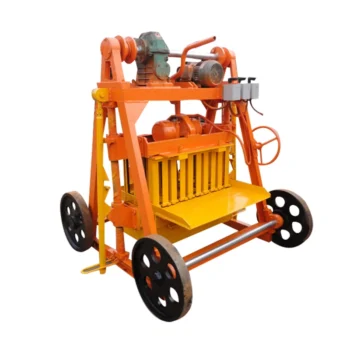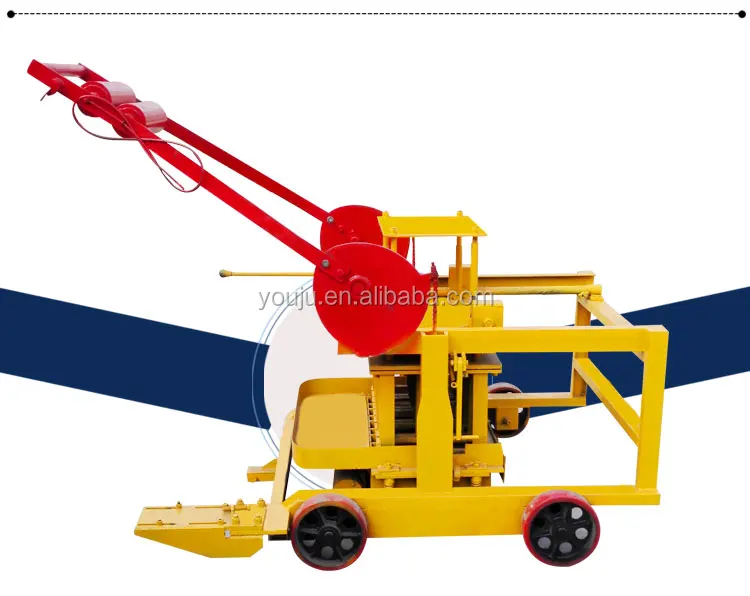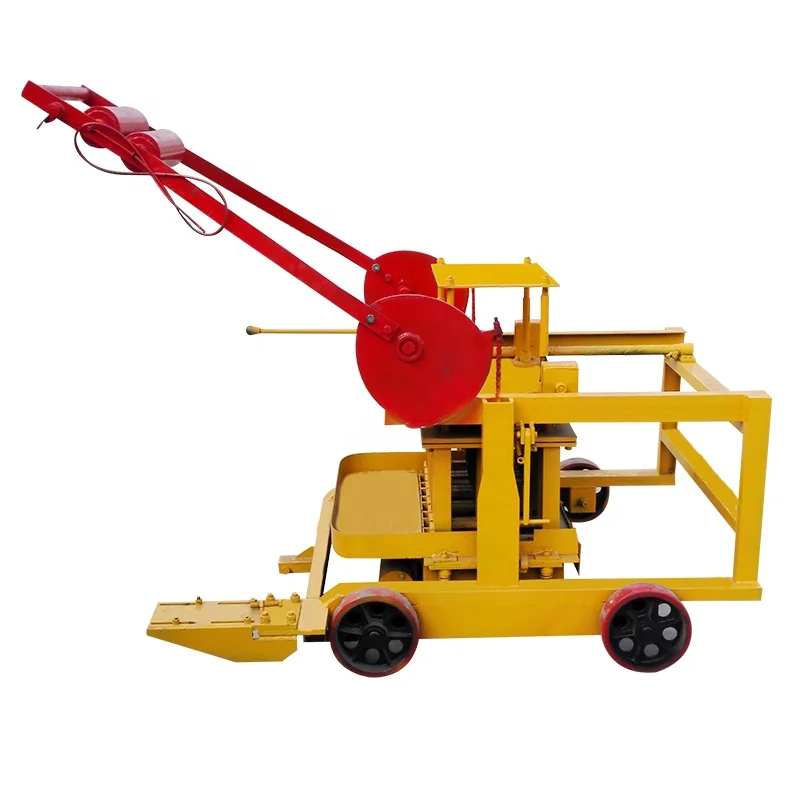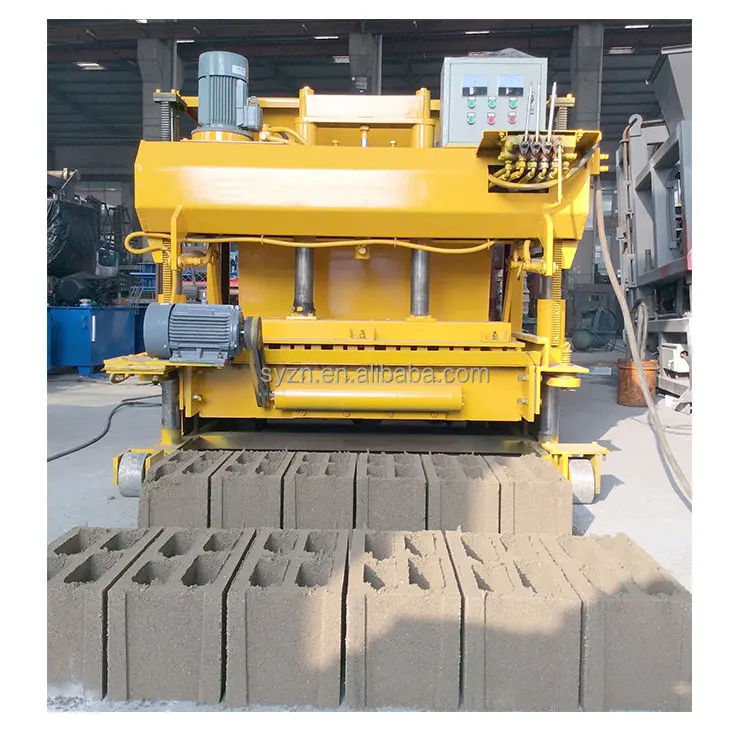

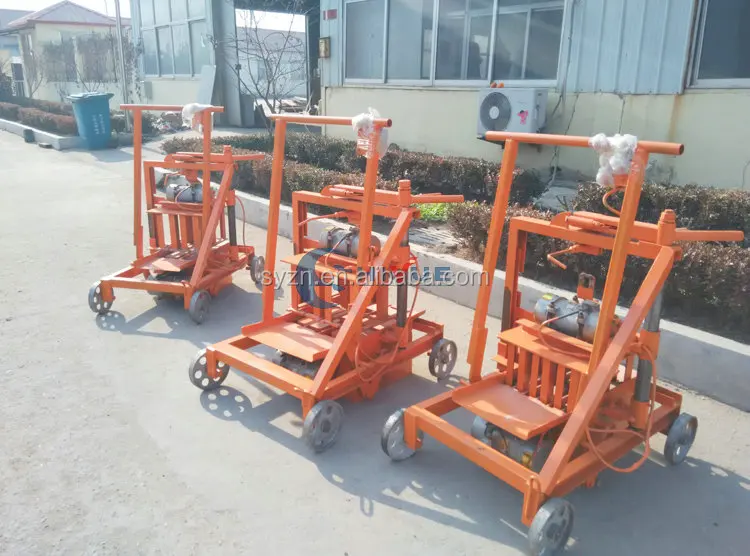

Description
Mould-matched to your block format — capacity calculations stated per hollow block dimension rather than a single blanket figure, so the QMJ2-45 is configured around the product your market actually buys.
Technical Specifications
| Parameter | Value |
|---|---|
| Model | QMJ2-45 |
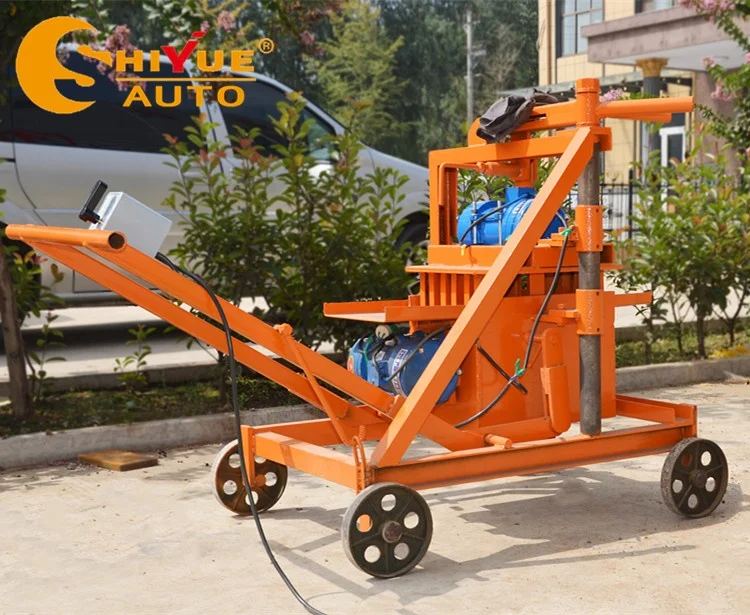
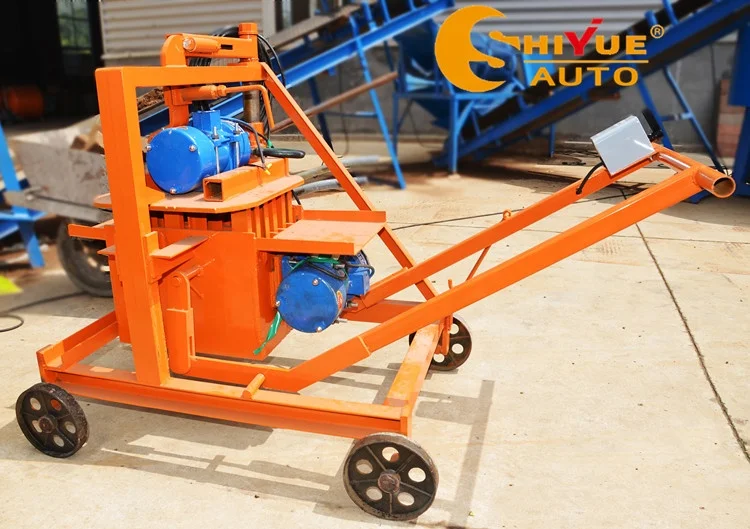
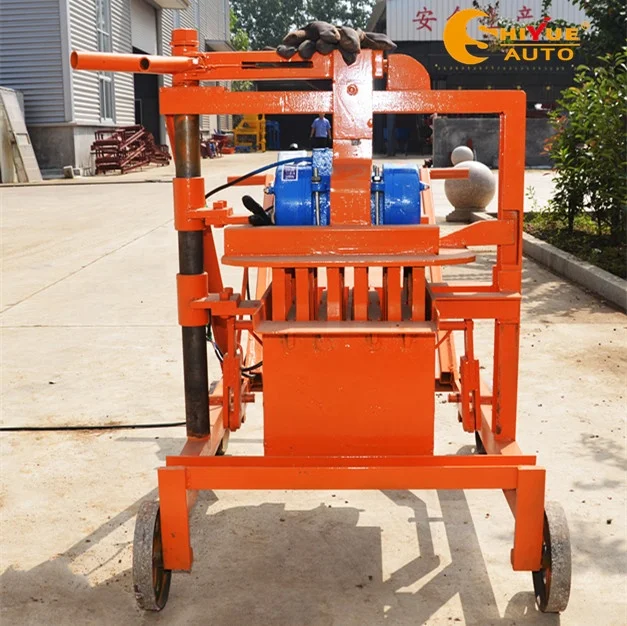
| Product Type | Manual Mobile Concrete Block Making Machine |
| Mould Format | Hollow brick, multiple sizes via mould change |
| Molding Cycle | 25–30 s (basis not stated in source — confirm block format and material) |
| Output Capacity | 1,280 pcs/8 hr on 400×200×200 mm hollow block at 2 pcs/mould |
| Output Capacity | 1,920 pcs/8 hr on 400×150×200 mm hollow block at 3 pcs/mould (source listed 4,800 — verify against manufacturer catalog) |
| Output Capacity | 2,560 pcs/8 hr on 400×100×200 mm hollow block at 4 pcs/mould |
| Pallet Requirement | None (egg-laying mobile type) |
| Power Source | Engine-driven (diesel or petrol — confirm with supplier) |
| Labor Requirement | 1 to 3 workers |
| Automation Level | Manual |
| Mobility | Free-moving, no fixed plant required |
| Control System | Manual operation, no PLC |
Application Suitability
| Application | Material or Output |
|---|---|
| On-site hollow block production for construction projects | Crushed stone, sand, cement, water — laid directly on compacted ground |
| Small-scale block plant for entrepreneurs | Multiple hollow block formats from a single machine via mould swap |
| Remote or off-grid project sites | Engine-driven operation where grid electricity is unavailable |
| Building material distributors expanding product range | 400×200×200 mm, 400×150×200 mm, 400×100×200 mm hollow bricks |
What "Pieces per Hour" Leaves Out About Mobile Block Machines
Cycle time only means something when tied to a specific block dimension and wall thickness.
Sellers quote a single output number for a manual mobile block machine without naming the format behind it. A buyer expecting 320 pieces per hour discovers that figure assumed the thinnest wall block, while their market demands the 200 mm wide format that cuts output nearly in half. I watched a West African contractor lose an entire week of production because the quoted capacity was based on a mould his market did not even sell. The fix is simple on paper: confirm the block format before the cycle time matters [NEED_CITE: block format and capacity calculation standards for mobile egg-laying machines].
Format-Specific Output Instead of a Single Number
The QMJ2-45 manual mobile block machine specifications list three hollow block sizes, each with its own piece count per mould and per shift. A 400×200×200 mm block yields 1,280 pieces across an eight-hour shift, while the 400×100×200 mm format reaches 2,560 pieces in the same window. This transparency lets a technical buyer match the machine to the product that actually moves in their local market rather than chasing a headline figure.
Ground-Cured Production Without Pallet Infrastructure
Egg-laying design means blocks are deposited directly onto a prepared concrete floor and the machine rolls forward to the next position. No pallets to purchase, store, rotate, or replace. For a contractor working on a remote housing project, this eliminates an entire logistics chain. The trade-off is floor space: curing area must be calculated against daily output and local climate conditions so blocks are not disturbed before initial set [NEED_CITE: concrete block curing time and floor area planning].
Reading the Specs That Actually Matter
Molding cycle time of 25–30 seconds governs the upper ceiling of production, but real throughput depends on how quickly workers feed the hopper, level the mix, and advance the machine. Engine-driven operation removes electrical dependency but introduces fuel logistics and engine maintenance into daily routines. The manual mould change system offers format flexibility, though change time is not stated in the source data — buyers should request a timed demonstration before shipment. Vibration force, which is also not published here, must be matched to the buyer’s local aggregate density; a heavy volcanic aggregate demands different vibration settings than a light river sand mix to achieve consistent block strength.
When the Wrong Mould Spec Cancels Out the Machine
Ordering a machine without confirming the mould drawing against your local block standard leads to product that the market rejects on arrival. Wall thickness, overall dimension, and corner radius must align with what builders in your region expect. I have seen mobile block machines sit idle for months because the supplied mould produced a block format that local contractors refused to lay [NEED_CITE: regional block format standards and market acceptance].
Why Sourcing the QMJ2-45 Here Reduces Configuration Risk
Block machinery is our single focus, so the QMJ2-45 is specified as a matched system — machine, mould, and curing method reviewed together rather than assembled from separate catalogues. Configuration is set against your actual mix design and local aggregate, not a factory default. Mould design covers the hollow block formats your market sells, with custom drawings available when standard sizes do not match. Documentation includes a capacity calculation that names the assumed block format for every output figure. Operator training covers mould change procedure and engine maintenance so your crew is self-sufficient from week one.
Documentation & Verification
- Line layout stating daily output per hollow block format and curing area requirement
- Mould drawing with dimension confirmation for each block size in quotation
- Engine type and fuel specification sheet matched to local availability
- Factory test record on buyer-specified block format before dispatch
- Operation manual with mould change procedure and engine maintenance schedule
- Wear parts list with mould and vibration component replacement intervals
Installation, Commissioning & Support
- Production floor must be level concrete with sufficient area for daily output and curing time of the QMJ2-45
- Engine fuel type confirmed before shipment to match locally available diesel or petrol supply
- Machine arrives assembled; only mould installation and hopper attachment required on site
- First production run supervised to set cycle rhythm, feed consistency, and block density
- Crew trained on manual mould swap procedure and engine service intervals
- Spare mould and vibration wear parts shipped with initial order to cover first replacement cycle
What We Need to Size This Correctly
Tell us the hollow block dimensions your market sells, the daily volume you need per format, and the aggregate available at your project site. Share your local fuel type and any existing curing floor dimensions so we can calculate whether the egg-laying layout fits. We will respond with a capacity table tied to your specific formats, not a single output number.
Frequently Asked Questions
Q: How is output capacity verified, and which block format does each figure assume?
A: Every capacity figure we publish is tied to a named block dimension, piece count per mould, and shift length. For the QMJ2-45, the 1,280-piece figure assumes 400×200×200 mm hollow blocks at two per mould over eight hours. We provide a written capacity table with your quotation so expectations match production reality from day one.
Q: How long does a mould change take, and what tools are needed?
A: Mould change time depends on bolt configuration and alignment pins specific to the QMJ2-45 mould mounting system. We provide a timed procedure in the operation manual and train your crew during commissioning. Basic hand tools are sufficient; no hydraulic disconnects or heavy lifting equipment are required for the swap.
Q: What mix design and local aggregate does the QMJ2-45 work with?
A: The machine handles standard cement-aggregate mixes, but vibration force must match your local aggregate density. Heavy volcanic stone and light river sand behave differently under vibration. We request a sample or specification of your aggregate before configuration so vibration settings and mix ratios are adjusted to produce consistent block strength.
Q: What block strength can be achieved with manual mobile operation?
A: Block strength depends on mix ratio, aggregate grading, vibration force, and curing conditions rather than automation level alone. The QMJ2-45 delivers mechanical vibration during molding, but final strength is verified through compressive testing of cured samples. We recommend buyers conduct local lab tests on blocks produced during commissioning to confirm compliance with regional building codes.
Q: Are moulds and wear parts available when the first replacement is due?
A: A documented wear parts list ships with every QMJ2-45, identifying mould liners, vibration springs, and engine consumables by part number. Replacement moulds are manufactured to the same drawings as the originals. We recommend ordering a spare mould set and critical wear parts with the initial machine to avoid production pauses during first replacements.