

Description
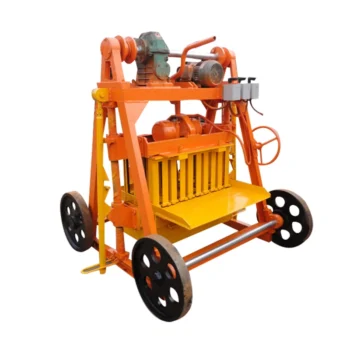
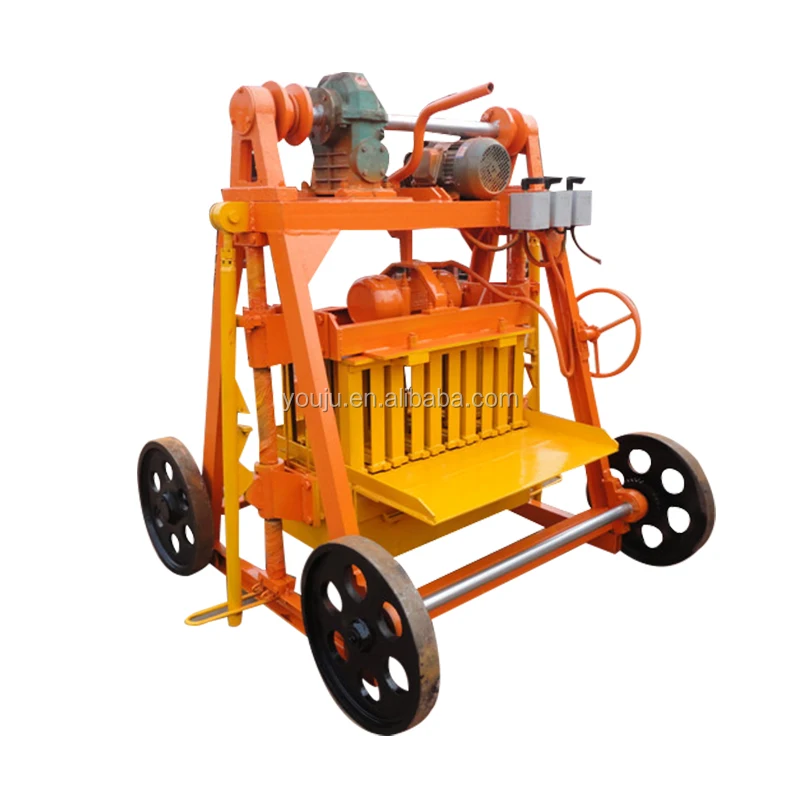
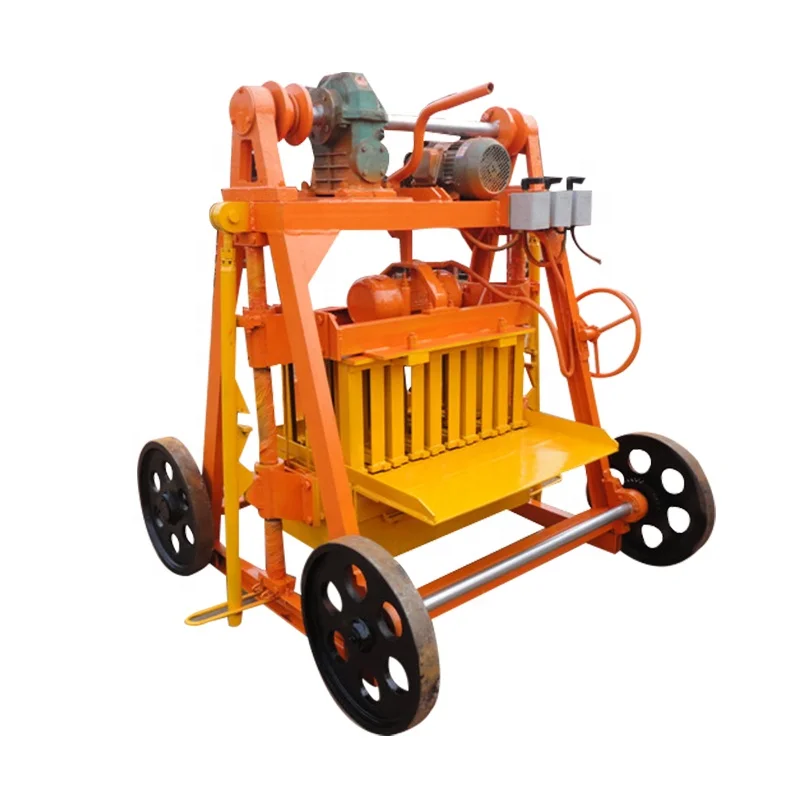
Honest Capacity by Format — The QMY4-30 mobile egg-laying block machine is specified against your actual block size and local aggregate, so the daily output you plan on is the daily output you produce on site.
Technical Specifications
| Parameter | Value |
|---|---|
| Model | QMY4-30 |
| Product Type | Mobile Concrete Block Making Machine |
| Machine Type | Mobile / egg-laying |
| Rated Power | 5 kW |
| Molding Cycle Time | 30 seconds |
| Overall Dimensions (L×W×H) | 1200×1200×1100 mm |
| Net Weight | 950 kg |
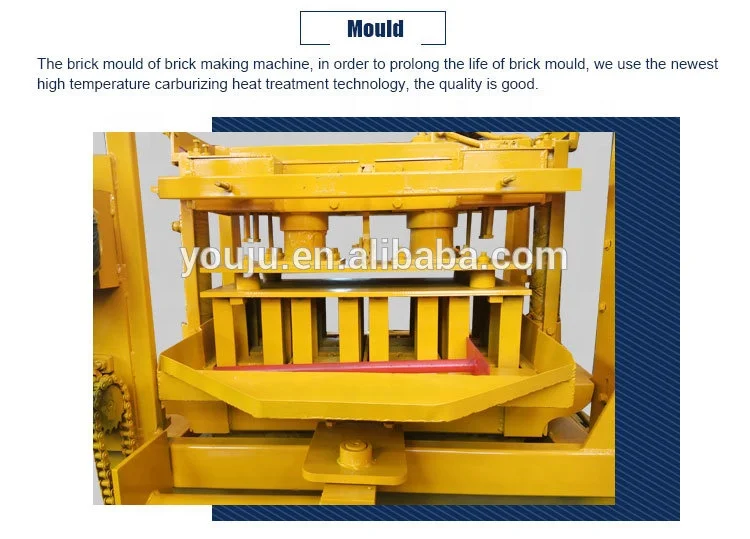
| Mould Changeable | Yes (hollow block and solid brick) |
| Output Capacity | 480 pcs/h based on 400×200×200 mm hollow block, 4 pcs/mould |
| Output Capacity | 600 pcs/h based on 400×150×200 mm hollow block, 5 pcs/mould |
| Output Capacity | 840 pcs/h based on 400×100×200 mm hollow block, 7 pcs/mould |
| Daily Output (8 h) | 3840 pcs (400×200×200 mm) / 4800 pcs (400×150×200 mm) / 6720 pcs (400×100×200 mm) |
| Raw Materials | Cement, sand, crushed stones, slag |
| Pallet Size | Not applicable (mobile egg-laying type, no pallet required) |
| Automation Level | Manual operation |
| Assembly State | Fully assembled, mobile unit |
| Voltage & Frequency | Configurable — confirm before order |
| Standards | CE (verify for this model) |
Application Suitability
| Application | Material or Output |
|---|---|
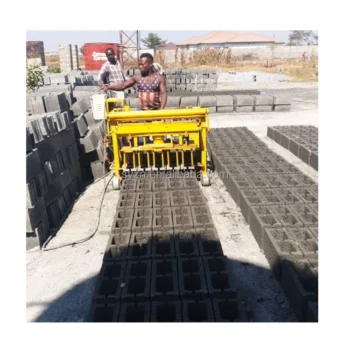
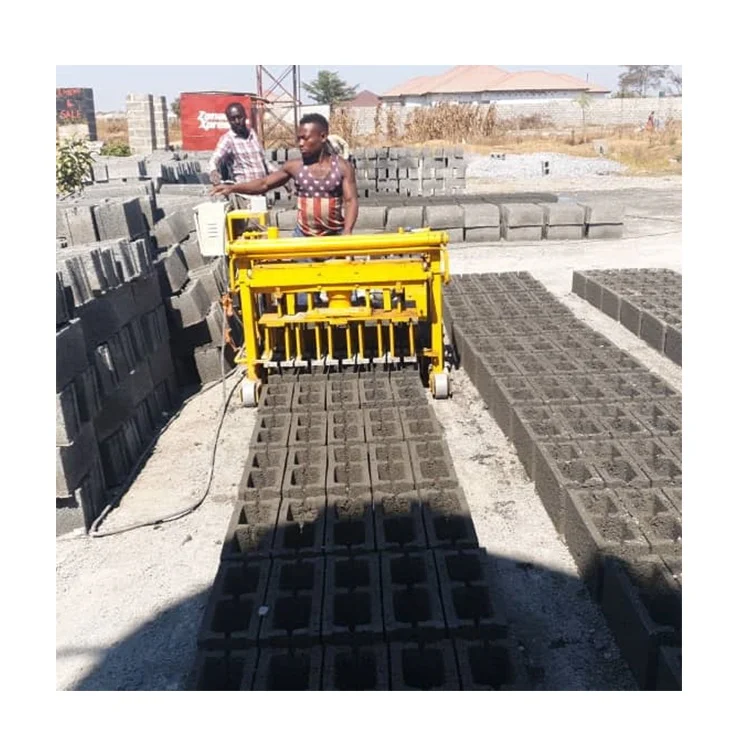
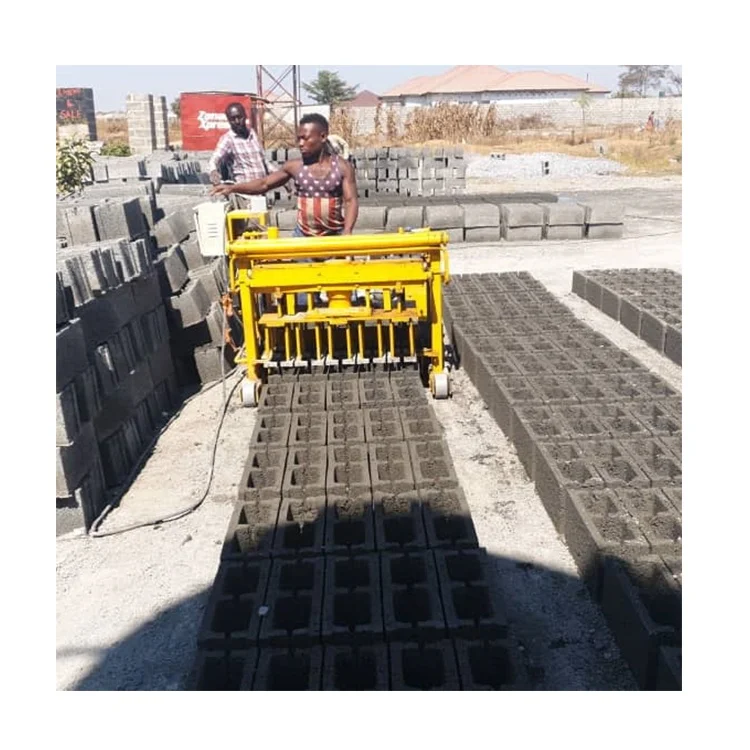
| On-site block production without a fixed plant | Cement, sand, crushed stones, slag laid directly on the ground |
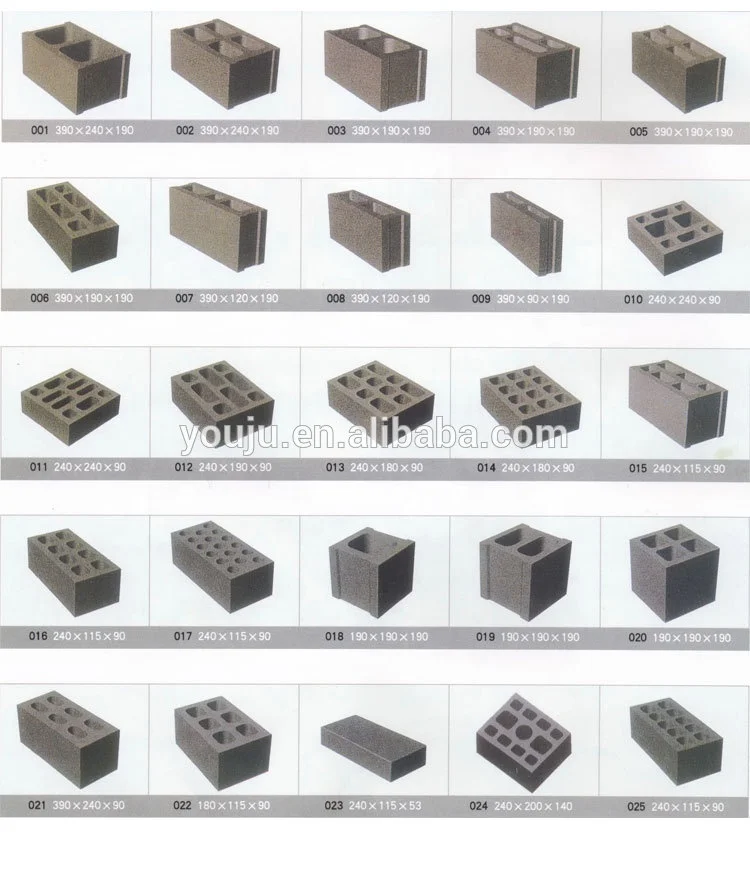
| Small-scale hollow block manufacturing | 400×200×200 mm, 400×150×200 mm, 400×100×200 mm hollow blocks |
| Solid brick production for local construction | Standard solid brick formats via interchangeable mould |
| Entrepreneur first block plant setup | Low initial investment, manual operation, minimal infrastructure |
| Contractor self-supply on housing projects | Hollow and solid blocks produced directly at the building site |
What "Cycles per Hour" Leaves Out About Mobile Block Machine Output
A 30-second cycle only tells half the story — the block format and mould cavity count decide what you actually stack at the end of the day.
When I first started doing after-sales calls across the Yangtze River Delta, a contractor told me his mobile egg-laying block machine was rated for thousands of blocks a day but could barely push out a fraction once it arrived on his site. The catalogue quoted a single cycles-per-hour number tied to the smallest block format, while he was running the largest hollow block his market demanded. The machine itself was fine. The expectation was wrong from the start. That mismatch between quoted capacity and real output is the single most common reason buyers lose confidence in a mobile block machine specifications sheet before the first week of production is over [NEED_CITE: common buyer complaints in small-scale block production].
Matching the Mould to the Block Your Market Actually Buys
The QMY4-30 is configured around the specific block format your customers pay for, not a default catalogue size. Three standard hollow block dimensions — 400×200×200 mm, 400×150×200 mm, and 400×100×200 mm — each yield a different cavity count per mould and therefore a different hourly and daily output. Choosing the right mobile egg-laying block machine means starting with the format that moves volume in your local market and working backward to the machine, not the other way around.
Why Local Aggregate Decides More Than the Machine Does
I once serviced a QMY-class unit that produced clean, dense blocks during factory testing with standard river sand. The buyer shipped it to a region where the only available aggregate was lightweight volcanic scoria. The same vibration and pressure settings could not consolidate the lighter material, and block strength dropped noticeably. Before we quote this machine, we ask for a sample or description of your local aggregate so the mix design and machine settings are matched to what you will actually feed into the hopper [NEED_CITE: effect of aggregate density on block compressive strength].
Reading the Numbers That Actually Matter
The 5 kW rated power is modest, which is expected for a manually operated egg-laying unit designed for sites without heavy electrical infrastructure. The 30-second moulding cycle applies across formats, but the output per cycle shifts from four pieces in the largest mould to seven in the smallest, which is why the daily output range stretches from 3,840 to 6,720 pieces over an eight-hour shift. The 950 kg net weight and 1200×1200×1100 mm footprint keep the unit portable enough to move across a building site without a crane, while still providing enough mass to absorb vibration during compaction. Because this is a pallet-free design, the machine lays blocks directly onto a level concrete floor, eliminating pallet investment and curing-rack infrastructure entirely.
The Hidden Cost of Skipping Format Confirmation
When a buyer orders a mobile block machine without confirming which mould ships with it, the machine often arrives with a format that does not match the local market. Swapping moulds later means additional shipping, downtime while the new mould is manufactured, and in some cases a machine cycle time that was never recalibrated for the new cavity count. We have seen contractors lose entire project timelines because the block size they needed was never part of the original conversation [NEED_CITE: lead times for custom mould fabrication and shipping].
Why Procurement Starts With the Block, Not the Press
Block machinery is our single focus, which means the QMY4-30 is never quoted as a standalone press disconnected from the mould and the block format you sell. The machine, mould, and operating parameters are specified as one matched system, so the capacity calculation in your quotation states the block format it assumes. Mould design is available for standard formats and for custom dimensions drawn to your specifications, so you are not locked into a catalogue default. Voltage and frequency are confirmed against your site supply before production begins, avoiding the commissioning delays that occur when a machine arrives wired for a grid it cannot connect to. Installation guidance and operator training cover the first production run on your own aggregate, not just a dry cycle in our factory. Wear parts and replacement moulds are documented and available, so the first maintenance interval does not become a procurement crisis.
Documentation & Verification
- Machine specification sheet with capacity stated per block format and mould cavity count
- Mould drawing and format list confirming every block size included in your order
- Voltage, frequency, and control language confirmation recorded before production starts
- Factory test record showing cycle time and block quality against your target format
- Operation and maintenance manual with wear part identification and replacement intervals
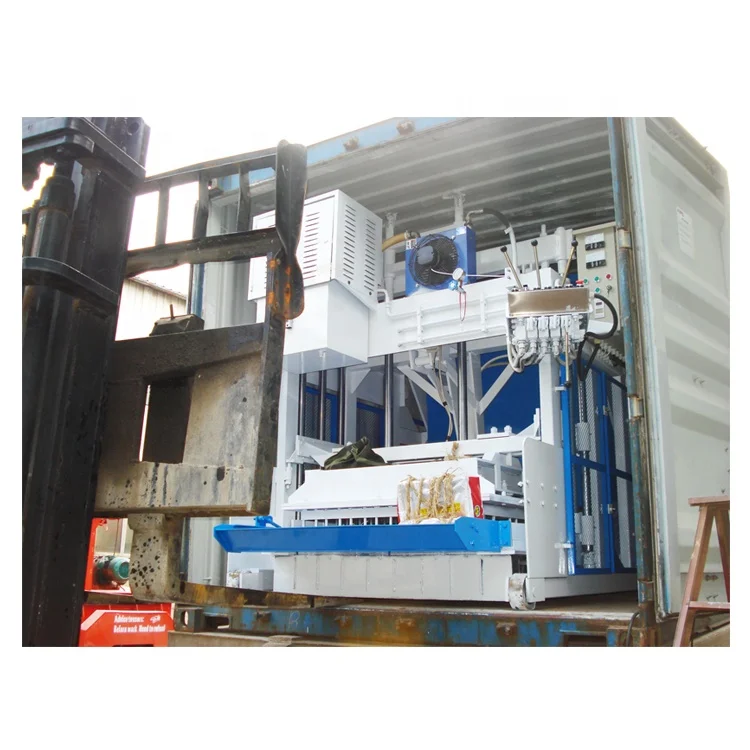
- Packing photographs and customs documentation support for your import process
Installation, Commissioning & Support
- Level concrete floor required; the 1200×1200 mm footprint needs no foundation bolts
- Confirm 5 kW power supply and dedicated circuit matching your confirmed voltage and frequency
- Machine ships fully assembled; position on site and connect power to begin commissioning
- First-run parameter adjustment based on your local aggregate and target block density
- Operator training covers mould change procedure, mix proportioning, and daily maintenance checkpoints
- Wear parts list and mould replacement schedule provided with the operation manual
What We Need to Quote the Right Configuration
To specify this machine correctly, tell us the block format your market buys most, the aggregate available near your site, and the voltage and frequency of your local power supply. If you are producing on a construction site rather than a fixed yard, let us know the floor conditions and the curing space you can allocate so we can confirm whether the egg-laying method fits your layout.
Frequently Asked Questions
Q: How is output capacity calculated per block format on the QMY4-30?
A: Every output figure is tied to a specific block size and mould cavity count. The 30-second cycle stays constant, but a four-cavity mould for 400×200×200 mm blocks produces 480 pieces per hour, while a seven-cavity mould for 400×100×200 mm blocks produces 840 pieces per hour. We state the format alongside every capacity number in the quotation.
Q: What block formats can this machine produce, and how involved is a mould change?
A: The QMY4-30 covers standard hollow block sizes and solid brick formats through interchangeable moulds. Custom moulds can be designed to buyer drawings. Mould change is a manual procedure on this model; the time required depends on operator familiarity and is covered during on-site training.
Q: Which voltage and frequency options are available for my market?
A: Voltage and frequency are configurable and must be confirmed before production. We record your site supply specifications during the inquiry stage so the motor and control wiring match your grid on arrival, avoiding commissioning delays.
Q: How do I match the QMY4-30 to my local raw materials?
A: We ask for a description or sample of your locally available aggregate — whether river sand, crushed stone, slag, or other material — and adjust the recommended mix proportion accordingly. This prevents the common problem where a machine set for one aggregate type underperforms on a different material.
Q: What spare moulds and wear parts should I plan for?
A: A wear parts list and mould inventory recommendation are included in the documentation package. We advise ordering at least one spare mould for your highest-volume format at the time of the machine purchase so replacement is on hand when the first change-out is due.