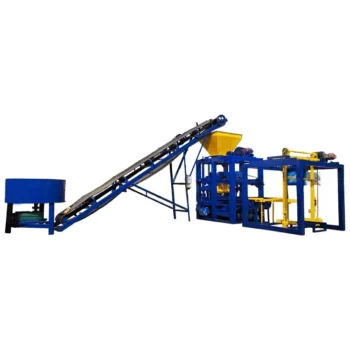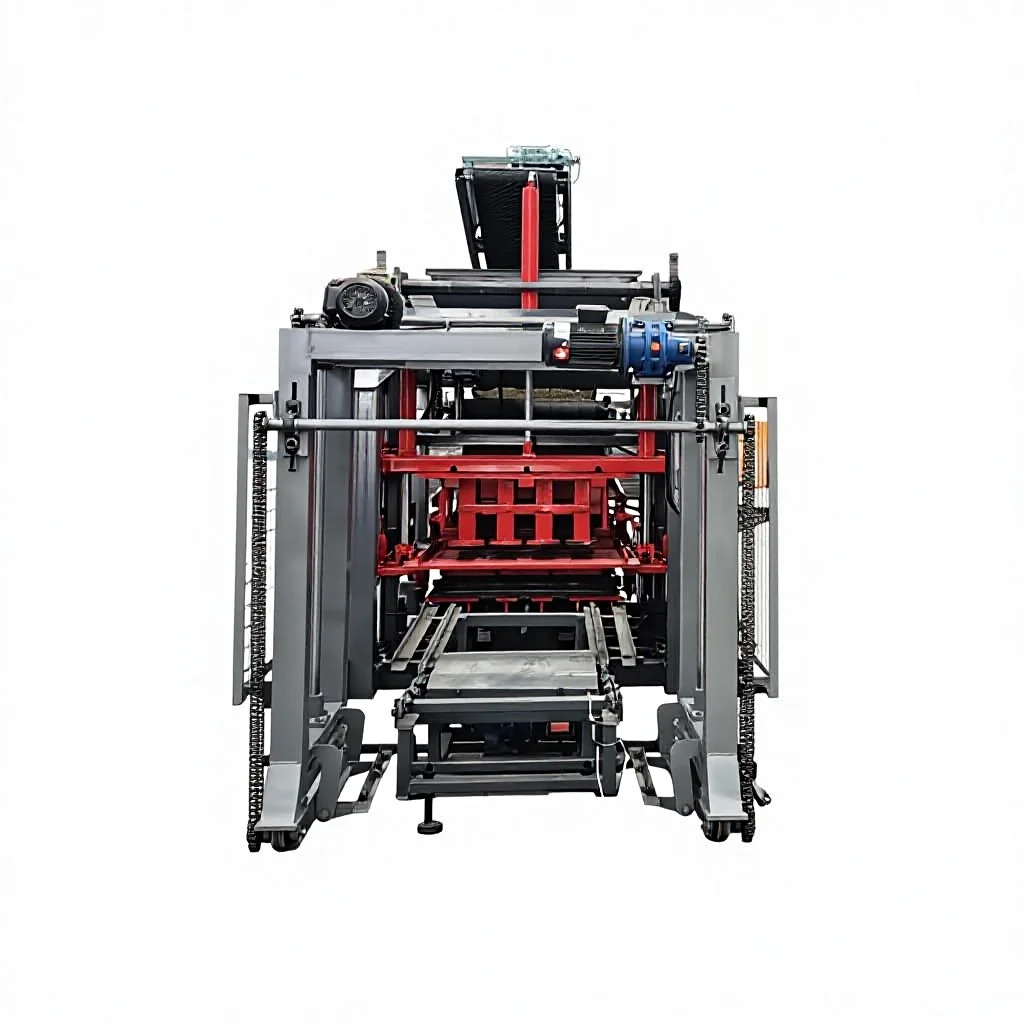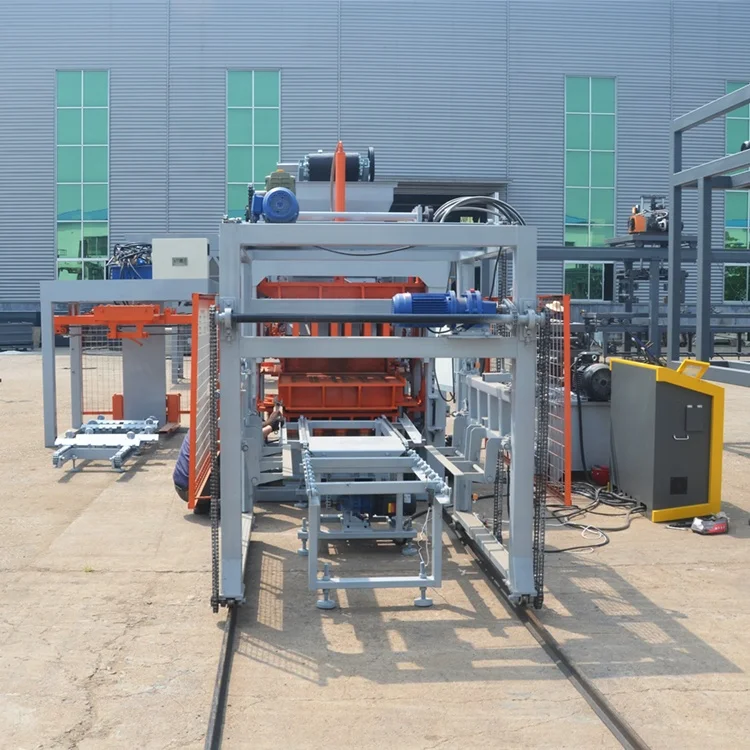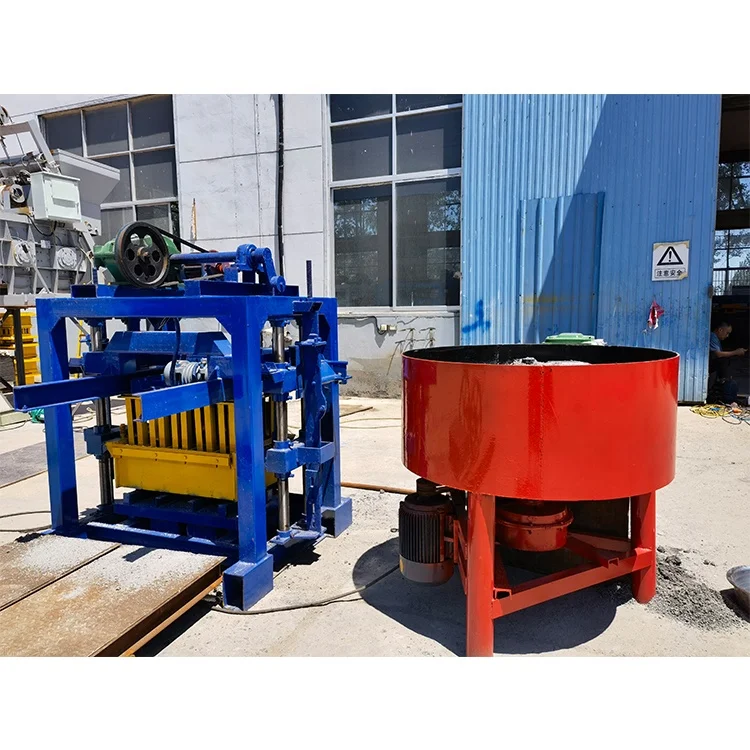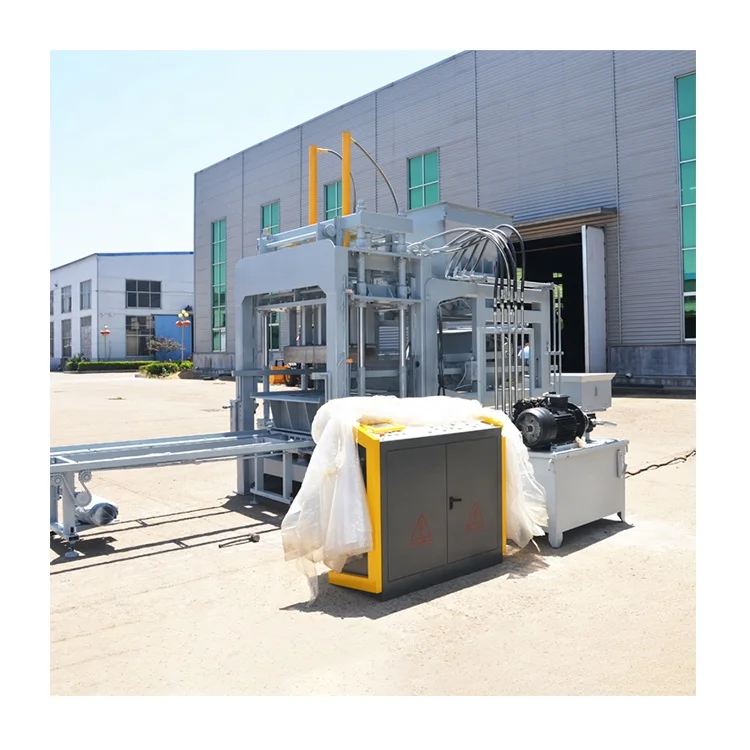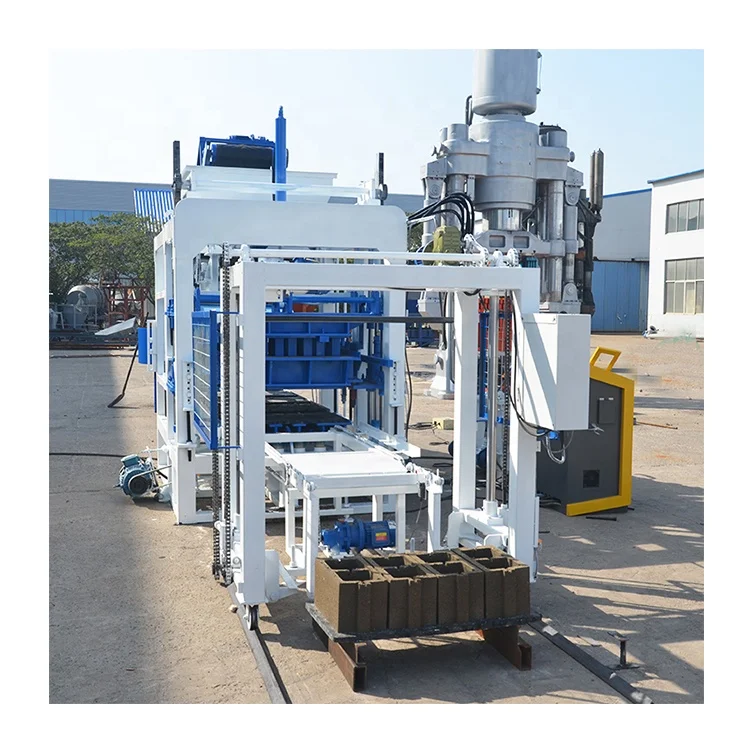

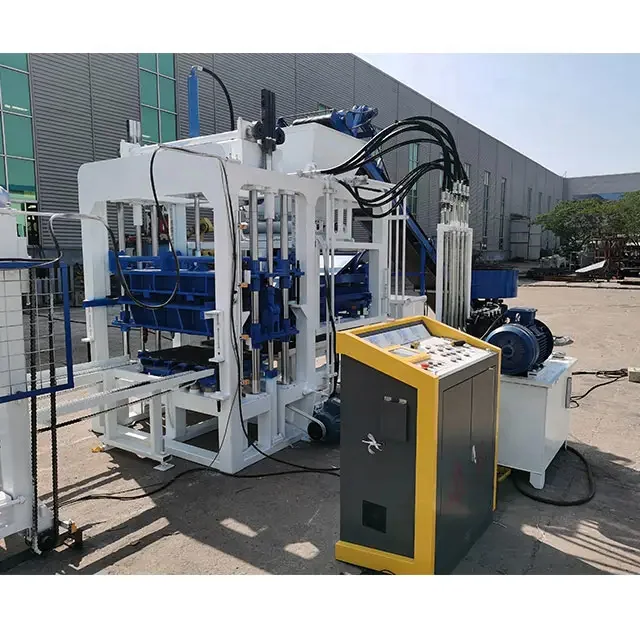

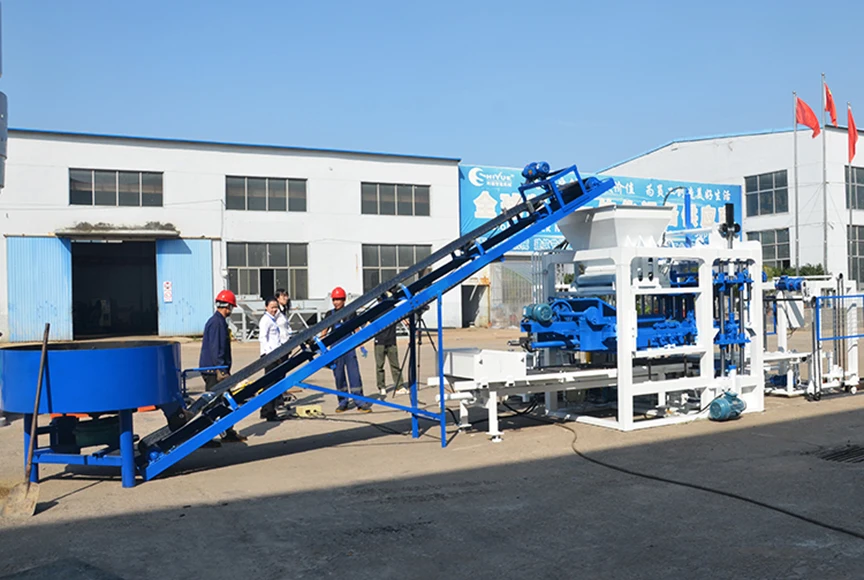
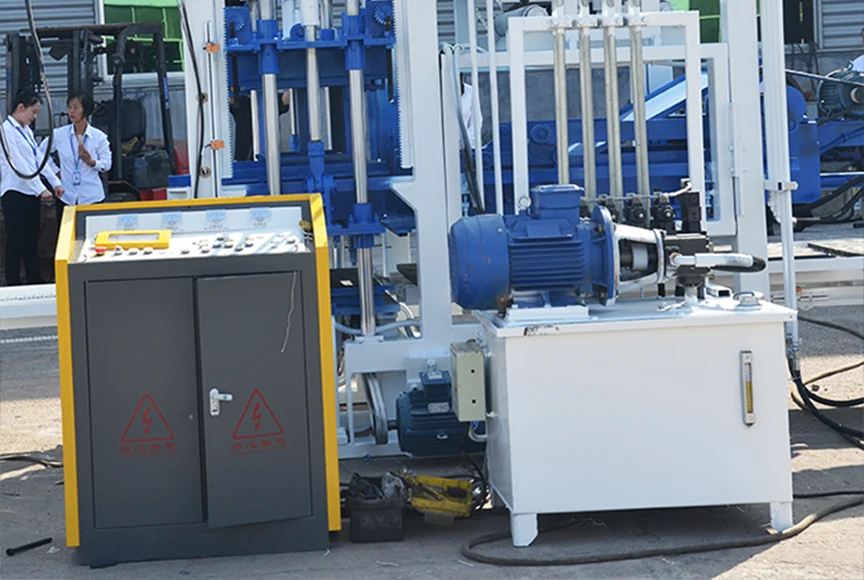
Description
Matched System Specified — Every pallet dimension, vibration force rating and mould cavity count on the QT4-18 is set against your target block format and local aggregate, not a catalogue default.
Technical Specifications
| Parameter | Value |
|---|---|
| Model | QT4-18 |
| Product Type | Concrete Block Making Machine |
| Overall Dimensions | 3900 × 1600 × 2300 mm |
| Molding Cycle | 15–25 s |
| Vibration Force | 40–50 kN |
| Total Power | 24 kW |
| Mixer Model | JQ350 |
| Pallet Size | 850 × 550 × 25 mm |
| Total Weight | 3 T |
| Automation Level | Semi-automatic |
| Hydraulic System | Hydraulic station for high pressure and stable operation |
| Vibration Method | Bed mould vertical vibration + upper mould compression vibration |
| Output Capacity (Hollow Block) | 1200–1680 pcs/h (based on 400×200×200 mm, 4 pcs/mould) |
| Output Capacity (Hollow Block) | 1800–2400 pcs/h (based on 400×150×200 mm) |
| Output Capacity (Solid Brick) | 3240 pcs/h (based on 240×115×53 mm) |
| Daily Output (8 hr) | 9600–13440 pcs (based on 400×200×200 mm hollow block) |
| Daily Output (8 hr) | 14400–19200 pcs (based on 400×150×200 mm hollow block) |
| Daily Output (8 hr) | 16200–19440 pcs (based on 240×115×53 mm solid brick) |
| Applied Products | Paver, solid block, hollow block, curbstone |
| Raw Materials | Crushed stone, sand, cement, dust, fly ash |
| Stacking Method | Automatic stacker included |
| Assembly State | Shipped as nude packing in 20 GP container |
| Voltage & Frequency | Configurable (basis to be confirmed before production) |
| Control System | PLC control (brand and language options to be confirmed) |
Application Suitability
| Application | Material or Output |
|---|---|
| Hollow block production | 400×200×200 mm and 400×150×200 mm formats from crushed stone, sand, cement and fly ash |
| Solid brick production | 240×115×53 mm standard format from sand, cement and stone dust |
| Paving block production | Interlocking and rectangular pavers from crushed stone and cement mixes |
| Kerbstone production | Standard curbstone formats from high-strength concrete mixes |
| Small-to-medium block plant | Semi-automatic operation with JQ350 mixer and automatic stacker |
| On-site construction production | Mobile plant setup using locally sourced aggregate and cement |
What "Pieces per Hour" Leaves Out When No Format Is Named
A cycle time means nothing until you know which block is sitting on the pallet.
I spent years on the procurement side in Southeast Asia before moving to the supply side, and the most common dispute I witnessed started the same way every time: a buyer received a machine rated at a headline output figure, installed it, and watched the daily count fall well short. The cause was almost never the machine itself. The quoted capacity assumed a small solid brick format while the buyer’s market demanded 200 mm hollow blocks. The QT4-18 concrete block making machine specifications here list three separate output tiers — each tied to a named block dimension, mould cavity count and cycle range — so the number you plan your business around is the number the machine actually delivers [NEED_CITE: capacity calculation methods in concrete block production].
Capacity Tied to Format, Not a Catalogue Headline
Every output figure for the QT4-18 concrete block making machine specifications is anchored to a specific block format. The 400×200×200 mm hollow block yields 9,600 to 13,440 pieces across an eight-hour shift at four cavities per mould, while the smaller 400×150×200 mm hollow block pushes that range to 14,400–19,200. Switching to 240×115×53 mm solid brick changes the mould cavity count entirely, lifting the hourly rate to 3,240 pieces. A technical buyer can match these figures directly against local market demand without guessing which format the test was run on.
Dual Vibration Meets Hydraulic Pressure
Block density depends on how well the vibration energy penetrates the mix while the hydraulic head holds compression. The QT4-18 uses bed mould vertical vibration paired with upper mould compression vibration, delivering 40–50 kN of exciting force through the material bed. The hydraulic station maintains consistent forming pressure across every cycle. When both systems are tuned to the buyer’s specific mix design — particularly the ratio of fine aggregate to cement — the result is uniform block strength from the first pallet to the last [NEED_CITE: vibration and hydraulic pressure effects on concrete block density].
Pallet Size and Curing Area Alignment
The 850×550×25 mm pallet is not an arbitrary choice. It must fit the curing racks the buyer already has or plans to build, and it must be compatible with the forklift tine width in the yard. Ordering a machine without confirming this dimension against the curing area leads to pallets that stack unevenly or cannot be moved by existing equipment. The QT4-18 concrete block making machine specifications state this pallet size upfront so the buyer can verify the fit before the machine enters production, avoiding a situation where hundreds of pallets arrive and sit unused because the rack spacing is wrong.
Reading the Core Parameters for Real Output
The 15–25 second molding cycle range reflects the difference between a fast-setting solid brick mix and a slower-consolidating hollow block mix with higher aggregate content. Total power of 24 kW covers the vibration motors, hydraulic pump and mixer drive — a figure that determines the electrical supply contract the buyer needs in place before delivery. The JQ350 mixer is sized to feed the press continuously at the upper end of the cycle range, so the press is not left idle between batches. Mould change enables format flexibility, but the time required depends on the operator’s familiarity with the clamping system and the weight of the mould assembly [NEED_CITE: mould change procedures for semi-automatic block machines].
The Cost of Skipping Configuration Verification
When voltage and frequency are assumed rather than confirmed in writing, the machine arrives and the motor rotates in the wrong direction or the PLC will not boot. Control language left to default means the operator cannot read fault codes, turning a minor sensor issue into a full-shift stoppage. Pallet material chosen without considering local humidity leads to warping within weeks, throwing the mould alignment off and producing out-of-tolerance blocks. These are not machine defects — they are configuration gaps that surface only after the container is opened and the line is expected to run [NEED_CITE: electrical commissioning requirements for exported machinery].
Why Buyers Specify This Machine Here
Block machinery is the sole focus of this operation, which means the press, mould, pallet and handling equipment are designed as one system rather than sourced from separate vendors and bolted together. Configuration starts from the buyer’s actual mix design and local aggregate, not a standard test recipe. Mould design covers the formats the buyer’s market sells, with custom drawings available when a non-standard format is needed. Automation level is selectable — a buyer can begin with semi-automatic pallet handling and add automatic stacking or cubing later as volume grows. Installation includes on-site commissioning and operator training so the crew understands cycle tuning and mould change before the first production run.
Documentation & Verification
- Line layout and capacity calculation stating the block format and mould cavity count assumed
- Mould drawing and format list with cycle time per block type
- Pallet specification covering material, dimensions and recommended quantity
- Hydraulic and electrical schematic with voltage and frequency confirmed
- Factory test record run on the buyer’s target block format before dispatch
- Operation and maintenance manual with wear parts and mould replacement list
Installation, Commissioning & Support
- Foundation must support 3 T machine weight plus dynamic vibration load across the 3900×1600 mm footprint
- Dedicated 24 kW electrical circuit with confirmed voltage and frequency before motor energization
- Nude packing in 20 GP container requires on-site reassembly of vibration table and hydraulic station
- First-run commissioning includes cycle time adjustment matched to the buyer’s mix and aggregate
- Operator training covers mould change procedure, PLC fault diagnosis and daily lubrication points
- Wear parts list identifies high-wear hydraulic seals and vibration motor bearings for first reorder
What to Include in Your Inquiry
Provide the specific block formats your market demands, including dimensions and required daily volume for each. State your local raw material sources — the type of sand, crushed stone or fly ash available and the cement grade you use. Confirm your site’s voltage, frequency and the language your operators need on the PLC display. If you already have curing racks or forklifts, share the pallet dimensions they accommodate so the handling system is specified around your existing infrastructure.
Frequently Asked Questions
Q: How is output capacity calculated for each block format on this machine?
A: Each capacity figure is based on a specific block dimension, mould cavity count and cycle time range. For example, the hollow block output assumes a 400×200×200 mm format at four cavities per mould with a 15–25 second cycle. The daily figure assumes an eight-hour shift. Different formats require different moulds and produce different hourly rates.
Q: What mould formats can the QT4-18 run and how is a changeover handled?
A: The machine supports hollow block, solid brick, paver and curbstone formats through mould swaps. Mould drawings are provided for each format before production. Changeover time depends on operator training and the specific mould weight. Buyers planning multiple formats should confirm the sequence and tooling required for each swap during commissioning.
Q: How do I choose the right pallet material and quantity for my curing setup?
A: Pallet material — typically wood or fiberglass — must withstand local humidity and curing temperatures without warping. The 850×550×25 mm size must match your curing rack spacing and forklift tine width. Quantity depends on your curing cycle length and daily output target. Confirm these details before the pallet order is placed.
Q: What electrical and control details need confirmation before the machine ships?
A: Voltage, frequency and phase must match your site supply exactly. The PLC display language should be confirmed so operators can read cycle parameters and fault codes. Written confirmation of these specifications is obtained before production begins to avoid commissioning delays when the machine arrives on site.
Q: Which supporting equipment is required alongside the press itself?
A: The JQ350 mixer feeds the press, and an automatic stacker is included for output handling. Raw material feeding, pallet feeding and curing rack handling are configured based on the buyer’s automation level and site layout. A complete line specification is provided so no station becomes a bottleneck limiting the press cycle time.